How Finance and Supply Chain Can Align for Better Decisions with Lyndsey Weber & Marcia Williams
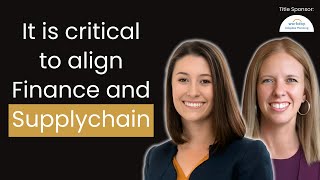
This is a YouTube video titled "How Finance and Supply Chain Can Align for Better Decisions with Lyndsey Weber & Marcia Williams" recorded in December 2024. It features a podcast-style discussion hosted by Paul Barnhurst, who engages with guests Lindsay Weber and Marcia Williams on the intersection of financial planning and supply chain management. The conversation covers topics such as supply chain planning processes, financial planning and analysis (FP&A), integrated business planning, data alignment, and cross-functional collaboration to improve decision-making in organizations. The discussion includes practical examples, challenges, and strategies for aligning finance and supply chain teams to achieve better business outcomes.
We made one change to the height of a wooden pallet. Doesn't really sound like a big change. 100 bags now can't fit on every pallet because of this tiny little change.
Everything related to inventory, it has a huge impact.
Every company has supply and demand and from a supply chain planning perspective, it's really all of the decisions that go into how do you satisfy and match up your demand to your supply. We had a customer several weeks ago that spoke and said that optimizations they made in their supply chain completely funded their IT roadmap for the next five years.
So any advice there of how you kind of make sure back end communication happens?
We understand where the data is coming from and how it evolves over the planning cycle. And then I think the final thing I would mention huge component of the supply chain planning and the FPA process is making sure.
And now a brief.
Message from our title sponsor, Workday. Are you looking for an EPM solution that will give your business the agility, connectivity and scalability it needs to succeed with powerful AI Workday? Adaptive planning delivers insights that help you make better decisions faster. Our advanced data visualization and powerful reporting tools make it easy to elevate your budgeting, planning and modeling. See it for yourself at www.workday.com.
Welcome to this LinkedIn Live FPA tomorrow. As many of you know, FP&A tomorrow is a podcast where we talk all about financial planning and analysis. Except for today we'll talk a little bit of supply chain. So we'll mix it up here a little bit. But you know, each week we're joined by thought leaders, industry experts and practitioners who share their insights and experiences. I'm the host of the show. My name is Paul Barnhurst, AKA the FPA guy, and I'm super excited to have two great guests with me. But first we. Let's see, we have one guest that's come in some wobbly. He said it's evening for him. So good evening for you. He's joining us from South Africa. We got Sammy from Long Island, New York, Carolina from Switzerland, Carolina Lago. Great. See, Obedience joined us from the Netherlands. So they're all starting to come in Argentina. So we got quite the group all over the globe. So thank you for letting us know. Keep those coming. We'd love to know where you're dialing in from. And Carolina says you have better jokes, Paul, so that was an improvement. The Eiffel Tower. So that's good. I'm glad you like that one. All right, why don't we Start. Lindsay, if you could just take a minute and introduce yourself. Yeah, sure.
Hi everyone. Thanks, Paul, for the time today. Lindsay Weber. I am currently in the sales team at 09, which is a supply chain planning software. I'm based out of Tulsa, Oklahoma, currently used to live in the Houston area. And yeah, really excited to be here with you, Paul and Marcia today. This is going to be a lot of fun. So thanks for the opportunity.
Yep, you're welcome. Thanks, Lindsay. Marsha, why don't you go ahead and introduce yourself?
Yes, I'm Marcia Williams, Happy to be in the show with Paul and Lindsay. I work in supply chain planning snop. So this is my favorite topic and looking forward to the conversation.
Great. Thank you so much. And just keep the questions, comments going in the chat. I'll keep an eye on that throughout. So if you have questions as we're going through things, throw them in the chat. We'll get to them when we can. Also continue to let us know where you're coming from, but let's go ahead and get started. So today's goal is to discuss supply chain and financial planning, something we probably all get to deal with at some point in our career, whether we work in supply chain or finance, and overlap between the two. So, Marcia, we'll start with you. You started your career as an accountant, but you focused today primarily on supply chain planning. So tell me a little bit about your journey, kind of how you went from accountant to being, you know, strictly on the supply chain side.
S. Yes, I know your background, Paul. That's also interesting because I started in accounting and then I wanted to take more action, like to be in the place where we create value. And that's when I decided to get an MBA and I went to Michigan State. So from my home country, that is Uruguay in South America, I went to Michigan and then I got my MBA and I started working everything related to supply chain. Initially my area was procurement, but then I did a lot of different activities in the different area within supply chain and always working with finance as well. And my focus is in planning, so I have been in the different areas.
Thank you. Appreciate that. Yeah, I could totally understand accounting, wanting to be more in the business. Funny enough, I went to Arizona State, which is another supply chain school, much like Michigan State. We had professors from there. And I originally planned on doing supply chain and decided to do a finance degree instead. So definitely some similarities there. Lindsey, tell us a little bit about your journey. I know you've done sales, you've done some supply chain, you've done some finance. A little bit of everything in there. Yeah.
Yeah. I started my career at Exxon Mobil in the chemical company in their global supply chain. So background wise, I have what I typically call an industrial engineering degree. It's actually called engineering management. So it was kind of a fusion of operations, research, business and erp. Actually I took an SAP course in college, which I feel like is maybe a little bit rare. And yeah, started my career at Exxon in the supply chain and did a bunch of different roles from kind of global project management and supply chain process optimization to packaging to a supply planning role as my last kind of turn through the company. And then to your point, Paul, I made the switch right over the pandemic to tech and I joined a financial modeling software company called Quantrix and had spent a lot of time building Excel models at Exxon. And so I was pretty familiar with what it takes to build a business case and kind of speak the language of. To your point, Marcia. Right. Of how do we take the considerations from a finance piece and then go operationalize it and actually bring the value through supply chain. So joined Quantrix on the pre sales side of the business and had a great time learning about mergers and acquisitions, very traditional strategic financial models and the decisions that people have to make and a lot of times the challenges that they have using the tools that they have available in their organizations. And then about a year ago I switched to my current company, which is 09, and it feels like a great kind of marriage of all of those things. It's supply chain planning software. But a lot of our conversations, which I'm sure we'll dive into today, are about how do we make better financially informed decisions within the supply chain. And I think that's kind of where a lot of the conversations are in my current role at 09.
Great. Yeah, no, there's definitely a lot of overlap for sure. So next question. This one's for you, Marcia. I'd love to get your thoughts. What all is typically involved in supply chain? When I think supply chain, I usually think logistics procurement. But maybe talk a little bit about what are the typical kind of roles within supply chain, particularly around planning and the different areas.
Yes, and that is a great question because in general planning with other team members, like outside from supply chain, they don't see that. So there's one area that is all related to planning and is related to strategy. Then we have other areas that are more related to execution there. Yes, we can find all the links with operations. We have links, of course with logistics, everything related to warehousing and inventory, we have it from planning all the way. So those are different areas that they are. Ones are strategic more that is the focus and other areas are more related to execution. Operational, looking at the short term, day.
To day and, and that makes sense, right? You got your strategic planning, your big picture, your long term and your operational planning. And you know, finance awfully kind of sits in the middle between that strategic, doing the financial planning. But then they also have to make sure it links to the operational in a, in an ideal world, which hopefully you see not always, but a couple other people have joined us. We got one from Dubai, looks like someone from India. So we got a good, good audience out there. Keep letting us know where you're coming from, ask your questions. This next one's for you. Lindsay, how would you define if I asked you to say, hey, tell me what supply chain planning is and then FP and A maybe kind of how they're similar, how they're different. Give us your view on that. We've talked about it before and I kind of like the way you shared it, so I'd love to, for you to share that.
Yeah, I think, you know, one of the ways that I like to think about it and to your point, we've talked about this before is when we think about supply chain planning. When I think about supply chain planning, I think it is in most cases what people consider the physical component of the supply chain. Right. So talking about the details from how we used to describe it at Exxon would be from your suppliers, suppliers or even your supplier, supplier, suppliers, Right. All of the raw materials through to the finished product and how you get that to your end customer. And from a supply chain planning perspective, it's really all of the decisions that go into how do you satisfy and match up your demand to your supply. And I was actually talking to some friends last night about supply chain and said, you know, every company has supply and demand. Whether you have a physical product or you sell a service, there is always demand and there's supply that you need to match with that. Right. And so I think one of the key differences from my perspective and from my experience between supply chain planning and kind of FP&A is a lot of times the level of detail that you have to plan and decide at in supply chain, I think is much more granular and kind of tactical operational to begin with. When you are trying to decide where do we source that raw material from, how do we expedite orders to satisfy customer demand Things like that. I think from a traditional FP and a perspective, or at least with a lot of the customers I worked with at Quantrix, it was a lot more strategic. So kind of pulling that up to the 30,000 foot level and saying, well, what do those lower level supply chain decisions, what is their impact on the P and L on the balance sheet? And so we're looking at that more from the true financial implication. And I know we'll talk about this, but there's an increasing need to kind of dovetail those together. Because when we're making those lowest level decisions in the supply chain, we do need to be actually thinking about how do we pull that thread and where is this going to have implications when we do get to the balance sheet or to the P and L?
Sure. A decision you make that increases inventory is going to have a big impact on the balance sheet and also on carrying costs, which can end up in the, you know, the P L. And if finance doesn't know that, then there's that variance and they're scrambling to go what happened? Why? Why is our expenses here on a cost of goods sold higher or wherever it, you know, it may be, the carrying cost, those type of things, trying to understand them. So I get it. I love to kind of pull that thread and make sure everything's aligned. I'd love any thoughts on that. Marcia, any thoughts to what Lindsey said there? Just kind of how you see the differences. I know you just did the Wharton program on fba, started as an accountant, so I know you have a lot of experience on both sides of this as well. So I'd love your thoughts.
What Lindsey described is one of the key challenges in supply chain because when we talk about the planning, we have a process that is called sales and operational planning. Sometimes there are other terms like integrated business planning, when it is more advanced. That is one process for planning that it should be done at a higher level. We don't look at each sku, we look at product families at that level. We need to extend the Horizon up to 18 months if possible. Not just to look at two or three months. Then there's another area within supply chain. And sometimes that is exactly the challenge when they are mixed together. That is sales and operation execution. That yes is at the SKU level is much more granular. So one of the challenges that I have seen is that there are many companies where we have that mix like they are doing more sales and operations execution at that level. So it's critical to define the level. Yes, finance also the Approach that is top down supply chain, typically they do bottom up and is very detailed. So we need to combine both because we also want to know how we are doing with the financial targets and the implications and focus on what really matters. And at the same time we also need that granularity. But in my view is two processes that are different.
Okay. So yeah, so I'd love to dive into this a little bit more because we hear a lot of terms or buzzwords with planning. Right. I mean obviously traditionally you had FPA, you had S&OP, you have integrated planning. Today you have XP and A or connected or continuous. All these different terms you're hearing. And is there really like a fundamental difference between all these or is it at the end of the day there's different levels of planning that needs to happen. We need a framework and you need it. Make sure it's all consistent kind of across the board and I'll get both your thoughts on this. So Lindsey, I'll give you first take on that kind of. How do you think of it when you hear these different terms when it comes to planning?
Yeah, it's. I think it's a heated topic of debate. I actually think, Marcia, you have a. You have a lot of beautiful infographics on LinkedIn. So if anybody doesn't follow Marcia, make sure you do because they're amazing. I think there was a, well, nice thought at one point that was comparing FP and A to S and O P and it was like a huge debate in the comment section. And so I think a lot of people have different interpretations of what those mean. I think one of the key differences between them that is important to note. And Marcia, you mentioned it is the planning horizons. Right. So not every one of those activities is planned at the same kind of time bounds. A lot of times like snoe. Right. It's very tactical, it's very operational. Almost day to day we're trying to fight fires and close gaps. FP and A and even I would say ibp, which you mentioned as well, Marcia. Right. Typically tends to be more longer term. So I think the key to focus on with each of those different terminologies, FP and A, xpa, S and op, IBP is what are the key questions we're trying to solve and what is the time balance of the criticality. Right. Of those answers that we need to be able to act upon and make sure that we're meeting whatever those goals are. So I think that would be my maybe biggest piece of advice. I think there's A ton of overlap between those and probably some semantics on even at the organizational level, what some people might call S and O P another company might call ibp. So I think it depends a little bit on the maturity of the supply chain organization and the finance organization. But I think there's more in common than not. But you have to get the goals and the timing balance, I think right to make sure that we're solving the right problems at the right time.
I love the last part you said at the end of the day, make sure you're solving the right problems at the right time, you have the right goals, call it whatever you want to a certain degree. Right. It's like the debate stepping away from supply chain rev ops. Does it sit in fpa? Should it sit in the you know your go to market under your CRO? Should FPA do sales commission? Should hr? At the end of the day it doesn't matter to a certain extent. And what matters is you have the right culture, the right organization, everybody understands the frameworks and the tasks they have and you're aligned. Which gets to this comment by Ezekiel. Then we'll come over to you for your thoughts on this. Marcia who can relate to this? IBP never matches with financial planning, at least that first version. I'd say S&OP and FP and A operational. Often it doesn't match. If you've worked in planning, I'm going to guess everybody here on this call could raise their hand that they've been in a meeting where I don't recognize that number. I didn't submit that number. Right. Finance must have done that or that was operational planning. They didn't align with us. And I see Marcia chuckling. I see the smile on Lindsay's face. Right. We can all relate to it. It's keeping everybody coordinated and aligned, whether it's supply chain, whatever type of planning is tough, but I'd love your thoughts on the different terms. Marcia, any thoughts there you'd like to add?
Yes. The key as we were talking is that these processes need to help the business. So it to make decisions. Making the decision considering the Venus as a whole and not each individual function that is the objective. And there are different terms just more to highlight the maturity in the process. Initially SNOP was all about balancing demand and supply. So it was within supply chain and we work with marketing and sales but we didn't have finance too much involved in the process. So now there are new terms to make it like a cross functional process. And that's why we see ibp. But we need to be clear like on the objective what we are looking for with this, that is decision making, that is an alignment as you mentioned, Paul and Lindsay.
Yeah, and we'll definitely get more into alignment here shortly because that's where we end up with the. I don't recognize that number that we all deal with, but I like that you said help make decisions. I love a cfo. The former CFO of Grammarly Stu West. I did a webinar with him recently, I think it was last week and he made a comment when he asked what you know, we asked about finance. He said the role of finance. He sums it up in three words and I'd never heard it said this succinctly and I think this applies a lot to planning, particularly helping he said better, faster decisions. That's what we help the business do, make better, faster decisions. And I think planning a lot of times all of that is really to help the business make better, faster decisions. And I thought that was just a brilliant way to sum it up where I'm like, okay, hard to argue with that. So before we get into a little bit of cross functional and alignment and some of those things, I want to ask a question, just kind of get some, some thoughts and we'll go with you here. First Lindsay on this supply chain and supply chain financial planning, I've seen, you know finance, I've seen supply chain sit in finance in the sense that they're often called finance supply chain planning. I've seen them sit in supply chain. Do you think companies need like a financial supply chain and a supply chain team or are they just different names for the same thing? Or how do you, what have you typically seen? How do you think about it?
When it comes to business planning, staying ahead means planning smarter. Whether it's forecasting, budgeting or long term strategic planning, you need a solution that's built to scale with you. That's why more growing businesses turn to workday adaptive planning. It's designed to empower organizations to move beyond spreadsheets and into a connected, agile future. With powerful AI, workday adaptive planning delivers insights that help you make better decisions faster. Our advanced data visualization and powerful reporting tools make it easier to elevate your budgeting plan planning and modeling. It's time to start planning smarter.
Discover how@workday.com yeah, I, I will say.
Personally it's been rare that I've seen finance embedded within the supply chain though I it's a great idea. I think, you know, getting to what we were Just discussing as well, to me, the importance is kind of both directions, making sure that people in supply chain have at least a general understanding of what are the financial implications of the decisions we're making. Right. Even just basics of understanding as we were talking about what are the lines on the P and L, what are the lines on the balance sheet and which of those line items are contributed to by decisions we make in supply chain. I think that's really important. From the flip side, I think from a finance perspective it is very helpful. And we've talked about this, I think in previous conversations, Paul, but I think it's amazing if you can actually get out into the field, if you will, as a finance person or, you know, if you're in a different function, because it's so, I think, complex and nuanced, the amount of decisions and the interconnectivity of those decisions. In supply chain, I think I've, I've mentioned the packaging piece before, but even when I was at Exxon, you could make. We made one change to the height of a wooden pallet, right. Which is what we shipped a lot of our product on. And that one inch of a change on a pallet doesn't really sound like a big change. Right. It's a nice little, you know, maybe performance boost or maybe we found a way to cut costs with that incremental change. But it's not until you get out into the field and realize that that 1 inch actually means you can stack an entirely one fewer level of product on a truck or an entire. Right. 100 bags now can't fit on every pallet because of this tiny little. What you thought was an optimization change. So I think when we talk about where should finance sit in relation to supply chain, should there be people embedded? Maybe if that's what works to ensure that those lines of communication are opened. And we're making sure the decisions we're making upstream and downstream are actually truly optimizing the plan that we have. I think somebody, Andre said that. Right. Always making sure IVP aligns with the long term strategic plan. We need to make sure that all of the decisions we're making, especially the small ones that maybe seem like they're good optimizations in a vacuum are in fact still good choices for us to make long term. So if people in the call do sit in supply chain and you're a finance role, I'd actually love to hear more about that. I think that's a really interesting approach. It's not one I've seen very often. But I do like the concept.
What's your thoughts, Marcia? Do you have a kind of preference of how this should work or what.
You'Ve seen when companies refer to SNOP typically is in supply chain or we have a person, but of course we need to have finance involved because we always need to check the target. How we are doing that is for sure is very important. What I have seen is that when a company decides to have more maturity and have more that integration with finance, that is not only to get to the metrics, because now in snop, yes, we have just on average snop, we have metrics that are related to finance. But to see we were saying, okay, but what is the impact on this line on the P and L that is more advanced and that is when sometimes they call integrated business planning and to get the buy in from the organization. This is what I have seen in companies. They have finance leading that instead of supply chain. That is another approach.
I've seen that in some of the consumer goods space where there's a finance supply chain team that's kind of leading it from a finance perspective and working with the SNOP and the rest of the teams. That's kind of where it came from. I've trained a few companies where a lot of people have the title. You know, they're doing a supply chain role, but they're part of the finance organization. So not a lot, but I've seen it a few times. That makes sense. All right, keep the questions coming. If you haven't, let us know where you're coming from, let us know. We got a quick joke because we got to break it up here and then we'll. Next question. We'll go back to you. You, Marcia. So who knows why you take an extra pair of socks to the golf course in case you get a hole in one. All right, I got a few laughs. That's all I could ask for. All right. Cross functional planning. Right. That's something we should all be doing across the business. Really critical today as things have just accelerated since COVID Right. Everybody struggled with supply chain logistical issues, raising capital shortages list goes on and on and on, and planning and scenario planning and all that became more important. So what's your take? How do you ensure that finance and supply chain teams are on the same page, that they're aligned? Because we've all heard of the different people say here, it never matches. You know, often you have challenges. We've talked about different numbers. So what are things you've seen? What's your thoughts on how you ensure that you're really collaborating and you're not building in a silo, so to speak.
Yes, in this process is true, right. Only the most advanced companies, they get to one set of numbers. But the reality is that there are three, four, there are several and we see the differences. So if we follow this process, the SNOP process, we start with the demand review, then it will go to supply and then finance because they need to see the different implications. There are different ways to achieve the target. So for example, new product introductions, they want funds for that sales, they may need to do a new promo campaign. Supply chain will say we need more like or more workforce or more inventory. We need to invest in that. So then when they move to finance they can see the different ways and evaluate the impact and then the decisions will be done by management. So that is the process. But of course in the demand review supply, we will have those numbers different.
Yeah. And I agree that's typical supply. Right. You go and say hey, here's what we're trying to accomplish. You get all the numbers from them. Finance says okay, here's some different ways we think we can achieve this. Management looks at it and says we want to go with option three or scrap all these. We're going to go with this. But how do you ensure, once management says hey, we're going to go with that, those details get filtered back and plans get updated. So there's alignment because at the end of the day, if you've agreed with one approach, ideally, and I say ideally, you know, it should stream throughout. So any thoughts on how you kind of make sure it gets back to people after management? Because I've seen it where management makes a bunch of changes and sometimes they say just push it to everybody and you're like, but wait, that's just going to create a nightmare. Everybody's going to not understand their numbers. So any advice there of how you kind of make sure that back end communication happens?
That is the function of snow. So what we talk at the beginning to have sales and operation planning. Now we are moving into snoe. So this is to have these meetings all the same sequence, but it's going to be different and if there are issues there, they need to escalate so we can come back to SNLP because we need to make assessment to the plan based on execution. So that's the key when we have both working well and that way in my view they should be separated processes. They are working together, but separated. That is how we can work better. And we did that in the pandemic. I have many examples. That is when SNOE started to be more.
Feel free to share an example. I'd love to hear an example you have from the pandemic. So if you want to share one, go ahead.
Sure. For example, we had on the plan, they made a decision on a certain number of product that they needed. But then when it go to Snoe, that we see materials, that part of procurement, getting the materials, we couldn't get that. So materials needed to communicate back materials in Snoe. So materials needed to communicate back to supply planning to tell them that they cannot build that number of products. And that happened with packaging film, for example, one of the hot items to get. So. And that is how they made the change in the plan.
Got it. You know, I. I kind of laugh as we talk about, you know, Covid. I have my training partner, good friend Ron Montero. He worked for a company that sold toilet paper, you know, sold paper products, but one of them was toilet paper. And so, yeah, I was trying to, you know, keep the supply. It was a crazy year for him. He's like, yeah, we think we beat budget by like 50%. But the next year wasn't much fun. Is it's always like, well, how are you going to increase it? We can't. That's not going to happen. So, Lindsay, your thoughts on this kind of whole discussion and trying to make sure we have alignment?
Yeah, I think Marcia captured it really well. The other couple comments I'll make on this, and we've touched on them a little bit, is I think there needs to be alignment across, I would say, four key areas. One is, of course, as we said, process making sure people understand what are the steps, let's say across the monthly planning cycle where we're meeting certain gates, there are certain outputs and plans that are either being finalized and things like that. Of course, the time component. Right. As we said, there needs to be alignment across the planning horizons that we have that we're trying to lock in those decisions. The other two pieces that we haven't talked too much about, I would say are data and technology. One of the issues. Right. Of course, with, as we were just describing, the, you know, the first version of the FPA versus the ibp, it doesn't match. A lot of this is actually not related as much to, you know, relational collaboration between the teams. And it's more just how is the data stored and structured today and who has access to what and when those changes are made, how does that data get translated back into your ERP or into your production plan or into your warehouse management system? So the data piece we could have an entirely separate conversation on, but that's a huge component of the supply chain planning and the fp and a process is making sure we understand where the data is coming from and how it evolves over the planning cycle. And then I think the final thing I would mention that, you know, Marcia, you kind of touched on it right there at the end. A lot of times what we talk about in my current role is we call it post gaming. So after you have those management approvals and we make a change to a plan or we commit to, you know, making an alternative scenario and going and executing on that, there should be one more step beyond that where we come back, let's say a week later or a month later, and we post game it. So we say we made this decision, did we follow through on it? What was the outcome? Was that the expected outcome we thought? And if it was or wasn't, how should that change the way that we make decisions similarly going forward? So I think you have to have that kind of continuous process of not only improvement, but actually keeping the teams accountable for did we actually execute on what we said we're going to do and what was the actual outcome and how can we incorporate that going forward?
FP and a Guy Here Today I.
Want to Talk about the FPA Guys Ultimate FP and a course bundle. This bundle includes over 10 hours of content recorded by Ron Montero and myself, many templates and great lessons to make you a better FPA professional. The content includes FP and a business partnering how to manage tough conversations, build world class relationships and hold the business accountable. Includes Modern Excel which is a real game changer for the way you'll work in Excel. Excel Tables, the gateway to modern Excel Power Query a game changer for transforming your manual processes and loading data and then dynamic arrays. Next we cover modeling design principles. In this course we talk about the importance of designing models in a certain way and how important it is that you think about design. And last but not least, driving value through smart analysis, how you can conduct data analysis to be a better FPA professional. Go ahead and sign up for this bundle@the spnaguy.com that's the FPND a n-a guy.com use the code podcast to save 25% get started learning today.
Yeah, it feels like that fourth one in compost gaming accountability and monitoring. That continuous monitoring number three data come on. Our numbers always align. That's never a problem. We, We've, we've all dealt with that. As I. Everybody's heard the quote by a. A lot of people probably heard by George Box where he says, all models are wrong. Some are useful. I saw a similar quote related to data, and I'll, I'll tweak it a little bit. It was all, data is wrong, same idea. Some is useful. Right. You know, it's like if anyone has perfect data, they don't have any data or they're lying. It's one of the two. There's no such thing as perfect data. It's. Is the data good enough to make decisions? And I still remember early in my career, we had one report where the numbers were like, different by a billion. And once we started explaining it all, it made sense. But on the surface, it's like, wait a second, 3 billion and 2 billion. How can we have something that's supposed to be similar and have completely different numbers turned out? They're really explaining something different. Right. As you dig into it, there's usually explanations, but sometimes it's just we define things different. Yeah. How often does finance have one definition for something and, you know, marketing or supply chain or S and O, P or whatever has a different definition, and you just find out, oh, we're really working with the same numbers. We've just defined them differently, which results in a different ratio or a different, you know, number. I see both of you nodding, so I know you can both relate to that one. All right, so here's a question for you, and I'll start with you, Marcia, on this. Love your thoughts. I think often finance struggles with feeling like they're not connected with the business. They're not getting the information they need. Maybe things aren't filtering back to them. If you're in that situation. As a FPA professional, any advice on maybe how to make sure you get closer to supply chain and you're getting the information they need? Any things you'd recommend somebody do if they're in that situation? Situation.
Well, my recommendations is that to know some of the key metrics or the language that supply chain speaks that I typically say to other supply chain practitioners, like, we need to learn the language of the business that is finance. So of course we need to learn that to. To communicate and that everyone can be aligned. But for finance, something that they can see some metrics that with those metrics, they can understand the future. We can take one that for supply chain is critical. Everyone will tell you this one first, I think is on time in full, right? ODIF is a very famous metric, but if you see how the business is performing, you can see if the plan will be met or not. Because let's say that on timely fool is 60% or lower. That is bad, right? So you can see those numbers in the plan. It gives you, you can challenge those numbers and you can understand also well what happened in there. You can identify the reasons and work with supply chain because they are not going to hit the target. The business is not going to hit the target. So that is one key metric. Of course, everything related to inventory, it has a huge impact. So other metrics like fill rate, how can we meet that, how we are doing? So I think there are some metrics, as I mentioned, that can help finance to understand operations more.
Got it. That makes a lot of sense. Lindsay, anything you'd add?
I think Marcy is exactly right. The other way I would think about it and just coming from my time, especially I guess at Quantrix, when we're building these very high level strategic finance models, there's always a set of 50, 100 assumptions, right. That we make. And I think an interesting exercise, if you are in finance and you want to build that relationship with supply chain or understand it more, is similar to what you're saying, Marcia, like double click into those assumptions, right? Your first level of assumptions is maybe total sales, right? Or you have a growth rate or something, right? Some kind of a, a driver for your cost of goods sold. Peel a layer right off of that and say, well, what are the components that contribute to my cost of goods sold or to my working capital, to Marcia's point, and then double click into that. And once you get to the point where you don't have the answers to those questions, find the person in supply chain who does, right? Because I think that's where you start to get a lot of the interesting context and story around where these assumptions that we have at the high level, from the income statement and the balance sheet and the P and L coming from. And truly, who are the people right down on kind of the base level of the supply chain that are seeing that firsthand? I think maybe that's a great way to start the conversation with somebody in the supply chain organization to say, hey, here's the view from my P and L lens, right. Of what's happening and here are the assumptions I'm making. But what assumptions are you making that are kind of feeding right into this high level assumption that I have? I think that can Sometimes be a really interesting dialogue.
I love that. It kind of reminds me of kind of the five whys when you're trying to get to the root of the problem. They kind of keep asking you final, I need to go talk to this person, that person. And you really start to understand what's made in the buildup of that. This high level assumption is made up of these 30 things. It's like, okay, now next time when numbers are wrong, I know I can go talk to these three different people or whoever it might be. I think that's, I think that's great advice. Just going to give a minute here. If anyone has any questions for Lindsay or Marcia, put them in the chat, let us know. I might do one more joke here and then we got a few more questions and we'll move into kind of a fun section and a little bit of Q and A. So does anyone know what the difference between an accountant and an FPA professional is? All right, here we go. When an accountant gets creative, they go to jail. When an FPA professional gets creative, they get promoted. So there you go. That's why I'm an fpa, not accounting. I'm too creative or something like that. So I'd love to get some thoughts and I'll throw this out to either one of you, you know, or both of you. You could take this how you want. What you see is kind of the key differences in skill sets between supply chain planning and finance planning. Are there real kind of key areas where they're different? Maybe where they're similar. Would love your guys thoughts on that. Maybe we'll start with you Marcia, if you have some thoughts on that.
I think the difference is just the language because we need to in supply chain is very granular. So sometimes I think we lose that broader view and we start focusing on some products that they don't have a significant impact. So that is the difference that I see more related to the approach and the language. But then we need to. Then the rest. I see many similarities. Even the challenges when I was looking at the FPA process, there are many in similarities. Even when we send the pre reads, we need to explain the variances. So I see more similarities than differences.
Got it. And that makes sense. What about you, Lindsay?
Yeah, I totally agree with Marcia. I think way more in common than not. I think clearly, yes, having an understanding, as we've said, you know, many times already, of just basic finance. I think everyone, even if you're not in supply chain or finance, everyone who works in any kind of Company should have a basic understanding of, you know, what's, what's in A, P and L and how do we get the numbers right and why is that important? I think one of the interesting similarities between supply chain planners and maybe FP and A is we both exist to serve stakeholders. And I think that that can actually be something that brings these two functions together. Right. I think to Marcia's point, in supply chain we're oftentimes much more focused on the specific issues in front of us as far as how do we make sure that this customer gets their order on time or how do we make sure that the decisions we're making help our manufacturing plants to run at full speed and capacity. Right. How do we make it easier for those people or make sure that we don't have disruptions to, you know, runtimes finance. Like the stakeholders are oftentimes like the stockholders. Right. Like the actual investing people in the company and, or the end consumers. And I think you can actually bring these two organizations together to say, you know, in both cases we need to serve the same group of people. One group is maybe focused more so on the very near term tactical, I would say even almost like customer experience of how people, you know, perceive the brand. But then those people end up being potentially investors in your company as well. So both actually play, I would say a really significant role in how people perceive the company and the organization you work for. And that's something that we should use to kind of align our teams together, I think towards a common goal.
I like that and I think that's great on that alignment and that common goal because the more the teams are aligned, the more you're going to have the cross functional collaboration, the sharing. I mean at the end of the day we're all trying to do the same thing. We're trying to help the business achieve its long term strategic goals. Often the day to day takes over, like you said, the customer that has the, that they got their order and it's all messed up or we're late on this or the machine that broke down and so now we can't make 50 widgets or we missed on the quarter, how do we get the business to fix it? From a finance perspective, all those type of things and can, can take precedence but at the end of the day it's all lying back to helping. The planning should all tie back to what are we trying to strategically accomplish. Regardless of whether it's financial, supply chain marketing, S and P, we could use it. We could come up with a Million different acronyms. Right. But at the end of the day, when I think about it, that's the simplest way I can break it down. There's different time horizons, there's different data, there's different assumptions, but we should all be focused on helping the business achieve its strategic objective.
Yeah, totally. I think too, the last comment I'll make on this that I I think is interesting. And Marcia, I'd be interested if you've seen this as well. But in a lot of the customers that I've spoken to recently, it's been very interesting to see that there are kind of value unlocks happening coming straight out of decisions being made in the supply chain. So I think in particular, especially in the current market conditions, there are a lot of companies that are cash constrained, looking for ways to free up cash flow, looking for ways to do more with less. And I've actually seen many stories recently of customers who have partnered with their finance teams to say, you know, where are the value leakage opportunities in the company? Or places where we could open up completely new areas of value that could benefit the business in other areas. We had a customer a couple weeks ago, several weeks ago ago, that spoke and said that optimizations they made in their supply chain completely funded their IT roadmap for the next five years. So a completely unrelated value creation opportunity that started right in supply chain and finance working together to say let's make some changes in here, but the benefits are actually being felt and experienced far outside and beyond the supply chain organization actually helping, helping the company, you know, technology roadmap be achieved earlier and sooner, you know, with the cash flow that's been unlocked, which I think is really cool.
I love that, you know, trying to end revenue leakage or expense leakage that can be invested elsewhere. Marcia, thoughts on that?
What Lindsey just said there, that's a great example. And when we work together with finance in particular related to inventory, if we cannot optimize inventory, I don't use the word minimize on purpose because we don't want to have lost sales either. So is that a balance? We need to have the right inventory, the right moment and at the right quantity. That one we can see a huge impact on the cash flow. And that is all in supply chain, right. With inventory. And another one that also procurement can help is everything related to supplier relationships that from there there are many opportunities to create value and we need to work with finance for that. So we make sure that like the proposals are right and all what we are doing with inventory. Right. And investments. So it's very helpful. We have a significant impact in that area.
Love it. And, you know, kind of. We're going to move into a fun section. We have some personal questions of our guests. We'll leave a few minutes for Q and A. But just kind of ending with the reality is if we can align things properly, we can unlock value. Those opportunities are there. The better we work together as a team and learn each other's business and be good partners financially. Partners with supply chain. And the reverse is true. We will accomplish more. I. I guarantee it. Anyone who's been in a high functioning organization has seen it. So, you know, that advice is make sure you're talking to your supply chain people and you're in finance. And if you're a supply chain, have those conversations. Learn the basics, figure out how you can better support each other for the benefit of the organization as a whole. All right, few fun questions. Lindsay, we're going to start with you. As a child, what did you want to be when you were going to grow up?
Yeah, so when I was really young, it was definitely a vet. I love animals. We were just talking before the live stream started, so horses, dogs, all the animals. So really early it was a vet. And then I would say as I got older, it was very confidently journalism, actually. So I was very set on going and being a writer or a broadcaster. And then I realized I really liked calculus, which sounds super nerdy. And that's how I got into. Into engineering and ultimately supply chain.
Oh, I thought maybe you learned there's an SAP class and decided, I want to learn about ERP because, you know, I didn't even know what SAP was in college. So we went from that journalist to math to now sells.
That's right.
Yep. Love it. Great journey. All right, Marcy, you get a different question. If you could have dinner with any person who's passed away in the history of the world, who would you take to dinner?
The person cannot be alive.
In that case, it can be dead or alive. Either one I'm getting. We'll give you a buck.
Okay. Well, a person that I would really like to know more and just to feel like the energy. Tony Robbins. I love that. So that would be great. I like how he approaches problems to turn them into opportunities. I think it's super helpful.
All right, so we got Tony Robbins. Love it. And anyone who's listening, feel free to throw in the comments, who you're going to take or what you were going to be as a child. When I was younger, I wanted to be John Stockton. But I wasn't good at basketball. I thought I wanted to be a statistician more from a sports side. Then I took a statistics class and realized that that ain't my career now. I talk to people all day, so go figure. All right, we'll ask both of you this one. Lindsay, what's your favorite Excel function?
We've had this conversation. I feel like I know I'm going.
To put you on the spot and see if it changed. I'm going to go back.
I am a classic. I would say index match or index X match, probably just because I feel like that was one of the first combinations of functions I started using in some complex models early on. And it was just amazing, right? Once you finally learned how to do it, it felt like you were cracking a secret code. Way cooler in my opinion than, you know, having to nest a bunch of like vlookups or B, you know, hlookup, that sort of thing. So I'm probably classic. I'll go index match.
That's a pretty common one. Marcia, how about you? What's. What's that function you like?
Okay, this one is really simple, but I like it because it's visual, like attractive. I like conditional formatting. Right. To see the green, yellow, red. I don't like red, but at least I am aware. So yeah, I. I like it.
Like red is a normal, normal course of action, at least on conditional formatting, because it usually is not a good thing. I like it. Conditional formatting. That's. That. That is a good one. All right, we're going to ask both of you this next one. We'll start with you, Marcia. What's your favorite thing to do outside of work? What's a non work hobby or passion, like writing? You like to write nice. You get to do a lot of it on LinkedIn.
I love doing that. I always like it so well, great.
And Lindsay, you. I know animals is one, but what you could share that one or another one.
Yeah, let's see. Tennis and boxing are currently two big things. So my husband and I, we're in a boxing gin, which is really fun. So that's a good stress relief. But yeah, we like to be outside and do active things and take the dog for walks.
So nice. So tennis and boxing. So did you watch Mike Tyson?
No. You were like the fourth person to ask me. I feel like, you know, that's the wrong answer for me saying I like to box. But yeah, only the highlights.
I just had it. I had to bring it up because right that's all anyone's talked about lately with boxing, it seems like. All right, well, we're going to go ahead and wrap up here. We'll hang on for a minute or two to see if any questions come through and if not we'll go ahead and close the stream. But thank you so much for joining us, Lindsay, Marcia, it was a fabulous conversation, especially thank you to the audience. Without all of you, this wouldn't be possible. And you know, if you want to share this with somebody, let them know they can see it on YouTube. It was streamed live there. The recording will be there, it will be on LinkedIn and it will also be released as a podcast in a few weeks. So you're welcome to check out anything you want to re listen to or kind of catch some of the highlights as we release that. So thanks again for joining us and we'll hang on for a minute or two for any questions and then we'll go ahead and end the stream. There is a possibility we may not get anything from LinkedIn. Usually I get a few comments and it's been about 20 minutes, so I'm wondering if there might be a little bit of a connection issue. But we'll give it a minute or two. Not that that ever happens with LinkedIn.
Certainly not.
Or software. Right. It's just like numbers. They always.
Yeah, never, never, never.
All right, we'll give another 30 seconds. If nothing comes in, we'll call it and then I'll go check LinkedIn and see how many came in. All right, we got to thank. So somebody's hearing us. Good.
Thanks, Mark.
Thank you, Mark. All right, well, I think we'll go ahead and wrap up at this point, but thank you everybody for joining. It was a real pleasure, always fun to host. So everybody have a great rest of the day, wherever you be. Morning, evening, afternoon.
Thanks for listening to FP&A tomorrow. If you enjoyed the show, please leave us a five star rating and a review on your podcast platform of choice. This allows us to continue to bring you great guests from around the globe. As a reminder, you can earn CPE credit by going to earmarkcpe.com, downloading the app, taking a short quiz and getting your CPE certificate to earn Continuing Education credits for the FPAC special certification. Take the quiz on earmark and contact me, the show host, for further details.
More from Paul




Trust and Leadership Lessons for FP&A From 100+ Top Leaders with CFO Jon Laudie






