How Finance Leaders Can Overcome Burnout, Find Purpose & Love Mondays in FP&A with Ron Monteiro
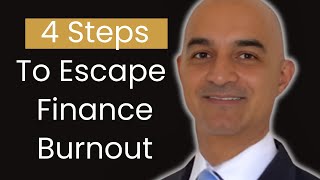
This is a YouTube video titled "How Finance Leaders Can Overcome Burnout, Find Purpose & Love Mondays in FP&A with Ron Monteiro" published in February 2025. It features a conversational podcast hosted by Paul Barnhurst with guest Ron Montero, discussing challenges in financial planning and analysis (FP&A) careers, strategies to overcome burnout, finding purpose, and loving workdays. The dialogue covers personal career stories, mindset, networking, and practical advice for finance professionals.
It was like 11pm During COVID I'm building a budget. The rest of the finance directors were yelling at me because I was consolidating it. The system wasn't working, so we had to manually put the presentation together. We had the presentation the next day and we weren't at Target. So if you put all these X's beside it, it was a disaster. You don't necessarily get that credit that you're putting in all these hours and time. There's an unsung hero component to fpna.
This week we have a real treat for you. We have a guest that's been on the show before, Ron Montero. He just published his book, Love Mondays. You think most people you worked in finance and FPA that you worked with were loving their Mondays?
No. It's all over the board. Our attitude has a huge impact on whether we love our job.
Do you feel like FP&A, you know, for career, A lot of people kind of get burned out there that the hours are just often too demanding.
Never want to put FPA in a negative light. When I went through it, it was messy.
Finance pros, this is the event you don't want to miss. The AFP FP&A forum, March 17th to 19th in Austin delivers sales free insights from top finance leaders. With 18 plus expert led sessions, you'll gain actionable strategies to drive your success. I'll be there. Join me and hundreds of our peers. Learn more@AFP online.org hello everyone. Welcome to FP&A tomorrow where we delve into the world of financial planning and analysis, examining its current state and future prospects. I'm your host, Paul Barnhurst, AKA the FPA guy, and I'll be guiding you through the evolving landscape of fpa. This week we have a real treat for you. We have a guest who's been on the show before, Ron Montero. He is back this week to join me. He just published his book Love Mondays and we're going to discuss that and have a conversation about what it means to love Mondays. You know, did we love our Mondays in fpa? You know, why he wrote the book and some other things. So really excited to have you on the show, Ron. Welcome back.
Yeah, thank you, Palm. Super excited to be here.
Good. Well, why don't we start? I'd love to start with you. Just giving your background. I know people have heard some of that before, but tell a little bit about your story and also how you came to write the book.
Yeah, fantastic. So I. I grew up in Kenya, so I moved to Kenya when I from Kenya to Canada when I was a teenager. And the reason I share that is I had really had a ton of anxiety. I had lots of trouble with public speaking. So fast forward did my accounting degree. Started with an accounting job at Hitachi. It was good foundational job. And then I actually spent 15 years at Craftsman and and spent much of my time in FP and A roles at the analyst, manager and director level. And I really got to love FP&A. And the reason I loved FPA is because I felt like I was in the business, I was involved, I could be the products that I was working on in the grocery store. So absolutely love that career. I went on to be the VP of finance for a private beverage company and then I also went back to FPA roles at Campbell Soup and Kruger Products. And so absolutely loved my 20 year career called in finance. And about three years ago I decided to start my own business and I wanted to teach storytelling again. Back to. I was very shy and I found a way to feel confident and be able to leave meetings with deo. So I wanted to share that journey. And that's where I started doing training courses and that's where our path intersected. And so for the last three years, you and I have done training sessions for people all over the world. It's amazing to see people in America all the way to Zimbabwe and in between. And I've always had this passion or this bucket list item to write a book. And I chose to write it on how do people find more joy in their lives? How do they find, whether it's an FP and a role, whether it's in a teacher, a Buddhist monk, whatever you are, how do we intentionally find more joy? Because I want people to love the work they do.
Got it. I appreciate that. I know you've tried to get me to write a book. Keep trying to tell me I need to write one. And I keep telling you, we'll get there. Give me time, right? So why was it Love Mondays first? How did that. You said you always had it on your bucket list to write a book, but why was your first book. What was the kind of impetus behind that? Is there a story that, you know.
What like I, I started doing this podcast, right? And I got inspiration from you. I started doing, you know, amateur podcast compared to your podcast. But it was my, my. I started interviewing people to say how do they love what they're doing? I tried to find people who just really inspired me and somehow the name became Love Monday Like, I, I actually don't even know how I came up with that name. But for me it signifies Monday's the start of the work week. So how do we love Monday and every other day? And then it naturally became okay. Interviewed 15, 20 people, including yourself. I kind of like that as a title of a book. And I just started working towards it. So it's not like it was some grand plan, it just kind of evolved into this one. And I. There's something about just love Mondays that just people understand right away what you're talking about.
So let's talk FP and A for a minute. You think most people you worked in finance and FPA that you worked with were loving their Mondays? What was your take of kind of it as you look back over your career?
No, it's, it's all over the board. Right. Like I've met FPA people who just love their job and that's all they wanted to do. And you know, they love Monday and every other day. I've also loved FPA folks who are mailing it in, it's mail in Monday and mail it in Friday and they didn't like it. And, and you going deeper into that question, our attitude has a huge impact on whether we love our jobs, whether it's a teacher, an FPA person, whether it's an FPA person in corporate, whether it's, you know, a FPA person who works with marketing or sales. I think that attitude plays a big part of it.
Yeah, I agree with you and I have a follow up question to that. But before you get there, you mentioned how, you know, some people hate Monday and every other day and some people love their job. I worked with the guy. Every Friday he'd check out early and every Monday he'd show up late and he would always go, yeah, Friday. Tyler hates Monday. Tyler. And so, you know, kind of that like he drag in and just like, why am I here? And it always kind of made me laugh, but at the same time I was like, yeah, don't, don't want to be that way. And so that was the first and you know, second thing is you mentioned attitude, you know, and we can control our attitude. We can't control what happens to us. But how much you think loving a job is attitude versus, hey, you have to find the right fit for you. Like there's a, there's a right career or, you know, maybe a couple right careers, kind of. What's your thought on that?
Yeah, no, I think, I think they're both important and I'D say, attitude is, to me, if I was to put a number, it's at least 50% of the battle to say, am I bringing an attitude that, yes, I can enjoy my job, I can love my job, I can make an impact. The second half is really the environment you're in. So again, go back. Going back to my experience, my first job, Hitachi Data Systems, good company, but the accounting team was very much busy at month end, not busy during the middle of the month. And there wasn't any drive to get better. It was just like, here's how we do it. And I actually didn't like my job. Like, I still had a pretty decent attitude. I learned a lot, but then I got stagnant, whereas I went into the next role, which was crapped. And, you know, it was just that culture of, okay, let's learn more, let's grow more, let's. The leaders actually actively helped you get to places you couldn't get, like public speaking. So I think they're both important attitude. I honestly think you can be have if you have a bad attitude, even a fantastic culture, it's not enough to unlock potential. But if you have a great attitude in a great culture, to me that's nirvana.
How much of a role does your boss play in all this? I mean, let's talk culture for a minute. A lot of people say you don't leave companies, you leave bosses. But at the same time, we join a career because that's something we're interested in. So what role does that play?
I think, I think your, your boss, your manager plays a huge role. And at the same time, like, I've been in many roles where, okay, my manager is not interested in developing me and they're busy with other stuff and, and what I, what I did in those circumstances, I didn't quit immediately. I said, okay, is there anyone else, internally or externally, I can use as a mentor, coach to help me? And so, yes, it was important. And I loved a lot of the roles where I had phenomenal bosses. But I've had many who would, especially once I got to the senior director level, CFO had no time for me. Like, I had to figure out my own ways to develop. So, yes, it's important, but I would say the culture of an organization to me is actually more important than your direct manager as you go up the ladder.
Right.
I. I'd say more junior, like if, if you're an analyst or manager, like, if you're very junior. I think it's very important to have a boss who's invest time with you, spends time with you, but as you, as you grow, there's many other ways to get that development.
I, I was going to challenge you, and then you said in, in later roles and you elaborated on that and I, I can agree with that. I think early on manager is critical, especially right out of college, those first couple roles that could really help teach you as you're trying to get comfortable and realize that you can have mentors beyond your boss, but as you move up the ladder, for sure you can get mentors elsewhere. Obviously, if you're in a toxic environment, that's a different story with the boss.
100% agree.
Different. There's bosses that take an interest in you and develop you, and those are huge for your career. And then there's the ones that it's just an unhealthy environment. They don't treat people well. And that environment doesn't matter if you're junior or senior. You generally just want to get out of that environment.
Yeah, Paul. And so, so you didn't ask me this question, but I'll ask myself. So one thing I've learned is if I was to rewind as back to Ron when he had hair and as the analyst.
Wait, you had hair? Do you have a picture?
I would actually invest a lot more time in networking and, you know, meeting people in the industry because I did get to periods where I had a toxic environment or a toxic boss, but I felt stuck. So if, you know, if I was to rewind letter to my younger self, so to speak, I would actually invest in, okay, how do I build a foundation of people and a network where if I get into that situation, I, I feel like I can move to a better situation. Do you know what I mean?
I, I know 100% what you mean. I didn't build a network at all early in my career. You know, it took me a year out of undergrad to find a career role. I mean, I did some banquet, serving some things to pay the bills, but it wasn't really a job that anything to do with my degree. And it took me six months out of grad school. You know, I've always kind of had a hard time finding those jobs and transitioning, and I'd never really built a network. Now as I've started to, you know, do this business, I've built a network and have opportunities to talk to people. And I feel like if I had to find a job today, had to get out in an environment for whatever reason, that wasn't healthy. It Would be much easier than any time in my career.
Yeah. And I'll tell a little story here where Paul myself do a lot of training in different parts of the world. And so occasionally Paul will come to Toronto, Canada, my hometown. And when he comes here every night, somebody is taking him out for dinner and wants to get his expertise on FP&A. So again, it just speaks to, you know, both of us didn't really have great networking skills, a great network early in our career, and now we invest a ton of time and you just see that the hard work Paul's put in, you know, of course crossed a hundred thousand followers. People all around the world are looking for Paul because he adds a ton of value. So it takes work. Right. And, you know, I'd love to just get a little bit of recollections from you to say, okay, you love your Mondays. What was that process like to get here? Right. Because at one point you were in a job which I don't think you were thrilled with. Like, what would you share to your listeners? I don't know if you've asked this question on this podcast.
Yeah, I've talked a little bit about it. I. I think for me, you know, I. I've always liked working with the business. That part of FP&A. The part that's always been hardest for me is either been, you know, unhealthy environments, are feeling like I gotta work 247 with the stress of to meet others needs, to meet others demands. It feels different if I'm working long hours and it's my own business, I'm building my own thing. I enjoy that more. So I think for me, those were the parts that were always tough in fpa. I saw a boss that one time said, now we'll get back a question, you know, he commented that FPA is kind of like investment banking for corporate finance and that a lot of people get burned out and go elsewhere because budget season, all those things can be long hours. And I'd hit that point where I was unhappy, not. Not the work. I had great relationships, a lot of people I like. There was a lot of projects I worked, but it was a. It was an unhealthy environment and it was. They expected you to be on 24 7. So for me, it came down to, you know, LinkedIn was a way to find a job, as I've shared before. And over time, I started to get enough opportunities as I built a following that I felt like I could turn it into a business. Never planned on starting a business and then I just kind of went for it. I said, okay, I got enough Runway that you either work for a company and continue to work for somebody else or kind of control my own destiny. I'm like, there's really no more risk here. I could be laid off tomorrow. I got enough Runway to last a while. Why not give it a try and learn? I'm sure I'll be able to find a job if it fails, because I'm focusing on network and building and talking to people and being kind of, you know, out in the community about fpa. And so I found, you know, today, I. I love it. There's a lot of exciting projects I have just like any job. Do I love every day? No. Are there times I'm like, okay, I want less hours? Yes. Are there things where I'm like, okay, I need to manage things better? Of course. That's just life. But, you know, I love the conversations I get to have and love a lot of the things I do.
Fantastic.
So I'm curious. I want to get your take. I mean, do you feel like FPA for career? A lot of people kind of get burned out there that the hours are just often too demanding in the. In the career. I know you have a story you share in your book a little bit about this. Toward the end of your FP and a career.
FPA for me was a massive positive turning point. So I never want to put FPA in a negative light. I went from, again, doing this accounting job, which I was crazy busy at month end, and then it's really boring, and I was clock watching the rest of the month, which. That's another signal. If you're ever watching the clock, it's time to look at something.
Yeah, Ben, there. I know what you're talking.
My opinion. Then I went to FP&A, and it exposed me to a whole new world, right? Working with marketing, working with sales, working with operations, being able to express myself better. So I think I owe so much to the brilliance of FP&A roles. But I remember when I was transitioning out of one of those roles, the person came in and said, hey, tell me what an average day in your life of FP&A is. And I literally laugh, laughed out loud. There is no average day in FP and A. And when you get through month end, you've got a lineup of marketing and sales and operations people waiting to talk to you.
And.
And then you got back to a forecast, and you're putting in the long hours, and you're up till Midnight or maybe even later, getting this together. And you might present a scenario and this president of marketing sales don't like it and they throw it in the garbage. And you don't necessarily get that credit that you're putting in all these hours and times. It's a. There's an unsung hero component to FP N, which I think also toughens you. So as I reflect on it, I got to the point where I think it was like, not sure if this is a story you were thinking about, but it was like 11pm During COVID I'm building a budget. The rest of the finance directors were yelling at me because I was consolidating it. The system wasn't working, so we had to manually put the presentation together. We had the presentation the next day and we weren't at Target. So if you put all these X's beside it, it was a disaster. Right. Anyway, long story short, we got to the meeting, we ended up pulling it together like most teams are able to do. Sacrifice my family time, sacrifice my personal time. And the meeting didn't go exactly that well. Was it my fault? No. There's many combinations of things that led there. So I think for me, it's like that people expect FP&A and finance people just put in those long hours and it just becomes normal. Right. I remember another time where I had. I was a director and my two analysts were in the office until midnight. I was trying to support them. We couldn't get something to tie. I was literally telling them, plug it, because I'm done, I'm done. And so I always say, like, if your FPA role or finance goal rule gets to that point where you're just done, I think that's where the burnout happens. It's like, how do we. How do we draw those lines earlier in our career? Right. And I think me and you've probably both made the same mistake. Like my wife always tells me, I missed a lot of my kids early childhood. Right. Like, I missed events and things like that. And I had to do it for various reasons, but I also probably had a choice in there. So I think, I think for me, again, back to our conversation, it's around taking more control, being more intentional with what we do and taking the beauty and brilliance of the FP and a role, but also saying there's another side to life and. And we can control it. That kind of help?
Yeah, I think so. And. And I agree with you. I still remember I had was lucky enough for about a year. I You know, I've had some FP and A roles where they weren't that demanding in the sense of a lot of late nights. I've had other times where it's been absolutely crazy. And I think when you're getting to do the job, especially when you're with the business, I love it.
I love those parts.
There's a lot of great parts of FP&A. And I have nothing but, you know, gratitude for the experiences I've had. But it's. I agree with you. There's a certain level where you have to take control. And I can remember one time having that conversation. I had a boss that wanted something done and I look at him like, look, I'll get it done when I get home. I got a friend's wedding reception tonight. It's one of my best friends that I'm going. And he was like shocked that I said I was going. Like, that was the culture. He expected me to just keep working because it was for the CEO the next morning. And I, he almost know, told me I had to stay. And I'm like, okay, if this guy tells me I have to stay, I'm quitting.
Yes.
Like, and I may not have done that early in my career, but it was like, no, there's a line here and I'm not going to cross it. You have to find that balance of, you know, what, what you're willing to do in the sense of how many hours, how many sacrifices you're willing to make, and it's personal for each of us. There's not a right answer to that. You know, kind of going back, we mentioned, you know, a lot of people that work in FP&A, and hopefully not many that are listening to this podcast because I would hope most people that are listening to this podcast enjoy their, enjoy their work and they're listening to get better. But would love to get your thoughts when you talk Love Mondays. I know you mentioned a four, a four part framework. So somebody's maybe struggling or you know, thinking, this really isn't the ideal job for me. I'd rather be doing something else. What do you recommend? What's the kind of process you tell them to go through?
Yeah. And, and just the backstory is like, when I went through it, it was messy. Right. And I'm shaking. Sure. The same thing. It's not like I was like, here's my four step process, I'm gonna follow. I was not that like, it's. This is more rewinding.
Yeah.
And saying, how can I help Others follow a certain path. So the first thing I always say is, find your purpose. Right. And again, that's a pretty nebulous topic. But there's a. There's a cool frame. There's a few frameworks in there. One is called ikigai, which is a Japanese word, and it has four questions. What do you love to do? What does the world need? What are you good at? And what can you get paid for? Okay, so if you hit all four of those, you found what's called your ikigai. Your reason to wake up, your reason to love Mondays.
Okay. And this is an or again, one more time. I just want to make sure.
Yeah, so. And maybe I'll ask. Let's. Let's do this live. So, Paul, what do you love to do? And maybe put a little bit of a finance at Penny lens on it. What do you love to do?
Tired of sitting through sales pitches designed as professional development. Same here. That's why I'm heading to the AFP, FP and A forum March 17th and 19th in Austin where it's all about real, actionable insights. We're talking about AI, process efficiency, strategic planning, finance, communication, practical takeaways, no fluff, just ideas you can actually use to drive results. I'll be there too, leading the session. Amp up your scenario planning with Genai. If that's a topic you're excited about. Let's connect. Join finance professionals from across the map at the afp, FP and a forum where the only agenda is your Success. Head to afp online.org and use code FPAGUY 2025 for $200 off. See you in Austin. I love learning new formulas in Excel because I'm a nerd. I love teaching people and I love business partnering, having those relationships with the business, especially when you're talking strategy and how to kind of grow and improve things.
Amazing. Okay, and what does the world need? Like. Like think similar context, you know, I.
Mean, one, there's lots of finance people that need to be better at Excel, that need to improve their skills. They could save themselves hours, you know, power query, other things. I know you. You've seen that. You've seen people that have saved time from, you know, training and things we've taught.
Yeah. And just a little bit interjection. In one of our latest training sessions, Paul actually had somebody blow their brains. Like, wow, that's going to save hours. Okay, so. So that's two questions. So what do you love? You talked about, what does the world need? We agree. Hey, they need it. What are you good at? Right, so are you good at excel and teaching and. Look, I'm just going to answer that for you because it's obvious. Yes, you are. Okay, so you've hit three of those quadrants and then the last one is what can you get paid for? We both get to pay our bills, etc.
I, I hope is paying my bills, otherwise I'm in trouble.
Yeah. Think about how brilliantly that fits into your equation to say how you do it. And I'm actually looking at the page. I have it. And you can Google if you want, but if you, if you love that you found your I. If you found just, hey, what do you love and what are you good at? Maybe it's a passion. If you found what do you love and what the world needs, maybe it's a mission. But this kind of rounds out four different ways. So it's, it's a very introspective way to sit down, down and just journal on it and, and journal on again and come back to it. It's not like, hey, like, like we're doing again, rewind for your case. But if, let's say you don't know, it's working through that. So that's one way and what that helps. And Paul, I'm like, what, what it helps with is even if a student calls me from the University of Toronto and says, hey, can you talk to me about a career? I would say yes, because it's in my purpose. Right? So what that does, the first thing is purpose. What, what gives you joy? What. What do you want to do more of? Right. So that's step one. Step two is okay then how do you build a bridge? Let's say it's very different than what you're currently doing. What's the bridge to get there? For me, it was doing some free training sessions for or, or organizations. Right. Me and you met at a webinar where we were speaking for free. Right. Neither of us were getting paid, but that's building the muscles, right? Crossing the bridge, getting to think about, like, when we first started three, four years ago, it felt hard to start our businesses, right? Like, it didn't feel real, right. I didn't feel like I had the confidence. So it's like, what are those little things you can do to build a bridge to your next phase? And again, I always say, look, you were working full time when you were building a bridge. I was doing the same. So we're not saying go quit and stuff like that. It's like what are the little things you can do every day? Learn a new form in except in Excel. Every day for me, you see all the books behind me. I read a lot to build my confidence. So that's step two. And then when you feel you're in the stage where, okay, I've got this, I feel like I can run my business. I've got enough potential clients. The next step is burn the bolts. Meaning you're going all in, Right? So maybe tell us your all in moment. When did you figure out, here's when I'm ready to quit my job and I think I can make it my own. Tell what was that like for you?
So my journey was kind of happened over, over a couple months. But really there were a few things that I say are kind of turning points, you know, first started to build a following, really found I enjoyed some of the things I was doing, going maybe I could turn this into a business at some point. Then there were probably three or four turning points. First somebody reached out to me and said, hey, I want to do sponsored collaboration on LinkedIn. I think they offered me $150 like, woo, you know, pay the bills.
No.
And so I said yes. And then someone else reached out to me and said, look, I know a company that's looking for about 15 hours of work. I can do that on the side. My job was only really being 40 hours a week at the time. And so I was like, okay, I can do that. And it was part time gig. Then you reached out to me and said, hey, I need someone to help do an Excel course. I could put that together. And then I'd say the kind of final turning point, I believe it was in December of 21. Three different companies in one week reach out to me. Two of them asked me to apply for a role and the third one talked about doing a big collaboration. And so at this point I went to my wife and I'm like, I think I can turn this into a business. She kind of looked at me like I was crazy because I hadn't really raised any. Yeah, I hadn't earned any money at this point. And so we talked about it for about six weeks. And then one day in February she goes, I'm good. If you want to start your business, go ahead. I go, are you sure? Because I'm going to put in my notice this morning. I put in my notice that day. Didn't leave the company full time for about four months. I stayed with them on kind of a combination of full and part time and Then started my own business. And that was June of 2022.
Yeah. And, and, and where that's burn the bolts, you know, stems from, is they would say in. In olden times, like when, you know, when you'd land in an. On an island or. Or on land, you would literally burn your bolts, meaning there's no going back. So that, that's the whole thing to saying, I love your story to say, hey, you. You built over time. And you say, okay, when am I confident I can do it? And so that's an important step. And, and it's not just about ver, like, you know, burning your bones to start a business like I did. It could just be, hey, I'm going to move from one company to another. I love FP and A, but I have a toxic bot like we talked about. It could be like, I'm in accounting and I want to move to FP and A, whatever your version of that. I even have somebody who was a marketing director at a company. She's now selling journals and she's teaching yoga. You know, there's tweaks, but there's also wholesale changes. We're talking about whatever your listeners thinking, maybe I want to get just a couple percent more apier and I have an interest in something in the company. Go ask for it. Right? So it doesn't have to be like, extreme. Like, the two of us could just be a tweak.
Speaking of that, I mean, I'll tell a story. I was getting a little kind of ready to do something else other than FPA kind of change. I remember mentioning a boss. I always thought product was interesting. I knew our product marketing team, and I had commented one day to him, you know, I've thought about moving into the product team. That'd be kind of fun. And basically he's like, nope, not happening here. Like, you're too valuable. And it was kind of a compliment. But at the same time, like, really? Because I think it would have been kind of fun to have that new challenge and to do something different. Not that I didn't like FB and A, but, you know, I think like all of us, we have times when we want to do something different. Maybe the candle just isn't burning as bright. Maybe we need a new challenge. Whether it's a company, whether it's a role, whatever it might be. Right? There's. There's nothing wrong with switching careers. Even if you're passionate, if you feel like it's time for a change.
Yeah, it's cool. Your story is cool. And it reminded me I was sitting in a meeting, okay, finance director a few years ago, maybe 11 years ago, and me and my peers were on the finance leadership team. And the CFO looks at us and she goes, the person who was on, who was leading a course called Cash College, teaching cash to 200 people just went on sick leave. She's like, who wants to lead it? And it wasn't one of those awkward moments where everybody's looking away. Something in me just said, let's go. And I put my hand up. The best career experience I've ever had, probably the hardest experience I also had as well. So I had to go interview universities, develop a curriculum, say, how the heck am I going to engage sales and marketing folks for two days, teaching them about the cash conversion cycle and things like that. But it was a really cool lesson to say, volunteer for things that maybe are in that interest zone, even if there aren't. And that experience in itself, the confidence I built because I went all in, was probably the reason I had the confidence as well to start my own business and to teach.
I appreciate that. And so let's just kind of recap the four things were, again, if you could just run through those. I know we have burn your bridges.
I don't think we have.
So that's what I want.
Yeah, fantastic. And I don't think we've gone to step four, so I'll go to step four. So step one, find your purpose, find what you're more energetic towards. You know, think about that. Step two is build your bridge to start doing more of what you love. Step three is burn the bolts, where you go all in. And step four is flex your muscle. So in, in other words, when you first start, it's okay. I had a vision of, I just want to do storytelling for finance, teach communication skills and thought skills. My client then says, hey, can you teach Excel? And I was like, I can, but it's going to be bad. So let me find somebody who could do it at a world class level. And I asked you when you did it. So flexing my muscles in this case became okay. In order to sustain a business, I need to offer more than one course. How do I do it? Then? I was asked to facilitate leadership training sessions.
Okay.
That's another potential part of my business. Now I'm facilitating CEO meetings. So again, what I've tried to do is say, what are the things I still love to do that are in that wheelhouse? Right. And same thing with you. Like you started a podcast and you working with vendors. And you, we're building a newsletter. So flexing your muscles, being open to change, adapting to change, and thriving during change. Okay, so those are the four steps.
Got it. And any kind of tips or things you found as you're going through the four steps that people should watch out for, like, hey, you know, be aware of this or these are things that often what people struggle with.
Yeah. So what I would say is, let's say you're an FPA person in a role. You got a Monday to Friday 9 to 5 or 9 to 9 to N role, whatever that role is.
In my case, it's 4:00am to 5:00pm yeah, exactly, exactly.
So, so what I would say, pay attention to your energy as you go through the. The week. Right. And. And same thing we do when our. You said, look, there's parts of an our entrepreneurial job that are not the most fun. So pay attention to the things you just feel like you're in flow you have energy towards your time is passing by fast. And that's a massive clue to the thing that you actually enjoy doing. Sometimes we just do stuff unconsciously because we've done it for so many years. That's the first thing I would say and try to do more of that. The second is I interviewed 20 people at the back of the book. They're called Monday Mavericks. You're one of them. I truly find tried to find people who love what they did in very different disciplines. CEOs, FP and A individuals. Many of them actually had a finance and FP and a background to start with. So it's pretty cool to see that. But a couple of things came through. One is they thought back to what did they love to do when they were young? Okay. And I think you always liked math and things like that. Like, you know, when I reflected on that. So one is there was something they love to do as a child. Life has taken over and has pushed them in so many different directions, we don't even know. You know, life has a lot of ways to do that. So it's reflecting on what gives you joy. And many of them, like when they came back to that, it started bringing more joy. The second is surrounding yourself with people who are uplifters. Right. To say it is possible. So when I first started my business, many people told me, what the F are you? Are you doing? Like, you've got a secure job, you're getting high, a lot of pay and blah, blah, blah. I had a lot of other people who encouraged me. Right. So find the circle they say you're the average of the five people you surround yourself with. I know it's a saying, it's not exactly true. But we do get a lot from our network. So I think the network's really important. And then I think it's back to what we're talking about, networking, just being open to ask for help. Right. And a big part of me was asking somebody to coach me because I'd never gone through it. And you've introduced me to so many people. The reason I wrote the book is Asif Masani, who's a big influencer like you, was writing a book. So I started believing it's possible and he introduced me to the publisher. Right. So there's many different things, but a lot of it is just being bold and saying I'm going to take charge of my life and here's what I'm going to do about it.
FP and a guy here and I want to tell you about the Planning and BI Showcase. Gone are the days of juggling multiple platforms. Now, with business intelligence tools, you can integrate planning directly into your BI system, the same system your entire company already uses. Join me on March 20th for the Planning and BI showcase where industry leaders will demonstrate how top BI tools are reshaping strategic planning. See firsthand how modern FPA solutions can drive real value across your enterprise. The event features live demos from leading BI solutions. Whether you're a CFO or an FPA professional, you'll discover the tools that that can help you deliver more value across your enterprise. Don't miss out. Register today at www.excelevents.come planning.in.bi. showcase and take the first step towards smarter data driven decision making. I like what you said about taking charge and doing it and I think it's interesting how you mentioned, you know, a lot of them went back to what they did as a child. I did like, I've always liked numbers, statistics, sports and funny enough, I always enjoyed arguing as a kid. I know that shocks you. I knew you'd laugh if I said that. So I always thought I was going to be a lawyer when I grew up. But as I got older, I realized.
Now I don't want to be a lawyer.
But when I was gonna say what did you want to be as a kid? Like were you all, did you like teaching when you're a kid? I mentioned you were, you were very shy and kind of scared. So what were outside of soccer? You know, what's your passions?
Yeah, what, what's interesting is so I Wanted to be a soccer player.
Yeah, I knew that.
So at my age, my young age that I am, I. I don't think I could do that anymore. But I also. I always love the team aspect within a sport or within work or things like that. So I'd always wanted to be that coach, be that leader, and I think this job affords us to do that. And. And then, you know, as I think about, like, whenever somebody needed help, I would love to teach them and help them. Whether it's a peer in grade three in math or, you know, now I'd be like, hey, I'd love to sit down with you. And, you know, I would do that for my friends at work. They start, and they'd have a financial responsibility, let's say marketing or sales, and they didn't understand the piano. I'd be like, I'd love to sit down with you and walk you through it. Where other peers, for me would be like, do I have to do that? So again, there's so many different clues at different stages to say, what do we love to do?
Yeah, no, it. It's a great point that there's a lot of clues at different stages. And, you know, the. The reality is, like, you went back at the beginning. It's about what you love to do and what you could be paid for. If you love something that isn't going to pay anything, it's really hard to turn that into a career. So I think there's an aspect to this of just being realistic and being honest in that assessment.
Yeah. And. And so I agree with that a hundred percent to say, okay, yes, like, we gotta find something that we get paid, we get paid for. But what I think we both learned is if you go in for the money, the money's not gonna be as great and the fulfillment's not gonna be as great. Now, I'll give you an example. When I first started, I needed to get paid. I'd do anything to get paid. So I wrote articles on subjects that I didn't like. Like, I was just. It was like pulling teeth. I did it, and I needed to do it to get paid, but I didn't love it. So if I did more and more of that, I would start to love my Mondays less. So it's about finding things that you do for the love of it, but also pay. Right. And going in not for the money, going in for the joy of doing it. Like, so me and you have done so many free webinars and training sessions. You do this Excel thing every week on LinkedIn Live. You probably enjoy it. It's a lot of work, I'm sure. But it's back to, like, money's important, but don't do it for money. You know what?
Yeah, well, you know, I still remember I had an opportunity one time where I had been offered an extremely good package, you know, really good money. And that next year I would have probably doubled what I was making. And I would see I was seriously considering it. My wife said, you know, you really need to take the new opportunity. You're not happy where you're at anymore. Like, you're not happy there. Why would you consider this? And it was just that reminder. When you're making decisions, it's not about money. Because at the end of the day, if it's just about money, at some point, that's not enough. That could be enough for a while. We could all do certain things for money, but at the end of the day, money isn't happiness.
Yeah. Paul just. You reminded me of a story, and I'm gonna try and tell it on the fly. I don't think I've ever told this story. So let's say we got Paul Barnhurst.
I can.
What you do? Well, just we. Me and you, we get a training session in Hawaii, and we see this person on the beach barbecuing a fish, okay? And I go to the person, I say, oh, wow, what is that? And it's tuna or something like that. I'm like, man, that's good. Why don't we go into business and build a factory? And he goes, why would I do that? And so we're like, okay, so when we're gonna make a lot of money and we're gonna expand it everywhere, and. And anyway, the story goes on for a bit, and it builds. And then he. Then that person on the beach says, so why would we. Are we doing all this? And the guy goes, oh, so we can sit on the beach to go back, Right? So sometimes we just get caught in this corporate ladder of money and all that. But the moral of the story is that fellow was sitting on the beach, enjoying his life. And you do all these things for. Until retirement in order to sit back on that beach. So sometimes it's like it's thinking about, are we doing things we love? Right? And the story is probably way better told. But I think you get the moral of the story I'm talking about, right?
Wait, there's a moral to that? That story? No, I totally get what you're saying. Sometimes we're right where we want to be and we don't even realize it because we're so focused on other things.
Yeah. And it reminded me one of the other things you asked me the question, what were some common elements in people who loved Monday's gratitude? And for example, Jim Aling, who's the ex president of Starbucks, he's the OO of T Mobile, CEO of Tom Shoes, he talked about the biggest turning point in his life was when him and his family every night would say, what are the three things they were grateful for that day? And you know, Oprah has gratitude journals. It was a pretty cool thing for me to interview all 20, including you, and say one thing. They're genuinely happy and grateful, even though many of them have big challenges in their lives.
Yeah, it's really funny. It goes back to attitude, right. I've heard it said an attitude of gratitude. And I think gratitude has a lot to do with your attitude. There's a correlation. And a big part of being happy isn't, you know, the job we have isn't the situation we're in. It's how we choose to approach things. Doesn't mean we shouldn't search for the passion, doesn't mean we don't want to be happy in our job. But we, we can control a lot of it by just our attitude and being grateful and looking for the positive things in life, you know, regardless of what role we're in. And whether it's two in the morning and you're, we're yelling, plug it or whatever it might be, because I've been there too. I've where the boss is just like, just plug it. I'm done. I'm like, yeah, yeah, it's midnight. I can't even think anymore. Just stick a number in there and.
We'Ll deal with it later. Yeah. And one of the things I've learned is to reframe things, right. And one of my mentors, Ann Gomez, who's amazing and she does, she's as a training business, she always says instead of saying I have to, she consciously says I get to. Right. So for me, before we went live, so to speak, you were asking me, hey, what was it like? And I was like, oh, I landed for Vancouver at 10pm and I had to take my wife to the airport at 3, 3am and then, and at 7am I was downtown again and we both had a good chuckle. And I said, but we're not complaining. That's what we want to do. I got to go to Vancouver. It's not like I Have to. I. I got to do two keynote speeches on Sunday. Not like I had to. Right. And that's a practice. It's practice practicing that. So when I find myself tilting to negative. Okay, what can I appreciate about that?
Well, you know, it's funny, as you said that it made me realize earlier today, I was thinking, because two days ago I had no podcast on the calendar today and this morning, thinking, I have to do, you know, a couple podcasts, like, there goes all my time. And just you mentioning that reminded me, it's like, I get to like, this is fun. I enjoy doing it. Now, are there other things that I'll have to figure out at a later time when I'm going to do them?
Sure.
That's more of kind of just have that positive. I get to do something I love because I love doing podcasting or the other one. So many people. I could never be good at Excel or storytelling or whatever it may be in FPA that they want to be good at. Visualizations. Right. We've all heard them. Business partnering, you know, communicating. And I love your reframing. We talk about the growth mindset and great book is I'm not good yet, or I haven't mastered that yet, or I haven't learned that about Excel yet. It's just that little framing says I'll get there. And the reality is, 99% of the time we can. Am I ever going to be Michael Jordan? No. That ship has sell. Right? Are you ever going to be the greatest soccer player in the world? No. There are certain things we're just not going to be able to do either. Genetics, time, whatever. But generally, if we're willing to frame it right and put in the time, we can do virtually anything we want to. Within reason.
Yeah. It's funny, I was sitting around a table yesterday, facilitating a group of executives, and there's a CFO who's actually pretty well spoken, and he made the statement, I'm not good at public speaking. And you know what I do when I hear that type of stuff? I always say put the word yet at the end of it. Because if you make a definitive statement like, I'm not good at public speaking, you basically seal the deal. If you put the word yet, it's telling your brain. Yes, it is possible. Right. And what's been cool about working with you is three years ago, your stock skills were probably average. Now they're top of the charts. Right. Because you've invested in it. Mine, technical skills were bottom of the chart. And now I can do an xlookup. And I can use Unique, and I can use all these things that I've been exposed to watching you. And it's. My skills have gone up a little bit. I'm still, it's not, frankly, a big interest in mine, but I've gotten a lot better because now I believe it's possible. I sat there and I was like, why would I go from X look up to for B lookup to X lookup? But have you watched it? Do it four times sometimes, like, okay, Paul, I'm going to follow along with you. I learned it, so it's being open to it. So. Carol Dweck's book and podcast is phenomenal in terms of teaching that story.
I think we're probably about time for this. So what I'd love to do is just get your last, last thoughts you want to share, you know, something about the book. Fpa. Just up to you where you'd like to take it, but just take a minute and some last thoughts before you.
Yeah, so I'd say my last thought is, you know, when you write a book, it's, it's, it can be a pretty overwhelming project. There's many times I didn't believe I could do it, and what I did was I said, I'm gonna write for 30 minutes every day. So I'd say advice to listeners is, if there's something you're going after and maybe it feels big, what's the one step towards it? What's that one step? What's that one commitment every day? So I think, to me, that would be pretty cool. And then the other thing is, I'm really proud of, you know, I'm honored to have you be write the forward. But I'm also so proud to have Adena Samuels, who was my editor, write it because, you know, I, I, I really feel like it takes a team. And she took that so seriously. When I first talked to her, she said, it's a dream to edit a book. She was working weekends, nights. She pulled what I would say is my average writing. And she took that so seriously when I first talked to her, said she said it's a dream to edit a book. She was working weekends, nights. She pulled what I would say is my average writing to what I'm really proud of. And I would say, if anyone's interested in, look, the book's on Amazon. I'm really proud of this book, and I'm. My goal for writing is to help people change people's lives because my life got changed and Many people helped get there.
Right, well, grab the book and hold it up so we can see it.
Yeah, so you can see it over there. And here's what it looks like. So it's bright yellow Love Mondays. And if you're not a book reader, hopefully this podcast would help, but it really is around. How do we think? Be more intentional. Find the right people to surround yourself with and love Mondays and every other day.
I only love Mondays if I'm making a lot of money so I can sit on the beach, not. Not catching that fish.
Hopefully in time, Paul. Hopefully in time.
No, I, I really like that story. I enjoyed chatting today and just, you know, if anyone's listening to this and they want to learn more about Ron, you can find him on LinkedIn. I know you have a website for your book as well, right?
Yeah, it's. It's lovemondays book.com. hey, Love Monday. Maybe I'll send it. I'll send it to you and we can put it in the show notes.
Yeah, we'll definitely add that to the show notes. So, again, thank you for joining me. It was great to chat. Hope our audience enjoys the conversation as much as I did. So thanks for carving out some time, Ron.
Thank you so much, Paul. Really appreciate it.
Thanks for listening to FP&A tomorrow. If you enjoyed the show, please leave us a five star rating and a review on your podcast platform form of choice. This allows us to continue to bring you great guests from around the globe. As a reminder, you can earn CPE credit by going to earmarkcpe.com, downloading the app, taking a short quiz, and getting your CPE certificate to earn Continuing Education credits for the FPAC certification. Take the quiz on earmark and contact me, the show host, for further details.
More from Paul




Trust and Leadership Lessons for FP&A From 100+ Top Leaders with CFO Jon Laudie






