How Finance Professionals Can Grow with Excel, Avoid Automation Traps, & Build a Brand -Jon Acampora
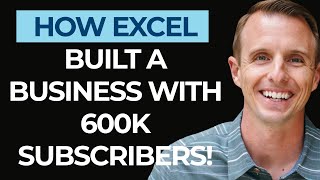
This is a YouTube video titled "How Finance Professionals Can Grow with Excel, Avoid Automation Traps, & Build a Brand - Jon Acampora" created in June 2025. It features a detailed podcast-style conversation between Paul Barnhurst and Jon Acampora, discussing topics such as financial modeling, Excel best practices, the journey of building an Excel-focused business, Excel esports commentary, and the role of AI in Excel and financial modeling. The discussion also covers becoming a Microsoft MVP and community engagement in the Excel ecosystem. Paul Barnhurst hosts the episode, engaging Jon Acampora in an in-depth dialogue relevant to finance professionals and Excel users.
The more you get your users involved in development process of the model, the more likely they are going to use it and adopt it going forward. It's a learning process and you'll never get it perfect.
Tell me that horror story, worst model you built, you inherited, you've seen.
I do have a lot one that sticks out. I think it's applicable to everyone that works in any kind of environment with spreadsheets. John Acampora is the founder of Excel Campus, a Microsoft MVP and a true Excel enthusiast who with over a decade of experience in corporate finance, he's on a mission to make Excel faster, easier, and believe it or not, a little more fun. With over 600,000 YouTube subscribers and a library of powerful tips, tools and courses, John helps people save time, automate the boring stuff, and actually enjoy working with spreadsheets.
Someone recently asked me on YouTube, you never in your show define what a financial model is, but if I ask you, how would you define a financial model?
I think any financial model includes inputs, calculations and output.
What does it take to become a Microsoft mvp?
I'd say most of the people that I know that have become MVPs over the years, it's not their sole focus. For most people, the award is kind of a byproduct of just all the contribution they've done.
The contribution is key. You have to have a technical level of proficiency. They got to be comfortable, you know how to use the tool and you can speak to it, but it's really that community engagement, however you choose to do it. Will Excel ever die?
Never.
Do you think AI will build the models for us in the future? Foreigners Corner is the world's premier modeling podcast. It is brought to you by Financial Modeling Institute, the world's leading financial modeling accreditation organization. Welcome to Financial Modeler's Corner. I am your host, Paul Barnhurst, AKA the FP and a guy. This is a podcast where we talk all about the art and science of financial modeling with distinguished guests from around the globe. The Financial Modelers Corner podcast is brought to you by the Financial Modeling Institute. FMI offers the most respected accreditations in financial modeling and that is why I completed the Advanced Financial Modeler last year and this year I'm working on the Chartered Financial Modeler this week. I'm thrilled to welcome our guests to the show. John Ankompore. John welcome to the show.
Paul. Thanks for having me. It's good to be here. I'm excited.
Yeah, really excited to have you. I think last time I had you it was you and Oz in Tucson that's right.
Yeah. We were at the Excel esports event.
The esports event. And I think we learned who your Jesus was then. Who was it again?
Well, my. Well, you have to be clear. That's my experience.
I figured you might elaborate on that. I couldn't resist. But it that way.
That would be Mr. The one and only Mr. Ken. P.S. i'd say. I'd say he's my Excel power query Jesus.
So Anyone? I. I had to bring that one in. That was our fun. And you know, you. Did you listen to the Ken episode where he said I had to use that?
Yes, I heard that.
Let me give a little bit of John's background and then we'll jump into conversation here. So john runs excel campus.com and he's all about making Excel easier and more fun. And I can attest to that. I've learned from many of his videos. He's been a Microsoft MVP for 11 years, has over 600,000 YouTube subscribers. I thought my 25 was pretty good. And a regular host of the Microsoft Excel World Champion events. His love for Excel is probably obvious to anyone who knows him, but what really drives him is helping people. At the heart of his mission is a genuine passion for helping the community harness the power of Excel. By eliminating mundane tasks, John strives to make Excel not only a tool for efficiency, but also a canvas for fun and creativity. With innovative Excel add ins and insightful online courses, he's paving the way for a more efficient and enjoyable spreadsheet experience. So we start every episode with this question. John, tell me that horror story. I know you have one worst model you built, you inherited. You've seen kind of that. That horror story of a financial model you had to work with.
I do have a lot. It's been a long career, as you just alluded to in the intro, but. But one that sticks out. And. And I'm gonna share this one. Cause I think it's applicable to everyone that works in any kind of environment with spreadsheets. Was it a model that I inherited? It was actually several. There was a guy that, you know, I used to work in FP and A before I started Excel Campus.
Man after my own heart.
Yeah. And. And of course, there was a, you know, a guy that came before me that worked at the company that built a lot of the models, and he used a lot of vba, a, A lot of macros. I think his background, I never got to meet him, but I think his background was more in IT and engineering. He's probably more of an engineer, sure. So he was using VBA to solve problems that you could probably easily solve with a pivot table or even a relatively simple formula.
So basically coding everything, whether it needed to be or not.
Exactly, yeah. And a lot of complexity comes with that, because now you're trying to interface between the VV editor in the background and the spreadsheet and a lot of hidden processes going on and stuff. For the average user that's just using this model and doesn't understand, and of course, I won't share his name, but everyone around the office would kind of say, oh, this is, you know, I'll just say Bob. This is one of Bob's spreadsheets. And they kind of hated it and always were scared of it, stuff like that. Since I knew vba, I became the person that could hopefully fix all these models. But the big lesson I've learned from that is that whenever you create a model, you're creating what I call leaving your legacy. Really, you're kind of leaving your legacy on this. This model that other people are going to inherit from you eventually and might also be like cursing your name in the future. So I've always tried to take that as the learning lesson to make models much easier to use for others that don't have the same skill set that, you know, you have.
As an Excel Pro, I am confident more than one person has cursed my name. They definitely didn't refer to me like some refer to Ken when they inherited my model. I can relate to that, for sure.
Yeah. But it's good. I think it's really good just for people to think about that when they're designing a model, because it's very easy to use very complex formulas. And a lot of times we think, oh, well, this is going to help me keep my job security because I'm using all this complex stuff and no one else is going to be able to. I understand it or use it, but I think oftentimes that can backfire. And it backfired for me in my career, because then all of a sudden, you can't even go on vacation without, you know, the company calling you, emailing you, hey, how do we do this? How do we update this thing? And that kind of stuff? So there's a balance there that.
I had a guy on FP&A tomorrow, my other podcast, who shared a story where he had gone so deep in VBA and being complex with the model he was so relied on, it really delayed him getting promoted, like, almost a year in the company because they were worried he wouldn't, you know, if they put him in a new role, how was someone going to manage that? So you really. And I think early on in the career, as you first start to learn it, it's really easy to get complex. As you start to age and been through it more times and get more experience, you realize, I think the real challenge is doing it efficiently, you know, automating while still making it understandable. Simple enough that, you know, 95% of the people are going to inherit it, can still manage it. There's always some cases you might use vba or some things they're going to get complex. But I, I think it's kind of, as you experience more and more you learn that. I don't know if that's kind of what you found, but definitely for me, I can remember building some complex formulas where it's like, okay, that was not the right way to do that.
A hundred percent. Absolutely. I think it's, it's a learning process and you'll never get it perfect. Right. That's the other thing to, to make sure that everyone knows is it's never something that you'll get absolutely perfect. But just being aware of it can really go a long way in trying to, to figure it out. And another thing too is one other tip from that that I kind of learned is that the more you get your users involved in the development process of the model, the more likely they are going to use it and adopt it going forward. Right. So that's another big piece of it too. Don't just like, spend. I, I mean, I made this mistake where I spent months creating a model and then, you know, give it to everyone to use and they're like, well, it doesn't do this one little thing. And it's, you know, we're not going to use it because, because it, it doesn't use, you know, it doesn't have this feature that we need kind of thing. So then you're going back to the drawing board. So getting everyone involved along the way can really help with, you know, usability and, and they also feel kind of involved in a part of the process.
Yeah, 100% agree. You get the usability benefit. There's also something to be said for them feeling like they have some ownership in, in the whole, the whole process. One more question around the financial model. Go ahead. You're going to say something on that?
Oh, no, I think that's good. Yeah, I, I totally agree.
Yeah, no, I'm with you. So I'm curious. Someone recently asked me on YouTube. They're like, you never in your show define what a financial model is. So we've been trying a few episodes to ask different people, and we'll probably put together a video at some point with different clips of how everybody defines a model and see how similar or different it is. But if I asked you, how would you define a financial model? You know, what would be cons, what you would consider one, what would you include in that? Or how would you define it?
Yeah, I would keep it relatively simple in that I think any financial model includes inputs, calculations and outputs. Right. Kind of those three components. And that I think. And maybe that definition is a little too broad, but it, it opens like kind of the definition of a financial model up to more than just financial data. Right. Like, if you might. Your data might not be necessarily financial, but if as long as you're kind of inputting data somewhere, doing some calculations and then have an output, I think it could fall under that umbrella. I don't know. What are your thoughts? I would love to hear the answer.
Yeah, so I, I go a little. I think. So there's a couple definitions I like. I really like one from Danielle Stein Fairhurst. I think you probably met her before. I know she was in. Yeah, she was in Vegas last year. But she, she described it in one of her books. She goes, as long as it's dynamic and flexible, it includes inputs, outputs and calculations. I'm willing to call it a model. Someone else had one where they added a little bit more. It has to help support answering something, some kind of decision. Otherwise it's just a report. And I thought that was a good point, kind of saying, you know, the model is really, you're supposed to be modeling something. It's a representation of real life, so it should help answer something. And so I thought that was a good. So those are some that I really like. So fairly similar to yours. I might just add a little bit more to it.
Yeah, I like that. I do agree that there's a difference between a financial model and a report. So, yeah, I like that nuance. Interesting. I'll think about it.
Yeah, so it is interesting to get different people's opinions. If you ever want to read a really esoteric and painful definition, go to the Federal Reserve Board and read how they define a financial model. I share it in one of my courses. To kind of start with, here's your really technical definition. Now, you can ignore that. Here's a more, you know, kind of general one. You'll see. And then here's a real simple, practical one.
Interesting. Oh, I'll check. Well, I might have like AI summarize it, but I'll check, I'll check.
Yeah, I'm sure they can. Or if you email me, I can, I can pull it out of the deck and send it to you. It would take me like two minutes, so.
Yeah, that's cool.
I get it from AI faster though. But it was pretty funny, just like, you know, using all these big words and some of them I'm like, what does that word mean?
Right, right. But a lot of money was spent on that, that document, so better be good.
I'm sure it was our money, but we digress.
Yeah, let's not go down that road.
Yeah, we could be here a while. We might offend everybody by the time we're done. So we'll, we'll steer clear of that. All right, so you started your career working in accounting and finance. How did you end up starting your own Excel business? How do you go from kind of that accounting to FP and A to. I'm going to, I'm going to talk about Excel all day.
Yeah, it's an interesting journey. I think I was really born like probably a lot of, you know, Excel quote unquote experts or really just heavy Excel users within a role. You know, you end up using Excel all day, every day and you either love it or hate it. And I really loved it. I felt like it was this tool that you could be really creative with. Like I said, I did a lot of VBA coding. So I was really felt like it was almost a platform where you could develop applications with Excel. And that kind of led me down this road of I was still working in accounting and FP&A, but usually doing a lot of projects that required a bit more automation, a bit more creativity and things like that versus just kind of, you know, doing some of the other tasks that might be involved there. And so that led me into maybe a little more systems analyst type roles, business analyst type roles as well. And, and from there it was kind of trying to. I started my blog, I think it was in 2009 and that was really just to share some of the add ins and macros that I developed online. I didn't really have like a, a clear business idea or anything for this. It was not like a, you know, I'm going to quit my day job and go start this online business and it's going to be an overnight success. It was a much slower path where I was doing just some blogging here. And there and some YouTube videos for years and then started selling the add ins online. And that didn't really make a lot of, you know, money. It was still kind of very much a hobby at that point. And I think it was in 2015 or 2016 I launched my first online course on VBA. It's called the VBA Pro course. And that's, and you know, between 2009 and 2016 I was also building an audience, building an email list and things like that. So I had an audience. But it was at that time after I launched the first course that it, it really felt more like a business. I was able to make a, you know, good amount of income from that and generate a good amount of revenue as well for it to support me and then eventually leave my day job and run Excel campus full time.
So it was about a kind of five, six year journey from hey, I got this blog, it's a hobby, I'll throw some stuff up there to, oh, I could start selling a little bit to, hey, let's release a course. Oh, this is big enough. I built enough of an audience, maybe I should really turn this into a business.
Yeah, exactly. So it's about a six year overnight success, I would say because I think it's often misconception is like you just, you know, you start a website, you start social media and you throw up a course and it's, it's instant success. And that's, that's definitely. It's not the case for me. For others it's, it might have worked.
But yeah, there's always the occasional flash in the pan or over. I don't want to say overnight even that I hesitate to use because there's still a lot of work. But there's some that are much shorter, much quicker builds to success and some that are much longer. But really any sustained success I would say is really never overnight.
Yeah, I, I agree and I think especially with, with this industry, you know, or with Excel is, and financial modeling kind of being the arena there, it's something that takes a long time to learn. It's not something you're going to learn overnight anyways. It's like all the kind of experiences we just talked about, you have to have those in order to teach how not to do those things or how to learn from them, you know, so it takes a lot.
It's kind of funny, I'm one of the other Excel MVPs gave me access to one of his courses. I've been going through it all and, and it's surprising how many little tips and tricks I've picked up that, you know, even some concepts I've seen people use a lot I've never really used myself and didn't quite fully grasp them. Oh, that totally makes sense.
Now.
I get it. And so there's, there's just always more to learn, whether it's modeling Excel.
Yeah.
These areas, especially when you have a technical field and a tool that. Right. A billion people are using it, has to have a lot of use cases that many people are using it.
Yeah. And the use cases that are absolutely endless in terms of what you can use it for, how you can solve problems, and even if you're solving a very specific problem, there's at least 10 different ways to solve it with different formulas and, you know, tools and features of Excel. So there's always something new to learn. No one knows it all and no one ever will because it's just such a vast tool.
I was, I was going to vote for you as the person who's going to know it all. You and Ken. It's a race.
Ken's got me. Yeah. I mean, he's a walking encyclopedia. But even that, like, you know, there's a whole set of engineering functions that I've never used.
Yeah, exactly. You know, I see all those and I'm just like, yeah, I'm never using these.
Yeah, I have no. No use. So there's just. Yeah. Even with that, it's, it's just stuff I will never learn.
Yeah. I mean, I think there's what now? Almost 600 formulas, I believe. You know, kind of functions.
Last I heard. Yeah. Over 500 price. Yeah, close to 600.
Yeah, I know it's over 5. I'm just trying to think if the number keeps growing as they adding more and more these dynamic arrays and things. So it's hard to keep track. But I mean, I guess I maybe know, you know, 100, 150 I use in any kind of regular basis. Maybe 30.
Yeah, that would be an interesting test. I don't even know, like, be interesting just to go through them and say, oh, yeah, I know this one. I don't never heard of that one. Or a lot of variations of each of them, too. You know, some older legacy ones.
So maybe I, you know, it could be fun. We'll have a show. We'll do some kind of Excel Jeopardy.
That would be fun.
That actually kind of fun. I bet I can get a couple MVPs. Maybe we'll do that as a little webinar, turn it into A podcast and have a little. Just nothing but an Excel Jeopardy. Different categories of functions.
Yeah.
And asking different questions about them, how they work. You know, what's the third argument in this function? And you know, just watch the glaze and there'll always be somebody that. I know. That one.
Yeah, that would be fun. Sign the app.
All right, well, definitely keep that in mind when I, When I have a little more free time, I'll put that together. Which means it could be a while.
Yeah, okay.
But no, I definitely will consider that. That could be fun. So we'll put you on. We'll put you on the short list for that one.
Okay. I might have to be the commentator. There's people that know a lot more than me. It's like the esports thing. I'm better at the commentating because I can't. I can't compete.
Have you competed much in the esports? Speaking of that, we'll come back to another question. But, you know, I know you do the esports announcing. How did you become the announcer of the commentator versus competing? Like, how did that come about?
Yeah, that's a good question. I think the coordinators originally just reached out to a bunch of MVPs and trying to just get people to commentate on some of their live streams. And I thought, oh, it'd be fun. You know, it's kind of interesting. So I, I gave it a shot and they invited me back. So I must have done a decent job and. Or no one else wanted to do it. I don't know either one. But yeah, and. And then it just kind of grew from there. Oz and I commentated a few events together and that kind of. We have a pretty good chemistry, I'd say, him and I, and have a lot of fun together. So just kind of grew from there. I never really competed. They always send the cases before the event so I get a chance to solve them. And on my own, I'll try. I'll set a 30 minute timer because the events are. Or the challenges are 30 minutes in length when the competitors do compete. So I'll set a 30 minute timer, see how far I can get. And it's usually just not very far. Or, or the thing that they gets me is that I, I don't read the instructions clearly and then I have mistakes in my model. So it take a lot of practice. But the competitors now at the pro level are so fast. They're so unbelievably fast at solving these things that I, I wouldn't stand a chance. And it's amazing to watch, isn't it?
Amazing to watch what some of them do so quickly in Excel. I. Yeah, I see some of the lambdas they build and I'm like, I couldn't build that Lambda in 30 minutes, let alone solve this case.
Yeah, and that's the thing. They have lambdas which are, you know, custom functions that they're using. They have a library of those. So they've memorized what all those do, what inputs they need for those that, you know, in order for them to calculate properly. So yeah, it's absolutely incredible and it's fun to be a part of.
Well, my background is in FP&A. I am also passionate about financial modeling. Like many financial modelers, I was self taught. Then I discovered the Financial Modeling Institute, the organization that offers the Advanced Financial Modeler program. I am a proud holder of the afm. Preparing for the AFM exam made me a better modeler. If you want to improve your modeling skills, I recommend the AFM program. Podcast listeners save 15% on the AFM program. Just use code Podcast. No, it really is. So I'm curious, what do you enjoy most about being an announcer? Like, what's been your favorite part about that? Because it's just unique. Right? I'm sure when you tell people, if you go to a dinner party and it comes up, people like, wait, you announce Excel competitions where people are working in a spreadsheet? I'm sure you get some interesting comments with that from time to time.
Oh, 100%. Yeah. They don't either. Understand it, believe it. And then when I tell them I've been on ESPN doing this, it's like they really don't understand or believe it. And that's, that's definitely like one of the highlights I'd say of this is that it's gotten a lot of publicity and you know, been featured on like some of the ESPN channels like ESPN2 and ESPNU and stuff. So that's, that's definitely a benefit. But ultimately I, I do like the competition aspect of it. I think it's, you know, because it's, it's time based, it's essentially scoring the most amount of points in 30 minutes. I really like that competition aspect because it does come down to the wire often. So that's my favorite part about it. I'm always trying to figure out ways that we can improve the broadcast to make that, that suspense kind of more visible and stuff like that. So I'm always thinking about that and along with the commentating too, because I think it's It's a lot of fun, but there's so much going on right when you're looking at someone's spreadsheet, they're solving a complex financial case and. Or a complex model in. In a short amount of time that it's. It's hard to follow sometimes.
Yeah, that's definitely one of the biggest things. I kind of likened it a little bit to baseball. And what I mean by that most. A lot of people go to a baseball game, but how many people go to a baseball game that actually keep score? Or do you go for the social aspect and you're watching occasionally and enjoying the environment? Because personally, for me, if I spent the whole 30 minutes just really trying to follow what was going on everybody's screen, I don't know that I enjoy it. It's much more the social, the excitement to see who I won, and just the atmosphere. And that, to me was baseball. Yes. There are the die Hards, and we. We know some of them. They're at those competitions that, you know, oh, wow. They pulled out this formula and they're. They're really just 100% into it. But I don't think that's the majority of people. Curious, your thoughts on that kind of analogy?
Yeah, that's a really good point. I hadn't thought about it like that, but I do. I like that. Like, that's definitely something to think about. I also, like, from a broadcast perspective, I think of it like golf, because with golf, if. Even if you don't watch golf, essentially you're watching one player on one hole and, you know, hit one shot at a time, and then you're moving around to different players that are on different holes. And that's very similar to. To how this competition works because we're watching individual players on their own Excel workbook. So in terms of a broadcast perspective, it's a lot about kind of. Of jumping around to these different scenes and kind of picking up where each individual player is. And that's probably a different viewing than like golf, you know, I mean, than baseball, than baseball. Like what you're talking about. So you're talking about.
That's a really good. I hadn't thought about golf, but that's a really good analogy, especially for watching. Right. Because you might up hole 16 and see someone whole hole something in, and then all of a sudden they're taking you to somebody dropping something in the lake. Yes.
Yes, exactly. Yeah.
Yeah. Which might be that person who just got eliminated because they're doing, you know, eliminating someone every Five minutes.
Yeah, exactly. Yeah. So that's, that's exactly kind of how I look at it. But I like the baseball analogy. Kind of the more communal, enjoying the game, not really worried about every single strike or, you know, pitch, location and all that stuff.
Yeah. But I, I think golf's another great one. And because, yeah, I think it's, it's a challenge to announce, to announce something like that. I mean, I haven't done it. I've competed in one and it's on YouTube somewhere. If you want to watch somebody completely suck, feel free to watch it. I, I, I was in first for about 20 seconds because I answered a bonus question quicker than everybody else, went to the bottom, bombed the rest of the thing and just stayed there.
You just need a screenshot of that one, that one moment where you're in first.
You know, that's, I, I know I do need to go find that video and just snap that out and.
Yeah, well, well, kudos for you to competing. Like, that's, that's amazing that you.
That was my first time ever competing. They, they live streamed my first one ever.
That's brave.
You know, I figured, what's the worst? I do look stupid. And I did. I'm okay with that.
Those challenges are very difficult and they, they change every time. That's the thing about this. It's different than a lot of sports is. Every time the field is different and the players don't know what's coming. They don't, they haven't studied the model, so they don't know what they're going to get. So that makes it extremely challenging, unlike probably almost any other sport.
Yeah, no, I agree. It is definitely challenging. And they can be completely, totally different types. Like, I think a little bit like, you know, tennis, some people are very good on clay, court or grass. Some people are competing, might be really good with, you know, some of these cases are very much positional, like you're moving around a map. But maybe they're not near as good as some other one where you're solving a different type of problem.
Yeah, it's very good point. Like running totals come into the play a lot that it can be challenging. So, yeah. Just kind of having those different skill sets. Yeah. Can really play into the outcome.
Now, did you ever think you'd be on a podcast where we talk Excel, esports, tennis, golf and baseball in the same podcast?
Never, but I love it. I mean, this is it for me.
Yeah. I'm sitting there going, I don't think I've ever covered all that.
Okay. Okay. This is the first for the podcast. Awesome.
And so one more question around kind of financial modeling World cup that I want to ask. XL Esports. You know, people often go, hey, I should do something like that, or like, how do you do something like that? What advice would you offer to. People are listening. Obviously, our audience is financial modelers, primarily people that are really building models, spending a lot of time in Excel. What. What would you tell them if they're considering doing something like this?
Well, I'd absolutely encourage them. I mean, I do this on the broadcast all the time and I really don't have. It's just I don't have, like, an affiliation with the company. So there's no, like, financial reason for me to say this, but I think it's like, it's just something that is going to help you practice and improve in your job and it's a great way to challenge yourself, too. So, yeah, I'd highly encourage people to just sign up and try and even if they don't feel like they're going to be the best in the world, still give it a shot. Even within our training programs, we've recently launched a weekly challenges feature where we publish an Excel challenge kind of similar to these esports challenges.
We've.
We've launched these weekly challenges where it's very similar to that and it's really helping our members just push themselves to learn new skills by opening a file that they're maybe not familiar with and need to learn, you know, how to problem solve and critically think through that. So it really helps develop those skills that you can apply elsewhere.
That's great. And there's a lot of them on LinkedIn. You know, I know Oz does his weekly challenge on LinkedIn and there are several other people who regularly do challenges. So, I mean, I think the, the thing is whether it's excellent esports was financial modeling World Cup. The more you can gamify, the more you can have fun in learning, the more it's going to help you and Excel and you're just going to pick up new ways. So whatever it might be, I think it's really beneficial to find something like that. It's like the people who used to. Not as much anymore, but the discussion boards like going and helping answer people's questions. A great way to get better at Excel. I can't remember the last time I look at a discussion board about Excel's problems.
Yeah, that's true. I guess, like, yeah, those, those are kind of fading a little bit now in this new era, but it does. Yeah, I. That was where I originally learned all of my knowledge from. You know, it's kind of dating me a bit, but I was really the original, you know, Excel knowledge base. And you still see posts from, you know, 20 years, 25 years old that are still relevant today.
So, I mean, I still, sometimes, you know, you Google something and I find them and we'll look at them, but it's not like it used to be. Where that's where the majority of people's knowledge would come from is spending time on those boards every day.
Yeah. And, you know, it's interesting, like, now that we have these AI tools to help answer a lot of questions, and a lot of people don't fully know or understand this, but all of the knowledge that the AI tools have is based on what they've learned from the Internet and when it comes to Excel, because there's such this rich, long history. A lot of times AI can just hallucinate because it's reading data from 25 years ago on a Vlookup and kind of mashing that with a new xlookup and you might get some kind of, you know, answer that kind of combines both of those. And it's, it's not really 100% right. A lot of that comes from the fact that, you know, this. The tool has been around so long, there's so much information, so much knowledge out there that it's, you know, it's definitely getting better. But when you've come across those challenges, know that a lot of times it's that. That's the reason.
No, it's a great point and kind of, you know, fun, controversial take. When I had Ken pulse on it, we were talking AI.
Okay.
And kind of asked his opinion on something, and he goes, it is the greatest data theft in the world, basically. They've stole everybody's content.
Yeah, I don't disagree. You know, I, I've talked with Ken on this too, kind of privately, and. And I don't disagree there. I think there's. There's definitely challenges with that. I, I try not to get too frustrated with it, but, yeah, in a sense, it, it is the tool that's learned from. From everybody else. So good or bad, that's what it is.
There is some frustration sometimes to people, and, you know, they're all trying to figure that out. Okay, do you compensate? How different is it from somebody looking at a bunch of pictures and learn to draw one. You know, where's the. And so we won't get into that whole detail. But it definitely, it could be frustrating. You know, he was very strong, in his opinion, and we had a good conversation about that. But regardless of the. Some of the frustration, it's amazing what it can teach us. If you're not using it, you're missing out. Like, if you look back, say, two and a half years ago, you know, kind of when it first came out, I'm going to guess you're getting quite a bit of efficiency from different AI tools today. When Gen AI came out.
Oh, yeah, yeah. Over the last two years. Two and a half years, absolutely. Like, and it's, it's got. It's improved so much. Right. They all have. All the top tier LLMs have really improved a lot. So, yeah, I definitely encourage everyone to. To use them, figure out how you can use them, how that, you know they're best for your role and what you're doing to help assist you in your work.
I'm with you. It's. It's great for podcasts. It definitely makes putting together the summaries after the episode so much quicker than when I used to go listen to every single episode after the fact.
Oh, yeah. Interesting. Yeah, Yeah.
I just dumped the transcript in and it gives me the summary and then I tweak. Saves me 30, 40 minutes on every single episode. Just right there.
Yeah. Amazing, right? And it does it in 10 seconds or so. The minute.
Exactly. Exactly.
Yeah.
Yeah.
Unbelievable.
So I'm curious. You've been a Microsoft MPG 11 straight years now. Is that what we're.
I think that's the tally. Yeah, that's the count. Been a long road.
I'm on year one, so I got a while to go.
But that's congratulations, by the way. You know, I think I said that last time around, but, yeah, congratulations.
No, I really appreciate that. It's been. It's been fun. It's a great, great community. I learn a lot. And, you know, you get people. I'm sure you've had people ask you, you're always, you know, what does it take to become a Microsoft mvp? Or what advice would you offer if somebody's listening and they're like, yeah, I think that'd be cool. I'd like to, you know, kind of strive to achieve that.
Yeah, it's a great question. It is a very common question that I've gotten over the years. The short answer is, I don't know, because they kind of keep it a secret. What constitutes your contributions, but ultimately it comes down to contributions. And it's really just. I mean, you do such a great job at. You have what, three podcasts that you do, Paul, Is that right? Yeah. So you're constantly talking, you know, about Microsoft tools. In my case, I'm mostly talking about Excel and Power Bi and some other tools, Power Automate and things like that. But really it's about talking about those tools in whatever fashion you do, whether that's podcasting or YouTube or blogging or whatever it is. And just being passionate, kind of an evangelist, you know, for the product is I think, really what it takes. And it's probably, I'd say most of the people that I know that have become MVPs over the year, that's not their sole focus. It's really that they're passionate about the tool and the kind of the MVP award, because it is an award that Microsoft gives out, it's not something you can take a test for or you know, qualify for in that fashion. So most people. For most people, the award is kind of a byproduct of just all the contribution they've done over the years.
Bad financial models can lead to bad decisions or worse. So how do you minimize the risk of a bad model? You make sure the models you build are, are great. Financial Modeling Institute developed the Advanced Financial Modeler Accreditation Program to help modelers like you. The AFM program offers a step by step approach to building world class financial models. The program ensures that you know the best practices in model design and structure and will help you grow brush up on your Excel and accounting skills too. Be the one on your team to build great models if you want to impress your boss and your clients. Get AFM accredited podcast listeners save 15% on the AFM program. Just use code podcast@fminstitute.com slash podcast. I think that's a good way to put it. I like that because it's really. The contribution is key. You have to have a technical level of proficiency. They got to be comfortable. You know how to use the tool and you can speak to it. But it's really that community engagement, however you choose to do it.
Yeah, exactly. So yeah, for anyone that's, you know, wants to do that and there's some great benefits, right. We get to talk with the, the product team at Microsoft, see what's coming next in the product and, and of course connect with other MVPs in this network and stuff like that. So there's definitely some great benefits. But I'd say for anyone listening that that's looking to do that. Just continue to do what you're passionate about. And all that stuff will kind of follow.
Yeah, totally agree. Just contribute. You know, I never started out to, hey, I want to be a Microsoft mvp. It was something I enjoyed doing. And over time it just kind of. Somebody said, hey, I. Can I nominate you? And I'm like, yeah, sure. Well, why not? I mean, I was flattered. That's kind of, you know, when I got the email from him and because he asked me first if I would, if it was okay with him if I nominate, I'm like, yeah, that'd be fine.
So, yeah, that's amazing. Yeah, I. When I got, when I got the award, I didn't even know what it was. I mean, it was a long time ago and it. I don't think it was as calm. I. I don't, I still don't know how many people really know what it is, but I think now nowadays it's a little more common.
I would agree. It's better known today than 5, 10, 15 years ago.
Yeah, for sure. But, yeah, it's a great program. So.
All right, we're going to move into kind of some standard questions here in a minute that we ask almost every guest, but I want to ask you one more first. You mentioned how much you love helping people. Do you have maybe a favorite memory moment experience, you know, from teaching, consulting, just working with people that really has resonated with you where you've kind of made a huge difference and it's just kind of stuck with you.
Yeah, that's a great question. I think, you know, there's several over the years. I've been focusing lately because I. I mentioned earlier that I got my start with vba, especially kind of doing data cleansing type work. And since Power Query came along, I know we mentioned Ken. Ken is my Jesus for Power Query. Ken. Ken. I think it was in my first MVP summit, I was sitting next to Ken and I was in awe of everyone in the room, you know, all those that came before me, big names including Ken. You know, Ken's written several books and he's been around forever. And anyways, I was sharing kind of this VBA macro that I. Or add in really, that I developed to do essentially what Power Query does with an unpivot. The unpivot feature in Power Query. I'd written a very complex macro to do that. And Ken was like, oh, that's cool. But you could do that in Power Query. And then he spent the next 15 minutes like walking through, you know, it was still a complex report with multiple headers, multiple sheets, like it it wasn't easy, but essentially, you know, to get the data in a tabular format so we could use it for pivot tables and reporting and forecasting. You know, it's a few button clicks in Power Query where this macro took me forever to write.
I'm sure there's a moment of wow, that's amazing. And are you kidding me? I spent how much time building this?
Yeah, exactly. A lot of that. Yeah. I was still was in disbelief for a bit, but I, but I eventually kind of, you know, caught on. And so since then, anyway, long, long story short, since then I've been teaching Power Query more and more because what I've learned is that a lot of a data analyst time is spent cleaning up data. There's studies that Show it's almost 80% of our time can just be spent cleaning data. Right. And this is, that's the problem that Power Query helps solve to automate that entire process. So I've been spending more time doing that. One story that just kind of comes to mind is a student of ours, her name was Sherry and on LinkedIn she posted that she saved her company over $500,000 by implementing power Query in her work. You know, it was over, I think that was over a two year period, so it wasn't like an overnight thing, but just she just calculated the number of labor hours saved from them having to prepare. I think it was a budget process and all the data that goes along with that. Right, the iterations and stuff. So just being able to consolidate that with this, you know, relatively simple automation. Power Query doesn't require coding. Most of it you can do, you can code with it, but most of it you just do with button clicks. It's kind of a low code, no code solution built right into Excel, also built into Power bi. So that's, you know, just. I think that in general is something that I'd try and bring more awareness to because it can be such a time saver for so many Excel users that are just kind of bored and frustrated with data cleanup, data prep type work.
Yeah, I'm totally with you. I preach that tool all the time. When I first learned it, for me, it was 2017 and I'd heard of it, but I'd never really used it. I knew what it was, but I was working on a project and I was able to build this project, but at first I'm running it all through an access database instead of using the, you know, the. And then putting it into the data model and flattening all my. And it took quite a while to really figure out what I was doing with Power Query and Power Pivot and all those. But it saved me so much time, and the rest of the business thought it was working magic. They're like, wow, you got that report? And I'm sitting there thinking, this thing's really clunky, but it's a start, you know. So, yeah, it was. It was huge. It really helped get me promoted because I worked at a company where the data was the worst I've ever seen, much worse than any other company I'd worked at. And so it allowed me to get insights and information to other people couldn't in any kind of timely manner. And, you know, that got noticed by management, and it really helped advance my career there. And so I attributed a lot of it to what I was able to do with Power Query and Power Pivot as well, and then a little bit of Power bi. But it all started with Power Query.
Interesting. Yeah, that's where it also, I mean, that's really kind of where the data analysis process starts, is, of course, getting your data, cleaning it up. And a lot of times, you know, if you're spending 80% of your time doing that work, then you really don't have much time left for analysis, calculations, you know, preparing dashboards, reporting, and all that other stuff.
That's only if you want to have a life.
Yeah, just that. That small little thing called a life.
That's kind of what I joke with people. I was like, well, it all depends if you want to see your family or not.
Yeah, yeah. Anyone with kids should learn Power Query if, you know, if you don't have.
Kids yet or there's a tagline, I might have to try that. We will put the episode tagline, if you do not have kids, you do not need to listen.
There's a title for a YouTube video.
All right, so here's kind of the standard. We're going to go to Rapid fire in one second, but I have just two I want to ask kind of quickly. First, what's your favorite Excel shortcut?
You have a favorite One I use most commonly now is Control Shift V to paste values. And I mentioned that because a lot of people don't know that on newer versions of Excel, Microsoft has released that shortcut. So you don't have to use like Alt ESV enter anymore.
I know, I need to. I need to switch over. I'm still an Alt ESV guy.
Okay. Yeah.
Reaching to the choir on that one. I just haven't been able to bring Myself to make the Switch.
Yeah, that's one. You know, since we're talking power query, Alt F12 opens the power Query editor. So that's another one that a lot don't know if you are using Excel. I'm sorry, are using Power Query.
Sure. All right. And so this is when we start asking every guest and we get some really kind of fun answers. Tell me about the most unique, the most fun thing you've created a model for in your personal life using Excel.
Okay, so my son and I, I have an 8 year old son and he's really into Pokemon and like collecting the cards for anyone that's that has kids or is an adult that does Pokemon, they'll. They'll know this. And if you haven't, or if you.
Don'T, I got the Pokemon Go on my phone. My daughter has about 12 Pokemon books. So I.
Okay, so you're in the world. Yeah, my son entered this world about a year or two ago and he's fully. He lives in this Pokemon world. So anyways, he wanted to make his own cards. So we created this Excel file where I basically used like shapes in Excel to recreate a Pokemon card. And then he can draw a picture of the actual character and we like take a picture of that, scan it in and put it in Excel. And then he also can fill out a table with all of the characters characteristics. Right?
Yeah, the attributes, like it's defense or whatever, all the different.
Yeah, yeah, all that stuff. And then, and then the card on the. There's another sheet where it has a card and it's kind of interactive so you can select from a dropdown of the Pokemon character's name and it'll bring up the actual card. And that's where we've gotten so far. We eventually he like. Our idea was that you could have a battle between two cards. You go like kind of randomly pick two of the cards and then he could do a battle in them, you know, between those two Pokemon.
I bet he has fun with that. I bet he really likes what you've built.
Yeah, it was fun for both of us. You know, me too, because I got to geek out on Excel and learn more about Pokemon.
So cool. That's fun. All right, so now we're going to move to the rapid fire section. Here's how this section works. I always like to lay the ground rules. No, it depends. We're not a consultant here. You got to say yes or no and then at the end you can elaborate on one or two because I recognize there's nuance to all of these.
Okay, makes sense.
So we'll hold till the end. You're just kind of quickly answering each of them. Should take us about a minute. And then the one or two you're most passionate about. Like, I got to explain. I can't just say yes or no. You can go ahead and elaborate.
Okay, I got it. I'll try my.
Ready?
Yes.
Right. Circular references and models. Yes or no?
No.
Vba.
Yes.
Do you prefer a horizontal or vertical financial model? Horizontal being lots of sheets or vertical? Kind of doing all your schedules in one sheet?
Vertical.
All right. Dynamic arrays and models. Yes or no?
Yes.
Fully dynamic models. Like doing everything 100% dynamic in a financial model?
No.
Okay. External workbook links?
No.
That's most people's response. It's usually a sound. No named ranges?
No. Congratulations.
Do you follow a formal standard when modeling, like FAST or smart or any of those, or just kind of have your own principles?
You use no own principles.
That's what I figured. Okay. Should financial modelers learn Python in Excel?
Not yet.
What about Power Query?
Yes.
Power bi?
No.
Okay. Will Excel ever die? Remember, you're in Microsoft mvp. I'm just kidding.
Never. Oh, Power bi. I meant to say yes on Power bi. Sorry. That's one good. Yeah. Yeah.
And it's. It's no on Excel. Well, every night. Do you think AI will build the models for us in the future?
Yeah, it's some degree, I think, with assistance.
Okay. Fair. Yeah. With a human in the loop, so to speak.
Yes. Yeah.
Okay. Do you believe financial models are the number one corporate decision making tools?
Yes.
My favorite answer I've got on that is someone said no, and I go, well, what is. They're all politics. Hard to argue with that one.
Yeah. Well, I would say a close second is a blindfold and a dart board.
Yeah. Random walk down Wall street, if you've ever read that.
Oh, no, I haven't. Okay.
It's kind of the whole idea that basically you could throw darts and you're going to be as successful as trying to pick stocks.
Okay, yeah, yeah, same premise, but.
Yeah, same premise.
No, I was saying you still need the financial model to back that up.
Yeah. Exactly. What is your lookup function of choice? What's your favorite lookup function?
Xlookup.
Okay. And then which one you want to elaborate on from that list?
Wow, that's a. That's. I don't know. I said, I said a lot of like, maybes.
I don't know, say yes or no. But your voice had A little more of a maybe.
Yeah, had a lot of maybe in it. What's like, what's most interesting or like the hot topic for you from that list?
I think Python's an interesting one right now because that's a hot topic, you know, always anything around AI is interesting. I think, you know, fully dynamic array models is another hot topic. So there's a couple, if you want to elaborate on just, you know, a minute or two on one or two of those.
Okay, yeah, because I did kind of with Python, I said not yet. And I think it's, it's. And it kind of blends into AI too because I think like there is probably already a shift and will be a shift in how, you know, Excel files and financial models are created and managed. AI is really good at coding, like unbelievably good at generating code and specifically Python code. So I think there's, and I think right now there's a pretty big disconnect. Even though Excel has Python built into it now. I don't, I don't know what like the user adoption is of that and it could probably be, I don't know, it's. I, I still think there's a bit of a disconnect between kind of this classic financial modeling where you have formulas and cells and, and you're creating reports and calculations and things like that, and then kind of the Python piece. But I, I think there's a gap there because AI is really good at generating Python code and analyzing data through that. Like, I think like, you know, these LLMs aren't necessarily great at just analyzing data on their own, but they can create Python code to do the data analysis.
Right? Yeah, they're great at creating the code.
Fully agree. Yeah. So I think that's where those two merge in the future. I don't know what that looks like for Excel or other kind of tools because the disconnect really is the complexity of Python code versus you kind of your, the managers and non finance people that are going to consume these reports and still kind of want to have that control in Excel. Right. That's why I think Excel's had such a long lifespan is you still have that control to make changes and stuff like that to your data and your model. So when you kind of put a shawl that into a Python script, you lose some of that and kind of the, you know, the blending of those two in the future, I think will, there'll be impact there.
I don't know what it is that makes sense. I appreciate that answer why did you say no? I'd love to get just a quick thought on fully dynamic models yet. Why do you, why do you think we're not quite there yet?
I think like I love dynamic arrays and, and, and you're talking about dynamic arrays, right?
Correct. Yeah, I'm talking about dynamic arrays. So. Right. Building a model, you 100% adjust. It's fully dynamic with dynamic arrays.
Yeah, I, I love dynamic arrays. So I'm going to say this and it's going to get some pushback. I don't think their feature complete yet.
I, I would actually agree with you if it makes you feel better, we can both get pushed back together and.
Like the biggest one in, in my opinion is just formatting. Right. They do, they don't spill formatting. So you have to go apply number formats. You have to pre plan that. So if the range is going to extend longer, you got to, you know, pre plan how long that range is going to extend in order to apply number formatting there. Yes, you can use conditional formatting as kind of a workaround to that. But that's like, that's really for, you know, a lot of people listening to this. Well, yeah, I just use conditional formatting. It's easy but that's really kind of pro level stuff I would say. So for the everyday user to be able to model something and not have formatting applied. There's other nuances too, but I'd say that's the biggest one right now. So it's just not feature complete yet for me to say you can go do everything with dynamic arrays and it's going to be easy. They don't, you know, another one is like they kind of work in Excel tables, but they don't really, they don't spill in Excel tables, so they don't really work in Excel tables. So you kind of have, you know, then it becomes the trade off of do I use an Excel table for this versus do I use dynamic arrays? You know, you'll, you'll run into those trade off. So that's, that's my reason for the.
No there, no, I think that makes sense. The other one that I say is, you know, ma, like when you think three statement modeling, managing your corkscrews, right. You gotta use some complex lambda. And I just think that's. Even though yes you could find someone and just you know, put it into your machine and use it, I still think the audibility, the challenges there, we're just not at that level. You either gotta be using some really complex math or Some really complex lambdas to solve corkscrews, and some just little unique challenges that you get in more complex models.
Interesting. Yeah, that's. That is really interesting. I agree. Lambda is another one that's just. It's amazing what it can do. But the implementation with, you know, being in the name manager and things like that, I think it's. There's still room for improvement there. You know, I think Microsoft's. It's easy to just point the finger at Microsoft. They're up against a very strong challenge of trying to make things compatible, you know, backwards compatible. So, you know, kudos to them for even adding this stuff and trying because they got to make it all back compat. And a lot of limitations there.
Yeah, I would not want to be the one trying to figure all that out. I'll say that I enjoy using them, but don't make me. The person has to figure it out. All right, so last question I want to ask before I let you go. You know, if our audience wants to learn more about the work you do, you know, the courses you have, your different offerings, or potentially get in touch with you, what's the best way for them to do that?
Yeah, again, my brand is Excel Campus, so you can find us@excelcampus.com and then we have a popular YouTube channel like you mentioned, which is also Excel Campus.
Perfect. So we'll. We'll put those in the show notes for people that want to see some of your videos. I know I've watched more than a few over the years and learned some things, so thank you for that and thank you for joining me today, John. I appreciate it.
Yeah, Paul, it's been a lot of fun. Thank you so much for having me.
Thank you. Financial Modelers Corner was brought to you by the Financial Modeling Institute. This year, I completed the Advanced Financial Modeler certification, and it made me a better financial modeler. What are you waiting for? Visit fmi@www.fminstitute.com podcast and use code podcast to save 15% when you enroll in one of the accreditations today.
More from Paul




Trust and Leadership Lessons for FP&A From 100+ Top Leaders with CFO Jon Laudie






