How Finance Pros Can Fix Broken Reporting and End the Monday Morning Problem with Ian Wong
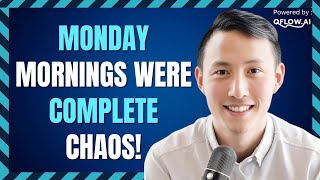
This is a podcast-style YouTube interview (Future Finance) featuring Ian Wong (co-founder & CEO of Summation) with hosts Paul Barnhurst and Glenn Hopper. Wong describes the "Monday morning problem"—executive questions about red lines in P&L that trigger multi-week manual analysis—and explains Summation, an AI platform that automates reporting, generates "deep dives" (decision-grade reports), and traces numbers back to sources. He also warns of a coming "query flood" (agents issuing many parallel queries — he cites a run that issued ~7,000 queries), discusses hallucination and defensibility issues with general LLMs, and offers practical advice: experiment with LLMs but start by mapping workflows and bottlenecks.
Chapters
Welcome to the Future Finance show where we talk about treasury management on bars.
Monday mornings was a complete chaos. 10am comes by our CFO show up with a binder of printouts, five lines into the P and L. The question always comes up, hey, why is this line red? That would kick off two weeks worth of work. That was Monday. Tuesday, pricing and inventory review. Wednesday will be a marketing sales review. Monday through Friday was this deja vu day after day and that was so frustrating that I decided to do something about it.
Meet Ian Wong, the co founder and CEO of Summation, an AI platform for enterprise analytics. Previously he co founded Opendoor. Before that he was Square's first data scientist, building the company's early fraud and risk systems.
The CEOs of multi billion dollar companies, they're taking some data, putting it into ChatGPT and doing vibe analysis. They would take the output, toss it over to the VP of Data or VP of Finance. Well, hey, can you just check this? Because I think this is what we should be doing with our strategy. And the VP of Data and VP of Finance are like, are you kidding me? Think about a world where humans are no longer issuing the queries. But.
Future Finance is brought to you by qflow AI, the strategic finance platform, solving the toughest part of Planning and analysis. B2B revenue align, sales, marketing and finance seamlessly speed up decision making and lock in accountability with qflow AI.
Welcome to Future Finance. I am Glenn Hopper along with my esteemed colleague, Mr. Dr. Senator Paul Barnhurst.
Yes, Senator, I'm running for Senate. Did you not know our guest today.
Also with us is Ian Wong. Ian is co founder and CEO of Summation. Most recently, Ian co founded Opendoor and served as CTO from Inception to going public. Before that, he was Square's first data scientist, building the company's early fraud and risk systems. He holds degrees in electrical engineering and statistics, two of my favorite topics from Stanford University, one of my favorite universities. Ian, welcome to the show.
Thanks for having me on.
Very excited to have you. I love the Square background because I work for American Express. So you know, the fraud and all those type of things. I remember more than one conversation. I think that's just a fascinating area, so.
Totally. Yep.
Great area for a data scientist, right?
Like 100%. Yeah. I mean classic and all fraud detection is one of the most typical applications of that.
Yeah, exactly. Right up a data scientist alley, machine learning, all those things. So I want to start with a question that kind of ties a little bit back to when you and I chatted because I know you and I have had a couple conversations over the last year as you've been building your new project summation, which we'll get into. But I loved you shared how when you're at Open Door, you had an experience that you called the Monday morning problem. And I really like the way you framed it. So can you talk to our audience of what the Monday morning problem is and why is this such a big problem for so many companies, in your opinion?
The P, L, the income statement, the, you know, and actually a lot of the management. P and L was literally printed. And we all look at it five lines into the P and L, the question always comes up, hey, why is this line red? Right? Maybe it's revenue today, maybe it's growth the next day. Whatever the case might be, why is this line under budget? And that question used to drive me nuts, because that would kick off two weeks worth of work between finance and data, BI and biz ops. The issue is, number one, by the time they come back in two weeks, the exec team's forgotten what the question was, embarrassingly. But more importantly, the insight's no longer relevant. And that was Monday morning, when you'd ask a simple question about the business and it would kick off these again, what I think of as the expedition. The armies of people go on to stitch data from data set number one, data warehouse number two, and so on and so forth. That was Monday. That would be total piano review. Tuesday would be a pricing and inventory review. Same thing happens. Wednesday would be a marketing sales review. The same thing happens. And so it really felt like Monday through Friday was this deja vu day after day where people were just constantly asking questions, not actually understanding how the business was doing. And that was so frustrating that after I left Open Door, I decided to do something about it.
That's such a. I mean, anyone who's worked in FP and A or bi, that resonates with them because you've got kind of your standard monthly reports that you do, or daily reports, weekly reports, whatever they are, and you've got that. And then you have all these ad hoc reports and they're never built into the system. So it takes all this work. And it also ties into. There's a big argument now around finding ROI around AI projects or anything, analytics projects, and the time to insight that return that, that getting quicker view into that. It's hard to measure that to the satisfaction of a CFO where it's like, yeah, get it, but what's the dollar value of it? It's well, if you're asking a question on Monday morning and have to wait till the next Thursday to get the answer, I mean, the ROI is the time that you lost in number of days of being able to pull the right lever and act on it, right?
Yeah, totally. I think there are two aspects that I question it or that point you make plan, which is number one, the speed up. Right. Just the fact that you have all these people doing all these manual analyses. There's that element of just how much time can I save? But more importantly, what's the depth that you can go into? Right. What is the quality and the depth of the analytics? And I think those are the two big issues. When I think of the way that people do work as it relates to analytics and FP&A and data science, we are in such an early era. I think in 10 years we're going to look back and be like, I can't believe people used to do things that way. I can't believe that people used to have to click through to dashboards, look at numbers, see what's red, and then figure out the next dashboard they should click into and repeat the same thing. That's literally how org is done today. And my hope is that over the next five years we're going to replace eyeballs on dashboards with agents and tokens.
Right.
Doing that work for us so that we can actually not just automate the grunt work, but actually get deeper, better insights.
You're preaching to the choir here. I loved hearing that. Arguably very much so. It could be said that for in 2025, you actually have the perfect background to be a founder, especially in analytics and AI fields with electrical engineering, statistics, Stanford. But it's still there's a transition from a data scientist and the mindset you're in to being a founder, where I mean, I would suspect in your heart of arts, like maybe your favorite thing to do is to sit down in front of a machine learning algorithm or a TUNA model and all that. But what was going from that really hands on and I'm sure as a founder you still have a lot of this as well. But what was the hardest part? Was there a notable transition going from data scientist to founder?
That's a great question. I think there are actually lots of things that are translatable. I think data science and finance are actually very similar in that sense, in that you actually to be a great data scientist, you have to empathize with the domain. You can't lead with a technique. You have to start with what Does a business care about what's a customer? Paul, you were talking about how you were at Amex or you worked with Amex and thought about fraud detection. Well, how do you design fraud detection systems? We actually have to empathize not just with your risk operations team, but you actually have to think in terms of a fraudster and think about all the, you know, threat vectors that are coming at you. And your job is back in the day, do classical feature engineering to detect that. So there are lots of things that are translatable about data science and becoming a founder, which is empathy with the domain and the customer. I'd say the hardest part, honestly, is the number of hats you have to wear as a founder. Right? Yes. You have to be a technical co founder like I did and you know, you have to manage data science and entering all that good stuff. But I was also a GM of pricing and so I had to oversee the P and L for the business and that was really hard. And in one moment you're context switching and like, how do I be a functional leader for engineering and data science? You know, another moment you're context switching. Like, what's going on with the P and L? Why is it read in these areas? How do I course correct? And so I'd say the context switching and having to get good suddenly in many different areas and not be picky about what you got to get good at, that is hard, but it's also what makes a job fun.
So switching costs. Right. Like just the. It gets exhausting for me. You won't say this about yourself, but I'll say it about me. The hardest part in all that is. Oh wait, in this role I actually have to care about people.
Well, you know, I would say actually one of the biggest founder lessons I learned is how do you be empathetic but also direct. Yeah, you know, I think one of the really challenging things about being leader, especially, you know, when I kind of first managing this with circa early 2010s, the topic de jour or the management term du jour was authentic leadership or empathetic leadership. And it's actually really easy to misinterpret that, you know, to be application and not delegation. And so there are lots of things in which how do you effectively manage teams? And we can talk about that separately at some other time. But yeah, lots of management, lots of.
There a couple things I, I totally resonate with the context of switching costs so much higher now that I run my own business. Yes. I don't have a team to Manage. But, you know, this call is a podcast. Next call is selling. The next one is just somebody who needs to chat. The next minute I'm, you know, trying to build a course, and it's just constantly trying to carve out enough time that you're not switching so much that you get nothing done during the day. Right. Because there is a real cost to that. I think AI can help with that some. But. And then the second one you mentioned, fraud and fraudsters. You know, having been data science, you'll appreciate this. I worked in Creep 8 at Amex, and we had one guy there that anytime they wanted to know the question of how the fraudsters would work, because he had learned how to maximize reward points and how to do everything legally. The game, the system, you know, so you could question the ethics for sure. But he always kept within the legal bounds. And so anytime they had a qu, he's like, you do realize you ran that promotion. All you did was got a bunch of scammers, and here's why. Or you did this, and you realize that was terrible. Go, go look at the data. Let me show you how much money you lost. And he was just a master at basically, you know, what is the equivalent of fraud in the sense of where are you losing money? It wasn't legally fraud, but still taking advantage of the offering. So it was really interesting. All right, so let's talk summation here for a minute. I think I believe you started summation almost 18 months ago. I know you're in stealth for quite a while. I think we chatted for the first time. Was it probably eight, nine months ago?
That's right.
And so why don't you share with our audience what summation is, what you do. Kind of why you started us. Give us a little bit of that founder story of summation.
Yeah. So I started the company because of that Monday morning problem, and I became really motivated to ask, what if enterprises actually had a summation layer to all their data and all their operations?
Right.
A layer where I can actually interrogate and have a tactical feel of how the business is doing. My analogy is kind of like the F1 car, right? Like, you want to be able to steer the business and run really fast, but you need to feel how the business is moving. And today, your operation and that feedback loop are so detached. And that's what makes it really hard for leaders to operate. So what do we do? We are an AI platform that helps enterprise leaders transform all the complexity across data and business into clarity and action and what customers use Us for are they use us to help them automate reporting, generate deep insights, and more generally improve their decision making and operating cadences. Whether that's a weekly operational deep dive to a monthly or quarterly business reviews. These are all the different ways in which we can help our customers. And the value that we really bring to our customers is that they're able to get this real time, tactical understanding of their business and find strategic growth opportunities. I think it's so hard to actually understand how the business is doing and all the things we just talked about where it involves armies of people weeks to figure out what's going on. We want to condense all that and give people really fast feedback cycles.
So right front and center on the Summation website it says decision grade AI platform for enterprise leaders. And I think my first question when I saw that is like, how is your deep research? I don't know if that's even what you refer to it as, but how is that different than what I could get from, you know, ChatGPT or, or Grok or any of the other research models out there?
Yeah, it's a great question. One of our marquee features is what we call a deep dive. And before talking about what a deep dive does, let me give you an anecdote from the field. I've been chatting with a lot of CFOs, COOs and other enterprise leaders. One person I've been chatting with a lot is the VP of Data. And the VP of Data, and this is in more than one case have told me that the CEOs of multi billion dollar companies are going to Snowflake or Databricks or Open or Redshift or any of these data warehouses. They're taking some data, putting it into ChatGPT and doing vibe analysis. And after the output, you know, and after this vibe analysis session, they would take the output, you know, toss it over to the VP of Data or VP of Finance. Well, hey, can you just check this? Because I think this is what we should be doing with our strategy. And the VP of Data and VP of Finance are like, are you kidding me? Like where do I even start? Because there's hallucination like left, right and center. Number one and number two. People think about viacoding and frankly a lot of AI slop. Now there's strategic slop, there's analysis slop. And we want to be the counterpoint to that, right? How do you think and picture yourself in that Monday morning meeting that we talked about, right? Picture yourself as a GM of a major Business unit or CEO or what have you. And your VP of Finance or VP of Operations is presenting you with, here's how my business is doing. What do you expect? Well, you expect, number one, that it should be correct, like the numbers in there should be correct. Number two, you expect it to be defensible, right? Which means if I poke at a number, if I poke at a line of reasoning that you can trace it through to the source, you're able to justify your thinking, your calculations, right. And number three, you expect a level of strategic depth, right? And you expect that to have the context of the business. You expect that your VP or your GM is telling you something that's non trivial, right? And so those are different elements that we really bake into our deep dive, right? Number one is correct. So every number is correct and we force LLM not to spit out numbers, but actually spit out the way to get to a number. And we actually do many checks before any number is presented to our customer. And every number that is shown is traceable back to the source. And we actually, so much of our work is actually this multi agent system to help our customers get there. One more thing I'll mention is that we don't deliver answers, we deliver deliverables. Right. As you think about a weekly business review, it's not like an answer, it's not like a output from a chat that you want to see. It's actually a structured document, right? So we work with our customers to structure. Hey, here's what they mean by their weekly operational deep dive. Here are the sections, here are topics. How do we break this down such that this multi agent system can give you this decision grade report back to the users.
It's so funny because I'm picturing sitting in that Monday morning meeting and if you're the cfo, head of finance or whatever and you're getting grilled on your numbers, I could see in that meeting actually wouldn't work for a huge company, but a small enough company where you have a number of ledger entries that could fit into the context window of AI. I could see in that meeting dumping the whole GL or whole trial balance or whatever into Claude and saying help please, what's going on here? And then, you know, because it's, that's kind of the dream. And that's where I think a lot of people run into problems. Like I've been testing Claude for Financial Services 2.0 that I don't know if it's been officially released yet, but it does amazing things with Excel and you can tie it into data rooms and it has all these great features and outputs really nicely formatted Excel workbooks. But if you're going on the fly, if you're not human in the review, there's not an inherent reason to trust that more than any other AI, other than it looks really professionally put together, which that might be, the fact that it looks so good might be even more of a reason to be duped by it. So having that cross checking against hallucinations, I know we haven't eliminated them completely, but that's huge for finance. You can be in gray area, I always say, with sales and marketing, because not on your analysis, but if you're, you know, writing marketing copy or whatever, obviously there, there's a lot more gray area there. But with we can't be wrong, we can't be, you know, the whole probabilistic nature of, of finance numbers.
I mean, Google can't go public and say, oh sorry, our AI gave the wrong number, we really earned 4.3 billion last quarter. That's not going to go over well.
Right. But the other thing to really hone in on too is there's a workflow, right? There is an existing process where you have to review your ledger for variances. Maybe it's a monthly flux process that you go through. So there's an existing process already. And one of the challenges I see with most conversational analytics is that I don't. It's not a conversational analytics problem. I'm trying to put this flux analysis together. These are the data sets, these are the questions, and this is the format I want to see the flux analysis in. That's a workflow, right? And so what we do is that we deliver the deliverable, not just answers from a self service conversational analytics platform. By the way, we do have a self service conversational analytics part to our products. And what we see actually from actual usage is that to be honest, most users don't even know what to ask. Right? It's kind of like in the BI world circa 2010s where tableau and looker and all these things and you have all these BI teams that made all these effectively what is now known as ontology. And the idea is that hey, you can go in and configure your own dashboards like it's just a pivot table. Well, turns out actually even despite all the how easy it is to pivot things in these BI tools, people still don't. Right? And we're seeing the same thing with conversational analytics, there's a chat box. You can literally ask at anything and get information in your fingertips. The challenge that people don't ask. However, there is a workflow. There was a meeting, there was a weekly business review. You need to present information in that meeting. So that's what we really focus on.
Ever feel like your go to market teams and finance speak different languages? This misalignment is a breeding ground for failure, impairing the predictive power of forecasts and delaying decisions that drive efficient growth. It's not for lack of trying. But getting all the data in one place doesn't mean you've gotten everyone on the same page. Meet qflow AI, the strategic finance platform. Purpose built to solve the toughest part of planning and analysis. B2B Revenue QFO quickly integrates key data from your go to market stack. An accounting platform then handles all the data prep and normalization under the hood. It automatically assembles your go to market stats, makes segmented scenario planning a freeze and closes the planning loop. Create airtight alignment, improve decision latency and ensure accountability across the team. That makes a lot of sense because they're structured easier to structure that and to bring it back each time you have a workflow behind it. It's like I just did a webinar before we jumped on here. You know, we've all seen Vibe coding. You talked about slop and all that. Now we're seeing Vibe working. Microsoft's leaning to that. Just tell Excel what you want it to build. And I told everybody the majority of you would get more benefit by getting better at Excel and modeling than trying to use AI. And when you talk, you know, can sometimes it'll look perfect. We had one where built the MO from a format standpoint. Build a beautiful integrated three statement model, different assumptions, tab schedule. Did a really good job. Then it was out of balance, right? So the balance sheet didn't balance and we asked it to fix it, spent some time, got a little closer and and finally it came back and said it's only a 1.3 million variance. That's close enough. I'm not looking any further. And we went if I'm an intern and gave that to my boss. I just got fired. Sorry, I'm not looking any closer. It's close enough. You know, it just totally made us laugh. Like wow. See when you talk a slop, that was the example. The other thing it did is it reversed the number formatting and made positive numbers negative with custom formatting and negative numbers positive. But only did it on like two lines in the entire model. You know how long it took us to find that?
Yeah.
Oh, my gosh. Well, going back to, you know, operating cadences, the reason why we focus on that a lot is companies have a sense of what good looks like. Right. People are already doing it. And so in many ways that defines eval. It's not like a de novo deep research. And, you know, and by the way, if you get deep research, one of the issues that I see with a lot of, again, these platforms that you get a bunch of SQL queries now thrown at you. Well, now, are you going to check every single query? Right? Like, oh, my gosh, like, you know, yes, it saved me a bunch of time. But to your point, checking everything in this Excel workbook, checking every single, you know, thing that's thrown at you, that's really. That's really hard. So a lot of what we focus on is building an environment similar to our customers. And again, the enemy is how work is done today. The enemy is all these people going out to all these data silos and manually switching things together. How do we streamline all that for our customers?
And going back to what you said about not knowing what to ask it and this, when I talk to finance professionals all the time, I say, well, you still have the domain expertise of being a finance person, because if you don't know the difference between EBITDA and net income and operating income, you know, you don't know the right questions to ask. And I the same thing. Like, on some levels, the biggest barrier to entry around data science was you had to be able to code to do it. But now if you can vibe code your way into data science, but if you don't know, if you don't know how a clustering algorithm works or, you know, a K nearest neighbor, I don't know, whatever algorithm you're using, then it might as well be a black box and it might as well be like what was the old Dragon drop data robot where it built amazing models. But you put it in the wrong people's hands and they're using the completely wrong algorithms for their predictions. So it is, on one hand, yes, you have access to it, but it's also a lot of this is taking hallucination out of it. But it's a lot of power in the hands of someone who may not have a background and know the right questions to ask or understand how they got the results, even if they see all the code or the SQL queries right there in front of them.
Yeah, yeah. So that last Mile problem is a big one and that's what we're looking to solve.
Yeah. So I want to kind of get to an article you recently wrote called the query flood. So you said about how it is coming and I think this really gets back to analytics and somehow we talked about the dashboards data and just you said with the query flood that's coming, you mentioned it might take down our analytics infrastructure. So can you describe to our audience what the whole query flood is, why it's such a concern, why you think it's going to be a problem?
Yeah. So I wrote that blog post because I've been looking at how our agents in summation work and they're issuing a ton of queries. So when we do a deep dive in summation, it can take minutes, sometimes up to an hour to run. And the reason why is we're spinning up 20, 30 agents and it's looking at every nook and cranny of your business cross checking each other. And in one of these runs over the course of an hour, IT issued over 7,000 queries against our database. And part of what we had to do is build an AI calculation engine that can accommodate all these parallel queries. But it's a lot of queries and it reminded me of a time when back at Square and I encourage, you know, the audience to read the blog post, but back when I was at Square, you know, we used to the whole payment stock, crazy enough, was run in this one monolithic Ruby on Rails app and the dashboard was actually connected to the same database as that runs the transactions. And so if anyone knows, you shouldn't be running your analytics on the same operational database as to a payment system. But we did because as a startup we were like 40 people at the time. And the PM at square at the time was frustrated by how slow the dashboard loaded. So he just like rage held down Command R and that just issued like 30 or 40 super expensive queries against the database and suddenly the site went down and people didn't understand why payments stopped flowing. And so, you know, it was a fun postmortem. And so the experience of building this multi agent system kind of reminded me of that where effectively the agents are the ones that are pressing Command R across every single dashboard in your business. Right. And think about that flood of queries are hitting our analog system in the coming year. Right. Think about a world where humans are no longer issuing the queries, but the agents are issuing the queries. And so the amount of analytics and amount of querying that's going to be done, I think is going to be 10x, maybe even a hundredx in the coming few years. Right. I think we're already seeing that in software engineering. The amount of code that's being written, the same thing's going to happen to analytics. And so my point is, and by the way, I used to be the cto, and part of my job is to keep my data warehouse and data platform bills down. And I would get hard palpitations whenever I get a bill from the data warehouses of the world because it was like multi million dollars growing like 50% year over year. Now you're telling me that agents are going to scale that number up by 10x100x? That's kind of scary. So my point is actually how we think about analytics and the whole data infrastructure stack needs to be just. There needs to be fresh thinking because the world's moving to a very different place. And how we got to where we are in many ways is an afterhang, an overhang from Hadoop and how we think about what's going on and where we headed again, we need to have some fresh thinking there.
God, that's so funny. I was going to bring up Hadoop when you were talking through all that, and then I was just picturing everybody's data lake, data warehouse, data lakehouse, whatever, you know, just together with duct tape and bailing wire and what it would do to them to have, you know, 10x, 100x more queries on this data. So, yeah, that's.
There's a few people. We gave heart palpitations to some of the CTOs. The list is there. And the data people are just like, oh, I could just see the system crashing.
Yep, yep. And the cost. And the cost.
Yeah. Then there's the person who looks at the cost part going, wait, I'm paying 2 million. Now you're telling me it's going to be 20 million?
That's right.
All right, Ian, we've thrown you a lot of softballs. I'm going to now ask you the hardest question of 2025. This is the question. So I'm getting you to do my work for me. Here is what I'm hoping. It's a question that I get every day, and it is. We're going to skip the ROI part of it, just take ROI out of it. But we are, if you've seen the latest Gartner hype cycle report. So AI agents in particular are at the absolute peak of the hype cycle right now. So there's all this fear. There's fear around missing out. You're hearing all these tech bros say, you know, half our company is agents, and we talk to them like they're employees. And then on the other side, you've got people who aren't doing anything, so they've kind of got a fomo. And then there's also fear of the technology because of everything we talked about with hallucinations, with not knowing when you can trust it, not understanding how it works. But since there's so much noise around the hype cycle right now, like, how would you advise employees or companies in general to figure out where to apply it? And maybe we make this specific to generative AI, but you can go broader if you want. But where can we apply AI in our company to get the most tangible benefit considering where technology is right now?
Totally. And it's a really great question because, like you said, everyone's talking about AI. I was just chatting with, literally, partners at some of the largest consulting firms. Think McKinsey, BCG and Beans of the world. And they're talking to their clients about AI. Everyone's talking about AI, but no one's really doing AI. And that's kind of where we're at. All this hype. And honestly, by the way, I'm starting to see the trough of the solution, to me, right? Where people are like, well, I don't trust. Honestly, it's actually affecting vendors like us, where I don't trust AI, right? Because it's hyped it up to be, you know, this big thing. And I tried ChatGPT over my data, and it doesn't work. So, you know, why would you guys work, right? And the point's, well, that's exactly why we're here anyway. But the point being, like, we are kind of in this weird moment in time, what I would say. And I'm sure everyone's sharing similar advice. I think as a finance team, we have to work both forward and backward. Forward, meaning go log into ChatGPT. Like, try it. Like, I do think it's really valuable to understand the limits of the technology and where it can deliver a ton of value. So try that. Like, try advanced prompting technique. Just get a subscription and try things out. Try ChatGPT, Gemini Manus, you name it, just try them all. The other part of it is working backwards, though, right? And what I mean by that is, like, what is a business process? What is a workflow? Like, where do we think AI can help the most? And classic like, hey, where are the bottlenecks? In this process, maybe it's financial operations and there are things around reconciliation that's really painful.
Great.
Can we apply it there? I've got to put it. Put together this weekly business review. Hopefully you will consider summation, but if you want to do it yourself, fine. Like, how do we. What are the bottlenecks in that kind of workflow? Right. So the other part of it is like, what are all the parts of my job that frankly sucks because it's super laborious? Let's work backwards from that. Right. So I think it's a bit of learning and going with the platforms as they get better and also doing an honest accounting of all the ways in which you think your job can be improved.
I love it. You've just validated what I've been telling clients too. So thank you for that. And Paul, I'm going to, I'm going to do a shameless self promotion here. You were talking about building workflows. I have a new course on LinkedIn learning, building finance automations with N8N. So all of our LinkedIn viewers, if you're on premium and do the LinkedIn learning, you can, you can check that out.
Look how fancy you are. And another course, I think we've covered so much on the, the whole, you know, hype disillusionment, but I just totally agree. People just need to get in and start learning and trying and experimenting. And, you know, that's why I tell so many people, is you got to start somewhere, start small, learn and, you know, look at what others are doing. Learn from experts in the space like Glenn and so many others out there that have done a lot of the work. Because the reality is, yes, there's hype, but if you choose to just think it's all hype, you're going to miss out. Because I can guarantee you it can save you hours. There's no doubt. No matter what your role is, I don't care if you're in finance, marketing, sales, any, anything. If you work any type of job, it can save you time, but you have to be willing to put in time. And generally you have to know what you're doing so you can validate what it's giving you. So many people think, like, for the longest time, well, AI killed Excel. No, well, AI killed coding. No, it's a magnifier. That's what I keep telling people. If you don't know what you're doing, it's going to magnify that. If you know what you're doing, it's going to magnify that. And it's super exciting. So I love what you shared there. A lot of great advice. All right, we're going to move into our personal questions. Kind of funny enough, normally it always rates them 1 through 25. This time it counted the six questions I gave it for the episode and gave me 7 through 31. It didn't give me 1 through 25. It took me a couple minutes to figure out what the heck it did. I'm like, why did it start at 7? And so instead of picking a number between 1 and 25 and Glenn does this the different way, we'll let him go next. There's two options. We can let the random number generator, if I can speak here, pick a number between 7 and 31, or you can pick a number between 7 and 31 and I'll ask that question.
I will let the random number generator. Have at it.
All right. And I got to set it up because I had it set aside.
I was going to say.
So we'll change it here so you.
Don'T change your parameters there.
I do. All right. It gave me 10. So let's see what 10 is. As Square's first data scientist, you expected complex fraud, but found only 50 cases. What was your most hilariously wrong assumption about the job?
Yeah. So I took a job at Square because at the time I was a board graduate student at Stanford and I had just interned at Facebook, and I realized, oh, my God, what am I doing in grad school? So I dropped out and literally had two conversations. One with Keith, who was the CEO at the time, and later on, my co founder, Opendoor and Jack Dorsey. And then I got the job. And there was no technical screening. I was actually a little sketched out, so I didn't know what to expect out of the job. And they were just like, hey, we're a payments company. There's going to be fraud and just come in and build machine learning algorithms. I'm like, great. You know, that's what I studied in school. That's what I'm great at. I'm going to go do it. And like you mentioned, Paul, the first day I showed up, I was like, great, I'm here to build some models. Show me the fraud. And the company was like a year and a half old. There was like 40 people. There was like, no fraud. There was like 50 cases of like suspected fraud. So I'm like, what am I doing here? Like, there's no data science, there's no fraud. And. But that was such a blessing. In disguise, because that's the thing with startups. You kind of go in thinking you can do one thing, but honestly, you have to wear all these different hats. So I started by building tools for the Briskops team and then eventually analytic infrastructure and eventually, you know, the ML side of the house. But honestly, I thought I was going to be doing one thing entering squared, but I ended up doing 10 other different things and that was awesome.
All right, you're up, Glenn. Let's see what the AI picks for in here.
All right, so yeah, so I take the human completely out of the loop here. We just turn it over. If AI generated the questions and AI can hallucinate for all of us can pick one. So. All right. Actually, I really like this one. I think you're going to like it too. Your Twitter. Your Twitter handle is hat from physics. How would you explain your career? Wow, this is a weird one. How would you explain your career using only vector notation? Only AI could have come up with this question.
Oh, my gosh. Yeah. By the way, I had to change it from IHAT to Ian long underscore because people are just like not getting ihat. So I'm. I'm like very surprised. I mean, it's a good thing that the algorithm.
Well, you know what, they'd also called it Twitter, so who knows how old that was versus X.
That's true. Yeah. Now there's all this AI stuff and this is. Maybe this is getting a little bit abstract, but maybe we're all just a gradient descents for this giant universal algorithm that we're part. All part of. So I'm just contributing my own little tiny. I hat love it.
And now we're going to give you 10 minutes and there's a brilliant answer, by the way. You could use that on your personal statement for Stanford. Yeah. And now we're going to give you 10 minutes to just talk about gradient descent and all the.
Yeah, maybe it's a Cyber account. Might. Might take a bit of a dip after that.
We'll tell anyone who wants to know what it is to go chat GPT it instead of Google it. Right?
That's right. There you go.
This has been a great episode and they go by it so fast, but I'm. I'm literally like grabbing my bag and walking out the door right after this. So, Paul, any famous last words as we bid adieu to Ian?
Ihap? No, I'm just kidding. Thanks for joining us, Ian. It was a real pleasure.
I appreciate it. Thank you so much.
Thanks, Ian.
Thanks for listening to the Future Finance show and thanks to our sponsor, qflow AI if you enjoyed this episode, please leave a rating and review on your podcast platform of choice. And and may your robot overlords be with you.
More from Paul




Trust and Leadership Lessons for FP&A From 100+ Top Leaders with CFO Jon Laudie






