How Founders Mistake Models Only for Fundraising and What They Should Do With Ilyas Anis
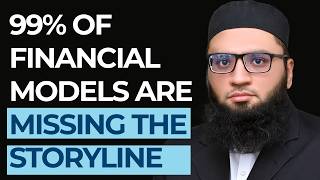
Ilyas Anis, a corporate finance executive and modeling boutique founder, argues that 99% of financial models are technically correct but fail strategically. Models should answer a clear business question and be usable daily, not just for fundraising. He warns against the precision trap and sees AI as a junior analyst for data work, not a replacement for critical thinking.
Chapters
AI is causing dumbness. If you see LinkedIn or maybe some post, even the job post, everybody is using that. The emails which I am reading right now, it does not sound like human. It makes a lot of assumptions itself rather than telling you. What if it assumes something wrong? How can you vouch it? In today's episode, we are joined by Ilias Anayas, a corporate finance executive and chartered financial modeler currently serving as finance lead at Turning Point Brands Canada and founder of IMNS Associates. With 15 years of experience in financial modeling, business analysis, and advisory services. Stakeholders don't pay you for getting the right thing. They pay for the confidence. So the modeling is basically the artifact. The moment you open a model, every assumption is on the table. Either the numbers will tie or don't tie. If the finance is not connected with operations, so the finance who are building the financial model, it's not a model. It was just like a pitch deck with having the formula.
Any final advice you'd like to offer people their building models. I would say— Financial Modelers Corner is the world's premier modeling podcast. It is brought to you by Financial Modeling Institute, the world's leading financial modeling accreditation organization. Welcome to Financial Modelers Corner. I am your host, Paul Barnhurst. This is a podcast where we talk all about the art and science of financial modeling with distinguished financial modelers from around the globe. The Financial Modelers Corner podcast is brought to you by FMI, the Financial Modeling Institute. FMI offers the most respected accreditations in financial modeling, and that's why I completed the Advanced Financial Modeler, the AFM. I'm thrilled to welcome to the show Ilias. Ilias, welcome to the show.
Thank you. Nice to meet you.
Nice to have you here. So we have Ilias Anais. He's a corporate finance executive and a chartered financial modeler. I'm a little jealous. I told myself I'm going to take the CFM, but I haven't yet. With 15+ years of international experience in financial modeling, valuation, and governance across regulated industries, including cannabis, tobacco, higher education, fashion, and FMCG. He serves as finance lead at Turning Point Brands Canada and is founder of IMS Associates, his financial modeling boutique, where he has built investor-facing models for founders who have collectively raised over $1 billion. He has his FCA, CPA, AFM, and FMVA. He is also a board advisor and AI enthusiast. He has 7,000+ followers on LinkedIn and writes regularly on forecasting, capital strategy, and leadership discipline. So again, welcome. Excited to have you on the show.
Thank you, Paul.
All right. We start every interview with this question. Tell me that horror story with modeling. Worst experience. Go wherever you want. Everybody has some kind of horror story somewhere along the line.
So let me start like where I really start. I think it's been 14 years. So initially I was having like a job in a firm, an audit firm. So that's where my career started. And once that completes up, so I started my business, which is I M&S Associates, and which was side running with my audit firm experience. I was having my partner like Suhail. He's still with me. We were using like a side project, whatever projects came up. So we started doing that. And, uh, when we move on, like it was horrible. Like we were taking all of the projects. Bookkeeping, Excel modeling, chaotic spreadsheet, helping owners who don't like understand about their own business, like what actually earn. So what I learned really in those year that small and medium-sized business like don't have a finance problem. They have a visibility problem. They can't make a good decision. So strategic side, which I think like is really missing in the financial model, especially. So that's where like I shifted my career. In helping those businesses. I have seen many, many terrible spreadsheets. Like, still there is not a translation of those spreadsheets into a strategic side.
Yeah, so obviously one thing that you mentioned that was missing a lot is the whole strategic side. There's the spreadsheet there, but no real understanding of how it ties back to strategy. Correct. I would imagine that's, uh, probably most models you see, that's the case, I would guess.
I would say 99% of the models.
That doesn't surprise me. So would love to know, you've led me to a question there. You say majority of the models don't have it. What do you see when you see one that does have? Like, what's the key difference?
So first of all, like financial models are really objective. Like they are not subjective. Balance sheet should tie up, profit and loss should be flowing into retained earning. Statement of changes equity should be there. Cash flow should tie up. Like it's really simple. So all financial models, I think like 100% of them, like they are really fine. But the key thing is the translation. And there is a storyline which is really missing in these financial models. So that's where like there's a real gap.
It is. That makes a lot of sense. At the end of the day, the statements, what should be included in a model is relatively objective. There's not a lot of subjectivity. If you're building a 3-statement model, you need 3 statements. And you need the schedules that go with it. How you build it, what schedules you include, whether you do a free statement or just a P&L, all that, there's some subjectivity. But at the end of the day, it's, there's definitely some objective to it. But the strategic side, the storytelling, how you do all that gets very subjective.
I think the storytelling, that's where you're missing, like models would be model., but when you present and translate this to the, in front of the, like the end users. So ultimately there should be like, the number should make sense. It should not be for the end user. Like we are preparing this for the investors. So investor would be fine. He knows like what he really gets, but the financial model will be sitting in the closet day after. Nobody's gonna use it. So it should open every Monday. There should be the operational, like a model first, which should be translated into the financial model. And there should be storytelling and business owner, the end user should know like where they are looking to foresee their business, maybe in 1 year, 2 year, and their vision should be correctly described into it.
Makes a lot of sense. So I want to step back a little bit. You mentioned, you know, you started your business, think about 14 years ago. What led you to start your own business? Kind of how did that come about? I know you're doing some audit work. So tell the story.
Yeah, it was just like a side project and we like, obviously I live in Pakistan, so I started my audit experience over here and we have audit firm, but I always like, like to work globally with international clients. So back 15 years ago, so I was like very young. So I started a side project with my partner Suhail and we founded the company IMNS Associates over here. And we started doing that, like some small consultancy projects, Excel Modeling, as I said, and restructuring thing, bookkeeping issues. Then like over the years it gradually improves. Then we shifted towards the financial modeling, decision-making, fundraising, investment banking, and gradually like we moves on ultimately with the strategic CFO side. Got it.
So it kind of built over time. I'm curious, what is it you like so much about modeling? Obviously you do a lot of it. What is it you enjoy about it?
Like it's objective. So like we know, like ultimately, like there is a procedure, there is a regulated rule, it's objectivity, it's not subjective. Ultimately, like the things would tie up. And, uh, but the moment, like there is one issue over there that, but the moment you open a model, there is every assumption is on the table. Either the numbers will tie or don't tie. So it forces the business conversation to to be honest. And one thing again, I would tell that the model is not the point. The argument that lets your business is the point.
The discussions, the assumption, the planning. The model is an output. It makes sense. And you mean about a, a model? The balance sheet has to balance. That's not subjective.
That's not subjective.
I asked it. We, we had a model that didn't balance, so we asked AI to fix it. It's been a while and Finally, AI came back to us and said it was only a 0.3% variance and that was okay because it was small. And we're like, no, no, that's not how financial modeling works. This isn't pick a number that's close and call it good enough.
Yeah, exactly. When we are like an audit firm, so I would say like if the trial balance is tied up, like even if it does not have a difference, so the balance sheet should not be having the rounding of difference. That should be the basic principle if you have done correctly.
Yeah, balance sheet always balance. I get sometimes when you get the, uh, like I had a model that I updated and I would get the, um, uh, balance sheet income statement for whatever reason, cash was always off like a few dollars. We're talking like 20, 30 bucks on millions. And I'm like, all right, I can plug in an adjustment. Nobody cares about $30. I'm not spending hours finding it. But you know, balance sheet, no, I'm not plugging. If it doesn't balance to zero, I'm going to go search for it. But small transaction or something up, I'm not going to spend the time every month to find $20. So I get it. So when you and I chatted a while back, you had mentioned a lot of early stage companies, you know, they only want their model for fundraising, right? I need my model. The investors have asked, they get it, they go raise their funds. And you've seen that, I'm sure, plenty of times where they want that. But I know you've mentioned that you don't think that's a bad idea. So talk through that a little bit. Why, why that's a bad idea? Why do you think founders are so set on, hey, just give me a model for fundraising, help me raise my money, and then I'll, you know, I'll go do my thing.
I believe that financial modeling, like, if the core vision of financial modeling is to prepare for the fundraising, there is a problem that it's going to be optimized for one audience. Which is the investor for fundraising, is going to be for one moment and there is going to be one outcome and it will die after the term sheet is signed. So the moment, like the financial model, the main core purpose of the financial model, like it should open every Monday morning.
How many companies actually do that?
They are preparing like the operating model and we have done this before. Like they are using it like a Bible. So there should be operational model, which should translate like about pricing, hiring, inventory, cash management. Like there should be everything which should tie it up. Like the actual should be plugged up. The storytelling should be there. All of their vision should be translated. So that's how, like, I think the game changer can happen, but it should consolidate all of the things. The full business story into this model.
That makes sense.
And one more thing, like, um, I would say that if there is a, if the finance is not connected with operations, so the finance who are building the financial model, it's not a model. It was just like a pitch deck with having the formula.
Why do you say that? Elaborate on that a little bit.
Because like, if finance is considering itself as a, like a different function. Because ERP is the one like that was built for originally for finance. And what's the purpose of the ERP? That it connected all of the departments together. So ultimately like finance is the core function that should connect all of the department because it's gonna generate the money. It's managing the money, finances. So ultimately like the cash is going to be landed over there and cash is king. So strategic decisions should, should come from there.
By the way, I agree with you. I just wanted to hear your thinking. I'm not, uh, I'm not challenging you on that. I say all the time, and one of the best things an FP&A professional, I think, you know, applies to modeling, can do is learn the operations of the business, right? We're translating things from a financial lens. We're looking at it from financial numbers. But if we want to have real conversations, we have to understand the operations because that's where the conversations happen. They don't They don't happen with financial numbers in isolation, or they shouldn't. I've seen them happen that way, but they shouldn't happen that way. You know, we've all seen, like I said, the models that are built and forgotten and have no tied operations. Okay. What, what good does that do you? Maybe a little bit. You had some thinking, you built it. Maybe it helped clarify some things, but you don't get the true benefit for sure.
Exactly. It's, it's the same thing as AI. Like there is a level one of the AI generating answers, generating your emails. Writing your response. But there is a level, like the next level of AI, the ecosystem. It should automate like everything, but very few people in the earth knows about that. They are using AI just to like using the basics.
Yeah, we're, it's getting better and better. The way I've heard it from some experts is kind of two ways. There's, there's the efficiency side of AI, and I think everybody's getting some efficiency. Yeah. How much? Yeah. You can debate. And then there's a second layer where when it's properly set up in your systems, it can kind of be a decision layer. So go beyond automation and help do that analysis and make better decisions. Obviously, human has to be in the loop, but I agree with you. And, you know, so there's everything in between from, hey, we've automated, we're getting a ton of efficiency to, hey, it's also helping us make better decisions. Like I've used it to think through a number of things in my business. You know, and not always the best at following it, may not always agree, but I use it quite a bit now to kind of clarify thinking and help me try to, you know, yeah.
And this is the only thing like which everybody's learning at the moment. Like everybody's the learner.
It's amazing what you could do with it. We'll come back a little more to AI for sure. Before we get there, I want to ask you a question. So As I was looking at your, your LinkedIn feed, you made a comment one time where you said, waiting for full clarity delays progress more than bad timing does. Walk me through that. Elaborate on that one.
Yeah. So like many people go for the, to be the perfectionist. So they try to collect, like spend 2 weeks preparing the scoping documents, collecting all of the right assumptions. So they spend too much time in scoping document and, and try to finish the model in very rush. So I think like quality depreciates when they wait for collecting all of the things. So I would like, that's, I usually talk with my client, like it's better to be vaguely right than precisely wrong. And clarity is like, that's what I mentioned on LinkedIn, that clarity is not upstream of action. It's basically the downstream of it. So I always use like, uh, let's complete 70% of the model, like by having just the initial assumptions and maybe like just to be perfectionist, let's use it afterward because when you send the model to clients or maybe the end users, so more vision and clarity for the business owner on the end user will come up. So we can make it much more better rather than waiting for 3 weeks just to collect assumptions and saying like, this is your issue in your accounting system. We can't proceed without that. So don't spend too much time on clarity.
So I have to share, because just this week I read the outline of, I don't know if you know who Asif Massani is, but some of the, uh, some of my audience may recognize him. He runs a business around FP&A training and he wrote a book called The Precision Trap. And it's kind of like your clarity idea. The whole point was in finance, especially if you came up through accounting, You're trained to be precise. So you want all the details, you want everything to tie out. But the world has changed. Half the time doing that, you've missed the opportunity, which gets to your bad timing. It's like, well, we already made a decision because we knew it would take you guys 2 weeks to button up your numbers. Or, oh, that's great. We should have done that. But the company was already sold because somebody else was said, we're good enough with 80% information. So we've missed the opportunity. And so I think you make a really good point. And he goes through and he talks about, you know, it's not the finance is doing anything wrong. It's that we need to retrain the way we think. It's that the world has changed. You can't wait for full clarity. Bad data is everywhere. You have to go, you have to say, okay, it's good enough. Let's go forward. Now, there may be times you may need to be a little more precise than others, but I totally agree with that kind of philosophy. And so kind of speaking of that, You know, speed versus clarity and precision. How do you draw the line or how do you decide good enough is good enough? Do you know what I mean?
Yeah. So I always start with the revenue modeling. So I use 80/20 rule, like 80% of the model is coming from the revenue model. So once you have the assumptions for the revenue model, like meaning how the business actually makes money, what the drivers are. Like who pays whom, how the cash moves, what are the revenue assumptions, everything. So I think if the revenue model is there, we can build 80% of the model.
Well, my background is in FP&A. I am also passionate about financial modeling. Like many financial modelers, I was self-taught. Then I discovered the Financial Modeling Institute, the organization that offers the Advanced Financial Modeler program. I am a proud holder of the AFM. Preparing for the AFM exam made me a better modeler. If you want to improve your modeling skills, I recommend the AFM program. Podcast listeners save 15% on the AFM program. Just use code PODCAST. Really good point. I mean, I've heard people say, look, get the revenue right. Everything else can be ratios and percentages off revenue, especially for long-term assumptions. Because you know an industry, you know roughly, okay, my cost of goods sold is going to be 22%. My headcount will be, you know, my margin. And you can build all that in and that tells you how much you need to grow. So I agree with you. If you have, if you have a really good understanding of your, your volume, your pricing, your products, everything that goes into your revenue. The rest of it, for the most part, there are exceptions, but for the most part is a math exercise.
Yeah. Yeah, exactly.
Exactly. You know, especially if you have businesses to have, you know, step increases or a lot of nonlinear stuff. Okay. Then it gets a little more important. Okay. We have to add a whole new factory at this point.
Right.
You got to get that right. But as long as it's in that curve of relatively linear. And you just kind of grow it as revenue grows. It's a pretty simple exercise.
Yeah. So modeling is like writing. The first draft is going to tell you like what's the second draft is going to be. So I would rather start with partial clarity. I'm a fan of it.
I'm going to share one more example because you're really hitting an important point. I was talking to a head of FP&A at a public company, good-sized company. And he commented, it's like, I need my people to realize it doesn't need to be perfect. Stop with so much complexity. Just give me an answer. I don't care if it's kind of back of the envelope sometimes. I just need answers. So any thoughts on how we overcome that? Because it's definitely a trait. I was guilty of it a lot of my career, being way too detailed. I still am. I have to remind myself it doesn't have to be perfect. It's good enough. And so any thoughts on how you kind of help yourself overcome that tendency to want to be precise and detailed? I mean, what have you done that's helped you, you know, kind of be able to go, hey, good enough is good enough?
The thing is that when we are having discussion with the end user and the stakeholders, so sometimes, like, it's sometimes, when I say sometimes in 5%, like, we get all of the details in a very organized way, the precise way. And, uh, so it's clear. So it's good. It's good to have precise information. But many times, 95% of the time, even the business owners don't know about their business. What's happening with like AP department, payroll department, like what's happening with how much inventory do they have, how much inventory is sitting in their Amazon. So there are things like which needs clarity over there. So obviously these assumptions would be needed to make the end financial model is perfect. But to start, just to push, I would say let's start with whatever you collect. Don't stop yourself because many, many like experts I have seen, this is resistance because the scoping document cannot be like finished. We cannot just start like unless the scoping documents gets finished on the scoping document should have been having the all of the information. So I think there is some resistance and there is some friction which we have to avoid because There is a huge gap which has been created between financial modelers and the end users due to this behavior.
All right. So I'm going to keep moving beyond the clarity discussion, although I think we could spend the rest of the time there because it's definitely an area we could all get better at in finance. And so I think the key takeaway is, look, you're not going to get perfection most of the time. Just move forward. Do the best you can with what you have. And remember that, as you said, a good decision is better even if it doesn't have full information than waiting a few weeks in most situations. Yeah. So I had a boss that always said, hey, if it's 80% right, I'm going to go ahead and make the decision because the cost to get to 100% is pretty much never worth it. Agreed. So same idea. I remember I learned that one early in my career. What's your favorite industry to model? You've obviously worked, built a lot of different models, different industries. Do you have a favorite?
So almost like I have worked with everyone, you like, I can count on that one, but there are a few like specialized one. But what I really like, if you ask me, I like to prepare operationally complex business with having multiple revenue streams. I know this is difficult, but this is not about harder. For example, like there is a business having retail business, wholesale revenue stream, e-com, D2C, like that's where this interesting flavor comes up. Or maybe there is an education business with having multiple campuses, or maybe if there is like any consumer brands with having a wholesale business. So it's not about the reason is not that like they are harder. I like to make things harder. No, basically the key reason is that there is a decision-making, which is very interesting over there because business having a different revenue stream, different COGS structure, different pricing structure, and the money which is flowing at a different timing. So that it's, it gets very interesting when we are talking with the end users and the stakeholders about the decision-making. It, it becomes really fun and I really enjoy it.
Bad financial models can lead to bad decisions. Or worse. So how do you minimize the risk of a bad model? You make sure the models you build are great. Financial Modeling Institute developed the Advanced Financial Modeler Accreditation program to help modelers like you. The AFM program offers a step-by-step approach to building world-class class financial models. The program ensures that you know the best practices in model design and structure, and will help you brush up on your Excel and accounting skills too. Be the one on your team to build great models. If you want to impress your boss and your clients, get AFM Accredited. Podcast listeners, save 50% off 15% on the AFM program. Just use code PODCAST at fm institute.com/podcast. I was going to say you're a masochist. Just kidding. You like pop— no, you know, there's something to be said. Probably my favorite model I built my career was the most complex business I managed. We had a call center. We had mail. We had digital campaigns. We had subscription, we had one-time revenue, you know, we had a mixed sales force that supported two different businesses. You had to split out what they were selling in the model. And I really enjoyed it. It was, and the data was a complete mess. And that's putting it generous. I've worked a few different companies. It was by far the worst data I ever dealt with. So, but I, I loved the challenge. So I can relate to that as much as I joke. I get it. It's probably why I have 5 different businesses in my business and a bunch of different revenue streams, because it's interesting. All right. AI, you talked about it earlier, but let's talk about it in the term of financial models. What testing have you done? Talk about your experience so far.
AI is changing the world. Nobody imagined like just 5 years ago, like what is happening. So it's really fun what's happening and everybody's feared about it. But, uh, I always say to my associates and colleagues, uh, that, uh, AI is the best junior analyst so far if you treat it like a junior analyst. So it's brilliant that, uh, whatever things we are like that were eating my time. So it saves a lot of time cleaning up the messy data, generating formula, like it also gives, like, sometimes we see very complicated formula and it gives the reasoning. Sometimes, like, it explained the inherited model, but there are few, uh, the cases where it falls apart. For example, um, like where the junior analyst falls apart, I believe it's the judgment, reasoning, and strategic decision-making and the storytelling. Because maybe like it can work up in future. Nobody knows about it. Maybe after 5 years, what is going to be the game changer? But still, I believe like it is not going to replace the modeler. I have seen like in LinkedIn and like everybody's talking about it. It's going to replace the accounting function. I think it might be bookkeeping and accounting function. It's just, it has started replacing, but, uh, in terms of modeler and strategic side, I don't think like it's going to replace because thinking is still yours. The strategic direction and the decision-making, what we call like business finance decision. And strategic financial management, it is still, I believe like there is a huge gap, which like AI is going to take a lot of time.
I agree with you. I think AI is amazing. I think treating it like a junior analyst is the right approach. I always like to say human-led AI assistant. We're still responsible for the thinking or responsible for the, for what we produce. So I think some great examples. What's the, uh, you mentioned formulas is one. What's the favorite thing you've automated so far that you used to have to do that you're like, oh wow, AI is doing it now?
Like right now I am preparing many, many Google Sheets and, uh, depending a lot of cloud dashboards, which are linked with Google Sheet and like using Apps Script, which I, I wasn't aware like about how to use Google Apps Script. And it's really fun. Like the things with they are linking with each other. And AI is generating the script for that one. So it's really fun. And the visualization is really amazing what it's developing in terms of HTML dashboards and visualization. Like I know we have been using, everybody using this Power BI, but obviously Power BI coding and all of this restructuring Power Query, we cannot replace it, but it saves a lot of time. So I believe the automation is there, stakeholders are happy, they can see like what's happening. But there is one thing with AI. I think AI is causing dumbness. Why is that? Because everybody— I'm right now, if you see LinkedIn or maybe some post, even the job post which is coming on LinkedIn or maybe on any other platform, everybody's using that. The emails which I'm reading right now, it's not human. It does not sound like human. Everybody's using it. And I'm not sure what will happen after 2 years or maybe for the Next generation, what will happen? I think their logical skills and technical skills, their brainstorming things, because they are relying totally on AI. So you need some basics. Your basics is really important. Like people ask me, like, do I need to learn how to type balance sheet? 100%. Otherwise, if AI is going to throw you something and like AI makes the assumption. It makes lots of assumptions itself rather than telling you. What if, like, if, if it assumes something wrong, how can you vouch it?
A lot of great stuff on Pat Bear, but I have to say, we got to end the show. You use Google Sheets.
I'm not kidding.
This is a modeling podcast. Now I've used Google Sheets, but I think you're right. There's a real fear that if we let AI take over. Um, I saw an article online where they were finding in some situations, if you started on your own and then used AI to finish something, this was in research, like education and stuff, you learned much better than if you started with AI, even if you tried to finish it on your own. It was interesting. Like, there's something to be said of the struggle, the learning, the foundations. Yes, you want to use AI. But if you become dependent on it, like you said, there's a real fear. And I think I've, I've gone on record saying I think AI will make us dumber as a society. I think social media has done it. So I have no reason to think AI wouldn't. Unfortunately, unless we're forced to struggle, we take the path of least resistance. It's kind of human nature. That's correct. Yeah. I, I'm with you.
Yeah. And one thing you asked about, I think the formula which you asked, which I'm very fond of. So like there are many, many formulas which are in Excel and Google Sheets, add a formula, dynamic ranges, but still I love the basics, F2, F9.
So are those, yeah, yep, keep going.
So it's like the, it's basically, it's not about shortcut, it's the diagnostic mindset. I believe like what I'm using, I was like, just using, um, like thinking about myself, like what I'm really using a lot. So I think F2 and F9, which I'm using a lot.
So those are the favorite shortcuts, the F2 and F9. Yeah, I get it. Uh, F2 is incredibly helpful. F9, you know, if I'm not doing dynamic arrays, I love F4. But as you start making more and more things dynamic, it doesn't matter as much. Or if you work in tables, Microsoft, if you're listening, fix it. Allow me to do F4 and K with table formulas. But anyway, I digress. I'd love to know what's the number, if you look back at your career so far, number one lesson you've learned that's helped you the most.
I think number one lesson, like I already communicated before, but I think everything needs to be right. I totally agree. Build the right model. It should give you the right answer. There should be the storytelling. It should produce the right forecast. But the key thing which I've learned over the year, the business, the stakeholders don't pay you for getting the right thing. They pay for the confidence. So the modeling is basically the artifact. If you see Claude, like there are live artifacts over there. So it's basically the artifact, but The product is basically the trust. So model should tell the storyline. Recently I worked with them, I prepared the model and it was showing like 45% EBITDA. I told them like nobody competitor was making like such thing. I have researched about it and see unless and until like if you are confident, if you have a confident, if you are visionary and if you believe in your product that you can make that. Go for it without Edison. And trust me, like, uh, that business owner, like, she presented in front of the investor and she got the $5 million easily. And they invested, like, not in the model— like, model was the helping thing— but it basically the vision. What's the vision is. So judgment is the job.
Appreciate that. All right. What's the most kind of fun, unique, strange, whatever word you want to use, thing you've done with a spreadsheet kind of in your personal life?
I think my own personal finance tracking, to-do list, travel plans, and I use it in everything. See, I try to avoid like some of these subscription software. I try to automate things over there. So I have like a dashboard in my Excel Online where I used to track like whatever my portfolios are, or maybe my what's I need to do in to-do list. So it gives me the same, the automated email every day that, that was, I need to do like, there is a daily digest, which I receive based on that one.
So you're saying you use it for everything. Yeah.
Yeah. And I feel proud about that, like whatever things I've learned and I'm still using in my daily life. So I'm very proud of it.
All right. So we're going to move into rapid fire. So let me tell you how this works. First off, the rule number one of rapid fire is you can't say it depends. Because nobody wants to listen to you say it depends 15 times. So you have to pick a side. Yes, no, or if there's other options, you have to pick one option. Then when we finish, so we'll run through all of them, you could elaborate on a couple. Because I realize there's nuance to all of them. But if you say it depends on everyone, it defeats the purpose of rapid fire here and having a little fun so people can be like, I disagree. I think it should be this or that. Make sense?
Makes sense. Let's start.
You ready? So here's the first one. Circular references in models, yes or no?
No, but—
You can elaborate at the end. We're going to— I'm going to hold you to it. I know there's a big but. Everybody has that. VBA, yes or no? No. Lambdas in financial models? Yes. External workbook links?
No, no, no, no.
Yeah. I've had other people use more colorful language on that one. Should modelers be keyboard warriors? Yes or no?
No.
Okay.
There is too much obsession.
Do models need to be print ready?
Yes. Okay. Really? That's a big yes.
Is there ever, is it ever acceptable to use merged cells?
No. Big no.
I had one guy that says, uh, Use merge cells, go to hell. That's his saying. So there you go. All right. Should financial modelers learn Python and Excel?
Not to a, like a high extent, but yes, to a basic level. Okay.
Give you that. Should financial modelers learn Power Query?
Big yes.
Big yes. What about Power BI?
Yes. Okay. Non-negotiable.
Should every financial modeler be able to build a fully integrated three-statement model?
Yes. Otherwise he is not a modeler.
We'll come back to that. We'll have a— will Excel ever die?
No, it won't.
Have you— actually, I already know the answer to that one. You mentioned you used AI with some modeling, so we'll skip that one. But what financial statement is most important for modelers? Income statement, balance sheet, or cash flow statement?
Cash is king.
Favorite LLM? Claude, Copilot, ChatGPT, Gemini? A lot. All right. If you could only pick one for the rest of your life for all your models, what are you picking? Sensitivity analysis or scenario?
Scenario analysis.
I might have to stop asking that question. So far it's 100% scenario. Not much of a debate.
All right. Yeah.
Do you believe financial models are the number one corporate decision-making tool?
No, no, no. What is? It's just the artifact. And I said, like, basically the conversation is the tool. The strategic thinking is the tool. The translation of the model.
And what is your lookup function of choice? Choose VLOOKUP, INDEX MATCH, XLOOKUP, or something else?
XLOOKUP.
Alrighty. Yesterday I had some. You know, they're doing some fun if that's their favorite lookup. He was also a mathematician, so go figure. All right, so first pick a couple. Which ones did you— there were a few. I know you did a bunch on circular references. You hesitated on a few. Where would you like to elaborate?
I think circular reference, uh, we cannot avoid like this in few things, like especially in revolvers. We have to use it. We have to turn on iterative calculation just to avoid this. Like, uh, there are a few instances which might be the 1% out of 100. But we cannot avoid this. In terms of VBA, I think VBA is decreasing. Like Lambda has come up, so maybe like there is a huge help which Lambda is helping. So I think Lambda is great and it's overriding VBA.
Any others you want to elaborate on?
I think there is one thing, Excel will die. So every tool which has ever tried to kill Excel It has like that tool specifically becomes the add-in for Excel. So I have been hearing since 15 years.
So true. There was a, there's a video out on YouTube. I won't name the company, but you know, it had rest in peace Excel. This software will kill Excel. Within 3 months of that video, that company had pivoted to advertising that their tool was an Excel add-in more than it was. Own spreadsheet.
Exactly. And, uh, I have been listening this like since last 10 years. There are— there have been a lot of tools and ultimately they become dead ends.
Yeah, I've seen someone who's been making the argument Excel will die in the next 5 years and it's like, I just don't see it. I, I understand where you're coming from and other tools have benefits for sure, but it's not even about is Excel the best tool for the job. In many cases it's But it's the most flexible tool and it can do the most things. And I, and it's built into everybody uses it. It's training's virtually free. How do you overcome all that? It's more flexible than any other tool unless you're doing a spreadsheet. It's biggest company in pretty much the biggest company in the world's backing it. It's virtually free. Training's virtually free and it has a a user base of nearly a billion people. I mean, it's gonna have to be something pretty revolutionary to overcome that. Do I think it will eventually die? Yes, everything does. Um, but, you know, it's— I don't know what's going to take— what it's going to take. Good luck to that person is all I have to say. So I, I totally hear you.
I totally agree on that one.
So it's funny on the, uh, should every financial modeler be able to build a fully integrated 3-state model? I share this, my career, I never built a 3-statement integrated model until I went out on my own 4 years ago because I worked in large company FP&A and all the models you're building is P&L. So it's interesting to see the different perspectives on that one. I think, I think it's an important skill to have and I wish I had learned earlier. I'd only done it in exercise, but I'd never built one for work. So it's, it's interesting to see different people's backgrounds and how they answer that one. That's why I kind of said what I did is I usually push back a little bit saying, yes, I think ideally they should know how to, but you can be building models without it depending on the companies you're supporting is what I've found. Correct.
Makes sense.
Yeah, it's a fun one. That's why I love to see the different debates. What I find is the more you work with small companies, the more the answer is yes. The more you work in some other places, then it tends to vary a little bit. It. So that's the whole idea here is to get some debate as people listen.
If you can translate the decision, like templates, everybody has templates. So balance sheet is ultimately going to tie. That's not going to be a big issue. Ultimately, you should know the basics, like what is in the balance sheet, what that's like flowing through, like what elements of balance sheets are flowing through the cash flow and what's in, how it's impacting the P&L is impacting the balance sheet or cash flow.
Like 3 things are already integrated, but I would, I mean, the best way to do that is being able to build a 3-statement model is one of the best ways to learn those intricacies. 100% agree.
100%. And this AFM course from FMI is amazing. I have seen like many people have like, this is becoming like an ABC to them after completing this course.
I did the AFM. It really, it sharpened my thinking. I highly recommend it to anyone in modeling, especially early in their career. I think students, people getting started, it's a great foundation to have. I mean, I wish I would have had it 20 years ago. Instead, I took it 2 years ago now, 3 years, I think. But I originally was going to take it before COVID and it got canceled and it took me like 5 years before I ended up taking it. So it's been on my radar for a long time. Before we wrap up here, any final advice you'd like to offer people that are building models?
I would say that every model should answer a question. If you can't like say in one sentence what decision this or what this financial model is telling or is answering, then this is not a model. You are just building a decoration. I would say like learn with AI now, otherwise it will be too late. It's the good time. Everybody in the world is learning. There are a few people who are giving the training, but this is a very good time. Even the trainers are learning. So it's a very good time to step up and implement as much as you can and go to the next level. Don't be on using the generative AI or just giving prompt, automate things and implement in your ecosystem.
Great advice there on the go out and learn it, you know, kind of implement it. It's the time, right? Everybody's figuring it out. As one guy put it, it's like nobody's experts. I keep hearing these people on LinkedIn. I'm an expert in AI. Ask how many hours LeBron James has spent on the basketball court or, you know, whatever superstar or world-class person. I can tell you it's not 6 months of time.
It's not 6 months. Correct.
But you can still learn a lot from people that maybe only put 6 months if you're in week 1 or week 2, right? They're as far along as you can be. So I guess that's always what I say is everybody on LinkedIn's an expert, but take it with a grain of salt. All right. If someone listened to this podcast and they want to learn more about you or get in touch, what's the best way for them to do that?
LinkedIn is the easiest. They can reach out to me, search Ilyas Anis, I-L-Y-A-S A-N-I-S, at IMNS Associates or maybe Turning Point Brands. So they will find me and that's where I share most of my work and my thoughts and my DM is always open.
Perfect. You can go to LinkedIn, look up Ilyas Anis, you'll find them there. Thank you for joining me, Ilyas. I really enjoy it. I'm glad we were able to connect and get to chat. So thanks for being on the show.
Thank you so much for your time.
Well, my background is in FP&A. I am also passionate about financial modeling. Like many financial modelers, I was self-taught. Then I discovered the Financial Modeling Institute, the organization that offers the Advanced Financial Modeler program. I am a proud holder of the AFM. Preparing for the AFM exam made me a better modeler. If you want to improve your modeling skills, I recommend the AFM program. Podcast listeners save 15% on the AFM program. Just use code PODCAST.
More from Paul




Trust and Leadership Lessons for FP&A From 100+ Top Leaders with CFO Jon Laudie






