How FP&A and Product Management Work Together for Market Success
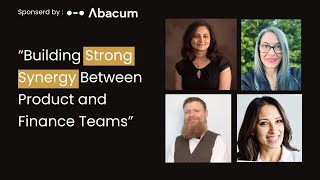
Paul Barnhurst talks with product managers Dara Goroff and Navia and FP&A manager Urvi about how their teams work together. They cover budgeting challenges, strategic alignment, data consistency, and where generative AI fits into their work.
From your mind, what does great business partnering from FP and A look like? What do you look for when you're partnering with fpa?
There's a lot to learn every single day. To me, this question is so important because as a product person it wasn't obvious. For me, product people are mostly customer focused, so the partnership with sales or operations or marketing comes naturally to product people.
Meet Irvy Capoti, who's working as an FPA manager at Netdocuments and is also a budgeting and forecasting expert. Also beat Dara at Gaurav Anavi Gupta, both working on the product but in different companies and proudly collaborating with their FP and A team ready to give valuable insights and product side practices that resonate and are in sync with FP and A practice. They are passionate about product and driven by a commitment to create quality results. One thing that is common between all three of these ladies is the belief that knowing the basics about product and pricing is extremely important. Even if you are working working in FP and A or any other part of your organization, your product team does.
Have to have a certain amount of financial savvy. A lot of times product success is dependent on a lot of small tweaks, maybe a tweak in how you bundle something.
To me, good partnership is as FP and A is predicting the future that product and finance are aligned on what the future is and they're all aligned and asking the right questions.
Foreign is the leading mid market FPA solution trusted by hundreds of companies. To eliminate the spreadsheet struggle, visit Abacum IO today and multiply the impact of your finance team. Hello everyone. Welcome to FP&A tomorrow, a brand new podcast where we delve into the world of financial planning and analysis, examining its current state and future prospects. I'm your host Paul Barnhurst, AKA the FPA Guy and I will be guiding you through the evolving landscape of FP and A. Every week we are joined by thought leaders, industry experts and practitioners who share their insights and experiences, helping us navigate today's complexities and tomorrow's uncertainties. Whether you're a seasoned professional or just starting your journey in fpa, this show has something for everyone. Before we introduce this week's guests, I want to give a special thanks to our title sponsor for this episode, abacam, whose support makes this episode possible. So now let's dive into the show. I'm thrilled to welcome three guests with me today. We have Dara, Yurvia and Navia here with me today and we'll give Each of them a chance to just say hi, Dara.
Hello everyone and thank you for having me.
Paul, thank you for joining me. Yurvia.
Hi everyone. Thank you, Paul, for having us. Looking forward to the conversation.
Yeah, very excited to have you.
Hi Paul. I'm glad to be on the show. Thank you for having me. I'm Urui.
Yeah, very, very excited to have you. So this is a special episode. We're going to talk with two product people and one FP and a person and we're going to focus on product management. So I'm really excited to have our guests. They're coming to us from all different locations across the Western U.S. so we're going to go ahead and jump in and we're going to start this question to Dara. As someone who has worked in the business, you know, supported product from your mind. What does gray business partnering from, you know, FP and A look like? What do you look for when you're partnering with FP&A?
You know, I love that question, Paul, because what I think is most fantastic is when product management and the person in financial planning and analysis both see the art of the possible. Because when you're working a product life cycle, you could be at the very early stages of a new idea. That idea is not proven yet. There's no revenue behind it. You maybe even haven't gotten the idea out to market past an early adoption, adopter phase or pilot users. And you need to be supported by somebody in FP and A who doesn't just look at budget and the detriment of the fact that you have something out there that's just gaining steam and sees the art of what that product could be. The other thing that I think is amazing is when you can collaborate with the person in FP&A. And a lot of times product success is dependent on a lot of small tweaks. Maybe a tweak in how you bundle something, maybe it's a tweak in your go to market pricing or how you price a retail product versus a wholesale product. And truly having that open dialogue and being able to again, collaborate to bring something to market is an amazing, amazing synergy. What I have to say about that, though, to make it really, really possible, is that your FP and A team needs to be familiar with their customers and they need to be familiar with their product line and the value proposition of that product line to the custom customers. And your product management team does have to have a certain amount of financial savvy to understand when that tweaking needs to happen and when they need to go back to the financial planning and analysis team.
Thanks, I appreciate that answer. We'll go over to our other product person here. Navia, what's your take? What is great business partnering from FP and A look like for you?
Yeah, so I agree with everything Dara said. A few things to add to me, this question is so important because as a product person, it wasn't obvious for me for many, many years what good FP and a partnership looks like. Product people are mostly customer focused. So the partnership with sales or operations or marketing comes more naturally to product people. So for many years I missed out on the party and I would say, you know, I'll be honest, we're still improving our partnership and there's a lot to learn every single day. And I'm excited for this conversation as well. But to me, good partnership is as FPA is predicting the future, that product and finance are aligned on what that future is. And they're all aligned and asking the right questions. They're asking the five whys and they're walking hand in hand that the momentum that product team is building is actually in the right direction. And a lot of times that doesn't happen naturally. The teams are communicating effectively. FP&A is proactively sharing insights without losing people into details. Both teams are vested in building relationships. And then finally, both teams are always, in my experience, overworked and stretched too thin, getting pulled in all different directions. This partnership works when there is mutual empathy on both sides on what is driving the stress and the wins for each of the teams. And the teams are motivated to embrace the challenges and work towards towards them. But this can only happen once you actually know what it is to be in the shoes of the other team.
There's two things I really love that you said there. You know, the idea of alignment. Right. We all got to be on the same page. And I think that's something Adair, you emphasized as well. And then the empathy, trying to be understanding of where the other person's coming from and what they're going through versus just focused on herself. Now we'll go over to our FP and a person. Yervi and Jesse, do you have any thoughts or anything you want to add from your perspective working with product?
I loved hearing the product's perspective. I think it's really nice to see the other side. And as an FPA person, like, it's really nice to get involved in product planning at the early stages. Like, that's a very unique Opportunity that most FP and A people would love to be involved in. And so you know, like just for the product team to involve the FPA people at their business partners at the right time to get aligned on that strategy that Navya talked about and you know, kind of make sure that we are all heading in the right direction. That helps with, you know, the product placement, the product pricing, profitability, like all those tactical things that NFP and A can definitely be so helpful in. And, and I think my biggest thing is getting aligned on the metrics because both organizations look at product so differently. And so you know, like product is focused, customer focused and finances like FPA is finance focused. So just getting aligned with on those metrics, like creating and tracking them from the get go, that, that is like a great partnership that kind of leads to just like overall, you know, good strategy.
Yeah, that's great. I know what you're saying, like that, you know, early alignment is really critical. Getting involved early, you know, makes finance feel like they're involved in the process and you don't run into situations sometimes where you come to find, you know, finance finds out about something or finds out about it from seeing the budget and there's more than what was expected to be spent. Dara's shaking her head. She's never had that conversation. Right? Yeah. Both of them are like, oh yeah, no, we've never had to deal with that with finance. So you know, that early alignment is a great point from a finance perspective and just making sure that the spend and everything is in agreement so there isn't problems down, down the road. So now we're just going to take a minute here and give our guests an opportunity to introduce themselves. We've talked a little bit about the whole partnering and what that looks like and we'll dive more into that. So why don't we start with uvia if you want to start here. Yuvia if just introduce yourself, tell us a little bit about yourself and your background.
Hi. So I'm Urvi. I am working as an fpna manager at NetDocuments. I support the tech Ops organization and the product organizations here. It's a fun ride. I come from an accounting background and I have kind of found my place and my sweet spot in FP&A and most of my professional career I have been working in various small to mid sized PE companies here in Salt Lake City and I've also worked in manufacturing. So it's been, it's been really fun being the strategic finance business partners and getting like an overall view for for the businesses and for the industry in general.
Oh, great. Exciting. Sounds like you've been with a lot of great companies. Thank you Ravi, I appreciate that. Why don't we go over to Dara?
Excellent. Thank you, Paul. So my name is Dara Goroff. I currently work for icar, which is a collision repair educator and credentialing body. We set the standard for what our body shops need to know to be able to set a safe quality and complete repair. I take care of planning which includes product management for I car as well as the launch of a new initiative that we've brought to market to help encourage entry level technicians to join the industry and thrive in the industry. As Paul kind of alluded to, we have a little bit of a past, but I've spent the majority of my career working in the automotive space, very much concentrated on providing solutions for collision repairers, franchise dealerships, and even in some cases used car dealerships. I absolutely love the world of product management because it allows me, as I said earlier, to think about the art of the possible framed around problems customers really have. And it's such a delight when you get to think about a new innovation that can make your customers happy and help to make your business, whatever business it is you're working in, successful and stronger together. So I'm like Urvia said, I'm very, I found my sweet spot. I'm delighted by what I do and I'm really excited to be part of this conversation because FP&I is so critical to product success.
Thank you. Thank you Dara. Appreciate that. Navia. Great.
I'm the Chief Product Officer at peak. Our mission at PEAK is to connect the world through experiences and we have the industry leading software product called Peak Pro that tours and activity operators use to run and grow their business. In my role I'm responsible for product management, design and analytics. I'm an engineer by education who very quickly realized that engineering wasn't my strength. So moved to product very quickly. I started my career on Wall street and literally instead of coding, I would take the ferry down from New Jersey to New York to sit down with my customers because that was something that was far more interesting to me than coding and I never looked back. So I've worked at bigger companies like Goldman Sachs, worked for Mickey Mouse for a little bit at Disney doing mobile gaming and then the last decade has been in high growth startups like Uber and then worked at Style Seat and Beauty and then the last several years has been at Peak.
Great, thank you Appreciate each of you doing an introduction. So let's kind of jump in here. We have some different questions for each of our guests and we'll start with Navia here. So what does a Chief Product Officer do? If you were to describe your kind of role and function in the company, what does that include?
Yeah, so a Chief Product Officer is a C level executive with the responsibility for making decisions that have a company wide impact. The fundamental difference between a product leader and a CPO is that a CPO needs to understand the full end to end business, needs to know the current financials, the shareholder priorities, needs to understand the customer and market perspectives and help to drive decision at that level. CPOs have the authority and the responsibility to make decisions that will drive growth and profitability for the company, but also the customers. A CPO is typically both working on strategic things, but often even tactical things that are required to transform the company. And the last thing I would say is each CPO has their spike and it's important to know that CPOs come in their own flavors, but ultimately they all have the same responsibility for driving the end to end company success.
Got it. Thank you. Appreciate that. And so go to Dara next. You know, kind of what is it like to work in product management? What's a typical day like? Or maybe just talk a little bit about that role, give our audience a little bit of a flavor for that.
I would say there is no typical day. As we've already talked about on this call. Product managers and working in product management means you have a passion that is split between understanding an organization's goals and major business objectives. But also this passion to get into the heads and the mind space of your customers and really boots to the ground, see what their day to day activities are like so that you can A find those gaps and see what solutions might be perfect for their future. But B also see how they interact with whatever product or software or tooling you may have created for them in the past. So you combine this passion for understanding and being in the head of your customer to a mindset that really is analytical. Because a good product manager, when they're not boots to the ground face to face with their customers, needs to be planning either future success or they need to be measuring the success of what they already have in the market and truly understanding what to do if the product isn't achieving the goals that you set and your customers are not behaving the way you expect. Because as much as you can get into the field and really see what a customer wants or even hear it from their own mouth. Sometimes how you translate their desire doesn't exactly match what they thought they saw in their head. So you need to be able to figure out your iteration path and really use like that ability to see the future to map out different iteration paths. And what is the level of effort I might have to go through to make something happen versus the amount of success or value I might see from taking that level of effort. So a really good product person spans some marketing tools that they use every day, some analytics tools they use every day. I'd say they're doing some intensive calculations on a weekly basis but they're also painting that picture of what their customer wants in a very understandable way. Sometimes to take it back to a software development team. But sometimes Paul, and you've probably seen this or irvia, the product person has to represent that to FP and A so that you together can figure out from a success standpoint and success KPIs to manage to when the product has met the organization wide goals.
Thank you, that's helpful. Definitely there's an analytical side as you mentioned, there's the customer side and coordinating and really trying to help bring that to life as you mentioned. I think as both of you mentioned there's some strategic and tactical in there. And so Irvy, I'd love, you know, as the finance professional in the room, so to speak, what's been your experience working with product? Maybe talk a little bit of kind of how you've worked with product over your career and what's that, what that's been like from your perspective.
So I have worked with, you know, NPE companies in SaaS companies and so sometimes there has been a product organization, sometimes it has been rolled up into R D. And so working with a dedicated product organization was kind of unique. Like I had to kind of reorient myself to kind of see what is it that this organization needs for me, how can I help them. And so you know, in what, what has been helpful and what I have helped like besides the budgeting of discretionary spend of headcount, like all the bread and butter FP&E tasks, there is also this getting involved in the product planning process and to see their roadmap for the product, how they think about it, the little bit of UI tweaks that they do and how that impacts the product and you know, how that kind of, kind of translates that to the cost side of the business presenting that analysis, doing a resource allocation or a pricing analysis, the biggest, the most Rewarding of it was building a product investment model in collaboration with the product team where, you know, to kind of, kind of actually see and what the map, the product map looks like financially. How does it impact all the financial key metrics? Does it align with strategy and kind of presenting that, updating that, looking at TAM and Sam. So those have been some of the very interesting things that I have had to do and have gotten to do with the product team in my roles as fpa.
Yeah. And I'm going to ask you one follow up question here. You know, as you've got into those product roles, how important has it been that you've got to learn the product, the understand kind of the product and the business? Would you say that's kind of been critical to working with, you know, product and R and D teams or how do you think about that?
I did not start out, to be honest, learning the product. Like you kind of know this is the product, this is the price. And then you know, you kind of hit a ball at some point and then it's like I do not understand this, I do not follow this. What are you talking about? And then at that point it, it's like, you know, you have to, it's just in the best interest that you kind of have a basic understanding of the product from an FPA standpoint also to see how the new products or the existing improvements kind of tag along or you know, are impacted by this. Otherwise I think it's not a full experience. It's not fair to the FP&A team, it's not fair to the product team when you keep asking repetitive questions when you that you should absolutely know. So I think I have learned it the hard way that learning the product of the company and learning how the bundles are formed or how the pricing is created is not only like it's essential, you cannot not do it. And the sooner you realize that the better. So.
And now a word from our sponsor. The FPA process is broken. You know it is and I know it is. Putting together management reports takes forever. There is a growing demand for operational insights and running scenarios or preparing budgets will inevitably break your spreadsheets. It doesn't have to be this way. Avicum is the leading mid market FP and a solution empowering hundreds of finance teams to eliminate their spreadsheet struggles with automated reporting and forecasting. With abacome, finance teams can see every financial and operational KPI in real time, forecast revenue more accurately, build headcount plans, budget their spend more effectively and run any Scenario with just one click. ABACOM is the most scalable FP and a solution for finance teams. If you want to double your output, half your reporting time, forecast your performance and become a strategic partner to your business, visit Avakum IO today. Yeah, I, I 100 agree with you and I love how you said you're going to hit a wall if you don't learn that product, if you don't invest the time in those relationships and being able to contribute to the conversation beyond here's the budget, here's the cost. Right. The more you understand that. So now we're going to go over to our, our product people here and we're going to give them an opportunity, going to give them a fun question that I think they'll like, love to hear. Maybe an experience or in general, what's been the most frustrating thing when you guys have worked with FP&A, and we'll start with you, Darren, what's, you can either share an experience or just in general, what's been some of your frustrations that you've had when you've had to work on budget and different assignments with FP and A.
So it's, it's quite interesting you asked that question, Paul, because lately my experience with FP&I has been fantastic. But there were two points of frustration early on in my career and one point of frustration more recently, maybe three years back, early on in my career. I think Navya and Yuriya both kind of alluded to this, which is I did not realize that somebody working on FP&A could be an asset or a partner to me. I kind of saw them as this checkbook and being in product management and living the world of what if and this is what my customers want. It was really hard for me to even want to think about a budgetary constraint of okay, Dara, you can't have all the resources you need to build this in three months. You have to build something in six months because you're going to do it with two less people. Those kind of conversations were so frustrating to me because I was just not understanding of the fact that if I built that bridge and created that partnership and helped my FP and a team to understand my roadmap, understand my customers needs, even understand some of the loose level financial projections that a product person can do that my path to a yes might have been easier or my path might have still been to a no. But we would both understand the ramifications of a no. So no, you don't get the resources you need because we need to stick with this budget because of company wide objectives. But we also understand your product is not going to market for six months. So we're not going to hold you accountable to revenue till nine months or greater from now. So that frustration cleared up. The more that I matured in my own career path, the more that I actually ended up moving up in companies to get that wider lens view and had a fuller understanding of business objectives versus my own roadmap and my own objectives. But what I will say can be frustrating is sometimes you deal with an FP and a team team that really is risk adverse and for reasons that nobody in the business understands, they want to stay under budget and you can't get them to see the light. And when that happens, no matter what tactic you try of putting them into the customer space and really painting that external picture, you can run into frustration. But I will also share that like in the past several years I have not encountered what I used to refer to as fp. No rather than fpa.
Yeah. So two kind of funny stories to that and then we'll go over to Navia. The first one you said F.P. no. We had a guest on the show that he used to refer to as CFO as CF no. He was an intern at time like 20 and somehow got back to the CFO and he got called into the CFO's office and the CFO thought he was referring to him as CF no kno like he, like he was really knowledgeable and so thanked him for that. He didn't correct him. He just said okay and left the office, you know, because he thought he was getting fired. So we've all dealt with the CF no. And the second I'll share. So Darren and I worked together. I was actually FP and a support for a while and I still remember she once made a comment the company she worked at was the only. This was the only company where she enjoyed legal more than finance that she had worked at. We'll just say finance had a reputation at that company. So that's one of my favorite memories from Dara. But we had a great relationship. So we'll go over to Nivea and give her an opportunity to share kind of maybe one of her frustrations or challenges she's experienced during her career working with FP&A.
Yeah, I want to share. And typically I would agree the frustrations are typically around Cash. Right. So cash is king and the risk assessment is not aligned. The example that I have is actually a different one which Is, you know, we all believe that cash is king, but also data is king. So we had 4x our entire company after our series C at peak, and we went through our first budgeting cycle after seeing tremendous growth in the company. So with this growth, the product and finance teams had to develop their ways of working right. If you imagine the whole company is, or, you know, 60% of the company was fairly new at that time, and it went quite poorly since there was lack of understanding on the data, there was lack of collaboration, there were mistakes made along the way. The teams were looking at the data sources in an inconsistent manner. The QA process was missing because the right people weren't confirming the data. And in many ways, both teams were overlooking the impact of market dynamics because the teams were fairly new. But thankfully, we have a culture that encourages very open communication and collaboration and a growth mindset like, these are all our core values, which led to discussing every challenge that we ran into. And we identified great solutions to make us all effective as a team. So let's say just like product management, you're never done building. I don't think we're done evolving our budgeting process. It continues to get better every single day. But I still have some nightmares on our first cycle after that. Tremendous growth.
Yeah, I could imagine after a lot of growth, it could be really painful. You've just raised money, more money, so you have the different investor expectations, you have a different growth profile and trying to figure out, okay, how do we get to the next step? And often that early hyper growth comes at a heavy cost, and then they want to rein in all that cost. And so it's just, it's a very challenging budget cycle when that happens. And I see everybody nodding their heads or kind of chuckling a little bit because I have a feeling everyone on this call has been through that experience when that happens. And it's. It's critical. I think, like you said something you mentioned there navia two things, that growth mindset, to get through it and being willing to have open conversations. You know, sometimes they're tough conversations, but as long as they're respectful, you come out the other side better. And so that's one thing I'd say with that budget process is it's just critical to, to be open, to be transparent and work through the issues. Because there'll be times you may not agree, there'll be times that finance may agree with you, but corporate will come in and say, here's the number, Figure it out. Right? We've all been there and Sometimes you're. Well, I really can't figure that out. Well, that's your problem, not mine. And those are always fun. I see everybody chuckling a little bit of that. But we'll go over to our finance professional now and give her a chance. From your perspective, what's been some of the biggest challenges, you know, maybe working with product or some of your kind of frustrations as you try to, you know, work with product on, you know, budget or just kind of FP and A in general, from your perspective.
So it has been fun listening to perspective from product because some of the challenges we face are the same. But just from a finance side, I totally kind of agree with Navya when she said the data inconsistencies or the different perspectives of looking at data and at the grain that you look at the data also. And with high growth companies, the processes, like the good old, often outpaces the processes. And so we do not have clean data, you do not have great data to begin with. And then everybody kind of wants to look at it in their own way and at their own grain. And so that is one of the things that that kind of, you know, has been my challenges to work with product and marketing or sales across the board, that we don't have a defined way to look at it. Like, we have not kind of sat down and kind of decided a strategy that this is how we need to look at it. This is what we need to agree on for the KPIs and have a data strategy of sorts. I also agree with Tara on the headcount conversations are always the hardest to have and to get your point across because working at SaaS companies, I've always seen that headcount is the biggest expense expense. And just like a PSA out there, like all FPA professionals are risk covers. Like, that's the nature of the job. Like, that's why we are in fpa. And so yes, most of the FPA professionals are risk covers. And our goal is to meet those net income or EBITDA goals, you know, to have those gross margins lined up to the board expectations or to the stock market, you know, and so that's the place that it's coming from. And, and I have also seen that, you know, having like transparency and open communication, communication about the deadlines, like we have specific deadlines for budget and for like three versions of the budget or three at least presentations of the budget. And honestly, like the world doesn't revolve around those deadlines for the monthly closes and the budget deadlines or the board deadlines. And so it's hard to get information from the business to meet those deadlines. Right. And I, I don't think that kind of translates well where FPA is seen as this bureaucratic, like just budget focused, numbers focused organization, but it's just coming from a different place. And so it's kind of, it's kind of fun having this conversation. So thank you, Paul.
Yep. Great. So, you know, a couple things you said there that I really like. I think, you know, this was mention more than once. That's always a challenge, right? Data. And it's not just data, but it's often how we interpret it, how we measure it. Like finance calculates one metric one way. You guys calculated a different way. I'm guessing every one of you have walked into a meeting and you open with the number and someone says, I have a different number. And the meeting delves into, well, what are the assumptions around that number? And I've learned if, that if you ever get to that point in the meeting, you're not getting anything accomplished. Accomplished. You're just going to discuss different approaches. And so, you know, anytime you can align that data culture, and that's going to be true. Product every organization. The more you've aligned your data definitions, you have a consistent culture and, you know, same data sources, the less that becomes an issue, the worse your data is, I think the more it tends to become an issue. And I've definitely worked in some companies where the data lack, to put it mildly. So. And then the second thing you said is just, you know, deadlines, right. That transparency, it's so important. And I've seen a lot of people in other businesses, that's where they get frustrated with finances during the budget cycle. Not being real clear about the deadlines and not making sure that they give the business enough time. Right. I'm sure. I see Navia, Derek kind of nodding their head there. I'm sure you've both experienced that, hey, we need it by tomorrow morning. It's like, well, why didn't you tell me about this a week ago? I need time to do it. Navia's smiling there. Do you have something to say on that one? I think I hit a spot there.
Oh, man. Yes, A lot to say, but I have a lot of empathy as well. There are these external deadlines that we're all laughing about, are sometimes not into control of finance people. So my only ask is, as soon as you know, please broadcast it to the business and don't wait till the last minute.
Please, Yes, I will add something to that as well. Because Paul, as we're all laughing about this and we think about budget season and we think about the fact that our FP and A team is here for multiple purposes. Not just to help us predict the future, not just to make sure that we're pricing our products in the most agreeable way for our customers. But really you guys are controlling for some risk and sometimes you need to make a change to something we answered or gave in our budget cycle. And what I would say is the best thing you can do is especially involve your product management leadership there because as part of an executive team myself and you know, doing that over the last several companies I worked in, nobody likes to get their budget back. And see, you know, here are some dollars that were cut out of it. But we cut all your dollars in travel because we don't think you product need to travel as much as you say. And then you know, part of your sales strategy for your product may be speaking at conferences or maybe getting face to face time communities like for back when we were working together, those dealer groups were so important to us. Right? So I think everyone understands that whenever we ask for money on the product side, we're going to ask for as much as we possibly can because we also know it will be negotiated down. But involve us in that prioritization when it is negotiated down. Because what you cut actually you may even be surprised at the strategy that you've also cut if you don't involve the product team.
A word from our sponsor. Let's address the elephant in the room. Bad data. Any investment made on top of a rotten foundation is money down the drain. The Analyst Intelligence platform, or aip is a data transformation notebook where users write their tasks and the system does the work for them. Clean data is so critical for decision making. The Daydream, the BI tool for operators gives customers a discount for using aip. Warning, using this product may lead to a sudden acquisition of a corner office. Prolonged use may result in being seen as indispensable to the company's success. Learn more@ AnalystIntelligence.com yeah, that's a really great point. There is. Look, if there has to be cuts, which there often is, we know that almost never is the first number. The final number right is to make sure you have that open communication and you prioritize things. And I've definitely had times where I've done that and I've had other times where I've made cuts and that doesn't go as well. Because then, hey, here's your new number. And it's like, okay, how do we work within this budget? What do we do? So, you know, some great points there. I appreciate both of those. And you know, another question I'd like to kind of ask here is, you know, for. This is for Dara. And then we'll go to Navia here. What does great FP and A support mean to you? Like, what is maybe the one or two things you really want from FP and A on a regular basis that you're like, okay, I know things are working well here.
I would say the first thing is the relationship. And I love my current team that I have working with me on fpa. I, I really enjoyed working with Paul. No matter what he about me preferring the legal team is because I loved that legal team. But really it's the relationship and the ability to have a very productive disagreement about how, when, and why we may want to budget something or spend something. I think that it is delightful when my FPA leadership also feels a really strong affinity to my customer. Because everything you do on the product side is to position your company to delight your customer and position the needs of your, your customers back to your company to be included in strategy. And when FPA is equally invested in that relationship and understands the importance of that, I find that you have this great harmony and this great flow. And even when you may disagree about dollars and cents, you will come to the most productive final conclusion of what a budget should look like or possibly what a forecast should look like. And everything is wonderful.
Yeah, I don't know if I've ever had everything wonderful, but I've had most things. I've got close. How about you, Navia? What's your kind of take there?
Yeah, so agree with that. Agree with all the conversations we've had around aligning on communication, planning. Another, like, another big one for me is getting FP and a support on strategic insights. And that's something that has been really valuable for us. I personally partnered with our, you know, really amazing FPNA team to create, create a product ROI model for the board. And that was simply done because of the way our FPA team looks at data. You know, we as product people look at things from a customer angle. FP&A is, you know, used to looking things that even at a transaction level or transaction angle at an asset angle. And what I appreciated about that conversation is we started the conversation at 20,000ft and then, you know, together as a team be zoomed into details, but regularly as we were building the model, we zoomed out enough to identify new opportunities for the business that the product team was actually overlooking that drove business growth. So to me, really zooming out and zooming in together as a team helps expose these new opportunities which can be meaningful and helps build alignment that both teams are building momentum in the right direction. Both from a focus perspective or even from an investment perspective.
And there's a couple things I love that you said there. One, I love the immense strategy and having an FPA team that can be strategic. It's really important that they go beyond the numbers. Right. If you have someone that's just in the spreadsheet and it's always about cost with no real appreciation for the business or the customer, it, it just doesn't work. You know, I, I, I say again and again to FP&A professionals all the time, the biggest thing you can do is get to know the business, get to know the operations of the business and the people you work with. Yes, numbers are how we explain things. Yes, you have to be able to work in a spreadsheet, but that's not really the job, right. It's helping drive insights and value. And that comes from, like you said, looking at the big picture, zooming back in and getting that different perspective. Because you know, for sure finance will look at it in a different lens than product. And if you have that open communication, you can come to different conclusions. Sometimes it's that makes everything better in the end. That's obviously the goal. That's where you want to get is because you each brought different perspectives and you were strategic, you came away with a better end product or end budget. Right plan. And so now we've, we've asked our two product people, now we get to go over to our finance person and get her thoughts from kind of her perspective. You know, maybe any thoughts on what, you know, a great partner is in product or thoughts for them as you're working with them?
No, I agree with all of these viewpoints and I think even from a FPA standpoint these are important to get aligned on strategy, to kind of work on things together. What I want to add is to have the FPA team involved in the beginning of the planning process or as soon as possible. I think that is the biggest challenge because, and that can be affected through good communication, through kind of not having silos because sometimes it's kind of chugs along all the organizations and FP and a kind of finds out about it post haste and then you are catching up to it. So I think a good practice is, what I would value is to get to be involved at the planning phase and then kind of working through all of these things together to break down those silos and to have good communication skills and to kind of move in the same, same direction. But that's the, that's the only thing I would add to everything that Dara and Navya have said.
I think that's a great point, whether it's product or others, is that early communication, the worst is when we find out about something after the money's been committed. And, you know, I, I, I've seen that before and I've had, I even had a partner one time that kind of hid things, hid things from me because he wanted them to be recognized at different times. That was a fun one to try to manage. But, you know, so that open, transparent, early communication, I would agree with you, is just critical. It makes, you know, things go better. So we're gonna, we're gonna move into, toward the end of our interview, we have two sections we're going to do here. We have one kind of called Rapid Fire. Some of these questions will be for everybody. A couple of them will just be for Via here on the finance side, Via. And then we're going to go to a couple questions around getting to know you, and then we'll wrap up. So we have a, just a few more minutes here. So this first question we'll just, we're going to ask all three of you. It's a fairly simple one. So we'll start with Navia here. Do you prefer using a Google or Excel for your spreadsheet?
Oh, my God, I'm going to get blacklisted in this finance podcast. But Google is my answer.
I figured that would be your answer, Darren.
Excel.
Excel. And I see you're not nodding your head. I already know the finance answer.
No, I'm just kidding. Yes, Excel. Excel all the way.
All right, and then here's the next question and we'll flip the order here. So we'll go to finance first. Are you currently using generative AI in your work today? If so, how?
We are kind of starting to use AI Edna documents just a little bit. And that's, that's the Copilot feature that is integrated with Microsoft. That makes it easy. And so, you know, it's to summarize meetings or to, to create some presentations based on some summary data or summarizing a page. On the product side, though, it's super exciting because our product team is building a product based on generative AI for the legal tech domain and that's super exciting. So that is there, but internally we are using it this way. I know of a few instances where we have used AI to kind of, you know, for quota allocation for our salespeople and you know, that kind of with some anonymized data. And so we have been kind of slowly inching towards that. But it's not kind of a full blown thing. But I'm hoping we all get to leverage it more on the BI side and on the FP and the accounting side as well.
Great. So it sounds like learning more about it and starting to use it. So great. Dara, from your perspective, how are you using generative AI?
So dipping the toe in from the product management side a little bit in storytelling, a little bit in documenting. As Irvie mentioned, it's a great tool if you're having a conversation or doing a customer interview and you need transcription. AI works wonderfully. Haven't fully integrated it into our product lines yet, but definitely looking to continue the internal focus on how we can help storytell through it. And then one other thing, I think we're probably all using AI a little bit more than we know because if you're using a visualization tool of any kind, whether it's Tableau or Power Bi, what takes you from being able to type in a question and have something generate into a beautiful chart? There is some generative AI on the back the OF in there. That's that's helping to pull those stories together visually.
Navia, what's your kind of with generative AI so far?
Yeah, I'll share mine because my team is using, you know, different, different tools and engineering sales product. We're also building our custom LLMs. But for me personally, I use generative AI as a brainstorm buddy as I'm working on different talk tracks. I use it for cooking recipes and I use it for creating presentations from talking points. So I'd feed it talking points and get a beautiful deck and then finally also for data analysis. Although I always check the work that the LLM gives me.
Yeah, you definitely want to check it. I say it's like you would never take the intern's work and give it to your boss. You shouldn't do the same with AI. All right, so these next two questions are going to go to Irvy here. These are our finance questions. So I'm going to get your perspective. What is the number one technical skill that FPA professionals should master? Your view.
Yeah, that's a good one. So the importance of data analysis is increasing so much. And so I think FPA has this unique opportunity where they kind of see the whole organization, they get to interact with the whole organization and have like this 20,000 view and also like a detailed view. So I think the most important thing is to be a bridge, like a data architect kind of role where you kind of see what each organization needs from a data perspective and kind of to understand the systems and the architecture on the other side and bridge that gap. And I think to make that and to lead that process, to lead that organization if you will, to get to a good data strategy so that everybody can have, have good, validated operational metrics, good, good financial data. Right. And I think FPA is in this unique position to kind of have that, to be that bridge, to be that data architect. And I think that that's like, that's super important.
Do you need to level up your FPA game then join us April 23rd for the FPA guys best practice FP and a course. Imagine working small, smarter, gaining greater visibility and becoming a top flight FP and a pro. During the four sessions we will teach practical frameworks and share real world examples that will make you a better FP and a professional. Visit the FP&A Guy.com FPA course to learn more and become the FP&A expert your company cannot do without. Yeah, definitely. I think that's a great skill to understand how to work with data to, to understand how data flows and be able to work with the business and help ensure data is aligned. It's just becoming a bigger and bigger role for FP&A professionals whether we like it or not and for everybody frankly. So what do you think is the number one I'll call soft or human skill that FP&A professionals need to master?
Storytelling like you know, I think just getting out of the financial, getting out of the spreadsheet to really understand the business and to kind of be able to present it in a way to different audiences and leverage visualizations offered by generative AI maybe and kind of be able to tell that story, to kind of bring everybody on the same page to align on the strategy. I think that will help to influence the business and, and you know, to guide it towards that overarching strategy that is laid out for the, for the next two years, five years. I think that is, that is a great, great skill to have transition from being an FPA analyst to being like to business partnering. And that's not going away anytime soon.
With any advances yeah, that's probably one of my favorite sections to teach when I teach FP&A. And I have a data storytelling course. And definitely being able to tell the story is important and it's something that takes practice and you can't do it in a spreadsheet. All right, so we're going to move on to our next section. This is the get to know you section. So we're just going to ask you a couple questions about yourself. Go, you know, relatively quick here. Give the audience opportunity to get to know you a little bit better. Navia, how about you? What's. What do you do when you have some free time? What's a hobby or passion of yours?
Time is always constrained. I have two little kids, so my personal hobby is actually hanging out with my two little kids. I do hear that this doesn't last. They wouldn't want to hang out with me when they're a little older. So I'm trying to make the best out of it. And we do a lot of fun things together.
Yeah, I definitely enjoy that. I know my daughter's getting older. Well, she still likes to hang out, but it's not quite the same. She's almost 11. She's getting close to being a teenager. So. Yeah, enjoy it when they, when you're their world because it won't always be that way. Alrighty. Irvie, what's your, what's your hobby or passion? What do you like to do?
So I really enjoy cooking and it gives me an opportunity to experiment with different things, just, you know, do my crazy little thing in my own kitchen, not follow rules. And, and I, I do enjoy reading both fiction, non fiction. Sci fi is something that I stay away from. Not my jam, but, but I do like going outdoors in the summer and kind of hiking and going biking around our neighborhood. So just hanging out with my family.
Great. Got a few, few hobbies in there. Some cooking, some reading, getting outdoors. So we're gonna move the next one here and we'll start with Navi on this one. What's your favorite travel destination?
Santorini in Greece. I do think it's a dreamy getaway with beautiful sunsets, like crystal clear water, whitewashed buildings. I don't think anything else compares.
I've been to Greece and that's a fun place to go. I haven't been in that area in Greece, but it's definitely beautiful there, so. And Irvi, what's your destination gonna be?
From all the places I have traveled, I have really enjoyed going to Napa Valley, California and It's just so relaxing. It brings you closer to nature, good food, a relaxed lifestyle. I think that was a vacation I really truly enjoyed from everywhere that I've traveled.
Great. Napa Valley is a fun place. I have been there. All right, so last get to know you question. This is kind of a fun one to see the different answers we get. And we'll start with Navi on this one. If you could have dinner with any person that's alive in the world today, who are you going to have dinner with?
Michelle Obama. In addition to her being our former first Lady, I am always inspired by her work in education, health, and women rights. So knowing having read her book, that would be a dinner that I would good one any day. And it would lead to some amazing conversations.
Great. All right, Yurvia, who. Who are you gonna pick? Ria?
So I have read Grit by Angela Duckworth, and I would love to pick her brain, sit down to dinner with her, and, and kind of, you know, get her thoughts on. On a lot of things. And I think I've been following her podcast, no stupid questions. Super interesting, like, you know, economics and psychology converging. So I think it would be a fun conversation to have with Angela.
So I want to just take a minute and thank the three of you for joining us. This has been a great conversation. I've really enjoyed it. I think there's been some great advice, you know, both from a product and a finance perspective. And, you know, I want to say just to our audiences listening, it really is critical that as finance professionals, we make sure we're listening to our business partners and we're having those conversations and learning the business and working with them, and I can tell you they will appreciate that. So we're going to go ahead and just kind of wrap up here and give each of them just, just 15, 20 seconds to share any last thoughts that they might have from the episode. So we'll start with Navia here.
Last thought, I don't think we talked about it, but don't forget to have fun. You know, this is. It's not a sprint, it's a marathon. And every time you go through some important budget deadline or some other deadline, don't forget to get everybody involved in the business. Talk about celebrate and then also enjoy it.
Celebrate those moments. Great. I like that you pointed out, also recovering from failure together versus finger pointing. Not that when any of us have ever seen that, but I've heard it's happened. Irvy, what's your parting thoughts?
I love both of these and I would love to be invited to a business partner celebration and I promise I would invite you back to a financial celebration. And I would like to add to this list Empathy. I think just being in somebody else's shoes, seeing from their perspective, is, is huge and it's underappreciated and, and I think that should be more common.
Well, we'll go ahead and close on that note. Empathy. So just a final thank you to each of our guests. We'll put their LinkedIn information so if you want to contact them or connect with them, you can get that chat on LinkedIn when we release the show. And again, thank you so much for joining me today. I really appreciated getting the chat with each of you.
Thank you.
Thank you, Paul, it was great to talk to you.
And Navya and Tara, thanks for listening to FPA tomorrow. If you enjoyed the show, please leave us a five star rating and a review on your podcast platform of choice. This allows us to continue to bring you great gaps from around the globe. As a reminder, you can earn CPE credit by going to earmarkcpe.com, downloading the app, taking a short quiz, and getting your CPE certificate to earn continuing education credits for the FPAC certification. Take the quiz on earmark and contact me, the show host, for further details.
More from Paul




Trust and Leadership Lessons for FP&A From 100+ Top Leaders with CFO Jon Laudie






