How FP&A Pros Can Use Automation & Python to Save Time & Become Better Business Partners - Willian
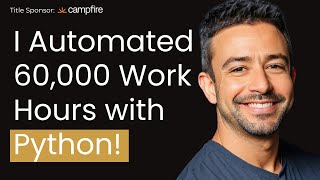
Willen Gomez explains how FP&A professionals can use Python and automation to free up time for strategy work. He emphasizes soft skills like communication and storytelling matter more than technical tools, and warns that generative AI poses data security and explainability risks that finance teams should approach carefully.
You can have a huge list of hard skills and soft skills, but if you don't have time to do it, it's just a list. A good way to say time is automate things. I have a frame of work that I usually use before I start to automate something first.
William Gomez, the FP and a senior.
Data analyst at Kenvoo.
With 15 plus years of experience in.
Finance, data analytics and business intelligence, Willian has led innovation across telecom, aerospace, investing and consumer goods. His passion for AI and automation has.
Helped save over 60,000 work hours through smart scalable solutions.
Nowadays we need to take care with AI because people rely so much on that. A lot of times I see the AI answer is wrong. It doesn't seem good. It's time memory consuming. But I think people need to learn the basics behind what they want to use with AI.
What's the number one technical skill they should master?
Excel for sure.
It's fabulous for quick and dirty. It's fabulous for prototyping. If you could offer one piece of advice to our audience to be a better business partner, what advice would you give them? FP and A Guy here. And I'm excited to introduce you to our title sponsor. Meet Campfire, the AI native ERP built for modern finance and accounting teams. Automate revenue, streamline your clothes, and centralized accounting all on one unified platform. Learn more today by going to Campfire AI that is Campfire AI. Are you tired of being seen as just a spreadsheet person? Will others get a seat at the table? Well, then, welcome to FP&A Unlocked, where finance meets strategy. I'm your host, Paul Barnhurst. The FP and A Guy. Each week we bring you conversations and practical advice from thought leaders, industry experts and practitioners who are reshaping the role of FP&A in today's business world. Together, we'll uncover the strategies and experiences that separate good FP&A professionals from great ones, helping you elevate your career and drive strategic impact. Speaking of strategic impact, our title sponsor is Campfire, the ERP that's helping modern finance teams close fast and scale faster. Today's guest is someone who's earned that coveted seat at the table. I'm excited to welcome Willen Gomez. Willen, welcome to the show.
Hi, Paul. Thanks for having me. It's an honor to be here.
Yeah. Really excited to have you. And just, you know, our audience knows Willen's joining us from Brazil, right?
Yeah, I'm from Brazil.
We're excited. I don't. You don't get a ton of guests from South America, so I always enjoy that because you get different perspectives from everybody you know working all over the world. So a lot of fun. Willen is a professional with over 15 years of experience in finance, data analytics and business intelligence across telecommunication, aerospace, investment markets and consumer goods. He has his MBA in Project Management from from FGV Business School along with several specializations in Data Science including Machine Learning from Stanford. Driven by a passion for process improvement, finance, automation, data science and AI, he has a proven track record of implementing automation solutions and BI tools that have saved over 60,000 work hours across companies, professionals and retail investors. As a financial partner on the supply chain FP&A team, he supports the EMEA cluster covering 60 countries across Europe, the Middle east and Africa, leading financial reviews with senior professionals and leadership to help drive the financial close and forecasting process. Love the background, love the automation. Really, really excited to jump into that. I know we'll talk about some of that, but we're going to start with this question. You know it's coming. What does great FP and A look like to you? Describe it for us.
Yeah, honestly Paul, this is my favorite question. Just listening to your past podcast and focus on this top key has taught me a ton. I would encourage everyone to just pay attention to these questions and watch your previous episode because there's a lot of insights that we can get from that. To me a grade of penny start with soft skills. Sure. That technical abilities matter is how you are partnered with people across the organization that really drives impact. And I would like to tell you recently personal story in my current role at Ken View, as I said, I'm responsible for helping the company to understand their story behind CNIS. That means I work with folks across 60 countries through Europe, Middle east and Africa. And to do this well, I I need to build a genuine partnership, not just check in about business performance. One day I was getting ready for a close review with the analysts in charge of a particular cluster. We kick it off the call as usual with a little small talk before diving into the numbers. Joking, I'm good. But when I stepped beneath calling me, I panic. So of course we laugh. But after our meeting I was just thinking about it. What if it's not just a joke? Am I making his work harder instead of helping? So in the next few meetings I'm starting to ask more about his workload and I learned that he was juggling way more than just nis. He barely had time to prepare for reviews to help other people in his team. I was Reflecting on that and I began to send my quick questions ahead of time. Right away he seems to be more relaxed, prepared, and our meetings became much more productive. So that's my view. What makes a great fpna? It's about being a true finance partner. Not just changing explanation from budget variance, but really working alongside the teams. Understand the challenge, make things a little easier. So this is one point that I would like to mention. Another one that I was like to tell is the storytelling for me is a skill. It's a soft skill that you should pay attention to that because very often FPA is the last stop before important information reach the high level of leadership. So that means we have to make our story simple but powerful because it share with the stakeholders, shareholders, employees, even the broad community. So I like to think of storytelling in a like a business TV series. You know, if you watch the first few episodes and you they don't connect or make sense, you'll probably stop watching and switch to something else. So when you go to a company, it's risky to let someone change the channel because in your world, those viewers are investors or shareholders. If they turn out they were not looking for entertainment, they might be looking at our competitors. So that's why shaping a clear comparison story is zero for me. A great FNA makes sure people want to watch the entire series. You know what I mean?
I like that analogy and I love the example you gave where you were proactive. Like, okay, is this person really joking? Usually there's some level of truth in humor, right? I've heard stories that say 70% of all truth is said in humor. And I don't remember where I heard it. I'm sure the number was probably made up, but gets that point across that there's almost always some truth to that. And I love that you actioned that and found a way to improve the meetings. That's totally being proactive without him directly saying, hey, we need to make some changes or I'm struggling here. You looked at it and said, how could I resolve his pain? And that to me, that's a great example of FP&A. So thank you for sharing that. And you know, talking about great FP and A in general, you shared a post recently on LinkedIn. That's how you and I connected about the things you've learned from FP&A tomorrow. In particular, that question you mentioned earlier, it's your favorite question. So what are some of the key takeaways you've received from that question that's helped you in Your work.
Yeah. I'm trying to summarize a lot of things from your past episode, but I need to be honest, I need to re watch all of them again because there were so many sites that is impossible to capture just at once. But something that I really see that is being repeated by your interview with is a great FPA needs to be good at communications, needs to be good at a business, partnering, needs to have empathy. So I'm starting to pay attention to this because hard skills is important, but some of them you can learn in just a weekend if you put a lot of effort. You can, for example, go from a non knowledge in power bi to someone that can make a reasonable dashboard. Just a weekend of learning by listening to all episodes. I have tried to collect as many sites as possible to help me improve my soft skills, which I believe are very important in this area. One episode I like was the interview with Brent Dykes which talked about storytelling in fpa. So it showed me how it's important to communicate financial ideas clearly. Not just showing the numbers, but telling the story behind them. I try to focus on these because although hard skills are important, like I said, you can study it in a weekend and get better. So from everything I learned, the podcast often says that great FNA professional has strong communication, work well with others, tell good stories, show empathy. And this confirmed my beliefs that why hard skills matter is the soft skills that really make a big difference in FP and A and help drive better results from the business.
Agree. I mean, at the end of the day, to a certain degree, the hard skills are just expected, right? We all have to be able to work with data. We all have to do some level of modeling, excel, understanding accounting. If you don't have the basic technical skills, then you should be spending some time developing them. But what really allows you to be strategic to be a business partner is all those soft skills. I mean, it's become so clear to me, talking again and again to guests. You know, attitude and soft skills to me are the key. Yes, you have to be able to do the technical, but give me the soft skills and the attitude and I'll hire that person, teach them the technical as long as they're willing to learn.
Yeah, there's a maximum that you are hired by your hard skills and you are fired by your soft skills. You know, you, you can't, you can't teach a hard skills for someone. But soft skills, sometimes it's, it's really hard for the company to manage you.
The one I've always heard I hadn't heard that one but the one I, I've always heard is your technical skills get you your first job, your soft skills get you promoted. You know, kind of same idea.
I couldn't say better. Yeah, that's really true.
So you recently transitioned from a data role into a full time FP and a role. What had you making the switch. I know you've kind of worked in both and you're very passionate about data, but what was the thinking of kind of wanting a full time FP and a role?
Since the beginning of my career, I'm always loving automate things. I start with Excel, I think as everyone learning some bvas, vva, sorry some vbas and some formulas to make my work faster and easier. And about five years ago I became passionate about stock market so I became a retail trader. I tried to, I start to invest a little bit of my capital in the stock market and I realized that it's hard to make a good decision without solid data analysis. So I just began to build some tools to find opportunities in the market. My work gained some attention in the community and I saw there was a real demand for this kind of skills. So I just give some time to my financial career and I moved to the data analyst as a data consultant working primarily with retail traders and some companies. But after almost three years in this area, my wife and I, we decided to have our first child. So you know, Paul, being our own boss has pros and cons. But I realized that combining my experience in automation data with my passion for finance would allow me to add even more value in the financial field. So I decided to switch back to the finance to get more security to my family. And now at canview I use both of my automation daily skills to do my job much, much better in the finance field.
It's amazing how those children change what's important, right? You know, things we think we'd never do. It's like well, do whatever we need to for our kids. Totally understand wanting that security. We've all been there. I know I have. At times it's like all right, I'll take, I'll take the secure position here. So makes a lot of sense. Sounds like it's been a great opportunity for you.
Before I move it to the data analyst role, I was working at Embarrass, that is the third plane manufacturer in the world. I had a solid career in finance but I was so passionate about automations and everything and once I, me and my wife didn't have any kids, I, I was just thinking why not try? You know, I'm not too young but you know I can make some mistakes. So I just tried to get involved into this and it was a great experience for me. And now back in the finance I use all these skills that I learned and I can say that my job now is, is doing much better than you know, I was a team bre.
FP and a guy here and I want to share a brief message from our title sponsor, Campfire. The ERP that's helping modern finance teams close fast and scale faster. Finance is changing fast. Are you keeping up? Campfire is hosting the first ever AI Summit for Finance leaders in San Francisco and you're invited. Finance Forward will bring together 150 plus of the brightest minds in finance and operations. Featuring powerhouse speakers from Snowflake, Vercel, Anthropic and more. You'll get expert led discussions, hands on sessions and real world playbooks designed to help you put AI to work immediately. Can't make it to San Francisco? No problem. Problem. You can sign up to receive exclusive tailored post conference content aimed at equipping you for the future of finance. Learn more about this can't miss event at Campfire Summit. AI it's funny, I've talked to others and you know I've said this before, if I went back into FP&A today, I would be much better for having run my own business for the last three and a half years and the things I've learned, you know, it definitely gives you a different perspective when you're the one where everything kind of stops with you. I think it gives you a greater appreciation for your business partners as well. Because you know when you're a business of one, you're doing all of it. And we mentioned this in your bio, but I'd love to dig into this because I know you're a big automation guy and we're going to get a little bit more into automation. But you completed the Stanford Online Machine Learning course. How has that helped you in the, you know, the data analysis and kind of analytics work you're doing. Talk a little bit about that because I'm a, I'm a big fan of machine learning and I think sometimes we, we sleep on how valuable that is a little bit. With everybody getting caught up in gen AI these days.
I get involved into machine learning because it's something that you can build it not from scratch nowadays. I love it programming Python and I don't know if you are aware of it, but Python has to the last client That I see was 200,000 libraries for you to build something, do some analysis and nowadays you can make a very efficient machine learning model using a library. We just need to have some knowledge on how to improve the data fine tune some parameters that answer your question. I still see Paul, that is not. There is not many companies that is ready to get involved into machine learning because some of the models we call a black box so you can see the result but people want to see step by step what's going behind is not possible for them, for all of them. So it's a huge work to do nowadays to build a machine learning model. I want to do it one day at canview especially to identify some posted in the BVA that can call my attention not because they are higher than the forecast but because they are unusual. Now imagining if I log in into an SAP and try to analyze the six country that I manage, I'll get a lot of data. It's impossible to do it even with Python so I need to build something to help me to do it. But to be very honest, machine learning have used it in my personal life I'm 40 as we talk it, I'm not so young but I like exercise myself so I build a model that track my body to see the points if the points of my body is aligned with the exercise that I'm doing so it's helped me to avoid injuring my body. So the first project that I did after complete the Stanford was this one. I tried to get involved into the can viewer but as I say to you, everyone ask me okay, that's a good project but I want to see what's behind your machine learned model and I just can't open it because it's a black box.
Yeah, it's really difficult. Well that's cool, you've done it for your health. I was going to say I'm pretty low tech. When my knees or my feet start to hurt, I know it's time to buy new shoes because I tend to abuse them. I go buy the new shoes and I'm usually okay, but I could definitely use a little more high tech there. That and my smart watch that says hey, your heart rate's high or it's low.
Yeah, there's a lot to do that you can take advantage for this.
Yeah, it's pretty amazing what's available nowadays. Yeah. When you say you're not so young, you're making me feel old because I turn 50 next year so.
Yeah, but we just have some experience. Different experience. You have A little more than me.
I just have a little bit of experience is what I like to say. You know, having that data analytics background. Where do you think fp? Fpa? We've talked about machine learning, but where do you think FP and a particular kind of teams fall short when it comes to working with data and analytics? Where are some areas that you think generally they struggle? I think black box is something you mentioned. So sometimes trusting the data sounds like an issue. But what are some of those things?
I think people want to have quick results very quickly because nowadays everyone talks about AI. You start to see some posts on your Instagram about a tool that can just receive a data and turn into various sites. A lot of insights for you. It's not the way it works. I think people need to understand the real problem they want to solve. I see many people just jump in the tool, just put some data in there and just try to receive the best result as possible. So they don't think about is it a real problem to solve, Is it worth it to work with data? Because it's very poetical to say that someone that work with data is someone that needs to come up with insights. But I think it's like 5% of my time that I come up with my projects to my manager and say, hey, see, I found this very interesting pattern in your data. Let's work on this. So it's not the way that work. It demands a lot of time, especially cleaning the data, understanding the real problem. I think people skip this process and moving faster to the tools. They want results and everything.
Yeah, so there's a little bit of a problem you're seeing of just people not being patient enough and taking the time to really clean the data, understand it and then analyze it. And you make a great point. We all talk about insights and hey, we need to bring insights. Many times we can conduct analysis and even of the insights we do find, often the business is aware it's not realistic to expect every single time you analyze data, you're going to have an insight that's going to change the way the business works. You know, if you're doing that, the business is probably working wrong. In fact, I would argue they are if you're finding it every single time because you should be using data all along. So I think you make a really good point on the data front because it's easy to get caught up in insights because we always hear that term. I appreciate that. So how do you, you know, any advice to people you've done a Lot of automating, right. We talked about the importance of business partnering. We started off with that in soft skills. You know, what advice would you offer to people to have more of that automation mindset and start automating things? How should they think about it? Is there a framework you use or what? What can you share with us there?
I have a framework that I usually use before I start to automate something first. First of everything, I look at the stage of the process. If something that is new that might be changes soon, I prefer to wait before automated because sometimes you can spend much more time building an automation than just doing the manual task. So it needs to be worth the effort. So if you work to automate something that is in the very beginning of the stage, maybe in the next week, your manager just came to you and said oh look, the process changed. Now we are going to do this way, not that way. So five, ten hours of your work is just, you know, through it out. You need to start it sometimes from scratch. The second what's the quality of your data? So there's the same data science that I mentioned, trash in and trash out. So if the data isn't good, any automation will produce a bad result. So make sure that the data is ready before moving forward. And finally what I like, I think about how much time automating will actually save. It's like make an investment. I look for a good return on my fort and in this case the return is time saved. If the automation will save a lot of time and make the process better, then I move ahead. Recently I tried to automate our BVA process at Caneview. I think I have spent five, almost 10 hours trying to build a BVA from automated completely the process. Because I need to connect to a system and then I need to check some tables and then I need to align something with the data governance. It's take a lot of time for me. So when this process will finish, it will be performing in a second. Not kidding. So something that now I spend two, three hours, it will be in a second. This is a very mature process. So it's worth it to spend time on this. So my advice to the people is look at the stage the process is. If it's a very staged process, try to keep it manually until you get more matrix stage. What's the quality of the data you are using and does it work your time to work with that automation? Because it's not that easy to automate process.
You know, I like that you're talking about the maturity quality and time savings. Kind of looking at all three and being able to say, okay, this makes sense to automate. This doesn't. You know, not so much automation, but even analysis. I did a. When you talk, number two, trash in, trash out. I done a ton of statistical analysis on some data we had, but it was all finance data. The accruals just made too big of a mess. They just never could find any patterns. And I was pretty new in my careers out of MBA school. I went and asked the guy I knew that we had a PhD in Statistics and looked at the data. He's like, your data is garbage. You're not going to get any good numbers from this. Yeah. He was able to tell, like, you could torture it all you want, but you're not going to get anything that's meaningful. It made me feel better. It's like, okay, it's not me, at least. It's just, you know, the data is garbage.
Yeah. The worst thing is people sometimes use this data in Excel to get the results. So they still use a garbage data and they rely on the results.
You know, it's always frustrating. You see decisions made and you find out, oh, the data was totally wrong.
Yeah.
And I've, I've done a few of those myself where I ran something and the data was totally wrong. Never fun.
It's not a good feeling to, to go to your boss and say, you know, that decision that you communicated yesterday was made by some wrong data.
Yeah. He had a situation where we paid some people and the data was wrong, so we paid the wrong people. That, that was not fun. You know, we all make mistakes. My view is always just be transparent and upfront and 99% of the time you'll be fine. So I'm curious. You mentioned, I think it was in the bio, 60,000 hours you saved over time, what automation has saved you the most time over your career. Can you share maybe a story of something you've automated where you've seen a huge benefit?
It was, I think the project that I saved most of the time was when I was working as a data consultant, especially for stock market. A guy for a firm just came to me and said, look, I work with these traders. I need to see all the Brazilian market, I need to see the US market, I need to see the dollar. So actually I have six people to look at the patterns for me and communicate the other traders some opportunity they are not seeing. And he came to me and say, can you automate that? And I don't know if you are familiar with Stock market. But usually we talk about some candlestick patterns, that is a graph with candlesticks. When you have open price, close price, maximum, a minimum to make things difficult, this guy was working with something that we call tape reading that basically you don't use graph most of the time, you just observe the patterns with the players. In Brazilian market we still see who is buying and who is selling. I think in us you can do it, you just see someone is buying, someone selling. But in Brazil we can see. So it was a big challenge for me. So I, I started to work with his team to understand how was the strategy, how they screened the market. And I built an automation from him that saved a lot of time because from six analysts looking for the market, he turned to just one to find to the system. So if you take five analysts plus four to five hours a day, plus 24, 24 days a month, in a year you can save almost 7,000 hours of work. So that wasn't huge project that I did that save a lot of time.
Yeah, I mean that's roughly three and a half employees, full year time, 7,000 hours. Thank you for sharing that one. I don't think I've ever saved anywhere near that many hours. I really like that example, you know. So I'm curious, you know, for your automation, what do you find yourself using the most? Python coding, you know, doing stuff in Excel, what are the tools you tend to find help you most when you're automating things?
Definitely Python, because you can automate things in Excel. But for example, one day I tried to build a system, entire system in Excel and get huge, huge, huge, huge, huge. And one day I just wake up, open the system and there was a error of reference in one cell. And you know what's happening when you have this kind of error? It's going to affect a lot of cells in your model. So what's panic, what's happened to this? I spend a lot of hours trying to figure out what's going on, who just delete some formulas in Python. If you want to organize a person, you can instruct it step by step of your code and one part of the code do not affect the other. So you can give your maintenance much easy. So definitely Python for automation is a plus.
And so I'm curious, do you, do you think more FPA professionals should learn Python? I mean, how needed do you think it is? What's kind of your take?
I think of like learn a new language, you know, when I learn English, it's open for me A new world, especially in terms of learning. Most of good materials that I found on Internet was came in English. So I can work just with Portuguese, I can keep studying, I can get better, but with English my vision just opened like this. Python for me is the same. You can do a great work in fpa. A person that I really like, the way she's managed fpa, she's new to know anything about Python. But if you know Python, you can automate things. Because I'm always thinking about the question you make in the beginning of your show, Paul, what a great FPA looks like. You can have a huge list of hard skills and soft skills, but if you don't have time to do it, it's just a list. And when we are in a financial field, it's very easy to get stuck into data. Some tie outs, some data cleaning. So okay, you have a list of what a great FPNA looks like, but you don't have time to even practice. So a good way to save time is automate things. So you use that time to do other things, maybe improve yourself in a communication skills, storytelling, be engaged with your stakeholders. So it's not mandatory for you to do your work in FPA with Python, but if you learn, you can save time not just for you, but for your coworkers, your stakeholders, your company. So I think something that is, is good for you to have in mind, especially because it's. I don't want to say that is an easy language, but it's more natural language. Some things that we see in Excel we just replicated in Python like if and else statement. You know, we, you can do some vlookups. So it's like a smooth transition. It's not like I'm going to to learn C. I don't know if nowadays someone is engaging to learn it because it's a very tough language. You know, my point is kind of.
Transitioning from Excel to learning the basics of R and Python. It does the example in Excel, then it has you do the example in R and Python and kind of walks you through. So you could start because I've heard it said Excel is the gateway to data analytics. And you know, almost everybody starts with Excel and some never move beyond that and they can still be good and do what they need to most all the time. And then others, as you start bumping into the data limits, whatever the problems are, you start investing more and more time elsewhere, whether it's Python, whether it's rich. Like your point in mentioning lady that right. She's great at her job. You can be great at FP and A without knowing Python, but having the ability to do it will save you time. Like if I started my career again that's something I would have learned. It was kind of always on my list and I, I didn't do it. Now that I've started my business I just don't do much of that type of work anymore. So I keep pushing it off but it's always kind of been something I've wanted to learn so definitely seen the benefit of it from others that I've worked with that had it. I'm curious, how do you see AI, you know, particularly Gen AI playing into kind of automation and changing the way we work. Whether it's Excel or Python or kind of what's your take? I think everybody has an opinion here so I'd love to know kind of how you see things with AI going.
Yeah, I think nowadays we need to take care with AI because people rely on so much on that and it's like people just skip the basics of the learning, for example Python because they think they just put some prompt in the AI, they are going to build the entire model for them. A lot of times I see the AI answer is wrong and I said it doesn't seem good. It's time memory consuming. So very, very relevant nowadays. It's going to change our life forever. It's here to be, you know, it's a real new stage of the work but I think people need to learn the basics behind what they want to use with AI. I'm using a lot, for example when I write emails in English but for example when I see some words I. It doesn't sound good, you know I think I, I mentioned to you one day I received an email from someone I think was from Spain. He tried to wrote in Portuguese it was clear that he is using AI because they may start with I hope this message finds you well. No one in Brazil use it. Made my grandfather the past days writing some letters but no one use it. So you need to be careful when you use AI. And I think the potential of AI nowadays is to combine it with the programming, especially Python. But what I see in the companies, they worry about the data is a fair point, you know because for example if you, if you are going to work with a framework, sorry framework, not if you are going to work With API from OpenAI in Finance, you are going to put your finance data in there. So what's going on with your data? Can you guarantee it's secure. So usually I'm using I everyday, you know, in my job just to try to help me to fight some errors, to optimize some codes. But I think we didn't get the fully potential of AI because of this limitation of data security and some of that.
I know it's a big concern. I know OpenAI just released, when they released chat GPT5, they released a model that can be run on local servers to try to, you know, manage some of that security stuff better and give companies, you know, a little more comfort. I was just talking to a company the other day that, you know, they're building an Excel add in and they were the only ones that did it as a COM add in. That's how they coded it and they did that for security reasons. So you can't download it from the store, you have to, you know, run it as an executable. And I'm like, why am I doing this? Like I feel like I'm in 1990. And I asked him and he explained it. He goes, it's because it's higher security. And you know, they're talking to a lot of banks and things with the tool and I'm like, okay, I get it now. Security is a huge one. I mean I worked for the Navy, so you know, the US government, military and I worked for a bank, American Express. So I've definitely seen where you have to be super careful with your data.
One question for you. Do you think they are using AI Navy nowadays?
I'm sure they are. I, I don't know which areas, how tight it is. I have to go back, I have to go talk to one of my friends that works in the industry. I have a friend that I think he's still in that industry. He may have switched but I'll have to check with them because yeah, it would. I'm sure they're using it in some ways, but I'm sure it's a lot more restricted. You know, they're not just letting them open up, open AI and put whatever they want.
I'm going to attack this country. What do you think is the best approach or something like that, you know.
So now we're going to come up to kind of that standard FP and A section now. You know these questions, you've, you've heard them before. I'm sure you've given it some thought. So the first one, so someone starting in FP and A today, what's the number one technical skill they should master?
Excel for sure.
It's amazing. 40 years later, and it's still the, still the king, so to speak.
Every year you say something that this tool will kill Excel. It's not going to be because sometimes my boss came to me and say, well, I have a meeting with the senior leadership in 15 minutes. I need to summarize what's the, you know, the most impact of the CNIS for these and these and these and these countries. I can't just stop to build some codes in Python. I need to make a pivot table, analyze it. And Excel is very, very good at this. So you need to learn Excel.
It's fabulous for quick and dirty. It's fabulous for prototyping. Even if Excel was to go somewhere, the spreadsheet is the form factor. I just don't see it ever fully going away. It's too valuable. As long as humans are doing analysis, the spreadsheet's going to have a place in our, in the work we do, for sure.
That's for sure.
What about that soft skill? What's, what's the one they should focus on?
Communication and storytelling. As I say, my work, it's impossible to do. I don't communicate with people if I don't try to do to be a good business partner with. And actually I have a, a big challenge because I'm Brazilian, we have an. A personalized style to work. But now I'm working with people from Europe, South Africa, Middle East. I talk to people in Prague, I talk to people in Spain, I talk to people in Italy, and everyone has a different behavior. I have a book, I just separated here that I would like to. Can I show it? Yeah, yeah. For anyone that Want is the Culture Map by Erin Mayer. It's a very interesting book because when I First start on FP&A, I had a meeting with someone from Portugal and I thought she was very rude at me. And I speak with my manager and say she's always that way. And she said to me, don't worry about that. It's just the way people treat that kind of subject in the country. So don't take it personal. She's a very, very good person, but it's normal to hear that kind of behavior from someone in Portugal. So this book just tried to summarize it, so how people from Japan usually behave, you know, they don't want to put everything on the box because everyone is unique. But of course, of course, in Brazil we have a pattern. If you send me a kind of mail, I maybe see it's a bit of rude, but if you send it to someone in uk, for example, they say, okay, it's pretty normal. So communication, it's. It's a very good skills for you to learn.
And cultural norms is a fabulous one. I still remember the employee. It's like, why are you thanking me? I'm just doing my job. They're from the uk. Like, he has always thanked me for everything. Like, basically, please knock it off already. It was better on you. A lot of cultural differences depending on where you go. And so that's a great, great book recommendation. I appreciate it. All right. You know, wouldn't be an FBA podcast without at least a few questions or conversations around Excel. So if Excel was to remove one feature tomorrow from the tool, could be a formula feature, whatever you want it to be. Which one's causing you the most panic?
I think pivot table for sure, because it's summarized very quickly. A lot of data.
I think a lot of people have said pivot table. I think it's a little less now that we have the pivot by function if you have 365. But still. Yeah, I, I can't tell you how many times I spent hours in a pivot table at work. I definitely would have a very hard time if they got rid of that. So I can relate to that one. All right, so we're going to move into the get to know you section. Have a couple questions to get to know you a little better. What do you like to do in your free time? What's kind of your hobby or passion when you're not at work?
I like to exercise myself and I like to spend now a lot of time of quality with my daughter. I try just to leave my phone away and try to go out with her, try to play with her and also like to a barbecue that is a very traditional in Brazil. You know, just enjoy sometimes with some friends and talking about some, you know, something about life.
Yeah, I was going to say barbecue. That sounds good. I might have to make a trip down there.
Yeah, definitely. I used to live in Australia. I lived one year in Sydney and one day a friend of mine just invited me for a barbecue. When I just reached out the place I saw it's just a sausage, it's not a barbecue. And he said, it's the way we make a barbecue here. So in Brazil, we use a lot of meetings meats.
It's funny, different places. What qualifies as a barbecue? What they barbecue like in the US you got Southern barbecue and Texas and, you know, different places are known and different sauces depending on where you go. And I'm sure it's the same in Brazil.
Yeah, it's the same.
It's fascinating how different. We can cook something or use the same term, but everywhere you go it's, it's different or a little different. Love that about culture. All right, if you could travel anywhere in the world tomorrow, what would be your, your travel destination? Where would you go?
I'm suspicious to say because I love Australia. I'd like to come back there one day. It's far away from Brazil. It's like 17 hours of flight was the longest flight of my life. But is a place that is very similar to Brazil in terms of weather. We have a mix of culture where everyone is very friendly. We have a lot of good places to visit. Yeah, definitely Australia. I love that country.
That would be fun. Never been. I had one time they were talking about sending me for one day of meetings and it's basically 17 hours there and back. And my, my wife is like six, seven months pregnant with our first and I'm like, yeah, it ain't happening. I'm not traveling over there especially for one day and you know, 30 hours of travel and they ended up bad managing it some other way. But it was pretty like, I'd love to go. Yeah. If it was a different time, I would have visited for a while. But it was just kind of a one day meeting. You're going to send me all the way to Australia.
It is a very good place. All of my friends just asked me the same question. Those spiders are real. Because they say that huge spiders, you know, that just come up. You know, I have never seen that when I was living in Australia.
It worries my wife. She's absolutely terrified of spiders.
Yeah, they talk about sharks. I saw a thing that was very interesting when I was driving. A kangaroo just crossed the street. I thought that was impossible because I saw some advice. Be careful with the kangaroos. I said it's not going to happen. And then a huge kangaroo just crossed, you know, the road and I try to break the car.
When you get out in nature, you never know what you're gonna see. It's pretty amazing. All right, so this is a fun one. I like to ask, if you could have dinner with one person in the world, dead or alive, who would you take to dinner? Who are you gonna pick and why?
That's a good one. Thinking about maybe Dalai Lama, because someone that has a very calm mind, you know, a very good philosophy of life. And I think nowadays everyone is very crazy to work as much hours as they can, then they realize that they spend all of their lives just working, just worrying about the problems. And I think if you can clear your mind and be peaceful with yourself, you can, you know, handle problems much better. You know, by the way, I'm trying to get into meditation. I promised myself several times before, but I didn't. You know, it's like I tried to concentrate myself and then that funny music just came to my mind and I said, oh my God, again. I need to try it again. But one day I will try definitely to meditate a lot of times during the week.
If you could offer one piece of advice to our audience to be a better business partner, what advice would you give them?
Try to put yourself in someone's shoes. It's very poetical to say, I know it's very hard to do because life is crazy. You are handled with your own problems. But you need to put yourself into someone's shoes to understand why they answer you that way. Why they not answer you. Because if you just try to chasing people because of the job they don't do, you're gonna be in a real trouble. So try to put yourself in someone's shoes. It's a good exercise.
You know, when you say that, I think of just kind of empathy, trying to understand where the other person's coming from. It's one I get a lot. So I, I am a big fan of that. Thank you for sharing that. So if someone wants to learn more about you or potentially get in touch, what's the best way for them to do that?
Yeah, I'm not a big fan of social media, but I'm trying to BE activity in LinkedIn. So just try to reach me out on LinkedIn. I'm trying to post some projects there, BI projects and automation projects. So if you have any questions regarding to any projects that I post, I'll be more than happy to guide you through if you want.
Well, thank you so much for doing that. We appreciate that and I imagine you'll get somebody who will take you up on that one of these days. So thank you so much for joining me. Thank you for sharing your post on LinkedIn about what you've learned from FPA. That makes my job much more rewarding when I hear those stories and so it's been a real pleasure having you on the show. Thank you so much Willem.
Thank you so much Paul. It's an honor to be here.
If you enjoyed the show, please leave us A five star rating and a review on your podcast. Platform of choice. This allows us to continue to bring you great guests from around the globe. As a reminder, you can earn CPE credit by going to earmarkcpe.com, downloading the app, taking a short quiz, and getting your CPE certificate to earn continuous continuing education credits for the FPAC certification. Take the quiz on Earmark and contact me, the show host, for further details.
More from Paul



Trust and Leadership Lessons for FP&A From 100+ Top Leaders with CFO Jon Laudie







