How FP&A Teams Can Improve Decision-Making with Scenario Planning & Financial Models - Michael
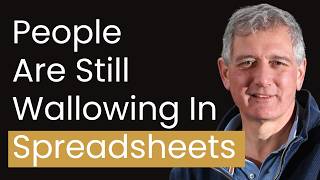
Michael Gould, who built Anaplan, talks about why spreadsheets fail for complex financial planning and why AI is now essential for scenario modeling. He argues FP&A teams need better tools for sensitivity analysis and cross-functional coordination, not just technical skills but the ability to communicate business-wide.
Chapters
AI is pervasive through everything. And one of the things we're thinking about very hard at the moment is looking at what's going to be differentiated in the AI space. My perception is— Meet Michael Gould, the founder and CEO at Kaleidoscope. He is a technology entrepreneur and software engineer with over 40 years of experience building financial planning and modeling systems. He was also the founder and CTO of Anaplan. If you're a bigger company, you may have a bit more leeway in terms of being able to raise capital or restructure or whatever. If you're a small business and you make a bad decision, you just run out of and you're out of business. I think it's fair to assume now that any platform going forward will have AI to help you with bringing data in and cleaning it up, helping you build your model, helping you get insights from it. An AI tool that generates 100,000 cell formulas in a spreadsheet, how do you know it's done it right? How are you going to figure that out?
What do you think is the number one technical skill that FP&A professionals should master? So right now, Welcome to another episode of FP&A Unlocked, where finance meets strategy. I'm your host, Paul Barnhurst, the FP&A Guy. Each week we bring you conversations and practical advice from thought leaders, industry experts, and practitioners who are reshaping the role of FP&A in today's business world. This week, I am thrilled to be joined by our guest, Michael Gould. Michael, welcome to the show.
Great to be with you, Paul. Really good to be here.
No, excited to have you. And so let me start just a little bit of Michael's background, but first I'll say why I'm so excited is Michael's one of the biggest tools. I think kind of a huge one in this industry that everybody knows about. So when you said yes to come on, I have to admit I was really excited because I enjoy talking to people that have been in this space for a long time. And I think you're over 40 years now.
That's right. Yes. Yep. More than 40 years in this space now.
You know where all the bodies are buried, so to speak.
Sunny D. All right.
So a little bit about Michael's background and then we'll jump into the interview. So Michael Gould is a technology entrepreneur and software engineer with over 40 years experience building financial planning and modeling systems. He began his career in the early 1980s on IBM mainframes after studying mathematics and computation at the University of Oxford. Oxford. He went on to co-create Adatum, a leading early business planning platform, and later founded Anaplan, a globally successful enterprise planning platform and British tech unicorn which listed on the New York Stock Exchange. Today, Michael is the founder of Kaleidoscope, his latest venture focused on rethinking modeling and planning for modern teams. He continues to pioneer in the space exploring how better systems can improve the structure of financial models and drive clearer, more effective decision-making. So how did you get into the EPM space? Over 40 years, obviously you've enjoyed the journey, but kind of take us back to how it all started.
Yeah, it seems to have kind of got me hooked, hasn't it? Yeah, so I started out, got a job as an intern at IBM. It was a gap year between school and university. Didn't know what it was about. It was a programming job, learned on the job in terms of programming. Programming in APL back in the day, goes back a while, not used so much nowadays, but it was used quite extensively at the time. And the system I was working on was, had been developed in-house within IBM by a great guy who's kind of my mentor, George Kunzel, who had built essentially a multidimensional modeling system for internal use in IBM UK. And so it was a kind of very similar to the sort of technologies that then emerged over many years to come in terms of being a kind of alternative to the spreadsheet as a vehicle for describing what's going on in the business and modeling it and planning it. So that's where I kind of got into this journey, found out about it, learned on the job, and took it from there.
What's kept you interested in it all these years? Obviously, you must have found it, you know, kind of quite interesting trying to solve that. Multidimensional modeling problem versus, you know, just using a spreadsheet, so to speak?
Yeah. So, I think why it's kept me fascinated is essentially the problem we're trying to solve is how do you represent what's going on in a business? And that is a complex thing. There's a lot of different parts in a business, a lot of different business functions, how they interrelate with each other. There's a lot of data and essentially trying to come up with a representation of that business that's a natural representation of the activities of business in all their complexity and not dumbing it down, not trying to make it over simplistic, but not so complicated that you can't work with it and model it. And obviously when you're forward-looking for financial planning, financial modeling, you don't know, you can't model transactional-level detail. You've got to model at a much higher level. So just trying to understand that problem, how do you translate what's going on in a business into a, effectively a computer model of it that allows people to make good decisions.
Yeah, and I think you made a great point, right? You're not gonna model, or nobody should model, at the transactional level, right? Just the amount of work that would be makes no sense. So it's how do you consolidate it and build something that's still realistic?
Yeah, absolutely, and represents the real complexity of what your business does.
So I would love to go back. I know you, uh, helped found Adatum and then you helped found Anaplan. What led you kind of to that entrepreneur route, to starting a business, and what's that journey been like? I mean, Anaplan well-known in the marketplace, one of the leading enterprise tools out there now.
Great journey with Anaplan. So I've been, as you said, at Edatum, and then we got acquired by Cognos and essentially recognized there was an unsolved problem. The problem which I'd by that stage been working on for 20 years, this challenge of how do you represent business, how do you model it? Seeing that spreadsheets, which were, so Excel was launched in 1985. So by the time I started on Anaplan, Excel had been out 40 years now and counting. The motivation really was seeing that companies big and small, still on spreadsheets, still struggling to get this kind of the right framework for modeling business decisions. And even though we'd made some progress with Adatum, which was essentially taking this IBM mainframe system that I'd worked on previously and taking it onto initially to DOS and then to Windows and then onto the web, it still wasn't a the right representation of how a business functioned. Anaplan was effectively a chance to just start again, clean slate, try and rethink it. And we moved along, we moved a significant step along the journey with Anaplan. I don't think we got the whole way, but it made substantial progress, which is how it became established as a leading player in that space. In terms of the journey, So I left my job at Cognos, and I was in a position where I was able to work by myself unpaid for a couple of years. One of the things I've learned, because I've been around this loop quite a few times now, is it takes a long time from writing the first line of code to having a product. These are complex problems. So at Anaplan, it was actually 4 and a half years from when I wrote the first line of code to when we signed our first customer. Which is a long lead time. So I worked by myself in a very cold stone barn, a couple of miles up the road from where I am now, rural North Yorkshire, writing the core calculation engine. Showed it to Guy and Sue Haddleton, who invested in the business. Guy came in as CEO and Sue started out in head marketing. And then took another 2 years with a small engineering team to build the product out and launch commercially. And so, that was a long, long lead time. Got it out and then started to see the success with it and started signing up some really amazing big name customers and took it from there.
Great journey. I've heard the barn part. I've seen that a few places. You kind of started in a barn and that's always fun. It's kind of like, you know, HP and starting in a garage.
That's the one. Yes. Yeah. Yeah.
Those type of stories. The other thing I heard you saying, it doesn't surprise me now. When I started, it did. You know, I really started talking to FP&A software vendors about 5 years ago now. And now I've talked to well over 100. I've talked to a lot in the market. And when you said 4 years, I'm like, yeah, I started thinking of all the tools. They show me a demo. Then all of a sudden I wouldn't hear anything for a long time. Like, yeah, we went back and rebuilt the product. It'd be a year later, 2 years later, whatever. Because they'd come out to market and just realize, oh, this isn't competitive, or we haven't really solved the problem. Or one guy I was talking to, you know, he got a year and a half in and he started over because he just, he didn't feel comfortable with the product. And so hearing you say that kind of ties with what I hear a lot of these founders say. Everybody thinks, oh, I just need a spreadsheet and some reporting, and this is a simple problem. I think especially after COVID and when I saw so many tools prop up and I'm like, yeah, okay, maybe for a startup, but then they're just going to use Excel. Enterprise, anything of real scale, love your thoughts. It feels like this becomes a very complex challenge to manage the dimensionality, the calculations, and build out what they really need to support a business.
Well, I think one of the things I've seen that's really interesting is the complexity. I mean, obviously at Anaplan, we were dealing with some of the biggest companies in the world, you know, the likes of HP, D&G, people like that, huge companies. But in many ways, the small businesses have the same problems. They have the same complexities, the detail. It's obviously much smaller scale, but you've got a lot of the same challenges about supply chains and choices, decisions you're going to make about, you know, do you outsource manufacturing or you do in-house? Do you manufacture subcomponents or buy them in? All these kinds of decisions that you have to make, and they really are the same challenges, whereas for small businesses, it's you don't have the resources to bring in to deal with relatively complex enterprise software systems.
Sure, yeah, it can get very expensive in a hurry if you're doing a lot of customization, you got supply chain planning, you got sales off, you got finance for using them all in the same tool. Whether it's Anaplan or somebody else, I mean, you know this, right? There can be a big consulting bill to get that all set up. The engine may be great, but there's a lot of bespoke work, so to speak, that goes on to meet each business's needs. So I'm curious, if you could do it over again, anything you'd do differently at Anaplan? Maybe what are some of those kind of key learnings from that journey?
Really good, really good question. So one of the things about Anaplan was obviously we were VC funded. We got, as it got the, after getting the initial product out, started to get a few customers, we got investment from venture capital firms. I don't think I appreciated, because first time I'd been on that journey, I don't think I quite appreciated at the time what that implied in terms of jumping onto a, like a, you know, moving walkway that was just going to accelerate. It had to accelerate. So you're jumping onto a trajectory that requires fast growth, further investment, further growth, and always striving for the next milestone, which was, you know, in hindsight, that was the only way we could have done it. It was extraordinary. It was building a business. We grew from, we went from like 150 to 300 to 600 employees in successive years. So, and you lose a few along the way. So by the time we were at 600, 500 of those employees had only been with the business for like a year or so. It's extraordinary kind of churn and change that you get in that high growth stage. So if I was doing it over again, what would I do differently? In one way, nothing at all. I think that was the right path for what we were doing then. We couldn't have done it in any other way. But what it does do is it forces you into a more short-term perspective on what you're building, because you're trying to hit the revenue targets for the next quarter and the next quarter. You've got to get the big deals in, therefore you prioritize the features that the next big enterprise deal will make the difference to get that deal across the line in time for the quarter close, in time for the year end. And that drives growth, drives the then allows for future investment. But what it doesn't do is, it's not a path that helps you on a long-term strategic re-architecting of the system. And in many ways, what you find is, whatever you built in to start with, that's what you've got to play with. And then you're building a lot of stuff around the edges, it's very hard to kind of really re-architect things. And so I think the The one thing which I, would I do differently? Probably not in a sense, because I don't think we could have done it any differently. But the thing which I would love to do, and now trying to do differently, is just taking that longer-term view to say, okay, well, where we want to get to, we're prepared to take a bit longer to architect the system. You mentioned you've seen people already re-architecting, and they're only a year or two out. And in a way, I think that's the right right thing to be doing. We didn't have that chance to plan. We were too busy being successful in the market to do that.
It can be tough. I know of a tool that's been around nearly 30 years and they did a big architecting project and, you know, while continuing to have customers and be, you know, be good size, that's hard to do. It's really tough because of, you know, all that goes with that. So it sounds like kind of the biggest thing The, the learning and probably what you're taking away with Kaleidoscope is really taking that time to build it, get comfortable where it's at, really doing that architecting, making sure you have the tool you want, and going to market. If I understand correctly, I don't think you've done really any VC or any of that type of funding with this one. It's a little bit more, uh, kind of allowing you to not have the high growth targets as you try to build.
Started Kaleidoscope back in 2020 on the back of having had the Anaplan IPO, so able to fund it, take our time, and yeah, try and do it right next time around. This is the Kaleidoscope, it's my 6th attempt at this. So this IBM mainframe version that I worked on back in the early '80s, I count that as V1, and counting through the different attempts, this one is V6.
So there's the IBM, there's the Datum, there's Anaplan, Kaleidoscope. What's the other 2 in there?
I'd count as two because there was the kind of DOS/Windows desktop product, and then we rebuilt it for the internet. So the—
Ah, yeah, yeah, that's a totally different—
It's quite a different world, and it's a dating contributor. And then there was, while still at Cognos, we attempted a new platform, which never made it out, and learned some good lessons along the way trying to do it, but it never— that one never saw the light of day. So there was one more in there.
Got it. Okay, that, that makes sense. I figured there might be a couple within either IBM or the cog— the whole Cognos journey there.
So that makes sense. Yeah, you basically know where the skeletons are. Yeah.
So tell us about Kaleidoscope. You've been working on that, I think, since 2020. I mean, I know you founded the company to build the tool you wanted now, but kind of just walk through why Kaleidoscope, how you're thinking about it, why it's needed in the marketplace. Just give us the story.
Yeah, so one of the things that I've seen and going back over the years, so at Adatum, we were working with much smaller companies than we did at Anaplan and then gradually worked towards bigger companies towards the end of Adatum and with Coglass, obviously large companies. Seeing that the problems that small companies are trying to solve are really just as real as big companies in terms of decision-making. If you think of the impact on cash flow of a decision that you make, if you're a bigger company, you may have a bit more leeway in terms of being able to raise capital or restructure or whatever. If you're a small business and you make a bad decision, you just run out of cash and you're out of business. So in many ways, the decision-making process is more critical. So what we're trying to do with Kaleidoscope is to take the kind of modeling that allows you to come to good decisions that really has been exclusively the domain of big companies with big implementation teams and bring that to smaller companies initially. We may well go to bigger companies in future, but our initial target is to take that same kind of modeling expertise domain into small businesses, medium-sized businesses, and provide them with a platform that allows them to make good decisions and specifically to explore possible scenarios, model different assumptions about where the business may go, and then be able to evaluate options before you commit to a decision. And yet not all decisions are going to be good, but at least you can understand what the risks and benefits are.
Got it. And when you say smaller company, are we talking, you know, few hundred employees, you're kind of mid-market, or how do you think about that? Like what kind of, because at some point, you know, if you're too small, probably doesn't make sense. So how do you kind of think about?
Yeah, so that's been part of our journey over the last couple of years. So we started out looking at very small businesses and there was a reason for that really was to almost set ourselves a challenge to say, okay, well, We've got experience in the mid-market with Adatum, experience in the big companies with Alaplan. If you start with really small businesses, you've got two things going to happen. One is you've got the kind of threshold for usability is just so high. If you can't get them up and running really quickly, really easily, you've just got to make it easy. And you've got to make it easy to get data in. And now we can come back and talk about that because that's one of the real big challenges and a big opportunity there. The other reason for starting with really small companies is there's this kind of gravitational pull upwards. So once you've got people selling a product, every salesperson on the planet, they never come to you and say, hey, can you take all these features out so I can sell smaller deals into smaller businesses? That's not what a salesperson says. They say, can you put this feature in? Because if you put this feature in, I can get this deal at this big company. And so there's this kind of gravitational pull upwards towards the bigger companies. So we thought, well, let's start right at the smaller businesses, see how we get on and then take it from there. So we initially started looking at sales analysis, demand planning, and stock planning for micro businesses. So tiny companies, anything we didn't, we said, okay, we'll exclude sole traders. We assume a sole trader can just, they're doing it on the back of an envelope. But anyone who's got a couple of employees upwards and are selling goods on e-commerce platforms. What we found was that it's actually that size of business, you don't have anyone who's technical in the company typically. They're the founder who has a passion for some particular product and they've got some ideas and they've started producing it and selling it. You don't have a finance person quite often, and found that sector just too challenging to get into. So we've now shifted up, but we are still looking at small to mid-market companies. So essentially companies, once you're big enough to have a finance team, you've got people using spreadsheets, you've got anything from, we're probably targeting more like the 100 to 500 company, but we're certainly interested in the 50 to 100 as well, maybe a bit, bit smaller than that in terms of, in terms of number of employees.
Yeah, no, that, that makes sense. And yeah, that— I'm not surprised to see you moved up a little bit. The smaller you go, it's just, it's so— it's very hard in this space from everything I've seen. So, and I'm glad you, you tackled it. Anything else you want to share about Kaleidoscope before we move on? I want to ask you some questions about FP&A, but I Give you anything else you want to share there.
AI is pervasive through everything. And one of the things we're thinking about very hard at the moment is looking at what's going to be differentiated in the AI space. Because my perception is that things have shifted and have changed even over the last few months. There's something has moved in terms of the capabilities and the adoption of AI. And so I think it's fair to assume now that any platform going forward will have AI to help you with bringing data in and cleaning it up, helping you build your model, helping you get insights from it, either queries to get information out of it or to alert you to things that are going on. Those kinds of capabilities, they're going to be across everything. They'll be in, they are in spreadsheets, they're in, big enterprise tools. And so what's going to be differentiated is going to come down to some very different things, because to me, those things are now just table stakes. If you don't have that, then you're not in the business. So then it comes down to, well, is your model a good representation of the business such that AI tools or people and/or people can build a really good model and understand it, trust the numbers, because that's one of the big challenges. Okay, it's all very well for AI to generate lots of data, but do you trust it? Do you know what it's got? So that's the kind of stuff that we're looking at now, is to say, okay, we think we've got a building on the multiple previous attempts at this, building a framework that allows you to describe your business really well, that actually is then amenable to AI tools to do the same thing, but still got that human aspect that you can inspect it, you can understand it and make sense of it and therefore trust it. And just to give an example, I mean, it's extraordinary the developments recently in terms of AI tools generating spreadsheets. They're getting so good at it, which is amazing. But an AI tool that generates, you know, 100,000 cell formulas in a spreadsheet, how do you know it's done it right? How are you going to figure that out? Okay, it might be great. And it may be that we'll get to a point where people trust the tools so well that they, the tools are so good, they just don't make those mistakes that humans make. But in the meantime, I think it's a real that's a real challenge. There could be some anomalies in there that you just don't spot. And if you didn't construct the model, actually picking through it is going to be really difficult. So in a way, one of the questions I still feel like people will have to ask, and we are asking ourselves as a business, as we build out our platform is, okay, what are the constructs that you're actually working with? Are they a faithful, natural representation of what's going on in your business so that you can examine them and understand them and see the, specifically the calculation logic, but the data structures, do they help you and do they play well in that world?
FP&A Guy here. Agentic AI is one of the biggest shifts in finance ever, and most FP&A leaders are still struggling to figure it out. On May 21st, I'm hosting the FP&A and AI software showcase with two of the leading AI agents in the marketplace, Concourse and Sapien, plus leading planning tools, Drivetrain and Una AI. One sitting, real demos. Register at thefpnaguy.com/fpa-software-showcase. That's fpnaguy.com /fpa-software-showcase. See you on the 21st. I think you hit on kind of a key point with, you know, all these tools building models, whether you're building it in a spreadsheet or whether you're having a build in a planning tool. You know, more so in a spreadsheet because every cell is typically a different formula. They're not building them with arrays, at least that I see in general. So you're, you know, you're, you're dealing with 100,000 formulas if you have 100,000 themselves. And I really like what somebody said. I had a, you know, an expert modeler on. We did a conversation. He's like, thing everybody needs to remember is we trade in trust, right? When you have someone build a model, you trust that it's right. It goes, they don't care if the tool built it or you built it. If it's wrong, you lose the trust, not AI.
It is an interesting point, that, that trust aspect. How do you, and how do you know whether it's good or not? Well, it almost in, like you say, independent of whether it was built by a person or a, or an AI tool.
Um, yeah, so you need to become better at auditing regardless, because, you know, the, the best modeling houses, you know, investment banking, all those big deals, they have a very strict audit process. And you're going to see that develop for AI, and some of it will be another tool checking it, some will be software, some will be a human, until we get, like you said, one day maybe we get to the level where we're comfortable enough that the errors and mistakes are going to be less than the human, we let it build. And we probably do get there at some point given how far we've advanced in a few years. But we're— I don't think we're there yet for most models. I wouldn't trust it at this point without, you know, a review. So I think it's a, it's a fascinating area in discussion. It'll be fun to kind of watch it all unfold.
Yep, indeed.
All right, so I'd love to get your thoughts. You've supported FP&A software for 40 years, 40+ years now, you know, 6 different tools. How would you describe, or how do you think of the job of FP&A in an organization? What's your thoughts on that?
So, I think fundamentally, it's supporting the decision-making process in an organization. I like to think of organizations as kind of 2 types of people in there. There are the people who actually do the stuff, so people who make stuff, who do services, they go out and sell it and market it. Because if you've got to market it for people to know about it, you've got to sell it for people to have it, build the products, whatever it is, support them. So they've got the kind of frontline people. And then in an organization, you've got the kind of people who are one step removed from that. So senior management, finance, HR, IT, if you're not an IT company, they're all kind of one step removed, kind of, you could just say, don't really do anything useful to the business. At least they only do things by being one step removed in that sense. So it's what their supporting role is within the organization that is critical. So specifically in terms of the finance team, what are they doing? Obviously, they're providing the information, the insight as to what is going on in the business. But I see it fundamentally as being enabling the decision-making and therefore providing the, if you like, the analysis of potential future states. What if I do this, what's going to happen? What are the alternatives? What are the different paths that as an organization, a particular decision could lead to? And putting that in the hands of the right people. So, you know, senior management, but all the different departments in the company making their own decisions about how they spend their budget, what hiring they do, what investment do they do in plant and equipment, all those critical decisions enabling all of that and critically, I suppose, tying it all together so that the functioning of the business is a coherent whole rather than disconnected, dragging off in different directions.
I like what you said there is, you know, FP&A, it really is to enable decision-making. So how do you think, you know, as you look at it, how do you think FP&A is doing at the job? How do you think they've done from your perspective? Do you think the field's done a pretty good job there? Things you think that we need to improve on, or what's kind of your take on kind of the FP&A profession on how they're doing?
I think I'd characterize it as doing kind of as good a job as they can with the tools available. I think the motivation is there, you know, that people want to do a good job. I think, yeah, people are still wallowing in spreadsheets, and that's a problem. People are, even with the, you know, bigger companies with the planning systems in place, they don't necessarily have the kind of, you know, flexibility to move things on in the way that they want to and speed of change because of the teams involved in that process. And I think where that comes out in terms of the limitations of what people are able to achieve as an FP&A function supporting the business is things like evaluating scenarios. So, are you Very often when you hear people talking about scenarios, it's just, okay, well, there's a best case and there's a worst case. And I mean, guys, that's just not, it is so oversimplistic. You've got a whole bunch of levers that are interconnected. You make a decision on, let's take an example. You've got a new product launch. You don't know how much it's going to sell, you've got to decide how much stock you're going to make. Do you buy more or make more? And that ties up capital. How, what profile of sales, what profile of uptake is there going to be? Are you going to, if you don't have the funds to fund that initial stock, stock purchase or stock production, you might have to take out some financing arrangements. What are your risks around the the upside or downside, depending on how you're on a range of outcomes or range of timings as well. It's not just about, especially for the smaller businesses, it's not just about how much you sell or don't sell, but when, when's that kind of curve of uptake hitting? Those kinds of things are enough to make or break a small company, especially. So how do you tie all those things together? To be able to evaluate lots of different scenarios and identify risk. And that to me is where I feel like the, in terms of the role of FP&A, the desire is there, the willingness is there, but the tools are not to enable people to do that kind of detailed exploration and analysis of potential future states, particularly with regard to this kind of interconnection. You know, okay, product launch, I've got new products, I've got to be able to market them, am I going to be able to sell them, have I got the finances, have I got the production capacity, have I got the warehousing to store the things, the logistics to deliver them? All those parts of the business get triggered from one decision we're going to make you know, we're doing to launch this new product line and how does that all pull together back into the finance function where, right, I've actually got to pull this together into a P&L, a cash flow, and a balance sheet and see where we would, we would end up if we make that decision.
I often hear finance leaders say, I know I need FP&A software, but I don't even know where to start. That's why I created the FP&A Software Showcase. So you could see top tools in action. This year, we're featuring Drivetrain and Oona AI on the planning side. And the— for the first time ever, we're adding two leading AI analyst agents on the market, Concourse and Sapien. These tools are already being deployed at public companies. You will get to see actual demos without the pressure of a formal sales pitch. Ask your questions and compare tools, all from the comfort of your chair. Join me on May 21st for the showcase. Register for free at thefpandaguy.com/fpa-software-showcase. That's thefpandaguy.com/fpa-software-showcase. Www.microsoft.com/fpa-software-showcase. See you there. It sounds like the biggest challenge you see is really around the tech and being able to manage scenarios, sensitivity, variables, really looking at something interconnectedly and saying, hey, we're going to do decision C, go into this new market or build a plant or whatever that might be. How do we really make sure we understand all the implications? What's that do for cash? What does that mean for inventory? What does that mean for, you know, the team or customer support team, whatever it might be? Because we all know, you know, any big decision touches pretty much everything in a business.
Yeah. An example of where I see this kind of thing working well is in the S&OP process, particularly in large companies where you're on a monthly cycle deciding how much production to run, you're bringing together the sales team, the marketing team, finance, statistical analysis, or statistical forecasts based on historic data in order to come to a consensus plan that can then drive your production. But that's a very kind of tightly managed structured process on a monthly cycle with specific events going on through the month and specific meetings in order to drive what's effectively a short-term planning decision. What are we going to make of which products in the next year, the next period of production? It feels like that same kind of ethos is needed on the bigger decisions, the long and the longer-term ones. Getting all the different functions, who each function. So one thing that I really believe is critical for finance is how do you kind of look almost like the coordination, each part of the business have their own expertise. They understand what's going on, what makes marketing work. I don't understand what makes marketing work. There's kind of a whole world out there of people who understand that, what levers you can pull and where investment will pay off and what you need in order to to have a successful product launch or ramp up at a particular product line. But how does that correlate? It's all very well marketing, doing a great job on marketing a product. What if the production capacity isn't there? So, you know, there's constraint or they shouldn't have been marketing that because there wasn't the demand and the statistical forecasts may have shown you that. So there's kind of tying all those pieces together and it seems like a key role of the finance team should be almost having a finger on the pulse of all those different parts of the business, how they connect, and then modeling that in such a way that you can explore what potential future states look like.
I'm sure you've seen this in your role and with companies how many times, and I've been guilty of it, you make a decision and you realize, oh, we didn't think about this, or we didn't include that. And it feels like the more and more we connect, the less that should happen, the better the data can speak to each other. And sometimes it's an FP&A mistake. I've, I've done a few. I've made my, you know, my errors, so to speak. But a lot of times it's just a challenge in knowing everything. You need that help. And so I think you think, bring up a really good point. And then you add in the complexity of more of a long-term. If you're thinking at a year, it's one thing when you're doing production for a month or quarter, right? The shorter the time, the more detailed you can be, the more accurate you can be. And even if you're a little bit off, the less risk, right? One month, yeah, course correct is a lot less expensive than if you get a year into something and you realize you did it completely wrong.
One of the things which I sort of feel like we should be aiming for in this, this space is you, you can't say no nasty surprises because nasty surprises can happen. COVID, wars, don't want to go into which, you know, plenty of things.
Humans are human.
Plenty going on in the world. Or just decisions that don't work out in the way you hoped. No outside influence affecting it, but just products that just don't take off in the way that you expected that they would. So not saying that there should be no nasty surprises or no nasty events happening. That's part of life. But in a way, I feel like there shouldn't be surprises because if you've modeled it, if you're modeling a product launch, you should have modeled it assuming it didn't go well. There wasn't the uptake you expected. You've had to weigh up a decision. You've had to make a decision. That's what senior management execs have paid to make the call on those. Things, and they may get it wrong. But what you shouldn't be in a situation is where it goes wrong and you don't know, you know, the results of it are not, are unforeseen and you're scrambling trying to model something that you hadn't thought about beforehand. It feels like you should know what the result of that be and almost get the very early indicators. Okay, well, it's not going quite as well as we thought. Therefore, we're on track to this scenario that we have already modeled out. What are our, if you like, our pre-planned actions that we can then put into play? And obviously, things change and you have to rework things. But so, you know, no, you know, obviously you can get surprises, but it shouldn't be a complete surprise. That's what I'm trying to say.
Yeah, you should have a good idea. I mean, there are, like you said, there's always going to be big things, macro things that come out of the blue that you couldn't have foreseen. But within that range of foreseen things, there shouldn't be big surprises, right? There's always a little bit of that unforeseen world. And even then, we all know at some point a black swan's going to come. You can at least model, okay, what could that mean for the business if it's a bad or good scenario in a black swan, and how would we respond? You may not be able to know exactly what, like nobody knew, you know, COVID and exactly what that would be like, but you still could have said, hey, a black swan's coming. If one comes that has a significant impact on our business, here are some different things it could have. How would we think about that? And so I'm, I'm with you. It's that idea of there, uh, within that range of known probabilities, you shouldn't have big surprises. Small ones are gonna happen. But there shouldn't be big things. And that gets a lot into tools, but I think there's also maybe a little bit of skilling, and I'd love to get your thought because, right, Monte Carlo and a lot of things that help you do scenario and sensitivity tend to be more on the math side than a lot of finance people are in FP&A. You don't see a lot of the statistical modeling. So what's your thoughts there? Do you think as a profession we need a little bit more of that data science skill? I know AI is starting to fill some of that gap now, making it easier. But just kind of your thoughts in general, because, you know, I've used some statistics and frankly, I would have liked to use more if I did it again and learn Monte Carlo and some of those things, because I feel like it's a little bit of weakness, but I'd love your thoughts.
Yeah, I think it's, it's a really interesting question in terms of whether, uh, AI will move the bar because, yeah, bigger companies will have data scientists, they'll have company, used to be called operational planning. I don't know if it's called that anymore, but it's the teams who do this, who are your specialists. And I think it's needed. And I think the question is, is it something that will, my gut feeling is that it will come, that it will bring that kind of analysis will become more available to much smaller companies who don't have the specialists. They probably need to take it with a bit of caution, but it could at least alert people to, like you were saying, scenarios that they maybe hadn't thought of, or probabilities, risks. I certainly see a role for that.
I agree with you. I think that's where we're headed. I think You know, AI makes it easier to be a data science citizen, I guess, or citizen data scientist. It doesn't— you still need to know things, and so that's kind of the challenge. There's still fundamental knowledge you need to have, but you can get a lot further with the basics than you could before, is kind of how I see it. But you got to take it with a grain of salt, like you said, because, you know, the less you know, the more you can be surprised.
Yeah, I mean, in a sense, I, I like to think it's not, not so much taking it with a grain of salt as, as more saying, okay, I'm not a statistician, I'm not a data scientist, so I know I'm not going to understand the ins and outs of what confidence levels that model has produced or whatever, but what I do know is I do know my business and I do know how the business works, and so I can at least put that sort of sense check on it to say, okay, well, there's this possibility that there's a risk I haven't thought about. How does that look in my business? And bring that kind of human instinct, kind of instinct combined with experience to play onto the input you get from the tools that you don't understand. In a sense, in a way, AI as a whole complete bucket, in a way, it's a similar thing to a statistical model or data science model that it's a bit of a black box, but both are a bit of a black box. AI is almost 100% black box because it's all happening inside some, you know, the weights inside some LLM and the tool calls that are going on in the background when it says thinking with a little spinner. You know, it's kind of, there's something happening. I don't understand. I don't know what's going on exactly, and some results come out and I have to assess the results. And in a way, what you're saying with things like statistical methods, it's almost, if you're a non-statistician, you almost have to take them in the same way. Well, yeah, I don't necessarily understand what, how it got to it, but I can at least, I can, I can absorb and, and assess what it's presented me with critically, but critically is the important thing. You've got to, You can't be non-critical about it, but bring your own understanding of the business and of finance to bear.
Yeah, you don't have to understand, I think what you're saying there, you don't have to understand all the math behind it, all the details, but you have to be able to do a sense check. You have to understand enough to look at it and say, okay, this is realistic, or no, something looks totally off here. I need to dig deeper or rerun this or whatever. So it's kind of that judgment level that you have to bring regardless of whether you understand everything. Because, right, black box, transparency, none of us understand everything that's going on behind AI. But we have to be able to look at it and decide, is this, does this look right enough that I can use it? Is there enough here that I trust it?
And of the bits that I can see, is it giving me visibility to things in terms of things like the calculation logic and things like that?
Yeah, no, makes sense. So I want to move into our kind of FP&A section. There's a couple of questions I ask every guest. There's two I pretty much always ask. And so I'm curious what you'll, what you'll say coming from a different perspective than the typical, you know, guest I have that usually works day to day in FP&A. What do you think is the number one technical skill that FP&A professionals should master?
So right now we've been talking about it, AI. And I think why it's critical is because I think there's a huge shift happening and some people are kind of at the forefront, embracing it and exploring it. Some people are skeptical, don't really believe it. But I think I've seen this recently within our business in different areas, just being prepared to understand and try almost replacing your own job with an AI tool to say, can I get the AI tool to do what I'm doing today and see what works and understand? Because I think it's a, there's a lot of opportunity, there's a lot of pitfalls and things are going to change a lot. So I would say, understanding how that impacts your day-to-day work and what the opportunities are and what the risks are, you can't do that without actually just trying it hands-on and it's not that difficult to do. You can just spin up any of the AI tools and try stuff. If you are doing it, and I would recommend a paid subscription because then they come with a license agreement where they're not, whatever data you share isn't being used to train the AI model, just to flag that one up, just so on behalf of anyone who's looking at thinking about doing this, if you stick all your company finances into an AI tool and you haven't got a subscription with a zero data retention policy, you have just provided the AI tool with some learning data for the next time round. So just, you need to be cautious and look at the data retention policies. But using tools to build a spreadsheet, using tools to drive the other, whatever other tools you're using, or just to kind of explore what it can do for you. And to me, that is, that's a very different answer from what I'd have given even 6 months or a year ago, just because of the shift I've seen in a really in a space of a few months. The level of reliability of what's coming out, you know, the ability of tools, like we've talked about generating spreadsheets, you've at least got to understand what it's capable of and keep up with it because what it can do now, you might have your best efforts and think, okay, that was a load of rubbish. It didn't do what I want. I could have built that myself with far fewer errors and done it. That might not be true in 6 months' time or even 3 months' time. And so keeping current on that is, to me, is the number one technical skill that FP&A professionals should be investing in right now, which is, in a way, it's interesting because it's not an FP&A skill. It applies to as much, you know, I've had similar conversation with people on my design team at GlideScope, where even 6 months or a year ago, if we wanted to do a working prototype, we'd write some code to knock up a working version of something, just so we could put it in front of people to try it out, get a bunch of engineers building it. And we don't need to do that now, because we can just use tools that will generate a really convincing UI that you can try out with people. So suddenly the ground has shifted, and the designers are, they can try out prototypes that they couldn't do even 6 months ago on a very tight turnaround. And so I think just keeping abreast with that and seeing how that impacts your day-to-day work. And I'd say do that almost do it with everything, do any task. If you're in accounts, reconciling your bank statements, how can you automate that and just see what happens? And often be surprised.
It's a great point on the AI. It's an answer I expect to see more. I think I've only had it maybe the second or third person so far, but, you know, I've been doing this for a couple years and I think we've all seen that become more and more important.
I think there's something— something is in my mind, something has shifted literally in the last few months that, you know, I agree, experiments that we were doing, um, yeah. Last year and they're getting just very, very different results. I mean, I'm a software engineer by background. I'm not a finance person. Trying, you're seeing what the, and that's the space where, because AI tools are built by software engineers, that's the first thing that they've tried to crack is because it's the people who are building it understand the problem they're trying to automate. So that's almost a kind of leading indicator on what where things are heading. And it is quite extraordinary what tools can do in terms of understanding a complex codebase, making changes quite successfully and safely, and presenting you with reasons why those changes were made. It's extraordinary. And that wasn't, I didn't think that was true that long ago. It was people trying it and the people who are really enthusiastic would make progress, but normal people wouldn't. Something shifted. And so I say that's the number one technical skill to invest in.
All right. What about softer human skill?
Coming back to what we talked about earlier in terms of this kind of coordination. So I feel like two things really. One is that just recognition, understanding that the Yeah, the finance team. I, there's a quick anecdote. I, one of the people I worked with back at IBM, he used to say, well, finance, we made our numbers. What are the rest of you guys doing? It's like, and, but, you know, at one level finance don't, they don't contribute anything to the business. They don't sell stuff. They don't make stuff. So understanding, okay, so what is your role? It's that supporting role in terms of the decision-making of the business. So in terms of the soft skills, I feel like this kind of making the connections is between the different people and making, trying to make sure that the, you know, almost enabling the communication, don't get lost inside the technology, but understand the extent to which what you're doing is enabling different parts of the business to talk to each other, but not by not talking, but talking numbers to each other, because at the end of the day, it's going to have to boil down to specific concrete things, how much you spend, how much you produce, how much you store, all those, those can, how many people you employ, what you pay them, all those decisions. But acting as that kind of coordination in whatever job you're doing because you're working on the financial models, but you've got touch points across the business. And so there's no reason why you shouldn't be more than just the number cruncher who kind of pulls this stuff together by burning the midnight oil, hunched over your spreadsheet. It's, yeah, I feel like there's an opportunity to do something that's far more, contributes a lot more to the ongoing success of a business than just that.
Thank you. Appreciate that. I like both of those. How fast is this? Because I'm curious as somebody who very much focused on multidimensional modeling and seen Excel survive for 40 years now and continue to be arguably the most used software in the world. What do you see as its greatest strength, if you had to list one, and maybe its greatest weakness?
So I think the greatest strength, I mean, there are many. I mean, it clearly wouldn't have survived as a tool if it hadn't got some extraordinary, you know, good qualities about it. I think it's a combination of the fact that it's so quick and simple and easy and natural to get started. You can open up a spreadsheet, you can just type in some stuff or copy and paste some stuff in, do a calculation, which you only need to learn how to point and click, and you can start to build something. So you can get up and running remarkably easily. In expert hands, it can do— you're almost, you're basically kind of almost unlimited. I'd say almost because there are some big caveats to that because any experienced Excel user would understand, they could push it so far, and then there would be another level of complexity that wouldn't just be a bit more work, but it would completely become completely infeasible. So there is a ceiling on the complexity that Excel can handle. It goes quite a long way, and especially if you start writing macros and things, then yeah, you can start to push the boundaries.
It's amazing how far you can push it. You can push it in the hands of a capable person, but you hit a limit.
Yeah. And you hit a limit, but you don't hit a— it's like you don't hit a brick wall. It's more like you hit a curve that's going up steeper and steeper. Do you see what I mean by the analogy? It's like, yeah, you can get a long way and then it gets harder and the really good people can get a bit further in, but it's getting harder and harder and harder, but it doesn't actually there isn't like a hard stop where you've got a tool where it says, okay, well, no, you just can't do that. It's not supported in the tool. You never hit that kind of a brick wall. It's incredibly flexible. You can apply it to any kind of problem. So I think those are the strengths. Very easy to share, and you can email spreadsheets around, so it's great for collaboration, Conversely, that's a nightmare for the poor people in FP&A who've got to try and pull the whole stuff to get back together again. Greatest weakness, I think, is the— fundamentally, it's not a good representation of your business. If you think, what are the constructs in Excel, in a spreadsheet? Obviously, there are online spreadsheets too. But the constructs are you've got a workbook which has got sheets, it's got rows and columns of cells as a grid. And your business doesn't work in terms of sheets and rows and columns. Your business deals with products and product lines and employees or people, contractors and employees, customers and numerical metrics. So it's basically dealing with a different set of constructs and you're using a spreadsheet metaphor to represent those. But in Excel, in a spreadsheet, any— there's no meaning attached to a number. So if I type in 5,000 in a cell, the only reason it has any meaning is by looking to the— typically to the left and above and seeing what other bits of information have been put in the headers in the same column or in the same row. And maybe the sheet name as well, or maybe a header somewhere up in the top left. The meaning of that number is only there by inference. Remarkably, the AI tools are beginning to get quite good at figuring that stuff out and therefore understanding what's going on. But there isn't any kind of coherent data structure that says, okay, that was a sales figure for this product, a sales forecast for this product in this month. Within this region. It doesn't have that information. The information is all implicit and depending on how tight you've been about constructing the thing, it's quite, yeah, it may or may not be good. You can do it without the labels in there if you know what's what.
Sure.
So I think in a way the weakness is the fact that it's not a it's not a close representation of your business. It doesn't deal with the lists of things that you care about, the people, the products, the locations, all the fundamental metrics, drivers, ratios, all those things that you're interested in, all your accounts from your accounting system. It's not, those are, those constructs aren't actually represented in it. And then there's obviously a whole bunch of other weaknesses in terms of things like collaborations, sending a bunch of spreadsheets out and everybody inserts a row and it goes all out of, you know, changes the formulae or whatever and all that fun and games that any FP&A person will be only too familiar with, but that's more of a kind of just practical logistical challenge.
We've all been there on those, so appreciate that. I want to just ask you one or two questions, kind of get to know you a little bit better, help our audience get to know you, and then we'll wrap up here.
Yep. Great. Thank you.
First, what do you like to do to unwind? What do you do in your spare time when you're not working on Kaleidoscope?
So firstly, I'm a Christian. My faith is really important to me in that, yes, it's not just outside. I see that as something that I try to live out both in work and outside work. I play the guitar, love guitar playing, classical guitar and acoustic. I have a little folding guitar. So when I was at Anaplan, I was traveling, I was in San Francisco about every 6 weeks or so, and also trips to other parts of the world on sales visits. I always had a little travel guitar with me to carry around. So I played the guitar and I started running. And this was after kind of winding down at Anaplan and managing to get a bit more time and trying to undo a bit of the damage of 10 years of flying around the world. Spending too much time in airports and hotels, so I run. Yeah.
Okay, great. And then I know, appreciate sharing, you know, the Christian part. I know some of that. I know you, uh, you and your wife have done a lot of fostering of young refugees. Share a little bit of that experience. How'd that kind of come about? Would love to just hear a little bit.
Yeah, so we have a big family. We've got, um, 4 birth children and 3 we've adopted. At the time of the Syrian refugee crisis, which was, I guess, I'm trying to think, about 10 years ago now, um, we saw images of, you know, terrible things happening. And we basically said, you know, we can't just sit by and do nothing about that. This, we've got space in our house. We've got the means. We decided to start fostering and specifically to foster unaccompanied asylum-seeking children. And we've been doing that for the last, so we had to go through, we signed up through a local authority, got the training and did that. So we've been doing that for the last 9 years. Um, and it's been a wonderful journey. I mean, we specifically, we do fostering for teenage girls who've arrived in this country, either as refugees or as asylum seekers. Obviously, you know, it doesn't take much imagination to guess what the experience of girls who've been traveling alone across Europe is like. They come, you know, they're very traumatized, have had a really tough time. It's just wonderful to be able to provide a place where, you know, a big house where they can be safe, they can get back on their feet, they can get back to school, get back to college, learn skills. And we've had quite a few now who've moved through now. They're safe, they're happy, they're living independently, making a life for themselves. That's just a real joy to see. And yeah, in terms of, you asked what I do in my spare time. Well, we've currently got 8 people besides my wife and myself in the house. So it's a busy household as well.
Is there really any free time with that many in the house, right?
Yeah, there's a lot going on.
Hence why you're out in the barn, so to speak.
Yeah, so I have this little shepherd's hut down the bottom of our field where I hide away so I can get on with the business.
Understand that one. Thank you so much for joining me, Michael. It's a pleasure to chat. I loved hearing some of the backstory and just how you think about these things and all the work you've done. I mean, one of the experts out there, obviously, in this space with 40-plus years of experience. And, you know, before we finish here, You know, if someone wants to learn more about Kaleidoscope or maybe get in touch with you, what's the best way for them to do that?
Best way would be, well, obviously go to our website kaleidoscope.com, drop us an email hello@kaleidoscope.com. The thing we're particularly looking for, so we're not launched commercially yet. The thing we're looking for, we'd love to talk to people who are particularly people in finance teams who are struggling with spreadsheets. If you're in a finance team in a small business, We'd love to have a chat to understand what are you looking for in a system? What are the tools you'd love to have to help you do your job better? We're busy building something, and we'd love to just hear from people who would like to dive into an early adopter engagement, participate in the process of building this next platform. It's an opportunity to jump in early and have a bit of influence about what we build. So yeah, love to hear from people.
Well, great. Hopefully you do hear from some people. Really excited to see what you end up building and see the product when you're ready. And thank you again so much for carving out some time. It was a pleasure chatting with you.
Great. Thanks, Paul. Really great to spend time with you.
Thank you. That's it for today's episode of FP&A Unlocked. If you enjoy FP&A Unlocked, please take a moment to leave a 5-star rating and review. It's the best way to support the FP&A Guy and help more FP&A professionals discover the show. Remember, you can earn CPE credit for this episode by visiting earmarkcpe.com, downloading the app, and completing the quiz. If you need continuing education credits for the FPAC certification, complete the quiz and reach out to me directly. Thanks for listening. I'm Paul Barnhurst, the FP&A Guy, and I'll see you next time.
More from Paul




Trust and Leadership Lessons for FP&A From 100+ Top Leaders with CFO Jon Laudie






