How Modern Finance Teams Are Automating Billing and Revenue Workflows with AI Tools - Riya Grover
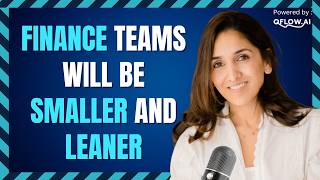
In this episode of the Future Finance Show, hosts Paul Barnhurst and Glenn Hopper interview Riya Grover, co‑founder and CEO of Sequence, an AI‑powered order‑to‑cash platform. The conversation begins with Riya’s first venture, Feeder, a two‑sided marketplace that connected independent restaurants with corporate clients, and the lessons she learned about talent density, marketplace dynamics, and the cold‑start problem. Riya then explains how those experiences informed the creation of Sequence in 2022, a platform that automates complex B2B billing, quoting, invoicing, and revenue recognition using a blend of deterministic logic and generative AI agents. She details how agents handle contract intake, invoice review, accounts‑receivable follow‑ups, and transaction matching, while always keeping a human‑in‑the‑loop for auditability and trust. The discussion covers the importance of configurable guardrails, customer‑level customization, and the balance between classic machine‑learning models and LLM‑driven workflows. Riya shares Sequence’s recent $20 million Series A raise (bringing total funding to $40 million), the product roadmap for new revenue agents and enterprise features, and go‑to‑market plans. She also outlines the company’s strategy for unified CPQ‑billing integration with CRMs and ERPs to eliminate revenue leakage and reduce reliance on spreadsheets. Finally, the hosts explore the future of finance technology, predicting leaner finance teams, consolidated tool stacks, and the evolving role of AI in strategic finance work. The episode ends with a light‑hearted AI‑generated “quirky” question segment about food‑subscription boxes for CFOs and guilty‑pleasure snacks.
Chapters
Welcome to the Future Finance Show, where we talk about treasury management on Mars.
LLM agents doing a review of all invoices before they go out the door so that humans only have to kind of dive deep and double-click into 10% of them. That's really powerful in the workflow because— Meet Rhea Grover, the co-founder and CEO at Sequence, an AI-powered billing and quote-to-cash platform. She's an accomplished entrepreneur entrepreneur and business leader with extensive experience across diverse industries. Also co-founded Feeder, a food technology platform connecting independent restaurants with corporate clients. Human in the loop is so critical in finance operations. It's actually why domain-specific platforms, you know, have a right to win versus maybe building agents directly in kind of a horizontal agent builders. When I think about the future of the finance function, I think it is going to be leaner generally, both in terms of software and team size.
How do you find a way to stand out in that crowded field of competitors?
When we started the business, we had this observation that Future Finance is brought to you by Qflow.ai, the strategic finance platform solving the toughest part of planning and analysis: B2B revenue. Align sales, marketing, and finance seamlessly. Speed up decision-making and lock in accountability with Qflow.ai. Welcome to another episode of Future Finance. I am one of your hosts, Paul Barnhurst, and I have here with me my trusty co-host, Glenn Hopper. Glenn, how you doing?
Good, Paul, how are you? Happy Monday.
Yes, happy Monday. Excited to, uh, get an opportunity to chat with and introduce our guests. So start by doing a brief introduction. I'll serve Shara Bracken, but Ria, Ria Grover, welcome to the show.
Thank you, great to be here with you both.
Yeah, excited to have you. So let me give a little bit about her background. She is the co-founder and CEO of Sequence. Sequence is backed by 16Z with $40 million raised today and is building the first agentic platform for accounts receivable, helping B2B companies with custom pricing and sales contracts, automating quoting, billing, invoicing, and revenue recognition. All those things we love, right, Glenn?
Yeah, absolutely.
Prior to building Sequence, Ria built Feeder, a venture-backed software company that exited to public company Compass Group in 2020. Ria holds an MBA from Harvard Business School in 2015 and a BA in Economics and Management from Oxford University. So what that tells me is she's really smart. Alrighty, well, again, welcome to the show. We're really excited to have you here.
Yeah, likewise. Just never, never tee it up by saying, uh, you're really smart. You set the, the bar very high there.
Well, you know, I mean, you have Harvard and Oxford. Those are rules. I think, Glenn, you have Wharton on yours. Is that the one, or is it Harvard? See, I feel like I'm in a room with just really smart people, so I mention it. All right, so enough of that. We'll jump into the first question we have for you. So, you know, you mentioned in your bio your first company was Feeder, and that was a technology platform in the restaurant space that you sold in 2020 to Compass Group. Maybe could you talk a little bit about why you started Feeder and what you learned from that first venture? Let's start there.
So, I mean, very simply, kind of saw a problem. You had kind of lots of independent restaurants which had hours of downtime in their kitchens, and they were trying to tap into new sources of demand. Often, restaurant teams don't have kind of large administrative functions where they can kind of go out and find those new opportunities. So, we started looking at ways in which we could help them grow revenue by tapping into new segments of the market, so corporate and venue demand. And essentially built that two-sided marketplace, and then also kind of built the software stack to enable them to service it. So, manage orders, payments, kind of loyalty, inventory by the end of it as well. And so, it was really interesting kind of building a two-sided marketplace because, you know, you have to be able to scale both sides in parallel. Also interesting building a business with a logistics and human component. Because there's no amount of software or technology that you can build that can prevent kind of humans making errors and you having to kind of build the buffers into your product to be able to sort of account for that. But it was, we didn't raise that much capital. We were running fairly lean as a business. And I think really what I learned during that was how to build a business, how to operate a company, what matters. I developed some very strong points of view on talent, the importance of really great talent early, and, um, you know, really kind of creating this idea of talent density and hiring at an exceptionally high performance bar. Because I, I could see in the cases where we had that kind of exceptional talent what a dramatic impact it made on the trajectory of the business. Um, you know, I think you, you also learn whether it's something that you, you want to do. Do you want to be an entrepreneur? You know, there's as many low points and hard times as as great ones. And so, you know, and by the way, the answer to that was yes, because I went and did it again.
I would sure hope so if you did it again.
Yeah.
And other than that, I mean, like, you know, when you're solving in a new problem space at a different time in a different market, most things you're doing are from first principles. But really, that talent piece and, uh, and also just really understanding what it takes to scale a company, um, and, and ultimately exit a company is something that I got from that first experience.
I just wanted to ask a follow-up question because there's something you mentioned, the two-sided marketplace. First, I'm curious, have you ever read the book The Cold Start Problem by Andrew Chen?
Yeah, I have.
Okay. That's what I was thinking of is you mentioned that and just would love your thoughts for anyone who hasn't read it. I'll, I'll tee it up just a little bit is so Andrew Chen, he worked at, uh, Uber or no, he was at Lyft and several other marketplaces and works for one of the big VCs now helping people start marketplaces. And he kind of, he goes through and he talks about the challenges of Starting a two-sided marketplace with one of the biggest being the cold start. You kind of have to start from nothing to how do you get most important side of the marketplace, how do you make sure you get the other side and kind of scale it. And so I would love to get your thoughts, how that book kind of in relation to just starting a marketplace and the biggest challenges there, because I've always been interested by marketplaces.
It is really hard in the beginning. No side is interested if you don't have critical mass on the other side, and, and that's the reality. So you're really you're trying to scale those in parallel, but, and give enough to both sides for it to be meaningful. It's probably not valuable until you have critical mass on both sides. And for us, you know, we started by onboarding and scaling with the restaurant side first. But then, of course, very quickly, you get the pushback of, well, like, you know, there's not much demand coming in, you know, is this worth my while? And so, that's when you're sort of rapidly trying to build the other side of the marketplace in parallel. What I will say is once you do have critical mass on both sides, there is this really beautiful viral loop and that kind of kicks in where, you know, you are growing both sides quite naturally because you've kind of got that critical mass. And I didn't start a marketplace business again. It's hard to do it really well, but it can be a really beautiful business model once it's, you know, if you can kind of drive it to a certain level of success.
Telling that the second business was something different. It's a very challenging business, can be very rewarding, but yeah, you have to solve multiple things at the same time to make it work. You can't just focus on one side or the other.
Absolutely.
Yeah. And Paul, uh, not for this episode, 'cause we have a lot to cover with Rhea, but I've gotta tell you the story of the business that was, uh, a marketplace. It was user-generated content and listeners company that I co-founded that we did not hit that inflection point. And we read the book as well. And, uh, we had the CHIN model that we used to, uh, forecast all of our growth that never came. We never hit that inflection point. And now every time I hear chin, I just think about that chin model and how just wrong we were on it. But it's, that's a whole story for another day. You've got, yeah, building a marketplace was very tough. Getting the creators in our case and then the listeners in as well. It was a lot. So kudos, kudos to you, Rhea, for pulling it off in the restaurant space. But I love, and having that success and having that exit, and then you've got, after that happens, I'm sure you've got the bug to do it again, which brings us to Sequence that you founded in 2022. And I, it feels like with what you're doing, you're, you've kept, you know, you're kind of riding the wave at exactly the right time. So Sequence, AI-powered billing and quote-to-cash platform. And I'm wondering, we know about the marketplace side of it, but what led you to this industry and also 'cause there's a lot of competitors there, so you've gotta find a way, but I think maybe the timing might be an advantage there, but how do you find a way to stand out in that crowded field of competitors?
Yeah, so I mean, when we started the business, you know, we had this observation that like the way companies sell today, whether it's, you know, SaaS companies, AI companies, fintech companies, and obviously many other verticals, the way companies sell is not simple. In advanced subscriptions. Like, most of the traditional subscription management companies, or, you know, or even the— what ERP support is, is generally geared around, like, if your pricing is very simple and kind of fits into a box, you can manage kind of billing, subscription management, invoicing in those platforms. The reality is most B2B companies end up working around that because, you know, they've got a 3-month trial or an opt-out or multi-year pricing step up, or, you know, some kind of variable pricing model with seats or usage, and all of a sudden, actually, like, that workflow of saying, like, taking, you know, a contract that's signed to actually collecting revenue against it becomes this very manual thing. And so, when we came into the market, this was, you know, sort of pre-LLM era. You know, we started building this product in 2022, but we were seeing this huge tailwind where companies, like, you know, were closing contracts with all sorts of terms and different pricing structures and didn't want to be constrained in their back office and their billing engine by what their sales team were doing. You know, they— sorry, didn't want to be constrained by the back office as to kind of how agile they wanted to be in their go-to-market. They wanted to be able to close deals and bill for them accurately and in an automated way. And so, there's been a ton of evolution in how, you know, software companies are pricing over the last few years. And we stepped into the market at a time where we built a level of pricing and billing flexibility that really most legacy players can't handle, and that was our sort of wedge into the space. And what's been really exciting for us is over the last couple of years, as we have seen these big leaps forward in GenAI and essentially what LLMs can do, that plays really well to the types of workflows that we're supporting. And we make a pretty key distinction here. There are certain things that are that need to be deterministic. So, you know, billing calculations, invoicing calculations, that's still code, and that is not, you know, LLMs taking contracts and, you know, trying to figure out what an invoice should look like. We're able to do that deterministically because we built these very robust pricing and billing foundations. But where LLMs are really powerful is kind of in aiding workflow and getting some of the jobs that people are doing really kind of down to minutes or seconds. And I'm sure through this call, we'll share examples of those. But today, we have an agent that will take a new sales contract that's signed and set up that subscription automatically with all of those terms kind of taken out. So, a human operator really has to review it for 30 seconds and can start the subscription live. LLMs drafting follow-ups to unpaid invoices or answering billing queries. Agents doing a review of all invoices before they go out the door so that humans only have to kind of dive deep and double-click into 10% of them. That's really powerful in the workflow because you're going from billing runs, invoicing runs that would take 5 or 6 days post-Mandant to now can be done in minutes and sent out the same day. And so, for us, the intersection of agents, the capabilities of LLMs, but with a kind of a very robust kind of foundation and sort of system of record is a very powerful combination.
Paul, I'm trying not to step all over your next question here. So, I'm gonna bite my tongue and let you go ahead and go because I'm champing at the bit to jump in there, but I'm gonna let you go.
You're all good, Glenn. You know, something you said that I kind of ask about, we'll get to the next question, but I really like how you mentioned the whole deterministic. Cause so often you hear people right now thinking you could throw GenAI at everything and it's like, okay, remember it's probabilistic or you shouldn't use GenAI at all cause it's probabilistic. And I think we all know the reality is there's a balance. There are use cases where GenAI is fabulous and there are use cases you probably shouldn't touch with GenAI. And, you know, I know as AI continues to grow, we've all seen how rapidly it's changing, you know. Cloud releasing its Excel app and its Cowork and all these different things from all the different tools. How do you ensure there's always human oversight in the process with your agents? How do you make sure you find that right balance, right? As we continue to see agents do more and more and they're getting better, but they still have these challenges, whether it's hallucinations or the probabilistic nature, whatever it might be. How do you balance that?
Yeah, I mean, I think human in the loop is so critical. In finance operations. It's actually why domain-specific platforms, you know, have a right to win versus maybe building agents, you know, directly in kind of a horizontal agent builder. It's because the work those agents are doing are so kind of tightly coupled with the human workflow that they need to be designed and embedded in a way where you have really strong auditability and you have this ability to actually get those points of human oversight and validation or judgment in things. So, you know, to be more specific, let's say, you know, our contract intake agent has taken a new contract and set up the billing subscription. Human still wants to review that before it goes, before invoices go out the door. Even if you're driving for 100% accuracy, that is a, you know, this, we're talking about contracts and revenue here. And so, agents can do a great job at like cutting out a lot of that manual work. The agent can notify the human when a new contract is ready for review, but there is still sort of human in the loop there with our AR agent. We have— think of this agent as like someone working in your team. So they are, you know, following up with customers if invoices are unpaid. They're, you know, replying billing queries, you know, following up with a purchase order number or W-9 form if that's requested. So kind of cutting out that busywork that otherwise a receivables team member would have to do. When a request comes in, you know, there are going to be scenarios where the agent can kind of handle that with full confidence, in which case it's going to go back directly. There are many scenarios where there's nuance and input is needed. So, you know, a customer hasn't paid and the contextual signals aren't there to understand exactly why. An agent will probably have a suggestion on how to follow up, but you may not actually want that agent to send that email out before it's been reviewed. And so, this is where I think product design really matters because an agent could pull in all the context, draft the message it suggests sending, give all the context to the human operator, and just say, "Look, this is my suggested approach based on these inputs. You happy for me to go ahead?" And I think that's a really powerful paradigm of like agent pulling together all of that context, teeing up what needs to be sent out, but actually in certain cases, not necessarily sending it automatically because The human has some potential context that lives outside of any data records that they might want to share. An account manager might have some context that they might want to share. And so, this is where I think in pretty much every agentic capability that we've built into the platform in our designing, the intersection with the work that people are doing and how they do it and really kind of embedding that very seamlessly into the sort of, into the UI has been, has been really, really important for us at Sequence. And I think there are very few agents in finance operations where you, you know, write the agent, you automate it, happy for it to be a black box and just run on the side without that sort of human oversight.
I think she just used the word that all finance people hate, right, Glenn? Black box.
Yeah. Yeah. And it's really interesting hearing you talk about this from a product side, because I think this might be a sign I've been doing consulting too long because Every project I take on is a snowflake and it's somebody's precious baby and everything is so bespoke as we go through. But like you mentioned, there are things like if you define, you know, okay, the AI agent can handle sending a W-9, it can handle these things. You don't have to reinvent the wheel every time you do it. Whereas when I come in with a client, we're building whatever it is, a workflow or an automation or whatever, and every time it's different. And instead of having sort of like you would with a product rules around it, we're redefining for each client what this workflow does, where the gates are, what they're comfortable with. And I'm, I'm wondering, that's gotta be hard from a product standpoint because you do have, you'll have customers with different risk tolerance around or, or trust tolerance around what they want to do. Are these things you toggle or is it?
Yeah, in the— when customers switch on an agent or a workflow, you know, they will essentially configure that agent with their own business instructions and nuance. And, you know, that can include, you know, tone of voice, that can include guardrails and things that they don't want to do. And, you know, we have some kind of pre-configured prompts to help them set out and define, you know, what they might want an agent to do versus not do. And this is where As you said, like that tolerance for what agent does, when agent acts versus when agent suggests, will vary between companies. And you want the ability for, you know, at a customer level to be able to configure that. And I think truthfully, that is what is exciting about agents versus, you know, ML-based workflows or capabilities, which is that there is this kind of inherent reasoning ability and this ability to sort of more loosely prompt to get desired outcomes. But as you rightly said, it doesn't work in every scenario. And there's a lot of parts of our product and our platform where we absolutely, you know, do not rely on GenAI and where GenAI wouldn't make sense for the kind of solution that we're trying to solve for.
I'd love to drill down on that a little bit more because right now, you know better than most, I mean, with classical AI, with machine learning, we've been using that at scale for over, well over 15 years or, or more now using machine learning for everything from product recommendations to, you know, customer segmentation, you know, whatever regression, what the, what tools, the algorithms that we've used to great success that are deterministic on the machine learning side. But it was, you know, the barrier to entry to using machine learning was you had to be able to write Python and you had to have an understanding of the algorithms and, and data science and all that. Then generative AI comes along where we were all sort of, whether it was in our social media feed, what ads we were being served or what products were being recommended, we were all interacting with AI on a daily or hourly basis. We just never thought about it. Now with generative AI, you can get in and you can talk to it like it's a person and you can even build your own, you know, you can have it code your own algorithms and everything. But I think a lot of times people just lump it all together. And they just think, they try to apply the same rules that they do to generative AI to more of that classical machine learning. Yeah, so how do you think about using both tools to get the most out of the technology and obviously reducing just with, along with the black box, you've got the errors and hallucinations that generative AI is known for, but classical machine learning, not so much.
Ever feel like your go-to-market teams and finance speak different languages? This misalignment is a breeding ground for failure. Impairing the predictive power of forecasts, and delaying decisions that drive efficient growth. It's not for lack of trying, but getting all the data in one place doesn't mean you've gotten everyone on the same page. Meet Qflow.ai, the strategic finance platform purpose-built to solve the toughest part of planning and analysis. B2B QFO quickly integrates key data from your go-to-market stack and accounting platform, then handles all the data prep and normalization under the hood. It automatically assembles your go-to-market stats, makes segmented scenario planning a breeze, and closes the planning loop. Create airtight alignment, improve decision latency, and ensure accountability across the team?
Yeah, I mean, always kind of choosing the right technology for the problem that we're trying to solve and thinking about, to your point earlier, when something should be deterministic versus probabilistic as an outcome. And so, one example of that is transaction matching. So, we have a reconciliation agent like a lot of that like product will be designed and built with kind of more classic kind of machine learning where transaction matching and we're sort of spotting for certain rules and patterns based on what bank payments have come in. But then, you know, GenAI can be quite helpful to, you know, sometimes provide judgment in some of the nuanced cases and actually provide back information on why it wasn't able to transaction match or suggest an approach that a customer might take. We also have a sort of automations layer within the platform where people can build actually defined workflows and rules. So, you know, finance teams might want to put pricing guardrails on new quotes that are being signed, you know, to prevent certain discounting or to make sure that, you know, a certain kind of margin is achieved on a quote. And so, you know, that's going to be rules-based. It's not going to necessarily be kind of an LLM. They're prompting to sort of share those approval workflows, other workflows that you'll have in the business, you know, things that you're mapping to other systems of record. Again, sometimes actually building, you know, defined workflows is really great. You know exactly, you know, what scenario it's going to act in and exactly what the outcome is going to be. So, we definitely leverage a mix of both. And I think that's really important, again, in the domain of financial operations where there's just no room for hallucination and error. In certain places, like particularly on things like, you know, invoicing calculations, usage calculations, billing, revenue recognition.
And when you find areas where you can stack them on top of each other and get an even more valuable response out of it, that's when you start feeling like, I'm doing magic here.
Absolutely. Absolutely. And that is actually, I think, where the magic comes from. And that's why I think they're like ultimately coming back to the product design, the UX, how and where agents and AI interject in these processes, how you get oversight into what they're doing. I think that's a really big part of winning here because this is all about trust. Back to that no black box thing. A big part of trust is understanding what AI and agents are doing or not doing and how you can interact with them in a system.
I agree. I think it's a— yeah, a huge part of it comes back to that trust. So knowing when and how to use things goes a long ways toward that.
Exactly.
So you, uh, you recently raised $20 million. I think it's just the last few months here as part of a Series A. So maybe talk a little bit about that. I believe, if I remember correctly, you really didn't do, uh, the VC route with your first company, so this is probably one of your first big funding rounds you've done. I mean, I imagine you did a pre-seed, but one of your largest you've done so far. So maybe talk a little bit of what that experience was like, maybe some of the highlights and lowlights of raising those funds, and then what's the plan for, you know, continuing to scale with those funds? How are you thinking about things?
Yeah, so we, uh, we actually raised a large seed round as well. So this new $20 million investment brings us up to about $40 million raised in the business.
Okay, so you did a large— I didn't realize it was that large of a seed.
Yeah. But really, you know, continue investing in our product and engineering team to build out what is a very ambitious roadmap across the order-to-cash space. And, you know, lots more revenue agents and sort of enterprise-grade functionality coming later this year. And then also, of course, invest in growing our go-to-market team. So sales, marketing, and success.
And I'm curious, when you think, you know, order-to-cash, how do you think of integrating with the big CRMs How are you thinking about that? Because I know they have tools, lots of tools integrate with them, you know, you sometimes see that separated from billing. So, how do you, as you talk about the ambitious roadmap, kind of how are you thinking about all that?
We've thought about a kind of unified approach to CPQ and billing because the problem that we see in a lot of businesses is that sales teams live in CRMs, they're closing contracts upstream, and that data is entirely disconnected. From what finance are doing and seeing downstream. And a lot of the revenue leakage, a lot of the manual work comes in actually just trying to connect and understand what sales have sold and making sure that it's represented accurately in financial systems of record. We really are playing a role in bridging that gap and giving companies the product catalog, the pricing engine to be able to configure and track, you know, every, you know, the terms of every contract sold, but then, you know, absolutely ensure that that data is pushed into the CRM, is synchronous with what's pushed ultimately into the ERP, so that actually RevOps and finance teams are working with this kind of shared context layer and sort of unified source of truth on really what product pricing usage and revenue data is. And I think that's incredibly powerful actually for an org where it's insane. You'll see these companies that are kind of $100 million plus in revenue, and actually that data lives in spreadsheets or PDF documents somewhere and hasn't been unified. And you actually have no idea if you've billed for the right things or if you've missed some revenue somewhere. And what's held in these contracts is actually really important signal for then how to drive kind of further revenue growth in the business. And so, you know, I think one of the big value adds we, we bring is not just enabling companies to, to track that data, but then actually pushing it back into the, the systems of record where, you know, companies are reporting and, and learning from that data to be able to, to actually leverage it in positive ways.
When you said you'd be surprised at what's done in spreadsheets, not at all supporting a billion-dollar business that complete disconnect from their CRM and our billing system. And for the longest time, we were pretty much billing it out all out of Excel files. And just uploading it to the system for the invoice. And at one point it got so bad I had to review all the files because there were so many mistakes. So I can definitely relate to what you're talking about of those nightmare billing scenarios. I've lived them.
And I think it's such an amazing time right now because there are all— I mean, Paul hears me say this all the time. We've been talking about digital transformation for 30 years and there have been tools along the way that have come along and made things easier. But I don't, I don't mean, I don't want to get into the whole AI crash, you know, or in all that. However, this is reminiscent to me in a lot of ways of the dot-com era, um, with the rapid growth of so many people coming into the market. The difference is then it was kind of, well, we just have to be on the web. We don't know to what end. We don't know what it's going to mean. We just have to go dot-com. We have to do, uh, whatever we can. Whereas now the speed at which tools are coming out that facilitate these tasks and issues that we've dealt with for years. It's amazing. And me on the consulting side, we're trying to build solutions, but at the same time on the product side, I mean, it seems whether it's an existing platform or a new startup, I've never seen, and I've, I've been very tech focused through my whole career. I've never seen a pace of such rapid technological changed before. And like, even trying as a consumer, trying to keep up with it and like looking at the marketplace and all the software that's out there now and everything. It is, I mean, it's gotta be invigorating, um, as a heading a startup in the space right now. But it's like, just as a user of some of these tools trying to keep up with it, it's, uh, jarring. I, I bet from your side it's even, even more so.
Yeah. It's unbelievable. And I think, you know, actually like really forces you as a CEO to force yourself to continue growing and learning. At a rate that ultimately enables you to beat the market because things are moving so quickly. I think, you know, I was speaking on a panel recently where someone said, like, as a CEO, you basically in this era have to reinvent yourself, like, every few months. Things are changing so rapidly that if you don't keep pace with that market change, the new shiny things that you're building will become obsolete and old news very quickly. And also just from a perspective of, like, looking at the market and, you know, understanding your positioning in that market. Again, that's changing faster than ever before historically, just with, you know, so many new players kind of trying to tackle the space in, in different ways. And so it's, it's really fun, uh, being a CEO. You're, you're on your toes for sure. But yeah, I'm, I'm enjoying it a lot.
And I guess as follow-up to that, because you are forced to stay on top of what's going on, and, uh, so You know, there's the software platforms, there's the stuff happening under the hood, there's what the frontier companies are doing. I mean, this is, and this is a tough question, I know, because the pace of change is so fast, but AI is taking on more of a role in finance departments. I think, you know, we're more risk-averse than our sales and marketing companions, but now, they are, you know, just kind of being forced, whether sometimes dragged kicking and screaming into it. But now finance and accounting are adopting AI. I mean, what do you, get out your crystal ball and what does the tech stack look like in 5 years? I mean, like with Cowork in recent weeks, the perfect example of the software stocks plunge because, oh, and it's like Satya Nadella said, well, if what's going to happen to SaaS if Gen AI is just, you know, it's just a wrapper around a database basically. And I don't know, it's hard to fathom where it's going, but I also think, I don't want to answer for you. I've got my own thoughts around this, but I'd love to hear what you think about not even necessarily what's going to happen to the SaaS industry or all that, but if this is what we're doing, you know, 3 years after ChatGPT 3.5, where are we in another 5?
Look, for what it's worth, I do think that sort of the model capabilities will plateau somewhere. Like, I don't think we're going to— I think the rate of change that we've seen over the last few years, I don't think that necessarily sustains on the fundamental kind of capabilities of the models and what they can deliver. But what is going to meaningfully change, in my opinion, is how companies and teams work over the next 5 years. And it's just getting started, right? I think when I think about the future of the finance function, I think it is going to be leaner generally, both in terms of software and team size. So, speaking first on software, you know, you used to have, even in our space, in order to cash, you used to have 5, 6+ tools that would enable you to basically manage revenue. You know, you have a CPQ tool, billing tool, maybe a separate place you do RevRec, you know, something else that you spun up to sort of manage reconciliation, somewhere else you're calculating your sales commissions, et cetera, et cetera. Whereas I do think that now you'll have fewer kind of systems, maybe you can have one for revenue, one for spend, and you'll be able to do a lot more in those systems because fundamentally these like businesses like mine today can build faster, more powerful capabilities in a shorter span of time and essentially kind of build and execute on more product in a shorter space of time than you could 10 years ago. And so, I do think we'll see sort of less in the tech stack relative to, you know, you survey some finance teams today and they're working with like 15+ tools. And then the other thing is teams and smaller, leaner teams and where teams spend their time. So, I think you'll start to see people move away from that sort of bottom of the pyramid work of this kind of repetitive, manual, operational stuff, you know, sending, like answering billing queries updating and editing an invoice with a credit note or manually, literally manually keying in invoices and invoice data in some cases, that stuff will go away because agents will handle that really, really well. And you should start to see, you know, all this talk of like the rise of the strategic finance leader. I think every finance leader will and should be spending their time on more strategic work. So, in our case, less time on, you know, reviewing invoices and more time spent looking at pricing evolution and revenue tracking and understanding which product segments are driving your revenue to then inform pricing guardrails on what the revenue team are doing, as an example of like the difference in where time is being spent. Because I do think today finance teams are spending the majority of their time on things that, yeah, are not particularly kind of needle-moving for the business, just things that have to be done every month, these kind of painful manual repetitive tasks.
Yeah, you're preaching to the choir there. What a time to be alive. It's exciting. Yeah. Yeah. I think we, in the interest of time, we need to get to our—
I know—
AI questions, don't we?
How this section works is we pick a different AI model. We've used them all and we feed it the questions we're going to ask you, your LinkedIn profile, whatever it can find on the web, and ask it to come up with 25 kind of personal, sometimes a little quirky questions. We get some odd ones from time to time. Usually they're pretty good. And so how it works is Glenn and I each ask a question, but we each take a different approach. So you got one of two options for the question I'm going to ask you. I can let the random number generator pick a number between 1 and 25, or I can have a human in the loop and you can pick the number between 1 and 25.
I'll pick the number.
All right. What number do you want?
Okay, I'll go with 7.
All right. Let's see what we got. So number 7 is under the section labeled the Foodie Founder Era.
Okay.
It says, if you could create a food subscription box for stressed out CFOs, what would be in it?
Okay. I would have some good 80% dark chocolate in there. Probably protein shake because it's efficient and Cause we don't, we don't have any time for anything fresh, do we?
That's your call.
Yeah. And maybe like a fruit, like keep it simple. All right.
I like it. Chocolate smoothie, protein shake, whatever you want to call it.
Chocolate and the fruit should be fairly low GI because you got the dark chocolate there.
Nice. Alrighty. I'm going to turn it over to Glenn. He takes a little different problem with these questions or different approach.
So first off, I have to say, Paul, which model did you get to come up with these questions? These are way better than whatever ChatGPT came up with. It was Claude. This was Claude. Yep. Claude wins again. I don't know.
And we asked something about if a golden retriever was doing accounting, what kind of golden retriever would it be or something?
Yeah. Or something just complete. Yeah.
They were just about that bad last time. So these were actually pretty good questions.
So I almost did an override to put you on the spot, Ria. I'll tell you the question. I'm not going to do this one, but the way that I do mine is I feel like, well, AI generated the questions, let it pick its favorite. But I was reading through the questions. And the first one I, I felt like would've put you on the spot. It is, you've lived quite the academic journey between, and, and Paul, you left off Yale, so you've had Oxford, Yale, and Harvard. If you had to survive on a deserted island with only students from one of those schools, which alumni group would you choose and why? But I'm gonna skip that. I mean, but I thought that would be—
she's like, please don't make me answer.
So instead we'll let, uh, Claude pick this. Hang on. Oh, this is going back to the snack as, uh, as well. Let's see.
Okay.
Okay. This is good. As someone who worked on improving the health and nutrition of PepsiCo's snack ranges during your MBA, what's your guilty pleasure snack that you'd never admit to a health-conscious consumer?
Honestly, it's the dark chocolate.
Again, I had a feeling that was coming.
Like I think, and that, but 80% dark chocolate is a great one, right?
Like that's, you can give me one more. I feel like there's a, all right.
All right. These are all food related. Let's see. Okay. The next one is, you've described loving the immense highs and lows of building companies. What's your go-to ritual when you're in the lows? Ice cream, karaoke, or spreadsheets? I don't know. That's kind of weird. We, this, maybe, maybe I should add human in the loop more on mine. I don't, do you have a go-to ritual to pull you out of the stressful parts? And these are all sort of related though. I don't know. Is that?
Yeah. I mean, I have, I have two kids, so I feel like, uh, And maybe, maybe not less stressful, but it's definitely diversion or kind of downtime from work. So that's where my, the rest of my mindshare goes.
Two kids would do that.
Well, these are all great questions, Paul. I think, I don't know, Claude has been just winning back-to-back challenges with me for weeks now. So I don't know. We're, but these were, these were good, even though we did sort of in the random nature of it hit on a theme there, but that's okay.
That's, well, I guess every, everybody knows I like dark chocolate now.
There we go. We know, we know what you love and, uh, We know what you're building. So Ria, thank you so much for joining us and spending some time chatting about what Sequence is up to, what you're doing. You know, best of luck continuing to scale and grow the business. I know you have some ambitious goals for that, so we wish you the best of luck.
Thank you. It's been great to, to be on with you both today.
Thanks, Ria.
Thanks for listening to the Future Finance Show, and thanks to our sponsor Qflow.ai. If you enjoyed this episode, Please leave a rating and review on your podcast platform of choice. And may your robot overlords be with you.
More from Paul




Trust and Leadership Lessons for FP&A From 100+ Top Leaders with CFO Jon Laudie






