How to never be left out of the conversation again in FP&A - with Airbase CFO Aneal Vallurupalli
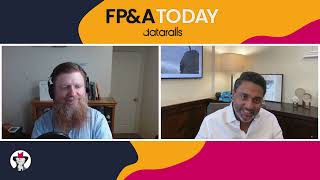
This is a YouTube video titled "How to never be left out of the conversation again in FP&A - with Airbase CFO Aneal Vallurupalli" published in October 2023. It features a podcast-style interview hosted by Paul Barnhurst, a recognized FP&A expert, with Aneal Vallurupalli, CFO of Airbase. The discussion covers topics related to financial planning and analysis, procurement software, leadership in finance, managing hyper-growth companies, and the impact of AI on fintech. The content is conversational with multiple speakers, including Paul Barnhurst and Aneal Vallurupalli, engaging in a detailed dialogue about finance and business strategy.
If you would like to earn CPE credit for listening to the show, visit earmarkcpe.com FPA Download the app, take a short quiz and get your CPE certificate. If you would like to earn continuing education credit for your FP and a certification from the association of Finance Professionals for listening to the show, go to the Show Notes for details on how to earn the credit. Finally, if you enjoy listening to FP and A Today, please go to your podcast platform of choice, click the subscribe button and leave a rating and review of the show. And now onto the show from Data rails. This is FP&A Today. Hello everyone. Welcome to FP&A Today. I'm your host, Paul Barnhurst, aka the FP&A Guy. FP&A Today is brought to you by DataRels, Financial Planning and analysis platform for Excel users. Every week we welcome a leader from the world of financial planning and analysis. Today we are delighted to be joined by Anil. Anil is the CFO of Airbase. Anil, welcome to the show.
Thank you. Pleasure to be here.
Yeah, really excited. So just a little bit about his background and then we'll get into some questions we have for him. So he comes to us from the Bay Area in California. He's currently the cfo, as I mentioned, at Airbase. Been there a little over two years. He earned his degree in business from Santa Clara University and he hosts the podcast what I Wish I Knew. And so we'll get started here. The first question we like to start people with is what is the most challenging or kind of worst budgeting experience you've had in your career?
It's a great place to start. I'm sure many can relate to this. I didn't experience about eight, nine years ago when I came into a company as call it the first FP and a hire. And I came into the company and the company really had made me one accounting manager and was still on QuickBooks, right? So didn't have GL and ledger information. I just started for a new COO who had started three, four weeks prior, who knew me. He was a prior CEO of Twilio and some other great companies before, before that. And so a great leader. And he hired me to be the first FP and a leader and to build the first model for the business. So I came into the company, you know, quickly realized there was not much there of a real forecasting financial model. There was something that was summarizing, you know, historical actuals, but not even in the. In the realm of what we would want in FPA to understand how is this business performing, what's been historical trends, et cetera, and to give you a sense for what I mean, on the historicals, they did not even have payroll or expenses, employee expenses segmented out by departments. It was all under total opex. Right. And so they did not have an HRIS system either. Yet. So going and taking the full list of employees, categorizing everyone to the departments that they're actually in. Right. Then adopting an HRIS system and taking this information and dumping it into there, getting folks logins as part of that. So this effort is an all for naught. And so that was an awesome experience because ultimately the company was really starting from scratch. And all of this was asked to be done in five business days. And so take all of the historical data, build something of it, and then forecast what we can do going forward to a level of so some degree of accuracy. So I will say that I did not sleep that week. It is all possible to get done, but it was one in which I walked in and there really was not historical information that could even help. Help me. So having to recreate all of the historical P analysis funding.
Yeah. Not surprised. There were some late nights. I think one of my favorite stories around that when you mentioned all the headcount. I had worked for a company where we had huge problems. All the headcount had been a mess, and they decided they were going to try to restate it all and get it correct. And somehow I got to be the lucky guy because I was working for the regional CFO to roll it all up. And the guy who was in charge of the product, he was on his way out the door. So he was just parroting whatever they told him to do. And he goes, you need to make sure for the last two years you get all the headcount. Right. It's all wrong in the system. You can't use the HR data, you can't use the finance data. And you should talk to all the managers. And we had high turnover. And I went to my boss and we're talking thousands of employees, not hundreds. You know, we had call centers. Right. And so I went to my boss and said, the only thing I can guarantee you is this will be wrong. There's nothing beyond that I can guarantee.
You, but it would likely not be 100% right. I mean, the fun ones there are like, how do we allocate CS&C? Yeah. So fundamentally, companies spend money in two main fashions, right? That's payroll and everything else. Airbase has a system that consolidates everything else into one software solution. Right. We do that. It's called Procure to pay. You can call it spend management, but ultimately we do that with four main products. One product is called guided procurement, that's called intake. Right. So what is it like when you're in this big company that's 5, 6, 700, 2000 employees and every single employee at some point will request spend. Where do they go? They go into Airbase and they hit request sped. And fundamentally what guided procurement does is it solves the collaboration problem around spending. How when I say that I want to request a software spend, do I then automatically within the software because I'm integrated with HRIS systems, pull in the InfoSec person, the IT person, the legal person, the FPA person for budget review, the controller for payment terms, the manager to approve that spend all the time. All of that collaboration happening within Airbase through that upfront guided procurement workflow and sitting underneath that, we have the methods by which you could ever pay, cross function and across the world. So obviously one being bill payments, ACH is ap, right, Accounts payable. Two being expense reimbursements. How do we reimburse our employees for the dollars that they spend on company behalf? And then finally three is cards. Physical or virtual cards. Airbase does that in the form of Airbase cards as well as Amex cards and SVB cards that we're partnered with. So fundamentally we are solving how to consolidate all non payroll spend into a single software solution globally.
Got it. Great. And when you said the procure to pay, that brought back memory.
Having the level to understand that we come with our past baggage in context, but there's no playbook. We just reapply at every company we go to. There's always context that that exists in business.
I really like that you said there's always context. You can't just take the playbook without tweaking it. There's going to be something different everywhere you go. So true. So can you start by telling us now a little bit about your background, kind of how you ended up where you're at today, what's kind of your story?
Yeah, so as you mentioned, I graduated St. Clair University. Kind of happened since I got there. I ended up in know being recruited for a sport that we can talk about later, but ended up playing at Santa Clara and then fortuitously ended up getting into investment banking after Santa Clara, during the recession in 2008. Not a time when anybody was really hiring, especially in San Francisco. Right in The Bay Area. And I was fortunate enough to land a gig there. I said that a lot of folks were trying to get in and Santa Clara is by no means a feeder school into investment banks. Banking, it is finance like ebay's and Yahoo's back, sure, Google's, but definitely not at ib. I spent a few years there. I specifically worked mainly on buy side, sell side transactions and enterprise software. One of the companies that I was on an active engagement for ultimately ended up deciding to go public, Helped them through that process and joined that business as the first corp dev hire during my five years there, took over corp devs strategic finance, global sales, operations, pricing. And that was kind of a catch all job. Being able to touch everything at this company that, you know, now 20% of the literally nationwide state farms, all states, 20% of the world's property and cash, which is your homes, your cars, your boats, your jewelry, everything. The software is being processing that for the insurers. Wow. And from there I just, you know, I said, you know, I spent a few years in this and this has been fun. And once you get to about 3,000 employees, instead of having breath, you end up having specialization in certain areas, right?
Yep.
Very normal. And you know, nobody should ever take that personally if that's happening in your career. Companies grow, right? And they dictate that that occurs. And so I ended up saying, you know, I want to go smaller, I want to go smaller to smaller business. And that is when fortuitously, one of my wife's ex bosses reached out and said, hey, you know what, I kind of want you to come start finance at this place I just joined. I'm the CEO and president here. Let's get running. I was like, all right, this looks interesting. From there, we did well there for about two and a half years. From there I went again a little smaller. And in this role though, instead of just running finance, I took over all of GNA. So finance operations, IT, HR, recruiting, the entire function of DNA across 30 countries. Right. And so for me, you know, one of the things that was super important in that was that even though, you know, I'm never clamoring to take over the people function, they're very good people leaders out there that you can manage or hire to be your peers. I do think it's very important that every operator at some point in their career manages the people function. It gives us a much better sense for outside the numbers perspectives that are necessary and real factors. And ultimately, you know, I met when I went to that smaller business where I managed that across many countries and I highly identified with the problem that Airbase solves, meaning that I was working in all these disparate solutions like, you know, the build.coms, the expensifies, using Amexs. Speaking of forecasting, when you asked about that company that I first went into, which was a Nightmare, there were 65 or 70 physical cards and in a 300 person company like Spend was not controlled, it was just happening. Right. No way to forecast when someone was thinking of using a physical card, which was for anything at that time. And So I met TheJo five years ago and as I built the last company, identified with the perspective our CEO founder, TheJo here is taking around. This is a software workflow issue we're solving and eventually said, you know what, I'm gonna come join that. It'll be fun to, to be on that journey and play a role not just in, you know, as a CFO, but as a CFO of a CFO's company. Right. And have a lens of a perspective on product and engineering and go to market and positioning and so, yeah, it's been fun.
Great. So can you tell our audience a little bit about what Airbase does? So if somebody's not familiar with the company, what's kind of that core product that you guys sell?
Yeah, so fundamentally, companies spend money in two main fashions, right? That's payroll and everything else. Airbase has a system that consolidates everything else into one software solution. Right. We do that. It's called procure to pay. You can call it spend management, but ultimately we do that with four main products. One product is called guided procurement, that's called intake. Right. So what is it like when you're in this big company that's 5, 6, 700, 2000 employees and, and every single employee at some point will request spend. Where do they go? They go into Airbase and they hit request spend. And fundamentally what guided procurement does is it solves the collaboration problem around spending. How when I say that I want to request a software spend, do I then automatically within the software because I'm integrated with HRIS systems. Pull in the infosec person, the IT person, the legal person, the FPA person for budget review, the controller for payment terms, the manager to approve that spend. All of that collaboration happening within Airbase through that upfront guided procurement workflow, and sitting underneath that, we have the methods by which you could ever pay cross function and across the world. So obviously one being bill payments, ACH is ap, right, Accounts payable, two being expense Reimbursements. How do we reimburse our employees for the dollars that they spend on company behalf? And then finally three is cards, physical or virtual cards. Airbase does that in the form of Airbase cards as well as Amex cards and SVB cards that we're partnered with. So fundamentally we are solving how to consolidate all non payroll spend into a single software solution globally.
Got it. Great. And when you said the procure to pay, that brought back memories. I started my career in procurement. I worked for the government buying stuff. So very different environment. But yes, I worked for a Navy base and you know, I was doing very unique procurement. Like I still remember one time you're working with someone to buy a bomb basically. Right. Totally different than your typical procurement and all kinds of different things. A lot of service and so it was really unique.
My last company was a company called Mattermost. It's essentially a more secure version of Slack. So the White House uses Mattermost, the Joint Strike Fighters use Mattermost, Government of Defense uses it, the JSFS use it to communicate with kubernetes back from Jet to to Air Force Base. So we're on the GSA schedule for purchasing and all that fun. And I had to work with a few of you in my past.
I'm sorry. No, it was a great experience. But I pretty quickly realized for me just the level of rules and regulations around buying stuff, I'm like, I just can't see myself doing this my whole career. It's just too rule driven. I want a little more flexibility. But it was a good experience. I really learned well.
Guess what, with Airbase you get that flexibility. We you get to define the preset variables for the workflows that occur either based on Persona type, spend type, amounts, etc. So it's fully configurable in that way.
Great. I'm familiar with procurement software. Actually spent some time when I worked for the Navy on the Joint Requirements Board that they had across all the services to try to develop the next version of the software. That was an experience.
That's awesome.
You know what it is like 13 different spreadsheets emailed out to 23 different budget holders. Multiple iterations, version control errors, back and forth updates. You never really feel in control of the consolidation and collection process. Yep, I've been there. Stop Breathe. Datarels is the financial planning and analysis platform for Excel users. DataRails takes data from all your company's disparate sources. No organization is too complex, consolidating everything into one place, secured in the cloud now all your data finally talking to each other. Everything is automated back into your report in Excel. Cash flow, FX conversion, intercompany transactions now automated and up to date. Drill down and variance analysis in seconds. Don't replace Excel, embrace Excel. Turn your Excel into a lean, mean FPA machine. Find out more at www.datarails.com. yeah, great, great stuff. So you've been the CFO of Airbase now for a little over two years. Right. Can you talk a little bit about the journey, you know, just the experience and what it's been like, as you mentioned, being at a company that's serving what you've been doing your whole career. Right. You're serving your peers.
Yeah, I think, you know, not dissimilar to many others who've stepped in as the first CFO of a company. There's a level of and there's always a level. But even in that case there's a hyper, call it prioritization that we have to do. There's generally three things wrong or three categories that can have issues. There's people, process and systems. And so when you step in as the first CFO of a company or any cfo, fundamentally we have to understand the people we're working with and who is going to work well in the vision that we have. One of the ways of putting it is my background is FP and a strategic finance, investment banking. My background is not being a controller, my background is not being an auditor. My background is not being, you know, procurement. And so it's, it, it's important that in the areas where we have superpowers, we understand how we can de risk the company. In the areas where we do not have superpowers, we bring in very good people that we think are stage correct for the company. And so that is what that was like. Not dissimilar to last three companies I came into doing effectively a similar type of function in finance. Coming in, starting many of it and rebuilding in some cases that's what it was. And then ultimately prioritization. We know in this environment that budget is not infinite and it's actually the opposite. It's often lacking or not there at all. And so that effectively means we have to prioritize accordingly and really pick the most strategic things that we can work on that make sense to move the needle for the company. So there was that for the realm of people, for systems, we were fortunate enough to be customer zero, as we call it, of our own product, airbase. But there's a whole host of other things Call it in the FP and a side that we need to build financial models. We need to build reporting necessary. One of my first hires was also our director of data and analytics cause my team also focuses and runs the company's data model and the fundamental data warehouse for the business like Snowflake and called the retooling required there. Another aspect that we went out and we concertedly aligned with my CEO and myself on this was we need to build a strong and best in class risk and compliance function as we are moving billions of dollars of customer funds. And so we went out and got a strong VP of credit and risk that we could rely on to build the policies we needed and also the operational rigor and requirements to make sure that we are bringing on good actors and not bad actors onto the platform. We are de risking our customers from potential payment, fraud, et cetera. So as I mentioned in every way shape and form being the CFO of a CFO's company that is also moving money, not just an FP and a software business. It's truly in the business of moving money as well. You take a different level of call it a rigor to the role in other areas that we predict. You know, predominantly had not had to focus time on.
Sure. No, I can imagine with moving money and any of that kind of stuff you have a security level that you're not going to have elsewhere. I like I said I worked for the Navy so you can imagine the security level there. Then I went to American Express and you know, extremely tight. So I can relate to that importance. And I still remember I went to a different company and I could download install something on my computer and I'm like what? I mean I can actually do this on my own. Like I've never experienced this because it was just such tight security even basic.
Level of decision making processes. So you know when you come into a company you take a, you take a sense and call it. You start to write down how does this company make decisions. Taking a look at those processes and approvals matrices, is it consistent or is just one off decisions happening by the CEO in Slack or by the product leader or by the sales leader. You know, so anything around money, movement and risk. We have committees internally here now that ultimately you know, double check things and then we have an exec committee that ultimately signs off on recommendations from subcommittees and putting in that governance is very, very important.
Yeah, totally agree. Anytime you're dealing with spend and moving a lot of dollars and things, there's a higher level of Governance, I mean, governance is always important, don't get me wrong. But last thing you want to do is tell somebody you messed up their money.
Nope, that's the, we're in the business of trust and that's all we, we have to keep that level of trust extremely high.
Yeah, no, that's, that's the American Express. And also I worked a cyber security company and that's how they defined it. Right. We're in the business of trust.
Yep.
We can't, we can't have somebody be hacked.
Nope.
So, next question. Here at Airbase, you know, you're focused on unifying and autumn automating diverse workflows, but there's a concept you use around that that I've heard called spend lightenment. So can you talk about what that is, kind of how that term came about and what it means?
Yeah, I think, you know, if I were to synthesize it and we've, we've tuned it a little bit on our, on our website and as well as in some of our materials. I think what it roots to is control your spend, control your destiny. Right. If you can control your spend as a company, you can control your destiny. And it's achieving that state that is very important. There's no other business for the mid market out there that can maximize that spend under control like Airbase can. There just isn't. And we do that because we can, because we have these features and products that are broad and deep as well as international money movement and feature capabilities. Right. So for mid market companies, you know, called anywhere from 200 to a few thousand employees, there's no other product that can do that for you in a way that we can and as well as in a way that's going to help you adopt it as fast as we can for a price that you find very affordable.
Got it. Thank you for that answer. That's really helpful. Next question here. Can you talk about what it's been like to manage a company that's been experiencing hyper growth over the last few years? Especially this environment where all of a sudden we went from grow at any cost. Who cares what the, what the bottom line is? Just give me revenue to, oh, balance it, make sure you're growing responsibly?
Yeah, I think that that has definitely been something that a lot of not just myself, but my network of friends, VPs, finance, CFOs, finance leaders, heads of finance, whatever you want to call them, has been challenged with definitely over the last three years, four years, I wouldn't even say Last year because Covid and everything kind of put you on notice and then, you know, called the downturn, solidified all those feelings you had the entire time. I will say that there is a level of we have to understand where are we focused as a company and why are we going to win in those areas. So beyond obviously controlling your spend is very important. That's one aspect of being a company that can consistently drive growth and value for the customers at a spend level that is palatable by us on the board. Right. That's effectively all the things we're trying to balance.
Yep.
We need to balance growth value we give to customers with a spend level that we can justify and showcase that we're being good stewards of company dollars. I think that in this environment there's obviously alignment needed. So a lot of that has been alignment with myself, my CEO and the board. Thankfully at Airbase here, Tejo has been a second time founder. Right. Sold his last company to series 6M for 100 million plus. And the great news with that means that he's had to balance this before. Right. He's had to make those trade offs before. And our number one value internally at Airbase has always been since I've started, control your own destiny. So we've never been one of those companies that has felt like we've had to raise, had to raise, had to raise, had to raise because balance sheet's dwindling, dwindling, dwindling. In fact, we haven't raised in two years and we still have multiple years of revenue or, sorry, multiple years of cash. And so the benefit there is that it's built into our DNA as a company. The biggest challenge has been for those companies where it's not a part of the DNA and the CFO has been in charge of kind of stewarding and force aligning the company to care about these things, things. So as I mentioned, you do this by aligning with the CEO, aligning with the board and then putting in the process with sales and with people and systems. Right. And a process that can get you force aligned to those segments.
Yeah. As I hear you, I feel like there's a lot that you've said around one, you got to align. You know what that's going to be. How responsible are we going to be? I mean we should all be responsible, but what is that appropriate level of spend?
Yeah. Because the debate could be underspend. You don't ever want to be a CFO that's blamed for underspending and under investing in a time where it's time to go get more market share.
Yeah. I still remember a lesson I Learned from a VP. We came into Q4 and you know, they were asked, make sure you're putting everything forward. If you're holding anything back, make sure. We know, we've all seen that where you sandbag, you know, in a budget or a forecast, we all know what happens at everybody who've been doing it. And the one guy brought everything forward at the end and a lot of the other leaders didn't. And I think they, you know, they beat the plan by like 7% or something. It was a bit, I mean the forecast, not just plan, but the forecast for Q4. And he went to all of them, he goes, you do realize because we were a division within a bigger company, you do realize that we just lost out on an opportunity to invest in a bunch of things. With that extra money, we're not going to get it back for next year. Like it's really important that you bring everything forward so we can optimize those investments if we're over performing or we can adjust if we're underperforming. And it was a good lesson for me because I was early in my career is that VP was telling, you know, all the other leaders, you guys, you realize we really messed up here, you heard us.
As a company, that VP received was probably one in which the C level executives and the CEO had set a boundary for and had set a focus on. Right. So here at Airbase and many companies, right, you may be okay with beating or missing plan by single digit percents, but we are not okay with spending more than we plan to spend. I mean we've got to be eating our own dog food, right? So it's literally in my time here we have never missed our cash forecast, but that's the amount of focus we put on that. And so some companies will say, we have the balance sheet, don't worry at all, focus on revenue. And that's the environment you were describing in the past.
Yep. Yeah, exactly. So next question here, you know, what do you look for as a, as a CFO from your FP and a team? What are those key things you're looking for? You know, kind of skills and tasks for them to have.
Yeah, I think that number one, there's basic skills required that are table stakes. Right. Obviously you need to be able to cast, you need to model, you need to be fun, functionally communicative and understand the terms of why they matter. Right. So it's like bringing someone from CPG, FP and A into SaaS. FP and A, they may not even know the terms of. What does you know, an average enterprise software sales cycle look like? You know, what are the stages within that sales cycle? What does an MQL mean? Right. So being able to have a level of industry expertise and know how is very important. Because the most important thing I believe from FP&A is you build a level of credibility across the company and across the organizations, across the decision makers. That is the most important thing. Because when you come into a FP and a team that is likely not functioning great or is not there and you're starting it for the first time, there is what I call the push first pull dynamic. You will find yourself as the FP and a person or the new FP and a leader pushing yourself into conversations because you know it is the right thing for the company. That is the right thing for the company. But over time, the right thing for the company is also for you to be pulled into those conversations over time. Right. So that's the give get of value. You push yourself into conversations because you know it's the right thing for the company. But you also need to be providing value to your constituents around the table for them to be better versions of themselves. Right. And the company ultimately to get to a better position. When that occurs, you will generally start to feel the pull being pulled into conversations. And so that is why I believe that even though FP&A is very numbers driven and modeling driven, it needs to also be left brain and right brain. It needs to be able to build relationships across the organization.
100% agree those relationships are critical. And I really like something you said there about they need to be able to establish or build credibility. What's the key to doing that? What have you found is kind of that secret to building that credibility with the business. So they're pulling you into the conversations versus you having to push your way into the conversation. Because we've all been there where you get left out as a finance professional.
Totally. I think the consistent thing I've seen there is really understanding the pain points right now for those stakeholders. Every stakeholder at a company has a pain point. If they tell you they don't, there's something going on there. There's a dynamic going on there that you also need to understand. Why do they feel like they don't have a pain point? I have a pain point. Every single manager or leader or IC at a company has a pain point. We have to identify it or them Identify the pain points and we have to find out how can we in FP and A DE risk them or make them better or alleviate them or turn them into a strength. So when we talk about getting information that's super important and then giving something back to them that is usable and provides value back is how you build that bridge of collaboration from the FPA perspective. Because otherwise there is no give get. Right? The get is that you're getting information and eventually if you keep getting and that ratio's off, the person you're spending a bunch of time with is going to be sick and tired of spending time with you. Like, how are you helping me? Like, you're just doing this because you have to do it, but it doesn't help me in any way.
100% agree. If you're not giving something back to them, it's just a matter of time till they're gonna try to avoid you like the plague. Right? Like, just stay out of my office. All you do is waste my time. You don't give me any value.
What if pmm, what if the product marketing team, whoever's in charge of pricing, is starting to look at a new pricing metric or starting to look at repricing a product or starting to look at a completely new way of pricing a product. So instead of going from, they want to go from seat based to usage based, right?
Sure.
The way you can provide value is by asking a lot of questions and understanding, oh, tell me more about the reason to drive this. And are you having trouble thinking through some concepts that may showcase value here or is there some data that's really hard to get at consistently? Let's try and figure out what we can bring back that can help you with this. And eventually what you're also doing there is you're providing things back and you're also getting a perspective on how a core function of the company is thinking and you're eventually figuring out how. We then can either a help them make their point emphatically with data and metrics, or you can help them challenge their point behind the scenes so they don't go too far down the road.
I really like that. I appreciate that. So if I was to ask you from your perspective what FP&A professionals in general can do to be a better business partner, what would you say that kind of that most important thing that they do to make sure they're a good business partner?
Yeah, I think as I mentioned, need to spend time across the company. It's easier in FP and a, in My opinion to spend time with the go to market function because we are ultimately numbers driven and so is go to market in almost every sense. It is a little more difficult in many ways to spend time with product and engineering in a way that. That give get is equal. Right. And that is obvious in many ways. Where they are measuring you the highest to give get. Because engineers are very pragmatic that way. So I think that ultimately building the relationships with the leaders across the org is the most important thing you can do. The other things like spend time figuring out how to do a vlookup and all that you know, know is are all table 600% agree.
And I really like when you said the give get an engineer. So, you know, when I worked in procurement, I had a guy that I was good friends with. I knew him outside of work. We'd work together with youth in different programs. We attended the the same church. But I got stuck on some of his contracts and he hated procurement, so. Right. It was just. I was always pulling teeth. He's like, I only give you something because I have to. Basically I hate you in the work relationship.
That is most. That is most people's perspective. Which is why I always feel like people procure. I feel bad for him because thankless in so many ways. Generally leaders are the most thankful for it.
Yeah. And so that was a lesson of learning where it's like, just give me the minimum and I'll try to do everything I can for you. Just work with me a little bit. You know, we're friends outside of work. Help me out here. I know you hate me in the work environment.
So.
Yes. That is procurement in general there. It's a thankless job and I really appreciate people that do it well and keep that passion. When everybody's like wait, you want me to give you this and that and. And they look at it as just.
We now have a software tool that makes your procurement life a lot easier with Airbase.
No, that's great. We definitely need better tools in that area. So that's. That's exciting. And so next question here. You know, as a cfo, do you have like a. A favorite metric that you like to look at when you're first analyzing a business?
No.
How about anything financially? Is there area financially you typically like to look at?
The reason I say that emphatically is because the North Star metric for every company is very different and it is oftentimes not a financial metric. I feel that if you are a CFO and you're just looking at growth rates, you're just looking at gross margins, you're looking at Casper and you're looking at cac, you're looking at LTV to cac, you know, you're looking at burn multiples. Those are all historical things, not actually indicative of what is the NPS of the customer? What is the active usage rate of the product? What is, call it the most important thing that. What is the most important metric that you can encompass? A lot of the efforts around at the company that would suggest that this company is aligned, that vision makes sense underneath that. And so what I will say is that it's different across everyone.
Sure.
And it's generally not a financial metric.
So I'm curious, what is that metric at Airbase that kind of helps keep you aligned, that you like to look at? Is there one, two key metrics?
Percent of spend under management. So there's no other company that can get you to as high of a level of spend under management or spend under control as Airbase can.
So, next question. Right. The last year, I think everybody, at some point to ad nauseam, has heard about generative AI, right. ChatGPT, how our world's changing. Are our jobs all going away? So how do you see AI impacting the future of fintech procurement solutions? How do you see that changing things?
Funny, somebody asked me this question last week and they said, is AI going to replace jobs in finance? I think that's the big thing. How much? How many jobs are going to be replaced by this? And I gave the, the, the historical story from one of my founder managing directors at my investment bank from like 14, 15 years ago, you know, and he used to have funny sayings, like he walked by on a Friday and be like, you know what's amazing about a Friday? And you should be asking first your analyst? And they'd be like, what? Right. And there. And he'd be like, it's only two working days away from Monday. See you on Monday. Awesome, thanks. Super motivating. But the reason I brought up that MD was because he gave me a story of how back in the day, in the 70s, there was no Excel. Right. There's no way of tracking comps across public companies. So the analysts would end up having to go and run to the basement of these banks and manually pull public comps off these huge books, write things down on like science paper and then come back to their desk and like manually analyze.
Yep.
So in reality, what did Excel do? It took away the number of hours or maybe even the number of analysts, potentially, you had to do because if it was 0.2 FTEs or analysts required amount of time to focus on manually pulling that data accel eradicated that need.
Yep.
So are there rudimentary functions that AI will displace? Yes, agreed. I do not believe AI will displace logic and business and circumstantial related decision making abilities. Right. And so, and, and by the way, those rudimentary tasks, how fast does AI replace it? Does it happen in a week? Does it happen in 15, 20 years? TBD? I think we're already starting to see that a lot of the chat TP stuff is great, but we're also starting to see the reports of folks getting wrong information from it. Right. Where the model is being trained incorrectly, where it's saying things that are just outlandish, it's not business tested proven to make consistently repeatable good decisions. And until it is, I don't see the majority of finance jobs being replaced. I do see it being leveraged in rudimentary tasks for sure, but I don't see it replacing enough equity. A near amount of jobs that may create in other areas.
Makes sense and I, I could totally see that. And yes, we do have to overcome the accuracy, the bias. There's a lot of things that still need to be figured out. There's some privacy and data, data things and. But going back to your one where you said the guy, you know, two days away from Monday reminded I worked with the guy that every Friday he'd be like, you know, super happy, head out the door early and he'd always drag in on Monday and he would say, Monday Tyler hates Friday. Tyler. I always loved that. It was so funny. He was a unique dude, but he would drag him late every Monday morning and that's. We always knew what was coming.
So yeah, I mean it was, you know, I think that investment banking for the FPA people out there is a great foundation to have, but it was never something for me. But there's always a quirkiness to the business that's you can appreciate in arrears.
Yes, exactly.
Going through it.
A lot of truth to that. We almost. There's so many things that in the moment we're like, am I really going through this? And a year later we look back and just laugh.
Yeah.
So next question here. Can you tell me about a time in your career when you experience what we'll call a strategic moment? And I'll give an example, you know, I. E. A strategic insight that later empowered you to drive change within an organization that led to a, you know, positive outcome.
Yeah. I think you asked a question before about modeling, being able to model. The first business model or company is the first layer of, call it a thousand layer deep onion. Every layer you cut back provides a different level of sophistication of visibility into something. Right. And so the most important thing that I've found is that you continue to dig into, you know, these different metrics, these different areas that could potentially unleash an insight. I think that, you know, a few companies ago I was at a company that was, was, was a lot of everything to everybody and had not done a lot of work in segmentation, had not done a lot of work into ACVs, had not done a lot of work into industry segmentation. Right. And Personas, meaning like what kind of Personas within those segments then were Personas buyers of the product. And the insights that we came up with from my team, never I we came up with from my team were able to showcase an area of our existing customer base that had the highest retention rates, the fastest win rates in prospecting cycles and also had the highest net retention rates. Right. And so that is technically then an area where we have strong product market fit.
Sure.
Very strong product market fit. So we're able to do with that, is able to go to leadership team, then marketing, then sales, then CEO and everyone line. Everyone say put more of our wood behind that arrow. Yep, go there. And obviously, hopefully there is a good enough market size for us to go after. And you know, that was something that I think helped that business out a lot.
Makes total sense how that would really drive a change. When you're able to find something that says we got the product market fit, if we put the dollars behind, we can hit those growth numbers that the board's given us or whatever the most.
Challenging thing was the company was hitting its growth numbers, but it was hitting it very inefficiently. Meaning when you're going after 10 person companies and also the government as an example, those are very different sales cycles, sales reps, enablement, materials, marketing efforts, lead gen efforts, messaging, all of it's very different. So it's like then you're vanilla your blah to everything, which means you're probably not doing all those things well. It's very hard for startups series A, B, C, D, E, F to actually be good at being everything to everyone.
100% agree. I think no matter what the size of the company, it's hard to do that. But especially as a startup, a great book on that is called Crossing the Chasm, if you've ever read that by Geoffrey Moore. Right. It gets to that exact idea. Figure out who that core customer is, scale up with that, get across that chasm, and then start worrying about being everything to everybody.
And I've also been in part of companies who found that at first, and then you start being everything to everyone over time and then you refine that again that ICP when you're at a later stage. So it's never done right. These things are organic. They're always happening, which is why finance is not a replaceable function.
I'm with you on that. I agree. So we're moving toward the end of our time here, and this next section is what we call the get to know you section. It's kind of a rapid fire where you get 30 seconds to answer each question. So we're looking kind of a quick answer. There'll be four questions here and the first one is what is something interesting about you? Something unique that not many people would know.
So that's probably something not many folks know.
Great, thanks for sharing that. I had a boss that he was a big tennis player and his son was ranked nationally in Texas. So he always was talking about the tournaments his son was going to.
So, yeah, that's fun.
So if you could meet one person in the world, dead or alive, who would you meet and why?
We can keep it fun. There's different categories.
There is, for sure.
Fun would probably Roger Federer, in my opinion, in my mind, the greatest ever. To do it and to be that great for that amount of. In that period of time is something that goes beyond just ability. It goes to, you know, there's a process behind it, there's a mentality behind it, there's a mental strength behind it. And I think anybody could learn from that. Regardless of whether you appreciate tennis or not.
I agree. Any of the greats, There's a mindset there that I love to understand. Whether it's Michael Jordan in basketball, Tom Brady in football, whatever your sport might be in person, there's usually some very unique characteristics that drive that. All right, so this is kind of a fun one. We like to ask what is the last thing you use? Google, YouTube or your generative AI tool of choice, I'll say it that way. To research something about finance. Excel or FP&A.
Google the FP&A guy. It's really funny you mentioned that. I have a podcast that Airbase asked me to host and I titled it and called it what I Wish I Knew. Intentionally. There was a whole bunch of stuff 13, 14, 15 years ago when I started in finance and investment banking that I could not Google, it just didn't exist on the Internet and stuff today that is there within the first three words of a keyword search. Right. And so give me a leverage buyout model that's available in a second. What's the calculation for roas return on advertising spend available in a second? These things didn't exist. This is like this younger generation that doesn't know this doesn't exist 15 years ago on the Internet and we had to go figure it out. So the Internet is a wonderful tool and one that I have folks leverage constantly. So I would say the Internet and oftentimes YouTube and many other things.
Yeah, no, it's amazing what's out there now. I do a lot of training and sometimes I'm asked to train on something that I may not be really familiar with within the training and I can go to ChatGPT and Google and find a dozen articles and different things to read and triangulate to really bring myself up to speed. So I don't feel like I'm training on something that I have no idea what I'm talking about because I hate that feeling totally.
It's, it's an investment banking. No, not to any investment bankers that listen to this. You end up having to be, you end up having to know a little about a lot of things and when you have to know a little about a lot, Google is your best friend.
I agree. So last one of the questions here, this is one we like to ask because our sponsor datarels is a big fan of Excel, an Excel based tool. What's your favorite thing about Excel? Favorite function or feature?
So this may not be something you've heard of before, which we're going to test that. So I'm a big fan of a tool called macabackus, which is a tool that is a plugin to Excel. The reason I'm a big fan of that is because in my original days investment banking, my first two months they gave you a computer with no mouse. And so that meant that you had to be able to run your entire work life for two months without being able to use a mouse, which means you get very fast with all of the shortcuts on how to get from window to window and all the requirements within Excel and Mac back is something there that's honed that, that you can create all those Control shift, open end, alt, esu, alt, jdal, like all those random things that you can throw out There of shortcuts that make your daily life way more productive.
No, I love that. That's definitely something I haven't learned. I still occasionally use the mouse. And the other day I was with somebody, he's like, you use the mouse. Like, what's wrong with you? Sorry, I do. And I had a boss who worked investment banking and he said he got so trained of those different patterns that he'd be sitting in meetings and he'd be tapping them on the table with his finger just out of habit, just super fast.
You know what? I wish I said this the other day, I think to my CEO or some, maybe my finance leader. I told him, I wish there was the Excel Championships that were on ESPN 15 years ago. I feel like, you know, aspiration. I could have had a run up.
You still can. I'm actually going to go to the World Championship and interview all the finalists. I definitely couldn't compete with them. I did one event once recently and they asked me to do it live. So they made me one of the four people because I had mentioned I was going to do a podcast around, like, oh, we'll have them stream this, you know, give us some visibility. And I got annihilated. It was not pretty. It's out there on YouTube and if anyone wants to watch how to Flame out in Half an Hour trying to figure out a model, just go watch me do it.
That's so cool. I'll check it out.
Yeah, it was fun. Financial modeling, World Cup. It was a recent one here about a month ago. So real quick, you know, last two questions wrap up here. I know we're running out of time. If you were to offer advice, you know, one or two pieces of advice to someone starting a career in FP and A today, what would that advice be?
Have a hunger for knowledge.
Love that.
Keep a growth mindset.
It's a great one. I love growth. Great book. If you haven't read it, Carol Dweck, I highly recommend it. And last question. If someone wants to get a hold of you, you know, wants to talk to you, they heard something here, what's the best way for them to reach out to you?
Connect with me on LinkedIn and I'm relatively active there, so shoot me a message on LinkedIn and a request and always happy to chat.
All right, great. You'll see a request coming from me. I don't think we're connected now. We might be, but if not, you'll see a request for sure. And thanks for your time. I really enjoyed chatting with you. And I know our audience will enjoy the message you shared, so thank you.
Awesome. Nice meeting.
More from Paul




Trust and Leadership Lessons for FP&A From 100+ Top Leaders with CFO Jon Laudie






