How to win at FP&A with Psychology, strategy and tradeoffs
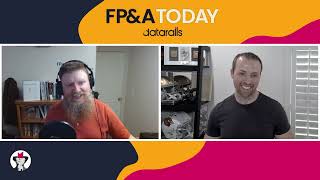
Taylor Ostott, VP of Finance at Dashlane, talks through how psychology and strategy shape FP&A work. He covers decision-making frameworks, team building, and the tradeoffs that separate good finance leaders from great ones.
If you would like to earn CPE credit for listening to the show, visit earmarkcpe.com FPA Download the app, take a short quiz, and get your CPE certificate. If you would like to earn continuing education credit for your FP and a certification from the association of Finance Professionals for listening to the show, go to the Show Notes for details on how to earn the credit. Finally, if you enjoy listening to FP and A Today, please go to your podcast platform of choice, click the subscribe button and leave a rating and review of the show. And now onto the show from Data rails.
This is FPNA Today.
Hello, everyone. Welcome to FP&A Today. I am your host, Paul Barnard, aka the FP&A Guy. FP&A Today is brought to you by DataRels, the financial planning and analysis platform for Excel users. Every week we welcome a leader from the world of financial planning and analysis. Today we are thrilled to welcome to the show Taylor Ostott. Taylor, welcome to the show.
Hey, thanks, Paul. Happy to be here.
Yeah, we're really excited to have you here with us. So just a little bit about Taylor and then we'll jump into some questions. He comes to us from Scottsdale, Arizona, Used to be my stomping ground. I lived right, right in that area. So great, great location. He's currently the Vice President of Finance at Dashlane. He earned his bachelor's and master's in accounting from U of A. And he's previously worked at such companies as GoDaddy, Honeywell, and EY, among others. So we're going to kick this off with a question that we've been using lately that we like to ask people. Tell me about the worst or most challenging budget experience you've ever had.
Oh, man. Can I say everyone?
I'm sure they all have their unique angles.
They all do. But one stands out to me. So my first time doing a budget, I was transitioning from ey, so Pure audit accounting into a hybrid accounting finance role. And so I was doing FP and A for a real estate investment trust. Good thing about real estate is things are really simple. You know, your cash inflows and outflows. The challenging part was my manager wasn't super tech savvy to the point where the way she wanted to review the models is I had to print out the Excel spreadsheet so that she could review it by hand, write down notes, give it to me to review. This real estate Investment Trust had 4050 sets of properties. So you're talking about 4050 tabs that had to get printed, get handwritten notes, come back. And that was the moment where I promised myself, I am always going to leverage technology in my finance role because I am never reviewing handwritten notes on an Excel spreadsheet ever again.
Yeah, that sounds pretty painful. It reminds me of talking about technology, and I think I've told this on the show before, but I took a VBA class and the guy was talking about the importance of vba, and he's like, let me share the experience I had on my first day on the job. Sit down with this guy who's training me, and he's at the computer and he enters all these numbers and he gets done. And there's like 50 numbers in the spreadsheet. And he goes over to his 10 key calculator and he adds up all the numbers and puts the answer in the bottom of the spreadsheet. And the guy that's watching him goes, I'm pretty sure it'll sum that up for you. He's like, I don't know about that, but this is how you do it. And just moved on.
That's great. Okay.
You know, talk about the height of inefficiency. Like you could save yourself some time there, but sometimes people are set in their ways. So I think you answered the next question of what you learned from that experience to leverage technology. So great answer there, and it is so helpful. Definitely something we should all be doing. So why don't you go ahead and now tell us a little bit about yourself, your background and what you're doing today.
Yeah, so I appreciate the intro, and I think you nailed it pretty well. So just to give it a little bit more color, I went originally went to school for psychology just because I was interested in how people think and how people decide. And then I realized that I didn't want to do anything with that longer term. So I made a shift into business and ultimately accounting. Started doing public accounting. Thought it was a great environment, great people, just not for me, because it's a lot of pointing out problems and not a lot of solving it. So I just gradually made my way over into the FP and a side of the house where I could leverage some of the things that I learned about decision making and how people think, but also start to leverage some of the business stuff as well. And bulk of the career that was at GoDaddy. I joined a year before the IPO, was there for eight years where we scaled from billion and a half revenue to about 4 billion revenue by the time I left. I was Supporting about a billion and a half of that, 4 billion. Running a team of about 14. And that's all from starting as an individual contributor. So not only was I part of a business that was going through a lot of growth, but personally had to go through a lot of growth. And then I got the opportunity to come to Dashlane and start building things again. And that's really the most fun part of this job is not only building up the finance team, but building up the finance acumen of those around you so that folks can appreciate how what they're doing ultimately delivers for the business and then delivers for the customer.
Yeah. So it sounds like you've definitely had that experience of not only building the finance department, but seeing a company building. Right. Obviously, GoDaddy went from private to $4 billion company. That's substantial growth. And you grew from being an individual contributor to, as you mentioned, 14 people. So any kind of key takeaways from that experience? Maybe one or two things that you've taken with you and that help you in that building process?
Yeah. So one is that change is scary for everyone, but it's also inevitable. So one of the best things you can do when you're part of that high growth, whether it's personally or as part of a company or both, is to be that rock and say, look, things aren't going to be as bad as we think they're going to be. They're probably not going to be as great as we think they're going to be. But the one that we encounter on is that things are going to evolve. And once you start to put some characteristics around the change, so it's not just unknown change, but it's change in a direction or change to a process, it starts to become a little bit less scary. Right. The whole idea of naming entertainment. And so once you kind of start to name, like what the uncertainty is, you can get through there. I think the second thing, especially when you're talking about developing in your career, is learning how to develop others around you. Because for so long, especially in fpa, what you're valued for is your spreadsheet modeling, your partnership. But as you're moving up, you really have to build up those around you and teach them and delegate and most importantly, let go. And it's a little bit scary because the thing that got you to where you were, where you were lauded for all these things, you actually now need to exit those conversations altogether and trust your team to go do that. And just building that muscle of, okay, how do I train people to do things and also appreciate they're going to do it in their own way. That's actually how you could start to grow. Because once you're able to let go of all the things from where you were, you're able to reach new heights.
That's definitely a lesson. I think any of us that have gone from that individual contributor to manager have had to learn, as you were saying, that I could think back to conversations and I still remember the time when I was like, okay, let it go. As long as they meet the requirements, let them figure out how they're going to do it instead of telling them how to do it. And I can totally relate to that because you, you think your way is best sometimes or you want to control it. You know what people like. And if you have someone you trust, you have to learn to let go. Otherwise you're not going to keep them 100%.
And there's two things that really helped me with that because I admit I was, I was not great at it to begin. One was I would. I actually had a post it note on my desk and it said, wait, W A I T, why am I talking? And I kept reminding myself, I don't need to say things, I can let it go. And you know, once you kind of appreciate that you don't have to fill the silence with your words, you can let others kind of fill it, it becomes a little bit easier. The other thing that really, really helped was remembering that what a manager's role is ultimately is to be really clear on what the outcomes need to be. And then you're allowed to be really light on how. And I think that's to your point of, you know, how you like people to do it in their own way is say, look, you may, I may have done it differently. I'm going to suggest it because that's what works for me. But ultimately it's your call because this is, this is what I want to see at the end of the day. And once you can master that balance of really strong on the what, really light on the how, and then appreciate that you don't always have to say things that are coming up in your mind. Delegation is really easy.
I still have a lot of room to work on that. Probably why I'm doing my own thing instead of being a manager with a bunch of reports, but that's another story. We won't get into that. Next question I want to ask you here is you run your own blog. As I was looking at the blog, there was a statement you made that stood out to me. I'd like to talk a little bit about it. You made the statement that finance is more than dollars and cents. And you went on to say it's about making the right trade offs at the right time. And then you said, so you spent a lot of time studying organizational design, decision making, psychology and strategy. So can you elaborate on that? You know, kind of that statement, the belief and what you meant in that?
Yeah. So to the first part of finance is more than just dollars and cents. Similar conversation, right? When you're early in your career, you spend so much time in the spreadsheets that the spreadsheets become the product. Like that's what you're delivering, it's what's on the. What's there is what matters. And as you move up in the career or even as you're part of a growing company, you start to appreciate the spreadsheet is just the map, it's not the territory. And if all you're focused on is getting the spreadsheet done, you're going to be really disappointed if it's an annual budget when January 2nd comes around and a lot of things that you thought were going to be true are wrong. And so what I came to appreciate is the value of finance is not the numbers that get codified in the spreadsheet, but it's the thinking that fills those numbers in. Because once you start getting folks to imagine scenarios, they can not only appreciate what's expected of them, but they can also pivot as things change again every year. The budget's going to be wrong as soon as the year starts. Sometimes it's wrong in your favor, sometimes it's wrong against your favor. But ultimately you want to understand where those strengths and weaknesses are and it's more important that the business understands that so they can make decisions. So then the other way to think about finance is that trade off piece, which is we live in a constrained environment. Whatever industry that you're in, there is not unlimited funds, there's not unlimited resources. So one way I've always framed this is that there's more good ideas than there are resources to supply them. So whenever we're talking with our business partners about what they want to go deliver, the ultimate constraint is we can't do everything. And so every conversation in finance is really a conversation about trade offs. Whether it's are you going to take budget from this part to do this, or even if you're getting incremental dollars to go deliver something that came from something else within the business, whether an opportunity that could have been spent on something or literally taken from one other department. And the more you can appreciate that this system exists and you're moving things around to try and optimize and prioritize, it becomes a lot easier to have those discussions. And I think that's where then all the social skills come up. You get to a certain point in your finance career and it matters less how good you are at finance and it matters a lot more how good you are at managing people. That's managing up, managing laterally, managing down. And so having an appreciation for how people think, how organizations think, which is totally different. Departments don't think like individuals. They have a different mindset altogether. But if you can see through those things, you can kind of help guide people and teams to ultimately make those good trade off decisions.
Thank you. I appreciate that answer. And I love where you brought in the constraints. Right. The reminder that there's always more good ideas than there are dollars. And the other thing that I was thinking about as you said that when you talked about, hey, the spreadsheet, right. The spreadsheet is only a representation. There's so much more than that going on. And we had a guy on the show by the name of Jim Cook and I really like the way he framed this. He said the spreadsheet is not your product. The insights and actions derived from the spreadsheet are your product. Basically like, you know, what are the things you're doing because of that? It's helping you make those decisions. Not, you know, hey, look, I made this great spreadsheet. Everybody check it out. Which is often what we think early in our career. Oh, I use this really complex formula.
Isn't it awesome?
It's like, could you please simplify that formula? Nobody understands it.
Yeah.
So I can, I can relate to that. So I'm curious, you mentioned kind of studying different areas. You obviously you studied psychology in school. Strategy, decision making, organizational design. Is there maybe a favorite book or article that you've read in that area that you really like that you could share with us?
Yeah. So it's hard to limit it to one.
You can give us two if you want.
That's still probably too much of a constraint. And so the invitation always is. If folks want recommendations, I'm happy to provide them for whatever situation you're trying to grow in. I say generally, one. That was two. That really helped shape me. One is Creativity Inc. Written by Ed Catmull, who was the co founder of Pixar. And not only a great history of that company and how it developed into what it is today. But it's a really good story about how someone developed into a manager and started to appreciate what it takes to run a high performing team, a high performing business over a really long period of time. So that one I was really influential because it talked to okay, anyone can learn these management skills if you're willing to experiment with it and appreciate what the ultimate goal is. And then from a psychology standpoint, thinking fast and slow is one of the best ones out there. A little bit of a slide to get through in the beginning, especially because it talks a lot about the history of the research. But once you start getting into the research findings, if nothing else, you start to appreciate how counterintuitive thinking can be. And there's a lot of stuff that people do that you wouldn't necessarily believe and it helps you in your day to day interactions where you go, I wonder why this person's doing that? Rather than thinking oh this person's wrong or this person's dumb or blah blah blah, you start to think oh no, there's actually structures and systems in place that help guide this thinking. And once you can see those structures and systems, you have a better chance of being able to upend it and help insert some new thinking into that process.
Great recommendations. I'm a big fan of thinking fast and slow and I do have that book on Creativity Inc. I'll have to add that to my list. So thanks for sharing and I totally understand limiting it to 2. It all depends on situation and it's really hard to do. But I was just curious what a couple of your favorites were there. So thank you for indulging me. We'll say you know what it is like 13 different spreadsheets emailed out to 23 different budget holders. Multiple iterations, version control errors, back and forth updates. You never really feel in control of the consolidation and collection process. Yep, I've been there. Stop Breathe. Datarels is the financial planning and analysis platform for Excel users. DataRels takes data from all your company's disparate sources. No organization is too complex, consolidating everything into one place secured in the cloud. Now all your data finally talking to each other. Everything is automated back into your report in Excel Cash flow, FX conversion, intercompany transactions now automated and up to date. Drill down and variance analysis in seconds. Don't replace Excel. Embrace Excel. Turn your Excel into a lean, mean FP and a machine. Find out more at www.datarails.com so earlier this year, I think it was February, you wrote a blog titled Eight Lessons Learned the Hard Way. Reflection from eight years at GoDaddy. So can you tell us a little bit about why you wrote that article and what you were hoping others would get from it?
Yeah, you got it in quick clarification. I think I actually wrote it two years ago because I was still at GoDaddy at the time.
Okay.
And what I normally do is every year at a company, I step back and just try to reflect on things that I learned. And I realized, well, eight years is a really long time. And so I tried to kind of go back through all of my notes and document exactly what it was. And as I was looking, I'm going, oh, there's some really interesting things here that has shaped how I think about running a team, running myself, developing as a professional. And I wonder if it's worth going ahead and sharing it. I'd already been sharing posts for a while. It was part of just my own journey of trying to clarify my thinking, really, for an audience of one. And I occasionally pick up a few subscribers here and there who also want to read it. But that one was just kind of a good culmination of, like, here's some real quick lessons that I learned, and hopefully it'll be helpful for you as well.
Got it. That makes a lot of sense. And, you know, I've heard other people say that that really writing can really help clarify. I know when I've done it, it's definitely helped. I'm not the best at always writing it down, but I think there is something that is really helpful to have to write and think through something because it forces you to think beyond just the general depth we go to.
Yeah.
And so in the article, there are a couple things you wrote. The first point you said was titles on lock doors, but that doesn't mean you'll be invited in. I'm sure there's a story behind that. So can you talk to a little bit about that point and, you know, kind of how you learn that the.
Hard way is how I learned that one.
Unfortunately, that's many of us.
Yeah. So look, like any young, ambitious professional, I was a bit title hungry. And so I had been at GoDaddy for, I think, a couple of years at that point. And I was supporting our customer care organization. I had taken over for a team of three. I was doing it as an individual contributor, and I was doing it as a senior analyst, whereas the prior team had a director and a couple of senior analysts. So after doing it for a little while, I'm like, you know, doesn't seem fair that I'm a senior analyst and this whole team was running it and I'm doing the same thing that they were doing. And so I got it in my head that I should really talk to someone. And so I went and talked to my boss's boss about it and was picking his brain of like, thought I could kind of get him in there and say, like, look, this team was running it. They had a director. It's kind of a director role. Don't you think that I should be a director? Make, make not judge. And he just looked at me really calmly and he said, I can give you any title you want. It doesn't mean that it's going to make any difference in how people hear you. And at the time I remember thinking, okay, I don't know if that's true, but the more I thought about it, the more I was like, oh, you know what? There is actually something to that because if I get that title the next day, I'm still who I am. And what he was trying to teach me was you're doing some of the work of that role, but really the higher up titles are something that's earned that the people see you in that light where they're not looking at you just to get the work done, but you're actually going beyond the scope of the role. And it kind of instilled this thing in me of, okay, if I'm going to get a promotion, I want people to react and say, oh, I already thought you were at that level. And that kind of changed my thinking about it of, I'm going to earn my place in these meetings, I'm going to earn my place as a trusted confidant of my stakeholders. And then if I get the title, that's fine. But it took a lot and it was, I think a lot of young professionals have to go through that process because you think the title is what unlocks everything. And to some degree it does, because you're not going to give certain tasks or meetings to people at a certain level. But if you really want to have an impact, which is mostly why you're going for those titles, there's actually a way that you could just earn your way into it. And it's actually having people see you.
In that light, that is really good advice. I like the last part there. You know, having people see you in that light right at the end of the day, yes, titles are nice. And do titles matter to A certain extent, right. We all talk about we've moved jobs and sometimes the role is vp, senior director, director. And the director could be making the most of the three and have the most responsibility just depending on the company. So there's something to be said of a titles don't matter. But I really like the point, especially for young people in their career of make sure people picture you in that role. Be the person that you need to be in that role regardless of the title. So it's kind of basically elevating yourself to what's expected and what's really expected. And what the boss is saying is more than just what the title is. You're expected to make a difference. Are you doing that versus you've checked off point 1, 2, 3, 4 and 5 on this job description, therefore I deserve the title.
Exactly. That's right.
And that's a lesson I think everybody, when they're young and hungry has to learn in one way or the other. You know, sometimes you have to take a lateral or a step back in your career. I remember I came out of grad school with making I think slightly less than I did before because of the timing and the role. And that was pretty humbling. It worked out well in the long run, but at the time it's like, are you kidding me? Like what have I done wrong here? You're telling me I just spent two years and all this money and I have the same salary?
You know, I hear I had the same thing when I went to GoDaddy. I technically had a manager, a manager title at the real estate investment trust and I was a senior analyst at GoDaddy. And like at first I was like, oh, but should I really be trying to be a manager? And then I went, you know what? Like being a senior analyst at GoDaddy, I'm going to have a lot more long term opportunities than being manager at a company that no one's ever heard of. And so I just kind of bit the bullet. It was really hard. I still, it took me a long time to kind of overcome it. But once you start to let go of the title and realize the title doesn't represent you, it's just a title. Man. There's so many opportunities because now when you're not like locked into your title, I'm just a senior analyst, I'm just a manager, you actually can elevate yourself and do more things because you're just going to do the things that you know are right and you can take responsibility even if normally you'd Be outside of the scope of your role.
Yeah, no, And I had about a two year period where I was basically in a role, asked to be the director but not given the title and there was someone else who had the title and was there and I was basically told, we really want you to do the work. And so that was, it was a very challenging situation to be in, but it taught me a lot about just managing relationships for one and the importance of, okay, title doesn't matter. You got to get the job done, do what's best for the company and you know, manage the relationships accordingly. And it was, you know, it was a very challenging time. But I learned a ton from that experience. I could really relate to what you're saying and I think this is an important thing for guests, especially those early in the career. The earlier you learn that titles don't matter, the better off you'll be.
Yep.
So I just want to, wanted to spend a few minutes on that because I think it's really important for the people learn that lesson. Kind of shifting gears a little bit away from that. You know, another thing you talk about, I know it's kind of in your website and just learning a little about, about you is you're a big fan of decision frameworks. You're like kind of having a framework to guide your work. So the, this will be a couple part question but the first is why do you find frameworks so valuable to help you in your work and help you make decisions, make decisions. Why do you always kind of want to have a framework to help you?
Yeah, and part of this probably just how I think, right. Like if I, when I start to get stressed, I, I start to narrow my focus and I start to really think about just the thing that's in front of me. And I realize that what I'm neglecting or what I'm forgetting is that these challenges have probably been encountered before, whether in like a different flavor or in a different company. There's most things are on repeat, but the other thing is that it helps you to break out of what your normal default decisions are. Sometimes your normal default decision is. Right. But more times than not, when you're in the heat of the moment, you're trying to deal with something. And typically when FPA is trying to make decisions, it's because times are tough and you're trying to figure out like, should we put this risk in there, should we hedge this, should we push the team to cut more expenses, whatever those things are. It really helps to take a beat and just Think, okay, there are other perspectives we should bring into this, or there are other ways we could think about this before we make that call. Because you want to be ultimately confident in the decision that you make, and you want to make sure that the decision has some staying power to it. So that's kind of why I've enjoyed those things, is it helps you to just think differently, put yourself in a different perspective, and at a minute just confirm whether or not the path that you're on feels like the right one.
As I listened to you give that answer, I thought about thinking fast and slow. Thing one, thing two, and just the idea that often initially what we think the answer we'll immediately give is not right. And the importance of taking a minute to think and clarify and kind of speaking to that. When you use a decision framework, do you have some favorites you like to use? Is there one that you find yourself turning back to again and again as you're trying to make decisions?
Yeah, there's probably a few, so I'll run through some. So one is this one that I like to call tacos versus burritos. And the basic idea is that you think about, like, what goes into a taco or burrito. It's effectively the same ingredients, but they're very different. So if you wanted a taco and you said, can you make me a taco? I want this, this. I want a tortilla and meat and cheese, and then you got a burrito, you'd probably be kind of disappointed. This isn't really what I wanted. This happens all the time in business decisions where, whether it's a business leader or an organization, they say, we want this thing. Here's all the things. We're going to put it in place and then assume that because all the ingredients are there, it'll just magically happen, right? It's build it and it will come type of thing. And that's not really how it works. So when you take this framework into effect, then what you're looking at is not only what are the ingredients, but what's the actual recipe? How is it all coming together? So to make it a little bit more tangible, think about if an organization is struggling because they're not hitting their targets, whether it's okrs or budget goals or whatever. And they say, you know, we need monthly business reviews like every great company does. Monthly business reviews. That's the thing that we're going to need. We're going to make sure that they're scheduled every month. We're going to have these People in the meeting, they need to come in and they need to have a slide on APIs and this and this and this, and they set it all up. And then what happens is you have these meetings that go on for a while and then after about six months, everyone goes, is anyone getting any value out of these meetings? Like, are we, is this working for anyone? And the problem is that we didn't actually specify what's the outcome, what are we trying to get to with these meetings. We just said we want monthly business reviews. And if it was as simple as we want to make sure that those targets are achievable, do you need to bring the whole organization in for monthly business review? Maybe, maybe not. But just kind of splitting the recipe and the ingredients and making sure both are fulfilled, you have a better chance of getting what you want versus just getting something that is related but ultimately isn't going to satisfy you.
I like the example you gave there, the business reviews, because often we think, okay, we need to have a meeting for that without really thinking through what's the objective, what are we ultimately trying to accomplish? Not just, well, hey, we need to hit our numbers, therefore we need a meeting. Let's go.
Yep, that's right. So another one that I like, and this is more for business partnership, is I basically frame it as there's no such thing as a safe choice. I wrote a post called They're Only Chasing Safety where I talked about this. But effectively the idea is that the safe, typically we are attracted to the safe choice because it feels like the one that is the least likely to get us in trouble, whether the business won't fail or the budget won't be wrong or whatever it is. And the reality of those things is like the safe choice is actually typically the least safe choice. It just happens to be the consensus. And so Howard Marks, famed Investor, has this 2 by 2 of non consensus consensus and then right or wrong. And his basic idea is if you want to have extraordinary results, you have to be right and you have to be non consensus, because if everyone's doing it, you can only have a small piece of the piece of. And conversely, if you want to be average or slightly below average, then you should follow the consensus. Because then whether you're right or wrong, the actual disparity between those two results isn't very much. But more times than not, when we're making these kinds of calls, we're not striving for average, we're striving to be better. But then you have to push past what is perceived to be as the safe choice. So a really great example of this, and this is now dated a little bit, but back in 20, I think it was 2020 Pro Football Focus, the publication put out this statistic that basically said, hey, when it's third or fourth down and you only have a yard or two to go, the one that had the play that has the most success to get a first down is a quarterback sneak. And it's run 10% of the time. What most teams do is they either do a non quarterback run or they do a throw. And those have far fewer success rates. And they posited the reason why most coaches probably do it is because it seems like the safe choice. If everyone's doing it, then you're probably not going to get called before to be fired when you lose the game. But then you see things like the Philadelphia Eagles, who are out there running the tush push every single quarter when they're on a fourth and one and they're having a lot of success. So there's this idea of sometimes you have to break past what feels safe if what you really want to have is a good outcome. And that's that same idea of tacos versus burritos. You're picking safety because you want to be good, but being safe isn't good. Being safe is average.
Great example there. I love the football example. Bringing in that and the tush push. And another one I'll share is right, implementing a new tool, whether it be an FPA platform, an erp, often heard nobody got fired for implementing xyz, right? It's the safe choice, whatever that tool may be. And ultimately that may be the right choice in your situation. But you need to step back and ask yourself, why am I doing the safe choice?
Exactly.
And I really like that. The risk and the non going against the grain, so to speak. Going with the non consensus is when you can achieve great returns. Because that's really what every company wants, is above average returns.
That's right.
Unfortunately, we all regress toward the mean.
Over time, as is often the case. That's why it's the average.
Very well said. All right, so we've talked a little about decision frameworks. The next thing I want to talk about is a little bit about team building. I know we have many of our listeners who are in the process of building their teams, trying to make sure they have a high performing team. So can you share your thoughts from your career? What's worked for you to build a strong team? What's kind of maybe Some of your secrets to making sure you get your team performing well.
Yeah. So we talked about one, which is the delegation. Strong teams are ones that have ownership, and it's really hard to have ownership if your team doesn't own anything. If they're part owners or if they're only seeing pieces of it, the odds that they're going to have an ownership mindset attached to it is pretty low. So that's one, I think two, and the best way I can frame this is good performing. Teams tend to be good teams to be on. They're fun like, and. And fun has different flavors depending on the makeup of the team. But ultimately, it's folks working with folks that they like, whether they can learn from or they're having a good time. And the leader has to build that camaraderie because these are people from different perspectives, from different parts of the world, potentially, especially in this more remote environment. So you actually have to foster those cross conversations and make people feel comfortable being themselves at work every day. I think the final thing, and we talked about it a little bit, is being really crisp on the what and being really open on the how. I think about this a lot because you typically have to be more refined on the what than you think you should. Like, I think some people would probably even argue it's getting close to micromanagement when you're saying what it is. But the flip side is what you're trying to define is what great looks like. And it should be hard to get to because we just talked about most things are average. So if you want the team to be great, you have to see what great looks like, and then you have to call out when things aren't great. That doesn't mean in a condescending way or a critical way, but people need feedback to know where they are relative to that bar, and they can feel really good when they get to that bar. And when you're able to do those three things together, you can see some real magic happen. Just to give you an example, on the second piece of just building the camaraderie with the team, one of the tricks that I use a lot with my teams, both GoDaddy and Dashlane, is opening up staff meetings with what we call Rose and Thorn. Every single member of the team says a rose or think that's something that's going well this week, that could be personal life, could be work life, whatever it is a thorn, same idea, something that's been rough, work life, personal life, whatever. And then we typically have some third Category of someone picks out a random icebreaker question, right? Like what's your favorite movie? Or what's a book that you've shared most often? Or, you know, variety of things just to get to learn about the team. What it does, especially opening with it, is one you start to hear. Everyone gets a chance to vent and or talk about things they're really proud of. So it gets everyone in the right mindset, but it also gets people talking. And finance people don't typically talk a lot. And so if you open your meetings with that, people are already in the mode and you can start to see conversations happen more organically. I used to hate that I'd run staff meetings and I talk for a full hour and it's like, guys, you gotta have questions. You must have things that you want to talk about. Why am I the only one talking? But once I started getting people to talk at first and also help surface up the things that were on people's minds through Rose and Thorne, you started to see these things come up a lot more organically. So that's just one thing. And it can be little stuff, but if you just observe your team and you see where they are and then you just figure out, how do I build them up so that they are seeing where greatness is and then ultimately getting a leg up to be able to reach it. Got it.
I like the Rosenthorn. That's a good one. I know someone who did one where they started doing the first eight minutes of every meeting, get your gripes out because then we're done. And one, it got people talking, but it also helped them realize that, okay, we can't solve most of these things, so we're going to park them after a certain amount of time. You know, that's another one that I knew someone used quite a bit of success. But I agree with you getting them talking and I like that you've talked about wanting them do something they're passionate about or something they've done well, you know, not just dwelling on that negative, but trying to bring in both sides, get them going and then making sure you give them an expectation of what great looks like. Often people don't know they like, okay, well, I just got to meet the requirements of the job. Well, no, great means you're really being proactive and you're going beyond that. And how can you optimize processes and improve things so that you can provide more value to the business, whatever that may look like, depending on your organization.
That's right.
Appreciate that. So this is A question we like to ask everybody. It's kind of a fun one. Tell me about a time in your career when you experienced what I'll call a strategic moment. Right. A strategic insight that later empowered you to drive change within the organization.
Yeah. So here's one. Back when I was supporting the customer care organization, we were recently going through a transition. The old care leader had exited. We had brought in a new leader, and one of the things that he was responsible for was rebuilding the morale of the team. Customer support is a really tough business to be in. You're listening to your customers gripe all the time. You generally have high turnover. But godaddy had really good marks in terms of employee satisfaction. But in recent years, it had fallen. So this leader was like, okay, we need to figure out, like, what's going on. And we kind of started doing some listening tours. And one of the things that came up was the compensation plan. And there were a lot of complaints about that. Which has financial implications as well as employee implications. Yep. So the initial proposals from the table is, okay, we have to completely redo the compensation plan because everybody hates it and they're upset. And once we fix this, everyone will be happy. And, you know, this is where your tacos and burritos things should start flagging, where it's like, wait a minute, wait a minute, wait a minute. Like, are we sure we just double check. So I actually went and grabbed a few support agents myself and was talking to. And what I found was it wasn't the structure of the plan they hated. It was the fact they couldn't see how they were doing during the month. It was a monthly compensation plan, but they wouldn't know how they landed until the end. And they were keeping spreadsheets off to the side trying to manage it themselves. So we realized, oh, wow, we can actually turn things around. Zero investment in the compensation plan other than building them a dashboard that they can go look at. And that, amongst other things, started to really turn the entire organization around. And it set us up for success because we didn't have to go ask the company for any money. All we had to do was was really dive deep into what was driving the business and then figure out, okay, like, how do we make this Better.
Visibility of comp plans is huge. Is one thing. I've definitely learned that having calculated them for a number of years and having those calls and you know, salespeople hate when they can't understand what they're going to earn.
100%. Yeah. As we all do if we all if we all had a bonus plan where it was like, here's all these metrics, but we'll tell you at the end of the month how you did we go. That doesn't sound like a great deal for me.
Yeah, 100%. It's all of us. I've heard someone say, you know, the sales plan is basically their playbook and they're going to follow it. So make sure you're giving them the playbook you want them to follow.
Yeah. You want to make it easy to understand because otherwise they're just playing the lottery. They're going to do what they're going to do and they're going to see if they want any money at the end. And what you really want them to do is feel control. And I think that's actually true for every type of employee. Whether the variable comp or not is going back to what we were just talking about. They want to know what great looks like and they want to know how to achieve it and they want to have some feedback mechanism, whether that's compensation or whatever else, help them know. How far away are they from Grant?
Yep. No, well said. And I love that you went and pulled some people aside and asked them instead of, well, let's just rebuild the comp plan. Generally when people hear the comp plans being rebuilt, the first thing they think is, oh, you're cutting my pay.
Exactly, yeah.
And so now you got another problem you have to deal with, even if that's not what you're doing. That's the initial response, the automatic, Ah, there goes management again. They don't want to pay us as.
Much as they're paying us. Yeah, talk about a safe choice. If everyone hates it, just change it and we'll deal with how people hate it in the future.
We'll deal with the next version they hate. Well, I appreciate that answer. Thank you. So this next section is what we call the get to know you section. So you get no more than 30 seconds for each answer for these questions. So the first question is, what is something interesting or unique about you that not many people know?
So I think probably the most unique thing is that I do some digital drawing on the side. I haven't done it in a while because I have a two year old and she takes up all of my time, but before her I would do some illustrations, some stuff, and actually for a little while manage the store. I didn't do any marketing for it, so I didn't really have a lot of sales, but it was just a fun Opportunity to kind of play with that more artistic side.
What kind of drawing? Like, is there a particular style or thing that you like to draw or. A little bit of everything.
I was playing with it. It was all digital art, I would say very simplistic digital art since I'm self taught, but just kind of playing with like different characters. Probably more cartoony more than anything, but just kind of fun stuff to draw.
Great. No, that's a great hobby to have. It's always fun to have something to a channel you can go to when you need to let off some steam or just relax.
100%. Yeah.
So next question here. If you could meet one person in the world, dead or alive, who would you meet and why?
That's a tough one. I think I would have to go with Walt Disney. So I started getting interested in him. My wife's a huge Disney fan. Like we were going to Disneyland like once a year, sometimes twice a year before my daughter was born. But I started kind of researching and I started to appreciate what an innovator he was. And not just for pushing art forms to the level that he did. First one to make animation with music and with sound and all kinds of things, but also how he just became a manager, built an organization as an artist. It was just a really cool story and there's a lot of good learnings from him. So I'd love to be able to spend some time learning a little bit more and maybe get a Mickey drawing for my daughter.
The Mickey drawing would be fun and I'd be really curious to what he would have to say about the company today, just how different it is than what, what he created. You know, would he love it, would he hate it, would it be in the middle? But it would be a fun conversation especially. I think it'd be interesting to bring him to today and have the conversation and see what he thinks of things and what he'd do differently. That would be a fascinating conversation because I mean Disney is a huge company and he's an icon in American history.
For sure. For sure.
If global history I would say, right? I mean everybody knows Disney pretty much almost anywhere in the world.
So yeah.
Next question is this is one around learning. So what is the last thing you googled, looked up on YouTube or asked chatgpt/generative AI about as it relates to finance, FP and a Excel.
So. So Google, probably the easy answer is just looking for more benchmarks, especially in this environment where things are changing a lot. Like just trying to understand in this new world what what other companies look like, I'll say. On the, on the ChatGPT side, I'm still pretty nascent in that I'm trying to learn it myself and develop it, but I did kind of play with like, okay, if I have a budget that I have to start on this date and I have to deliver by this date, what would be a good timeline to run this by? And I was really impressed with the results. So my kind of New Year's resolution for next year is to get a lot smarter about AI and how that can help, because I think there's a lot of power to it, and it certainly moves me even further away from having my model printed out on spreadsheets or on pieces of paper and having someone handwriting notes.
I wish you had a picture of that one.
40 pages.
I'm sure. So thanks for sharing that one. Yeah, there's a lot of great resources out there on Chat GPT and Just a Matter and generative AI in general, it's a matter of jumping in and learning. Like you did with the budget. It's often surprising how good of an answer it will give for certain things.
Absolutely. Yeah.
Next question. What's your favorite thing about Excel function feature? You can go where you want with that.
Yeah. So I would say probably top one that I don't see a lot of people using nearly as much as they should is named ranges. And if you think about how a lot of models are built, you've got a support tab somewhere and then you have like a sumif and a sumif on this tab column ww this column wx and trying to review it is a nightmare. And if you just take the time to real quick name your columns, you can write your sumifs, formulas, or any of your formulas almost like in plain language. So not only can your boss review it really well, but you can review it or even rewrite it to change how the inputs are going. The amount of speed I was able to put into our modeling, both at GoDaddy and here at Dashlane, by shifting people away from doing just column references to using named ranges is astounding. And it. It shouldn't be this easy, but it is.
I'm a huge fan of not using the entire column. Please don't do WW or xx or yy versus name ranges. I usually use tables. I'm a big fan of tables, but it's a similar idea, right? There's a named range for that column. There's structure to it. And that's really important because either people do the range and they're updating it every time or they do everything and you have a really inefficient formula that's going to run slow.
Exactly.
I'm with you on that. Name ranges can be very helpful. I love them when I'm trying to create dynamic lists and different things to use name ranges with offset or different ways to make it dynamic. And it's getting easier and easier with all the new formulas they're coming out with.
Absolutely.
Good answer there. I will agree with you. Please, no. WW people just don't do it. All right, so we're coming up on the end of our time here. Just have two more questions for you before we finish. So the first one, if someone was starting their career in FP&A today, maybe fresh out of college, what's the advice you would offer them?
I think it speaks to what we were talking about before is really working on your communication skills. And that comes in a few different flavors. One is just simplifying what you're communicating. Especially when you're younger in your career, your instinct is to talk about everything that led up to whatever it is you're going to present instead of just giving the conclusion. I usually frame this as you got to sell the brownie, not the recipe. No one cares how you built it up. They just want to know what the answer is. And like just focusing on brevity and simplicity I think is a big one. The other one, and maybe you wouldn't call communication, but I think I would, is make sure you're building for your audience, not for yourself. Whether that's your models, your emails, whatever it is, think about how your audience is going to react to it or how they're going to read it and build it for them. If your audience is not really Excel savvy, don't build a complicated model. It doesn't matter how accurate it is, they're not going to understand it. And that's going to be hard for them to ultimately commit to it and sign up for what's in there. Simplify it so that they can understand and you're going to have a lot more power enough and quite frankly, a lot more trust across your career building for those around you rather than building for yourself.
Great advice I'm hearing in there. Keep it simple. Learn to communicate with people. Learn how to build for them and understanding your audience. And those are all really important things to do and something we often struggle with early in our career. I like the brownie analogy. I'll use that one. The one that was taught to me was called bluff. Bottom line up front, just get to the point. And I had a VP that looked at me, a general manager, and he basically said, paul, I'm going to teach you this principle. He's like, and then you can add all the details you want after that. And it was very clear in the way he said it. I won't read it, but just knock yourself out because I know you're a detail person. And it was like, oh, thanks.
I had similar advice, although I didn't get the bluff acronym until actually this year. It's the first time I've ever heard it. But the advice that I got from one of my executives was, I only want to see one slide. You can have as many slides as you want behind that to support it or to answer, help answer questions. But I want you to present to me like, you only get one slide. And man, like, forcing yourself into that box was really hard. Once you can do that, you can really clarify your message. And it gets a lot easier to say, like, is it important enough to go on this one slide? Yep.
It goes back to probably in the business world. My favorite quote at this point, complex is easy. Simple is hard. Really easy to put a 30 page slide deck together. Try boiling that down to one and conveying the same message as those 30 slides. That's hard. Even though that looks really simple. Right. It looks very, very simple compared to this complex deck. But it's much harder to do that than it is to build a big deck because you can throw everything in. You don't have to worry about every little word, every image, what does it exactly mean? And so I think sometimes we forget that and think complex is a good thing and the more we can simplify it, the better.
Exactly. You actually seem smarter when what you're saying is simple. Like we think it sounds smart when you're talking about all these complexities. But if no one understands you, they don't think you're smart. They don't know what you're saying.
I don't know. When my daughter used the word ambivalent when she was 4, I was thinking she was pretty smart.
But, you know, that's. That's fair. That's fair. Yes.
That's what I thought of when you said that. So we'll go ahead and I think that's a good ending spot. So we'll ask your last question here. If somebody wants to get a hold of you, they want to learn more about you, what's the best way for them to reach out to you.
Yeah. So I am proverbially on LinkedIn, so you can reach out to me on LinkedIn. I have my blog, which is Tuts Blog. Or you can go to my website, just my name, taylor, otsut.com and you can access reading recommendations, my writings and other contact info if you want it.
Great. Well, we'll put all three of those in the show notes when we release this. And thank you so much for carving out some time. Really enjoyed having you on the show, Taylor. So thanks for joining.
My pleasure, Paul. This was great.
More from Paul




Trust and Leadership Lessons for FP&A From 100+ Top Leaders with CFO Jon Laudie






