Key learnings and takeaways from actual attendees of Campfire's AI finance summit
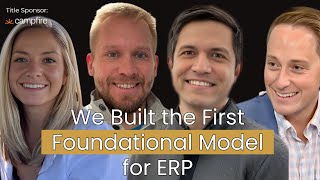
Paul Barnhurst talks with Campfire CEO John Glasgow and finance leaders about what they learned at the AI finance summit. They cover how to actually adopt AI without getting stuck in endless pilots, why data readiness matters when switching ERPs, and Campfire's new Large Accounting Model and agents.
Chapters
Finance's job is to help the business make better, faster decisions. What is great FP and A to you?
Great FP and A to me is using financial and operational data to provide.
Actionable insights to the business, whether it's finance or accounting. How do we rethink the role? How do we move into the AI era? That's really what today's content's about.
There's so much out there now about like how AI is going to take our jobs. I see it more as an opportunity.
To learn where is an AI summit we can sponsor and we literally could not find one for corporate finance and accounting teams. And so we went on this mission.
To go build our own Live in Campfire. We're able to really benefit from high end features within the product ember AI.
My ability to be the best Excel modeler in the room wasn't going to make me a better CFO. I think that the best CFOs have higher EQ than IQ.
It's an exciting time for customers in the finance stack.
Welcome to another episode of FP&A unlocked. Are you tired of being seen as just a spreadsheet person? Will others get a seat at the table? Well then, FP and A Unlocked where finance meets Strategy, Hosted by Paul Barnhurst. The FPA guy is the podcast for you. Each week we bring you conversations and practical advice from thought leaders, industry experts and practitioners who are reshaping the role of FP&A in today's business business world. Together we'll unlock the strategies and experiences that separate good FP&A professionals from great ones, helping you elevate your career and drive. Strategic Impact Speaking of strategic impact, our title sponsor for FP and A Locked is Campfire, the ERP that's helping modern finance teams close fast and scale faster. This week we have a special episode for you. We have not only one guest, but we have four guests that we'll be bringing to you live from Campfire Finance Forward AI Summit. I went to San Francisco and interviewed several of the people involved in the conference. It was a great experience. So I start talking a little bit about the conference. There's a one day event and what's great is they've made it available. You can get on demand access from Campfire Summit AI. If you go there, you can go listen to the different events. So they had obviously kind of the welcome remarks, but they had several panels. One of them was called Rethinking Scale the AI Finance Playbook. And several CFOs and thought leaders share their Thoughts of how do you think about finance and elevating your business, elevating your team, your department in the age of AI. Second one they had was called Build for the Billions Frameworks for Scale. This was hosted by a good friend of mine, C.J. gustafson. And they had on the panel the controller from Anthropic, Gina Jones, Daniel Kang, CFO at Mercury and Brad Flooring. If I can pronounce today, I'll get them right. Brad Flooring, the VP of Finance at Snowflake. I particularly love listening to Brad. It's a story you can find online. I've read about where how they had to improve their forecasting. They brought in data science people and I love their journey of how they went from a process that was really difficult to forecast to dialing it in within 2% on their journey to going public. So highly recommend checking out some of his stuff. I know CJ did a podcast episode with him at the conference that will be coming out. I loved hearing what he had to say. That entire panel, that's one of the ones I got to pay the closest attention to as I was often interviewing people. I had the opportunity to meet with several great people. Couple other things they had during the session they had an AI public company playbook, right? The reality is if you're public, you have to be much more careful with AI interviewing people. I had the opportunity to meet with several great people. Couple other things they had during the session they had an AI public company playbook, right? The reality is if you're public, you have to be much more careful with AI. You have to think differently about it. And so they had a former chief accounting officer of Fastly, they had one of the partners at Accel which is taking several companies public, the venture capital firm Accel, they had the CFO of Lima One and they had someone from PwC that's a principal in their AI business. So great information there. So they had that session, they had the what does the AI native finance stack look like? They did demos, the software they demoed was obviously Campfire. Also did Abacom. I had the opportunity to see their CEO Julio Martinez. They recently did a 60 million raise and they're doing a lot of great things in the FP and a space. So I had a fabulous conversation with their head of sales who did the demo or head of partnerships and also their CEO Julio Martinez. When I was there they had the co founder of Tabs, Rebecca present. They had a product, Calvin Lee from Ramp and they also had Anrock Ina from there I'm not familiar with that one, familiar with the rest. And they had a few other sessions from Data to Decisions, AI Insights at Scale. Libby Frankie hosted that or Libby Frank, which we have an interview of. You'll get to listen to her. CJ Gustafson, John Glasgow and then one of the attendees at Kevin Neary. So they had that. They had a closed door conversation just for cfo. So that's not available. But they also did a hackathon where you could build something with the replit. Then they had a dinner with networking and reception. So it was a great conference. I'm really glad I went. Let me introduce you to the four people are going to talk about the conference, what they learned, the session, a little bit about their business, what they think is great. FP and a. I tried to ask as many of them as I could. So in order, we're going to start with John Glasgow who's going to give us a highlight of the conference, how it came together, where Campfire's at the recent funding raise. Great interview, just a few minutes long. Next you're going to get a good friend of mine who runs mostly metrics, used to be a cfo. That's CJ Gustafson. We'll talk about the panel he ran, what he's doing with his business. We have a great conversation, highly recommend his podcasts. Next we have Libby Frank. She ran the session as I mentioned earlier on, from Data to Insights or Data to Decisions, AI Insights at Scale. She's finance and Accounting at Clarity. She heads that up. Conversation with her. And then last but not least, we'll have Kevin Neary. He's a participant, believe he's at Brainly is the company and really great conversation. He's also a user of Campfire, as is Libby, so they speak a little bit about their experience. If you want to hear some people that are using the software. Hope you enjoy this episode. I highly encourage you to listen to all four interviews, some great conversations and we'll be back with our regular guests from my office starting next week. But this one's on the road so it's going to look and feel a little different. But I hope you enjoy all these great guests from the conference and that you access the on demand information from Campfire Summit. Thanks again and until next time. All right, I'm here with John Glasgow, the CEO of Campfire and we're at Finance Forward, the AI Summit. So why don't you start. How did the summit come together? Tell me a little bit about, you know, how this Happened.
Yeah. Well, look, first, thrilled to have you here, honestly, I mean it's. You made the trip out and having people like you is what makes events like this so special. So thank you. It's a great question. This summit came about because we were actually looking, I was meeting with our marketing team, we were looking for conferences to support and invest in in communities. And we obviously do a lot with you and your content, but we were looking for in person events as well. Like where is an AI summit we can sponsor? And we literally could not find one for corporate finance and accounting teams. And so we went on this mission to go build our own and we announced it with our Series A. And you know, we candidly didn't know if we'd be able to fill the room and here we are and we're way beyond capacity and overwhelmed with the turnout. And so it's, it's been a great day.
It's always good when you have a large turnout.
Yeah.
And so was it hard to find speakers or how did you think about that? Like, you know, you got the people, they're all excited. AI is a topic everybody gets passionate about. But how did you sign on kind of the speakers and the panel and all that?
Yeah, it's great question. So for the speakers, a lot of them just made a lot of sense. I mean, I talk to thousands of finance and accounting teams a year and there's some folks that really were like going to think differently. So like Brad, you know, VP of finance at Snowflake. I met with him and he invested in Campfire and he was telling me how at Series B that they just built for the billions at Series B at Snowflake. And just hearing how, you know, he's still there, I think eight years later, how he has just built their finance stack and their teams and processes for the billions, I was like, my God, this is such great content. We just got to get this guy on stage, we got to get him a mic. And so a lot of those conversations from people where it's like, I feel like an audience of one is not doing it justice. We really gotta kind of help tell their story and help their peers think in that mindset.
Yeah, I was excited when I saw Brad. I read an article, there's an article they did a few years ago with someone that told the story of Snowflake, bringing in the data scientist and how they're basically CFO at the time, said, look, we have to be within 2% of revenue before we go public. You guys figure it out. Okay. Our Models aren't that good. We got to bring in a data scientist that whole journey and I remember how fascinated I was reading that. So when I saw them on the the list I was like, oh, it'll be cool to hear, you know, hear a little bit of that.
Yeah, no, I mean it's been fascinating. And then Jenna at Anthropic, she's previously early accounting team at Asana came to Anthropic. She's been at two incredibly fast growing teams and it's like how do we, whether it's finance or accounting, right. How do we just like rethink the role? How do we move into the AI era? And that, that's really what today's content support out.
Yeah. And it's definitely, we can all see it changing and it'll be interesting to see, you know, what's next with AI. I know you guys have done your large accounting model and you're doing a lot of work there. Just, just raise the Series B. Tell a little bit about that. Was it 10 weeks after the A?
Yeah, it was a quick turn. I mean it's funny, I was telling my wife like we're going to go on our first vacation. So I started a campfire after the Series A. And then we had this preemptive just overwhelming demand to do a Series B. And, and we had the inbound customer demand as well. And so we were hiring we5x our team in the last three months. We're hiring as fast as we can that we just saw an opportunity to bring in more capital. And, and part of that is because we now have like public companies going live on Campfire and 30. We went from 3 million in funding to 35. And it felt like a lot to me. But to our larger, more enterprise customers, they're like, hey, we would like to see almost infinite capital available to you and the team from like a going concern standpoint. So it's actually been, you know, we haven't even touched really the Series A money yet. The Series B was a lot of it was like allow us to think over incredibly long time horizons in terms of like the AI investments that we're making, but also just giving our customers the comfort around the capital that we have available.
Yeah, I mean that's a big concern. You know, whenever someone's looking at finance stack, whether it's FP and A erp, whatever, procurement, all those, you're like, okay, how long is the company going to be around? Yeah, sorry. Because you've seen a ton of growth in this space and it's like, okay, do you have that secure balance sheet, especially enterprise? Yeah. They're much more willing today to go for early stage companies. It used to be basically you weren't a big company, you know, the enterprises wouldn't touch you. Yeah, that's changed, but they need to be comfortable that you're not going to go anywhere.
We have seen a huge change that buying safe likely means it's not an AI product. And so there's been this groundswell, particularly at the board and C level and coming down on the team, which is like, how do we move into the AI era? How do we become more efficient internally, particularly within gna? I think we all feel that. As a former finance leader, I certainly felt that and that was actually one of the reasons I founded Campfire, which is like, help drive efficiency, allow us to focus on more strategic work. And our customers are certainly saying, hey, we think AI is in a good spot, that it's actually going to help us on that journey.
Yeah, no, it's, it's an exciting time and I love seeing all the AI exciting conference. I know you got to get back to it, help running it, but anything else you'd like to share before we let you go?
You know, I would just say it's like, it's an exciting time for customers. In the finance stack, I think this category had been deprived of modern tooling for so long. A lot of great options coming out. I think a few categories around us like accounts payable and payroll. There's, there's been some new folks that people come to us and say like, hey, the rest of my stack is so modern. Like, you know, why is not my, why is my general ledger still so outdated? Like, I'm looking for a modern ledger that looks like some other, some of the other tools that I'm running. And so I think that's been a lot of the feedback we've been getting is like, it's time for something new. And I think that's reflective in the enthusiasm today's event. But yeah, I mean, you briefly touched on it earlier, the large accounting model. You know, we're the first ERP to come out with our own foundational model. And this was something we talked about today on stage, which was largely based, just based on like accounting data is a unique data set. But then every customer has their own chart of accounts and their own dimensionality. And so we, you know, sitting with AI engineering, I sat down in a room with them and it's like, you know, is there an opportunity for us to provide better attribution at auditability, security and compliance if we were to bring the foundational model in house. The other thing we announced today is agents agentic workflows and allowing you to look across your finance stack. And so these are things again, just like thinking about AI as the newest member of your team. And that's really the approach we've, we've taken. And a lot of today's announcements are along those lines.
Exciting. Thanks for sharing the announcements and taking a few minutes out of your data. Thank you for being on, Paul.
Thrilled.
Thank you. And now a brief message from our sponsor. Campfire built a best in class AI native ERP designed for modern finance and accounting teams. With Campfire, you can automate revenue, streamline your close and centralize accounting all in one unified platform. And now they've hosted Finance Forward, a first of its kind AI summit in San Francisco. They brought together the sharpest minds in finance and operations, all focused on how to actually use AI to move the needle. You don't even have to travel to learn the tactical skills to put your team ahead. You can stream the whole thing on demand, totally free, anytime after the the event. So if you're ready to get tactical about AI and finance, head to Campfire AI and register for the on demand content for free. That's Campfire, where finance teams go to think forward. All right, I have here with me CJ of Mostly metrics, right?
Yeah, mostly metrics.
How long we know each other now?
It's got to be, I think it's four years.
It's been about four years. You were one of the first guests back when I first started podcasting.
You taught me everything I know about podcasting.
I wouldn't go that far, but we had some good conversations.
I'd never even been on a podcast, let alone hosted one.
So did you ever think you would now host two?
No, I didn't think this was a career. But I saw you doing this wacky podcasting thing about finance and you were kind enough to teach me the ropes.
It was a good time. We had some fun conversations. I remember when you started, I was jealous how quick your podcast grew.
So I had the newsletter to start out. So I started writing in December of 2020. So I was terrified that I was going to forget everything that I was learning at this hypergrowth software company I was at. So I started writing it down.
Yep, I remember you saying that.
And I think you either die a newsletter or live long enough to become a podcast. And so I became a podcast.
I hear You. So just so everybody knows, I'm here at the Finance Forward AI Summit sponsored by Campfire. You hosted one of the sessions. Yeah. Talk about that. What did you gain out of it? Who was the speakers? What was it about? Tell us a little bit.
So the panel was laying the foundation to get to a billion dollars or more. So we called it Scaling for Billions.
I want to get to a billion dollars. How about you?
I would love to be there. That's why. That's why I attended the panel and moderated it. And so I shared this stage with Dan King, the CFO of Mercury Fintech company Payments Space, with Brad from Snowflake and with Jenna from Anthropic. And so three companies of scale that are growing very quickly and have valuations well north of a billion dollars.
Yeah. Snowflake. Public or public now, aren't they?
The other two are not $50 billion, I think.
Yeah. I knew they had to be huge. I'm like, yeah, I know. They went public.
They do more than 4 billion in revenue per year and they're crushing it.
No, they're doing really well. And we all know Anthropic. I mean, our valuation, I'm sure, is what, a hundred billion now?
I think it may be a hundred billion now. Yeah.
Wasn't OpenAI, like a 500 billion valuation recently?
OpenAI is 500 recently. And anthropic went from, I think, like 7 to 30 to 50 now to close to a hundred.
So hard to keep track.
Yeah, it's wild. It changes every day.
Never seen something quite like AI. I mean, I was in college when the dot com bubble burst.
Okay.
And so I remember that, but this is just different. One being in the workforce and it just feels like it's moving faster than the whole AI.com phase was to me.
Well, back then, did you feel like the software vendors or I guess the websites were ahead of what the market wanted? Like they were too optimistic?
Yeah, there are definitely some of that. It's like when Apple came out with their PDA way back in, like, the late 80s or early 90s, whenever they were way ahead of the market. It was in the 80s.
Okay.
And nobody used it. Camera, what it was called. But when they came out with the ipod and the iPhone, the timing was right.
Right idea, wrong timing.
Yeah. There's so much to timing me.
And you were laughing about it at lunch that it does seem like a lot of these companies have magnificent things, but the people we talk to are asking pretty simple questions about just, like, getting started with stuff. And so I do think there's this expectation gap that is occurring right now between like, yes, you could technically go and do all these complicated use cases, but you had a crawl walker on.
Yeah. And there's also. I've had a lot of conversations. Glenn Hopper, who co hosts Future Finance with me, you know, he talks about how you go through the period of disillusionment, you know, and kind of that whole transformation. He's like, that's where we're at for a lot of companies right now is they're starting to realize, oh my data isn't there, or multi reasoning agents aren't really there yet. Standard workflows, fabulous for automating things. That basic agentic workflow, you know, great in analyzing data. There's a lot of fabulous things it can do. But I think the hype and the reality, you know, reality hasn't caught up to the hype.
Yeah. And I heard this really cool term, someone said that a lot of these companies are getting stuck in pilot purgatory where basically they'll pilot something. I think it's really cool. But then they're like, I don't know if I can bring this back and actually start using it today.
Interesting. I hadn't heard that term. That's fascinating.
I thought it kind of captured where we're at because you have these very complex use cases and you're putting a man on the moon. But we're still trying to learn how to drive a stick shift with a lot of.
One of the best I heard is what you want to try to do. One, start simple with projects, but make stack. Rank your projects that are most painful and then rank how good Gen AI would be at solving them.
Okay.
Take the one that's most painful and work on that.
Yeah.
And I thought that was a good way that Gen AI is good at. But you got to look at both together. Right. If it's really painful and Gen AI sucks, you're just setting yourself up for purgatory.
Totally.
And if you know Gen is not good at it, it's just, you gotta. You gotta match. And so I thought that was a really good way of trying to rank it. But you also have to be smart enough to understand what it's good at. And it moves so fast, it's like, you know, very few people are truly AI experts. We've had a ton of them crop up to say they're AI. Actually, it's like every company says they're AI native. Have you seen one that doesn't these days?
No. There are a Lot of domains feeding to AI now, which is fascinating to do it after the fact, but I don't know. You make a good point. Things are moving fast, but at the end of the day, if you can't adopt it and use it, it's like a lot of noise signifying nothing.
So are you kind of. Are you glad right now that you're not a cfo, having to figure out all the tech stack kind of a little bit on the outside. Are you missing it or how you feeling? It's been what, about a year now, right? Almost a year.
I miss it a little bit. It's been almost a year on my own now. But what I love the most is being able to build and see a tangible impact on the business every day. And I mean, I wonder if we'll move to a point where we start running businesses where it's less people but you're able to do more because of the agents. And so I'm excited to be here today. Cause I know Campfire was mentioning some of the agents that they're launching and like I'm running a small business now and there are multiple things in my financial stack that I don't want to do myself. I'm not.
I need to use agent.
Can I use an agent for that?
Well, it's funny, I was. I'm getting ready to hopefully interview a guy. Reached out and he's. He's built a couple businesses and now his goal is he's publicly building and sharing. His goal is with using agents to only have three employees and get to 30 million in revenue.
10 million per person. That's crazy.
That's a huge number.
Do you think you can do it?
I don't know, but it'll be an interesting interview.
It will be. Show me.
Yeah, I'll let you know. I want to bought waiting here back. I got to follow up on it. But it was. They reached out to me. One of the, you know, you probably get them PR firms sometimes. And so what's the number one lesson you take away from being a CFO with you now that you're running your own business?
I think that the best CFOs have higher EQ than IQ. I don't think I was ever the best at the forecasting, at the controls or the governance. But I think what I tried to play into was understanding the human element of what people needed in each department and then tying all the business outcomes back to what it meant for them and for their team. I think a lot of people overemphasize the technical skills. But I think what I noticed pretty quickly is my ability to be the best Excel modeler in the room wasn't going to make me a better cfo. It was more about being a GM of the sports team. And so that was a big mindset shift for me.
It's a great way to put it. I think that's one thing. The technical comes easier for me. The EQ is a little harder. How would I. I think I'm mature enough now. I could handle it but for a long time I could. I. I don't think the EQ was quite there. So it's interesting, you know, because I hear that again again as I interview people.
Yeah.
And FP and a. It's the soft skills. You need a baseline of technical. So it's not a weakness is my view.
Yes.
Then you should be spending most of your time on the eq. The soft skills, the relationships.
And I think the more I looked into it in any position, the higher up you get in any org it's your job is selling. You're selling talent on why to work there. You're selling investors on why to give you money and you're selling customers on why to buy your solution. And the best CFOs realized that I'm now in a game of selling and that was like that was a big unlock for me.
I bet that was kind of not what you expected.
I don't think it was not a salesperson either. But I mean look like the partner at a big four accounting firm. Their job is sales.
Well you look at Daniel Peek wrote the book and I've read part of it and all of it but selling is human. We all sell. We defer honest with ourselves.
Yeah.
You know that's a big part of our life.
I'm selling you to hang out with me. Like hey, am I cool enough to hang out with?
We had to sell our wives on us.
You know, I mean that was a.
Task bigger one for me probably than you, but yeah. So any last thoughts kind of from the conference or just the whole experience here?
Whenever I go to a conference I look for what's a tactical thing that I can take back and change about how I do work. And I think there have been a lot of ideas floating around here with use cases of how to get started with AI and also realizing like when just rule based stuff is okay. But the conferences that don't do well are the ones that just talk in general specifics about like oh AI is big. Like I agree too. This conference has been full of takeaways that you're like, you know what? That's like an if you know, then you know, that's a tactical insight that I can use. And for me, one of the takeaways was knowing when to throw AI at a problem and when to just put the human element into it. And that if I am going to throw AI at a problem, I should be able to recreate it on my own. And after that, you can go a bit faster, but if you can't validate what you're doing and if you can't explain to your investors, to your employees why an answer is an answer that you should probably back up a bit.
There still needs to be a level of transparency. Right, agreed. Really being able to understand things, is it a little bit of a black box? Sure. You know, in the sense of the sausage making, but you got to understand enough to be able to get everybody comfortable with it. Yeah. You can't get to that level. I agree with you probably want to back off and rethink it a little bit because, you know, people need to have a comfort level in what it's doing.
Yeah. And I think that ties back to what we were saying before about the eq. With any of these models, you still, you can rely on the IQ of the model, but you have to rely on the EQ to convey the message and then the storytelling skills to say why it's important. And I think a lot of the things we do with AI today helps you get to like, the characters of the story faster, but it doesn't necessarily dictate the storyline of the plot.
And the other thing that kind of reminded us we were talking about that is there's a certain level you have to have. Like, if you've ever worked with somebody that doesn't have the. The sniff test skill. Yeah, you know, exactly.
Yeah, I know exactly.
They put something in front of you and you're like, you didn't question that we're going to have 3 billion in revenue and the market's worth 2. You know, you look after like 2 seconds like, dude, something doesn't.
Yeah, that dog don't hunt, as my friend Brian would say.
Yeah, exactly. Right. This whole thing doesn't foot. The dog doesn't hunt, whatever you want to call it. And. And I think there's something to that of AI of having that ability to be able look at and say something just doesn't make sense here. There's times when it's blatantly wrong.
Yeah.
But as I've heard some people say it looks all polished on the surface, but underneath there can be a lot of issues like building models with AI or different. And you gotta be able to get in there and understand that, be comfortable with it.
Well, so I do these S1 breakdowns of companies that are going public and I'll throw the document at it and be like, summarize the cap table so the ownership percentages. Yeah, seemingly straightforward. Gets it wrong every time. But like I need to know the sniff test to know. Oh, well, yeah, the CEO probably doesn't own 90% of the company at its like something doesn't work here. So. Yeah, I totally agree with you.
I got it. Well, thank you so much for a few minutes, cj. Appreciate it. Always good to catch up with you.
Nice to see you, buddy.
Good luck with mostly metrics.
Thank you.
Come find me when you're a billionaire. I will. All right. And now a brief message from our sponsor. Is your AI thinking like a generalist or like a finance leader? Here's the thing. Most large language models weren't built for finance. They're trained on everything from Reddit threads to recipe blogs. So when you plug them into your accounting workflows, they're results can be, let's just say, not balance sheet accurate. That's why Campfire, the company pioneering AI native ERP just made a huge move. They've raised a 65 million Series B co led by Accel and Ribbit, bringing their total to 100 million raised in just 12 weeks. And they're putting that momentum to work with LAM, the Large Accounting Model. It's a proprietary AI trained specifically for finance and accounting. Already hitting 95% accuracy on accounting tasks. That's redefining what ERP can do for modern finance teams. Unicorn companies like Posthog and Replit are already using Campfire to automate their finance operations and seeing real results. You can see it for yourself. Sign up for a live demo of Lamfire AI. That's Campfire AI. So I'm here with Libby Franke. She's the head of finance at Clarity and she hosted one of the sessions here today at the Finance Forward Summit. So tell our audience about the session you hosted.
Yeah, so it was myself and three other finance leaders. Different companies, different stages, different industries, and the focus was really data. In the age of AI, why is it important? You know, how do you think about what it needs to look like, what problems you're having at whatever growth stage your company's at? Yeah. And kind of how do you take it Forward to the place that it needs to be in. Layer AI on top of that. And then how do you kind of turn data around and measure the efficacy of your AI measures or other things with data as well?
Yeah. And where do you think most companies are just kind of your opinion? It seems like data is a big challenge. A lot of companies. Right. We all, we all hear garbage in, garbage out. Yeah. So what are your kind of thoughts of what we should be doing to make sure, you know, our data is at the right stage? Because. Right. You could spend forever cleaning data and it's never going to be perfect. So how should companies kind of think about that as they're trying to layer in AI? Any thoughts there?
Yeah, it's a good question. I think it really depends on, you know, where they're at, what are the challenges they're having with it? I think for some folks, they, they're really like nowhere to begin with.
Right.
They've got bad systems that have been, you know, recording bad data for years. Yeah. And then they haven't been doing anything with it because they know that it's bad. That's kind of where we were when I joined. So yeah, it really kind of comes down to understanding what you need out of your data. Where is your data right now, you know, and then what do you need to do to close that gap? And so for us it's, it was, we need a better system that has the good dimensionality of data and then we need to do some one time cleanup and then we need to record data cleanly on an ongoing basis. I think for other folks the need is different. It's like we already have a pretty good system. We need to connect it to another system or we need to start doing something with the data. But I think kind of anchoring whatever those changes are in. What are your business's problems today? What are your functions problems today? What does good enough look like kind of in that context? And then closing those specific gaps.
Yeah. And that all makes sense. So for you, you guys had to really work with just kind of cleaning the data and getting to a good place with it. And you mentioned you're a campfire customer.
Right.
What was that experience like? What made you decide to switch? Talk a little bit about that.
Yeah. And there's definitely a data aspect to that as well. So when I joined, the company was using QuickBooks. You know, sure, classic solution, works for a certain size and stage. But our business had gotten complex enough that the data dimensions in QuickBooks didn't allow us to look at the business the way that we wanted to.
Yeah, you couldn't slice in.
Yeah, we've got a couple different product offerings and we've got a service line and we've got different locations, different entities and we can't see any of that. And so that is really what prompted a decision. Right. Like we need to make a change. We can't make the business decisions that we need to with the data quality and structure coming out of QuickBooks. And then a couple things like we knew Campfire from being at different settings like this with John and others before and had come to really think highly of what they were doing and who their team was and the solution that they were providing. And so we then looked at Campfire next to some of the other competitors in market. We looked at Rillet, we looked at Everest. We really didn't consider any of the more legacy, I'd call it erp so solutions. I think given the business that we're in, to choose a vendor that wasn't AI native and kind of building in that philosophy would have felt off. And we just felt like again, coming back to the data aspect, among other things, there were, I would say, like product benefits in Campfire that were stronger than some of the other providers out there. And what we could see was the direction they were building in and the pace that they were building at was going to be a huge advantage for where they were going to go and where we could go with them as a result of that.
Sounds like it's worked out really well for you so far.
Yeah, yeah. I mean we had to, with their support, work through a bunch of data cleanup through the migration, like what do we want our new chart of accounts to look like and what kinds of reclasses do we need to do as part of the transition. But now with that behind us and being live in Campfire, we're able to really benefit from, I would say that high end like features within the product like Ember AI and a lot of the auto tagging and auto allocations and things that we've been able to set up have saved us a lot of time, helped us answer questions that we either couldn't answer before or would have had to spend much more time answering and are really helping us kind of keep the team lean. And also think about like where do we still have certain needs that aren't met and what resourcing or solutioning do we need in that landscape?
Yeah, no, it sounds like it's been a really good partnership for you then. Yeah. Great. So what's it been like kind of building the team? How's that been going for you?
Yeah, it's been really good. Yeah. One of the really wonderful things about joining a company this size and stage is how much of an impact you can make. And one of the ways that you make that impact is by being really thoughtful about hiring. What roles do you need and then more importantly, who do you find to fill them? Because that each incremental person is a pretty meaningful percentage of the overall employee base. And so I've been able to bring on one person and he's been a great fit, both technically and culturally. And I think we'll be kind of critical about the next full time role that we need to fill in the accounting and finance function. Trying to really make the most of AI solutioning and low cost resources to really think about what does a finance function of the future look like. And it'll be a little more uncomfortable maybe than if we built out a little bit faster. But I think it gives us time to make sure that who we bring in and the job that we ask them to do is like really the right thing for where we are and have new people that join, join successfully and really grow into that role.
It's generally better to grow more slowly and grow thoughtfully than throw bodies at it, so to speak. Because generally that ends up just leading to problems down the line. May work great in the short term, but it makes a lot of sense.
Yeah. And I feel like things are changing so quickly these days that like, you know, we kind of started hiring for one role. We were trying to make sure we had the right bar for talent. And so we spent, you know, maybe six weeks starting to talk to candidates. And by the time those six weeks had passed, like the way that we were thinking of the role had changed. So it was like maybe we should just push pause and let things evolve and then come back around to this.
It makes a lot of sense. So one other question I want to ask you before I let you go. This one I ask a lot of guests, if you were to define great FP and A, what does that mean for you? How would you define great FP and A?
Yeah, I think it all comes down to how are you serving the business? Like when I think about this role, how am I as a partner to the rest of the executive team? How well do I understand our CEO, my boss, and like what he is interested in, what he's good at, what he's not good at, the questions he's going to ask or should Be asking and kind of really fluctuating how I show up and, like, where I spend my time to kind of round out around those needs and help influence the overall direction of the business. Because at the end of the day, you know, there are a lot of different versions of a finance function. I could tell you how I think it should look, but I think it only works if it works for the business that it's in. And so for clarity right now, it's, hey, there are important strategic decisions that we have to make, like, how do we bring a finance lens to them? You know, there are financial behaviors that we haven't practiced as an organization. How do I introduce those and then train people to adhere to them? So for us, it's kind of 101. Sure. And I don't know, a little bit beginner in nature, but I think that role will change over time.
Yeah. And I think you make a great point. The role, you know, great FP&A is always about that partnering. But the role and the function, the tactically how you do it is going to scale with size and different things. But that core idea of supporting the business and being the great partner in influencing is always going to be core. Yeah. And so I think that's a really good point. Well, thank you so much. I appreciate your time and chatting with me for a few minutes. And good luck as you continue to build out clarity. I'm sure it'll go great for you. So thanks, Libby. I appreciate it.
Been great chatting. Thank you, Paul.
All right, I'm here with Kevin Neary at the Finance Forward AI Summit sponsored by Campfire. Kevin, what brought you?
Well, Paul, I am a new Campfire customer. We have not gone live yet. We're in the middle of our implementation, but we go live on Saturday, and I couldn't be more excited. So when the Campfire folks invited me out, I saw it as a great opportunity to get more knowledge on AI and finance.
So you go live Saturday. You feeling ready? I know it's always a big transition for to do a new general ledger.
I am cautiously optimistic that everything will go very smoothly.
Good. So I'm curious before we jump into the conference, how did you come to the conclusion to make the move to Campfire? Was it you needed to upgrade? Are you switching from another platform?
Kind of.
How'd that come about?
I had inherited a very archaic version of our original ERP that will remain nameless.
That's probably best.
Yeah, we're not, you know, but, you know, I saw Campfire as a good Opportunity for a fresh start for Brainly. Brainly is an AI first ed tech company and we're trying to use AI not only in our customer facing technology, but also internally as well. So Campfire was checking a lot of those boxes for us on the finance side side of the house.
And now you are. Is it VP of Finance Joe Brainley. Is that the. So do you do both accounting and fpa?
Yeah, fpa, accounting, tax, kind of the whole, the whole nine. Yeah, got it.
And so how's that experience been you some of your prior roles, I think you accounting and fpa. And so this is the first time you've kind of had everything or first or second.
But yeah, first big one.
First big one. How's it been? What's been the hardest part?
I think the hardest part has been we're an international company. So kind of, you know, a lot of the, my previous roles were just the U.S. and you know, fueling that growth and supporting that growth of a growing business in the US the external international rather requires statutory requirements of some of our subsidiaries, I think, and build. Trying to build those into a fast moving financial process is challenging. Statutory requirements can be a little cumbersome and bureaucratic if you will.
Wait, government requirements. Statutory stuff can be bureaucratic.
I know, I know, it's a surprise.
The guy who started his career writing, doing procurement for the US Government for the Department of Defense, as you had, you know, follow all these rules, but be creative, but don't go outside these, these, this many rules.
Right?
Stay inside the lines but, but be creative.
Right. So yeah, I, I totally understand what you're talking about. Well, I, what have you liked about the conference so far? Maybe talk a little bit about just the conference in general.
Well, we're about halfway through it and I thought it started out with a lot of level setting and kind of letting us as the attendees know like what is the, what are the possibilities within of using AI in finance? What are some of the speakers gave their idea of like what they're, how they're using it today, whether they're using it agency to do AP and ar, like cash applications. Are they using it from a data perspective to have, you know, pull data very quickly and, and analyze that data. So you know, I think that was like the biggest thing for me was, was the biggest takeaway. You know, there's so much out there now about like how AI is going to take our jobs and I know that that is probably every finance person's like biggest worry when trying to adopt AI into their Daily work life. I see it more as an opportunity to learn more, an opportunity to get myself thinking more strategically and moving faster.
Right.
Like, yeah, I just, I'm, I'm excited about everything I've learned today so far.
It's really a productivity efficiency tool as much as anything else. And it's finding the ways that can make you more productive. You know, the hype is real, but there's also a lot of pressure promise out there and it's cutting through it all and deciding what makes sense for us and is this stuff ready yet? Because you know, I see all kinds of things and sometimes I'm like, okay, that's really cool. And other times I go, yeah, not buying that one with the ten foot pole.
Yeah, same. I think I've started to use a lot of the like generative stuff.
Yeah.
Like already today. You know, it's not easy, I think for, for finance to get technical resources, whether it's like data or engineering resources.
We're usually last because we're not a, because everybody else a revenue p. L.
Yeah, we are not a revenue or yeah, not, not selling.
We're a cost center. You could argue we're value creation, but we're still a cost center.
Very well said.
Yeah. And I, I had someone on LinkedIn one time to try to argue that finance is now a revenue center. I'm like, no, we don't sell or.
Nope, that's not how it works.
You could argue a value creation center. I'll buy that. But you just please just don't tell me we're a revenue center. I don't. The logic doesn't foot for me.
No, certainly not. I like that doesn't foot for me. But yeah, so I use the generous stuff. I'll use like Claude or OpenAI to like, hey, like this is my, you know, data table in Snowflake and these are my columns. Can you help me pull the code together for this?
Yeah, write the SQL or whatever and.
Then copy and paste that into Snowflake. And like now instead of waiting for a data engineer to have the time to meet with me for 30 minutes, I did it by myself in 15.
It's amazing. I wish I would had I, I did report writing before I moved into FP&A for about 18 months, two years. I did a ton of SQL and I would have loved to have. When you're like spending three hours trying to figure out where you have a stupid comma in the wrong place and the report's not working, you know. Yeah.
Now Claude tells me yeah, well, it's.
Like I had to write a complex indirect formula in Excel the other day for something and I'm like, I ain't doing this. I just slowly chunked it out with chat GPT and 20 minutes later I was done. Instead of spending an hour.
Yeah, it's so, it's pretty fantastic. So that stuff is already there for finance. Right. Where I'm not moving into yet. I want to get live with Campfire and see how Campfire can work for me. First is the agency stuff. I think that's like, I think the inherent logical next step.
I think it is, it's where you have to make sure you got your data in good shape and you're really thoughtful about it. You know, a lot of studies are showing a lot of the in house stuff is failing. Do you go to a third party? You know, there's just, there's a lot of learning with that. So I think you're, you're smart to kind of take it in chunks and, and build versus trying to do it all at once.
Yeah. And I think it's important for people to remember like using anything, you're already ahead of the curve. I think I heard a statistic recently that only 6 or maybe 9% of finance professionals are using AI in their day to day or, or teen. 6 to 9% are using AI at all. So if you're even just doing a little bit, you're already ahead of the curve. And, and you know, in a world where we are still like, you know, the narrative is like, oh, it's going to take our jobs, like to even be slightly ahead of the curve, I think is a great first step.
Agreed. I have one last question for you, then I'll let you go. This is something I ask almost every guest I have. So if you ever listen to some of the episodes, you may have heard this question. How would you describe great FP&A? What is great FP&A to you?
Great FP&A to me is using financial and operational data to provide actionable insights to the business.
I love it. It kind of goes with someone I heard and I've shared this many times. He said finance's job, and I think this applies to FP and A is to help the business make better, faster decisions.
Boom.
Kind of your actual insight. Same idea, just a different way of saying it. Yeah, so I, I and I love that you said financial and operational because operational are the leading indicators. So often we focus on the financial and it's like not helpful. A month later Right.
But you might have sales and marketing or even product people that have that operational data, but they don't have the missing piece, which is the dollars.
Yep.
To kind of bring it together and really make sense of it. And that's our job.
100% agree. Well, thank you so much, Kevin. I really appreciate it. I'll let you get back at the conference.
Thanks, Paul.
That's it for Today's episode of FP&A Unlocked. If you enjoy FP&A Unlocked, please take a moment to leave a five star rating and review. It's the best way to support the FP&A guy and help more FP&A professionals discover the show. Remember, you can earn CPE credit for this episode by visiting earmarkcpe.com downloading the app and completing the quiz. If you need continuing education credits for the FPAC certification, complete the quiz and reach out to me directly. Thanks for listening. I'm Paul Barnhurst, the FP and A Guy and I'll see you next time.
More from Paul




Trust and Leadership Lessons for FP&A From 100+ Top Leaders with CFO Jon Laudie






