Learn the benefits of the Financial Planning & Analysis Certificate from actual program graduates.
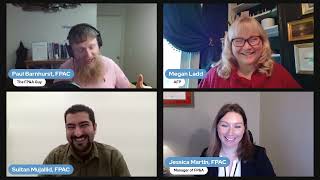
This is a YouTube video titled "Learn the benefits of the Financial Planning & Analysis Certificate from actual program graduates." It features a panel discussion hosted by Paul Barnhurst with guests Megan Ladd, Jessica Martin, and Sultan Mujalid. The conversation centers around the FP&A Certification (FPAC), including personal experiences with the certification, study strategies, career benefits, exam details, and the future of FP&A. The discussion is aimed at professionals interested in financial planning and analysis and includes audience interaction and Q&A segments. The content was created in April 2025 and is part of a series on FP&A, financial modeling, and the future of finance.
All right, welcome, everyone. We'll get started here in a few minutes with our LinkedIn Live. I have my panel here with me. We just like to start as we're waiting for everybody to join. If you're out there, just let us know you can hear us and tell us where you're coming from. We always love to know, you know, where in the world our guests are coming from. Last I saw, we had about 240 people registered, and it seemed like it was all over the globe. So just as you're coming in, you know, we'll get started here in another minute or two. We're just a little early, but, you know, if you're already on the stream, just let us know where you're coming from. All right, we'll give it one more minute, and then we'll. We'll get rolling, so to speak. So, again, if you're out there and you can hear me right now, just put in the comments, you know where you're coming from. If you can let us know that you can hear us. And will start the formal webinar here in just another minute. Great. So we have Ravi letting us know he's coming from Dubai. Thanks, Ravi. Great. We're starting to have everybody kind of come in. We got Rafael from Poland, Viola from Nigeria, Mercy from Nigeria, Maxwell from P.A. i'm gonna guess that's Pennsylvania. Got Washington D.C. ghana, France, Marita. So we got. Great. We got them all coming in. We got quite the global audience here today. We got someone from Santa's Workshop. I might have to show everybody that. Thanks, Michael. Can I put in my order for what I want for Christmas anyway? All right, so. Always fun to have a little bit of fun, so I'm really excited. This LinkedIn Live is brought to you by AFP, and I have here with me three distinguished guests, and we're going to talk about the FPAC. I think a lot of people have questions about that. I know I get a lot of questions about it. So where we're going to start is we're just going to go around the horn here, so to speak, and have each of our guests take a minute and introduce themselves. Just tell us a little bit about yourself and your background. So why don't we start with you, Megan?
Hi. Thanks so much, Paul.
I'm.
I'm very honored to be here today. My name is Megan Ladd. I work for the association for Financial Profess Professionals, and I am the certification manager for the Financial Planning Analysis Certification Program.
Great. Thanks, Megan. Jessica.
Hi, everyone. Thank you for Having me. Paul. My name is Jessica Martin and I work at a company called Rightworks and I am the manager of FP&A there.
Great, thanks.
And Sultan. Thank you Paul. Hello everyone. My name is Sultan Mujalid. I am the FPA director at Saudi Air Navigation Services. Plus 17 years of experience and certified FPSE.
Great, thank you. And just so you know, both Jessica and Sultana and myself, we all have the FP and a C certification and Megan helps manage that program. So we're all intimately familiar with it. So where I want to start and we'll throw this question to you first, Jessica. When. When did you earn the FPAC and why? We'll start with that.
I had to go back and look up when I actually did it. It was May of 2021 when I first or when I was certified. So I'm just at the end of my first cycle and I suppose to do it because of course 2021 was in the middle of COVID and there weren't a lot of conferences that I could attend and I fully believe in continuing education. So I was looking for an opportunity to do that. And. And this kind of fit right in line with what I do as an FP manager and as a senior analyst at the time. So that's why I chose to pursue this certification.
Sure, yeah. In 2021 there wasn't a lot of in person events you could go to. I could understand you had a little more free time to study than normal. Yes, for sure, totally understand that. How about yourself, Sultan?
Yeah, certainly. I started the certification, started the study for it since 2017 and I passed part one in September 2018 after one year of studying and I passed part two in September 2019. So I'm certified since 2019.
So almost four years there. Great. As for myself, I did both tests in 2023. I finished that. I think it was October, no, September. It was right before AFP that I finished the tests and you know, definitely spent some time studying for that. So before I get into the next question, I just want to let our audience know. If you have questions, feel free to put those in the chat and we'll get to as many as we can. We may not get to all your questions, but feel free to go ahead and put those in the chat. Also for those of you who stay till the end, we'll have a special offer for the F pack for our audience today. So I'll share that at the end of the webinar. But there's my little tease to encourage you to stay Till the end. Well, so just so you know, there will be a little surprise there at the end. So the next question I have, and again we're going to go to Jessica and Sultan here and then we'll get to Megan here in just a moment. But I would love to know, Jessica, how has it helped you in your career? What has been the benefit of doing the FPAC for you?
I mentioned a minute ago in my introduction of why I did it. I at the time was a senior financial analyst and I was looking at where I'd like to take my career and the natural next step seemed to be manager of FP&A. And I think this certificate really positioned me to be ready to take that next step and really take advance my career in that. In that respect.
Great. And how about yourself, Sultan?
Yeah, actually it helped me a lot because when I started my career I started in a different department than finance. Then I joined FPNA in 2009. That was a long time ago and I continued in FPNA as an experience only until 2017. And when I reached 2017 and FPSE is being explored by me and started studying for it, I thought that I have an experience but I don't have a certificate specifically related to the fpna. I was actually studying the another material then I skipped it to the FPSE because FPSE will support my experience in FPA into a certified a strong certificate. So that will boost my progression in my career. So that is one of my great ambitions to get the fpse. And as a result of that, after I got certified 2019, I worked on developing myself in other areas into my professional career. And in 2023 I have been promoted to a FPNA director from a manager position.
Well, congratulations on the promotion and appreciate you sharing your background. I mean definitely certifications are a great way to help show you're learning something when you, especially when you switch. Right. You go from another field. That's always a little bit of a challenge because some people sometimes will question that when you switch. So can totally see where that would be really beneficial. Megan, I'm curious, what do you see from, you know, people who take the test or talk to you? I'm sure you've talked to a number of people, have been certified or seen some of the data. How is the test helping people in their career? What's kind of your your view on that?
Well, I think what you said about earning a certification when you kind of switch careers is really spot on. We see a lot of people coming from especially Accounting backgrounds and they're wanting to branch out and do more Finance and FP&A. And the FPAC certification is a great way for them to do. We've also seen a lot of our candidates who have earned the certification have success in their careers like Sultan. They've been promoted, they've moved into, you know, higher job titles, making more money, which is fantastic. We love to hear feedback like that. I think it really speaks to the value of the certification.
Great. No, I appreciate that and I'll say for myself, you know, one, I wasn't looking to switch careers. In fact, I'd already started my own business. So for me, honestly, a lot of the FP&A certification was just for the experience and to share with my audience what it was like and to show that I could do it. You know, I wasn't thinking was going to help me necessarily be a better content creator or podcast host, but it was still a really good experience. I think mine's a little unique as to when and why I took it, but I still definitely learned some things, you know, from taking it and it was a good experience. So I'm going to jump into a couple questions we, we have here from some people, so I'd be curious. Maybe we'll ask you, Sultan, what's your take on how much of the material have you found kind of applicable to the FP and a role like how do you think it helps you kind of day to day? The material that you studied for the.
Test, the material of FPAC are actually very connected to what we do in our real life. It covers lots of aspects in business, in finance, in even non business elements. The FPAC cover the project management, it covers the communication, effective communication, it covers risk management, it covers financial modeling or Excel modeling that can be applied for FPA or it can be applied to other departments like business or sales or whichever department it is, it has industry, organization, it has many aspects that covers the business itself and explore, expand the knowledge and the experience of the practitioners for even finance or non financial people to be very connected to the business itself. The FPSE is different from other certifications that it is not, you can say a boring material that is only accounting or such material that you start studying and then you just drop it. I don't want to study it.
No.
Every page you read, it's interesting. It pushes you to read the second and the second and the second because it's very connected to our real life wisdom. That's the lovely part of it.
Well, we know what Sultan thinks About accounting, as I always like to say, what's the difference between an accountant and an FPA professional? Any guesses? All right, well, I'll tell this one and probably get myself in trouble with all the accountants, but that's nothing new. So when an accountant gets creative, they go to jail. When an FPA professional gets creative, they get promoted. So there you go.
That's fantastic. I like that a lot.
Obviously, please don't anyone take me serious. I'm just having a little fun here. All right, so, you know, next question I want to ask here, and this is towards you, Megan, and then we're going to go to an audience question here. But how do you ensure the program is relevant today for FPA professionals? Right. The world is just changing so fast, as is fpa, and it can be so different from company to company. How do you make sure it's relevant for people?
That's a great question. And it's one of the things that I love about the way that AFP structures their certification programs. We do what's called a job task analysis every five years for the FPAC program. And that is a survey that we send out to corporate practitioners, just like the people attending our seminar today. And we ask them, you know, what they do on a day to day basis, the tasks that we and duties that they perform. And we use that feedback and those responses to update not just the examination, but also the study material, the exam prep platform. So everything you're seeing is coming directly from practitioners who work in FP and A every day, even down to the items you see on the test itself. We do update those exam questions again every five years. And the people who write those questions work in corporate FP&A. So, you know, as soon as people get certified, they'll usually get an email from us, hey, want to volunteer to write some questions? So all of the people who work in FP and a day to day are the people who are actually contributing to the program and making sure that it stays relevant.
Thank you, Megan. And I can validate that. I have my inbox some stuff from Kendall at AFP to review around Excel and some of the technology material. Got to do that here in the next week or so. So I can attest to the fact that they do ask people who completed the certification to give feedback, you know, to be involved in the process. I know people that have helped with, you know, tests and different things on it. I've talked to a number of people, have been on different committees. And so it isn't just someone Say academic or someone removed from the field helping develop the test. It is people who are mostly actively working in the field. Right. And so I think that's, that's a real benefit and that helps ensure it meets, you know, the general needs of most people. Obviously there's always going to be some exceptions, just like any, any career you choose where you may take the test. Some applied to my job, some didn't, just depending. Because what I've found, and I think Jessica and Sultan could probably agree, is FP and A can be very different from company to company. Company. There are some core things that we all do. Budgeting and forecasting, analysis, month end. Beyond that, it's amazing how different it can be. And I see Jessica nodding on that. I'll give her an opportunity to speak to that.
I think it's very unique in the sense that FP and A can. We all have like the same fundamental skill set, but with the way we apply it in our individual jobs can be very different. And I think this certification gives everyone that framework and ground at ground level and grounds everybody to the same principles. And then applying it to our individual roles has been super exciting.
Yeah, great. How about you, Sultan? Any thoughts on that?
Sorry, I did not hear you. Well, Paul.
Oh, yeah, Let me just. So questions on, you know, just kind of FP and A in the test and how different FP and A can be from company to company, some of those type of things. Have you seen it very different from different places in your career?
It is different from a company to a company. Depends on the structure, depends on the business nature itself, depends on the experiences, the policies, the, the way the business operates. I have worked in plus four companies so far and every company has a different approach. There are some common, common points or steps between a company to a company, but the budgeting approach, the forecasting approach, the business planning approach, it's totally different. And especially I worked in an FMCG for 13 years and it's an, you know, it's a manufacturing company. So the planning and budgeting is totally different because we have lots of complexity into that business. Then I went to another company. It was less complex, but it has a wide diversification of sales, markets and regions. The production was easy and the supply chain was easy, but the sales is huge. So the difficulty or the challenge wasn't in terms of the production, in terms of the planning, of the cost. It was. The challenge was in the distribution and placing the proper margins with each country, with each customer. It was quite interesting. So what I can Say that if PSE changes from a company to a company, to some extent, there are some fundamentals. Does not change. However, there are some things that need. The FPNF practitioner needs to adapt to these changes.
Great, thank you. I appreciate that. So we've seen a few questions about this, and we'll, we'll get to a couple of them from the audience. But I think this is one probably everybody wants to know, right. Tests can take a lot of time. They can be a lot of work. And I see some laughing going on there. People probably remember some late nights. So, you know, I'd like to start with just getting an idea, like, Jessica, how long did you spend studying for the test? Do you have an idea of maybe how many hours or how much time you put in? And did you do both level one and two, or do you come from an accounting background? I think some people only have to do two, depending on their background.
I did do both parts of the exam. I do, actually. I am a former accountant, so I chuckle at the accounting jokes, but I, I don't remember exactly how much time I spent in terms of number of hours. I do know that, that it was a decent amount of time where I'd get up a little early and study before work or during lunch and that sort of thing and, you know, run through the flashcards and the different materials. But I don't know how exactly how much time I spent on it.
But would you say it was, you know, hundreds of hours? Would you say it was, you know, less than that? You have any kind of ballpark?
I want to guess probably around, like 40 to 50 hours I think I spent on it.
Okay. And I'm curious real quick for you, Megan, what's the kind of average time that you find somebody spends studying?
So we generally Recommend Anywhere from 70 to 100 hours. We're making the assumption now that most of the candidates are coming in with two to three years of work experience. But because we do get a lot of applicants from diverse backgrounds, you know, some people like Jessica can be really successful studying for maybe 40, 50 hours. And then some people, it can take 100 plus hours. It really depends on how much work experience you have. But generally we recommend, you know, like Jessica said, just studying for little increments of time every day. You know, 30 to 60 minutes a day over the course of three to five months leading up to taking the test.
Got it. So, yeah, 100 hours is kind of for both tests. Is that the way to think of it or.
Yeah.
Okay. And that's I will say that's probably about where I was. I want to say the second test only, I probably put in about 20 hours. It was on the low end. The first test was probably more like 70. So of the two, I felt much more comfortable with the second. How about yourself, Sultan? Do you remember how, how much time it took you or any kind of thoughts on that?
Actually, I cannot predict the total hours spent because I'm not counting the hours which I spent studying. That's difficult to do that. I can see that the daily average is about up to two hours. You can say.
Sure.
However, I have done some techniques to adapt to studying. I study late, so I wanted to adopt to the hard work at my company. When I returned back from work, I. I'm very exhausted. So I take a nap and then when I wake up, my family sleeps. So when they sleep, that is my best time to study. They are all asleep. There's no noise, no nagging, no shopping. So that's my perfect time to study. And I put my coffee at midnight and then I start studying for two hours daily. However, there's something very important that if I feel exhausted, if I feel sick, if I feel tired, if I don't, I'm not in the mood to study. I don't study. I skipped that because if I study without a solid energy that will lead to a negative impact. I might not study well. The subjects which, which I'm reading, I'm not focusing on it. The exam might touch these points. I have to study each and every point carefully and be fully prepared. So if I skip a day or two, I compensated in another day, maybe through weekend or maybe an extra time through through the week.
Sure. And I think there's some good advice there of you don't have to push through there. If you take a day off, it's not like, hey, I'm going to fail. Now if you take off three straight weeks and the weeks and the tests coming up in a week, you might have a problem. But you know, there's that balance. You got to make sure you're healthy. And there's a question here that we had submitted that I'd like to ask. So, you know, they asked, what are some successful, you know, study strategies for both parts of the exam? So I'll talk a little bit about what I did and they'll give everybody else kind of an opportunity to share any thoughts. You know, for both tests, I did have the prep platform. The exam platform to help prep me and I really just read through it all did all the questions, reviewed the questions. I will be honest, I didn't realize they had the flashcards till like a day before I did test one. So I didn't use those. I did use them for test two, but I didn't use them for test one. But for me it really, you know, I did a pre test. I went through and answered all the questions, reviewed all the sections, kind of highlighted some different things and just you. I use nothing but the exam material to study. Any thoughts from your end as far as strategy or things that helped you, Jessica?
I think, I think our strategies are very similar in the sense that I did the pre test, I did. I used the prep platform for all of my studying and I really broke it down into little parts and I focused on the areas where I might not have performed as well on the pre test and that's where I really spent my time in focus. And then if I had time I would go, go back to the other areas and really just refresh my memory. And I, I knew about the flashcards and I used them the whole time very frequent. I'd pull them out like in between, in between meetings or at lunch and, and I always had probably a stack in my bag with me. So if I had downtime, I was reviewing them.
Yeah, I probably shouldn't admitted that, but I just did. I think the flashcards are a great way to go, you know there. And we just had someone comment, very helpful tip says thank you. You know, another question we had that I want to get into and this one I think I'll give to you, Megan. I think it's really the first part. What are the prerequisite requisites for the FP And a. This person mentioned some experience, but maybe just talking about that. What's kind of the work requirements or prerequisites for taking the test?
Sure. So the basic requirement for entering the program is to have a bachelor's degree.
So.
So that's our baseline for entrance as far as work experience goes, depending on the level of your degree. If you have a bachelor's in finance, business, accounting or economics, we are looking at a minimum of two year or three years. Excuse me, if you have a master's, then it's a minimum of two years. And the way we evaluate work experience is we look at your job description. So we do have a box where you want to enter a job description, all the tasks that you and duties you perform on a daily basis and then we ask you to break down the percentage of time you spend performing specific Tasks and the tasks that we look at are budgeting, forecasting, modeling, corporate financial planning, and financial analysis. So those are the things that for us are really the standout and FP and A that you need experience in these five tasks to understand the, you know, this, this particular segment of finance. So you'll look at your work week and say you spend 10% of your time budgeting and then you'll go ahead and enter that on the application. And we'd like candidates to have at least 50% of their time performing or supervising people who perform those FP and A tasks I mentioned.
Okay, thank you, that's very helpful. Appreciate that answer there. Megan. I'm going to jump into one other question we've had from the audience and this is a little a step removed from the FPA certification, but I think I'll try take a stab at this one. So you know, any of you are welcome to add some thoughts, but someone asked, what are your thoughts on new tools? Will AI change how people do their FPA work? I mean, I think AI has the ability to disrupt just about every role to some extent. It's a question of how much, when and in what ways. We're already seeing some. Right. It can do analysis for us. Now. The biggest thing you have to be careful of, and I always warn this when I do any training on it, never give us a tool online. Your company data. You wouldn't put it on the front page of the Wall Street Journal. You wouldn't put it out on the Internet. Don't give it to generative AI. We just want to make that real clear. But there are things you can do. It can help with emails, it can help with analysis, picking a best chart. And I do think it will hopefully in time help reduce the amount of time we prepare data, amount of time we spend on some basic analysis, and allow us to focus on more of what I enjoy most about FPA and what I frankly think is most important is that business partnering and driving value for the business. Because at the end of the day that's what we all want to be doing. And then I'll pause there and just give if any of you want to share any thoughts, how you guys kind of think about AI or how it might change things. Feel free to jump in and share your thoughts. Sure.
I think we're what you said about allowing us as FP and A professionals to really focus on the business partnering rather than sitting and hiding behind spreadsheets and our planning tools. We can be out there with our companies really really driving that value of what FP and A brings. If we're spending less time, you know, grinding through formulas and grinding through the models, if it can help there and get us out into the world more, I think that would be a huge step forward for, for fpa.
Great.
Okay, thank you, Jessica and thank you, Paul. I think in terms of AI and incorporating AI into the business, there are some companies or entities does not allow AI into the work firms. I am working in a semi government entity and they blocked the AI for Bing or for ChatGPT. They have blocked it because you might inject into the AI platform some critical and sensitive information that that is a cyber security issue that could cause harm to the company. You cannot leave, you can say leak sensitive information to an AI platform. We don't know how it will be used or what hackers could do if they catch this data in some way. So that is a very important point to consider for AI. Additionally, AI will be a very helpful tool for the FPNA specifically and for the business generally. However, my belief that it should be used and can be used to support in some queries and some, I don't know, maybe definitions or whatsoever. However, let us not use the AI for stuff like for example, create me a report, do me and create whatever something for the business. Let it not do the job for you. That makes our brains lazy. Let us use our brain. Let the AI support us in doing our job at the end. We are humans and we are the control of the AI. We should adopt the AI to move our business and move our education. Notification. Sorry. And it should move our experience into fulfilling the job requirements. But the AI should not drive us through. We should drive the AI into moving forward with our business.
Thank you. Appreciate the answer. And just on closing on that, we'll get back onto the FPA is one learn about it. Everybody should be paying attention to it because it's coming now whether you can use it for your company or not. There are different companies that have it in tools. There's those that don't. Make sure you always understand the security measures and the privacy of your data. Nobody wants someone to get fired for putting out information that they shouldn't have. So make sure you know when, where and how you can use it, but start experimenting. And I do expect it to add value to all of us. It's a productivity tool and it makes me more productive in my job today. I can tell you that there are a lot of things I use it for. So kind of moving, moving back to the FPA here a little bit. There was a question where somebody asked, you know, what about attending in second part of exam and skipping the first part if I have more than four ACCA papers or so. Megan, what are the requirements for someone opting out of the first part of the exam?
Yes, we do have a waiver program set up so that candidates who have certain other accounting or financial credentials can skip part one of the test. And we have a full list of those certifications on our website, which is fpacert.org so I think the list now has gotten pretty long. I want to say there's about a dozen or so other financial and accounting credentials credentials that if you have one of those, you can submit an application to waive part one exam in regards to the acca. Specifically, you do have to have your ACCA be certified and come up as a member in their database in order to be eligible to waive part one.
Okay, thank you. Thank you for adding that, Megan. I hope that answers the question. And I see one question asking about some FP and A Tools. I'm going to hold that for this event. But Mark, if you want to reach out to me directly, I'm happy to have some conversation with you at FP&A Tools, but I want to just kind of get back to the FP and AC Focus here is that's, you know, the main part of this, this event. So next question I want to ask and I'll start here with Sultan. Can you tell me what material did you use to study for the test? Did you just use the prep platform? Did you use any third party materials or maybe just talk a little bit about what you use to study for the test?
Yeah, the main source for studying for the FPAC was the FPSE EPP exam prep platform. That was the main source for me. It has lots of questions. It has of course the materials printable into PDF or through the online, through the website in a very great way. The flashcards, case studies. It is, it is a very good and enough tool to study. However, I have relied on other materials I have in my library, physical books and I have ebooks in my library as well. I rely on it. If I was stuck into a topic, for example, if I was stuck into the concept of NRV for example or time value of money or budgeting or costing or whatever item within the material. I expand my knowledge through external sources, whether books, whether maybe Google it. I might read or view some lectures through the YouTube that will give me more insights about the topic that I need But I don't overwhelm myself for information that is beyond the scope of the study that that might distract me. So I tried to focus on the sequence of the materials because the exam will be within that very important that the exam will be a mix between experience and also the education. So the experience is very important to link it with the studying as well. And that is somehow a source that's very beneficial into the studying progression.
Thank you. I appreciate that, Sultan. And what about you, Jessica? What was your kind of materials you use? Was it just the exam prep or were there any kind of third party materials you used to assist you as you were studying?
It was really just the exam prep. I did print everything out so that I could have like my three ring binders of all the materials. And I will say I have saved them. So I do on occasion reference them. If I'm like, I think I remembered this topic and I think I go and look it up. And I think that's also a valuable thing for those people that are considering this certification that, that if you, if you go through the platform, that material is still useful as a reference point even after you have taken the exam.
Yep. And I'll share an example of that. So, you know, I kept a copy of all the material as well. I did that digitally versus printing it all, but it was easier for me that way. But there's a value driver tree where they show how you go from, you know, the financial drivers all the way down to the performance indicators. And I created one myself that was similar to the one they had done, you know, changed it up some. And I was teaching an FPA course yesterday and that's one of the slides we put up. And I say credit.
Yeah.
The idea came from afp, the certification and talk through people how that's beneficial because I thought it was a really good thing to share. So they're definitely places I use it today to show people the value you get. Megan, what do you tell most people? Do you find for most people the exam prep platform is sufficient? Do you find people wanting, you know, third party, like classes to take or what? What are you seeing?
The exam prep platform is designed to cover all of the content of the exam. So the material on there is sufficient. But like Sultan mentioned, sometimes you want to dig a little bit deeper. And we do have a page on our website with some textbooks listed so that if someone is stuck on a particular concept, they can reference that list and they can always, you know, check a book out from a library or purchase it online. And that can help them as well. And that list of books is actually the books that we use to put together the material in the exam prep platform. So it will be cohesive to what's on the test.
Great. And that, that's very helpful for people to understand. You know, any, any thoughts? I'm going to kind of keep going forward here. Let me see. Just give me one second look, see if we have any questions. I have to throw this one out here just because it makes me laugh. I have a worthy beard, just in case you were wondering. I don't know how it gives street cred for this test, but hey, Joe, if it makes you more wanting to take the FPA certification, great. All right, so now I've had my fun last piece. Any other advice any of you would offer to someone thinking about taking the test, both you know, how to make a decision to take it, and then any, any kind of final advice around studying. And we'll start with you on this one, Megan.
I think that Jessica and Sultan have both done a great job explaining how the FPAC has helped them in their career. And so my advice would be for anyone who is kind of looking for, you know, an edge, whether they're looking to move up in their career or switch careers or certifications are great for that. And for financial planning and analysis, the FPAC is really the only certification that is specifically focused on that area of finance. So if that is where you see your career moving or where your career lies, then the FPAC is a great certification for you.
Great. Thanks, Megan. Jessica, your kind of final thoughts on that?
I think I agree entirely with Megan and I'll also put the spin on it that I think I mentioned it earlier that I fully believe in continuing education and whatever form that takes for you, I would encourage everyone to do that. But I think if you're in FP&A, this is the only certification that is truly geared towards FP and A professionals. And I would encourage anybody that's in this field to make to consider taking this exam.
Thanks. Appreciate that. Sultan, your kind of final thoughts here?
Thank you. I actually have some advices for whomever want to enter the exam of FPSE number one. When you want to study, you have to please avoid distraction and study in a very quiet environment with the full focus so you will grasp the information. It will be stuck in your mind. The second advice which I want to give is basically when you enter the exam, the night before the exam, you should rest very well. Don't study, don't overwhelm yourself with reading and reading and going through the material before the day of the examination. That will make you panic and make your brain unrested. You need to take a full rest the day before the exam. Don't study anything. Just rest, relax and go to the exam in the morning or whatever the time you select and be confident that you will pass the exam. The third advice that during the exam, when you start the exam, you might panic. When you start the exam, if you panic, you need to calm yourself. If you feel that you started to lose focus. Flag and skip. Flag and skip until you answer easy questions. When you answer these easy questions, you might regain your trust back and your confidence of yourself. If you got that confidence, you will get back to the question which are unanswered or flagged. You'll say, okay, why did I flag this? This is very easy. Then you start to get your confidence and you will answer that. Flagging is important in exams. You need to flag the questions which are long or has some calculations that might take time from you flag it and pass. Answer the quick and easy questions. When you finish, you will find. Let's say that you have an hour and a half for 30 questions flagged. When you divide the questions pending for the time now, you have a sufficient time 30 questions for 1 hour and 30 minutes. So you take your time now reading the questions, answering it quietly and then you will find yourself ending the exam with a sufficient time and you can do it. You can pass the FPSE exam if you are well prepared, well rested and you have the full confidence of yourself. Good luck everyone.
Thanks. Appreciate that advice. So we're going to have another question here and then we'll open it up to some questions from the audience since we have a few minutes left. But the last one I'm going to ask is really around the future of fpa. So Sultan, we'll start with you. What has you excited about FPA and the future of this field?
Yeah, thank you. Actually, I have touched that maybe into the transformation of accounting to fpna. Because what we are seeing so far is that the evolvement business now going to fpna, shifting from accounting to fpna, we have exercised that in real life and I saw that and many people who are getting interviewed in the company that I'm working on, they are accounting and they want to shift from accounting to fpa. Because I believe that FPA is the future now. It is the focus for the plan for the uncertain environment and industry that we are into. The great evolvement of technology. Of artificial intelligence, of the business circumstances, you can see even the, the changes in political conditions, it evolves very, very rapidly. So if PNA role here is very mandatory, they step in and they take the decisions in terms of planning and manage uncertainties. So that is why I believe IFP is very crucial these times to give it a clear focus, clear adaptation to the changes in environment and being resilient.
Thanks. Appreciate that. How about you, Jessica? What has you excited about the FP&A of tomorrow?
That's a really good question. I think the FPA of tomorrow, I think over even my career I've seen it and my work here at Rightworks in the sense that FP&A wasn't a thing we did, it was the budget was an item on the to do list. And we've really moved it forward to really being that value driven business partnering group. And I think bringing that, even strengthening that into the future is where I'm excited and I'm excited to see potentially what do the new tools going to impact? Can we be smarter about the forecasting we're doing? Is there, is there other value areas that we haven't touched yet that we can really partner with other organizations and figure out what that looks like as we move forward?
Great. Any thoughts you have on this, Megan?
I think Sultan was spot on when he said there's a big movement from accounting to FP&A. We definitely see this just reflected in the candidates who apply to our program. A lot of people coming from accounting, a lot of people coming from auditing even and moving over to FP&A because they want to, you know, diversify their knowledge and change the path of their career. And I. That's great for us to see.
Sure. Thank, thank you for sharing that. And so I'm gonna. We had one question on here that I'll throw to you, Megan, and then I'm just gonna also let our audience know if you have any other questions. We have about three, four minutes left, so please go ahead and put those into the chat and we'll do our best to answer any questions before we wrap up here. But there was someone who asked. They mentioned they had an expired certification due to financial reasons. Are they able to go to part two or do you have to have a certification that's active to waive part one?
We do require that the certification be active, but if your station is currently inactive, you can apply to the FPAC program and actually defer the waiver application and then you can always go back and renew that certification and then reapply to for the waiver again. So we do allow the space to do that. And then you can just proceed with studying for and taking part two until you're ready to apply for that waiver for part one.
Great. And I'm going to go ahead and share now. We have a little code that I'm going to share for those who are interested in taking the test. So give me one moment here. Let's see. I just need you to give me. So there we go. And I will bring it up. So here you should everybody should be seeing now a certification from FP and a from AFP. If you use the code fpnaguy100, it is case sensitive. So FPA, the guy is capitalized then UI lowercase 100. If you use that code, you can take $100 off the application. That's good through midnight on the 15th. So for those of you who are considering it, maybe that will motivate you to pull the trigger there. But you do have that certification that's available to each of you. So I'll leave that up there for just a couple seconds and then we'll check and see if there's any questions. Another 10 seconds or so. So again, FPA guy 100 and that will save you $100. All right. Alrighty. So let's give it a minute here. If we don't get any more questions, we'll go ahead and wrap up. But we really do want to thank all of you for joining us today. Especially, I want to thank our panel. Megan, Jessica Sultan, I appreciate you carving some time out to share your thoughts. I really enjoyed getting to chat with each of you. I hope everybody has found this valuable and, you know, please feel to reach out if you have any questions or there's things I can help you with. Alrighty, we'll give it. We'll be here for one, about one more minute or so if there's any questions and then we'll go ahead and end the stream. And you know, since it's the holidays, since, you know, I'm in a festive mood as we end, I'll put on my Santa hat for everybody. I had to wear it for a podcast recently, so it's sitting here in my office. So I figure since we get any, we don't get any questions, we'll see if I can provide some entertainment as we have one minute left here. I even have beard ornaments. My wife got them as a, as a joke. So there you go. We do have a question. So can fpa reshape the future of accounting? I'll, I'll go ahead and try to tackle that one. I, I think they're separate fields. I don't think FPA is going to reshape the future of accounting. Accounting is looking backwards. Accounting's job is to make sure the historicals are accurate. FPA is focused on making sure the next dollar is spent wisely and we're maximizing that return. That being said, I think accountants can help shape the future of fpa and I think FPA can help shape accountants. We need to work together, but I don't know that FP&A is necessarily going to reshape the future of accounting. I think they are separate functions that depend on each other. There's a high degree of overlap. A couple other questions that came in, you know, is it a self study certification, Ravi? I mean if you want to get together with others, I don't think there's anything against that to study, but generally I'd say everybody I know has studied for it on their own. I, I haven't heard of many groups out there for studying. Doesn't mean it couldn't be done. You know, four or five people are taking it. You could put a slack channel together or whatever and study as a group. And then the last question, I'll throw this one to you, Megan, and then we'll wrap up. Someone asked, do we have any mentor community?
That's a great question. We do have forum online for candidates who are preparing for the FPAC examination and a lot of advice and study tips are shared on that forum. So when you do apply for the program, you get access to that and you will have direct communication with other people who are preparing and also with our training team. So if you have any content questions regarding the material and the exam prep platform or any questions about the exam itself, we're available to help via that platform.
Great. Thanks Megan. And on that note, we'll just say thank you to our panel, thank you to the audience and glad you were all able to join us. Hope everybody has a great rest of the day and a happy holiday season as we and take some time off to relax with family and friends. So thanks again for joining us everyone.
Thanks Paul.
Thank you.
More from Paul




Trust and Leadership Lessons for FP&A From 100+ Top Leaders with CFO Jon Laudie






