Leveraging digital twins for smarter business partnering
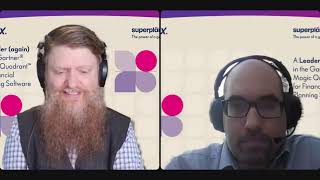
This is a YouTube video titled "Leveraging digital twins for smarter business partnering" recorded in April 2025. It features a conversational interview between Paul Barnhurst, an FP&A expert and host, and Kanush K, VP of FP&A and performance at JDOCS, discussing the use of digital business twins, predictive analytics, and digital business partnering in finance. The conversation covers challenges, benefits, and practical advice for adopting these technologies in FP&A and finance teams, with a focus on improving forecasting, scenario planning, and collaboration.
All right, welcome. For anyone who's out there. We'll get started here in a minute or two. We're still just a little bit early, but wanted to get started and just welcome those on YouTube, our LinkedIn, who may be with us today. We're really excited to talk about digital business partnering and digital twins today. So if you're out there and you can hear me, just let us know where you're coming from. Put it in the chat where you're coming from, maybe your name. And we'll just give it another minute here before we get started. And we got a great guest with us today from Germany. Just so everybody knows, I'm from Utah, we'll let you just tell everybody where you're coming from today.
Yes, I'm from Berlin, currently located in Leipzig. Yeah, from J. I mean, which is in southern part of Journey. Freiburg. Great place. If you ever happen to make it to Freiburg, you can go hiking.
I love hiking, so I may just have to make it out that way. All right, we'll give it about one more minute here, but if you can hear us, let us know where you're coming from, give us your name and location. We'd love to know. And we'll get started in about a minute. Just 11:30 now. So. All right, before we get started, just to warm everybody up, I'll tell a quick joke. I told this one to Kanish before we got started, so I'll do it again one time. What's the difference between an accountant and an FPNA professional? When an accountant gets creative, they go to jail. When an FPA professional gets creative, they get promoted. That is why I work in fpa. I don't look good in pinstripes, as I like to say.
Yeah, I totally feel you still like that one.
All right, so let's see. We got a few comments coming in. We got someone from the uk, Chicago, Dallas, Trinidad and Tobago. So we got a. A number of different locations. We should have more people joining us here in a minute. So please keep letting us know where you're coming from. Feel free to ask questions throughout. So we'll go ahead and get started here today. We're going to be talking about digital business partnering or digital business twins. And I have with me Kanush k, who's the VP of FP and A and performance at JDOCs. So I'm really excited for him to be here. JDOCS is sponsoring this LinkedIn Live today. So why don't I give you a minute to introduce yourself and tell the audience A little bit about yourself.
Yes, hello. So I'm Kanos, I'm. Yeah. Located in Germany, Berlin. Currently from. Yeah, I've been in the SaaS business for or SaaS and tech business for the last five to six years. Doing a lot of FPA business intelligence, Treasury. Before that I was in online marketing, before that I was in the aviation industry working for an airline. So more than a decade of finance background, so to say. And before that quite a lot of different stuff which I tried.
Yeah, so you got a little bit of everything in there. I like it.
True, true.
All right. And just so everybody knows who I am if you don't, my name is Paul Barnhurst, the FP and a guy and I'm fortunate enough to get to host this event, ask some questions and facilitate a great conversation here. So if you have questions as we're talking about things, let us know. We'd love to know if any of you are familiar with the concept of the digital business twin or if any of you are using it. If you are, just put it in the chat. So we have an idea. We'd love to know that. So, you know, one question I want to get your thoughts on before we get into kind of that digital twin is, you know, the complexity in finance keeps increasing. Right. We've all seen it. It feels like we're being asked to do more and more all the time and it's getting harder and harder. So I'd love to get your thoughts. Why do you think we're seeing such an increase in complexity?
So it's various topics. I mean people probably heard of the idea of a VUCA world. So volatility, uncertainty, you have complexity, you have ambiguous data. So this makes things a lot harder of course to forecast. You have new events happening. I mean Talking about like 10 years ago, talking about pen and that makes people be like, well what should that be? I mean, doesn't have an effect now. After Covid, everyone knows. Okay, so it did have a quite drastic effect then. It's also the accessibility of data. On the one hand side, a data overload, which is nice to have that much data available, but to get the value adding ideas out of that data, that makes it also a lot more necessary to implement more digital means and be faster, be quicker real time data for decision making. So you of course want to make the value adding decisions based on the data you have, based on the models you build and you want to have the actionable insights. So you're not only just doing number crunching and history, but you're also a very important strategic partner looking forward. So it's probably the shift of while back in the days you were like 80% of the past 20% of the future, now you're more like 20 of the past, 80% of the future.
No, it's a great point. We definitely have seen a shift on how much is forward looking versus backward reporting. You know, as I used to call it, fpnr. Right. Financial planning and reporting now becomes bigger and bigger. And Vuca volatility, pandemic wars, energy shortages, tariffs and trade wars.
Right.
We've seen it all in the last five years and it doesn't seem to be slowing down. The madness in some ways seems to be increasing, which means finance is asked to do more, is needed to do more, more scenarios, more analysis, more sensitivity because, you know, small changes can have huge impacts. And so I'd love to start with. Why don't you start by kind of just explaining a little bit of what digital business partnering is for our audience in case there are those who don't know what it is. Start with just kind of giving a little overview of how you view it and how JDOC sees it.
Yeah. So eventually JDOCs, of course, we are very proud of our adaptive platform where you can connect all kinds of systems. I mean nowadays if you want to make business, you have to be digital. So eventually you have a CRM, you have erp. I mean every process has some sort of digital background, some sort of tool and backgrounds, something where you grab the ideas or the data and at the end of the day you want to connect them all. So connect the dots, the different processes in the company and that's pretty much where the digital business modeling, where this digital twin is or business twin is coming from. So you try to have everything in your systems. Every process is somewhere reflected in the systems and connecting these different systems, these different information. This gives you power to steer a lot easier the business through these Vuca times.
What do you see as the difference, sorry about that, between digital business partnering and fpa. Talk a little bit about what you know the business partnering is, but how does that vary or how is it different from what we've been doing?
Well, it's a little bit of this digital business partnering you're based on. You have the self service bi, you have the various stages from business intelligence, from the regular business partnering where you do the case calculations, but you combine this with the digital aspects so that you're not just doing the number crunching, that you're not just doing the Reporting, but that you show using the big data or also prediction. I mean we have predictive analytics coming into that where you can just have a various broad width of topics which can help and support the business through digital insights, basically through KPS also. So like driver based modeling and this is stuff which you can combine with the real time data, adding value to the company, value to your department.
So great, thank you, I appreciate that. And just for our audience out there, you know, if you join us a little late, please let us know where you're coming from. And also feel free to ask any questions as we go through this again, you know, we talk about digital business partnering. Feel free to ask any questions. And why do you think the shift. We talked a little bit about this. We obviously talk about the increase in complexity. But you know, why is this so important for the business that we're making this shift in this change? Why is now the time that we have to, you know, be. Be more modern?
Yeah, I mean that's what we said from the reporting to the advisor type of things. So you're like finance used to be more like the scorekeeper and now you go into the strategic advisors, the guidance. You're a lot closer to the operations, to the product teams. Basically financial storytelling, like adding the commercials to the data, also translating real time cases into numbers and numbers into cases. So like storytelling in both directions and eventually now having the availability of real time data, that's where things get interesting because you can based on that real time data. Yes. Support decision making throughout the business, depending from small products, from market entries. Yeah. So that makes things.
I'm curious how, you know, how has predictive analytics, real time data helped you at JDOCs? How are you guys using it?
So I mean for. So of course being an FPA and in a B2B business that's a little. I said predictive analytics normally go with big data. So you have a whole lot of stuff which you can do. So I'd say we're more like on a. On the way how things are being accepted. So predict. Yeah, so that's more like where you have mass data. That's where it is more effective than.
Yeah. So maybe an example where you think the big data clients or something but just kind of getting thoughts of how you're seeing it be used.
Yeah. So seeing how be used. For example, if you have a canteen somewhere and people want to see how can I have optimal usage and not wasting too much food or something, you can connect the idea of what do people eat depending on the weather dependent on the time of the year, depending on how many people are visiting on average. So it's Wherever you have KPIs, driver based scenarios or models where you can see they are allocated with metadata which is based like weather data, calendar data, population data. So everything which you connect or also like public, public transportation. So if you want to see when do we have higher passenger numbers? Not. I mean, this is also stuff where you can best use predictive analytics because you can put this into with seasonality, with a day of the week, with demographics. So everything where you can use your own data, which you have in the operations and connect that to metadata which is available on the outside. And that way you can predict how your revenue will be, how your passenger numbers will be. Or also when you come by maintenance, I mean you're in the production, you're manufacturing, so you have, you have to do some repairs. And if you have like a very expensive machine which needs its repairs, you want to make sure that the down times are not as long or you want to reduce the downtimes. So also if you track that data in lifetime, you can see when the maintenance, you can optimize your maintenance, therefore reduce the downtime and that reduces the cost or improves the utilization of that machine. So there are various aspects where you can use predictive analytics, where you can use the mass data and different mathematic models which eventually help you to add value to the business.
So as I get the kind of digital business twin is building that model, that scenario of real life, bringing in external data and having real time or near real time, you know, enough data to really kind of analyze it and be able to run those multiple scenarios and see what happens. Like you gave the food example, right? Okay, when am I busiest? Looking back at history, okay, how much of an impact does weather have? If it's really cold outside, am I down 30% or 50% or if it's really warm, am I up 30% on average? Looking at historical data. So it's really about going beyond just the operational, but it's bringing that operational, financial and some kind of external metrics together to understand the drivers and run various scenarios to see how you can improve performance. Is that a good way to think of this?
Yeah, absolutely. So also it could be like market entry or new products introduced to a market. The more data you have, you can let it run through this digital twin and yeah, basically create different scenarios and in no time. Yep.
Yeah. So I mean, are most people. Do you do a tendency a lot of scenarios with the digital twin or how do I think about that? Like, you know, are you running kind of all kinds of different scenarios or you see people just kind of run a couple or what's the, what's kind of the best practice there?
I mean you would probably limit it to a certain amount because otherwise you get like lost in details. So probably go with three, four different scenarios per question which you're asking because otherwise it's a, an overload and you would get lost in details.
Sure.
So yeah, and it's basically playing around with main assumptions. So that can just simulate different aspects on that.
Yeah. So we have a great question here. I'm just going to put this up on the screen here. And so you can see that Jake asks, do these platforms provide suggestions, asserted certain data points or factors that may be impactful? So do they say, hey, have you thought of bringing in this? Or how does that part work? Like, you know, kind of providing suggestions?
Well, if we look from the digital twin, you have of course your defined number of KPIs or drivers basically. And the system at this point of stage are more like looking at correlations or are more looking at which model or if you like try to do predictive analytics, for example, which mathematical model behind that will be having the best effect to have a fitting scenario, fitting outcome. So it's not at this point, not necessarily there will be suggestions. I mean, depending on how it's trained the model, that's where you have maybe like some highlighting. But normally it's more like the correlation. So which KPIs are the main KPIs? Which, which should you combine? Which can you not combine? And so yeah, at this point it's.
Really more around running the statistical modeling with the different variables.
Correct, Correct.
Saying, hey, there's a high correlation, there's a high correlation between weather and cells, or there's a high, you know, we, what we found in looking at all this data, this new market, based on how you perform in similar markets, you should do, you know, X or Y or, or whatever. We think there's a correlation between this product and these markets that, that type of thing. You're looking to try to figure out what provides the best modeling fit. Is that a way to think of it?
Yeah, true.
All right, thanks, thanks for that. Go ahead, keep going.
So eventually at this point, not there yet, but I mean that's just a matter of question to come.
Yeah, those are things that are coming. Right. Kind of providing those recommendations. We all see where AI is going. It's just not Currently something that you're doing, the focus is on the correlations. Hopefully that helps you, Jake there. So how do you see this being most helpful for CFOs and you know, the FPA teams in general? Is it around the scenarios or where are some of the other areas that you maybe you see this really, you know, being important for the, for the cfo?
Yeah. So I mean the idea is if you have everything digitalized, if you have everything in place, if your digital twin, business twin basically up and running, then you can spend your time rather than preparing data, validating data and so on forth to create value for the business. So it's saving a lot of time at the end of the day and it's. Yeah, by you have basically this scenario or you can simulate also you can use the same scenario and simulate that several times with just switching smaller variables. So it gives you more possibilities eventually.
No, that makes a lot of sense to me and I appreciate that. And that leads me to a next question. If somebody's out there and they want to do more of this, right, want to get better at the scenarios and the correlations, what are the biggest roadblocks you're seeing to adoption? What are keeping, you know, FPA finance organizations from adding more sophistication in this process, bringing in, you know, this, these digital business twins?
Yeah, I mean eventually it's, it's always a change process, so the culture needs to support it. Because of course with AI, with digital twins, eventually it's a change and that's something you always have to handle. Then depending on your systems, do you have legacy systems which can support it? Do you have the data quality, the data consistency? Those are of course also possible roadblocks, the skill gaps. I mean, people need to know what are actually my main drivers. So are we actually all aligned that these are the main drivers? That's definitely stuff which you have to see. And then again, yeah, consistency infrastructure. You need to make sure that all the data, all the systems talk to each other, everything is fully integrated and making sure that the people also have the literacy and the same analytics understanding to make sure that your getting where you want to go.
So if I'm hearing it right, I think you mentioned change management, which is always at, I think the beginning of any of these adoption journeys. There's, there's skill, there's skill level, there's infrastructure, there's data. Those are probably some of the biggest things you mentioned there. So how do you ensure you have the right infrastructure for something like this? What, what do you need in place. What's kind of maybe talk a little bit about the infrastructure that you need in place to do this.
Yeah, I mean of course having cloud based platforms always helps because they are easier to connect with each other. Making sure that you have adaptable tools talking to each other. So it doesn't make sense if you have two restrictive tools which do not talk with each other then it's going to make your time a lot harder. So basically automation is a real big thing around that. So you don't want to sit there and download CSVs here, upload CSVs there. I mean that's gonna kill some of the positive effects which you can have. Yeah, also eventually, yeah, cross functional. I mean you have for example if you take marketing sales to reflect the full funnel that's also always needed to make sure that the, that there's like from end to end. Cradle, Cradle, basically all. Yep, connected.
No thank you. That's helpful. I get what you're saying. Within that. What about upskilling? Do you think most, most teams have good driver based models, have the technical skills to do some of this type of modeling and the correlation or are there areas we need to focus on or upskilling ourselves as you know we see digital business twins and technology in general just rapidly increasing. What's your thoughts there?
Yeah, I mean the upskilling, it's like depending on the size of company, size of teams. I mean you have these new roles basically. I mean the data scientists and working together with a FBA guy. So I mean that's where you just need to make sure that you have that skill sets available either as a person doing both or as an additional role to enhance this. The setup.
Yeah, so there's definitely. You need somebody that has a little bit of some data science skills and so that's really helpful. I know for me I'm seeing a lot of AI kind of helping making more citizen data scientists as gen AI becomes easier. But understanding the basics is always beneficial and I know I've seen benefit when I've had somebody that understands that in the role. And so you know going forward as people are looking at this and really trying to improve processes because the old way of forecasting the you know, mostly looking at historical, not really building driver based and be able to quickly do scenarios is just not going to work anymore. We have to be more agile, more flexible. So if you could offer one piece of advice to our audience that's listening kind of starting on this journey and really trying to move forward, what would you tell them?
Yeah, I mean eventually start in small projects. Don't try to build everything at once. Maybe just focus on one area. If you are completely new to the hot topic, then from there grow it at a decent rate making sure that you're also investing into it, not just the data but also the skills to make sure that people know how to use AI. It's like don't trust it blindly. Also still keep your common sense alive. I mean sometimes with Genai everyone knows it or should know it, that it's currently just a prediction of what makes sense. If you're talking about large language models and similar thing is depending on what you ever you train, it has to be trained on good data and you still need your common sense to make sure that the data or the results coming out of it make sense. So a little bit of validation so you don't come around the business knowledge. So you need people to know that it makes sense, what comes out of it. And then of course collaboration, cross functional collaboration, it's like doesn't. I mean it always is important but probably in these cases you want to build a digital business twin, it's going to be more important.
Yeah, even a higher level of collaboration because as you said, who's going to understand your drivers best business with, you know, with conjunction you, they understand the operations, they're the ones who have been working in them and you definitely want to involve all of them as you're building this out. So I think that's a great part. There's some skills area, you know, take it, take it slow. How many of us have seen projects where you try to do everything at once, it almost always fails. Right. So that's the other. And then you know, as people are trying in this world, something I brought up yesterday on LinkedIn is I asked people, basically they feel overwhelmed with the amount of data out there, whether it's courses or software. And you know, 85% said yes. Of over the hundred people that voted, I think we all feel a little bit of that way. What I see it's 4.7 million terabytes of data created every day right now and growing. You know, that's just an astronomical amount of information. So how do we stay ahead? How do we, you know, kind of stay up on these trends and make sure we're as best we can, being on the cutting edge to best benefit our business. Any advice you'd offer there?
Yeah, I mean definitely continuous learning. I mean nowadays of course like the growth mindset is more important than ever. So of course people Here they are looking for information and it's also the discussion. I mean, for example, I myself, I'm a part of an international controls association. So we meet up with peers on the FPA space and discuss the trends we discuss, we have workshops, we have webinars, we have. We just try and error. So eventually, yeah, find your niche, find some peer groups, discuss it and see how you can improve. Collaborate with also across the companies because many things, people have already felt the pain and it's good also to exchange on experiences.
Yeah, great. Thank you for sharing that connection. I think it's wonderful to be part of groups like you mentioned, the controller group. I have a community, I've created the FP and a hub, their CFO leadership council. There's ways you can meet with others, maybe there's local organizations where you're at and learning what others do, I find is one of the best ways. And you know, as we wrap up here, first I'm going to open it up to any questions anyone in the audience has and also I'm just going to put a shout out for JDOCs if you want to learn more about them, you know, you can go to the website, they have some great articles and, you know, information that can help you in FPA and also just learning about what they're doing and how their platform works and how they can help guide you. So with that, we got a few minutes left. We'll open it up to any questions anyone has. And if we don't get any questions, you might have to hear a joke or two for me. So you'll want to ask questions because they're pretty bad.
As my daughter, I mean, you could also go like round tables, road shows. I mean, we also are around for.
Yep, yeah, no, yep, Round table. So, yeah, check them out. There's a lot of events, but we'll leave it open here for any questions and as we're waiting for one to come in, let's see if I can come up with a good, good joke. Do you know what the most dangerous cell in Excel is? Ganoush. Oh, no, no, it is C4.
Oh, okay. Yeah, yeah, yeah.
Let's see. Why did the spreadsheet hate its job? I don't know too many functions.
Okay, okay, makes sense.
All right, I don't see any questions coming through. We'll give it just another minute here. I know sometimes there's a little bit of a lag between LinkedIn and Streamyard of when they come through. So we'll give people another minute here and Then we'll wrap up. So we'll do one last question. Do you know what the. What an. What the Eiffel Tower and a tick have in common?
Nope.
They're both Paris sites.
Okay.
Bad dad jokes. What can I say? All right, well, I don't see any more questions coming through, so I'm just going to take a minute and thank KN for joining us and give you an opportunity to just say any final words, anything you'd like to share with the audience before we let him go.
Yeah, I mean, thank you for having me here. And at the end of the day, just try it. Just go for it. Eventually, you cannot do anything wrong. You can only improve. So better to just do it.
Yep. As the Nike says, just do it right. So start out, start on your journey to improve your processing, to find ways to bring in digital twins, better forecasting drivers, and. And all those things. So again, we thank each of you for joining us. It was a real pleasure having you today. And you'll feel free to reach out to either of us. If you have any questions, you can find us on LinkedIn.
Yep. Thanks a lot.
All right, thanks, everyone.
Talk to you. Bye. Bye.
More from Paul




Trust and Leadership Lessons for FP&A From 100+ Top Leaders with CFO Jon Laudie






