Precision in Modeling: Sam Sivarajan’s Wisdom on Balancing Art, Science, and Decision-Making
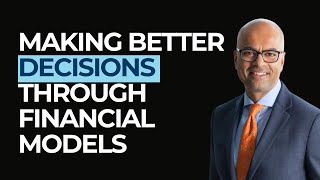
This is a YouTube video titled "Precision in Modeling: Sam Sivarajan’s Wisdom on Balancing Art, Science, and Decision-Making" published in January 2024. It features a podcast-style interview hosted by Paul Barnhurst with guest Sam Sivarajan, discussing financial modeling techniques, the balance between the art and science of modeling, decision-making frameworks, behavioral finance, and practical advice for modelers. The conversation covers real-world experiences, assumptions in modeling, and insights into improving financial decision-making processes.
Foreign welcome to Financial Modeler's Corner where we discuss the art and science of financial modeling with your host, Paul Barnhurst. Financial Modelers Corner is sponsored by Financial Modeling Institute. Welcome to Financial Modeler's Corner. I am your host, Paul Barnhurst. This is a brand new podcast where we talk all about the art and science of financial modeling with distinguished financial modelers from around the globe. The Financial Modelers Corner podcast is brought to you by Financial Modeling Institute. FMI offers the most respected accreditations in financial modeling. I am excited to welcome on the show Sam Sivarajan. Sam, welcome to Financial Modelers Corner.
Pleasure to be here, Paul.
Really excited to have you. So, you know, one of the things we like to do before we introduce the guests, we have a fun question we ask every guest that we start our show with. Tell me about the worst financial model you've ever seen.
Well, Paul, I believe that models should have a purpose. If it is a quick and dirty calculation, it's one thing. But if it is meant to drive key decisions, there needs to be some rigor and best practice behind it. I think the worst model I saw was one created by a client and it basically used historical P and L numbers and grew it over a number of years. And of course, to make things worse, many of the assumptions were hard coded in the cells. So basically you couldn't really use the model for anything useful.
Hard coded is the worst because you try to untangle them. I still remember and I think you'll appreciate this. I had this sales commission model, I inherited it from somebody else and it was horrible. And there was hard coded numbers and thing was terrible. And the guy who was the director of the organization, he calls me in a panic going, you realize this model will fail audit. Like if our risk audit looks at this from compliance. Yeah, it's been that way for two years. Where have you been? You know, like that's not nothing new. I'm trying to fix it, but I can't do it overnight. You know, we had like 10 different models. They took like two weeks to run for the prior guy. It had to streamline the whole thing.
No, look, you're 100% right. I think it's the bane of anyone's existence, I think. Yeah, I would say it's commandment number one, right? Do not hard code. And you find out like you're pulling your hair out. Which is one of the reasons I don't have any at this stage is to go through and try to decipher somebody else's model. And I think it's hard at the best of cases because everybody's got their own style of creating it. But when it's hard coded or when you can't make out what are assumptions or, you know, what are given values, I think it just makes that even that much more complicated in the exercise.
100% agree. I mean, I would say 80% of models that use hard coding are the, are probably the, the vast majority of those models that people scrap as soon as that person leaves because they try to understand them and it's just not worth it. You finally say, forget it, I'm starting over.
Exactly. So.
Well, why don't you tell us a little bit about yourself and your background, you know, what you're, what you're doing today, kind of how you got started.
Yeah. So I started my career, believe it or not, as a corporate lawyer in Toronto. And then I moved to London, England to become an investment banker and I worked on telecoms and technology deals during the booming 90s and the tech boom and the tech wreck. And I was doing telecoms and technology deals around the world, based out of London and Vienna, Austria. I then moved back to Canada about 20 years ago where I helped build and lead three wealth management businesses. During this time, I also did a doctorate in behavioral science because one of the things I'm interested in is really about how we make decisions. And so now I actually write, speak, and consult on helping individuals and companies make better decisions.
Let's see, we got the PhD, we got the law degree, MBA if I remember right now, do you have your CPA in there?
No CPA? No, I did have a CFP at one point, but yep, that's quite a.
Bit of schooling that I'm sure you sounds like you love to learn.
I think I love to learn. I think part of what I like is the blend. I think learning is great, but being able to apply it in practical and useful ways, I think is really where knowledge becomes useful.
I would agree with you. I mean, I've seen people that, they're always learning but never applying and there's definitely a balance to it.
Correct.
Yep. Great. So, you know, as you mentioned, you spent the early part of your career supporting the telecom industry. I think you mentioned over in the uk, you know, and it sounds like you did a lot of work from the M. And a perspective from what I remember. Can you talk a little bit about that experience, kind of that you said, the booming 90s, that kind of time and what it was like?
Certainly. So as you mentioned, at the start of my Investment banking career, I spent a lot of time building, building models. And so, for example, we won the mandate for the first satellite IPO in Europe, in large part due to our clear view on valuation, supporting how we would price and market the deal. And look, I mean, on a personal level, this was very exciting time because lots of things were happening and London was a really, really clueable place to be as a, as a young, as a young person. As I got more senior, I started leading deals. And so I led the team that advised Hutchison Whampoa on its European 3G mobile license strategy. We built models there to value and support our bids for licenses in the uk, Germany, Sweden, Italy and Austria. And what was really cool, Paul, here was that we had to model services, including demand and pricing for things that hadn't yet been invented. So services like FaceTime, YouTube, Yelp. And I think what's really interesting is that keep in mind that this was in 2000, so long before these services were on the scene. So the challenge that we faced was in building these models was in making reasonable assumptions about unknown services and markets. And billion dollar decisions were based on, you know, the output that we.
Yeah, no stress at all. That's only a billion dollars. So how did you make those assumptions? Walk me through kind of the decision process. I know you, you talk a lot about that. You've thought a lot about that with your behavioral science, you know, our behavioral finance. So how did you guys think about kind of making those assumptions and feeling comfortable that, you know, they were good assumptions given, you know, the huge dollar amount and all the risk in these type of deals for something that really hadn't been invented.
Look, I think this is where, as you said at the outset, there's an art and there's a science to a financial modeling. So the science is the technical stuff about how you put models together. And I think it's very important. But the art is really what are the assumptions? Why did you make them? And more importantly, how do you defend them to those that are asking you about it? So in this case there's a few things that we had that were working for us. So mobile penetration, we knew always was trending towards, and again this is 25 years ago, but like we, it was trending towards, call it 95, 90% of the population.
Sure.
So we knew what the potential market was. We also knew that roughly you would have a share as a mobile company, you would have a share of the market of 1 over x, where X is the number of licenses in that market. So if there was four licenses, you're likely to get a target share of 25%. If there was six licenses in the market, you know, your Target share was 18%, roughly less.16.7. I think the key is not that you can't get a higher share of market, but you would better be able to articulate why you think your service was going to do better than what was there in the market. So this explained, for example, why we were ready to pay about $8 billion for the license in the UK that we won. Okay. And that license was one of four in a country of 60 million people. But when we went to Germany where they were auctioning off six licenses, it was a country of 80 million people. And the bidding war, and it was a war got to over $10 billion. And we pulled out at that point. And we pulled out because for a market share of 25%, it sort of made sense to pay 8 billion for a market share of 8, 16, 17%. We didn't think that it made sense. Other things that we were looking at, it's really an iterative process that we kind of talked it out to say, okay, you know, what kind of services were you going to buy? We did think that the higher bandwidth that 3G allowed for was going to drive data driven services. That was the whole reason why 3G and why firms were paying $8 billion and $10 billion per licenses.
Sure.
But you were trying to model things like the video conferencing. So we did model video conferencing and how likely that was going to be used. We did think that, you know, how likely is it that an employee really wants video conferencing, to use it to be able to show their employer that, you know, they're actually on the beach somewhere, et cetera. But so as a joke, we were thinking about those things, but we were going back and forth and testing what was reasonable and what was not. And again, as I said, most of those things we got right. Maybe the form was different. I'll give you an example. We thought that video conferencing was going to be a separately charged item. Right. That you would pay as part of your mobile subscription for video conferencing. Now, that's not the case in most markets right now. FaceTime is free, but you do pay for it in the bandwidth that you are paying your telecoms provider. It's a different pricing mechanism than we had envisioned 20 years ago, 25 years ago. But it's still, that was the sort of thinking that we were going through A combination of top down and bottoms up type of approach.
Got it. Thanks. I really interesting to listen to you talk about that and how you thought about it because, yeah, I can see what you're saying makes sense. Hey, if there's this many, many licenses, we can get an idea of what our rough market share will be. Gives us a starting place. All right. We know these type of things will be coming just because of technology and where we're heading. And you can start just piecing something together that at least logically makes sense.
Correct.
That you can, you can support. So when you're doing that, any advice to modelers on how to manage, as we said, the art and science, you know, how do you, how do you balance the two? Because I've seen sometimes where people get all focused on the art, sometimes you get heavily focused on the science. And I got to follow these hundred page of rules that everything has to be in line with that for a model.
Yeah, I think that's a great question and I don't know there's an easy answer. I think to some extent it comes from experience. And of course experience is hard to speed up. You can't get 10 years of experience in a year. Right. So I think part of it is keep looking for experience in building different types of models for different uses. But I also think the key is to never forget and lose sight of why you're creating the model, for what purpose, who will use it, what decisions will it support the users to make, how much of what you're actually modeling is knowable and how much is assumptions. And at the end of the day, I think it's never forget that a model projects future outcomes. So the outcomes by definition have to be probability based. There is no certainty that you know your outcome, that your forecasted outcome is going to occur. So that needs to be supported by scenarios where you're being very clear what your base case is, what your bear case case is, what your bull case is. And finally, I think it's. It's important to have a degree of humility in the process to, you know, to point out the limitations of the model. Because a model is a simplification of reality. It isn't reality. Yep. And to remember that the model is but one tool in making key decisions. It shouldn't be the be all and end all. Nobody should want that. Not the modeler and not the decision maker.
I really like how you said it shouldn't be the end all, be all, because I think there's a lot of truth to that. Sometimes you go, well, whatever the model says, that's what we're going to do. And a model is just a representation. It's based on assumptions. You know, there's often qualitative factors and other things that you need to make sure you're thinking about. I think it's a really good point. And you know, kind of along those lines. When you and I chatted previous, you had mentioned that the process is, is often more important than the actual model. So can maybe elaborate a little bit on that, how you think about that.
Yeah, I think that building a good model forces the modeler to go back to basics. What are the key drivers of the business for the costs, for the revenues and so on. And by thinking about these drivers and actually modeling them out for the forecast period, it forces both the modeler and the person who uses the model to think about carefully about the business, its operating environment, and to focus on what really moves that business forward. In my view, the model is simply a numerical representation of some prior deep rooted strategic thinking. And you're bringing that to bear in, in that model as a representation, like.
You said, some deep rooted strategic thinking, because it really is around strategy. The one thing I've seen on more than one deal or the stories is just keep adjusting the model till it makes sense. Right. You're laughing. You've never seen that, have you?
I've seen it a lot and I think I can give you an example. Right. So I think that Michael Mabusan, if you know the author and analyst, he talks about the difference about using an inside view and an outside view. And your listeners might find this useful if they don't know him. So he gives the example of an analyst who was forecasting a stock growing at 25% a year for the next 10 years. Now, based on this analyst's models, an inside view, this looked like a reasonable assumption. You know, you would go and buy the stock based on this analysis. But Mabussen asked an analyst a very simple question. He asked him how many companies historically had achieved these types of growth rates for this period of time. And this was an outside view. And you can imagine what the answer was. It was completely different. And the answer is none. So I think that to your point about keep working the model until you get the right answer, that's the bottoms up analysis. Sometimes you have to complement it. Usually you have to complement it with a top down, you know, out of the box, kind of looking in to kind of say, does this make sense? We're so in the model, if you're looking at it, like, from an outside perspective. Why would we expect the assumptions and drivers and values that we put in. Why do we expect that to. To hold water.
Yeah, I like how you said that. To hold water. I mean, I can remember being in a meeting one time where they kept pushing me to make, you know, cut cost or add more revenue and kept getting there. And remember being in a meeting and we finally came to the conclusion, everybody was like, why are we considering doing this deal? The company's shrinking, and they're supposed to be a hypergrowth company. Like, they're slowing. Not shrinking, but they're slowing. We're not seeing the sales. We keep assuming we can do more with it when they're struggling to do it, and we can do it on low cost. So we're. And it was like, that's kind of the eye opener. The CEO finally said, just tell them we're out. Yeah. Like, we're not going to go forward. I'm like, thank you. That's a smart decision. Why do we continue to waste time and try to make this work when we know it's not going to? We're sprinkling assumptions that just aren't going to happen all over the place.
Look, I couldn't agree with you more, Paul. I think that assumptions look smart on paper, but they're completely impractical in real life. Like, you know, to sit there and say that you're going to cut this department or whatever. Yeah. Well, it looks easy to remove a line or a row or a cell on paper, but that department or line, I've had CEOs tell me this. Like, these aren't just lines on a spreadsheet. I think those people are the ones that are going to keep this company running. Whatever that cost is. That's the cost. I worked at one place where, like, you know, we had an IT team, and they were expensive. You know why they were expensive? It was proprietary code. You can't possibly replace them with, you know, with somebody else. So there's a difference between what it says on the spreadsheet and what it actually tells you when you look at the facts behind that. The numbers on the spreadsheet.
Well, an example, we were trying to wind down a Traveler's Check product. You can imagine how those are. And the system we were using. They were wanting to revamp it to something new because it was so expensive and, like, how old that is, how old the code is. You know, we ended up not going down that route because it's just like, you're just opening up a huge can of worms. Sure, you can make an assumption we're going to save this amount, but you may end up killing everything in the process.
Correct.
And kind of speaking of that on drivers and assumptions because they're so critical to a model, any advice you'd offer to modelers to walk through that process, how should they think about that as they're making those assumptions to ensure that they're not making bad assumptions or creating undue risk beyond, you know, the risk that's going to be there no matter what with every project?
Look at the risk of sounding like a cliche, I think part of it is look at it holistically and maybe I can illustrate with an example. In my early days when we were building DCF models for early stage businesses, we would look to see what percentage of the value was in the forecast period and what was in the terminal value. I've seen several models where the terminal value was over 100% of the total value, meaning that in your forecast period, you don't see a way that this business is making money. So you know, how much confidence should anybody have in that model or the drivers or the business in your own forecasts don't have confidence that this is going to make money, but in a terminal value, which is infinite, you think that's where we're going to make the money. And again, the assumption is that somebody is crazy enough to invest in this business thinking that I'm not going to make money for 10 years, but if I hold it for 100, I'm going to make money. I would say a couple of key questions that the modelers should ask themselves as they're working with the drivers and assumptions. So one, do these drivers make sense? So for a mobile company or a SaaS business, for example, a key revenue driver is the number of subscribers. For a manufacturing company, it's going to be different. The key is to think about each business and their operating model and operate, you know, think about that situation separately from everything else. I think two, do the values make sense? Like whatever the revenue growth numbers or the end valuation we talked about, the Mabusin example, this is a very, I think, cautionary tale of looking at something holistically. The numbers on itself could look like, oh yeah, that makes sense. 10% year growth or 25% of growth for a high growth stock. Yeah, that seems reasonable because it's grown over the last two years. 25% is reasonable. Where it becomes unreasonable is when you think it's going to do it. Ten years in a row, because that becomes like a unicorn and there are not many unicorns around. So I think it really is a question of, number one, tailoring it to each particular model. There isn't a holistic answer, but there's a framework or process that, you know, modelers can use. And it's really to kind of challenge from an outside perspective each driver or assumption that you're using and can it hold water when you're having to defend it to someone that isn't involved in building the business. It could be your boss, it could be the decision maker, it could be an analyst, you know, from the street.
In today's business world, financial modeling skills are more important than ever. With Financial Modeling Institute's Advanced Financial Modeler Accreditation program, you can become recognized as an expert in the field by validating your financial modeling skills. Join the Financial Modeling Institute's community of top financial modelers, gain access to extensive learning resources, and attain the prestigious Advanced Financial Modeler accreditation. Visit www.fminstitute.com backslash podcast and use code podcast to save 15 when you register. Kind of funny story, when you said have to support it or, you know, defend it. I still remember I had a boss and he had been in investment banking for years. I've been in the UK, probably in the 90s, early 2000s, doing a lot of financial modeling. And he looked at one of the models I'd built and he goes, this looks like government work is the way he put it. Then he proceeded to shoot holes and all kinds of things in the model. I had to go back and rethink the whole thing. He's like, yeah, this assumption doesn't make sense. And this is. And he was right. And he was, you know, he was nice about it, but it was a really good learning lesson to really try to think. It's something I hadn't done before. It was a new way. And, you know, it took us quite a bit of back and forth to get to where, okay, we're comfortable with this. Yes, this could make sense.
And I think you make a great point, Paul. I think building a model is and should be an iterative process. You know, you're testing assumptions. You know, it's like writing anything. I think the assumption that you can write a first draft and that it's going to be, you know, perfect, et cetera, is the same kind of mistake. To say that a model that you create is going to be your final version. I think you should be testing the assumptions and drivers. You do look at the output you do look at the scenarios, and you're going to want to try different things and working with other people, showing it to other people, and verbally explaining your model and defending your assumptions is a very good test internally with low stakes to see whether that model is really fit for purpose or whether you're going to have to go back and revisit some. Some of the key drivers and assumptions. So that's a great point.
Yeah, no, I appreciate that. One other thing I wanted to ask you, kind of shifting gears a little bit. We've talked a lot about the assumptions, the drivers, the behavior, all those things. But, you know, there's the technical side of the model, which 90% of the time is building in Excel. So anything you learned to kind of help you, maybe a formula, a technique, something that helped you get better at building those models. I mean, obviously shortcut and practice, but maybe is there any kind of technical nugget, something you would advise people to focus on on that side to be better at modeling?
You know, learn your macros, learn your vba. I can say that as having done it in the past and having promptly forgotten it. If you had asked me how to build a macro or a VBA kind of scenario, I couldn't do it today. But I do remember spending a lot of time learning about how to do those, and I think that was critical to kind of move things forward.
Great, thank you. I appreciate that. So, you know, moving on, I want to talk a little bit about something I saw on your website. So I know you do your own business today, and one of the things you had right on the front of your website, it said the Average person makes 35,000 decisions daily. Can you maybe a little talk about that? Where that name, that number came from, and how people think about making decisions?
Sure. So there's research that shows it. Of course, nobody is counting it. But again, I would say to keep in mind that Most of those 35,000 decisions are automatic. So things like getting out of bed in the morning or brushing your teeth or putting on your shoes, you're not consciously thinking. Each step through that is your brain being efficient. And that's good, because otherwise we would be completely overwhelmed. But this is also dangerous. And it's dangerous because if we let our brains go on autopilot, even when making critical decisions like where to invest, shutting down a business line, or launching into a new market, so we have things like biases, emotions, our own previous experiences that can all play a role, an outsized role in making key decisions without us even Being aware of it.
That's a great point. So I know one of the things you do is help people make better decisions. How do we make better decisions? How do we help eliminate those biases and those automatic reactions that may not be what's best, that may lead us down that wrong road? How do we get better at doing that?
I would say a couple of things. I don't know that you're ever going to eliminate biases. It's just what we're hired and it's hardwired into us. And remember, as I say, these biases come from the fact that our brains have learned to be efficient and to try to automate things. So we don't want to get rid of that because otherwise we're going to be spending an hour trying to figure out how to put our shoes on. Right? But on the other hand, I think being aware of it and letting your rational brain work through the decisions, the critical decisions that you want to go through, I think can lead to better outcomes. So in my writing and speaking work that I do, I share research and evidence, as well as real life cases of how these factors impact decision making and how to get better outcomes by following a more rigorous process. So I talk about doing a pre mortem, for example, on key decisions, like walking through a very rigorous pre mortem process to kind of think what could go wrong and how to prepare for that. You know, for example, in, in investing in market downturns, people panic and sell their investments indiscriminately. Even though every one of those investors will tell you that when they made the investment okay, when the markets are good and everything else, they will tell you that they of course, know that the markets will correct and it will rebound and they're okay to ride that journey without a problem until the market's correct. And so we know those things happen. So how can we help protect people against themselves? And that's a lot of the work that I do in terms of educating them. But the education itself isn't going to help because this isn't things that they're unaware of. It's being in the moment. What steps, what tools, what frameworks can you provide that is going to help them manage it? So, and in my consulting work, I apply this firsthand. So I actually do it with the clients to kind of sit there as they're evaluating. I had a client that I was helping that wanted to enter into a new market and I looked at different options with them and I kind of helped them walk through in a very Rigorous way. What are the pros and the cons? What are the alternatives? What are some of the downstream potential consequences of what's going to happen? You know, what is the impact on their current business? All of those things I think are need to be looked at systematically. And being aware that, as I say, behavioral biases can play a factor that limited perspective, either from a stakeholder perspective or from a time horizon perspective that you're not looking long enough. I think those are all kind of factors that I try to help individuals and companies take into account when they're making decisions.
Got it. So you mentioned, you know, one thing people can do is a pre mortem, right. For certain situations. You also mentioned frameworks. Are there any other, like, you know, favorite frameworks you have that you often train clients on that help with decision making?
So in team situations, for example, there's Edward de Bono's six Thinking hats framework. And the six thinking hats is, if you've ever known, like the Devil's Advocate or the Red Team kind of approach. It's asking different members of the team to kind of take on a Persona to challenge an initiative with that Persona's perspective. So the six thinking hats, you know, has different. There's a logic hat, there's an emotional hat, there's a culture hat. And so what you're asking is the team to kind of take turns wearing those hats and look at the problem or the decision from that perspective. If you were someone that only cared about logic, what would you think about this decision? Where does it make sense? Where does it not make sense? If you're thinking about it from a culture perspective, what does this do to the culture of our organization? Why is this a good decision or a bad decision? And I think that kind of framework, and you can use that as an individual as well, all you're trying to do is to force yourself to look at the decision from multiple perspectives and not to be blinded, not wear blinders, to sit there and think, okay, I've got a, to come back to financial modeling. I've got a financial model and this makes financial sense. And it may make financial sense, but it may not make strategic sense, it may not make operational sense, it may not make cultural sense. You know, all of the. It may not make technological sense. Right? I mean, the. But I think if you're not looking at things from multiple perspectives, there's a danger of having groupthink and making decisions on that basis.
As you said, all that one decision I thought of when you mentioned, you know, kind of the emotional and the logical, you know, there's always people's debates, hey, should I invest the money or should I pay off my house early? And if you look at it strictly from financial logical, if the interest rates are high enough and your loan's low enough, you should invest. You said all that. One decision I thought of when you mentioned, you know, kind of the emotional and the logical. You know, there's always people's debates, hey, should I invest the money or should I pay off my house early? And if you look at it strictly from financial logical, if the interest rates are high enough and your loan's low enough, you should invest. You know, from just a logical run, the numbers might be low risk, but there's the, hey, what's the benefit of paying off early? What's the peace of mind, you know?
Correct.
There's so many other things that are other perspectives leading to why rational people can come to a completely different conclusion that makes sense for them with the same basic facts.
No, look, you're 100% right. I mean, like in the example that you give that choice only is a real choice. If you were going to invest in something that was a good investment and you stayed invested.
Yeah.
If you don't and you are playing the markets, you're timing, the markets are getting in or out. I mean, that's a theoretical benefit that you're not realizing if you're going to take that money and spend it. And because you can't control yourself, it makes it a really bad decision. So one of the reasons to pay down your debt might be that, okay, you know, like, you would rather not have that temptation that you're going to try to time the market or try to buy something that you don't really need, and you're going to pay down knowing that you pay down your debt, that gives you a lot more flexibility. So I think you're 100% right. I think that the facts may be the same, but I think each person's preferences and motivations and circumstances, I think, dictate potentially different responses. Sure.
And I'm sure it's one of the reasons we have behavioral finance as a study is because economists want to come at it from often just that logical point of view. Well, why aren't people being rational? Because there's a lot more to it than just the rational facts.
Well, and the funny thing is, of course, the same economists that talk about all of that, when you ask them apply that economic thinking to their own decisions, they're very often guilty about not behaving Rationally as well.
So yeah, they do the same. Well, you know, as I always like to joke when it comes to economists, you know, ask five economists, get six opinions.
Exactly.
You know, so take it for what it's worth, you know. Next thing I want to talk a little bit about is you've written three books, so let me see if I have them right here. I believe you've written one called Am I okay? Making your Money Work and Uphill. Can you talk a little bit about your experience writing these books and why you wrote them, what you hope people gain from them?
Sure. So look, each book was a different experience. Making youg Money Work was my very first book and it was really tied to helping people make better decisions with their money. And it's fundamental concepts like risk return, compound interests, et cetera. Uphill was my second book and it was inspired by the rapidly changing world during the pandemic. And it was focused on taking the lessons that I learned in behavioral science and that I was applying to investing, but really broadening it to say, how can we use those tools to better understand a changing world and to make better decisions at work or in our personal lives for investing, but broader for career and other things as well. And Am I okay? Was my third book. And it was designed to be a short and practical primer for advisors and investors on the questions that they should consider in making key investment decisions. So each of the books started with a fundamental idea and message that I wanted to share. And you know, to be honest, writing was the fun part and the part that I found relatively easy editing now that took much longer and was a lot less fun. I can assure you I went through multiple edits and drafts over many, many months. And then I can assure you I went through multiple edits and drafts over many, many months. And then I decided to self publish the books, which was a whole other learning process on its own, I bet.
And I laughed when you said the editing because I never pictured myself as a writer. I've never considered myself a good writer. And I do a lot of it now for my business. And yes, you might crank out a first draft of something in minimal time, but then you're wordsmithing and changing and where do I add this picture?
And I decided to self publish the books, which was a whole other learning process on its own, I bet.
Sure. And hey, am I saying the right thing here? And constantly editing, at some point you just have to say, okay, it's good enough, you know, I can't keep going.
I swear, like every Time I look at it, I must have read each of my books at least 100 times. And I'm so.
And I laughed when you said the editing because I never pictured myself as a writer. I've never considered myself a good writer.
Of reading it, to be honest. Even though I think there's good stuff in there. But, like, every time I read it, I sit there and think, well, why did I. You know, there are still things that I would say, okay, should I put it this way, or should.
And I do a lot of it now for my business. And yes, you might crank out a first draft of something in minimal time, but then you're wordsmithing and changing, and where do I add this picture? And, hey, am I saying the right thing here? And constantly editing it.
I put it a different way. And ironically, I'm sure that I've changed it three times already in the previous edit. So it's. There is, you know, that's the art of writing is there is no one way of writing it. You can do it three different ways and they're all right. It's just, you know, it's just personal taste. Right? Yep.
Totally agree. So we're going to move on to what we call rapid fire. This is a section we ask everybody. You get maximum 10 to 15 seconds to answer. If there's something you want to elaborate on the end, you can. If you don't, that's fine as well. But I have about 10 questions I'm going to run through here, and these are all common modeling questions. If you have any, you know, clarifications you want, just let me know. And I can add more detail. But the first one is circular or no circular references and models.
No circular references.
VBA or no VBA?
VB 8.
Horizontal or vertical model?
Horizontal.
At some point, you just have to say, okay, it's good enough. You know, I can't keep going.
I swear, like, every time I look at it, I must have read each of my books at least a hundred times. And I'm sick of reading it, to be honest. Even though I think there's good stuff in there. But, like, every time I read it, I sit there and think, well, why did I? You know, there are still things that I would say, okay, should I put.
It this way or should I excel? Dynamic arrays, yes or no?
Yes.
External work.
I put it a different way, and ironically, I'm sure that I've changed it three times already.
Work links, yes or no? No named ranges versus no named ranges.
Named ranges.
All right. When you modeled. Did you follow a formal standard, you know, for your modeling one of the formal standards out there?
I was so early on. So the answer is no. But I would say yes. But it's no because it was so early back on that when I was modeling that we had our own standards internally but there wasn't anything formal.
Got it. That works. Will Excel ever die?
Not in my lifetime.
Fair enough. Will AI build the models for us in the future?
So I'm going to say no. But I'm going to say to expand on it I would say partly. But the logic still needs to be provided the drivers and assumptions because I don't believe that AI is ever going to be capable in the previous edit. So it's there is, you know that's the art of writing is there is no one way of writing it. You can do it three different ways and they're all right. It's just, you know, it's just personal taste of making those assumptions in a meaningful way.
That's what most people are saying is yes, the technical AI.
Right.
Totally agree. So we're going to move on to what we call rapid fire Fire I will figure out but you still need someone for the interpretation. Correct piece. This is the section we ask everybody. You get maximum 10 to 15 seconds to so what is your favorite lookup function of choice? Do you like using Vlookup Index Match xlookup choose or do you have something else you like?
I use Vlookup and largely because that's what I grew up using.
Understand that answer. If there's something you want to elaborate on the end you can. If you don't, that's fine as well. But I have about that's usually how it works. So when it comes to models, are you a fan of sheet and cell protection? Should you have them in your models or not?
Yes.
And the last one here is do you believe financial models are the number one corporate decision making tool? If no, what do you think is so?
This is heresy. But I'm going to say no on this podcast and I say no because I believe in a toolbox. Every situation needs its own tool and models are an important tool.
But 10 questions I'm going to run through here and these are all common modeling questions if you have any but.
Not the only one and not necessarily the one the first one depending on.
This clarifications you want just let me know and I can add more detail. But the first one is circular decision to be made.
So I think it depends on the decision. I think There are ones like. So for example, I gave you the market situation that we had in mobile markets.
Yes of or no circular references and models?
No circular references.
VBA or no?
Of course we did the financial model. But like for us, knowing that we were going to get 25% VBA.
Horizontal or vertical model?
Horizontal.
Excel Dynamic arrays. Yes or no?
Yes.
External work.
Our target was getting 25% of the market. That was a more important kind of tool, that kind of rule of thumb and heuristic that we were working towards in that case, than what the financial model was. The financial model helped underlie and support that, that thinking, but it was by itself. It wouldn't have been the decision making tool you passed.
It wasn't total hearsay. I can understand your logic. We won't, we won't crucify you or anything. No, I appreciate that. I can totally understand what you're saying there. So as we wrap up, you know, the first thing I would like to ask is, you know, is there anything you'd like to share with our audience about your services, your business, you know, ways to contact you, anything you'd like to add? Just kind of about what you're doing and your, you know, your business today?
Yeah. So look, I speak, I write and I consult book links.
Yes or no? No named ranges versus no named ranges.
Named ranges.
All right. When you model, did you follow a formal standard, you know, for your modeling? One of the formal standards out there?
I was so on decision making. You know, I have a newsletter, I do my own podcast early on. So the answer is no, but I would say yes. But it's no because it was so early back. That's advisor driven. So people can find me either on LinkedIn on that. When I was modeling that, we had our own standards internally, but there wasn't anything formal.
Got it. That works. Will Excel ever die?
Not in my lifetime.
Fair enough. Will AI build the models for us in the future?
So I'm going to say no. But I'm going to say to expand on it, I would say partly. But the logic still needs to be provided the drivers and assumptions because I don't believe that AI is ever going to be capable of making those assumptions in a meaningful way.
That's what most people are saying is yes, the technical AI will figure out, but you still need someone for the interpretation. Correct piece. Okay, so what is your favorite lookup function of choice? Do you like using Vlookup Index Match xlookup choose or do you have something else you like?
I use Vlookup and largely because that's what I grew up using.
Understand that one. That's usually how it works. So when it comes to models, are you a fan of sheet and cell protection? Should you have them in your models or not?
Yes.
And the last one here is, do you believe financial models are the number one corporate decision making tool? If no, what do you think is so?
This is heresy, but I'm going to say no, okay. On this podcast. And I say no because I believe in a toolbox every situation needs its own tool. And models are an important tool, but not the only one and not necessarily the one, the first one, depending on the decision to be made. So I think it depends on the decision. I think there are ones like. So for example, I gave you the market situation that we had in mobile markets. Yes, of course we did the financial model. But like for us, knowing that we were going to get 25%, our target was getting 25% of the market. That was a more important kind of tool, that kind of rule of thumb and heuristic that we were working towards in that case than what the financial model was. The financial model helped underlie and support that thinking, but by itself it wouldn't have been the decision making tool you passed.
It wasn't total hearsay. I can understand your logic. We won't crucify you or anything. No, I appreciate that. I can totally understand what you're saying there. So as we wrap up, the first thing I would like to ask is is there anything you'd like to share with our audience about your services, your business, ways to contact, anything you'd like to add, just kind of about what you're doing and your, you know, your business today.
Yeah, so look, I speak, I write and I consult on decision making. You know, I have a newsletter, I do my own podcast that's advisor driven. So people can find me either on LinkedIn or get in touch with me through my website, which is www.samsivarajan.com. and there they can find the links to the books that you mentioned as well.
All right, thanks. Appreciate that. So the next last question we want to ask you here, if you could give advice to our audience about how to become a better financial modeler. If you can give them one piece of advice, what would be that kind of parting advice for them?
I think the key thing I would say is remember who that model is for and what questions it is going to answer. Check your assumptions and the drivers. Keep it simple. The key thing I would say is the elegance of any model is in the thinking behind it, not the bells and whistles that you put on the page.
Thank you. I really, I like that, and I think that's great. Keep it simple. Focus on those assumptions and really validating them. And don't add a bunch of bells and whistles. So on that note, we'll go ahead and close. And I just want to thank you so much for joining us, Sam. I really enjoyed chatting with you and learning more about your background, and I'm confident our audience will enjoy this conversation as well. So thank you again for joining me.
Paul thank you for having me. I enjoyed our conversation.
Financial Modelers Corner was brought to you by Financial modeling institute. Visit fmi@www.fminstitute.com podcast and use code podcast to save 15% when you enroll in one of their accreditations today.
More from Paul




Trust and Leadership Lessons for FP&A From 100+ Top Leaders with CFO Jon Laudie






