Revolutionizing Mid-Market FP&A with Advanced Data Solutions With Julio Martinez
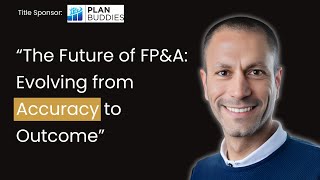
Paul Barnhurst interviews Julio Martinez, CEO of Abacum, about the future of financial planning and analysis in the mid-market. They cover technology adoption, data challenges, and how FP&A teams can become better business partners. Martinez shares lessons from his career in fintech and a sabbatical in microfinance.
The core of microfinance is not only managing the risk of microfinance groups, the tectonic plates move around technology and artificial intelligence. The advent of this new software category is actually generating an impact so much as ML did for quite some time. A convergence of Revenue, Operations, FP&A data analytics. So there is a world that with the new technology that we see in the market, I think FP and A teams are becoming more empowered and reinforced into the organization. I think when you launch a company and when you launch your own venture, it's very important to be mission driven. The core of our value proposition typically starts with automation. Modern finance teams need to have full ownership about data analytics and that engineering. Probably in many cases, it also makes sense and it's also an independent way of managing data and having a better way of prioritizing projects. What we fundamentally believe is that.
This week's title sponsor is Plan Buddies, the number one planning community for planning professionals. Check it out at plan-buddies.com and join me in the community today. Hello, everyone. Welcome to FP&A tomorrow, where we delve into the world of financial planning and analysis, examining its current state and future prospects. I'm your host, Paul Barnhurst, guiding you through the evolving landscape of fpa. Each week we're joined by thought leaders, industry experts and practitioners who share their insights and experiences, helping us navigate today's complexities in tomorrow's uncertainties. Whether you're a seasoned professional or just starting your journey in fpa, this show has something for everyone this week. I'm thrilled to welcome our guest Julio Martinez to the show. Julio, welcome.
Thank you so much, Paul. Excited to be here.
Yeah, excited to have you. So Julio comes to us from New York via Spain. He is currently serving as the CEO of Abacum, which was our first sponsor on the show. And they're an FPA tool. They're in the third gen market guide, and he has both a bachelor's and MBA degree focused on finance. So, Julio, the first question we like to start with before we give you an opportunity to tell the guests a little bit more about yourself is what does great FP&A look like to you? What is great FP&A today?
What an awesome question. And this is actually our dream, right? And for us, FP&A is no longer about accuracy in the model or, you know, sitting behind the desk and building more and more models is mostly about how we manage to drive better decisions and faster execution through business partnering in our organizations. So it's basically that outcome that we can Generate in companies.
I like how you said that outcome. It's about so much more than the model. And I'm curious, with all the change in technology, all the uncertainty, how do you maybe see FP and A changing over the next five years or so? Do you see any big changes coming?
Definitely. We are seeing the tectonic plates move around technology and artificial intelligence. The advent of this new software category is actually generating an impact and so much as ML did for quite some time. Look, that in my view is only going to be reinforcing how strong and impactful FP and A teams can become. So what we think is going to happen is that FPNA will become the command center of the company's operational rhythm. We have an opportunity for many companies, right? I don't want to talk about any industry and vertical, but for many companies we tend to see even now a convergence of revenue, operations, operations, FP&A data analytics. So there is a world that with the new technology that we see in the market, I think FP and A teams are becoming more empowered and reinforced in their organizations.
No doubt. And we're seeing more and more of a blending. Like, you know, some companies, some of the Rev Ops is done by FPA or some of the sales ops might be an FPA or, or vice versa sometimes, but you see a lot of that blending of the operations and where it belongs. I've asked a lot of people, okay, who owns Rev Ops? And some people say, well, it really should be owned by FP&A, it should be owned by the marketing, it should be owned by the chief Revenue Officer. And so you're surely seeing a blend of operations and, and to me, and I know you agree it makes sense that that really sits with FPA as a neutral party in finance and owning that data. And at least the definitions, not the technical back end stuff, but making sure everybody's aligned across the company. Because TAC can be calculated as an example a lot of different ways and everybody has a different incentive to look at it differently. And you want that consistency. I see you smiling. You've never dealt with that, right?
Never in my life.
So why don't you tell our audience more about yourself, your background and how you ended up where you're at today.
Yeah, I started my career as a corporate finance lawyer. Spent a lot of time working with finance teams and that was a short stint, then a couple of years. I then transitioned into finance and investment banking. So this is where I spent many years both in, you know, mostly investment banking roles and also Some operational roles in finance. So basically most of my career has been in finance. And you know, this is what I regard my, the core of what I've done in my, in my life. Okay. I had had the opportunity to transition into tech for some time around seven, eight years ago that I moved into fintech. I was given an awesome opportunity in a venture builder to start building fintech products from scratch and launching them to market. So you know, I had the great chance of gaining product and technology insights as well as company building. So this is where I also identified the opportunity of, hey, given my past experience and the amount of time I had worked with FP&A, with M and A teams, what if we deployed this product knowledge, this technology knowledge to really make the difference in teams where I belonged in the past and I know very well.
Awesome. Sounds like an amazing experience to work with the fintechs and starting product and seeing that from the ground floor, so to speak.
Yeah, it was an amazing opportunity and not an easy transition obviously because you know, I was, you know, hopefully a well rounded finance professional. But you know, you're far away from actually, you know, getting into the trenches of building products. Right. That's a totally different discipline and understanding the technology. So I remember, you know, scratching my, my head a few times back in the day. But hey, you know, anybody can learn anything basically. And you know, I, I managed to start building that, that fintech technology, that financial technology and launching them to market, which also gave me exposure to of course, company building and go to market.
Sure. And we'll come back to that here a little later. But I want to go back to. You mentioned you started your career as a corporate lawyer. We won't hold that against you.
Yeah, thank you.
Take a sabbatical. You did that for about a year. Then you, you did a sabbatical. How did that come about?
Yeah, that is probably one of the best experiences I've had in my life. And look, I was a, you know, corporate finance lawyer, so a lot of corporate finance, but still a lawyer. And I guess I'm still trying to redeem myself. It was 2005, 2006. I remember in 2006, Mohammed Yunus won the Nobel Peace Prize for Grameen bank and all his amazing work around microfinance in Bangladesh, Pakistan and some other places in India. It was a point in time where microfinance was really booming. Also in Latam. I was very interested in that movement. I had been following that for a long while. I remember in college, in some other places like, you know, very Focused on microfinance, reading books, trying to get exposure. Look, at this point in time in my life and my career, I realized, well, I don't want to be a lawyer anymore. Right? Like I'm not, you know, this is not for me definitely. So I need to break with that. I want to move into finance. What a great opportunity to, you know, get into microfinance and understand this a bit better. Let's carve out a year and let's learn as much as possible. Look, I found some projects and NGOs and some other multilateral organizations working in India. So I decided to spend a year in India, slightly 14 months really working with several parties there around microfinance topic. But interestingly, that led me subsequently my career a few years later to work in the World bank in the International Finance Corporation. But I spent some time in the World bank evaluating microfinance projects backed by private equities, which was extremely interesting. That was mostly African projects, but that was based on Washington D.C. but long story short, that was an amazing sabbatical from a professional perspective, of course, spending a year in India. Fascinating culture. You know, it's also a life changing experience. Right. And you know, this is where I started meditating or journaling or many more things that I, you know, continue doing to this day.
So I'm curious, you mentioned, you know, microfinance and now winning the Nobel Prize, they pioneered that. Is there maybe an experience or a memory of something you saw that was really impactful, that you look back and go, wow, that really kind of made a difference as you worked in that microfinance area. Maybe just a story you could share.
Yeah, 100%. Thank you, Paul. So there, what we saw was how strong communities can become, right? The core of microfinance is not only getting that, managing the risk of microfinance groups. What was a game changer for me was the community or eye opening, the community aspect of it. So the stage prior to microfinance is really self help groups. So basically you go to rural areas, even in city places, in urban areas, and then you gather together a number of people that start building a community. So that's just going to be from six to 10 people that will support each other. And whenever somebody needs some resource, and oftentimes that can be money, but not exclusively money, then the rest of the group will be held accountable for that person paying back the loan. So you know, I, I, I had been trained in risk management. You know, I was interested in finance, I was learning finance. But look, the core of it was, you Know, social pressure, basically. Right. So what you would consider an extremely risky loan category, because this is very poor people really like the, the, the delinquency. And it was very low. So loans were paid back on time just because the group was putting the pressure or the support, if you will. You have the. Of the conversation. So definitely something that made me think a lot about community building and how important is your community in our society?
I love that. And it's amazing. That community factor, support, pressure, whatever you want to call it, can change the dynamics of something that normally would have a much higher default rate if there was no community. If you're just doing it individually, you would at least anticipate that. Something that all the model scoring, the algorithms, everything is going to tell you is really high risk. It's amazing how when you incentivize correctly, you can completely change economics and help people. That's why I love, you know, freakonomics, others that talk about incentives and how when you get it wrong, how painful it is and just how beautiful it is when you get it right. I can remember doing some sales commissions where I got some of it wrong and it was painful. Yeah. We went through real learnings with that. You know how it is if you don't. If you don't incentivize it. Right.
Yeah.
There you're talking about people's lives. So thank you for sharing a community. It's amazing how many different ways that can help us all be better when we help the community elevate together. So I'm curious. We'll ask you one more question about sabbatical, and then we're going to kind of move on from that. If someone's thinking of doing one like they want to do one, any advice of how to go about it or any recommendations you would offer? Because I know it's a risk for most people. They think, oh, I got to leave my job for a year. How am I going to manage all this? Does it really make sense? Will anyone hire me when I get back?
100%. And I fully understand those considerations. And obviously that was top of mind in my case as well. But you basically did it over 20 years ago, I guess, or close to 20 years ago. So it was even worse back then. I can only say that that is just in your head. Like that doesn't matter at all. Right. Then to the market. I think sabbaticals have become more widespread, but in general, what I would say is, you know, life is short. Make sure you make the most out of it. And obviously a Sabbatical and exploring deeply a topic that is of interest to you can be very powerful and a life changing experience. So I would disregard any professional consideration, to be frank and you know, and just make sure that you get the most out of that experience. As I said, like I was working in microfinance in some rural communities in India and you know, having a blast and arguably those were very, you know, very strong professionals. Right. Like, you know, I had a great experience but a few years later I fulfilled one of my dreams which was spending some time in the World bank, which is a world class organization and I was working with amazing people. They sent me to Africa to different countries to evaluate private equity investments and you know, actually at an early point in my career as well. Right. So you don't really know what that experience that you get under your belt in the sabbatical can bring about subsequently at some point in your life and career. So things are way more complex. So you should just go liquid and take your sabbatical, that's for sure. Then you have different options, right? You can do all the backpacking and have a blast. Why not? But if you have a topic that is interesting to you, like go take a master's, right? Do something softer like, you know, polish and skill, maybe use that time wisely and that multiplies your experience.
No, I love that. And we've had on the show Carl Seidman and he did it, he coined it the first retirement. Did a TedX talk when he was 30 and he went and toured the whole world for a year. Well, he just shares some amazing stories and you know, I asked him a similar question and he goes, pretty much everybody I tell that to says, I wish I would have done that when I was younger. Almost nobody said, what a dumb idea. You hurt your career. When he was leaving, people were wondering what he was doing. But he came back, started his own business and has been very successful. And so I'm with you. I mean it's something I look back and think it would have been great to do earlier in my career. So next question, want to ask you returned. I know you worked for the World Bank a little bit, but you worked for the company Innocells I believe is what it was called. And you mentioned you launched multiple in tech startups in the, you know, the tech space, help with product. Can you maybe share a little bit more about that experience? We just love a little bit more as I believe that's what you did before you launched Abacum, right? That was your last role before Yes.
I was a co founder and the CEO of that venture builder and look, it was a blast. It was fintech focused, right? Our investors and the sponsors and shareholder of the venture builder was a financial institution. So therefore our sole focus and mandate was building fintech products and launching them to market. So as you know fintech is a complex space, right? We at avakum are B2B SaaS. So from a compliance regulatory perspective it's pretty simple, right? Of course you want to get security right and you have a few things there but when you enter the fintech territory it becomes very technical and very complex very fast. So I remember one of the learnings there of you know, when you do hardcore fintech basically so lending, fx, transaction, transactional, even treasury management depending on what you need to do, if it's cross border and stuff. So when we were building those products I remember like hey, this is a properly complex space from a regulatory and compliant perspective. So I thought yeah, I know finance, I will get this right. But when you move into fintech that's an aspect that you really need to be very careful and many of our customers are fintechs and we also see that reporting and planning complexity that specifically fintech businesses have then also as I said from a skill advancement perspective, yes, staying close to product, staying close to technologies, staying close to launching and failing and leaving aside some of the experiments we were doing really set up a very good frame that I think I carry to today about innovation, about thinking differently, about not being a follower but really being opinionated about what you want to build. And hey, if I fail, I fail. The thing is I'm going to fail very very fast and I'm going to realize soon I'm not going to course correct and carrying that experience instead of trying to replicate what others are doing. I think that was something that I remember I learned there specific.
Hey there, it's your host, the FP and A Guy. And today I'm thrilled to talk to you about Plan Buddies, one of my passions. It's where professionals meet excellence. This isn't just any community, it is a community ran by and for planning professionals. At Plan Buddies we're all about fostering connections, sharing knowledge and providing mentorship among our members. Ready to elevate your career? Visit plan-beddies.com and become a member today. And here's a special treat. Use the promo code the FP&A N D a guy the FP&A guy for an exclusive 25% discount on your first year membership. Makes a lot of sense thank you for sharing that. And so you went from there to starting Abacum. So I'm curious, from FinTech to FP&A. I know you did micro finance, obviously corporate lawyer in finance. You'd worked in a lot of finance. Why FP&A for a startup, why, why Abacum and why come into this space?
I think that the CFO office was a space that I had known and followed for years, right. Given my background in working very closely with M and A teams, corporate development teams, FP&A teams, right. So that was my job in the day to day and I witnessed some of this more probably enterprise software that they were using and the struggle. So I was directionally acquainted with that. When I was at the Venture Builder, I was also sitting on the board of actually a fair good number of companies, right. And also, you know, I sat in the board of some of the ones that we launched to market and I continued seeing, you know, the same finance teams struggling with reporting, struggling with the manuality. So I became more and more interested in double clicking and double clicking further and further into the space until it became an obsession. Right. So I started understanding very well the FPA category. And I think I brought with the product lens and also with the finance lens and given my background like some, some hopefully unique insights as to how to tackle that from a product and technology perspective, obviously what was instrumental there is also, you know, in my research. And then I went crazy, right. As probably an entrepreneur would do. I went over 100 user research interviews, scripted, recorded, like going very deep across industries, countries, like verticals, anything really. And you know, one of those was with you know, George, my co founder and you know, he was CFO. He had spent like over 15 years in operational finance roles like mostly head of FP and a director of FP and a also CFO and ultimately CEO. You know, that connection and his insights as to how he would solve the same problem space like made us think, hey, like we are super aligned here, so let's leave everything and launch the company. But this is the personal connection to the problem. And I think when you launch a company and when you launch your own venture, it's very important to be mission driven and to really care about what you're solving for. And after many years in finance I couldn't find a better problem space to solve for given the product, the skills I had developed in the Venture Builder.
Thank you for sharing that. So I'm going to ask a question. You did 100 interviews. What did you see as the theme that Was the main problem that people were experiencing that you said, hey, we can solve with this new tool. If there were two or three things, what were those that the Office of Finance, the CFO, FP&A were really experiencing as a pain point?
This will not surprise you at all because I think you know them very well and I'm curious, what do you think about it? But the vast majority of the pain was around data disparity, scatter data all over the place, connected with then the manual tasks and the day to day becoming very tedious in assembling the data, cleaning the data, trying to make sure. So it's the classic topic, I think every time we talk to FP and A teams and that's why the core of our value proposition typically starts with automation and with having clean data. And we all love talking about AI and we all love talking about advanced planning and all that funky stuff. And I love it, right? And we've built it right. But the first step and the most basic, at the most basic form in all those conversations right to this date is I don't have enough time to become a business partner. I don't have enough time to have an impact or to prioritize strategic projects because I'm spending my time, you know, trying to clean data and make sense of data. How does that sound? I would love to hear your thoughts here.
I agree. You know, I was thinking about that and I think, you know, the biggest problems FP and A needs solved, like you mentioned, is it's the data, it's the reporting, it's the manual tasks. When it's the data, it's the cleaning, it's the combining. Probably the biggest challenge I work for company and companies where it felt like that's half my time was just cleaning data. And it's so hard because you're like, yeah, how do you get to the business partnering? You either don't sleep or you sacrifice one or the other and generally bad reports are not going to go well. So often the business partnering is what gets sacrificed to a certain extent to try to make sure the numbers are right.
I think I should have interviewed you as well back in the day.
So yeah, I could definitely relate to that pain that you mentioned there. And I like you said, that's really the core problem. As I look at it and I look at these tools, you're trying to make sure you can bring in the data model, you can do good reporting, you can calculate and manage the amount of data they need. And then as we said, yeah, AI all Those things are nice, but especially generative AI right now is not solving the core problems of where FPA's pain is. It can help with certain things, but it's not there yet to solve those, those core pains. And that's really what any good tool should do. I'm curious, how is your view changed of FP and A since starting a tool focused on the space? I'm sure you've had many more conversations with CFOs heads of FPA. Anything's changed or anything really surprised you that was different than when you came into it.
That's a great question, Paul. And you made me think here. I think what has become over time, very core to our thesis at avacom is that the mid market is a very unique, complex, sophisticated and underserved category. And I didn't see that coming when we were launching the company. But over time we have seen this space in the market where you have companies in the mid market and there are many ways of defining that, but how we think of it is typically companies with 200, 300 of employees all the way to 23,000 employees. So this is what we consider mid market and our definition. But we have seen in this market segment like this increasing complexity, more data volumes, more pressure to deliver fast, more pressure from board of directors, more pressure for sophistication, more data volumes at the same time growing, more pressure, at the same time, more complexity. So these guys are at the crux of a very tough spot. And at the same time you have deep, typically more enterprise or upper mid market, maybe technology that you could explore. But yeah, you know the dream, right? So long implementation times, probably you need to hire people to maintain the software. Mid market companies cannot afford like those 9 months implementation, 12 months implementation period. They don't have that bandwidth, they don't have the headcount to hire. Right. At the same time some entry level solutions are too simple. They don't handle the, you know, multidimensional modeling that they need to deliver the vast volumes of data. They break those solutions, right? So honestly I didn't, I was not, I had worked more at the enterprise side, to be honest, in finance, right. When I was in finance, when I was building fintech companies, probably I was more at the other side, right on the entry level, right. Like more. Yeah, like some of those who would help us. So this middle space was a little bit our unknown. But, but hey, we've identified this is a very unique category. Very unique category. You, you, you need to be very, very intentional in building product for for.
These folks, FPA guy here. One thing I hear again and again as I interview and talk with FPA professionals is that learning business partnering is key to being a good FP and a professional. That's why I'm excited to share my new course material developed by Ron Monteiro and myself to teach us about business partnering. We talk about building relationships, managing tough conversations and holding the business accountable. This material is the same material that's used in the new Harvard online FP and a certificate. Go ahead, go to the FPA guy, click on my digital FP and a business partnering course and use the code podcast to save 20%. Your career will. Thank you. Got it. No, I appreciate that. And I want to get your thoughts. You know, we've talked a little bit about the mid market. We've talked about kind of the platform challenges faced there and some things in FP and A in general. Right. You look at FP and A today, I know you very much think of it as an operational center. So what's your take? How should companies think about, you know, FPA and data analytics and rev ops and sales ops and who owns what? Do you have any thoughts of how people should go through that? Because I get people asking me, well, should Revop sit under fpa? Should it? Shouldn't marketing? Should the CFO have data analytics? Right. There's a lot of different opinions and there's not a right answer. I think we can all agree to that. There's some wrong answers for sure. There's not a right answer. But any thoughts or guidance on how you think of that kind of structuring it? And you know, should more of it sit under finance or should it be more of a coordination just to kind of, as we move forward and try to, you know, make FP and A more operationally focused, not just financial? How do you think of that?
Paul, thank you so much. I love this question. Right. And we are very vocal about it and I get here very thrilled because how we think of finance, so taking on a step back, how we think of the CFO is more, you know, it's his role becoming closer to operations. So cfo, slash COO or some companies, you know, with very heavy operational operations, like maybe that is not possible. Right. So I'm not claiming this applies for every company, but for many others, this is a huge opportunity for CFOs to become more operational. CFOs becoming the chief Performance Officer and not only for reporting, but also to make things happen. Having strategy teams, corporate development teams under them to Drive also performance and accountability in the company at the granular level. Not only at the high level board reporting, but also in the day to day in the management team meeting reviews understanding how the marketing funnel is going, how the sales conversions are going, like going deep into what matters for the business. So basically what we're thinking is how do you equip finance teams to drive performance in the organization and hold their peers accountable to what they need to deliver? This is critical. Traditionally some of that was done in strategy, some of that was done in RevOps, in SalesOps, in Martin. It was scattered. What we fundamentally believe is that hey FP and A teams have the great opportunity, sophisticated professionals, extremely smart, willing to thrive, willing to make a push to make the effort, still struggling and syncing with the data messiness that they have. So we have a huge opportunity opportunity in front of us to empower these guys. And then therefore, I believe revenue operations could easily be done by FP&A. In many companies I work with they could easily sit with the cfo. And I think that to your earlier point around incentives that will set up incentives in a better way. If you want to leave revenue operations under sales or marketing, that could make sense or more on the technical kind of managing Salesforce or HubSpot or more the technical pipes. But when it comes to understanding the performance of the business, it's very easy to spot how is that people reporting are the ones that want to protect their own. So it's very difficult to then have smart conversations about what really happened without receiving as the CEO for instance, or as the management team, a cosmetic approach to data and breaking that and having FPA that is more objective running the performance analysis is going to be way better. The same happens with data. Data should sit under finance. Modern finance teams need to have full ownership about data analytics and that engineering probably in many cases it also makes sense and it's also an independent way of managing data and having a better way of prioritizing projects. So I can extend here, but I don't want to, you know, to. I acknowledge my, my excitement. So I'm going to leave it there. Unless you have more questions.
Yeah, I know I, I could see the excitement and I think we could just cover this subject as a series. Not one podcast, but a whole series. And I've had a lot of conversations. I'll share two things that kind of resonate with what you said. I had Scott Stouffer. He's been a CEO multiple times. He runs a rev ops big company right now or startup Go to market. And he mentioned he's like, if you want really technical and you want number focused, it makes sense that your rev op sits in fpa, which I kind of thought what you were getting at. If it's really more about managing the tools, then it probably makes sense under your CRO. More of that technical. I also had Casey Wu on, you may know who he is, you know, Operators Guild. And he commented, he almost called it the chief Business Intelligence Officer instead of finance officer and said you could tell you have a modern CFO because they're taking an ownership in data. Often the analytics team sits under them. And I still remember I got a new CFO at a company I worked with and the first thing he did is he moved analytics under finance. And it was interesting to watch and I always thought of that when he mentioned that. So you're definitely seeing that shift. And I look at it, you can align it however you want, but the key is you really FP and A should be serving as a nerve center to help hold the operations and the business accountable to those targets. And you need to make sure incentives are structured right regardless of who sits under who. And so I think that's kind of what you're getting to and it's fascinating to watch that change because definitely finance is becoming more and more front office versus the old hey, back office cf. No, just give us our reports type of mentality.
Totally.
So great. Have a couple more questions before we move into our last couple sections where we get to know you. A little bit of a rapid fire section. So I'm curious and I have a feeling I probably know what the first answer is. What do you see as the biggest challenge right now for fpa?
I think the biggest challenge to this date is. Let me share a couple. Right. The first one continues to be at least in the segment of the market that we know the most, which is the mid market, as I said, getting your data basics and foundations right. To be honest, I continue seeing people struggling with this and we get very visionary and where FPNA needs to go and how we want to drive performance and accountability and we dream and all that. But when I talk to most people on the ground today, they are still not taking enough action to really change the reality of their data systems. The data is scattered. They spend too much time trying to make sense out of it and therefore, you know, time for analysis for business partnering is not there. So I think I continue seeing that as the biggest challenge.
Yeah. Okay. What's the biggest opportunity moving forward? We talked about Data is the biggest challenge. What's that opportunity?
Well then the opportunities of course. Then what do you do then with all this time and energy and insight to back and to me it's always business partnering. This is what as FP&A professionals we need to be doing. You want to be that partner to the business, that partner to the product, that partner to the different stakeholders that brings to that conversation a lot of insight, a lot of intel from market, from industry, from your own data, from insights. And then you are enabling them to make better decisions, data driven decisions. And you bring that challenge and you bring also that accountability and that performance. I mean when we talk about performance and accountability, I don't want to, to portray FPA as the policeman. Right. Like it's not, it's not that it's about business partnering, of course for the management team and for the CEO and for the board is driving performance and accountability in the business. That that's what matters. But what's happening on the ground is, you know, a true business partnering approach where you bring data, you bring value, add insights into those conversations and enable people to make better and faster decisions. So business partnering is the most of the opportunity. And we keep on talking about business partnering but when you look at it like done effectively, it doesn't happen so often. And especially in the mid market, like maybe enterprise organizations, they have a different setup. Right. But especially in the mid market that, that's by far the, the biggest opportunity.
The way we manage data is perfect for a world that no longer exists. Over half your team's time is spent cleaning data. Imagine a notebook that does the work for you. Turn dirty data into a powerful asset with analyst Intelligence. Join modern FPA teams@ AnalystIntelligence.com today. Yeah, no, and, and speaking to that, you know, business partnering, I just released a couple modules for a course on business partnering. A lot of the training I get asked to do with my partners. Business partnering, we're going into one of the largest retailers in the world here in a couple weeks to do training. And one of the big areas is business partnering. How do we more influence, how do we communicate? Like this team's great technically, but we need them to be more with the business. So it's a common conversation I have all the time. So I'm with you on that one. So we're going to move to the rapid fire section. The idea here is you get about kind of 20 seconds to answer each question. You may be a little longer if you need it. Some of them will be even shorter. Well, for those, then we go into a little bit of a section called get to know you or ask you some more personal questions. So you're ready here?
I'm ready to go.
What's your favorite generative AI platform? Do you have one you like to use, either work or personally?
Yeah, personally, I found pretty amazing some of the ones I use with my children where you can create your own stories and characters and it creates a great family experience. And then you can actually turn them into small video animations of the same story. There is one called Bedtime Story AI that is pretty cool. So, yeah, definitely, I'm finding that amazing.
I'll have to check that out. My daughter creates her stories with ChatGPT. She's always coming down and asking me for my phone and asking it to create different tropes and new storylines for her favorite characters. And it's. I like it being there because I can go look at whatever she's done. And I'm like, okay, I need to train the AI a little bit. I don't like those answers, so it's kind of fun. So, spreadsheet, you a Google Sheets or Excel guy?
Google Sheets.
Why?
Collaboration.
That doesn't surprise me. I figured you say Google Sheets 95% of the time we get Excel, so I had to ask that question to get a contrarian.
Yeah, absolutely. So, of course, I think to this date I still master Excel better than Google Sheets, to be honest. Right. So I given my training, so I think I'm still better at Excel. But look, I cannot, I cannot collaborate back. Like, I cannot take that pain anymore. Right. So I just, you know, and I'm done with copy pasting and input ranges. Like, you know, Google Sheets is just like for. For what I need to do today, which is not super advanced modeling, because we do that in our own platform. So, like, for my ad hoc quick pack of the envelope calculations, Google Sheets and then I share that easy.
Yeah, I understand. So I'm going to ask you a question here. What is the number one technical skill FP and a professional should master?
I think it's still a spreadsheet. What can I say? I think, you know, FBA professionals still need to master Excel and Google Sheets and that spreadsheet realm. Still the lingo, I think, increasingly given what we spoke, right. About data and about like, of course, mastering SQL or, you know, some user understanding of SQL, I would say even Python. I see more and more sophisticated FP&A professionals that are expanding towards data modeling and languages to their own success. But they Definitely can advance their career faster that way.
Yeah, I'm not surprised to see spreadsheets. I get that one. Financial modeling, analytics. It's usually one of those three. What's the number one soft skill?
Influencing people. Right. Influencing people. I spoke about business partnering, so you would not be surprised. Influencing people. Convincing, persuading, building empathy, Building rapport, Getting and giving. This is, you know, we need to break the silo. Where we used to live in finance.
I like it. Not often I get to hear empathy on a podcast, but I totally agree with you. It's a skill. And a lot of other things in there. You said that we need. So here's the get to know you section. So do you have a favorite hobby or. Or passion? What's kind of. What do you do when you're not working for Abacum?
I would say it's sports. So mostly mixed martial arts. Passionate about it. And also surfing. I love surfing with the family and I love playing chess. So those would be the three ones that you know, besides reading, which is a classic.
Yeah, got it. Great. So speaking of reading, what's a book you'd recommend for our audience? What's that one book you're going to tell them to read?
I'm thinking to recommend Amp it up by Frank Slotman. He used to be the CEO of Snowflake and also the CEO of ServiceNow. I think I really like his shoot from a heap approach of company building and driving value in companies. So obviously he's not a founder, but he's been a professional CEO that has created billions and billions and billions of shareholder value. And I think he's very vocal about raising the standards, driving more and more focus in the organization, how to align people. So I found that book very refreshing. It's two or three years old.
Yeah, it sounds like a good one. I haven't read that one, but sounds like it'd be good. Favorite travel destination if you could go anywhere in the world. Where are you going?
That's going to be Panama these days. I have some other places, but Panama. Actually, we are repeating this summer with the family. It's great surfing. It's great surfing. I think it's underrated. Everybody goes through some more great surfing in Panama and also a great culture.
Got it. So Panama. I haven't been there. I'll have to add it to my bucket list. So if you could have dinner with one person in the world alive, who are you going to pick?
I'm going to pick a classic. I'm going to be Warren Buffett.
Yeah, we get that one from time to time.
Why Warren, I've been a huge fan of value investing forever. Actually prior to getting into into finance I was reading, you know, books on value investing and his shareholder letters that date and you know, from, from the 60s. Right. What I value the most is human values slash common sense. Like this approach to common sense that is almost embarrassing that you don't as a finance professional. Right. How they think of a bda, how they think of depreciation and amortization like some of these basic knowledge that, you know, we get so caught up within our own, you know, financy kind of thing that then there comes this wise businessman and sets this as straight. You know, this is nonsense. And of love that eye opening, those eye opening reflections.
I hear you. Well, I think we're at that point where we'll go ahead and wrap up here. I've really enjoyed having you on the show. Appreciate you sharing a little more of your story and how you came to start ABACOM and FP and a tool for the mid market out there, how you did your sabbatical. A lot of great lessons in there and I hope everybody enjoys this episode as much as I did. I've really enjoyed the interview, so thanks for joining me. Last question here. If anyone wants to get a hold of you, maybe learn more about you, what's the best way for them to do that?
I think these days I'm very active in LinkedIn. I like to share there with the community, some thoughts, some reflections and also engage with others like you, of course. So look for me LinkedIn Julio Martinez Avakum and you'll find me there.
All right, great. Well thank you so much and we look forward to giving the audience the opportunity to listen to this. So thanks for joining me, Julio.
Thank you. It was a blast. Thank you so much, Paul.
Thanks for listening to FP&A tomorrow, if you enjoyed the show, please leave us a five star rating and a review on your podcast platform of choice. This allows us to continue to bring you great guests from around the globe. As a reminder, you can earn CPE credit by going to earmarkcpe.com, downloading the app, taking a short quiz and getting your CPD certificate to earn continuing education credits for the FPAC certification. Take the quiz on earmark and contact me, the show host, for further details.
More from Paul




Trust and Leadership Lessons for FP&A From 100+ Top Leaders with CFO Jon Laudie






