Scaling FP&A with Growth to Build Trusted Processes and Strategic Influence with Noam Sever
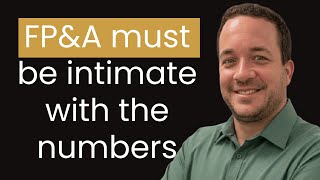
Noam Sever, Head of Global FP&A at Cellebrite, explains how FP&A teams scale from Excel spreadsheets to driver-based forecasting. He argues the best FP&A work is proactive: giving management insights they didn't know they needed. Three skills matter most: analytics, business understanding, and communication.
Chapters
The best kind of business partnership is give the management insight they didn't even know they needed. That's when you stop being the supportive of the business and you start a meeting with business.
Tell me what great FP&A looks like.
To you when I think of a great FP&A.
Meet Noam Sever, Head of Global FP&A at Cellebrite. With over 15 years of experience in finance leadership across global tech and manufacturing companies, Noam has led teams at Cornet Digital, Orbotech and Tenuva, specializing in financial modeling, strategic planning, operational excellence and business growth.
The success is not just about the accuracy. It's important to be accurate. It's important to drive the 95, 98%. But even if you miss a few percent here and then the speed, the insight and the real business impact is what really matters and what really moved a little small steps can make a big difference. Changes doesn't happen in one day. It's about improving every week.
What are the key skills or the key traits for someone to be successful at an early stage company in FP&A.
In an early stage, the one that owns the FP and A.
Welcome to another episode of FP&A unlocked. Are you tired of being seen as just a spreadsheet person? Will others get a seat at the table? Well then, welcome to FPA Unlocked, where finance meets strategy. I'm your host, Paul Barnhurst, the FPA guy. Each week we bring you conversations and practical advice from thought leaders, industry experts and practitioners who are reshaping the role of FP&A in today's business world. Together, we'll uncover the strategies and experiences that separate good FP&A professionals from great ones, helping you elevate your careers and drive strategic impact. Speaking of strategic impact, our title sponsor for FP and A Unlocked is Campfire, the ERP that's helping modern finance teams close fast and scale scale faster. Today's guest is someone who's earned that coveted seat at the table. I'm excited to welcome Noam. Noam Sver. Welcome to the show.
Thank you, Paul. Thank you for having me.
Really excited to have you. So, a little bit about his background. He's a highly experienced finance executive with over 15 years of progressive leadership in FPA for global technology and manufacturing companies. He currently serves as head of global FP&A at Celebrite, where he leads a multinational team responsible for full P and L ownership, strategic planning, budgeting, forecasting and driving operational excellence across the $500 million business. Previously, Noel headed FP&A at Cornet Digital Managing teams that supported executive management, operational initiatives and M and A activities within a rapidly growing public organization. His career spans roles at both large corporates and small ones, including leading finance operations at Orbotech, acquired by kla, business plans for NPIS at Partner Communications and Tunova, where he specialized in business modeling, process automation and cross functional collaborations. He holds an MBA in Finance and Marketing from Tel Aviv University, a BA in Economics and Management from Bara ON and Advanced Finance certifications from the Hebrew University of Jerusalem. His expertise centers on financial modelings, system implementation, and enabling data driven decision making to support business growth and profitability. So again, welcome to the show. Why don't you start by telling us a little bit about kind of what you're doing today at cellebrite?
Thank you Paul and again thank you for having me. So hi everyone, my name is Noam and I'm the head of FP and a Celebrite for those who don't know us. Celebrite is a global leader in digital intelligence. We provide technology analytics that helps mainly law enforcement speed up justice and keep communities safe. We do this by helping investigators extract and analyze data from digital devices including mobile phone to find key evidence that helps solve cases and stop criminal. So basically we are working in doing good for the world. In my role currently I oversee global FP&A function partnering with regional and corporate FP&A teams to strengthen planning, insight and business impact. Currently my focus is building on data driven agile FP and a team that connects strategy execution and insight turning financial planning into a real business advantage.
Love it. Thanks for that background. So I start every interview with this question. You probably if you've listened to the show at all, you know what's coming. Tell me what great FPA looks like to you. What is great fpa?
So when I think of a great FP and A I don't think about spreadsheets. I don't think about quarter closing or forecasts. I don't even think about AI. I'm looking at the bigger or the bigger picture. I think about a team that drive the shit decisions, connect timing to strategy and help the business look ahead. To me the best kind of business partnership is give the management insight they didn't even know they needed. That's when you start being the supportive of the business and you start leading the business. Now in order to do that you need to be very, very intimate with the numbers. Know your data from all around because only when you know that you will find Those blind spots, you can raise the flags in advance and really make a difference. When you know the numbers, when you know the business, when you understand the business, you can ask the right questions before anyone else does, find the problems before they become serious and really shape the future. Now, when you reach to this level of intimacy, the management wants you to be on their speed dials because they know then they can call you before they make big decisions, because they trust your judgment and they know you will help them to see the full picture. So for me, if I'm looking on FP and a individual contributor or FPA team, the best mix is basically three things. Strong analytics, business understanding, and communication. And I can touch base about communication later on. So the success is not just about the accuracy. I mean, it's important to be accurate, it's important to drive the 95, 98%. But even if you miss a few percent here and then the speed, the insight and the real business impact is what really matters and what really move the needles. So guide FP&A is all about people, curiosity, teamwork and the courage to challenge and really understand the way things are done. The system and the process will follow that. But the basics need to be done within the FP and A mindset. And that's exactly the FP and A culture we're building here in Sancrate.
Yeah. So there are two things that I kind of really stood out to Me, I appreciate that answer is I love how you said providing insights the business doesn't even know they need. Right. That, that shows that proactive and going beyond just what the business thinks they need. And then the whole idea of them having you on speed dial being that true partner, those two things really stuck out to me, I think are crucial to FP and A. So thank you again for that answer. When I interview guests, I always go ahead and look out at LinkedIn and learn a little bit about them. And on your banner you have the whole idea of the power of tiny gains. You share that. So let's start with, can you explain what that means, what the whole idea of tiny gains is for our audience? And why is that so important to you personally? Why is that such an important concept?
Yes, I agree. I think that the power of tiny gains, it's a concept that's relevant for all of us in everything we do, specifically in our professional life. Because I really believe that small steps can make a big difference difference eventually in FPA and in general, changing doesn't happen in one day. It's about improving literally Every week. And this is what I'm keep telling my team over and over again. So I do not expect everyone to block one hour a day in the calendar and think what are we going to do next? What are we going to improve? But I think it's really important and yes, it's technicality to really block your calendar, calendar one hour a week or one hour and two weeks and really think what we can do better, what we can improve. Because those small, small wins build up over time. When I joined Celebrite, forecasting was a completely head off. There were no clear timelines, people reacted to request instead of planning ahead. It was a bit of mess. So after we implemented a new budgeting system, we connected it to the bi which was very visible to the finance management and created a very clear monthly focus written. Everyone knew the role and deadlines and deliverables by the way, not just FP and a team, everyone, FP and a finance business partners. Everyone knew exactly what they need to do. And when the accuracy went up, the process becomes smoother, no surprises. And management could really rely on the numbers to make real decisions. Now it's okay to have, you know, at the end of the day we are, we are a very, we grow very fast and things tend to be from time to time surprises, which is okay. But the basic and the foundation and the reason was clear. Once a month, once a quarter, once a week, everything is very, very clear and everyone knows what to do. That's what helps changing the whole process. What I learned is that every strong FP and a process start with the basic. First of all, you need to define what you want to achieve. When do you want to do it, who is the owner both inside and outside the finance. Because once you have the rhythm, the story, the process and the structure, everything is aligned and everything is much more clear. Then it's about the consistency of tracking result versus forecast. Because once you have a very clear process every month, every quarter, it's very easy to try and understand what happens, to follow it, to investigate and to improve. So in fpa, progress come from small steady wins that build trust and influence. And this is the foundation. Because once you have the foundation, once you have the bva, the ongoing bva, the simple bva, once a month or once a quarter, once you have the closing process and all the really ongoing process of the FP&A, you will have time and the attention to bring the real value and really make a real impact of doing additional things above the ongoing and the usual day to day of the fba.
Thank you for sharing. And like I said, you know, FPA finances those tiny gains, you know, each month, those little incremental improvements, getting the foundations right and then making tweaks.
Right.
Rarely do we have this big huge breakthrough where everything changes. Can it happen?
Sure.
But it's not the norm. So appreciate that answer. I like that. And one things I know we wanted to spend some time on is just how different companies are different at different sizes. First, no two companies are the same. Even in the same industry, no two roles are the same. But you also have the idea that every company's at a different point. So you've worked at public companies, private companies, large, small, all different sizes. Do you have a favorite company stage you enjoy most? Is there a phase that you're like, this is where I really like to work?
Yes. I've worked in companies of many sizes and form and each one of has its own charm, its own uniqueness. I assume that helping companies scale up with 30% year over year is amazing and exciting. But also support restructuring when the business is not heading in the right direction. Both are very challenging, very rewarding. I think that if you take the sizes of the company and we take it from the small mid sized company to the large one, we have many, many differences. Because in the small ones you move very, very fast. You have one FP and a, maybe two FP and A. You move very, very fast. But often, you know, the resources are Limited. The FP&A that you have the team, the tools and the time you have to develop and have really, really interesting analysis behind the basic. But when you are going to large organization, you have much more system. The team is grow, but things move very, very slow. You have one dedicated person for each process in the FPA and in the finance and in the business. So things tend to be very, very slow, very, very structured, sometimes too structured. So for me, I like the stage in the middle. This is where celebrity is. When the company is growing quickly and still agile enough to make meaningless changes. That's when FP and I can really shape the future and shape the development of the company and really move the needles. I think this is the best solution for me.
So you like that where there's a little bit of scale but there's still some stability. You can have a big impact versus those very first days when you have to figuring out everything and it's changing constantly. Or the big huge company where here's your little role of responsibility. Do this all the time.
Yes, exactly.
Sounds like we have somebody who likes some variety but also wants to be able to create a little bit of the established processes and not just chaos.
Yes. Listen, I'm Swiss, so you know, I need things to be structured in a way it not necessarily to be 100% structured, but 99% is okay.
Yeah, no, I get it. Many of us are that way and especially when we come from certain backgrounds. So that all makes sense. Yep. So talk a little bit. You talked a little bit about this in your last answer. But like to go a little deeper from your experience maybe what are the key changes as companies scale for FP and a, you know, from the early stage to as they get larger, what do you see as kind of some of those, you know, key changes that happen?
Okay, so basically when company grows, FP and as to grows as well in small teams you have one person that does everything is done. The budgeting, the forecasting, the business support, everything. When the company gets bigger, you need specialist person, dedicated team, dedicated for podcasting and team which is dedicated to analysis and strategy and top line and expenses and so on and so on. You also need better tools. You need driver based modules, dashboard and scenarios. But keep in mind that when the company grows and the team grows, the leadership is accept more. Not just the reports of what happened, but guidance of what to do next. And very, very structured, not in a high level. So with the burden comes the responsibility. So in large organization, the FPA team itself becomes bigger and the expectation rise. Now when you have the resources, when you have the system, when you have the team, when you have the ownership and we'll talk about it maybe later and the accountability, the basics are still very, very important, but it becomes the portion become less. If in a smaller company, I know the ongoing, the BVA, the closing is 90% of your time. I expect that in bigger company, when you have more resources and more tools, the day to day maybe shrinks to 60 and 70%. And that shift is used to focus on deeper analysis, complex business questions and high impact projects that really move the needle. So FP and a change from reactive function to proactive partner that helps really move the needles and not just doing the day to day. And this is what I talked about in the first sessions, the proactive approach, the thing that you, that you want to do that that the leaders doesn't know they really need. This is when you have the time to do it. When the, when you have this, when the FPA is scaling up, you have more resources and you have more time to do it.
As you build out the team, processes become more standard, you have more time for that ad hoc versus sometimes when you're the only hire and you're doing the work of three people, you're just trying to survive. Even though you want to do the analysis, it's harder to find the time.
Yeah, the basic is very, very important, but you need to find more time and resources to do more than that.
Yes, a hundred percent agree. At the end of the day you have to do the basics and you have to do them well. But that's table stakes. People expect you to do that. If you really want to have an impact, to make a difference, like as you said, being the proactive, giving insights that they're not expecting, you have to go above and beyond that. The other question I, I'd love to ask you is a little bit of your perspective. How does that whole budgeting, forecasting process change as the company scales? What's your experience kind of been like in the early days and then as you, as you start to grow?
It's related obviously to, to the previous question as well, but budgeting and forecasting, for me it's, it's practically the same because it's the same, you know, the same lady with a different dress. But it evolves as the company mature. At first you have simple excel, one person, one version, some question from the business. Sometimes you work in a bubble, not necessarily consult the business, but then it becomes more structured when you have a bearded company and more resources you have running forecast. If at first you forecast once a quarter, the current quarter, then you start focusing, rolling forecast. You have 4/4 forecast or 8/4 forecast. You have multiple scenarios. You have a very clear ownership. You're not living in a bubble of the FP&A, you're involving everyone, the FPA, the finance and the business. And this is the real changes. In larger or more advanced companies, forecasting become very predictive. We use bi, use AI to look ahead. And this is what we are doing in celebrate. The more you improve your data, your ownership and accountability, which is super important, the more accurate and valuable the focus becomes at celebrate. This is exactly at the stage, this is exactly the stage that we are now in celebre when the basics are already behind us. Each analyst owns his own domain. We have someone that in charge of the HR expenses and someone who is in charge of, you know, the, the, the go to market. In apac, everyone knows exactly what he's doing. But on top of that everyone has his own project on top of the bva on top of the ongoing global things. Sometimes it's something that's related for the whole group of the fpa. But we are trying to do something on top of the basis. AI is starting to take bigger role in our focus in processes helping us to improve both speed and accuracy and push the whole function to the next level. Now of course what I'm currently talking in Cellpark we have about, I don't know, 13 or 14 FP and A. This kind of progress required a very strong management tension and the right supportive system. Otherwise we cannot scale. So once we had everything and as I said before come the expectation and we really need to tell us and we really need to convince the leadership that we are doing a great job, that you are valuable. So again they will have us in our speed dials. I can tell you that one of the biggest and important connection every company has is the connection between the FPMA and the go to market functions in the sales process. I can say that in Cellobyte we had weekly calls with the sales organization, sales operation to review the top line forecast for every region and every opportunity. We use one system and we have a lot of judgments that being done behind the scenes. So once we have the system, the ownership, the partnership between the FP&A and the go to market and the mechanism. Mechanism which means each opportunity is tagged and traded by its likelihood to close within this border. Once you have this mechanism and the rhythm and the experience, everything is much more smoother, much more calmer and much more accurate. I can say that in Sellerpark, in this domain we are doing a great job. And it's not necessarily just because we have a great FP and A team. Because we have, we have a very great communication and accountability within all the groups. Once everyone know exactly what they need to do, when they need to do it and they need to do it together, everything is much bigger. And this is part of the scaling up of the organization. Almost every FP and A activity touch the budget or the focus in some way. A weekly basis, a monthly basis, a quarterly basis. So super important to be on top of everything and try to improve from scenario to scenario. So even if you're doing something on a weekly basis, on a quarterly basis, or even in a yearly basis, we always need to make sure we improve from process to process. This is what FP and A need to do. Improve from process to process improve to give the better insights and better accurate numbers for the management team.
And now a brief message from our sponsor, Campfire. Build a best in class AI native ERP designed for modern finance and accounting teams. With Campfire, you can automate revenue, streamline your close and centralize accounting all in one unified platform. And now they've hosted Finance Forward, a first of its kind AI summit in San Francisco. They brought together the sharpest minds in finance and operations, all focused on how to actually use AI to move the needle. You don't even have to travel to learn the tactical skills to put your team ahead. You can stream the whole thing on demand, totally free, anytime after the event. So if you're ready to get tacked about AI and finance, head to Campfire AI and register for the on demand content for free. That's Campfire, where finance teams go to think forward. I think you said something that's really valuable there. That whole idea of continuous improvement. Always be trying to find ways to be better, whether it's be more accurate, whether it's drive, you know, better decision making across the business, whatever it might be. I would love to ask one question since I know you've, like I said, worked at all different stages. What advice would you offer to that FPA person? He's at a small company and he's first time he's managing the budgeting, forecasting process for the company. It's either it's the first time they've done it or his first time kind of. What advice would you offer to someone in that scenario? Because I think that's a really hard one for a lot of people because if you work for a large company, you don't experience that. You work for a midsize company, you don't experience that. It's only when you're a really small startup that you have to be kind of managing that process and figuring it out for the first time.
I think it's very, very different from company to company, from industry to industry, from a CEO to CEO, CFO to cfo. But I think that if you are an FPA individual contributor, it doesn't matter if you have more experience or less experience. You must start with the basics that really matters. First of all, you need to understand the business. You need to understand what moved the needle, what really matters and what need to be investigated by the FP&A, for example, you know that labor is 70% of our costs, need to make sure that we are within the boundaries and need to analyze again in a high level. No need to be 100% accurate, but at least 90, 95. We need to keep things very, very simple, build processes you can repeat and improve not just something which is very, very, are difficult and very, very complicated that you can't, you cannot repeat, improve and investigate. So once you have something very, very simple, repetitive and something you can improve, it will help you be more accurate and give more insight to the leadership. You need to get the business involved because the business must be accountable. Once you have that, first of all they will help you, especially if you're individual contributor or you have a small tip. You need the business to help you to really be successful in terms of ownership, in terms of accountability, in terms of knowing exactly what goes ahead, in terms of top line expenses and so on and so on. For every company, track your accuracy and learn from the mistakes. And most important, I think one of the best advice I can give is be patient. Because building trust, building accuracy, building processes takes a lot of time. Once you have that one, you, once you start with the foundation and you know exactly where, where you're heading, what is your, your, your end goal, you'll get there. It's a matter of time, it's a matter of resources, it's a matter of team, it's a matter of systems, it's a matter of accountability. Because sometimes it's hard to build accountability. Once you know where you're heading and everyone around you knows that you'll get there. It can take you a few months, it can take sometimes a few years, but I'm sure you'll get there. You can understand the business, understand the complexity, understand what is the pain points of each industry. For example, for, I don't know, for hardware industry is the other cogs. For software industry, it can be the hosting, the transition between ACDA and ARR and so on. But once you understand exactly where you're aiming, what are the pain points, I'm sure you'll get there eventually.
I like something you said in there that I think is really important or critical for, for most people is the whole idea of keeping it simple at first. Don't over complicate it, right? I was talking to a guy who's a CEO and he's like, you know, before we got bought by private equity, I wasn't CEO. He was CRO, his chief revenue officer. He's like, before he got bought by private equity, it's like, all right, we think we can grow 10% next year and you put some basic stuff in place. Then private equity came in and say, oh no, we want the details of how you're going to get there and show us the math. And it scales and grows and obviously you Want to have some math but you know, very early stage, a lot of it is ideas and you're changing it iterating so it's not reasonable to have a complex detailed process a lot of times. So next question for you. As you're scaling, you're growing from that 200 to 320 to 30 million or whatever. But as you're growing there's obviously different points where things have to change. Processes, how you think about things, size, on and on and on. So do you have any like process or framework or something that helps guide you as you're going through that process? Like how do you think about it to say, oh, I'm at the point where I need to add another person or I need to scale up our technology or I need to overhaul processes. So how do you kind of think about that?
I think that for every FP and a leader and again it doesn't matter if you're a single individual contributor or a VP of a major company. I think you need to start with the basic, which is map reality by the way. It's for every position, not just fpa. When I joined Celebrate or every other company I joined, I had a list of notes and every appointment I had with a leader, with a business partner I asked what is working and what is not working. This is for first of all understand what is working and what needs to be approved, what needs to be improved. Once you know that you know to create the standards in order to create the clear processes, even small processes over weekly updates or bi weekly update or monthly update. It depends on the complexity. You create a very clear templates and responsibility not just for FP and A for the whole organization. Because this is part of the engagement. Once the business is engaged and when the business knows is part of your R and R part of the system, part of the focus, part of the whole FP and a rhythm, they will be very into it and they will help you. You need to set realistic timelines that everyone can manage. Once you have those two main pillars which is map reality and creating the standard, you can start and I say start, start with automation. Now when I'm saying automation, you don't necessarily need to have the best automated systems in the market. You don't need to have all the machines learning helping you. But start, start with the basics again only after the basics are standardized, you start using the tool to remove manual work. For me I can tell you that I personally we are using a few tools. We have copilot, we have ChatGPT, and we have our budgeting system. But even myself, I have a weekly process I need to do in terms of some process and every week there's something that takes me an hour to do it. So I invested three hours in copilot to change the formula and it saved me 20 minutes a week. Again, it's a very small process that everyone can do. But saving those 20 minutes once a week aggregates to a lot of time saving. So start with the small things, start with what really kills, do what really painful and start to improving it day by day. So I think the automation can start on an early stage and you go with it as the company thrive and the company grows. Once you have it, I think the next step, and not necessarily by this order, it can be even before is the partnership. Again we talked first in the mat reality we talked about the standards and automation. Once you have the basic and one the business knows they can rely on you and they and they you have the value to give them. You need to strengthen the relationship with the business, build trust and make sure FP and A is seen as part of the decision making process. Now this part of the being seen is kind of like the chicken and the egg because you need to bring value so you'll be seen. You want to be seen in order to bring value. So it's a mix of both. You need to really, as I said, move the needle, bring the good insights, be valuable and the partnership will go together with you. And obviously the last thing which is super, super important as I said before, is keep improving. Always review and make small upgrades. Those tiny gains that keeps you moving forward will take you to the next step. And always ask other peers how they do it because I can tell you that from my point of view, at least once or twice a month I get someone from another company asking are you doing your forecast for top line, what you're doing in your budgeting system, which AI tool you just took and why are you doing with that? Because I think it's super, super improving. Keep improving in your domain, keeping improving in the company domain and you know, borrow some other insights from other company. At the end of the day we will be super happy to help each other. So I think those five items are the most important one. One more thing I think is very, very important that at any given time, before the first item, after the third item, every time, you need to make sure you have the right team around you. And it doesn't matter if you are in have only two members in your team or you have 15 members in your team. You need to have the right team around you because if there is a gap in skills, experience, approach, it can slow you down and the deliverables and it's like a snowball. So I think it's super, super important for the leader of the FP and A to invest time in developing their people and helping them grow. Because once you have them grow, they will be engaged with you and together you can grow up and really scale up the business. I think this is super, super important in every stage of every company scaling FP&A. It's not about system, it's really about the people, the communication and the culture. I think this is, this one is extremely important.
Yeah. As I always like to say, and you kind of, you nailed it right there. It's people, which includes culture, processes and then technology is an enabler. It's not going to solve your solutions, but it will enable you to be more efficient and effective when used properly.
Special. Exactly. By the way, I just posted a post on LinkedIn I think a week ago and I said that we have, you know, the last bug words everyone has is AI savvy. You write it everywhere. We want AI savvy. This is very, very trendy to write on every jd. Job description. Job description. You want an AI savvy in a rope. But for me AI savvy is the, the curiosity. This is the most important because the tool you just need to do, you just need to understand what is bothering you and what you want to improve. And the tools can come later. I think it's super, super important. Before the system, before the processes is the people, the culture and the communication.
And now a brief message from our sponsor. Is your AI thinking like a generalist or like a finance leader? Here's the thing. Most large language models weren't built for finance. They're trained on everything from from Reddit threads to recipe blogs. So when you plug them into your accounting workflows, the results can be, let's just say, not balance sheet accurate. That's why Campfire, the company pioneering AI native ERP just made a huge move. They've raised a 65 million Series B co led by Excel and Ribbit, bringing their total to 100 million raised in just 12 weeks. And they're putting that momentum to work with Lam the large accounting model. It's a proprietary AI trained specifically for finance and accounting. Already hitting 95% plus accuracy on accounting tasks. That's redefining what ERP can do for modern finance teams. Unicorn companies like Posthog and Replit are already using Campfire to automate their finance operations and seeing real results. You can see it for yourself. Sign up for a live demo of Lamfire AI. That's Campfire AI. I couldn't agree more. And I love how you said curiosity. Right? I'll take that person who's curious, proactive, has a desire to learn over the person who knows all the tools but isn't curious, not proactive. Like people can learn systems and systems are going to change. Yes, you have to have a baseline of knowledge, but at the end of the day, curiosity, being proactive, all those things you mentioned are just so important, right? Culture, etc. So I want to ask you one more question before we move into our FPA section where we kind of have some fun answers for you or some fun questions around FP&A that we ask every guest. So in your opinion, what are the key skills or the key traits for someone to be successful at an early stage company in FP and A? Are there some key things they they.
Need in an early stage? The one that owns the fpa, he needs to know that it comes to an early stage FP&A and it doesn't matter if he comes from a big company or from small company. You need to understand where you stand. You need to be super hands on, super flexible and agile and very close to the business. Because once you have it, as I said before, this is the foundation of the foundation. When you really understand the business, once you really understand the pain points, you will have more value. Because you know in some companies in private company, they can say okay, do a forecast only once a quarter or twice a year because it's not that important. We don't have the guidance to the market. We can do it only, I don't know, once a quarter. But once you understand the pain points of the company before they grow, you understand you have the AWS hosting issues, you understand you have the inventory in hardware company. Once you understand it and you dive in, even if it's not the most urgent, but it's most important, it will help you and the business scale up. So I think this is the most important and this is the foundation. Because when the company will scale up and become public and everything, sometimes you will not have the time to do it. So you need to really start with the basic and what really painful for the business, for the management and for you. Once you are getting to a large scale FP and A, I think it's more about influence the processes as I Said before, the accountability of the business, the communication and working together. Because once you work together and you set the rhythm again for all the FPA or non FP and a budget owners or, you know, business partners, it will help you be successful. At the beginning you win by doing everything by yourself, but at the company scale you win by helping other do things better and together. So I think this is, this is the advice they can give.
Yeah, good advice. Early days, you have to be a good individual contributor and being able to do everything as a company scales, especially if you're going to be in leadership, you have to be good at delegating, working with others, collaborating versus doing it yourself, which is a hard transition.
Yes, yes, yes. It's very, I think it's very, very challenging. Not difficult. We don't have difficulty or challenging. I think it's very, very challenging to change the mindset because you are, if you are a corporate FPA guy or you are a private or you know, a small company FP and a guy, it's a bit difficult to do the shift between one place to another. You should have some kind of maturity to be able to do this shift. And it's not, it's not for everyone. Everyone sometimes that sometimes everyone want to be in the corporate and that everything structured and organized and sometimes you have someone who loves all, you know, everything keep on changing and evolving and everything is a bit of a mess, a bit of Palagan, as you say in Hebrew. So it depends on the person.
100% agree. There are definitely people, personality, they're better fit for a startup and there's others that are better fit for a large company. It's why not everybody's an entrepreneur. Not, it doesn't mean not everybody can do it, but there are definitely those people are just a more natural fit for, you know, certain roles, certain companies, et cetera. So I, I, I totally agree with you on that.
It's a matter of skill, it's a matter of mindset. It's, it's, it's a matter of things you prefer to do. You know, it's everything together, as you said.
Yeah, like, like you said, skill, mindset and then what you prefer to do. Some people can be great at both, but they don't like one or the other.
Exactly.
All right, so this is, we got kind of three questions here. These are standard ones we ask a lot of our guests. So the first one, in your opinion, what is the number one technical skill that FP&A professionals should master?
I don't think we have one but I think that one of the major one that should have for every FPA driver based modeling. If you know how to connect the business activity to financial result, you can focus on almost everything and again try to touch the pain points, try to understand right really move the needles and what really changed the business. The the, you know, the P and L or the forecast. Try start with the basic model it and you, you, you can go wherever you want. Each company has its own blind spots and the FPA need to understand exactly what is the painful and and solve it. As I said before for that software company it can be the converting from ACV to ARR or the metrics of the customer metrics. It can be the hosting and for for hardware company it can be the other codes which is a big mystery. It can be the inventory which can have a big impact. It can be either way. So understanding those pain points and closing those gaps is where the FPNA bring the real value Even by the way, as I said, if the focus can, can jump a quarter, can jump a few months, but once you deal with the root cause of what bothered the CEO and the CFO the most, you're on the highway to do whatever you want.
Yeah, no driver based modeling, great example and I agree with you, there's not one. It's always fun to see if people have to pick one which one they share because they're. We all need more than one skill. But what about that soft skill or human skill as some people call it? What do you think? Is that kind of the one you put at the top of your list?
Yes, if I had to choose one, I would choose two because I think that the most ones are communication and trust, which is basically can be transitioned to one thing, but it's both. People need to believe you can help them trust both you and the number you provide. So it's a matter in time and results. Once you start scaling up your own personality, not necessarily the company, you scale up your own personality, you give value, you give accurate numbers and people know they can trust you. You own the partnership and you'll grow together with the management team, with the company and with your team. So I think communication and trust are the most important. And you know, in general communication is super, super important to know how to work with everyone, how to engage everyone. So I think this is it.
Yeah, communication and trust is definitely important. All right. Excel wouldn't be an FPA podcast without an Excel question, right? We all love our Excel. So what's one trick or Tip. You have learned that's help you the most working in Excel.
Use plug number. No, I'm kidding.
Just plug it and be done.
Yeah, just plug it and everything will go go away. I think the most important, and I said it before, is keep your model clean, simple separate inputs, calculation and outputs. Because once you have a model and it doesn't matter if it's three years model, if it's a consumption model, if it's just travels analysis model, once you have it very, very clean, organized and simple, everyone around you can use it, can challenge it, can add the value from it, you can share it with your peers, you can share it with the team members, you can share it with the leadership and everyone will really understand and we learn the benefits from it. It will make your life easier and your model stronger. So I think this is super, super important and I think that for all models it's always important and this is something that not everyone is doing. And I think that once you're adding sensitivity analysis to your models, first of all it present maturity of you as a business person because it present what you think is the risk and the opportunities. And once you have the model, very, very clean, very, very simple, very, very separated with what I said and you have the sensitive analysis, you have the whole package, you have everything. And you know exactly what is the risk, what are the opportunities and what can really change the numbers if something happens.
Got it. Appreciate that we're get. We're going to move on to our next section and I agree with you on the last one. I'm a huge fan of designing your models. Well, I think it's incredibly valuable. I wish I had learned earlier in my career how to do it better. All right, so this next section is where we get to know you a little bit personally. So we have a couple personal questions asked you first one is what do you like to do in your spare time? What's your kind of hobby or passion when you're not working Excel?
What do you mean?
Not everyone likes to when you're not in Excel. I mean I know you like to go to sleep with your spreadsheet open.
Yes, I do. Actually my hobbies is mainly being around family and friends. We love traveling together on weekends, vacation and I try to stay very connected to my friends as well. Even when during we have during busy times. I think this is the most important thing for me. Love it.
So big, big family, friends, just spending time with people. A lot of value in that favorite travel destination. If you go anywhere in the world tomorrow where would you go?
I'm a big fan of nature. I'm Swiss, so I have a special up to Switzerland. But every place has its own uniqueness and everything. I like to see new places. In the past, I traveled to South America with my wife. It was amazing. The view was amazing. But again, I'm a big fan of just being outside and see nature in its beauty.
Well, if you ever get a chance, Utah has some beautiful, beautiful nature.
I've been in Utah about 10 years ago. It was very nice. Yes.
Did you do southern Utah? Go down to the. The desert area or what part of Utah?
I was in the desert area, was only like about four or five days. It was on. On the way to another place. But I remember it. It was very nice. It was about 10 years ago. It was. It's been a while, but. But I love you.
Well, great. Love it. You know, obviously one of my favorite areas. All right, so this is a fun one. We're going to ask you if you could have the job of any person in the world or kind of any job for one week, what would you pick and why?
Why only one week?
Fine. You can have it for a year if you want.
Okay. Years. Okay. I think maybe it's not surprising, but to be honest, I think I would like to be an architect because I love building things from scratch in FP&A and not in FP&A. And I think this is something I would be good at and I would love doing it.
All right, Architect. I like it. And I could see definitely some similarities. Designing models, designing buildings. There's some. Both design principles in both roles, for sure. All right, so any final advice or anything you could add to kind of what we've talked about today to our audience, particularly around the whole idea of being a better business partner. If you could give some advice for them to be a better business partner, what would it be?
I think the most important and especially when you start your journey. I know it's not easy, but ask questions and ask good questions. It's two things that combine to one. First of all, ask questions. There's not a question that cannot be asked because you must understand everything. You must to be super, super intimate with the. With the numbers and the business. So ask good questions. When you ask good question, you have the ability not just report the number and really explain what they mean. Focus on the insight, not the outputs. Don't be shy, be curious. As I said, it will make your work better. It improve the personal brand of yourself and the fp and a team, of course. Remember that every cycle in FP and A we have so many cycles. Every cycle is a chance to learn and improve. Every forecast, every budget, every process, every model. Get a chance to improve, to do better for the FP and a team, for the company and for your own branding.
Love it. All right, last thing. If someone's listening to this episode and they would like to get in contact with you or learn more about you, what's the best way for them to do that?
You're more than welcome to reach me through LinkedIn. Always eager to help, to support. I always answer. Feel free to reach out.
Well, thank you for that and thank you so much, Noam for joining us today. It's been a pleasure to chat with you and I'm excited for the audience to get to learn from your wisdom. So thanks again for carving out some time for me.
Thank you very much. It was a pleasure.
That's it for Today's episode of FP&A Unlocked. If you enjoy FP&A Unlocked, please take a moment to leave a five star rating and review. It's the best way to support the FP&A guy and help more FP&A professionals discover the show. Remember, you can earn CPE credit for this episode by visiting earmarkcpe.com, downloading the app and completing the quiz. If you need continuing education credits for the FPAC certification, complete the quiz and reach out to me directly. Thanks for listening. I'm Paul Barnhurst, the FP and A Guy, and I'll see you next time.
More from Paul




Trust and Leadership Lessons for FP&A From 100+ Top Leaders with CFO Jon Laudie






