Strategic Finance Insights for FP&A Executives to Drive Growth in PE-Backed Companies - Nate Saperia
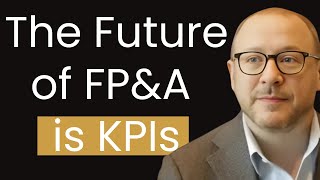
This is a YouTube video titled "Strategic Finance Insights for FP&A Executives to Drive Growth in PE-Backed Companies - Nate Saperia" created in May 2025. It features a detailed conversational interview between Paul Barnhurst, the host and FP&A expert, and Nate Superior, a private equity operations advisor with nearly 20 years of experience. The discussion covers topics such as the nature of great FP&A, private equity finance dynamics, KPIs, strategic finance roles, reporting challenges, and the importance of clean data and business partnering in FP&A. The content is aimed at finance professionals interested in FP&A and strategic finance within private equity-backed companies.
What does great FP&A look like?
For me, great FP&A is helping business leaders make better business decisions and also leading to better business outcomes for business.
You've worked with and advised a number of private equity backed companies. I'm curious, what is it you like about the PE space?
The biggest thing I like about PE is Nate Separria is a PE operations advisor with nearly 20 years of experience helping private equity backed companies scale, exit and navigate leadership transitions through his firm Superior Consulting. He delivers real time dashboards, strategic strategic FP and A and interim CFO support.
On your LinkedIn profile you mentioned you focused on is consulting is around KPIs and setting targets for KPIs and how does that work with the customer?
So KPIs key performance indicator Key Performance Indicator just indicates its measure.
So you started your own consulting firm six months ago.
How's it been so far starting your own firm? It's not going to ever be what you expect it to be. The biggest thing I've learned is foreign.
This week's episode is brought to you by Corporate Finance Institute, cfi, the global leader in online corporate finance training and certifications. With CFI's FMVA program, you'll learn how to build three statement models, perform DCF and comparable valuation forecasting, and presenting insights with clarity the exact skills you need to move your career forward. And right now you can get 30% off when you sign up. Visit corporatefinanceinstitute.com and thanks to CFI for sponsoring this episode. Hello everyone. Welcome to FP&A tomorrow, where we delve into the world of financial planning and analysis, examining its current state and future prospects. I'm your Host Paul Barnhurst, aka the FP&A Guy, and I will be guiding you through the evolving landscape of fpa. Each week we're joined by thought leaders, industry experts and practitioners who share their insights and experiences, helping us navigate today's complexities and tomorrow's uncertainties. Whether you're a seasoned professional or just starting your journey in FP&A, this show has something for everyone. This week we're thrilled to be joined by Nate Superior. Welcome to the show, Nate.
Thanks Paul. Thanks for having me. I'm really excited. I've been following you for a long time, so this is exciting day for me.
Well, good. I'm I'm excited to have you on as well. I was grateful you reached out and, you know, suggested that you had some ideas that you thought would make for a good show because I'm always looking for Great guests. So I'm really excited. First question I'm going to ask you, then we'll give you an opportunity to tell a little bit about yourself. What does great FP&A look like? What is great FP&A in your mind?
For me, great FP&A is helping business leaders make better business decisions and also leading to better business outcomes for business. There's a lot going on behind the scenes. We talk a lot about Excel, about power, bi, about data analysis. But all of that is for a purpose. It's to help a business.
I like that. Like I said, it's all for a purpose. Right. To help the business in the long term. So do you have an example maybe you could share where you've seen great FPA in action, where you're like, wow, we really made a difference. We helped the business here.
Yeah. So the example I'm going to give actually isn't a we example. I guess I can call it a we example. But I was brought into a client, a large consumer retailer, and this is where I've seen the best FP&A. The head of FP&A there. Was she the most technical person I'd ever met? No. But what she had was she knew the business inside and out. She'd spent time in supply chain, she'd spent time in merchandising. At one point, she was the head of their transformation Management office and then head of fpa. So what that meant was she could talk to any business leader in the firm, understand where they're coming from and what her team needed to do in order to help those business leaders. The other part of what made her and her team great is the rest of her time, she didn't spend it in Excel. She spent it with her team, being a good leader, mentoring and coaching. So this was great. She was basically a go between who could translate the needs of the business to her team who are able to do the analysis to help the business. And that was great. FBNA had the opportunity to advise them on something very specific. It was business intelligence. That's what they needed. That's what their team didn't have. But I wasn't the one providing great FPNA there. It was her and her team.
That's great. You had the opportunity to observe that and recognize that sometimes it's not us doing it, sometimes it's observing it from others. I've interviewed some people and I'm like, all right. I can tell they would have been a great boss to work for. They understand FP and A and like I can learn a lot for them. So I love that you shared an example where you learn from someone where you came in as a client. Can you tell our audience a little bit about your background, kind of what you've done and where you're at today? Let's start there.
Yeah. So I've been in finance for about 20 years now and I've played a lot of different roles. I studied financial economics in college and then went into economic consulting. All I knew is I like data, I really like data. Economics had a lot of data, but it was very academic. So I went back to business school and then went into corporate finance. I had a stint at ge, a stint at Hess and I finally realized I wanted to go smaller, I wanted to go growth stage. So I became head of FP&A at a VC backed company and I didn't really know what FP&A was before it. I came in as a capital markets role, head of FP and A left and they said can you do this? And I started and they took. So I spent a lot of time as head of FP&A but also half of my career has been in consulting. The past seven years that I worked at a firm called Accordion Partners, which advise's private equity backed companies and their CFOs on all things finance related. I was, for my first three years I was on the strategic finance team there. And I think we'll probably get into talking about strategic finance and what the differences are. But I advise clients. For the first three years my company Accordion was growing extremely rapidly, were also private equity backed. So I raised my hand and said look, we're advising our clients on this, let's get this internal. So I moved to the role internally of head of FP&A and I did that for three years, helped build out reporting, budgeting, planning, and eventually took the firm through its second private equity transaction two years ago, two and a half years ago. Then finally last year I moved back to advising clients. I worked in a lot of different industries, but decided I want to focus on professional services as an industry and started my own firm six months ago.
Got it. Well, thank you for sharing a little bit of your background. And since you had a lot of private equity, we decided to go with the EBITDA hat because for some reason that seems to be all they talk about sometimes.
Ebitda, our love language.
You know, it's, it's funny and I'll tell you this, cause I think it'll smile. I hated EBITDA when I started, because I started at American Express. American Express is a Warren Buffett company. He's the number one shareholder. You've heard what Warren has said about ebit, right? He absolutely despises it. So I kind of grew up, like, why would you ever talk about ebitda? Then? My next company was private equity. And that's all we talked about. That I started to realize, okay, there's. There's a middle ground here. It has its best benefits. I've never been a huge fan, but I get it. So it's always fun when I wear the shirt and get to have those EBITDA conversations, because I know you've had probably more than you care to count.
Yep. Yeah. And I. I see the debates on LinkedIn about whether EBITDA is a good measure or not. I can understand both sides. The reality is I work in. In private equity, so it's not really a debate for me. That's just EBITDA's measure and need to understand that. Need to understand what's right and what's wrong with it. But it is what it is.
Well, and that's exactly it. At the end of the day, you need to understand the measures you're going to be. You're going to be measured on. Right. The performance metrics. And if you're going to work in private equity, you're going to work in vc, certain industries. EBITDA is important regardless of what you think about it. So learn it, understand it, and support it. That's kind of the bottom line. Or find a new job if you don't want to.
Yeah. So you can like it or not like it, but your investor is still gonna ask for it 10 times a day, so.
Exactly. You still have to track it and understand it, regardless of whether you like it or not. All right, so you started your own consulting firm six months ago. How's it. How's it been so far? What's it been like?
Yeah. So I'm sure other founders have told you this, but starting your own firm, it's not going to ever be what you expect it to be. I've learned a lot of new things. You've started your own firm. I bet it's been. It was very different than you expected. I expected to transition out and be doing pretty much exactly what I was doing in consulting. Have people calling me, you know, doing cash flow forecasts. It's been very different and a lot. The biggest thing I've learned is how to say no. I'm saying no way more than I Expected. I expected to take most things just for the business, but nine times out of ten, I'm saying no. And the reason for this is early on, I was talking to a private equity firm. I had this splashy deck, went through my 20 years of experience, listed everything under the sun that I can do. I said, that's awesome. But what should you be doing and what should I call you for? What are the one or two things? And that was an aha moment for me. Said, wow, I really need to get super focused. So what I like to do is instead of saying no, say no. But I know this person who can help you out. Because I don't like saying no. I don't. That's not very helpful to someone and I want to be helpful. So I say no. But this is who can help you out. So I'm trying to build a partnership network. If there are any experts that I can refer work to.
Yeah, no, I'm always same way. I haven't, I can't say nine out of 10. It took. It's taken me a while to learn, but I'm getting better at the saying no and trying to figure out where should I really focus. I'm just a slow learner. So fortunately you figured it out much quicker than me, which is good.
Well, maybe my den is too much.
So you'll, you'll find out in time. Right? I mean the number is different for everybody. But one of the most important things you can learn in businesses, learning to say no. But I love that you pointed out no. But don't just, hey, go away. I don't want to do your work. Here's who can do it. I can help refer you or I can. Because that builds your network, it builds your credibility. People still trust you. They may come to you later versus the ignore them or, or buzz off approach. I mean, just like being a business partner in fpa, we shouldn't just say no to our partners. It's no different. So I want to ask you a little bit about KPIs. We'll get into strategic finance here in a minute. But I noticed one thing that on your LinkedIn profile you mentioned you focused on is K consulting is around KPIs and setting targets for KPIs. Kind of. How does that work with the customer? What's the typical process like when you're, you know, kind of helping them figure out their KPIs and targets?
Yeah. So private equity is an interesting situation. The way it works is a private equity firm acquires a company after going through a sale process. During that process, the private equity firm creates what they call a value creation plan. It's basically their roadmap to get from A to B. So they've usually defined their KPIs in advance. Whether they're right or not. That's for us to figure out. But they know that where they want to go and they have an idea of how they want to do it. So a big part of what I do is being an intermediary between a private equity firm and between an internal finance team. So where I start, I start at the top 30,000ft. Where do they want to be in four years when they sell the company? Because that's what they're looking to do. Sell in three to five years. If it's six, people aren't happy. But they're still selling the company. So where do they want to be? Okay, they want to be at X revenue with Y EBITDA margin. What does that mean for growth rates? Okay, great, but these are all too high level numbers. I can't do anything with those. I can't advise. Okay, how do you get from A to B? So then we need to start breaking it down into non dollar metrics. For example, at a retailer you got sales. Sales is a dollar number. But what does that actually mean? Sales are made up of orders and orders have an average order value. So those are two KPIs in the selling tree for a retailer. Just to give an example, one thing I don't like about the term KPI and I'm going to keep using the term KPI because no one would understand what I'm talking about if I made up my own term. So KPI is key performance indicator, but is that really what we want? We want a KPI to be both measurable and actionable. Key performance indicator just indicates its measurable. It's like saying you're on the highway and the speed limit is 65 and you're looking at your dashboard and your speedometer is saying you're going 80. You say wait, I need to slow down and you're just going to shrug. That says I'm indicating what your performance is. I don't know what you should do about it. There may not be anything you can do about. So just performance indication isn't enough. It needs to be both measurable and actionable. You need to be able to advise the other business leaders that okay, this KPI isn't where it should be. Not just it isn't where it should be, but these are the levers you can pull to get it where it should be. And that's all about what KPIs are for me.
I really like that you mentioned the actionable part. I think we start to see that more and more people mentioning that. And so it's why in my mind, KPIs are usually operational in nature. Rarely are they financial, because financial are lagging. And if it's a month after the fact, it's really hard to be actionable. Or by the time you're actionable, you've suffered a lot more pain or you've missed out on a lot of benefit because you're responding after the fact versus having something that really helps you understand in the moment where you can take an action. Right. Because if you see a trend upward and you're able to immediately adjust, maybe you pick up an extra, you know, a hundred thousand of EBITDA or whatever the benefit might be, or a million dollars of revenue.
Yeah, for sure. That's exactly right.
Yeah. And so that's usually where I advise people. Where would you advise? Someone's listening to this. Maybe they're in a PE or first kind of head of FPA and they're trying to figure out KPIs. Any advice you would offer them, like if you have to select them, what are some things you think about? Or maybe a framework you use to help guide you when you're doing that?
Yeah, so I really like, I'm going to focus on revenue. And I really like selling trees. And now the example I gave was for retailer. Okay, so you have sales, but what does that really mean? It's number of orders and average order value. So as you said, those aren't exactly financial metrics. One is number a number of units, the other is it has a dollar on it, but it's a dollar per order. And that's something. A dollar per order. You can say, okay, how am I going to increase the number, the dollars per order? Can I bundle things together to increase dollars per order? Then on the order side, you can break it down further. That's based on how many people come into the store and your conversion rate. Okay, how do I get more people into the store? Do I need to run a marketing campaign? How do I convert more people into a sale once they come in? That's things like maybe it's where you place things in the store. Maybe you need different products. So those are all actionable. That's what makes them KPIs. You're not just measuring them to see where you Are you're measuring them so that you can do something about them?
Yeah. You're trying to get down to the a root level where it's actionable. And that's why you mentioned the decision tree. Right. In this case, you like to start with revenue and just start breaking it apart and break back. And if you go back far enough, you'll start to see, okay, you know, whether it's website visits or leads coming from this source or whatever it might be, you start to see things that. Oh, that has a huge impact on my final number. And there are levers we can pull. There's things we can do. That's right. That's really what you want to be looking for.
Exactly. Also, tactically, another thing I do is at my prior firm, we'd call it a metrics matrix. It's basically just write out every possible metric that this business could track and define them. Defining is a huge part of the equation. You'll go, you get the business leaders in a room and ask them what an order is, and every single one of them will tell you something different about what an order is. How can you not agree on what an order is? A customer comes in, they place an order, but is it. Well, is it each item on that ticket? Is it a percentage that's being shipped later? So defining is another big part of that process. Then the last one is I really focus on dimensions. Different ways that the metrics can be looked at, whether it's by customer type, by region. Time is a metric, like what quarter of the year? Time is a dimension. Any way you can slice and dice the data and then you get your matrix. So you have this massive document and you go through and you say which ones have the most impact and which ones can have levers attached to them that I can pull to cause an impact. That's what I do.
I like that. It's a really good approach. Like I said, you build a big matrix, you define everything. Because like you said, everybody's going to have a slightly different definition. Anyone who's worked in FP&A for a long time has seen that then going through. And I love that last step with each one of them, which ones are most important and then which ones can I actually pull a lever on? Which one can I be actionable? Then you should have a list that you can pull. Okay, now what are the, you know, main ones? Why I want to measure. There's a reason it's key. Performance. Not every performance metric.
Yeah, that's an important distinction between KPI and metric. You probably still want to measure the metrics and they may be helpful in understanding where you are. They're not key.
Yeah, exactly. No, great, great advice there. So you've held several strategic finance roles. That's been the title. Now, I think a lot of times there's a little bit of confusion in, you know, what is a strategic finance role versus FP and A. So I'd love for your thoughts of how they might differ a traditional FPA role from a strategic finance. How you think about those two roles.
Yeah, there's definitely a distinction, but I don't think the distinction is as large as what people think it is. So I'll break this into two parts. One is a true technical distinction. The other, I believe is a perception distinction. So in my mind, the technical distinction is strategic finance usually has some corporate development or M and A or capital raising aspect to it, where that function is a leader in that process. FP&A is often involved in those types of activities, transactional work, but more as a support function. So. So in my mind, that's the only technical difference. I'm curious whether you can think of other technical differences.
In most of the roles I've been in, they're really. They haven't carved out strategic finance. There's Corp dev, there's FP&A, and someone from FP&A is helping with some. There might be a kind of a. Like one of the companies I worked at, there's a chief of staff group that did a lot of the stuff that you'd call strategic, strategic finance. But I, I agree in general with, with what you've said. There is a way to think of it is when you're more involved in that FP and A and more from a strategic standpoint, you're getting involved more in the, you know, the fundraising. That tends to be a little bit more strategic finance than you traditionally see in FP&A. But that's partly why I ask is the role companies I've been in, we've never had a strategic finance role.
Yeah. So the rest of it, I think, is just perception. Perception is of FP and A as doers, not as advisors. They're the ones, they build the bucket, they model it out, they put together the reporting package, they put it together and pass it along. They do an analysis and pass it along. That is, in my mind, the perception distinction between the two. Whereas once you have strategic in the title, that means you're an advisor. You're not just doing. You're going in and Going to the business leadership and saying, this is what I found, this is what you should do, or this is what you should think about. But that's purely a perception difference because good FP and A is doing exactly that.
Yeah.
So most of it, other than the transactional difference, I think it's mostly perception. And good FPA is basically strategic finance. We even started at my own firm. We stopped or started moving to calling it strategic financial planning analysis and just strategic finance. For sure. The lines are extremely blurred and I'm not sure if there's really that much difference.
And that's helpful. And that's kind of how I felt about it. You know, I had someone else who was going to come on the show and we never made it work. And they wanted to talk about the difference. And to them there was very much a big difference. And to others, like, no, it's really blurred. You know, you see a lot of these software tools, say your strategic finance platform instead of your, you know, FP and A platform. And it's like, okay, still doing planning and analysis. And that's why you're like, okay, where's the. So that's why I was curious your perspective, because I have, like I said, I've never had a role that it's been titled strategic finance or seen it in the companies I've been in. It's kind of like in some areas you have FPA that focuses on the reporting, the planning, and then you have what we call business decision support or business support or business partnering if over in Europe. And they separate the roles. Some people are like, oh, yeah, they have to be separate. They should be different roles. And I'm like, well, depends on the company and the size and what works for you. I've been in both. Right, you have. There's different parts of FP and A. So I agree with you. It's very blurred. It's kind of like rev ops. Smaller companies. There's a lot of times where FPAs doing revenue operations. There are times that completely different role and it can get really blurred. And depending on who you ask, should it sit in cells, should it sit in finance? You know, there's not right answers to any of these things.
No, for sure. And you make a great point about bigger companies. I get some of these distinctions at bigger companies. If you have 10,000 employees, you can't have a manager of FP&A who's putting together the model and then running the reporting and then advising, you know, your chief people officer on what to do. You have to have business partners and you have to have the separation. I've even seen it. A good friend of mine runs financial analysis at an airline. And I was talking to him, I said, you mean FPA financial planning analysis? And he said, no, financial analysis. We split the P and the A. I run financial analysis. My buddy over here runs financial planning. We work together a lot, but they're different functions. And, you know, the bigger you get, the more you have to do that. For better or worse, if you're ready.
To take your finance career to the next level, this is your moment. Corporate Finance Institute, or cfi, is the global leader in online corporate finance certifications. Their FMVA program is built for professionals who want to move beyond theory and master the skills top finance teams actually use. With fmva, you'll learn how to build robust three statement models, perform DCF and comparable valuation analysis, create accurate forecasts, and communicate your insights clearly using the same practical skills that top finance teams rely on to guide strategy and make better business decisions. Whether you're targeting a promotion, transitioning into FBI, P&A are aiming to stand out in a competitive job market. These are the qualifications that hiring managers are actively looking for. Over 2 million professionals worldwide trust CFI to gain skills, earn promotions, and advance their careers. And right now, you can do the same with 30% off any CFI plan. Visit corporate finance institute.com to start building the skills that get you noticed and get you hired. Yeah, exactly. Now I work for American Express, right? Big, huge company. And there was a lot of areas where we had to split it. You just, you have to try to figure out what somebody can manage. And there's trade offs to that. There's some things that are good about it and there's some things that aren't. Just like with a small company and when you're doing everything, you're doing FP and A and operations and janitorial sometimes, I mean, there's benefits and there's some like. Really? You're kind of chuckling because I'm thinking you can relate to what I just said there.
Well, no, I was thinking about the civics jar I worked at. We, we had a wework, a meatpacking district in New York City. And we needed a little more office space. So we moved to like a railing corporate building. And I remember the, you know, the CEO being like, Nate, just, just bring these pieces of equipment in your backpack. You go a little more each day. You know, at a growing company, you FP&A, you can, you can define the role, but you got to do everything. I remember, you know my CFO at my last firm when we were small, like 50 people, he was doing allocation of consultants to projects. Literally our CFO was doing the talent management. We're very small and grew much larger and now that company has a fantastic talent team. But early on you do a lot.
Yeah, you do what you have to to get it done. Well, I think I want to switch gears and talk a little bit about pe and we talked a little bit about strategy. Some of those differences. You've worked with and advised a number of private equity backed companies. I'm curious, what is it you like about the PE space? What have you enjoyed about being in that space?
Yeah, so the biggest thing I like about PE is the opportunity to go in and make a difference. I'm going to first compare it to a corporate like we're talking about where you have extremely large teams. Everyone has their specific form functions and that's not inherently bad. There are great programs out there. You know, I was at GE right after business school. They have a fantastic financial leadership program where you can see best in class and learn it early on. I think they're great for early in your career to see what best in class is. For me and for certain personality types, I'm drawn to situations where there, there's a lot of fixing that needs to be done, fixing and building. And the reality is private equity backed finance teams, they're run very lean and that can be challenging, but it presents a lot of opportunity. So the other thing I'm going to say here is there are a lot of parallels with VC backed companies, but there's a couple important differences. I think the skill set that makes an FP and a person and a VC backed company and a fee backed company, I think they're, they're very similar. You have to be scrappy, you don't have a ton of resources at your disposal and you need to be looking for problems to fix and then going and fixing them. One of the major differences to me is that VC backed company, they're looking for the next ChatGPT, they're looking for the next Uber. The sexy industries people are drawn to them. At a P backed company, you're looking for your next roof repair company, your next two to three person roof repair company and if you're looking at pretty much doing the same work either for the next ChatGPT or the next three person roofing company that you're going to bring in and the compensation is the same, which one is, are most people Going to choose. That's roofing company.
Kidding.
Yeah, but that's exactly what, what private equity is. You have private equity investors getting super psyched up about rolling up these things like roofing companies, H VAC companies, they're, they're not exciting to a lot of people.
So people are often not sexy. They're a roll up play.
Yeah. But that, that leaves a lot of white space. So you get a lot of FPA talent drawn more towards VC and that leaves a lot of opportunity open in the PE backed world to, to come in as a very talented FPA professional and really leave your mark on a company. You just have to get used to boring industry.
That makes a lot of sense. There's definitely some differences. So I'm curious how have you seen FP and A typically work like kind of structured. You mentioned runs really lean but maybe a little bit more of what you've seen at least in your experience working with PE backed.
Yeah. So I'll keep this to companies in say the 50 million to 250 million. Sure. New range which we call sort of middle market or a little bit down to lower middle market. So of course you have a CFO and under that you either have one VP of finance or you have two people directly below a controller and a head of fda. That's more common in what I've seen. But sometimes roles will be combined into a VP of finance. Sure. Under the controller you have a lot of accountants. Under the head of FPA you have a lot fewer people. You have, let's say call it two to three. It's tough to do a lot with two to three people. So this is where very resourceful, very scrappy talent can make a huge difference. If you get an associate, a manager who can both build power BI models and also explain what the models are saying, that person becomes invaluable. There aren't a ton of those people, but when you get that right talent, it can really change the course of the finance team.
I would agree with that. I know what you're talking about. The people you get that can be really good technically, whether it's the power bi, maybe some Python, they SQL do things on that reporting side but also still have the ability to really translate it, speak to the business and drive change. And I think we're seeing more and more of that. But that is when you get people that have that good mix, you want to hold on to them.
Yeah. Do everything you can to, to keep those people. And it's tough. There's a lot of Turnover in private equity. You know, I'll talk a bit more about private equity, the reality of the situation and I'll do a VC comparison as well. In vc, your, your investors, they all, they all have a small percentage interest in the company and no one of them really has complete say over what the company does in private equity. You know, traditional private equity, a leveraged buyout investor is taking more than 50% of the firm. So they have tremendous influence on what's going on day to day. And they're also extremely fast paced. The whole period that they're targeting is three to five years. So you should expect in a P backed environment to be working at a very fast pace and be making changes very quickly and regularly. So that can be exciting for a lot of people and that can be overwhelming for a lot of people. And there's, there's no right or wrong. It's really just, is that the right fit for you?
And I love how you said, hey, is that the right fit for you? I've worked two PE companies, I've worked at a large company like American Express and they're very different. There are similarities, but there are definitely differences and you have to learn what is right for you. I learned a ton, you know, all of them, but in different ways. I can, I can definitely relate to what you're talking about there. So reporting, I think often reporting can be quite different for PEs than, you know, non PE back companies. So maybe talk a little bit about what you've seen for reporting and what someone should kind of expect if they come into a PE back company on the, the reporting side.
Yeah, you're gonna, you're gonna need to expect a lot of reporting a lot more than you would expect in other environments. It's going to be 60 page monthly reports expected to produce hopefully within a couple weeks after the month end. A 60 page report. It's not, you're not handing over your income statement, your balance sheet and maybe your cash flow statement. Yeah, those are in there, but you have 57 other pages going through. Let's say we wish it were just the KPIs but pretty much every metric that you can think of. Their P firms have become incredibly data intensive and data hungry and that's what they're expecting out of their portfolio companies. So that's monthly, quarterly. You're going to be doing a board report report which is, it's going to be a sprint, it's going to draw on a lot of the same metrics, but there are also going to be Specific topics that require a lot of one off analysis. You're probably going to have, let's call it a week, a week and a half to do this. On top of you might be preparing the monthly report at the same time or you might be in budget season. It's still expected, it's still part of your job. The last thing is sometimes you're even doing weekly reporting. You know, private equity, the reality is they put a lot of debt on businesses. If we're talking about a leveraged bio.
Versus sure, a lot of the LBOs, there's going to be a lot of, there's going to be big interest payments.
Yeah, for sure. And that puts a strain on cash. So you're probably going to be doing weekly cash flow forecasting. You need to update it every week, you need to review it with your CFO every week. You're probably not reporting it to the private equity firm every week, unless you're in a cat strap situation, in which case you might be reporting it to them every day, but you're going to be updating it every week and you're going to be talking to your CFO about it every week. The thing I like about 13 week cash flows, and here I'm talking about direct cash flows, is unlike an indirect cash flow, this aligns exactly to how the business functions. If you can build 13 week cash flow for your business, you know the business inside and out, you know your customers, you know who's making payments, who, who's not, you know what you're spending money on. You see those big interest outflows and that's little painful, but it means you really know your business. It doesn't mean you're just doing high level. You know, how do I go from net income?
Cash flow can be really important in pe and I, you know, I never had to deal the cash flow as big enough P.E. that I worked, you know, out supporting the business until I wouldn't say cash flow. But we definitely had to get involved during COVID We had to approve every single payment, you know, kind of push it out as long as we could, try to negotiate. That's when more than any time, my career was all over. Cash flow.
Yeah, so a very similar situation. Coincidentally, I moved internally at my last firm to head up FPA in March of 2020. Complete coincidence. You know, we'd said that in December of the prior year and I just happened to be making the transition about two days before all of that hit. But yeah, the very first thing I did was dust off our 13 week cash flow forecast and get that thing up and running very quickly. One of the most interesting things I did actually during that process and I put puts about this on LinkedIn recently is Build in Power BI AR Aging AR Aging report that I think that's probably the most complex model I've had to build. I posted recently because there are actually now some resources out there showing you how to do it and with some some code. So I want to give a shout out to the guys at SQL bi, SQL BI and put out great stuff. I don't know if you know them.
Yeah, I'm familiar. I don't know the people but I'm familiar with that site and I know they put out a lot of great stuff. I don't do. I do very little in BI now. I mean I've used it in my career. I microstrategy, tableau, Domo power BI and so I've written a little DAX and stuff and I know how complex and challenging it can get. The more complex that report is. So Cash Flow aging three statements. A lot of those things are. They're harder to model than they are and accept it can be done but it's not always easy.
I actually I wanted to touch on that for a little minute little bit. You talk about FPA resources and you provide a ton of FP and a resources. That's something that I think is just so invaluable for our community. None of those things existed when I took my first FP and a role and it was just figuring it out on my own. And my guess is you had a similar experience. It's so great that these communities are coming together and there are more resources out there because there just hasn't been much to help people understand, you know, the function and get to speed on the function. So thank you for what you do on that front.
I appreciate that. I enjoy doing it and I know I wish I had those resources when I started. I love the community. We've built the FP and a hub. We've hit over a thousand. Hopefully we're closer to 1500 by the time this is released and we're starting to see more and more traction. So really excited when you get to help somebody answer a question they have somewhere they know they can go and talk to people that there's going to be somebody who's experienced what they have. You know, we have some CFOs in the community, directors, VPs and then you have those people that are in accounting. They're trying to figure out how to get into FP&A. So having that range makes it more likely the question that's asked. Somebody can give advice. And that's why you want a community, because so many of us have been there where you're googling it and just trying to figure it out and have no idea how it should really be done.
Yep, absolutely.
I'm with you. All right, so we're going to move into our standard FP and A section. This is where I have three questions, kind of short answers. We ask a lot of guests these questions. So the first one, what's the number one technical skill that you think FP and A professionals should master?
Power Query. Right now, it's Power Query. The biggest challenge for FPA folks is clean and automated data. And Power Query very quickly solves 90% of that problem.
I'd love me some Power Query so I could see where that is an answer that definitely it's beneficial for people to learn. All right, what's that Softer human skill?
The softer human skill. We talked some about business partnering. It's that. And it may not be a defined role, but it's a huge part of FP&A. And here's how I've approached it personally. I want to get to know the people in my organization, and I want to get to know them as people, I think, and I want to understand where they're coming from. I know I've been guilty of this at times, and I think it's common in our profession to assume we're the smartest person in the room. But that may be true for data and analytics. But there's a reason these other functions exist, and there's a reason these people have been successful and are leaders in these roles. So if you can understand where they're coming from, that can only help you do your job better and help your company out. So they probably know something that you don't.
There's no doubt they do. And as you said that the business partner I couldn't help think of, and this is an answer I get a lot of, is empathy as the number one soft skill which kind of comes close into business partnering. Actually understanding and relating and trying to put yourself in their shoes versus coming into a room and thinking, I know everything. I'm the smart guy here. They just need to listen to me. That never ends well.
I've probably been guilty of it before at some level.
I think we all have in some ways, whether it's really thinking we're the smartest or thinking we're right. And not being open to listen to others. I've been guilty of that thinking, well, it's a good idea, so everybody will just get on board. You actually have to influence. It's not how the real world works. I learned that one early in my career and it was a good.
It's a good one early.
Yes, fortunately. All right, so this is kind of a fun question we ask sometimes if you could wave a magic wand. So you're the fairy godmother for a day, I guess. No, I'm just kidding. But if you could wave a magic wand and change one thing about FP and A, what would you change and why?
Clean data. And if we could just get clean data, all right, maybe our jobs wouldn't exist. You know, so much, so much time and brain damage is done on manually copying and pasting cleansing data, pulling reports out of netsuite. And I think we're making a lot of progress on this. And this is why I flagged Power Query and a lot of other tools. You know, once all this gets integrated and people don't have to spend their time automated manually copying, pasting, cleansing and data, the profession is going to get really, really exciting because that's going to leave a lot of time for analysis and insights.
Agreed. No, it's a, it's an exciting time when you think about that. So you're not the first one that's mentioned data. All right, now we're going to move into the get to know you section. I have just a couple questions where we'll get to know a little bit more about you. So if you could live in any other time of the history of the world, where would you. When would you live and why?
Yeah, so I have to think about this one a little bit. There's so many times in the history of the world, but I've always pictured myself living in the 1950s. And maybe I've just watched too many either sitcoms or TV shows that, you know, romanticized the 1950s, but it just, it seemed like the, the high point of, you know, raising a family during a time where they're. Where you could walk down the street, street. And yeah, I think it's probably too many TV shows romanticizing the time. There was obviously quite a lot of volatility in the 60s and 70s, but throughout that time they also had a lot of fun. Like what. Whatstock happened then. So growing up early in the 50s and then living through that time, even if it was volatile and I, I.
Like it, that would be an interesting time, particularly the 50s. I know what you mean by the romanticization and then the volatility of the 60s and 70s. So I, I was born in the 70s. I can't say I really experienced late 70s. I can't say I experienced that. All right. If you could do anything else for a career, so if you could pick any other career in the world, what would you do? I've.
I've gone back and forth on this one. I've asked myself the question before. The easy answer is economist. I almost was an economist, but I, I backed out because there was the math got too advanced for me. So I'm not supposed to say that as an FPA guy, but that it was some really serious math, and I.
Said, wait, oh, I'm sure there was.
Something more practical than this. I'm doing two answers. I hope that's okay.
That's all right.
The second one is a psychologist, because I'd love to learn how other people think. And that's really what a psychologist does. Right. If I could get into people's minds, that would just be amazing for me. It doesn't necessarily come naturally for me, so it would be super interesting to learn that skill set.
Got it. That would be pretty cool. All right, well, I think this is a good spot for us to go ahead and wrap up. We've been going for a while here, so we like to ask pretty much every guest this question. If you could offer one piece of advice to our audience to be a better FPA business partner, what's the advice you're going to give?
The advice I would give is before you give advice, listen to what others are saying and try, and even if you disagree, try and understand the reasons that they might be saying it and whether there may actually be some validity to it.
Got it. Thank you. And if someone wants to learn more about you or get in touch. I know you run your own business, you're active on LinkedIn, but what's the best ways for somebody to reach out and connect with you?
Yeah, so I, I do spend a lot of time on LinkedIn, so if you send me a LinkedIn DM, I'll probably see it within a minute at least. That's definitely the best way to get in touch. Perfect.
So if anyone wants to learn more about you, what you do, we'll also put some links in the show notes so people can find you on LinkedIn or see your website, whatever you want there. And thank you so much for joining me. It was great chatting with you today, Nate, and appreciate you coming on the show.
Thanks for having me Paul. It was really great. I enjoyed it.
Good. Thank you. Thanks for listening to FP&A tomorrow. If you enjoyed the show, please please leave us a five star rating and a review on your podcast platform of choice. This allows us to continue to bring you great guests from around the globe. As a reminder, you can earn CPE credit by going to earmarkcpe.com, downloading the app, taking a short quiz and getting your CPE certificate to earn continuing education credits for the FPAC certification. Take the quiz is on earmark and contact me, the show host for further details.
More from Paul




Trust and Leadership Lessons for FP&A From 100+ Top Leaders with CFO Jon Laudie






