The CFO Role is Changing for Finance Leaders to Own AI, Talent, and Strategy with Omar Choucair
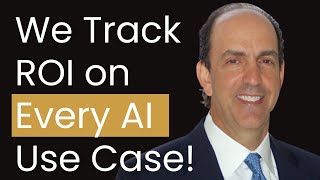
Omar Choucair, CFO of Trintech, discusses what great FP&A looks like: technical savviness paired with storytelling and operational partnership. He explains how Trintech uses an internal LLM and Copilot in-app, and why the CFO role now demands ownership of AI, talent strategy, and a closer partnership with the CEO.
Chapters
I think AI is just a filter. It's a miss. It's a go. Look over here while I'm doing this over here. The AI result is only as good as the data elements and the data sets that companies have.
I do another podcast on AI and technology and this is an area I'm passionate about. How are you guys thinking about the noise and kind of managing it?
So there's a couple of different areas. So the first one is.
Omar Chukair is a seasoned financial executive and board leader who's driven over 40m and a deals and major transformations, helping global software companies like Trinetech boost performance and lead with financial excellence.
The FP&A team they have to partner connected directly with their peers in the other departments. To be truly successful in FP&A, you have to be pretty technically savvy.
What has you most excited about the future of FP&A? As you look out in the crazy fast world we're in these days, the.
One thing that's exciting is that there's a lot of technology that should make our jobs foreign.
Are you tired of being seen as just a spreadsheet person while others get a seat at the table? Well then. Welcome to FPA Unlocked, where finance meets strategy. I'm your host, Paul Barnhurst. The FP and A Guy. Each week we bring you conversations and practical advice from thought leaders, industry experts and practitioners who are reshaping the role of FP&A in today's business world worlds. Together, we'll uncover the strategies and experiences that separate good FP and A professionals from great ones, helping you elevate your career and drive strategic impact. Speaking of strategic impact, our title sponsor for FP and A Unlocked is Campfire, the ERP that's helping modern finance teams close fast and scale faster. Today's guest is someone who's earned that coveted seat at the table. I'm excited to welcome Omar. Omar Shoukar. Welcome to the show.
Thanks. Glad to be here.
Yeah, really excited to have you. So Omar is the CFO of Trinetech and just a little bit about him before we jump into our questions. So, like I said, he's the CFO at Trintech, a company that provides financial software solutions. He has extensive experience in corporate finance, accounting governance and FP&A in both private equity and public company software businesses. He is known for his exceptional leadership, communication, interpersonal and change management skills. With a proven history of success in complex restructurings, major capital market transactions, M and A, and driving operational excellence. He has managed over 40m and a deals SaaS and subscription based platforms, sales compensation and go to market integrations and has been involved in public equity and debt financing. He has also served as the CFO of Multiview A Warburg Pincus backed B2B software platform and DG Fast Channel, a B2B software platform delivering mission critical media content. He began his career as a CPA at KPMG where he managed publicly traded large multinational services and technology company audits. So love the background. I always enjoy getting to talk to CFOs and hearing their story. And I know you've been a CFO for a few years now.
I've been the CFO for TriNetec for about six years and yes, I've done this for a long time. And being a CFO for a software technology company is a very exciting and adventurous position, that's for sure.
I'm sure it is. I've worked for a few software companies on the FP and A side and it's always been a adventure even there. So one of the questions we like to start with every guest is in your opinion, what does great FP&A look like? If your company has great FP&A, what does that look like?
You know, it's a great question and just given the number of years that I spent working in publicly traded companies as a, as an auditor at KPMG for 10 years, the one thing that really struck out as you can differentiate what's good versus great and you can easily see what's bad. And so given the experience of spending a decade, you know, auditing public companies and private companies, that distinction became very, very well burnt into my head. So what I like to think great is in FP and A is a very hardworking, knowledgeable, technology savvy group that engages with the operations of the company. And I really strongly believe that the FP and A team is really just an extension of the marketing team, the sales team, the R and D team, the professional services team, the corporate team. I mean the FP and A team has to very, they have to partner connected directly with their peers and in the other departments. And for me that is probably the most important quality that we look for in FP and A professionals.
I mean, I'm hearing a few things, but if I had to boil it down, I think there's a couple of things you want those that are technically savvy, a deep operational understanding of the business and that ability to partner in such a way that they're not viewed as an outsider, but they're just part of the team that has a certain role to fulfill.
Yes. And I would add on to that. They have to develop the confidence and they have to develop this relationship with sales and marketing that they're really there to help them. They're not there to, to identify problems and then communicate back to home base. And I think that's really important. And once you develop that trust, then the amount of information back and forth is so important to the overall benefit of the company.
What's the key in your experience or what's kind of needed to really unlock great FP and A? Is there something as a CFO you need to be doing? Is it just developing that trust or is there a key to you come into an organization? I'm sure you've seen it. And the FP&A is hopefully not bad, but it might be okay to good. Any thoughts on unlocking it to that kind of next level?
I think the unlocking is two components and the first component is just the. You have to be inquisitive. Like you really have to ask as many questions as you can and be prepared. Because when you ask a lot of questions, you get a lot of answers. And if you only ask 10 questions, you're only going to get 10 PowerPoints. But if you ask 50 questions, you're going to get 50 PowerPoints. And a lot of times as a new CFO comes in, everybody wants to, you know, they want, they want to engage with he or she. And as a result, they're going to give you all this information. So be prepared to get all that information. And then it takes more time. Right? So it's more time on you to engage with all that. The second part is I'm a big proponent of competitor analysis. And it's one thing to say that your company's doing well, but are you really doing well? Because then you have to get into and say, well, there's company A and there's company B and company C. Well, how are they doing and are they doing something different or better than you? So it's the, it's the tandem of intellectual curiosity and detail. And how are you comparing versus your peers?
Thank you. I appreciate that. And I love that you said the intellectual curiosity. One of my favorite ways I've heard it explained is that someone on the show called it humble curiosity because you're really seeking to learn to understand so you can help them versus sometimes you have the person that just wants to listen so they can tell you what the solution is. You know, their curiosity is motivated to kind of control things, so to speak, versus truly learn and be that partner. And so I love that.
Well, the only thing I would say to that is I tell everybody, don't take yourself too seriously. And I really, and I really honestly believe, do not take yourself too seriously. I can always try to learn something every day. And it's really important that you develop that trust because I could be wrong with my, I mean, I immediately have an opinion, but I try not to voice that opinion until we've had all the people, you know, share their input. But it's really important for people to think that you're, you're trying to help them. But again, we're not here in a, we're not in a popularity contest either. We're not trying to be the most popular group in the company that's usually reserved for sales or marketing.
I was just thinking the same thing. Definitely a lot of truth of that. So you've been CFO of Trin Tech, I think you said seven years now. Tell us a little bit about the company, what Trin Tech does, and kind of your experience there.
Sure. So we operate in a very interesting segment of the market. So we sell financial close automation tools to the office of the cfo. So when I came in looking at this business, I was actually going to be the CFO of a company that sells software to the office of the cfo. So that was, you know, interesting. And I like to also tell people everybody's in sales, so it doesn't matter what, what department you're in. Every, everybody's in sales. And that appealed to me when I was looking at this, you know, versus a couple of other opportunities. So we are able to go into customers large, large enterprise, medium enterprise customers and help them with very painful areas in their business, which could be reconciling accounts, matching point of sale to, you know, credit cards, automating journal entries. That could take days and days of time, creating task managers that say, okay, if you, if you got 100 to a thousand people in your accounting organization, you know, who's doing what, what's Sally doing versus Bob and, and enabling all that to create efficiencies and reduce and eliminate manual work and spreadsheets. I mean, Excel will always be critical for a company, but you shouldn't use Excel for something that you can automate. And I really, really firmly we preach that from the treetops. Excel is a great tool, but you shouldn't rely on Excel for something that can be automated and run at night, run during the day when you can go do something else. So that's what we do. So we, we, our software is integrated with, you know, 80 of the top ERPs in the world. We do about 70% of our businesses in North America, 30% of our businesses in EMEA and APAC. We have a little over 600 employees. And so we serve a really mission critical role inside the office of the cfo. And as you can imagine, that has changed significantly over the last 10 to 15 years. And now it's even changed even more in the last maybe two years, a year and a half just due to AI. And you know, we pioneered, you know, machine learning and bots and we've created so much value over the last five, you know, last five to 10 plus years. And now there's this new, you know, hype that's going on with AI. And so there's a lot of misconceptions about what AI is and what AI is not. And people are mischaracterizing what AI is versus, you know, technology maybe that, you know, we've had for two or three years in the past. So all that is just making the job and the role as a steward of, you know, the company's resources for the CFO a lot more difficult.
Not surprised to hear you say that. I mean, right. Everybody is dealing with the impact of AI, which will be fabulous, A lot of great things it can do. But there's a ton of hype out there. There's some marketing, there's confusion in the market, and everybody's trying to figure out what does AI mean for finance, how should I really be thinking about it? And you know, as you've mentioned, things that we might have had for three, four years, everything now seems to get labeled as AI, whether it really is or not. And so there's a lot of noise.
Yes, there is.
How are you guys managing that noise? Before Jim's question, I'm just kind of curious because, you know, I do another podcast on AI and technology and this is an area I'm passionate about. How are you guys thinking about the noise and kind of managing it?
So there's a couple of different areas. So the first one is we have integrated as much as we can on the people side and there are massive improvements and we've got use cases by department, so we're owned by private equity. And so with that, there's a certain level of rigor that we go through on a daily, weekly, monthly basis. Right. Which is good. I'm not complaining. But what's really important is we're tracking use cases of wins. Like what have we used AI for so clearly in customer, you know, success and customer support and all of our FPA and all of our competitive modeling, competitive outreach, it's a massive time saver, just overwhelmingly, but it's relatively inexpensive. We have an enterprise license with ChatGPT and we put everybody on that and we have just fully utilized that as much as we can. And so from our internal side, we're pushing every department to create use cases, create ROI and say this is, and basically creating dollars and cents of what we've saved with AI. So that's inside the company separately with our vendors, our software vendors. We've received a lot of input in terms of this is an AI upgrade, this is an AI upgrade. And I think we're taking a really strong look at, you know, is it really an upgrade? And you know, know, are, are they trying to monetize that additional AI module? And so we're going through all that with our vendors and we've pushed very hard to, to see what do the vendors have in their roadmap for us. And then the flip side is what are we doing inside our applications that we're selling to our, you know, to 2500 to 3000 customers, which is critical in terms of what our roadmap is. And what we've done is have our own LLM inside, you know, it's obviously partition, you know, for, for customers. And what we really have is, which is unique is the data. And so the AI result is only as good as the data elements and the data sets that companies have. And the data is critical. And we have this pristine data from customers for years and years of all their, you know, accounting, you know, results, et cetera. So that's a huge benefit for us in terms of rolling out additional roadmap Items on, on AI enhancements, etc. We've actually dropped Copilot into the app. So if you are a customer and you have, you know, two or three brand new accountants or people that are on the, on the app, they can just simply go into the app and say, hey, I just started, you know, give me 10 things I need to know about. And it just, it just creates it inside. So there's a lot of slick enhancements that we've done and I think we're trying to gauge what is the roi. What, what problem are we trying to solve for our customer and for us? We've solved all those problems for the most part, right? But now customers have new problems, so it's a Very interesting time to be in the, in the office of the cfo and even more interesting as a software provider, you know, selling to the office of the cfo.
No, that does help. I appreciate that and I fully agree with you. It's a really interesting time. I'm curious, you kind of look back over your career. I think you've, if I remember right, you've been a CFO for about 25 years now. This is your third company. How have you seen the role kind of change during that time? Like is it. You feel like it's the same or there's been a lot of change or just would love to get your perspective.
Well, I think it's changed a lot and I think it depends if you're a public company versus a private company. I think on the public company side the role has changed, but it's still very much the same. It's managing expectations and it's managing your shareholder base and managing your sell side analysts and managing the board. And you know, there's a whole separate set of responsibilities as a public company. And yes, those have changed, but it's, it's very much the same objectives in terms of financial performance, financial projections, engagement with sell side analysts, engagement with investors, almost the same. There's probably, there's probably some additional, you know, help that you've had through AI and a lot of different help on the public side. On the private side, I think it's changed a significant amount. Like just, it's almost a difference in night and day. If you go back and look over the last five to 10 to 15 years, and especially, you know, the last five years, I guess since COVID it's changed significantly in the sense that once Covid hit, everybody turned to the cfo, the CEO, the revenue, the board, everybody, just they lose the cfo. And as a result, I think the span of control, you know, really expanded in terms of HR, in terms of information security, IT, legal. I've even seen CFOs that are now running deal desk and running, you know, more operational type items. And so that's just a fact. And so I think those have piled on. I think the main reason is that the CFO is the voice of reason and they are fair, they're objective, hopefully cool under pressure, they try not to jump one way or the other. And like I said earlier, we're not necessarily here to win a personality contest. We're here to protect the company, protect the employees and protect the business model. And the other thing I'll say is I think the CFO is, you know, locked hand in hand with the CEO. And I think that relationship has just gotten closer and closer over the last four or five or six years. I'm fortunate to have a great, you know, great relationship with the CEO and I think as a, as a cfo and if you do not have that relationship, it's going to be probably hard for you to really fulfill your, your true potential if you don't have that, you know, connection with the CEO.
I would agree with that. I've, I've seen enough where it's not there. It's a struggle and it just doesn't work well. And now a brief message from our sponsor, Campfire. Build a best in class AI native ERP designed for modern finance and accounting teams. With Campfire, you can automate revenue, streamline your close and centralize accounting all in one unified platform. And now they've hosted Finance Forward, a first of its kind AI summit in San Francisco. They brought together the sharpest minds in finance and operations, all focused on how to actually use AI to move the needle. You don't even have to travel to learn the tactical skills to put your team ahead. You can stream the whole thing on demand, totally free, anytime after the event. So if you're ready to get tactical about AI and finance, head to Campfire AI and register for the on demand content for free. That's Campfire, where finance teams go to think forward.
I think the other thing that's changed is that the communication skills have to expand and meaning storytelling, like you really have to be able to explain the story and it doesn't matter that well. Revenues are up like, you know, 12%. It's, it's gotta be more than that. It has to be why, which region, which products, you know, and if, and if it was off, then why did that happen? And you just pull the string and it just keeps coming undone. And so I think that gets back to the tenacity and just having the data set in your head that you feel confident in answering those questions.
I like that you said storytelling and more about the why and not the surface level why, but the digging and what does it mean and why is it important and what do we do with this information? One thing I'm kind of curious about, and I'm pretty sure I know the answer here, but would you say you feel like the pressure is higher today than ever before on CFOs and finance? If they're doing more, that span of controls increased, you know, the expectations appear to be higher. You feel like that's putting, you know, more strain.
I think it depends on the person. I mean, I've always felt immense pressure from, in the last 25 years, probably reflected in my, in my blood pressure. Right. Well, I think it's, I think a lot of it's self induced and I think, you know, if, if you, if you really want to excel, then absolutely you're going to have pressure. If you didn't have pressure, you're, you're probably not doing your, you're probably not doing your job. So it just, it comes with the territory. And in order to, to deal with that, you have to have great lieutenants, you have to have great, not just good, you have to have great personnel and in all, in all the seats that you have in the direct reports, you have to have incredibly talented people, you know, working and all rowing in the same direction. And it's increasingly difficult to find really good people. It's as hard as it's ever been. And it was pretty hard for you.
I've heard that. I've heard it's becoming harder never to find good finance and accounting talent.
And the reason is because a lot of the, you know, if you look at the enrollment in accounting programs across the US and colleges, it's down. And it's not down by a little bit, it's down by a lot. And so, you know, unfortunately that's bad for companies. It maybe works in our favor as a software company selling into the office of the cfo because all that means is you have fewer people to do the same or a greater amount of work. Then the only way you can leverage is through technology. You have to invest in technology.
It can be a benefit for the company, but can be a challenge for you from a staffing perspective. At the same time, I'm curious, you know, you mentioned a little bit how the CFOs changed over your career. And as you look back, how has FP and A changed? Hear a lot of people talk, how it's changed a lot. But I'd love to get your perspective.
A lot of people thought maybe five to ten years ago it was just reporting the numbers and you could hire accountants that just, you could hire whoever. You could hire finance people or accounting folks to come in and do FP and A. And I think if you look at where people are today, it's just become so much more sophisticated in terms of the personnel and the technology. But, but probably more important is all the data sets. Because in the past I think you might have said, okay, what's fp? And A, well, go talk to the sales team and, and figure out what happened to, to revenue or bookings or whatever. But now it's fully analyze everything on, on the P and L, analyze the balance sheet, go through and look at everything. And I think the one thing we haven't talked about is just the advent of, you know, business intelligence. Also have the business intelligence teams that report into FP&A and it's a huge benefit to have incredibly smart people. And we use Power BI or you could use whatever, you know, you could use whatever system that you use. But the linkage between the data set, your visual, whether it's Power BI and the connectivity into your FP and a system, it couldn't be more important. And so to the extent that those are all hunting and connected, you have such an advantage because then all your people are just really following up on the variances and saying, well, why did this happen? Why did this happen? And so I don't have to go into that detail because we've got people that are doing that and we talk about it all the time. It's so important that that link between the data, your bi, your fpa, your, your accounting. I think the other thing that's changed is that to be truly successful in FP&A, you have to be, you have to be pretty technically savvy. If you are afraid of technology and you're not willing to understand the technology, you will not really do well in fpa. It just won't happen.
And we definitely see that more and more. I was talking to a recruiter recently and he said one of the biggest requests he gets when they're looking for FP&A is often wanting somebody with either tableau or Power BI skills. But the other big thing he mentioned, which isn't maybe directly technical but I think is an outpouring of this, is he said we need people that don't just hand the data to the business. They need to help the business know what to do with the data. Because there's, you know, we're more awash in data than we've ever been and new data doesn't tell you what to do with it. And that's where we need, you know, that like you said, the connection of the business intelligence and the FP and A and everybody to help interpret and guide with what, what it all means.
It's so true. And you know, we have a, we have a very strong, you know, recruiting team, but we also use third party recruiters. Actually, my, my daughter is a finance and Accounting recruiter, you know, executive recruiter in the, in the Dallas area. And it's so important that you get the right people to come in your business there. There. It's probably job number one. You have to get the right talent. And you know, we're lucky in Dallas that there's a lot of great talent in Dallas, but there's a lot of companies that are moving to Dallas. So the competition for these, you know, class A players is, is intense. And people can do very well if they can blend together the data set, the ability to mine the data. And then we're not asking them to be perfect on day one because we can train them, right? We, we can train people when we'll come in with, you know, how to talk about this or that and give them additional pointers. But they do need to have the basics down. And these are people that could maybe have five to seven years of experience. But, but more importantly, they have to want to do it like we want. We, we need people that want to learn as opposed to don't want to learn.
I couldn't agree more with all of that. So when you look for someone in hiring, you're looking for an FP and a role. What are those key characteristics, maybe key skills you're looking for? You've mentioned technology a little bit, obviously, willingness to learn. But any thoughts there?
So for, for me personally, what we, we like to have people that have worked in larger organizations. So I think, just for me, because I've worked in larger organizations, whether it's KPMG or some, some other firms, and, and you're open to different issues. And most of the time those larger companies have better, better controls and procedures and platforms and people and processes. And that's really, that's really important. So we like to find people that have worked in larger organizations that can come with a certain level of maturity in terms of controls. So it doesn't have to be, but I think that's important. We still love hiring people that worked in public accounting. Probably the best recruit would be somebody that worked in public accounting that also has, you know, three or four to five years of industry experience and just ready to make, to make that next jump. And so we, we think of that as people have public and private, so they have public and private experience. We think that's really, really, really good. And then it can be in a public company or private company. And the other thing is we, we like to hire people that have a software or technology background that makes sense.
I appreciate that. So I'm Gonna, I'm gonna shift gears here a little bit and we're gonna talk about either people have a love hate relationship with this part of FP&A. There's not much in between. Budgeting. Right. Some people say it's a swear word and others really see a lot of value in it. So I would love to know, when you think of the budgeting process, how do you think about it as a cfo, how are you thinking about it?
Yeah, I think that. A couple, several thoughts. I think the budgeting process, we call it their annual operating plan, whatever you call it is, is really important. I think some people may downplay how important it is, but it really is, it's critical. It's like a really important process. And I think the one thing is when you come into an organization, don't feel bad about breaking the way it's been done because a lot of people just do the same thing year after year after year and they don't know why they did it. And that's just a pet peeve of what. Why do you keep doing something that you did before? You don't know why you did it. So I always tell people to be very open and honest with the, with the program. But working in a private equity, you know, environment, the annual operating plan is just important because that's what everybody signs up to. That's our, that's what we signed up for. And you have to have a goal and you have to have a mission and that's our mission. And I think 95% of every private equity company is exactly the same. Now in a public company, it's really your, your forecast, what's your consensus of your sell side analysts numbers? And you could have, you could have two or you could have 20, you know, sell side analysts. And it's like, what's the consensus? So it's a little different on the public side, but. Well, on the public side, they're also looking at their commit, their bonus. Right? So it's all the HQ bonuses and stuff, similar to pe, but on the private equity side, it's the mission. It's like, it's the contract that we agree between the company and the board. This is what we agreed to deliver. We don't take it lightly and we don't underestimate, you know, the amount of time and effort that we go through. And obviously most companies are going through that, you know, today. So to break it apart, obviously the technology piece is important and hopefully people have good technology in terms of being able to run scenario modeling. And all that kind of stuff. So let's assume that, that, that people do have good backend technology and front end technology. But the most important thing is getting alignment, you know, with the elt, which we just executive leadership team and getting the alignment I think is, is 50 to 60% of the work. And you can't underestimate the importance of open dialogue, sharing, you know, debating, arguing about what's more important. You know, is it the marketing, is it the people, is it the strategy? All that is just critical. And I actually, I love that part of the budgeting process. And for us it doesn't just start like with the initial budget or the plan. It continues every quarter. And most private equity based companies have quarterly meetings and you know, there's, there's always a lot of strategy that goes on and it's the strategy of, you know, the product roadmap, it's the incremental revenue from each one of the product, you know, line items. It's your competition, it's global expansion. Expansion and you know, for us running a global business adds a different complexity to everything. Whether it's fx, whether it's different, different regulations in different countries, different HR policies. It's just, it's a more complicated process. So it's very important. To answer your question, I think it's super important. Has it changed over time? It probably has, but it, I think of it as just the, it's the handshake contract that company has. Well, we'll put it this way, the ELT has with the employees because that's what we agreed to and then the relationship that we have with the board.
Yeah, and I think you mentioned, probably you said one of the hardest parts and takes a good, you know, portion of the time is getting that ELT alignment right. Getting everybody on the same page at a leadership level and bought into what that plan's going to be. Any advice on how to make sure that's happening? Because I mean I've seen some plans where ELT's like, I'll just roll it all up, we'll figure it all out after. And then they just start cutting numbers and you end up with something people don't recognize or you know, things like that. So what's the kind of key? Is there a framework or process or. I'd love any thoughts on the key to kind of making sure there's really that alignment there?
It's a really good question. And companies do it differently. I think a lot of times, you know, the CEO would like to give kind of an Open book to, you know, the sales and product and marketing. So well, let's see what they have to say. Let's, let's open it up. And then whenever you do that, it's like, you know, what do you want for Christmas? Well, It's a list 20 pages long. And then so as a result, then you, then you go through this culling exercise which can be damning and maddening and frustrating and time consuming all at the same time. And I think a lot of companies do that. I think the alternative is just to put some wrappers around. Okay. We think our revenue growth should between X and Y. We think our expense growth should be between X and Y. And I think now given after Covid, a lot of companies really moved up their, their employee base after Covid just took advantage of a lot of different things. And I think now, I think what's happening is you see a lot of larger companies that are cutting back on employees and they're announcing layoffs, but they're doing it under the guise of AI. And so I think AI is just a filter. It's just a, it's a miss, it's, it's a go look over here while I'm doing this over here. And I think that's really what we're seeing is that people just have maybe have over hired in the past. And so as a PE company, you really have to be flexible and agile as you see your business go through different growth curves. So I think it's probably a little bit better to put, you know, put some wrappers in terms of what we think this could be and then, then have the debate and, and debate it as long as you can. And that debate can take two or three months. You know, you can start the debate in November and you can finish it sometime in December or January. Some people just don't have the patience to go through that. So it just depends on the company.
Yeah, no, I agree, obviously there's a lot depends on the company. But I'm curious in general if you could change one thing about the way most companies budget, Is there something you would change as you look kind of at your career, see how budgeting is done?
I think the one thing I would probably change is because I know we have so much to do in a given day is let's come to a conclusion faster. Like in other words, don't negotiate and hold back. And hold back and say, well, if I wait another week, maybe they'll cave. That's just. Nobody really has time for that. So it's really just be more objective and be more upfront early and, and, and save the time and compress the time and the budget. That's what I would like to do. But it, but again, it takes trust and you have to get people to get on the same train.
Yeah, there definitely has to be a high level of trust. It's easier said than done to just say, okay, everybody put your cards on the table and let's figure this out versus, you know, so and so has that half a million in his back pocket or whatever it might be. And now a brief message from our sponsor. Is your AI thinking like a generalist or like a finance leader? Here's the thing. Most large language models weren't built for finance. They're trained on everything from Reddit threads to recipe blogs. So when you plug them into your accounting workflows, the results can be, let's just say, not balance sheet accurate. That's why Campfire, the company pioneering AI native ERP just made a huge move. They've raised a 65 million Series B co led by Accel and Ribbit, bringing their total to 100 million raised in just 12 weeks. And they're putting that momentum to work with Lam the large accounting model. It's a proprietary AI train specifically for finance and in accounting already hitting 95% plus accuracy on accounting tasks. That's redefining what ERP can do for modern finance teams. Unicorn companies like Posthog and Replit are already using Campfire to automate their finance operations and seeing real results. You can see it for yourself. Sign up for a live demo of LAX at Campfire AI. That's Campfire AI, Right.
And I think maybe the larger the organization, the more back pocket items that you have. But I think the flip side is if you're, if your FPA team is doing a really good job, you know where all the, the back pocket items are. So I already know that. So it's not like. Because it's so visible to everybody, especially if you, if you start down at the vendor level and just are rolling all the expenses up, it's hard. It's hard to hide.
It's a great point. If FP and A really knows the business and they know the detailed expenses and the buildup, it's really hard to hide anything material.
And sometimes I get in the bad habit of asking a question that I already know the answer to. So it's those rhetorical questions that sometimes can get you in trouble.
I've been there. I know you're talking about as you look back over your career, is there one life lesson that has helped you the most?
I mean, for me, it's I, I would tell people, don't be afraid to take risks in your career. And just, you know, if you're a finance professional, you should not be worried about taking a risk. And when I say a risk, meaning to leave for a different company or to go up to a different position, and I did that when I left the accounting world and it was a pretty big risk to leave and go to a fledgling, you know, small public company. But it was a great, great, great, you know, move on my part for so, for a lot of different reasons. But I would just say don't be afraid, you know, be confident in your skills and just know that whatever you do on the finance accounting side, it's going to be a lot of work. But, you know, you can also say if you love what you do, you'll never work a day in your life. So I think that's not everybody's like, like me, but that's just, that's just me personally.
I think that's a great advice in general. You know, obviously you personally, but the whole idea of risk and being willing to take risks because we tend to sometimes can be a little too risk adverse in finance or at least have that reputation. And I know a lot of people are always shocked when I started my business and left the finance world. Like, how did you take that risk? And I did the analysis and said, how is it any more risky than working for a company? And they're gonna, they could fire me tomorrow. At least I control things at the moment and I'm gonna learn a lot.
Right, right. So that, that's what I would tell people and just don't be afraid.
Great advice. All right, so we have this FPA section. We asked some pretty similar questions of every guest. Sometimes we move them around a little bit, but these first two, we ask every guest, what is the number one technical skill that FP and a professional should master?
I'd say the number one technical skill would be any kind of data mining, or not so much the data mining, but to understand the connecting between your data sets and your systems. And I don't know what skill that is, but to understand Salesforce and understand your ERP and understand the operational data, get to know where the data lives. And once you can figure that out, you will be so much further ahead the curve than anybody else.
Incredibly valuable. That was one of the things that helped me the most my career is I came from a Data role where I had been doing report writing for a year and a half and pulling the data every day and then moved into FP&A. And my boss loved me because I had access to the data and I could pull whatever he needed. I know what you're talking about. There's incredible value in really understanding and being able to work with those data sets. What about that soft or human skill?
I would say the human skill would be be very open to other people's opinions. Just try not to be so close minded when you feel like you're right. But it's, it's refreshing, I think, for people on the other side of a CFO to be able, you know, to have them listen to what you're saying, understand, ask a lot of questions and just be open to somebody else's view. And I think that's, you don't have to agree with them, you just have to listen to them. And I think once people see that you're listening to them, even if you disagree with them, they'll say, well, at least, at least Omar was fair. At least, at least he took the time to hear me out with my, with my position, even though I thought it didn't make any sense, but I did take the time to listen.
Great, great advice. I really like that. So really taking that time to listen to opinions and give people that chance to be heard, what has you most excited about the future of FP&A, as you look out and the, you know, the crazy fast world we're in these.
Days, I think the one thing that's exciting is that there's a lot of technology that should make our jobs easier. Right. So there are certain things that will never change in our business, right? And that's talking to the sales team, talking to the marketing team, talking to the board, et cetera. But the fact that the technology is changing so fast, I will have twice the information next year that I had this year. And that's all because of technology. I believe that a hundred percent. And if you're armed with the right information, you'll typically win every argument that you have. If you have the right information and you're savvy enough to get around the, you know, the rough parts. If you have all the information, if you have twice as much information next October than this October, then you're in a really good spot.
Appreciate that one. All right, so we have to ask this one. We haven't asked any Excel questions.
Okay?
You can't have a finance podcast without at least one Excel question. So If Excel removed one feature tomorrow, which one would cause you the most panic?
If they took away the ability to put more than one tab in a spreadsheet, that would be. That would be painful. How about that? I don't know if anybody.
I don't think I've got that one yet. So I like it.
If they took away the ability to add tabs to an Excel sheet, that would be really bad.
You know what, though? Although there are a few people I'd like to take that way, that ability from.
Well, it could be. I mean, in our business, we've seen companies that have thousands of tabs in a spreadsheet trying to do reconciliation. And we go in and say, you really don't have to do this anymore. There really is a way to automate this. So you do not have to do that.
Yeah, I've definitely sat down with many an accountant, you know, trying to understand a reconciliation, because I'm like, where did this come from? Oh, it was sitting on the balance sheet. Help me understand that.
What chair was it sitting in? The balance sheet.
Yeah, exactly. Yeah, we've. I've had more, more than my share of surprises over my career. We're like, how much? And unfortunately, they're never in the good direction. Why is that?
Never happens.
So, all right, so we have a few get to know you questions and then we'll wrap up here. So the first one, when you're unwinding from work, curious, do you prefer something completely unrelated to finance, you just have, you know, kind of hobby, completely different direction, or do you find yourself often reading, listening, you know, doing things that are kind of finance adjacent, so to speak, not finance.
So I love just listening to Spotify. And then I cycle a lot, so bicycle.
Oh, nice. And so Spotify music podcasts, both mostly.
Music, but more and more podcasts. There's a lot of Wall Street Journal articles that I'll listen to. They're not necessarily podcasts, but there's a few podcasts that I started. I've actually started thinking I should start my own podcast. I was thinking about that, that instead of doing what you do for 30 minutes, I was thinking just do short 10, 10 minute podcasts. I think I would enjoy that because just like you're just like you're doing just to get out and, and get more and more people excited about finance.
Well, in all seriousness, if you ever want to talk about it, I've helped several finance people start a podcast. So I'm happy to share with you a lesson. Maybe, maybe I will feel free Would. Would love to. All right, so here's kind of a fun one. If you could swap places with a CFO of any movie or fictional company, you know, from a book or Reddit that you read for a day, whose office would you take over?
God, I don't know if I can answer that question.
It even be from a book or if. If not that, another company. If you want, we'll even give you.
I guess. I guess if you go back. If you go back. And it didn't work out so well for this guy, but the movie with Facebook was. I can't remember what it was called. What was the face that. The social.
That wasn't the social.
A social. Social.
Yeah, Social dilemma.
Yeah, that one. I think that would have been pretty incredible that he got smashed down on his equity so bad from Mark Zuckerberg, I'm sure. You know, maybe it was not intended, but that would have been quite a company to be in at that level because there was this massive opportunity, but, you know, there were absolutely no controls whatsoever. So that would have been pretty interesting. Oh, the Social Network.
Yes, that's right.
I wasn't thinking.
Yes, I was trying to.
It was. It was when Facebook was called. The Facebook.
Yeah. When it was at. Was it Yale or Harvard or whatever school he was at?
Harvard. It was at Harvard.
All right, last question. To get to get to know you, then we'll wrap up here. If you could have dinner with one person. Person in the world today, who would you pick and why?
Probably Tom Cruise.
Why?
Because I love all of his movies. And I would just ask him. I would ask him about all 15 of his movies. That's what I like to do. That's an easy one.
It's a big Tom Cruise fan. I do love some Top Gun.
Big Tom Cruise man. Yes.
That's probably one. That's probably my favorite of his. If you could offer any parting advice to our audience to be a better business person, partner, you know, kind of an FPA business partner, what advice would you give?
So I would say as a. As fpa, like a manager, I would say hire the absolute best people that you can, and if you have to pay a little more for those folks, you should. You should do that. And then when they come in the business, set them up for success and give them clear expectations as to what they need to do and give them all the tools that they can, because you've got to have good people that are working for you or you just won't be successful. And just. I would say also, most as important as anything is they have to have that intellectual curiosity and they have to be able to communicate because you can have somebody that's really good. If they can't communicate, then that's a really. That's be very difficult for them as they progress through their career.
It's really hard to move up. There's a ceiling without good communication.
So skills? Yep.
If someone wants to learn more about you or even learn more about Trin Tech, what's the best way for them to do that?
You know, I've got my LinkedIn, so probably the easiest ways is to hit me on LinkedIn. And if you're interested in the company, there's a, there's a couple different ways you can log on to the website and we've got agents and people that can can absolutely come back to you very quickly. We'd love to hear from you.
Well, thank you so much, Omar. I've really enjoyed chatting with you. It's been a great conversation and I appreciate you taking an hour out of your day to join us.
Sure. Thank you. Have a great day. Take care.
That's it for Today's episode of FP&A Unlocked. If you enjoy FP&A Unlocked, please take a moment to leave a five star rating and review. It's the best way to support the FP&A guy and help more FP&A professionals discover the show. Remember, you can earn CPE credit for this episode by visiting earmarkcpe.com, downloading the app and completing the quiz. If you need continuing education credits for the FPAC certification, complete the quiz and reach out to me directly. Thanks for listening. I'm Paul Barnhurst, the FP and A Guy, and I'll see you next time.
More from Paul




Trust and Leadership Lessons for FP&A From 100+ Top Leaders with CFO Jon Laudie






