The Influence Of FP&A On Business Decision Making with Jon Laudie
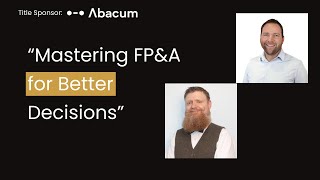
This is a YouTube video titled "The Influence Of FP&A On Business Decision Making with Jon Laudie" created in April 2024. It features a conversational interview between Paul Barnhurst, the host known as the FP&A guy, and John Lahti, a CFO with a background in FP&A and finance. The discussion covers John's career journey, the evolving role of FP&A in strategic business planning, challenges and insights from his CFO experience at Zerorez, and practical advice for FP&A professionals. The content is focused on financial planning and analysis, strategic finance, and operational alignment within organizations.
Great.
FP&A in my mind is a function that is deeply integrated into the strategic planning and the decision making of any organization. There was huge problems to solve and the hunger for models and data to help paint the picture of different outcomes and I kind of fell in love with that and just looked for opportunities to get as much exposure to different areas of the business throughout those roles as I could.
Being your first CFO role, what has the experience been like so far?
I've learned so much until the time I joined and right after I joined.
Meet John Lahti, a finance professional, began his career at an investment banking and financial advisory company specializing in M and A valuations. Later he worked in fpa, eventually working his way up to CFO at Zero Edge. With a sharp eye for detail, John has achieved great success in his career while working for top multinational corporations such as Netflix. In his upcoming video, John will share valuable financial insights gained from his experience on how to effectively manage and guide businesses from both a financial and strategic perspective.
The last two years have really been focused for me on the fundamentals. First, building the right structure for the team. I've always loved the business partnering aspect of what we do in Finance and FP&A and that really continues in the CFO seat. We still come across things that surprise us like oh, we didn't realize how this is or this contract existed.
Foreign is the leading mid market FPA solution trusted by hundreds of companies. To eliminate the spreadsheet struggle, visit Abacom IO today and multiply the impact of your finance team. Hello everyone. Welcome to FP&A tomorrow where we delve into the world of financial planning and analysis, examining its current state and future prospects. I'm your host Paul Barnhurst, AKA the FP and A guy. Each week we are joined by thought leaders, industry experts and practitioners who share their insights and experiences. Whether you're a seasoned professional or just starting your journey in FP&A, this show has something for everyone. Before we introduce this week's guest, I I want to give a special thanks to our title sponsor for this episode, Abacum, whose support makes this episode possible. Now let's delve into the world of FP&A this week. I'm thrilled to welcome to the show John Lottie. John, welcome to the show.
Hey, thanks. Good to be here.
Yeah. Really excited to have you. So, a little bit about John's background. He comes to us from the Salt Lake City metro area. Much like myself, he's currently serving as the CFO at zerorez and he went to school at byu. So John, one of the first questions we like to ask people before we get into the background is in your mind, what does great FP and A look like in the world today?
Yeah, Paul, I think great FP and A in my mind is a function that is deeply integrated into the strategic planning and the decision making of any organization. I think more and more you see teams rebranding as strategic Finance, kind of naming themselves that instead of FP and A. I think that kind of appropriately captures the value that FP&A can and really should be providing to a business. So ultimately, strong trust and partnership is really essential to delivering great FP&A. And I think that enables FP&A to, you know, have a seat at the table and to be consulted, you know, daily and broadly across not only financial outcomes, but also operational outcomes. So I would say great FDA is kind of the body of all of that.
Yeah, I appreciate that. I really agree with you. The strategic, the commercial. Yeah, you're seeing strategic finance use sometimes. I've seen vendors use that as a way to describe their platform, Strategic finance platform instead of an FP and a platform. So curious to get your thoughts on how do you see it changing over the next five years with technology and everything that's coming. Where do you see FP and A going?
Yeah, I think FPA has changed a lot in the last 10 years and a lot in the last three years. And I think it's. It will continue to change, you know, AI I think will continue and great planning tools will continue to kind of take more and more of the day to day reporting and the manual work kind of away and automate that. And I think that ultimately allows FP and A to focus on what it should be great at and what fpa, what great FP and A should be ultimately, which is partnership cross functionally and providing the context and the story and the decision making support really the why behind things. So I see a continued evolution in that regard and I'm actually at the moment intrigued by some of the technology that is coming out that can enable that as we move forward from here. I think there will be some very interesting changes in that regard in the next couple years.
Yeah. And excited to talk a little bit more about that. I think it's amazing what we're seeing technically and how it could change the way we work and how it is changing the way we work, frankly, for many of us.
Yeah, absolutely.
Can you give our audience your background, tell them a little bit about yourself and how you Ended up where you're at today.
Sure. So I started my career at an investment banking and financial advisory firm focused primarily on M and A valuations and privately publicly held companies. It was fascinating role and it gave me a look under the hood early in my career at the consolidated financials of lots of different companies. Yeah, I learned a lot of critical skills, financial modeling, how to see the big picture, financial results, what they look like for a company, how M and A affected those and drove those. I also learned some great technical accounting in that role too as it related to things like goodwill and intangible assets and the other pieces of a transaction that often aren't, you know, considered or thought through as much. So when I left that role, I chose to go in house to a corporate FPA team. So I started there a couple years and then went in house to corporate FPA and I continued to build my career there across different roles in corporate development, investor relations and then corporate fpa, various companies across various industries. I loved getting in house and being able to dig into the details at a more granular level than what I was doing on the advisory side. So, you know, there was huge problems to solve and a hunger for models and data to help paint the picture of different outcomes. And so I kind of fell in love with that and just looked for opportunities to get as much exposure to different areas of the business throughout those roles as I could. A few years ago I was approached about a CFO opportunity for a private equity backed company in the home services industry. Zerorez. And this was somewhat of a departure from industries that I'd been a part of. But I loved who I met on the management team. I loved and felt great partnership between the management team, the company and private equity sponsors. And so I was really excited to stretch myself in some new ways, leverage everything that I had kind of gained through my FPA upbringing, if you will, in those previous roles and put that into a role where I'd have the ability to kind of influence at a greater level. So, you know, here. Here we are.
Well, great. Well, congratulations on that. That's exciting. It's been almost two years now, is that right?
Yeah, coming up on two years here in a few months. So.
So first question I have, this being your first CFO role, what has the experience been like so far? Maybe talk a little bit of how it's been.
Yeah, look, I've learned so much, you know, for, for a bit of background. We were a founder led company until the time I joined. And right after I joined we Brought on a private equity partner, mentioned that before, and they brought with them the company's first meaningful outside investment. So concurrently with that private equity partnership that we brought on, we also acquired 10 other companies in one very complicated transaction. So all of this kind of happened concurrently on one day in 2022. And that significantly increased our size, our financial bulk as an entity. And really a lot of what we've been focused on as a business the last two years has been integration of M and A, building infrastructure to support the new organization. We have the traditional private equity structure with the lenders, the credit agreement, the covenants, and we have to comply there. And we're also really focused on profitable growth as we move forward and ultimately balancing the investment in top line growth and you know, driving ebitda, which is, which is going to be critical for us as we move forward. So that's a bit of kind of like what, what I stepped into and kind of what we're doing as a business. And given the stage of the company and the acquisitions that we did at that time, the legacy finance infrastructure was light relative to what the new organization needed. So the last two years have really been focused for me on the fundamentals first and that's, you know, building the right structure for the team and, and you know, one, one other big area of focus that I spent a lot of time worrying about in my prior roles was I hadn't spent a lot of time clarifying in my prior roles focused on was, was an audit. And, and so coming in, you know, completing the audit was one of the biggest priorities we had coming out of 2022. It was a crazy year from a financial perspective with all the M and A. So the audit process was frankly a bit wild. As a franchise business, we have a regulatory requirement every year to file what's called franchise disclosure documentation or the fdd. And one piece of that is the audit. So the audit gets kind of publicly filed every single year. So we're not a public company, but we do have that requirement where we have to file our financials by a certain date to make that timeline. So bringing together 10 entities into one audit, all on a timeline was, was just a big, big challenge. You know, one other thing, I've spent a lot of time the last two years thinking about that. I didn't realize I would be thinking about technical accounting. I mentioned a little bit, I started my career thinking a little bit about kind of that side of the M and A deals that we were valuing at the time. But you know, purchase accounting Revenue recognition accounting, lease standard accounting, all of these new kind of ASC guidelines that I've been learning a lot about the last two years. So maybe that we'll get into more, I'm sure with some of the next questions. But that's kind of a quick intro to some of the stuff that we've been doing. Some of the stuff I've been thinking about that's frankly quite different than my background was before this. And I've been learning a ton of.
That's good. You've been learning a ton. And I could imagine rolling up 10 companies all at the same time is a lot of work. I mean, I know some of them were priced small, some larger, but they still all have to be integrated regardless of the size.
That's the truth. If only it were easier to integrate something smaller than bigger. It's kind of the same.
Yeah, there's still a lot of the same process and steps. So what's been the biggest surprise since stepping into the role that maybe you weren't expecting?
You know, I think I wasn't expecting it to be as fulfilling as it is to work every single day with the other leaders across the business. And you know, we get into kind of how that parallels to FPA just in general, but everyone as a team, at the executive team level is kind of thinking about what's best for the business, period. And we all have kind of these lanes that we're focused on, right? Focused on the finance, the accounting, delivering the projections and kind of the audit and, and driving good decision making. And marketing is focused on, you know, acquiring new customers. But, but ultimately everyone sits at that table together and says, here's the overarching goal we have as a company and how do I support you? And how do we support each other? And it's been really, it's been really fulfilling to work with them on that. Cross, cross, you know, cross department, cross functionally and just have a lot of collaboration. I've always loved the business partnering aspect of, you know, what we do in Finance and FP&A. And that really continues in the CFO seat. In fact, it even gets more pronounced, like the need for that becomes even bigger. And so I've enjoyed that a lot. I think one other surprise is how many experts it takes to successfully apply GAAP to our financials. I mean, we have partners across tax and audit and technical accounting and international and transfer pricing. It takes a lot of outside support to work through regular day to day stuff. And particularly in an acquisitive environment where you're bringing in new companies and dealing with kind of that aspect. So I was certainly surprised at what that was going to take and I have found really great partners in the last couple years to help fill in those gaps as we're growing.
And that's why I just do cash based accounting. Business of one, nice and easy.
No questioning it, that's for sure.
So you mentioned kind of the surprise of just how much the partnering was there. Is that also kind of been your favorite part, is working with the senior leader so far the role?
Yeah, I think, I think it has. You know, that's been one of my favorite parts. I think another favorite part and perhaps least favorite part, you know, kind of in the same vein is we continue to find, I think every business experiences this. We continue to find kind of legacy issues that need to be resolved. So, you know, an old contract or an old agreement or, you know, you know, something that is a surprise, you know, and you know, two years into kind of post transaction, that big deal we did, you know, we still come across things that, you know, surprise us like, oh, we didn't realize this was how this is or this contract existed. So I would say maybe being surprised is my least favorite thing. I don't think anybody in this, in this field loves surprises. But, but I also think that's, you know, perhaps one of my favorite things is the fact that there's complexity and it's ever changing and evolving and, and we are getting curve balls thrown at us left and right. And I really enjoy solving those kinds of problems and working through those complexities.
So talk a little bit of maybe the framework or process you use to work through one of those surprises like someone drops on your lap, hey, we just found out about this contract and we're obligated to do XYZ or whatever it might be kind of what's your process to work through that surprise?
Yeah, I think that first and foremost it's, it's bring the right people to the table who have the context. You know, I think a contract can get dropped and say one thing and have, you know, a lot of context behind that actually helps you with the interpretation of what does this really mean. So getting with legal, getting with, you know, folks who were involved in the initial conversations, if they're around and if they're not around, getting, getting on the phone with those people who are on the other side of that contract and bringing people together. You know, one thing our CEO talks a lot about here is, you know, you want to have everyone in the same tent and not be on the outside of the tent kind of yelling in or on the inside of the tent yelling out, but rather just inside the tent talking together. And I think that is, that is the number one approach I take, and I've learned that credit that to him is get the people together, sit down and have a conversation and figure out what are the implications of this and what can we do to best abide by what the original intent was of any agreement, while also recognizing and understanding that the business may have changed. And so there's potentially new nuance to the way we need to actually carry it out.
That's a good approach and always a good idea to pull the experts, as you said, into the room versus making our assumptions ourselves. We know what usually happens when we do that. We've all, we've all been there on that front. So it's been a year and a half, almost two years here. Talk how FPA has prepared you for the CF role, maybe how it's prepared you, and maybe some areas where you feel like it didn't prepare you a little bit of both sides there.
Yeah, so. So interestingly, there. There were some times in the beginning of my time in this role where I, I felt like I wasn't remotely prepared for what I was doing. You know, what I knew and had built my career doing was traditional FP and A work. I wasn't doing much of that. And, and I was focused on building accounting infrastructure, getting the right systems in place. And some of that was just nuance. Right. Every company is going to be at a different stage if you're stepping into that CFO seat. And, and the seat that I stepped into, you know, our focus was accounting infrastructure leveling up, getting the right systems in place, getting the right processes and controls in place, hiring a team to support the existing team we had. And, you know, I think, well, I mentioned this before, working through the audit, working through the right outside partners to figure out some of the more complicated gap stuff, onboarding new audit partners, etc. So all of that was new to me outside of my wheelhouse, not directly related to my experience in FP&A. You know, that. That said, I think I look back on the last two years and say I realized that my experience in FP and A actually uniquely positioned me, I think, to be successful in accomplishing those things. You know, I've been able to build a structure and a team focused on the fundamentals because I know what the planning analysis side can do and that I know it can be so Much more impactful when the accounting side is all correct and accurate and set up in a, in a functional way. And so the FB and a North Star of being at the center of every decision making moment and bringing data and analysis to every decision, partnering and influencing the business. Those, all those things, all those have been critical in my ability to be successful over the last year just as a member of you know, the executive team and working with that group but also I think beginning with the end in mind in terms of I have the ability to sort of create an accounting infrastructure that will enable great best in class FP and A. I do think that that has, you know, uniquely helped me over the last year as well. Think about where we're going. So maybe the last thing I'll add here, working with bankers on covenant compliance and private equity sponsors, investors on adjusted ebitda, EBITDA adjustments reporting, you know the, the there's a lot of jokes about adjusted ebitda. Right. But you know, working through the annual budget process, all of those things obviously are still happening and table stakes a little bit for, for the day job here too. So I would say that stuff did prepare me and you know a stronger accounting background would have, would have been helpful to me but I don't think was critical to me being able to find my feet here.
And now. A word from our sponsor, the FP and a process is broken. You know it is and I know it is. Putting together management reports takes forever. There is a growing demand for operational insights and running scenarios or preparing budgets will inevitably break your spreadsheets. It doesn't have to be this way. ABACO is the leading mid market FP and a solution empowering hundreds of finance teams to eliminate their spreadsheet struggle with automated reporting and forecasting. With abacum, finance teams can see every financial and operational KPI in real time, forecast revenue more accurately, build headcount plans, budget their spend more effectively and run any scenario with just one click. Avicum is the most scalable FPA solution for finance teams. If you want to double your output, half your reporting time, forecast your performance and become a strategic partner to your business, visit Avakum IO today. Got it. And so you know it sounds like FPA gave you a real appreciation for how important it was to have clean data, to have the accounting, the systems that infrastructure in place so that you can be a data driven culture that's really helping inform and guide the business. Is that fair to say?
Absolutely, yeah, absolutely. I would even say I put my little flavor and my pitch in as we were working through kind of core values and rebuilding some of that with our new organization in the last year and fought hard to have data driven analysis as kind of like one of our core given we're core core values, we're data driven company. And so I got my little flavor in there and it stuck. So it's now part of who we are, at least on the whiteboard and on the wall. And we're going to strive to live to that every day. But I agree, I think data driven analysis and decisions is core to what I believe and is core to what we will be doing here as a business.
Yeah. And how critical is it to have the right system to be able to be data driven? I mean I've seen companies, we've all been there where data is a mess and you try to be data driven and to me it seems really hard. What's your take now? Kind of really have coming in and how to put some systems in place and probably seen in a number of different companies. How critical is it to get those systems right to be a data driven company?
It is everything right. You can't do it without it. You know, we're fortunate here to have a great in House built CRM that houses a lot of our data operational KPIs. I mean it's rich, rich data that we have for our business. For both, you know, the franchise side as well as kind of our franchisees. We can, we can see their data and help support them by, by analyzing it with them. But that data isn't necessarily easily attained. Right. It lives in these tables. But getting that data out and actually creating insights from it is still a challenge. And we're working on systems right now to improve that and make that easier for the business to get that data, get it trended and pull out the insights accounting data too. You talk about systems on the accounting side and ERP and kind of the evolution from QuickBooks to NetSuite to whatever you may be on the data availability and the ability to slice and pull out what you need is also so critical. We operate a lot of different departments in a lot of different locations around the country and around the world, frankly. And so being able to pull unique P Ls for every single piece of the business and manage them at that level, it's not possible with the wrong system. So. So I do think the investment in tools is just so critical to being able to do what we're talking about.
I agree with you. As I like to say, you get the right people in place, you have a process driven, oriented, constant process improvement type culture. And then if you put technology in with that kind of magic can happen. You need the technology to be an enabler, but you can't look at it to just be your solution.
Absolutely. Yeah, I agree wholeheartedly with that. And I think evolution is real too. Like day one, it's not going to look like that. So like you said, there's get the people in place and then there's get the process, but then the technology to support all of it technology will look like V1 all the way to V700 and we might be at V7 right now. And there's just so much more that can always be done.
Yeah. I've really come to believe for the last decade we've heard a ton of digital transformation and I feel like it's much more a digital evolution. It's not a one time event, it's not really a transformation. We should be constantly improving and figuring out how we drive further on the data and that digital structure. And I think sometimes we think it's just an event. I just got to get past this implementation, then it will all be good or I just got to get past this integration and then it will all work and rarely ever. Is that the case?
No, It's a step one. Right. And there's 10 more after it.
Pretty much always the case. So you know, you mentioned you're at Zerorez. I know that's a franchisor business. Can you talk a little bit about how that model works? Tell our audience kind of a little bit about that structure and maybe what are some of the key metrics that you monitor as a cfo?
Yeah. So you know, franchising is a brand new business model to me. In the last few years I've learned a lot about this. I realize I know infinitely less than most others who've been in the game much longer than me. Sure. But, but sharing kind of a few thoughts. We as the franchisor we aim to sell franchises, franchises to franchisees around the country and now the globe. We were in UK just this last year in Canada, last couple of years, so just getting underway internationally. We then receive as the franchisor royalty back from our franchisees as they grow their business. Basically a percentage of revenue and that pays for, you know, they're essentially paying for their access to the brand and to all of the support functions that we provide as the franchisor to them. You know, a few things that we, we provide to our franchisees and, and always can by the way are aspiring to be better at all of this that, that we do training on the actual zerorez way. You know, how, how do we, what is the ZeroRez system and the process that we, that we go by, what is the way that we represent ourselves in the market? And training on all of that is one very important thing that we do. We provide marketing support to our franchisees quarterly playbook that says here's the campaigns we're going to run and Houston, you should run the same thing that Atlanta is running. And we can align because then the marketing team can create creative assets that are available to everybody that support these campaigns. And so creating alignment and sort of saying here's, here's the playbook for the next quarter brings everybody together versus a lot of people creating independent sort of work and work streams, rather benefiting from the system. So that's, that's another thing that we provide and you know, simple things also like how to set up a chart of accounts and manage your profitability in your accounting system and you know, paint a picture of what others have been able to do in terms of at a million in revenue, this is kind of how you should look in your P and l and at 2 million in revenue this is how you should look in your P and l. And here's 10 data points that sort of support that where others were along this journey. So, so franchising is, is that right? It's all of that together. And we as a franchise or strive to support our franchisees in growing their businesses and in the journey as they build their businesses, as is often the case with some franchisors, certainly is with us. We also have some, some franchises that we operate that are corporate owned. So corporate owned bases if you will, corporate owned locations. And so you know, we also run it in cities that we own. And so we have a fleet of vehicles and we hire technicians, we do marketing to acquire customers on our own. So again, the franchisees are independent business owners. They kind of run in their own stream in their own city where they've acquired their franchise and then we separately are sort of running our own. And that creates this opportunity for learnings that's really unique because we can learn what's working and not working for us and you know, Tulsa, Oklahoma and sort of pass that data and insight along to somebody who's running Oklahoma City and we create this kind of network or this system network effect of learning that we're able to be more impactful in the training that we provide by actually Doing the work as well. So KPIs, it's. What is the revenue growth in our total system? What is the growth rate for each of our franchisees based on their age? 1 year old, 2 year old, 3 year old. We do cohort analysis on kind of the group from 2005 and the group from 2012 and how are they performing. We target our kind of franchisees, who we can help the most in any given year and assign a coach to go and support them. So those are some of the, it's generally a revenue based KPI trend that we're monitoring at the highest level, but we do get well below that and look at some operational KPIs, like how many vehicles are in the fleet, how many technicians do you have? So one ratio is kind of text per text per van. Excuse me, Vans. Yeah, text per van. How many technicians do you have per van in terms of hiring? To make sure we're not over hiring or don't have enough folks marketing metrics around how many jobs are booked? Kind of the leading indicator. And then there's the funnel of, you know, somebody who might cancel or reschedule to ultimately get to how many jobs are completed, job average, which is like, you know, how much revenue per job. We kind of monitor that from from front to back. And maybe the most important one that we, we, we really monitor and push hard every year during our awards and annual conference for our franchisees is this, this NPS score. We really are proud of, of the NPS score. We're in homes every single day, thousands of homes across the country. And you know, we pride ourselves on being a best in class and a different experience for those people who are using our products. So how do we measure that? Well, we, we ask for reviews and surveys from our, from our customers and we strive to be a best in class NPS score. And so I would say on the whole there's a lot I just said I think around KPIs, but we're monitoring on the franchise side certain things and on our corporate owned locations sort of other things. But ultimately it's the same KPIs that everyone's doing when they're running one of our operations.
Yep, got it. And so if I hear that, it feels like on the financial side it's a lot around revenue and just revenue growth cohorts understanding how they're performing corporate franchise from the customer perspective, that NPS is critical. Sounds like that's kind of a North Star for you guys. Are the customers really happy at the end of the day. And then operationally it's, you know, those standard things you'd think about. But in your case, the funnel right from hey, you booked to did we actually get a sell? And what does that look like? And then efficiency. Are our franchisees being efficient so we can give them advice if they're not saying, hey, it looks like you guys have over hired or under hired or help ensure that they're being as efficient and profitable as they can be within, you know, the, the guidance and the, and the industry.
Yeah, absolutely. And, and Paul, like one, one thing that's really interesting. When you're working for, you know, publicly traded company, you're always looking at your comps in the public markets and saying, okay, where, where, where's their sales and marketing as a percentage of revenue and R and D and G and A, and are we in line? And you know, private companies sometimes don't have that luxury of comparing themselves to, you know, comparable companies. But in this franchise system we have our own little, our own little network of this where, you know, we know kind of as a percentage of sales, how much should the technician labor be and how much should this other be? And so really quickly, you know, we can jump on, do a review and say man, you're like four or five points higher than you probably ought to be on this one thing. We see a lot of other folks who are able to do this for XYZ reason, you know, for four points less. So let's, let's revisit the pay plan, let's revisit the how many we're hiring. Right. I think all of that is, is something that's really interesting in the franchise world. That, that support system and that network of people getting together to say here's what I learned and here's how you can benefit from that. Really been interesting.
I bet. You know, so we've talked a lot about the business, you know, operations and leads me to a question I wanted to ask. You know, in your opinion, what are two or three things FPNA professionals can do to be more strategic and operationally focused?
Yeah, I think first, build a relationship with people outside of finance. Go to lunch with a department leader. Ask to join a marketing overview from someone marketing like to learn the tactics behind what they do. I did this once. I have an example of a time when I worked at Ancestry. It was transformational to me in that time in my career. I had a simple 60 minute overview from one of the marketing managers at the company and he taught me the basics of SEM SEO kind of Facebook advertising, content marketing, display advertising, just the very simple this is how we do what we do. And I certainly am not a marketing tactician and will never pretend to be one, but I got the 101 from somebody who's in the practice doing it at the company where I worked. And ultimately that simple knowledge helped me to get a better understanding to put context behind the numbers I was seeing and preparing every single day. So suddenly the CAC analysis and the lifetime value analysis, looking at Google versus Facebook in terms of the cost to acquire the customer and what does that mean in terms of their lifetime value? Suddenly I had so much more context and the understanding around the dollars that were going to the places they were going in the P and L. So you know, first perhaps get outside of finance, build a relationship outside operationally in the business. You know, even outside of just day job doing analysis for them. But like 101, teach me about product marketing or product management or engineering, you know, to some extent teach me about the processes you're using for, for the engineering sprints. I think that's all you know, has a multiplying effect for sure. A second one that comes to mind. Step back and look really big picture and force yourself to do this maybe once a quarter. Just step back and look totally, you know, differently at the business. I think the way to one great way to do that and you wouldn't do this every quarter obviously is, is just build a model of your business as though you were a stock analyst. Lay out the historicals for the last three years and build out the next five years again super high level, five line items on the P and L, R and D sales, marketing, G and A cogs, revenue, you know, EBIT net income, get to a cash flow and sort of say what do I think this business is worth? And, and that simple exercise forces you to think about really at a high level. Where are we going? What do our projections say we're going to be at? Where does the efficiency fall in our P and L and what are the levers like that actually drive value for, for the, for the shareholders, you know and then I think a little buy sell, hold analysis on, on your own company is, is a great way, it's a really great way to be more strategic and, and just have that bigger picture perspective. Yeah, maybe I leave it at that. I don't know if that addresses a couple of points.
Hey there, it's your host, the FPA guy. And today I'm thrilled to talk to you about plan buddies where professionals meet excellence. This isn't just any community. It is a community ran by and for planning professionals. At Plan Buddies we're all about fostering connections, sharing knowledge and providing mentorship among FP and A experts. Ready to elevate your career? Visit plan-beddies.com and become a member today. And here is a special treat. Use the promo code, the FPNDaguy that is the FPNA guy for an exclusive 25% discount on your first year membership. Yeah, no, definitely. That's really helpful. Appreciate that answer. And so I have just a couple more questions and then we're going to move to kind of what we call a rapid fire section. So as cfo, how do you ensure that your different plans are aligned throughout the organization? Right, you have strategic planning, you got financial planning, you have operational planning. And we've all heard about the silos and disconnects. I'm sure you've seen it in your career. So I know you play a critical part in making sure that it's aligned and that everything kind of hangs together. You know, how do you, how do you help ensure that happens across the org?
Yeah, it's, it's a really tricky one and, and I think FPA has to play that role because FP and A has a seat and should, and again as we defined at the very beginning, should have a seat at all of those, in all those conversations to be, to be best in class. So we're a bit early in that at our company right now in terms of the maturity model on fpna, but we look forward to getting further down that curve. As of right now, I think the most effective thing that can be done and that I've seen done and that we're trying to do right now @zerorez is create an annual planning process which is financial in nature but also operational and strategic. And during that journey, creating a three year plan, a ten year plan, kind of a three year plan and then a one year plan that starts the journey to the three year plan. I think then meeting after that is set defining annual goals. Annual kind of what I'll call rocks. Like here's the big things we're going to accomplish for the year. Then stepping into the first quarter and saying okay, Q1, here's the three things that we're going to do that achieve that put us on the path and then Q2 and then Q3 and Q4 and and doing that quarterly with the entire kind of cross functional team together. And when I say entire team, I don't mean every employee but like the leaders of each department. I think we, we have found, and I found that to be the most successful way because everybody's laddering their goals up to the total company goals. And generally that drives people rowing in the same direction. I think there, there are occasionally times when you know, will still think we're rowing in the same direction but somebody's doing something in direct contradiction to somebody else and, and it's going to drive the wrong outcome. And so not only meeting quarterly on those kind of big rocks, here's what we're going to chase and here's what my department's going to do to ladder up to those company ones. But I think then just meeting weekly and checking in, okay, how's my status on this rock and this rock and this rock and talking through what we're running into and challenges we're seeing from the finance side or marketing, representing that from the marketing side or ops and so bringing all of that together kind of at the right cadence weekly forces that alignment to make sure we don't get two months down the road realizing we've both been working on a project that's driving kind of the different outcome. So I think that that organizational structure around just what I'll call strategic planning in general with kind of starting with the long term vision, stepping that down to kind of the three year and then the one year to build to the three year and then stepping down to the quarters to build to the one year and then checking in weekly on the quarters and it requires everyone being at the table to do that. But, but I think that that is effective and that's what we're trying to.
Build really feels like as I hear you talk about it's, it's starting long range and just filtering it down and making sure everybody's involved throughout that process. That needs to be. I get not every employee in the company is going to be strategic and then having really measuring that performance. Right. When you say it that way it's, it sounds so simple right? It start with the big picture and just layer it all in. Get down to whether that's weekly, daily, monthly, whatever your lowest level that you really need to understand at is and then have those conversations, hold people accountable, review the metrics and keep adjusting.
That's absolutely right. And look as FPA evolves at our company, but even at any company, FBA has to play a key role in this process. Right? Modeling out the outcomes, ensuring that those rocks are, you know, that the company's executing against the highest Value outcomes for, for the goal. And FPA is the one who helps ensure that that's happening. And so, you know, I think they, they play a critical role in being the shepherds of that strategic planning process.
I totally agree. I think they're, they're a huge part of that. You know, CFO helps guide that. FPA needs to be there and be involved and in all those processes. If FP and A is just doing a financial process and not the rest, you're going to end up with a lot of, I think, problems and misalignment. I mean, who hasn't been in a meeting where somebody said, I don't recognize that number? Right.
Best kind of meeting.
If you've been in fda, you've been in plenty of those.
Oh yeah, absolutely.
And that's what we want to avoid. So this next section, these are rapid fire. So we want to go through them quickly, get a few seconds to answer on each one. You know, kind of your answer, that may be a sentence of why and we'll run through them and then we're going to move to our get to know you section. So you ready?
Great. Ready.
Which one do you prefer, Google or Excel?
Definitely Excel.
You know, I don't even know why I asked that question with FP and A people, but at least the product people had on the other day. I got some.
You got some Google.
Yep.
I will say Google has transformation. Google has changed the way we do presentations and there is value there, but definitely Excel.
Got it. Do you have any FPA platform you're using today?
Great question. We do not. And that is something we're in the middle of evaluating at the moment. So we're talking to kind of some early stage tools, which is really interesting. I mentioned this kind of earlier seeing what is being developed now. I think in the past I've used Adaptive and Anaplan and IBM planning and analytics and Hyperion and kind of some of those tools. And stepping back earlier into the maturity curve, you look at Mosaic and Data Rails and kind of some of these earlier, earlier stage FP and A tools, it's been really fascinating. Great.
I'm glad you enjoyed it and yeah, we'll look forward to hearing more about that. Where you end up going on that. So next question is, are you guys currently using generative AI?
Not really leveraging this yet. I like that some newer tools incorporate this, but it's not in our day to day.
Got it. Fair enough. What is the number one technical skill that FP&A professionals should master?
Financial modeling Speed in Excel, shortcuts. And I'll also say data manipulation, like big data manipulation in Excel.
Okay, got it. I like that one. That's a good one. What is the number one soft or human skill that they should master?
Building trust and confidence in you as a partner. No ego, just striving for the right outcome for the business, no matter what.
Love it. Great answer. So thank you for those. Now we're going to move to the section we call the get to know you section. So these are a little more kind of personal, so our audience gets to know a little bit more about you. So what's a favorite hobby or passion that you have?
You know, this changes over time, but right now I've recently in the last five years or so gotten really into mountain biking and I moved into a house a few years ago. It's right next to some trails, a trail system, and I love it. I get out on the trails as often as I can and that's been a lot of fun lately.
Any great stories or experiences from these rides you can tell our audience.
I've definitely gone over the handlebars a few times and realized my mortality. So, yeah, keep it. Keep the wheels on the dirt is my motto.
Yeah, I've cracked a helmet before, so I can. I can relate. Always a scary moment when you're looking at it going, that could have been my head.
Yeah. Yeah.
What is one book you would recommend to our audience?
Right now I'm reading Atomic Habits. Love it. I think the mindset shifts that this book recommends can meaningfully change the way that we operate both at home and at work. Love that book.
Great. I've heard great things about it. It's on my two read lists, so I'll have to pick that one up one of these days. Here. What's your favorite travel destination? Where are you going if you can go on a vacation for a week?
Yeah, I love to travel. Perhaps my favorite recent trip and in recent history was going to Puerto Rico with my family over Thanksgiving last year. Close to the beach, very low key, beautiful weather and some great family time always makes a trip a little bit better, at least for me. So that's. That's hard to come by occasion this sometimes. So yeah, I think if I could do a trip again this year in the near future, that's what I'd choose.
Nice. Puerto Rico with the family. That'd be fun if you could have dinner with one person who's alive in the world. So anybody in the world. Who are you picking?
Yeah, this is a Great one. I grew up as a kid in Kansas City and I became a huge Kansas City Chiefs fan. I would love, and I'm not going to say Travis Kelsey or Taylor Swift. I would love to have dinner with Clark Hunt, and he's the CEO of the Kansas City Chiefs. For decades, it felt like as a Chiefs fan growing up, and I mean, for decades, it just felt like there wasn't a lot to cheer for as a, as a Chiefs fan. But the last 10 years have been amazing, and the last five to six in particular. I would love to hear him talk about how he's built that organization and how they, what they attribute their success to in the, in the recent decade.
So I would love to sit down with Andy Reid from that organization, have dinner with him and just hear a story. I know players love to play for him. I think he's rated as the number one coach players want to play for in the league.
Yeah, I think whatever they've done culturally is, is working and it's kind of fascinating, so. And fun when it's your team. So.
Yes, always fun when it's your team. And it's fascinating to see how big of a role culture can play. I don't think we always realize it. Often we forget and think, well, it's just about the systems or the metrics or, you know, the processes or execution and all important. You can't, you know, it's not one or the other, but culture really is a critical component over the long term.
Yeah, absolutely.
So last, last question here before we let you go. If you could offer audience any advice to be a better partner for FP&A. If you could give them one piece of advice, what would it be?
This will probably be a couple things wrapped up into one, but keep an open mind always. And be proactive in bringing solutions to leaders in the business before they ask for it. Or better yet, before they even know that there's an issue to think about. I think if you do this, you'll have people at work who are champions for you for life, and it'll drive significant growth in your, in your career.
Yeah, you said that. I couldn't help but think of something Carl Seidman said one time. He called it one of the best things an FP and a professional can do is learn to anticipate, anticipate where they think the market's going. So you can run those different analysis, anticipating what people need. Right. If you, if one of your employees comes in and hey, I was looking at this, I noticed all this. I put this package together so you could review it without you asking them, how would you respond?
I mean, it's just a game changer that. And that's someone that I want next to me all the time.
Right? That's the guy you're gonna be. All right, I'll tap him to move up. That's someone I want. Or that person, you know, guy, girl, whoever it is.
Yep, absolutely.
All righty. Well, thank you so much for joining us. We'll go ahead and put your LinkedIn profile in the show notes so if anyone wants to reach out to you, they can contact you there. But thanks again for, you know, sparing a few minutes with us today. Really enjoyed chatting with you.
Thanks a lot, Paul. It's great to chat. Always appreciate it.
All right, thanks.
See ya.
Thanks for listening to FP&A tomorrow. If you enjoyed the show, please leave us a five star rating and a review on your podcast platform form of choice. This allows us to continue to bring you great guests from around the globe. As a reminder, you can earn CPE credit by going to earmarkcpe.com, downloading the app, taking a short quiz, and getting your CPE certificate to earn Continuing Education credits for the FPAC certification, take the quiz on earmark and contact me, the show host, for free. Further Details.
More from Paul




Trust and Leadership Lessons for FP&A From 100+ Top Leaders with CFO Jon Laudie






