The Power of Teaching in FP&A to Influence Executives & Bridge Communication Gaps with Carl Seidman
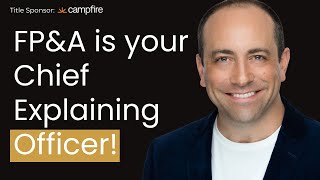
Podcast episode (FP&A Unlocked) hosted by Paul Barnhurst with co-host Glenn Snyder and guest Carl Seidman. The conversation reframes FP&A work as inherently pedagogical—finance professionals must teach and influence business partners, corporate staff, and executives by translating financial implications of operational choices. The episode covers early-career shifts from task-doer to teacher, practical techniques for teaching (start with the key points, avoid jargon/acronyms, check comprehension), cues to gauge audience understanding, and the mutual learning benefit of teaching.
If you can't figure out how to bring people along with you, you will never go anywhere in your career.
We need to do that teaching of what are the financial implications from all of these other non financial activities?
How do we make sure we're teaching in a way that the business can understand?
I think it's a great point and one of the first things I'm going to say is be aware of when.
You'Re using.
Meet Carl Seidman, the expert behind the FP and a training trusted by Deloitte, Spotify and Cigna.
With 100,000 learners and a 40% return rate, he's redefining finance leadership one strategy at a time.
I was working at a large company and the CFO gave me a project I had no business doing. That's what got me into FP&A. I loved solving problems.
If you are not able to simplify what you've done over the last few months into a 20 minute deliverable, you probably don't know what you did well enough.
So you want to share a little bit of your thoughts of how the idea of FP&A as a teacher came.
About for from a financial perspective, you have to be able to explain what's going on throughout the business that's ultimately.
Are you tired of being seen as just a spreadsheet person? Will others get a seat at the table? Well then. Welcome to FP&A Unlocked, where finance meets strategy. I'm your host, Paul Barnhurst, the FPA guy and this week I'm joined by my co host, Glenn Snyder. Glenn, Glenn, welcome back to the show.
Thanks Paul. Always a pleasure to be here.
Always great to have you here with me, Glenn. Each week we bring you conversations and practical advice from thought leaders, industry experts and practitioners who are reshaping the role of FP&A in today's business world. Together, we'll uncover the strategies and experiences that separate good FP&A professionals from great ones, helping you elevate your career and drive strategic impact. Speaking of strategic impact, our title sponsor is Campfire, the ERP that's helping modern finance teams close fast and scale faster. Today's guest is someone who's earned that coveted seat at the table. I'm excited to welcome Carl Seidman. Carl, welcome to the show.
Thank you so much, Paul. Thanks for having me.
Great to have you. And this week we're going to do something a little different. We're not going to ask the standard questions. Carl's gone through those before. Glenn's gone through some of those and we always have an episode, but this episode we're really going to have a roundtable discussion on how FPA often has to be a teacher and how it could be a better teacher. But before we do that, we'll give Carl a minute to introduce himself to the audience. For those who don't know who he is.
Yeah.
Thank you, Paul. Thank you, Glenn. So, Carl Seidman, based outside of Chicago. I've been doing management consulting, FPA advisory work, and fractional CFO services for upwards of two decades. I work with small and mid sized companies as it relates to helping them build out their FP and A functionality, processes and people. And then I also work with mid sized Companies and Fortune 5000 in developing the REPP and 18.
Why don't we get started? And you know, Glenn, I know you're one who came up with the idea for this topic as we were trying to pick something. So you want to share a little bit of your thoughts of how the idea of FPA as a teacher came about. Maybe we could start there.
Yeah, you know, part of it was, you know, just chatting with Carl. We were at an event together and he was telling me that he's doing a little teaching over at Rice University. And you know, I'm doing a little bit of teaching at UCLA and had in the past also at San Francisco State. And Paul, you do some teach, you do a lot of different courses and so on. And you know, so I was thinking, God, you know what, there's something natural about what we do in FP and A that makes us teachers, that makes us want to teach. And there are certain threads, as I was thinking about, kind of went through my career, about how you have to teach business partners or teach people over in accounting about the business, or teach people in the business about accounting. You're teaching the CFOs really kind of how the whole thing needs to work sometimes. And just kind of an interesting thought that was like, you know what, as you go through and progress through FP&A, you become more and more of a teacher. And it's not a skill set that people normally think about, especially when they think about finance people, but it is something that I think maybe makes us a little unique in FPA in that we not only have to think about, you know, how do we solve the problems, but how do we also teach it to other people. So there you go. Hence a podcast is born.
I like it. This should be a lot of fun. Carl, when you hear that term FP and A as a teacher kind of what comes to mind to you, what are your thoughts?
Yeah, I don't think I had actually thought about it before Glenn brought this up and I think I fully agree with him in that in FP and A it's often how do we explain what is taking place? And even though it might be driven by finance, ultimately when we think about financial results or financial performance, it's as a lagging indicator or result of everything else that's taking place in a company. So it ultimately hits financial statements as a result of sales and purchasing and manufacturing, marketing and everything else. And so I think to Glenn's point is if you are almost like chief explaining officer from a financial perspective, you have to be able to explain what's going on throughout the business that's ultimately hitting the financials and then also forward looking is if we're going to be making projections, what is likely to transpire outside of finance to give us these financial results. So again, I don't know that I'd really actively thought about it the way that Glenn brought up, but I think it is very natural for people in FP and A to be like your chief explainers as to what's going on in the business. Why, what are we going to do about it?
Like you, Carl, when you first listen to the topic and I thought the same thing I'd like, I never thought of it that way. You know, I've always thought of myself as a teacher in my life. But that's because I was a Boy Scout leader for a decade and you're teaching kids and I had, you know, I teach a class at church and those type of things, teaching. I didn't think of the FP and a job I had as a teacher.
Right.
I've never had a guest say when I ask them, hey, what's the top skill you need? You need to be a good teacher, you know, soft skill or what do you need to be a better business partner? They may see you need to be able to explain things, speak the business's language, but nobody ever says teacher. I just thought it was really fascinating when you brought it up, Glenn. I think you made both Carl and I step back and think a little bit in a way we hadn't. So thank you for that.
The many angles of FP and A. Right. But you know, one of the things that I always thought whenever I've been in a FP and A role, I would go down, I would talk to somebody from accounting or from HR and I'd realized they didn't understand the business that the company was in because they weren't interacting directly oftentimes with people in operations or marketing or in sales. But FP&A does that. So I ended up having to teach them about the business. And then when I would go out and be supporting marketing or sales, they had no idea how accruals were done or why financials looked the way they did or what the right approach was to get a new contract approved and legal or whatever. And I ended up having to teach the business people about the corporate side of the business. And it just became one of those natural things. It's like, wait a second. I liked Carl's new term of a CEO, Chief Explaining Officer. But it was one of those things that's like, wait a second. You know, what we do is we gain knowledge from what we do. We observe and we analyze the business and then we go and teach it to other people so that then they understand it and can do their jobs better. And then the funny part of this is that there's also the teaching up, if you will, kind of like managing up where I can't think of how many times I've been in front of my boss who was a CFO and had to teach them about, well, no, we don't really want to do it that way. And here's why, and here's what's really going on in the business. Because we see things at a different level than they would see it. And it's just there's so much information, data that we have, but if we just sit on it, that doesn't help anybody. So what we should be doing is teaching it to others.
Thoughts. What does that mean early in the career? Right. An analyst. I'm sure people, when they start their current FP and A, none of them think the thing they need to think about is teaching. So maybe I'd love to get some thoughts of what do you think that means for maybe somebody those first few years early in their career? How should they think about this whole idea of teaching? Carl, your thoughts?
I remember when I left grad school and I first started working in consulting. I think I had a set of expectations that was like, I'm going to have a boss or I'm going to have a manager. They're going to tell me what to do, I'm going to go through those tasks, I'm going to complete it, I'm going to email it, and then I'm done. And that was somewhat true in those first one to two years. But even on some of my performance evaluations that I really took to heart was my managers and directors and even partners were writing. Carl needs to think about the big picture and how what he does connects to other people. It was just out of pure ignorance in my youth of saying, oh, I'm just going to take orders, I'm going to do the orders, I'm going to give it to somebody else and they're going to take it going forward. And they were like, no, no, no, you better start thinking about how what you're doing connects, why it's meaningful, and how you can help support other people outside of the tasks that you've been given. And so I think for young people who are starting out, yes, you have to get your, you know, foundational financial and accounting acumen buttoned up. You need to get your basic analysis done. But I hate to say this, I've gone into some, some training clients of mine where I've been with people who've gotten their MBAs. They are probably 10 plus years into their career, and they'll pull me aside and they'll say, carl, I really hate to say this, but I struggle to understand why my manager, why my director is asking me to do things that they are. I feel like I should know, but I'm too embarrassed to ask. And it's this lack of thoughtfulness of how what you're doing actually matters outside of yourself. And are you thinking about the, you know, kind of less clear, more abstract, more nuanced parts of your job, or are you just doing the tasks that you're being told to do? What's interesting, even going back to Glenn's commentary earlier, I teach grad school at Rice University, and my students, they're not an undergrad anymore, they're in grad school. And I challenge them to ask these very subjective questions. I'll get on calls with them and they'll say, well, so you're looking for this answer, right? And I'm like, there is no right answer. There is no wrong answer. It's just your answer. And it makes them extremely uncomfortable where they're saying, well, wait a second, there should be a right and wrong. That's how it was in undergrad. I did multiple choice questions. You're either right or wrong. And I'm like, not always. And so you really do have to challenge people to think about what they're doing, why it matters, who it matters to, where are the risks in their work, rather than just being doers. And I think that's very difficult for a lot of young people to Grasp.
I think the challenge for me, and I'd love to know for you, Glenn, kind of earlier in your career was, and even as I got a little more seasoned, I'm extremely detailed. And so for me, as I wanted to tell that person everything about the details. And the quickest way to lose somebody that's not a good way to teach somebody is, hey, let me give you all the minutia that I just spent 12 hours with. And so I think for me, it was the tending to over explain and thinking they needed to know everything I've done in my whole process. And so as you hear that term teacher, I think sometimes analysts, we tend to be detailed by. By nature as analysts. We love numbers, we love digging into it is a huge part of that teaching is learning. Now, what do I share from that? What's important? How do I explain it to somebody at the level they need to do their job, not the level I needed to do my job? And they're very different. And that took me the longest time to understand. And I still sometimes struggle with that, where it's like, okay, stop. I don't care about all those details. Get to the point. And I think that's a big part too, kind of in that whole teaching, little different angle. But was hard for me, Glenn, early.
In my career, my story is kind of right in between your two stories, and it hits on kind of on both parts. I was working at a large company, and the CFO gave me a project I had no business doing. But the thing I love to do was solve problems. That's what got me into FP&A. I loved solving problems. And so the problem I had to solve was go into the IT group and figure out how to allocate the cost of all the systems out to the users of those systems throughout the company. And so I was like, okay, I could go and do this. I put my model together, I'm interviewing all the people in IT about what they do. I get all my data and I put together a solution I think is really cool. And I go back to the CFO and the chief technology officer and I present my results back to them. And it's nice presentation and everything. And the CFO says to me, you came up with a solution better than anything we thought we could do, but you failed miserably. Now, I know that my jaw didn't actually hit the table at that time, but there was certainly a thunk that I heard in my head.
There was the mental.
And I was like, huh? What do you mean? I solved the problem. And he said, you went over and you got all your data, but you didn't explain what you were doing as you were doing it. So it became a black box to all the people in it. You freaked them out. And now they're going to go and create their own solution. That's going to only be 50% of what you actually solved, but theirs is going to go through because they're going to have the buy in. Then the CFO says to me, if you can't figure out how to bring people along with you, you will never go anywhere in your career. And it was an inflection point for me, and he was 100% correct. But it was the same thing, kind of, Carl, I think what you went through, which was, hey, I'm here to solve the problem, I'm going to go and do my model, I'm going to go and create this. I was in all the detail, very much like you were, Paul. And the failure was I didn't recognize that it wasn't just about the solution. It was about the people that I was impacting with the solution and were they comfortable with that solution. It was very, very quickly that I realized that I had to pivot and recognize that I might know the answer, but that's not good enough. I have to teach other people where I'm at and how I got there so that they could be in the same space that I'm in.
I see you nodding your head a lot, Carl. Thoughts there?
I agree. I, I'm nodding because it resonates with me. And, you know, I think back to earlier parts of my career. I think back to, you know, younger people who I've overseen. I, I think to my students. And, you know, there are some people who are so thorough at their jobs in the doing. And to Glenn's point, it's like, you can do a phenomenal job and you're deliverable, but if you're not influencing, if you're not resonating, if you're not collaborating, you know, you're by yourself. And I think, you know, I think back to the earlier parts of my career and I, and I challenge my students, I challenge my, my training groups the same way. I'm like, if you are not able to simplify what you've done over the last few months into a 20 minute deliverable, maybe even a 10 minute deliverable, you probably don't know what you did well enough, or you just don't realize what parts are most important, what parts are nice to know. And what parts do you just leave out? And so I sometimes share with people. You know, when you're doing a presentation or deliverable or you're running a meeting, think about it almost like it's an upside down tree, right? So if you think about a tree, it starts on the bottom with the trunk, it goes up to the main branches, then it goes out to the twigs and then the leaves. But if you invert it and you say, well, let me actually start with the trunk, let me start with the key points and then let me diverge into the few other major points. But I'm not going to go down the twigs and I'm not going to go into the leaves unless I absolutely need to, or unless Glenn or Paul or somebody else in the room says I want to go down that direction. And then I manage the flow of the conversation. The reason why I think it can be so difficult, especially for young people, is they want to show what they've done. They want to show how proud they are of the analysis that they have spent so much time, energy, blood, sweat and tears on. And I'm saying you only have 20 minutes. Get rid of everything that you've spent the last three months on. All that detail. Just tell me what we need to know, what's most important and what else needs to say aside. That can be very difficult.
It can for sure, yeah.
In fact, actually, Carl, I would add it comes down to one thing. When you're presenting, know your audience, what is it that they need to have? Not about.
It's not about you, it's about them.
Right? How about you as the presenter saying, here's what I want to say. It's about, here's what they need to hear. And the best presenters present to the audience. Not this is. I'm going to tell you what I.
Want to tell you, Glenn, going back to what you said earlier in our conversation is if you adopt the role of a teacher, of this is what not. I want you to know, this is what I believe you need to know. I'm going to teach you about this versus I'm going to talk at you. It creates a very different dynamic.
I remember early in my career, as you guys were talking, one thing you mentioned, especially your example, Glenn, is the whole idea of influencing, right? You gotta influence people. And I think there's a lot of overlap between teaching and influencing. Obviously there's. They're separate. You're not always influencing when you're teaching or vice versa. But it just reminded me early in my career, it's like, well, I'm smart and I know I've done good work on this. And so everybody will just see it my way instead of really teaching and influencing and bringing them along. When they look at you like, oh, that's nice, now go back to your corner. And you're like, what did I do wrong? And it's like, you didn't influence, you didn't teach. You just thought, well, I've done the analysis. My boss agrees, so everybody will agree with me. And just not the way the world works, even if we want it to work that way.
In fact, actually, I've had many times my career where I was like, oh, I know this answer. I got it. And I was like, so excited. Go and share the information I had. And then it was the wrong answer. Does my boss or someone else say, well, let me tell you what you don't know, and that's part of it is that I Oftentimes we are so excited when we are young, you know, to Carl's point of, hey, I want to get out and show people what I can do. That you don't realize that you might only be seeing a portion of the picture. And that's one of the things is as you develop in your career and as you know in your career at fpa, that you start seeing a bigger picture because you're exposed to a broader part of the company. And when you go over and you're focused at the earlier in your career, one aspect of a company, you're only seeing that one aspect. But the company is an organism in a way. It's like different parts work together in order for the company to go. And you might not be seeing, you know, you might be over in the liver section, but the heart's doing something too, that has an impact and you might not be aware of it.
I want to kind of switch gears a little bit. And now let's talk about. So we've talked kind of early career quite a bit. Let's talk about who some of the people are we need to teach in the business. Then loving to get some of your thoughts of how you think about how it needs to be different. Because as we learn, anyone who's done a lot of teaching and we just all talked about, right, you got to think about your audience. So maybe, Glenn, what are your thoughts? Who are the. Would you say probably the two or three biggest groups we typically have to teach in FP and A. I think.
It comes down to business partners, corporate staff who don't have any access to the Business. And because you got FP and A is that liaison between the two oftentimes and then the executives. And a lot of times you don't think about, you know, hey, I gotta go teach the executives. But to me that's almost the most important one because they're the ones who you are influencing. You know, you're trying to influence their decisions with your analysis. And oftentimes they are sitting at such a high level, they don't necessarily know what's going on underneath. And they could make a decision about something because it seems like it's the right strategy, strategic direction, but makes a mess out of the rest of the company because they're not aware. And that is something that is, I think, unique to FPA is that we have a way of seeing the entire company at both a detailed level and a big picture. And we could connect dots for people when they're missing it. And I've just found, you know, as I developed in my career and I got to kind of the director, then vice president level, I spent more time teaching the CFO or CEO of what was going on because they were just too much into the clouds and didn't really see what was going on ground level. And they knew the business, they knew the industry, all of that stuff, but they didn't know, well, you know, what if this, if you go down this path, well, we're going to need to rebuild this entire system over here. And you know, or if you go over and do that reorg. Well, now you got three different people in the company doing the exact same thing and just because they don't see it at that level. So to me, those are the three main constituents. I think that we end up teaching too. But I think it's sometimes it's that executive one which we don't really think about teaching because we always think they know more than us, look at where they are. But sometimes that's the most important one.
And now a brief message from our sponsor. Campfire built a best in class AI native ERP designed for modern finance and accounting teams. With Campfire, you can automate revenue, streamline your close and centralize accounting all in one unified platform. And now they've hosted Finance Forward, a first of its kind AI summit in San Francisco. They brought together the sharpest minds in finance and operations, all focused on how to actually use AI to move the needle. You don't even have to travel to learn the, the tactical skills to put your team ahead. You can stream the whole thing on demand, totally free, anytime after the event. So if you're ready to get tactical about AI and finance, head to Campfire AI and register for the on demand content for free. That's Campfire, where finance teams go to think forward. Carl, your thoughts on that? Is it kind of as the three groups you'd think of or how do you think about it?
I probably think about a little differently. I think that one area that I think is very underserved, that FPA is instrumental in in supporting are those that are in leadership positions, maybe outside of the executive group, but in leadership positions outside of finance. So you know, listening to Glenn's explanation, it made me think about a, probably about a $2 billion manufacturing company I was with last year. And I was actually brought in by the FPA team to mainly support, inspire and teach the non financial leadership at this company. And it's sometimes a little awkward because I'm like, well why don't you do it right? You're FP and A, you should be teaching these people how to do what you're asking me to do. And you know, even though I'm an outside third party, impartial, no politics here and I can help bridge that difference. Sometimes it's just being effective at articulating how you want people to be showing up and how you want them to be thinking. And what I experienced there was there were a lot of very experienced non financial leaders and this was an organization that you know, was doing well, but probably could have done a whole lot better financial performance wise. And a lot of these non financial business partners didn't really understand why the company wasn't doing well financially. Again, I was like, well why, why is FP and A not communicating this? Why is this not clear? And it wasn't until I started to articulate and quite literally physically and visually demonstrate how certain operational assumptions and choices that these non financial business partners would be making, how it impacts the financials of the business. And there were people in that audience who were like, in the 20, 25 plus years that I've been here, I have never thought about my job that way. And sometimes I should say it, it doesn't surprise me because I've seen lots of companies, but it still always surprises me that you can have a company that is that large, that's that successful, where a lot of people are like, we have lots of data, lots of finance, but we are not a data driven organization. And I also cannot see the financial implications of my choices on profitability, on, on cash flow, on costs and more. And so from an FPA standpoint, I just strongly believe of we need to do that teaching. Credit to Glenn. We need to do that teaching of what are the financial implications from all of these other non financial activities. And then also just on the flip side real quick is you've got again, you've got FP and A, people who don't thoroughly understand the operations side. And so you have two completely separate groups that need to be working together. It's the whole essence of what FP and A is. But finance is finance, OPS is ops. They're not talking to each other, they're not talking to each other directly and they don't know the implications of the choices.
There's two things I want to comment on that you said there. First is the whole operations idea. We also have to need to be that learner. We need to be humble and willing to truly go learn and let operations teach us. Right? Yes, FP and A often teaches, but if we don't learn, we're going to fail. Bottom line, it's not a one way street here. And the second, as you were sharing that, you know, your example of a company reminded me working for a company and we had one of the businesses that the numbers were awful. We had had over a two year period, we'd lost like 30% of our customers, you know, just not a good situation. It was continuing. We had a product that we couldn't get to market. We tried, failed, tried failed. And I go to the product team, the product manager is like, could you come in and talk about, you know, kind of give them an idea of where we're at financially, what's going on in the business. And these were just, you know, the regular product, you know, an engineer, developer, product manager, whatever, not leaders. There might have been some directors in there, but managers, junior analysts, whatever, and they got done. A lot of them came to me. I had no idea, didn't realize how much, you know, my decisions are impacting the business and how difficult of a situation we're in. And it was just kind of shocking to me. One like, isn't that kind of leadership to be doing that? But it also helped me realize how much of a difference we can make when we really take the time to explain and teach and help people realize the implications of what they're doing. Like you said, people's like, oh, I never realized if I do this that could have a material impact on our financials.
Agree. And I think that sometimes it truly is ignorance of somebody who's not really thinking about it, but sometimes it's just a classic cliche. I don't know what I don't know. I've never thought about it this way before. And you know, credit back to Glenn is we have, I think, a duty and responsibility to challenge people to think in ways that they haven't thought of before. Because it's easy to just say, I've just done things the way I've done it. I don't know another way. I've never worked at another company to see anything different. And so if we adopt this mentality of let me teach you, let me show you, let me illuminate what you might not be thinking about. And if we do it in a very non judgmental, non jerk, non shameful way, we're positioning ourselves as an educational partner rather than somebody who is putting somebody in their place and not getting the buy in from them that we need.
In fact, actually, I think that last point is a very good one, Carl, because I've done this early in my career and it's made a mess out of my relationships where sometimes that's like, oh no, that's not right. Let me show you what is right. And that's not a good approach. When you step back and you say, wait a second, let me play a teacher rather than trying to be the person who is just going to get us to the right point. But to say, no, I want to teach you so that you understand, you remove all that judgment and now you go forward and you say, wait a second, let's talk about how we get everybody to this point so that we're all better off. And it's, you know, sometimes it's actually funny. One of the, one of the things I always like to tell people is if you want to be a good manager, if you want to be a good teacher, you got to take your ego out of it. Not about you. And we said that before, it's not about you, it's about the other person. And you know, there, it's funny, it's just, you know, through all of these things about whether you are talking about teaching or presenting or just business partnering or whatever it is, there are certain underlying themes which is very simple, is you do the best for the people you are there to help and make it about them and help them get to where they need to be and you're going to be successful.
Let's talk a little bit. I'd love to discuss the idea. I think finance, we have a lot of finance jargon. How do we make sure we're teaching in a way that the business understands, because I know. And I'll give a prime example. I thought I was explaining something. Well, I'd gone into the doctor's office, and I was actually wearing my EBITDA hat, which I usually just wear for events. I just thrown it on because I'm a hats person. And the doctor looked at me, goes, what's ebitda? And I explained it to him and. And I thought I had done a good job. And he said back to him, he goes, you're speaking doctor to the doctor. And I was like, all right, obviously I've failed. And it was a really good teaching moment for me to remind me that sometimes we think it's easy to explain finance concepts because we live with them every day, but it's not. So maybe we'll start with you, Glenn. With that kind of backdrop, how do we make sure we're teaching it in a way that the business can understand? Because we live it every day. Those finance terms, the first thing I'm.
Going to say is get rid of the acronyms. Be aware of when you're using acronyms, because if someone doesn't know what that acronym means, and you just keep going, you have just lost them for the entire conversation. They cannot understand because they just don't. It might as well speak to them in like, Swahili or something. Just. They're just not going to get it. So make sure you're not going in using certain acronyms. The other thing is, and I. This is something about when I first started teaching at San Francisco State, I realized I never wanted to teach to the. To the lowest level. But you can't teach the highest level either. You can't go in there assuming that people are going to know certain things. And you got to find what that right medium is to say, look, if you really don't know anything, okay, you're going to follow that up. You're going to probably ask me some additional questions, and I'll recognize and I'll. I'll take it down a level. But you need to go in there thinking, what is the level that these people really probably do understand? Not where they should understand, but where do they understand and meet them at their level. Too often, I think we get caught up in the way we think about things, and it's so clear to us because we're in that every single day, but these people aren't that we're talking to. And so you have to take a step back and say, hey, look, you know, if you're going to go and talk to some, you know, rocket scientist at NASA and they're trying to explain, you know, how they're going to get to the moon. Chances are a finance person is not going to go over and be like, oh, yeah, I figured, you know, I'll be able to follow that conversation. You're going to want them to say, well, take a step back, hold on, how did you get the rocket off the ground first? What's going on? Right? And so you need to do the same thing from finance. You got to recognize that you're in a career and you have a specialty and not everybody has that same level of knowledge. And you got to just, again, put yourself in their shoes and think, where really are they? And speak at that level, not the one that you want to speak at.
I don't have a whole lot more to add, but I would echo the sentiment about, you know, acronyms. I was just with my grad students a few weeks ago and I kept saying erp. And then I realized I wasn't getting, you know, I try to pay attention to people's body language and to their eyes. And I started to notice that some of these students were looking at me glossy eyed, and I'm like, does anybody here know what ERP stands for? And I didn't do it in a jerk way of judgment of, oh, you should all know what this is. It's, I'm using the term erp. Do, do any of you know what this is? And there were a couple of students who raised their hand and I had them explain it instead of me so that everybody's on the same page. And then just the last piece that I would add is, you know, I think Glenn's right, is it's, it's easy for us to, you know, try to connect with the highest level because maybe that's the level that we're at and that's where we can resonate most. But we need to take a step back and perhaps be a little bit more humble and realize that there are going to be lots of people who just do not understand the technical realm that we're in. So we have to have that awareness. And then the last piece that I would add, not always the case, but I would ask the question, why are people using so much complexity in the first place? Is it for their ego? Is it because they're not effective at communicating? Is it because they're not sure what they're doing and they're in some ways intentionally confusing people? Is it all of the above? And so I think that some of that both situational as well as internal awareness is really important to be able to meet our audiences where they are.
And if I could add one thing to that, Carl, because 100% correct. And I was thinking back as you were talking about a situation, I was at a company, a pretty large company, and I was being asked to go over some financial results around with a marketing department, and I would talk about how marketing was spending money and the impact on that company's P and L. And this woman who was sitting at the table and she's like, I don't understand. What do you mean? What? We're not an expense to the company. And I had to step back for a second. I'm like, wait, wait, hold on. Did she just ask what I thought? She just. No, no, no, no. She and I, before I said anything, her boss stepped in and said, well, you know, the company pays your salary. The company is paying rent in the building you were sitting in. These are all expenses to the company. And I was like, how did somebody, you know, my. My first reaction was, okay, this person is 15, 20 years into their career and they're pretty successful at what they're doing. How could they not know that? But that's the thing, is it wasn't their job to know that. They never had exposure to that. So it's not that there was anything wrong. You know, should she have known? Maybe not. But we got to recognize that not everybody has had our background and our skill set and they were just exposed to something different.
And now a brief message from our sponsor. Is your AI thinking like a generalist or like a finance leader? Here's the thing. Most large language models weren't built for finance. They're trained on everything from Reddit threads to recipe blogs. So when you plug them into your accounting workflows, the results can be, let's just say, not balance sheet accurate. That's why Campfire, the company pioneering AI native ERP just made a huge move. They've raised a 6035 million Series B co led by Excel and Ribbit, bringing their total to 100 million raised in just 12 weeks. And they're putting that momentum to work with Lam the Large Accounting Model. It's a proprietary AI trained specifically for finance and accounting, already hitting 95% accuracy on accounting tasks. That's redefining what else ERP can do for modern finance teams. Unicorn companies like Posthog and Replit are already using Campfire to automate their finance operations and seeing real results. You can see it for yourself. Sign up for a live demo of Lam at Campfire AI. That's Campfire AI. I think you make a lot of good points. Don't use acronyms and things, but something you mentioned, Carl, that I think is important. Would love to dig into just a little bit to give some advice to people. How do you notice when your audience is not learning? How do you make sure what are some of those cues and signs? Especially when you're early in your career, a lot of people haven't presented much. It's really hard to notice, oh, I just went way over the head of that vp or these five people over there are half asleep. Whatever it might be to know that, okay, I need to dial it back, I need to adjust. So I think the first is what are some signs or tips or things you would recommend people to really be able to kind of gauge the room as you're teaching difficult concepts and make sure that you're not losing everybody.
Yeah. I might segment this into two different ways. Is one is, you know, actual FP and a work within a company or with a client. And then the second was. Would be actually in a formal educational environment.
Yep.
Now there's tons of overlap. But let me begin with the actual learning environment. First is what I tend to do in my own teaching style is I tend to be very aware of when, let's just say somebody's brain is almost like a glass and this water level starts to go up here. And when that starts to get too full, people's brains are not going to be retaining or taking more. It's our responsibility to change the tone, the pace, the environment, create some state changes where we pause, we refresh, we, you know, summarize what's happening. We often say, let me hit pause. I mean, this is my style where I say, let me just hit pause. I want to make sure that everyone is on the same page and understanding where we are or understanding what I've just gone through, through. So rather than continuing to overflow the glass where people are like, I'm so far behind or I'm so overwhelmed, I don't even know what questions to ask. I stop before we even get there. Another key strategy that I use that is both in a learning environment as well as in a corporate environment is I ask people in a very non judgmental, non shameful kind of a way is I ask them to paraphrase or summarize or reframe what they have just heard or what they have just learned in their own words. So rather than them regurgitate What I have said is I might say, you know, Paul, how are you interpreting this? How are you understanding what we have just covered? What are some of your reflections on what we've just done? And so it becomes a little bit more of a back and forth discussion rather than me standing in front of a room and speaking at people, we're speaking among each other. And I want to make sure that, look, I have no ego in this activity. This is not about me being an effective teacher, me being proud of what I've just done. It's my success is based upon your comprehension. And if you're not comprehending, I have not done a good job. And so I need to make sure that we stop at various points that the engagement is where I need it to be. The people are not overwhelmed with having too much information. And then when they frame it in their words, then that in fact does support that they have comprehended what we're talking about.
You know, when I've done teaching I do something very similar. So I 100% agree with you. I think sometimes though, in a corporate environment that can be kind of tough, especially if you are teaching to people who are higher level than you. You don't really want to stop your presentation. Let me pause. How does that resonate with you? You know, all of a sudden the executives be like, really move on. And so part of that too, some other cues that I pick up on is number one, how much are people looking at their phone. If they're looking at their phone, they're not listening to you and they're not looking at the deck. And then the other thing is eye contact, you know, are they looking around doing other things or are they engaged in looking at you? And I takes a very similar approach to a Carl Said, but I change it in a different way for more of a corporate meeting where instead I'm going to say, you know, at this point I was trying to think there are a couple different things. What do you think? And it would be more of an open ended question about the topic which immediately when you start even just asking a general question like that everybody's afraid to be called on in a meeting and they're not paying attention, especially in a corporate environment. And so just by saying so what do you think? And just leave it open ended, everyone's immediately going to put their phone down and perk up because they don't want to be the person, you know, like, well, what do you. Oh, I don't know, I wasn't listening to you. Right. No one wants to hear that. So usually doing something like that to just engage the audience a little bit, I think is helpful. Another thing that you want to look out for, and maybe this is dating me a little bit, but back when you used to give actual printouts, if you guys remember, right, you go into a meeting and you. You might have your. You might your deck up on the screen, but everyone will also have a printout. And one of the things I always looked for was who kept on flipping pages when I wasn't there. You know, we're on one page and they're flipping ahead. They're not paying attention to what I'm saying. They're not, you know, they're thinking, oh, I already know this. I'm moving on. What's coming next? And I always want to pull people back when that happens. And the reason is, is that although you sometimes you recognize, hey, you know, maybe I'm going too slow. I need to pick up pace here. But at other times, you want to say, look, hey, you know what? I want to bring you back to this page because I think this is a really important thing. They want to make sure everybody gets. And so you got to sometimes look at those physical cues. It's a lot harder when everybody's on video because you can't see their hands. And you also can't see, you know, you might see people, oh, I'm going to look off over here to the side, because they're reading something on their other monitor. You got to be careful about that. And you always want to go over and encourage people to be on camera. And because the second they're not on camera, you know, that they're, you know, probably doing something else. Multitasking. The other thing is, I had a boss, and this was one of the funniest things I've ever heard. You guys remember the movie up, right? And the dogs, whatever, they squirrel, and they immediately go and look at something. And my old boss went over, anytime someone sent her an im, it was, oh, I got a squirrel. I got to go look at that. And her attention immediately went away. And so sometimes you can also start a meeting by saying, hey, guys, you know what? Let's all try and be present for the next 30 minutes. Let's, you know, shut down, you know, the IM tool, whatever you're using. Let's make sure everybody's on camera. And you just ask people to engage up front. And most people will be like, yep, okay, this.
I get it.
I'm here. I'm being paid to be in this Meeting. I gotta be present for it.
I love the squirrel example. Cause I definitely use that one sometimes. And I'm guilty of it sometimes when it's like, someone, something like squirrel over here.
Yeah, exactly.
Why don't we do this? I only just have a minute or two left. Just give any, you know, kind of 30 seconds, last thoughts, and then I'm just going to ask one fun personal question to kind of throw a little bit of fun here before we wrap up. So, Carl, any last advice or thoughts from you?
I think it comes to teaching, one big contrast from where I am today in my career versus where I was two decades ago is two decades ago I had this, I'm going to just say an insecurity of feeling like I had to have all the answers and I had to be right. And I think part of the value of teaching is it teaches you how to learn a whole lot better. I think the best way to really understand your domain in your world is to teach it. And when you take that ego away and that, you know, insecurity, I mean, look, well, I think we can all be insecure of, oh, I don't know the answer. And I'm teaching something, you can say, look, I don't have the answer. What do you think? Does anybody else here have an opinion? I was just doing a workshop this morning and somebody asked me a question and I gave an answer and I said, well, hold on a second, let me see if I'm actually right. And I was wrong. And I said, see, everybody, I get to learn too. And so that's the value of being a teacher, whether it's an education or just as an FP and a professional is the teaching helps other people through mentorship and, and through continued education, but it also helps us to become better professionals and learners ourselves.
The funny thing is, Carl said almost the exact same thing I was going to talk about. It was the best way to learn and understand something is to teach it. So it's kind of funny. And the one thing I would say, because many people who are in finance are more introverted, they're a little more shy about going up in front of people, and they think, you know, maybe I'm not qualified to teach. Know what? You got to push that aside and instead really go and say, look, if I'm going to teach this, I got to make sure that I'm going to know what I'm talking about. And it's a whole different kind of learning when you go through it. So I encourage people to take that opportunity and to go out and when they have that chance to teach something or present, don't shy away from it. Go out there. Even if you, you know, even if you make some mistakes, it's fine, but because what's going to happen is each time you do it, you're going to get better and better.
Thank you for joining us, Glenn. I think you came up with a great topic here. I think you had Carl and I both think pinking. So you taught us a different way to look at FP and A. So here's the fun question. Has nothing to do with FP and A, but I thought we'd end on something fun. So if you're on an island, we're playing Survivor, you can have one celebrity to survive with that you think is going to help you survive. So has to be someone that name, you know, people might recognize. I know not everybody will always recognize him, but somebody that's kind of in the public eye. Glenn, who you taking is your. Your partner?
I'm torn between two people. Jason Momoa, because, I mean, hey, he was Aquaman, right? So if you're on an island, you can't go wrong there. And Bill Nye the science guy, because he'll probably just be able to figure out how to go over and build the best fire or the best shelter or something. So I'm probably one of those two guys.
I like it, Carl.
So I think it's just top of mind because I'm reading his most recent book is you've all know Harari, who is the author of Sapiens from many years ago. He's written many more books, but for two reasons is one, he understands the evolution of civilization, where the future is going, how information flows, and really just how humans in the world tick. So I appreciate that. And in the event that I'm not able to get off of the island, I'd enjoy just sitting there and talking to him.
Paul, who's your guy?
You know, I've been thinking about that and I've been having a hard time coming up with somebody. I'm not gonna lie. I was like, I'll take MacGyver, but that doesn't really count. Bill Nye is a good one. Rock might take the rock with me. I joked and said, I don't know, the latest supermodel, although that might not help me survive.
I was thinking Tom Hanks from Castaway, given that he would know how to do that. Right.
Or at least the volleyball.
I'm going to take Wilson with Wilson.
Yes.
There we go. All right. Well, thank you both of you. I really appreciate Glenn you coming on and co hosting with me and Carl, you carving out some time to chat with the two of us. It was a lot of fun.
Thank you so much, Paul. Thanks for having us.
Yeah, thank you guys.
That's it for Today's episode of FP&A Unlocked. If you enjoy FP&A Unlocked, please take a moment to leave a five star rating and review. It's the best way to support the FP&A guy and help more FP&A professionals discover the show. Remember, you can earn CPE credit for this episode by visiting earmarkcpe.com downloading the app, and completing the quiz. If you need continuing education credits for the FPAC certification, complete the quiz and reach out to me directly. Thanks for listening. I'm Paul Barnhurst, the FPA guy, and I'll see you next time.
More from Paul




Trust and Leadership Lessons for FP&A From 100+ Top Leaders with CFO Jon Laudie






