The Strategy Gap in FP&A for Finance Leaders to Bridge Cash Flow and Planning with Moataz Mukhaimer
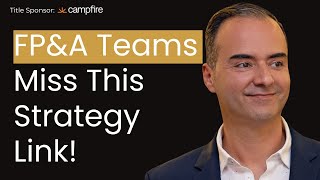
Moataz Mukhaimer explains how FP&A leaders can connect strategy to cash flow using a four-stage framework: diagnosis, identification, design, measure and fix. He emphasizes picking few KPIs tied to strategy, using pricing as a lever, and validating data across the organization before acting.
Chapters
Are you tired of being seen as just a spreadsheet person while others get a seat at the table? Well, welcome to FP&A Unlocked, where finance meets Strategy. I'm your host, Paul Barnhurst, the FP and A Guy. Each week we bring you conversations and practical advice from thought leaders, industry experts and practitioners who are reshaping the role of FP&A in today's business world. Together, where I'll uncover the strategies and experiences that separate good FP&A professionals from great ones, helping you elevate your career and drive strategic impact. Speaking of strategic impact, our title sponsor is Campfire, the ERP that's helping modern finance teams close fast and scale faster. Today's guest is someone who's earned that coveted seat at the table. I am thrilled to welcome Motaz. Motaz, welcome to the show.
Thank you for having me.
Super excited, very excited to have you. I know we had an opportunity to chat beforehand and kind of discuss what a show would look like and been really excited for this episode. So let me give a little bit about your background. Go ahead.
I'm super excited because I was telling you before even I've been watching a lot of your episodes and I'm becoming a huge fan. Your style and the conversations that you have are super in a language of finance. It's super entertaining and engaging. So kudos to you. I'm excited.
Well, thank you. I really appreciate that and I try my best to make it entertaining because I'm like nobody wants to listen to boring numbers for an hour even if you're a finance person. At least I don't. So I just go with what I want to listen to. So Motaz Mukmir is a. We went to McGill University for his MBA and Boston University for his BA in accounting and Finance. He's a strategic and financial Advisor with over 20 years of experience empowering SMEs in the middle east region. His expertise lies in providing customized services to help businesses diagnose their challenges and achieve their goals. He has worked with a diverse range of clients including SMEs, family owned businesses and international brands. His clients come from industries such as retail, medtech, E commerce, education, tech, manufacturing services and software solution providers. As an advisor, Mota's passion is to assist SMEs, entrepreneurs and organizations in navigating risks, opportunities and challenges to help them achieve their version of success through a rigorous process of situational analysis, framework implementation and measurement. He is also the co host of the business podcast Business Talk which aims to spread business Know how in Arabic. He has been featured in Money's magazine and has been the guest of various business podcasts. So once again, welcome.
Thank you for having me. Thank you for the intro.
Yeah, really excited. So start every episode with this question so you know what's coming. If you had to define great FP and A, what it looks like, what would you tell our audience?
For me, great FP&A is one that creates value for companies. And the definition of value can vary. But as a finance and strategy person, I always tell clients that it has to boil down to cash from operations, accumulation of cash, accumulation of cash, growth in your cash from your operations. Everything you do eventually as a company, whether it's improving your customer service, product development, and everything you do within planning, needs to lead to that. Forget everything else. We do fundraising and all of these things. That's great. But the fundamental value that you need to create as a company is the accumulation of operating cash flow.
Great point. Right. At the end of the day, if you don't have operating cash flow, it's a question of when you go out of business, not if. Exactly. Doesn't matter how much funding you've raised or what you've done. You can only go so long on other means of funding outside of the core business.
And that's why I always tell clients, look, and especially because I work a lot with startups and SMEs, they do a lot of funding and that's obviously a difficult endeavor to go into. But. And it's great that we have cash. That's the first thing I, I try to emphasize. Cash, cash, cash. But more so I say cash from operations. Not necessarily now, but eventually that should be the, the goal in terms of creating actual value is how much growth in our cash flow. Accumulation of our cash flow, cash from operations.
Totally agree. And as you said that I was thinking I need more cash for my operation, which is always the goal. Absolutely. Obviously you want to provide a service, but it's always an outcome you have to have to provide that service. I would love you look back on your career. Can you share a time where you've seen great FP and A in action? Maybe a story or situation from your career? Sure.
Although usually when they come to us, you know this. When they come to us, when clients come to us is because they have bad analysis or bad planning. But I remember a couple of years ago I was hired by a client and in tech and they were raising funds and there was a interested investor so they needed to do valuation report to value the companies, you know, to value the equity and all of that. So part of that obviously is analysis and projections and all of these things. And I expected because they operated in five countries in the Middle east, they had had products, they had services. I expected as usual for the planning and the financials to be somewhat of a mess. But I was pleasantly surprised that it wasn't because their CFO understood that he connected his planning and analysis with every leader of each vertical. So it was a conversation he had with let's say this product A and the leadership in that and and he understood every part of the business. So the numbers and the planning really reflected actual business, not just top down unrealistic numbers. And honestly if I want to say there was three things I remember thinking he did really well connecting strategy with finance. So the numbers told the actual story. The other two things that were really impressive and sometimes people forget them in planning, cost control. So there was a lot of attention on cost and collections. I'm a huge advocate for collections policies, procedures. I find many companies, okay, we're great making revenue. We're not good at collecting our cash. Now though, these are the three things I remember thinking.
I totally agree with you on the collection side. I've seen that again and again. I mean I had two eye opening experiences in my career. One was early in my career I worked for a company and we brought back in our billings and collections and all our accounts receivable process in house because it had been such a big mess. First year bringing it back in house they found 13, 15 million dollars to the P and L. We weren't expecting from things sitting on the balance sheet. They shouldn't have been on the balance sheet. Things having been billed and not collected and things never being billed. It was a combination of all three. They collected so much. The leadership was finally upset because like how are we going to grow over this? You've given too much revenue in this year. He's going to have a laugh.
That's right.
That was a early learning to me to reminder that revenue is not cash and it never will be.
Absolutely. And this is why I always there's. It's funny because the financial statements, you know the three big ones are and the glitter I find usually or the glory is usually with the P and L. And I tell especially startups and SMEs for me it's cash flow. Cash flow for me is number one. They all are important, they all complete each other. But for me cash flow is to me is the king or queen of the three Agree.
And I'll share this. I don't know if I've shared this on here before, but you know, obviously I have to do my own financials and I have an accountant that does it in QuickBooks and they just do the P and L do some of the cash. But I go through imagine things every single week where I'm looking at my invoices and kind of tracking on my own. And yes, I don't do a formal three statement and the cash flow because I'm a business of one and I know what's in and out but I'm looking at every single saying, okay, haven't collected this ping this person. Okay, I need to start billing. Well what about where's this? And just making sure that that cash is coming in house and looking at going, okay, what's my Runway? Do I need to shift the focus in my business, my priorities to more cash generating activities versus long term? Based on what that outlook looks like.
You'D be shocked how many people or entrepreneurs or CEOs don't look at Runway or don't. That should be a very. Especially startups and SMEs. That should be one. You wake up every day and you look at your Runway and your, your cash burn and, and these are very key fundamental things for you to continue to, to exist.
Agree. It is really amazing. I saw a study that said if entrepreneurs look at their financials monthly, which I mean you'd think automatically they're looking at monthly, something like they're three times more likely to survive as an ongoing business.
That's a fantastic statement.
It's just crazy because you would think that was an automatic. I get they're not finance people, but you still think you're looking at it and understanding it because it's right at the end of the day, the financials, the cash, it's all that matters in the sense of for being a going concern.
Absolutely.
So you've run your own advisory firm now for 20 years. You obviously love the entrepreneur early stage company phase. What is it you love so much about that early stage of a company?
It's funny when you, when you were talking about the introduction because I, as you were talking, I all of a sudden remembered, not that I forgotten, but it just reminded me of my first job was corporate. TJX Framingham. They own Marshalls and TJ Maxx and all of these things.
Okay, got it.
So we moved from corporate, you know, full building of 2000 employees to working with startups and SMEs. What I really like about them is that every word you say, everything you do matters and makes a huge difference in, in their existence. When they're startups and SMEs, you, they really listen and they really pay attention and it really becomes a circular thing where you're ethically become much more aware of every word you say because it really can change their trajectory. That's one thing I really love feeling that I'm, I really making a difference. Then you become part of the team and it's no longer, look, it's great to work for big companies and you know, learning the structure and the processes you really need to. But once you're working with SMEs or startups, you're okay, you're there as a finance or strategy advisor, but literally you're talking about everything and you go into the entire aspects of business. So we talk marketing, we talk branding, we talk operations and that I like, I like to see a bigger picture, full picture. And to be very Honest, with Holland SMEs, after 20 years, I keep thinking, oh, I've seen it all. But with them, every day there's like a new problem. I'm like, oh, okay, that's a new challenge I didn't think about.
So that can be rewarding because we've all been there where you feel like you're solving or doing the same thing day after day and it can get monotonous. I definitely like variety. So that's something you'll get with SMEs.
Exactly. Don't you, for your work, don't you find that, you know, after a certain X amount of years of working, you'd think that, oh, we've seen it all. But then new challenges pop up. If it's a different sector, if it's a different size, if it's a different country, I mean, that's what keeps it fresh.
Agreed. And so I know one thing you focus a lot on, which I think is really important. And we're going to spend a fair amount of time talking about this is strategy. Right. Sometimes you see us just focusing on planning and finance. So why, you know, as a finance leader, is it so important that you're talking strategy with your clients? A lot of people think, wait, strategy, that's a finance responsibility. And so maybe talk a little bit about why you focus on that as much as you do.
I remember this. It's so funny when you think about your progress as in your career and how much you're learning and how you approach projects and all of these things, there was a period of time where all of a sudden I'd hear things from clients like, oh, we don't talk about strategy because we're busy with operations, daily operations, or we're busy with our numbers, we're busy with this. And I now I'm at a point where I tell them strategy is the business, it's not a side project to do strategy is the business. And for finance, and especially when you're talking about analysis and planning, to me it makes no sense for an analyst, an analyst or a planner, financial planner, to look at the numbers without really understanding the story behind it. And numbers, at their best case scenario, they should be a translation of a company's vision and strategy and plan. Otherwise you find that, oh, the corporate level is talking about planning and strategy in a one, one way. And then you look at the numbers and you're like, they don't actually reflect anything of what you guys said. And that disconnect is very dangerous. That's why I don't believe you can do any planning, financial planning, proper financial planning and projections without understanding, fully understanding.
Strategy makes a lot of sense to me. So I'm curious, why do you think many finance professionals struggle to connect budget with strategy? I definitely seen it in my career. I'm sure you've seen it. Maybe talk a little bit about why we have that struggle.
Isn't budgeting the sort of the war time for every company? And we're basically, we are basically the enemies who come and every department wants something and we have to, you know, fight it over and try to, you know, create a full picture. I think finance, I think with FPA professionals, sometimes they have a hard time with budget and connecting it to strategy is because they're not used to talking to the right people. In my experience, it's not enough to talk to the head of, let's say one product line and that's it. And take the word of the top people. You need to talk to other team members and understand on the ground what the company is doing, understand the challenges and the opportunities. Because it's easy for me as the head of one department or one company under an umbrella of companies to come and tell you, we're going to, you know, our budget is this, we're going to do this, we're going to do that. And then in reality the team, when you talk to the team under that person, they're like, that's not really realistic. So I think, I think talking to the right people is key. And financial people and finance professionals need to start talking, communicating More and more, not just with certain people. You need to understand everything, challenges and opportunities. I think another thing about budgets is I find some, a lot of people fail to have clear KPIs. And once you have a clear KPIs, you need to make sure and go back to strategy and sort of the plan and make sure that there is some synergy between those KPIs. We cannot be in theory talking about strategy and certain KPIs. And then our financial KPIs and budget are completely different. There needs to be some sort of synergy. And again, big picture, you cannot, once you put all the little pieces together, you need to look back big picture financially and make sure that it actually, when you look at it from a strategic point of view, it tells the same story.
And now a brief message from our sponsor. Campfire built a best in class AI native ERP designed for modern finance and accounting teams. With Campfire, you can automate revenue, streamline your clothes and centralized accounting all in one unified platform. And now they've hosted Finance Forward, a first of its kind AI summit in San Francisco. They brought together the sharpest minds in finance and operations, all focused on how to actually use AI to move the needle. You don't even have to travel to learn the tactical skills to put your team ahead. You can stream the the whole thing on demand, totally free, anytime after the event. So if you're ready to get tactical about AI and finance, head to Campfire AI and register for the on demand content for free. That's Campfire, where finance teams go to Think Forward. Lot to unpack there. But there's one area I want to go to. You mentioned the importance of having clear KPIs. How would you define a clear KPI and just a KPI in general? Because I think, you know, there's sometimes two philosophies out there. We're tracking nothing and we're just kind of, oh, we have a good idea, we'll just go off gut and oh, we have a million things we're tracking and we're looking at everything to make sure we're doing it right. And both are extremes. So maybe talk about how you would define KPIs, how you think about, you know, clear KPIs.
Excellent question. Because this is where connecting budget and planning to strategy makes a difference. Because if you're doing planning and strategy correctly, you have, let's say, maximum three initiatives per that period of time and then you have certain actions under them. I work, when I work with clients, I try to minimize the number of KPIs. I do not want a dashboard full of 30, 50 KPIs I need. So we usually put them all there. We start to pick the really important ones and the ones that really connect with the goal that we're talking about. Now, once we've established that, we jump into our finance and budgeting. Whatever KPI we need to measure has to, for me, has to, you know, achieve two things. One, be actually important from a financial point of view. So it actually affects, let's say gross margin or net profit. So financially it affects something that I can see and measure. And the other thing is it needs to be connected to a KPI that is within our strategic plan. These two things, and usually I tell clients, simple, understandable, and easy to communicate. Again, we need to pick KPIs that we can communicate to the entire team. It needs to be clear. I cannot have 30 KPIs and so many of them that are like hard to even explain to non finance people. What's the point of a KPI in that sense? Because we need to communicate it anyhow to create that culture. So we're all behind the budget or we're all behind the strategic plan.
Like that. Simple, understandable, easy to explain.
Haven't you been in situations where you're talking finance, finance, finance, and the people in front of you are looking at you like, what are you talking about?
I have. And I've been in situations where leaders want to track everything as the KPIs. We got to create a dashboard and there ends up being a hundred things on it and they're like, okay, if everything is important, nothing's important.
Absolutely. That's a great sentence.
Yeah. And so that's kind of how I've more and more I've learned is you need a couple north stars, like you said, a couple initiatives, some ways to track them and really focus. And every time you see that, you get better results. And I, I think like you said, there's some financial KPIs you need to look at. But the end of the day, the KPIs that drive the business are not financial. They're operational in nature. The financial are almost all after the fact. Yeah, you gotta understand the health of the business. You might make adjustments, but if you're not looking ahead of time, you're gonna get yourself in trouble.
That's actually really well said. I totally agree.
Yeah, no, and I'm, I'm sure you've seen it where you're like, you look at the Financials after the fact, like, well, we should have been tracking this and this and we would have known that was coming.
Today. I was telling a client because we're Talking about their KPIs for their plan and he was saying, I was telling him that because of the nature of the business and because it's about people and, and it' type of business that is less corporate, more people oriented. And I was trying to create the KPIs that would connect with the team, with the spirit of the company and all of that. And then he asked me, he's like, oh, but what about revenue? So I said no, no, but because of the KPIs that I'm talking about, which is number of guests per period and the number of this X product being served. These two multiplied by each other give you revenue. So you know, I'm trying to create KPIs that also, you know, matter financially, but they matter to the, the strategy and the soul of the company. And I don't like obviously certain sectors, you just go with the traditional KPIs. But I like with small and SMEs and startups to create something that really also fits within a spirit of the company.
I love how you said the soul of the company or the spirit. You know, especially when you're dealing with family owned small companies. You know, many of these people started the business for a passion. They're not responding to stakeholders in the sense of they don't have a board to report to or depending on the company, they may not have investors to report to. They're doing this because it's their passion and if you can tap into that, you're going to get more out of them, they're going to care more. Not always easy to do, but if.
You can, because FP and A professionals forget, the next step after KPIs and measurement is also communication of these KPIs and what they do to the morale of the company and the culture and all of these things. So we cannot pick KPIs that make sense in every, in financially and, and, and, but then when we communicate them, the team is looking like why do I care about this number that I don't understand? So it's a full cycle. You know what I mean?
Trust me, this cact churn lifetime value ratio is really important, right?
A hundred percent.
When you and I chatted a few weeks back, you mentioned when you look at a company's P and L, you can usually discern kind of the company strategy from looking at the different things. So maybe walk through how you do that, how you're able to kind of how you think about reading a P and L and what they would tell you about strategy.
Because let's say that I'm at stage where I met a client, so now I know their sector, and I know, you know, how long they've been working, so I know the stage where they're at. Then they give me their P&Ls to review. And by looking at the gross margins, by looking at the operating expenses, you can basically tell what their strategy. So let's assume, let's, for simplicity's sake, say it's either depreciation or, you know, going full economies of scale. You can tell the bit by the difference in margins, especially if you know the margins, the general. The gross margin of the industry itself. So, you know, if their gross margin is so much higher, that means that they, you know, could be differentiation, all of these things. For another example, when we talk about gross margin, I've had a CEO when we first sat, and she said, we're doing growth in all of our verticals, business verticals, we're doing really well, blah, blah, blah. Great. I was looking. The growth was really great. And then I looked at the gross margin and I compared it to last year's, and the gross margin as a percentage was less. So when I looked at the verticals, I realized that they're doing really great in growth in verticals that had lower gross margins. So it automatically showed me what they're doing strategically. And I was wondering. And at that point, I had to have a conversation with her because I'm like, are you realizing that that's what you guys are. This is what you guys are doing, and that's why your total accumulative gross margin percentage is actually getting less. Is this part of your strategy or not? Another thing? Let's say you have a startup or an SME that's a marketplace business model, you know, connecting sellers and buyers. I would expect for the first five years that your marketing budget is off the charts because you're spending so much money creating traction. So again, when you look at numbers, it should translate into that. So I remember looking at a startup that was getting funding and it was a marketplace, and it was, I think, two years in, and I was looking at the marketing budget and they were struggling and looking for investment. I'm like, well, this is it. Your P. L does not read a business model of a marketplace. I expect to see the biggest number to be marketing, because you guys are Trying to create traction, you're trying to create traffic within that marketplace. So for the business model to work, you need to understand that this is a priority and that needs to go into your P and L. So this is how, after a while, you start reading a P and L or a balance sheet, and then you're like, oh, okay, this is what you know, this is what the story is. And this is why, again, I go back to strategy and finance need to be intricate.
I agree. One of the first articles I ever wrote, nearly eight years ago almost, yeah, nine years ago now, was about strategy and how it's kind of the missing skill for FP and A, and the importance of it and how you can see if a strategy is being achieved in a company's P L. And one of the things I said, look, if a company has a successful strategy, as defined by Porter, which, to have a strategy, you have to have a competitive advantage. You should be earning above average returns. So the first thing you can look at and say, okay, if they have way lower, why is that? And sometimes that's due to the stage they're at. So, you know, you have to put context into all of it. But if they're a relatively mature company and they think they're differentiated and have an advantage, and then their P and L looks awful, you can pretty quickly say, okay, what are you doing wrong?
That tells you the story of the strategy. Looking at these numbers tells you their strategy and what is wrong with their strategy. And usually, you know, this. You talk to CEOs, do you guys. Are. You guys have a competitive advantage? Everyone has this competitive advantage that statistically doesn't even make sense. You can't all have a competitive advantage.
Well, I like what a friend said, kind of, you know, getting into that and, you know, the importance of pricing, so shifting from strategy a little bit. But he goes, I love to go into a company and I ask everybody what, you know, what their kind of strategy is. He goes, I know if each of them tell me something different or what their kind of key thing is that differentiates them. They got a pricing problem and they're leaving money on the table. You know, and it's kind of like strategy. If it's not clearly aligned, you have inefficiency.
Absolutely. Actually, Paul, for me, because I work on pricing strategy and I call it framework, you know, rough estimate from everyone I've worked with 75% of them, so almost three quarters when they come to me, usually they're talking about. They come usually when. When there's a Lot of competition or then sales are going down and they're thinking immediately automatic response is decreased sales or increased discounts or. And 75% of them, I end up telling them that actually your issue is not. You're actually underpricing because there's either you're communicating the value incorrectly, you're positioning yourself incorrectly, the strategy is not working right. But actually you don't need to decrease your pricing.
It's amazing how often that pricing is an issue and how rarely companies look at it as strategic. There was a report done for the SaaS industry where they said the average company spends more time on, and they kind of jokingly said on toilet paper than pricing because they spent more hours in a year on their janitorial services for their building than they did on a pricing strategy. So, okay, what's our competitors doing? All right, we're in the ballpark. Let's worry about the business.
I believe it. I believe it. Honestly, I say this to startups, I'm like, you know what, that's fine at the beginning because you obviously knew. You want to know. You know, you're gauging by competition, you're trying to get. You don't have enough data and not enough client base to judge. But this should not be sort of the last minute decision. This is part of your strategy. Even when you develop new products, you can't do full costing. Maybe, but like you need to have pricing and costing as part of go or no go and new product.
Remember I had to approve all the pricing and somebody came to me and they were mad when I rejected their pricing. The director of finance, they're like, well, we did all this work Go. All you've included is the cost of goods sold and like 10% of the operational costs. Let's look at what the real margin is. Added it all in and it was basically around zero. I'm like, this doesn't work. Now let's have a conversation of what can work. I think you have a good product and a good idea here. Now we need to figure out how to price it appropriately or make changes to the services we're offering. So this price is, you know, viable as a business. And I developed a great relationship with her. I remember she was pissed at first, like, why aren't you just approving? It doesn't make sense. Like, I have a job, you have a job. My job here is to say no and here's how I can help you. So we get to a yes. Because I hate the finance idea of know to everything, right we're not the. No police.
That's actually, that's the reputation. But I'm trying to change it. I always say that that's amazing that you mentioned it because I always talk about this. I'm like, we're not the police. We're not the. No, we're not the, you know, we're there to help. And this needs to be also a mindset for professional financial planners and analysts.
Agreed. So I'm curious, is there a framework you like to use when looking at strategy? I think you mentioned a pricing framework you have, but maybe talking a little bit, is there kind of a certain kind of step or process that you.
Typically follow in general for strategy? I do four main stages. Diagnosis, identification, design, and then measure and fix. The more experience I have, the more I build connections and I know more industries. I totally believe. And this is what it is. Diagnosis, the first stage is the most critical stage. And because we are in a time where time is money and everyone is rushing and usually companies, pressure advisors or professionals, let's come on. I need the solution. I need the solution. We at some points under pressure, skip diagnosis or really deep detailed diagnosis, and we jump into conclusions or designing solutions that are not. We haven't really identified what the real challenges is. So for me, number one, the stage diagnosis. And I now I'm, you know, it's been 10, five years, let's say the last five years. You get to a point where you have enough confidence to tell the client, trust me, I need to spend that much time on this because it'll save us so much time later.
Yeah. So let's dive into diagnosis for a minute. Cause I hear you. We often jump to solution too early. And so is there a framework? Thoughts? How do you. How do you diagnose it? Because everybody's quick to give an answer, but almost always it's the surface. So what have you found that helps you get to the bottom? Because if you don't get to the root of the problem, the other three phases, as you're speaking, to become a problem because you don't. You're not able to optimize until you get to the root. So how do you get there in the diagnosis? What's your kind of framework or how do you like to think about that?
Two things, obviously, because we're both finance people. My safety net or sort of my pleasure at the beginning is send me all your numbers. All your numbers, all your numbers. And I take my time reading them. And that's like my sort of, you know, it's like these are the. My comfort zone. And I read all of the numbers and I read people sometimes skip. Even in audit reports, they skip notes. And these for me are like the most important and details and all of these things. And I start writing notes and at the beginning it's a lot of mess and it's just brainstorming and, and slowly, slowly, because you become expert in certain things within industries, you start reading numbers. And like here I have a feeling there's a red FL flag, but you just put it there, you're not sure. Finance, Numbers, numbers, numbers. The second thing I do, which is exactly the opposite, is I insist with every client. I need to sit with all key people in the company and not just top people, but let's say sales, marketing, operations, certain businesses. I actually go and spend the day there and I think numbers and people together. The more you talk to them, the more you try to understand, the more you try to see it from their point of view. It's funny because at some point at the beginning, it's so messy and there's so much. But I swear, after a while, trust me on this, what they're saying automatically starts connecting with the numbers that you're seeing. And you're like, oh, that's why this number is less. That's why this department is not doing well. That's why this is not happening. Slowly, slowly, slowly, slowly, slowly. And a lot of times I try to talk to the CEO first, but briefly because I don't want them to affect my opinion. I go talk to the other people first in more detail and then I come back and before giving feedback, I listen to the CEO and then see where the disconnect is. Usually there's a lot of disconnect between leadership and the rest of the team. So that's usually also an issue that needs to be worked on. But that's how I approach it. How do you look at it in your field or in your work?
I don't do near as much consulting today, but you know, much like you, I like to start with, okay, let's look at the numbers, let's see what they're telling me. And then I really, whenever I start in a new role and this is more corporate FP&A.1 of the very first things I like to do is find out where can I educate myself about that industry and that business. Not even the financials, but going out. Are there met trade magazines I can read? Is there people I should talk to? Is there a go out and look at an annual Report when I worked in prepaid at American Express. Remember reading Green Dots, I signed up for a fintech email. I started listening to a podcast about it. And I always pride myself on two things. Starting to learn the industry, but also learning the business. I would often have people for the business come and ask me how certain things worked because I invested a ton of time saying I need to operationally understand things. Then looking at those financials. So not, not very different from you, but looking at those financials, you can connect things and you can have those conversations with them and help them and it makes all the difference. I remember I worked with a team where we had terrible data and we did not know what our margins were for our products at cost of goods sold. It was just things were misnamed. We had a ton of different products legacy and I spent six months and went through and did it all and the goodwill that gave me. And I was only able to do it because I understood the financials and I spent a time learning the business. And I was the first finance person in like five years of someone being there. They had seen it, which is scary, and I gave it to them. And it took me almost six months to put it together because our data was so bad and it was still 80 20. But you should have seen just how happy they were and how much it allowed us to have real conversations and make a difference with the business versus hey, you're just a finance guy, leave me alone. Like you can't even give me the data I want.
And funny enough that once you fix this, I'm sure like you can have conversations that are built on actual data versus because humans, we have a tendency to just like let's say we've had a bad experience with the last client, then we just generalize and do all of this. So data is great because it tells you the story, the actual story, if the data is collected correctly and built correctly, obviously.
And now a brief message from our sponsor. Is your AI thinking like a generalist or like a finance leader? Here's the thing. Most large language models weren't built for finance. They're trained on everything from Reddit threads to recipe blogs. So when you plug them into your accounting workflows, the results can be, let's just say, not balance sheet accurate. That's why Campfire, the company company pioneering AI native ERP just made a huge move. They've raised a 65 million Series B co led by Excel and Ribbon, bringing their total to 100 million raised in just 12 weeks. And they're putting that momentum to work with Lam. The large accounting model. It's a proprietary AI train specifically for finance and accounting. Already hitting 95% plus accuracy on accounting tasks. That's redefining what ERP can do for modern finance teams. Unicorn companies like Posthog and Replit are already using Campfire to automate their finance operations and seeing real results. You can see it for yourself. Sign up for a live demo of Lam at Campfire AI. That's Campfire AI. Data is a great way to challenge and change your biases and assumptions. But you have to be able to validate the data because yeah, there are times when the data is wrong and I've been there or you calculated something wrong and you it confirms what you want it to confirm. So you run with it and later.
On you're like oh yeah, I don't know, we've all done it.
So if you could offer advice to, you know, FP&A professionals to do a better job of connecting their role with the company strategy, what's two or three things you would recommend they start doing?
Fantastic question. I think the first and most important one is get stop only looking at Excel sheets and numbers and actually take the time to communicate and get to know the business. So if you're working corporate FP and a understand the business really well, go to the, you know, go down to. Not just to talk to the heads, talk to everybody else. The people who are closest to the customer. Understand the challenges and opportunities. If you cannot understand the big picture and everything else around it, your planning and analysis is going to be meaningless or you're going to fall into so many different biases because of the numbers that you don't understand and you're going to make conclusions that might not be actually accurate. So that's the first one. Communication, Communication, communication. I think that's a great one. The second one is I've learned this as I got older because sometimes most of the time you're under pressure to perform and to give reports and to do all of this. I've pushed myself to be more organized and more plan my work better that I give myself enough time that once I'm done because you know, when you're doing the planning, there's a lot of pieces, a lot of pieces, a lot of pieces and all of a sudden you're done and it's just one big piece. I actually now I do it all the time. No matter how much pressure I have on time is to look back and then okay, now I'm done with the details, I've put them all together. Does it make sense as a big picture? Look back, step back and look at the big picture. It might. Every detail might be so well done and so well articulated and you're sure you've done the right thing. But then when you put it all together and you look at the big picture, there's something missing. And those two things, I think, communication and looking at the big picture, once you're done, allow yourself, your brain to digest it and then just look at it as one whole thing is really.
Critical, really good advice. So it's, you know, communicate, communicate, communicate, as you said. And the second, look at the big picture. I like to call it kind of that sniff test. Step back and look at everything and see if it actually makes sense or you're looking at it going, wait, we think we're going to be a billion dollars in five years and the entire industry is 1.2 billion. Think I missed something?
Absolutely. I remember when I was in corporate and I had my team and they'd come to me and I'm like. And I always ask that question, did you review it once you were done? Yes, yes, we reviewed it. I'm like, are you sure you looked at it as a big picture? You know, because. And then they started getting used to me and they're like, okay, okay, fine, I'll go back and come back again. I'm like, yes, don't come back unless you're super sure you've reviewed it as a whole as well.
I had a general manager. He's also a CFO of mine for a while. I served as his FP and a person when he was the general manager. And I also worked closely with him when he was a cfo. So we had a very good relationship over several years. And I got to learn where. All right, he's going to look here, here, and here for his pressure testing. Have I really thought about that? Am I sure? It all hangs together. And sometimes being, oh, yeah, you're right, crappy job there. And other times, no, I'm going to be right on this one. Let me walk you through the detail of why. Because he'd be looking at a number that can't be right. And we get done. He's like, oh, dang it, you are right. Now, what do we do about it?
Absolutely. You.
You want.
You want even the juniors and the seniors to challenge you all the time? Because sometimes, actually, as we get old, sometimes we do, you know, miss something. And because we're so. I don't know what it is. But sometimes you miss the simple things after a while when of experience.
So sometimes it's just a matter of you've been looking at something so long you miss something. That might be obvious is why I've had a lot of people recommend, you know, some of the best advice they've. They've received is when you finish a big project, step away, give it a night, review it the next day, or come back to it later with a fresh set of eyes. Because it's amazing how often once you're fresh, you're like, how did I miss that?
Absolutely. I fully agree.
You host your own podcast called Business Talk. I think you said you host that in Arabic. So talk a little bit about what that experience has been like for you. What have you enjoyed about it and what's it been like?
Honestly, it's, you know, I'm sure you feel this way. You get to a point where you've learned enough that you want to share and you want to do something good and you want to help out. And, you know, part of it is also promotion for yourself and branding. But. But to me, honestly, me and my co host, when we sat down, it was literally, we were sitting down for coffee causing something in business. And then it clicked after because we opened up a topic and we're both consultants and we had a conversation and we both stopped and we're like, oh, this would be interesting if it was a podcast. And that's how it started. And I'm sure you feel this way when somebody comes to you and tells you, oh, I listened to this episode and it was really beneficial. I learned a lot. I look forward to hearing more about this or that. To me, that feeling of giving back is essential. And as we get older, at the beginning, you're trying to. It's smaller circles. You're trying to improve yourself, maybe your circle of family, slowly, slowly, it's your community, and then bigger. So you try, as you know as you can, as much as you can, to give that. You tell me how satisfying and how great it is to feel when somebody comes and tells you, you know what, you've really added value or knowledge to my brain.
I got a note like that yesterday from somebody and I told them, you made my day. It's wonderful when, you know, you've really helped somebody in their career, in their life, however it may be. It's one of the reasons, you know, people who follow me. I've had a few people comment, why do you talk a lot about mental health? You know, stick to business. And I'm like. Because it's a passion and I've had many, many people thank me and say how it's helped them and share that they struggle, but they're not willing to share it publicly because of the stigma. And so it's the same idea. It's like we want to give back humans. My favorite, my favorite quote has to be one of my favorites. All time is service is the rent we pay for the world we live in. And that's what you're doing in a way. If you're trying to give back, sure can also be part of a business. But if you're trying to make society better, you're giving and that's. It makes us all better people.
I believe so too, I think. And that's why I also, I also like to talk a lot about ethics and values for companies. Even, you know, finance person talking about values. Yes, yes. We need to include values and ethics. We need to care. We need to. And I love when I meet this when you were asking about small businesses because sometimes you see small businesses that are community serving or that they, you know, environmentally friendly or they're trying to build something. I love these things because it's okay, great, it's a business and we want to make money, but it's also adding value to the community or to the place or space they're occupying.
Those are always my favorite businesses when you can see they have a community kind of motive or focus beyond just profit.
Absolutely, absolutely. Absolutely.
All right, so we're going to move into our FP and A section. This is where I ask some standard questions of all guests. So first one, if you had to list the number one technical skill that FP&A professionals should master, what is it.
AI we need to. I'm behind. But luckily the good news and the bad news is the bad news is we really need to. But luckily, I think in finance, I don't think that the AI sort of race is. It's not like with designers or engineers. I think now with all the tools that are available in their field, there's so much in our field, I think we're still at the beginning. So the good news is we still have time to catch up, but we shouldn't wait that long. I think soon enough it's going to be so many options. So don't get behind because just it's inevitable. You have to, you have to find the right tools to see how much, you know, how many X's of your efficiency can be increased so that's for me.
That's the number one AI is here to stay and we all need to learn it. What about that soft skill or that human skill?
Communication for me. Communication. We need to as finance people, our field. There's a misconception, I think, but some of it is true. Stereotyping is we're not good with communication. We need to get better. We need to talk to everyone and the company, be part of the conversation.
Agreed with you. All right, so this is a fun one. I like to ask. Kind of changing subjects here, but still very much FP and a related. We all get to use spreadsheets. So if Excel removed one feature tomorrow, which feature would cause you the most panic?
I think F formulas for me. I love them. They're my like safety net. I always like equals. If this cell is this, then this, then these values for me. If they remove this, I would really freak me out. Oh, another one. Filtering filtration data. Filtering data. Oh my God, if they remove this, I would die. You know how clients send you? Have you not received Excel sheets with like, you know, so many rows of data and it's like, how do I. I need to index this. I need to filter it. That's great.
Filter and F. I love those two. Great. All right, so now we're going to move into our get to know you section. So we ask a couple personal questions to get to know you a little better. So the first one, do you have a kind of a favorite hobby or passion? What do you like to do in your free time?
Honestly, this is. This came after Covid. I was super depressed. I'm not that I. I'm not. You know, some people are like, oh, it was amazing. We sat with the family and we got to know each other. No, no, I was depressed. I. I'm a social person and I decided that once the COVID was done that I would learn a new or try something new. And I tried diving and oh my God, did I love it. I think I highly advise anybody listening to go try it out. Going diving into the sea is a different experience. You're in a different world. It's so peaceful. It's so beautiful. And I live in Jordan where we have in the South Aqaba and it has beautiful scenery and beautiful sights to dive into. So for me, diving is. Has been a like a beautiful passion.
Love it. I'll have to pick. Take that one up. I haven't really done diving, but I've heard from a lot of people it's fun. Although I, you know, I don't have anywhere close to go diving.
It's not close, but come to Jordan.
I would love to. That's on my bucket list. I definitely want to make it to the Middle east and kind of, you know. Speaking of that, do you have a favorite travel destination? If you could go on vacation anywhere in the world tomorrow, do you have a place you'd go?
I'll tell you where I'm going. Hopefully in Christmas and New Year's, I'm going to Brazil for the first time. I'm really super excited. But I think my top country would have to be Spain, especially the coast. I like the sea, so the Mediterranean, So south of Spain, for me, is a beautiful destination that I think I always talk about. I don't believe in retirement, but I'm like, okay, I will end up living between Jordan and Spain. That's sort of my plan.
Get a lot of diving and coastal time in.
Absolutely. And just, you know, be in your bathing suit and then, you know, flip flops, and that's it. That's the life.
Got it. Well. Well, hopefully you'll get to do that soon enough and kind of last get to know you. Question. I want to ask, if you could have another person's job, anyone in the world, any kind of job for one day, whose job would you take and why?
I think I've always said I wanted to be an investigative reporter. I love the idea of. That's why I like diagnosis. I like investigating, and I like putting things together, and I like understanding a full story behind the details. So I think that would have been a great job. I should have maybe in another lifetime.
Well, you know, maybe when you retire, you can write reports from the beach.
Sure. Sure.
That's it.
That's it. Or actually, when I was. When I was a kid, I thought I would be a singer, but obviously don't have the talent, don't have the voice, don't have. But I thought I'd be a singer so that, you know, I just. I think I just wanted to be a superstar.
Here you go. When I was a kid, I thought I'd be a lawyer because I like to argue.
Oh, wow. You actually look. You know what? It suits you. It suits you. You're. You're a good talker. You're a good, logical talker. So it's good.
What advice would you offer our audience to be a better FPA business partner? If you could leave them with one last piece of advice, what would that be?
Honestly? I think learn how to connect strategy with your planning and analysis. If you're doing your analysis and planning without understanding the strategic plan and the vision of the company, whether you're working at it or it's a client, you're bound to fail in some sense because your numbers will not be realistic and they won't tell the right story and they will be not as useful as you think, trying to serve your clients. So really connect strategy with finance. To me, that's the key. That's where the value lies.
Great point. Connect strategy with the financials. And then the last question, if people want to learn a little bit more about you, the services you offer, what's the best way to contact them? Just tell us a little bit about that.
I have my website, But I think LinkedIn has been a fantastic way of connecting everyone together. So definitely if they add me on LinkedIn and send me a message, I always respond. And I do have a website also with my name, Motaz Mukamer Advisory. But I think LinkedIn would be the easiest way to. To communicate as well.
Perfect. Well, we'll put both those in the show notes and thank you for carving out an hour. I really enjoyed chatting with you, Motaz, and I think our audience will enjoy it. It was fun to talk strategy.
Thank you. Thank you so much. Thank you. I appreciate it.
That's it for Today's episode of FP&A Unlocked. If you enjoy FP&A Unlocked, please take a moment to leave a five star rating and review. It's the best way to support the FP&A guy and help more FP&A professionals discover the show. Remember, you can earn CPE credit for this episode by visiting Earmark cpe, downloading the app and completing the quiz. If you need continuing education credits for the FPAC certification, complete the quiz and reach out to me directly. Thanks for listening. I'm Paul Barnhurst, the FP and A Guy and I'll see you next time.
More from Paul




Trust and Leadership Lessons for FP&A From 100+ Top Leaders with CFO Jon Laudie






