Transforming Excel Competitions into Million-Dollar Events with Andrew Grigolyunovich
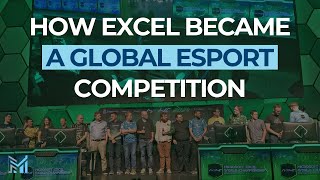
Andrew Grigolyunovich built the Financial Modeling World Cup into a million-dollar competition. The event draws thousands of Excel competitors worldwide, with Michael Jarman as the current champion. The conversation covers how cases are designed, why people compete, and what's next for the sport.
This week we have a special episode from the Financial Modeling World Cup. So the event was really amazing. Arena was electric. Giles created a song for the Financial Modeling World cup, played it on stage, espn, everything.
One point. I'm handing out the check to the winner of $1 million for the winner of the MEWC. The main thing that's going to be learning training in a very fun and exciting way.
Next we're going to chat with this year's world champion, Michael Jarman.
Luckily, the first round really suited me. The first SP5 minutes was just like a blur. Like just everything that you thought you knew about spreadsheets you just sort of forgot because you know you're there in the limelight. It's all quite new for most of us.
And now you're in a room with a thousand people who are all just as geeky as us. This is an Excel competition. That was electric in there.
I can't imagine what they must be thinking being up there with the noise and the excitement.
It's great to be part of that because you can feel that here, like every single person here, like, talking about their problems. We were trying to solve some problem from this random girl over here.
Love having them on this episode and visiting with them in Vegas. Hope to see you next year at the Financial Modeling World Cup. Please come join it. Welcome to Financial Modeler's Corner where we discuss the art and science of financial modeling with your host, Paul Barnhurst. Financial Modeler's Corner is sponsored by Financial Modeling Institute. Welcome to this week's episode of the Financial Modeler's Corner. I'm your host, Paul Barnhurst, AKA the FP and a guy. The Financial Modelers Corner brings you the art and science of financial modeling with distinguished guests around the globe. This week we have a special episode from the Financial Modeling World cup, an event everyone should attend at least once if they get the chance. It really is unique. But before we jump into the episode, I want to thank my sponsor, the Financial Modeling Institute. FMI offers the most respected accreditations in financial modeling. That's why I did the advanced Financial Modeler. And I'm a better financial modeler for it. And you should look to do it too. All right, let's jump into the episode. I was in Vegas for several days. It started out with a road trip. Before that, Giles Mel, the self proclaimed most humble MVP in the world. Well, he said, hey, let's take a road trip to Vegas. So he flew into Salt Lake. We spent the day seeing fluffy cows having a little bit of fun, making Bread, all kinds of unique things. Then Oz MrExcel, Mr. Power Query. We love Oz. Oz de Soleil. He came up and we did a road trip together down to Vegas that will be on Giles channel, the Road to Vegas. He's creating a video for that, so we'll share that when it's available. But today what I want to do is I want to go through several different clips that I received from Vegas. I have a number of different guests and before I jump into that, I'm just going to talk a little bit about the event. So the event was really amazing. The arena was electric. Starting with the arena again, going back to Giles, Giles created a song. He made all the lyrics for the financial Modeling World cup and they actually took a song and played it on stage, espn, everything. So I'm going to go ahead here and play a short little clip of it. You'll also notice the music in our trailers and kind of throughout the episode where it makes sense. So I'm going to go ahead and roll about a 40 second clip, let you listen to a little music. Everyone seems to know the score. They've seen Andrew do it all before. They just, they're so sure. But Dim is here to even the score. It's the XL World Championship who is going to win? It's the Excel World Championship who's going in the spreadsheet bin. Wasn't that some fun music? You could find the whole song out on Giles LinkedIn, I believe. You can see it if you want. Alrighty. Some other things. Michael Yman won the event. He's from the UK and then he currently lives in Canada. He came in first this year in the Excel Esports. The college competition was Guy by the name of Benjamin Baber. He came in first and then we also had the team competition as well. And so it was amazing to watch all these different people. In addition to the Excel Esports, which is the logic what you see on tv, there's also a financial modeling competition that goes on throughout the year and they awarded Dim early the first place for that, for the work he did on the financial model. Few other things I'll say is the event has two and a half days chock full of training and we'll have some different people who presented at it. We had things such as Dynamic arrays, Power Query, dashboards, Copilot Python and so much more. World class people were providing training. If you get the opportunity to attend, I highly recommend it. The networking, the training and then the event. Yours truly, I competed, had a little bit of fun Competing didn't do very well in the last dance, but I did it because I was there for the experience and I'd love to compete more. If you want to get better at Excel, can the training compete in these events? It's a great way to improve your skills and to really become an expert at Excel. I also managed to fall asleep. You'll get to see an image of that. So I encourage you, if you can, to watch the video of this episode. You can also listen audio, but there are some fun little images throughout it with the trailer and the event. What happened is it was the first night the semis, really tired, had been talking to some people, sat down for a minute, started to fall asleep, had only been asleep a couple minutes. And of course Katrina on stage, that works for fmwc, caught a picture of it and sent it to everybody in the event with me snoring. So there's probably the most embarrassing moment. All right, on to the clips we have for you today. First one is going to be Andrew. Andrew is from Latvia and he is the founder of the Financial Modeling World Cup. Andrew G. A great guy. We'll have him roll as our first interview. So we're going to go ahead and roll that clip. All right, super excited here for this next guest. I have the founder of the Financial Modeling World Cup, a master financial modeler, super smart guy coming to us today, Andrew. And I'm going to let Andrew say his last name because I seem to always butcher it.
Yeah, it's Grigory Novich. Andrew Grigory Novich. As easy as that. Grigoliunovich.
Got it. I'll get there on that one. I'm gonna get it. Yeah, I go with Andrew. So we're gonna start by asking some questions about your trip. You just got back from Vegas, so you know, I know you run. Look at the Financial Modeling World Cup. Been running that for a couple of years. How did you originally get involved? I know you used to compete. How did you get involved in the modeling competitions?
Yeah, I mean like my. I have like a 20 year plus background in finance. So I've been doing financial modeling back since the days it was not even called like financial modeling. I first encountered this term like maybe like in early 2010s, but my first models were created in 2001. So that's when I started to learn Excel. Learn, you know, finance. Graduated from the school, got my CFA charter and yeah, also got a good, got a good job like right from the start, you know, Latvia was an emerging country back then and you could really get high. I was at the age of 21, just thanks to my good education, Western type education, I was able to get the CFO position in a large company with retail company, 70 locations, several hundred people working there. And I was one of two candidates out of several hundreds who were able to put together a three way statement model. So that kind of was, you know, and the whole country was very young by that. Like our biggest bank was run by a bunch of 25 year olds. So and they did a. So and at one point. So by 2010 I founded my own consulting company. I was doing the outsourced CFO consulting budget modeling, a lot of modeling work for companies here in Latvian, also in the United States and across the world, mostly United States. And by that time I've started to take part in the model of competition. That was the. Well, the predecessor, if you'd like, of the financial World Cup. That was an amazing competition for the players. So you can solve lots of interesting challenging tasks and learn on your way. But the drawbacks were that you basically had it only once a year. So there were like two stages per year and finals after that. I made the finals twice, finished fifth in the 2017 competition in the world. But that was, you know, way too little for me. And also that was not streamed the format was maybe not as exciting for the viewers. You didn't have to, you know, the crowds and the arenas and stuff. And I really wanted this to be like bigger, more exciting really this to be an esport. So when at one point they like the previous owners of this competition have sold this to them, the new owners and the new owners have ranked once and then discontinued. I really saw that it's going to be a good time to start my own and do it better, bigger, more frequently with all the adjustments and the improvements. Because we've like when we started the financial modeling World cup we've introduced the solution models to the case studies, we've introduced the transparent ranking system so that you see how many points you have scored and everybody has scored. It was not there in model of and lots of other nice things. So yeah, I was a player that wanted to have more and bigger and better competitions. Then you know, now we have the competitions but I'm not a player anymore.
Yeah, yeah. Hard to be a player when you're building cases and running the whole thing. That might be an issue if you build a case and then you're a player.
Yeah, it's also a different mindset, honestly, like when I get a case, I Kind of see that I'm trying to solve it, like, very carefully, very slowly, not to lose any detail, which is not what you want to do when you have only 30 minutes.
Yeah, it's. It's a totally different mindset when you're under the pressure of a stage, especially. And you can speak to this, right? The events where you have a knockout where every five minutes the lowest score is going out, not only do you have to be fast, but you got to put points on the board. You can't try to solve it all at once and then just put the points up the end. Exactly.
Yeah. And that's an amazing format. Like, it's a very tough format for the players, but it's such an exciting format for the viewers. So we've discussed that with some of the participants in Vegas, and, yeah, they admitted that, yeah, it's tough, it's grueling, it's difficult. But we understand that it's really fun for the viewers and for the tv.
And you have to balance both. Everybody kind of gets that. So I'm curious, obviously, you took over as when Model off died and started this, and I built it into something bigger. But what's your ultimate goal? Where do you see this going in the future? Like, say, five years from now? What would you want to see this look like?
Yeah, I definitely see it bigger and more exciting and involving even more people I don't like. You know, like, every time in my life I'm trying to plan something, like, hey, in one year I'm going to be here, or in five years I'm.
Going to be here.
I reached those numbers. But that typically happens, like, a bit later. Like. Yeah, so I wouldn't say, like, it's an exact five years. Maybe it's faster, maybe it's slower, but I totally see that. Even right from the start, I was thinking that my vision is that at one point I'm handing out the check to the winner of $1 million for the winner of the MEWC. And that's going to mean that these are crowds, these are big arenas, because you need to get some quite some sponsorship interest so that you have that type of sponsorship money, you have many more players, you have many more viewers, and that's an exciting, Like, a much more exciting thing. So, honestly, at this point, I totally see we could be making a tour similar, like in a PGA Tour or ATP Tour, in tennis or golf. Tennis. Like, you know, different tournaments across different parts of the world. You can play, take parts, you know, educate yourself at the same time. Also earn some money. And I see that I was a bit hesitant at one point that like, do we really want to get like very big prize money so that the top talent gets thrown out of the economy. But then in a recent conversation, actually somebody persuaded me that, yeah, actually it's not a big deal because like you will maybe draw, I don't know, like five or 10 people out of the economy, the real economy. Right. But at the same time, you're going to make all the others so good or so better thanks to the, you know, like traction to that and their learning skills. That's, that's going to be the overall effect of the economy would be like very, very positive. So.
Sure, yeah. No, I get it. Just like, you know, there's some people that have been drawn to poker now. They play full time or other esports. And so I get what you're saying. Drawing them out of maybe the modeling or financial economy where they've cite full time to train for this. But at the same time, if you get 10 times as many people to participate or 20 or whatever it needs to be to raise those type of sponsorships, a lot more people are learning better skills than they would without the experience. Exactly. I can see both sides of it, see where you have to look at it on the overall, yes, this should be beneficial, but I could get that concern.
Yeah. And also we're going to be improving the skills across the globe because we see that like through this competition, many people from countries that let's say are not having as easy access to, let's say, you know, US type education or US way of formatting models, they can very easily get an understanding of what's required there and improve the modeling skills at home. That's exactly what happened to me back in 2016, 2017, when I was a player for model. And this is what we're giving back to the community at this point as well.
I've heard from so many people like diminishing dim early. Right early. He. He commented on my podcast was my first episodes. I asked him, being a world champion, what that's done for you. And he goes from a recognition standpoint, not really anything. You know, people don't be like, hey, there's so and so like they would do with the Michael Jordan. But he goes from a work standpoint of being much better at building models, it's been tremendously valuable. And I've had others say similar things that just makes the much better excel. I mean, I've only done a couple cases, just been busy Building my business and haven't dedicated the time. But even from just doing a few, I can see how much it will help to just study it. And it's a great way to learn and practice cases. I mean, there's obviously other ways you can get really good, but it's a great way out there. So I really like that. I'm curious, for the whole competition from the week in Vegas, do you have a favorite memory, Something that really stuck out to you? Like, just kind of that moment, you're like, wow, this is really happening.
Probably, like, one of the moments was, like, you know, it. There's a lot of different, like, moving parts in this thing. And, like, especially in the arena and probably at one point towards the finals when we kind of understood that, okay, all the technical glitches are all caught up, and we gonna have smooth finals and everything looks good. That was, like, factor, and that was what kind of. I remember another thing that basically every time I saw Enos, our COO was the main person responsible for the tech setup. Every time I saw him on the arena, that meant that, you know, something. Something's going wrong. So there is a fire ready? And by that time he came into the room, I have this, you know, the awkward face expression, like, hey, what. What happened again? He said, no, think all is good. I said, okay. Wow, that's. That's the feeling. So. Yeah. And probably my favorite. My, like, very favorite part of the whole thing is when, you know, like, the whole thing is over. The finalists, like, the cameras are off. And now, you know that, well, right now, it's officially done, sealed, and you can go celebrate.
Yeah, and I know there was plenty of celebrating going on. I know a lot of people stayed up all night, you know, just visiting and celebrating the moment. So that was fun to watch.
So for those who have not been there, I would. I have to admit that it was all very, you know. You know, nobody got into trouble or just something like, it was very, you know, on a good level. Celebration.
Yeah, everybody had fun, but everybody behaved responsibly. It wasn't like, yeah, they got arrested or there was a fight or. Because, yeah, you think Vegas sometimes think partying all night, like, okay, what happened? But, you know, the Excel crowd is what I've seen, and I'd love to get your thoughts. Just think of the Excel crowd in the community. I. It's one of the best communities I've seen. Everybody's competitor. They want to win, you know, and they really want to win, but you can see they're they're, they support each other first is what I've seen. They're there to help each other. They'll help anyone, you know, they'll give things they congratulate. I haven't seen, you know, anyone like getting mad at another competitor or that, you know, kind of talking trash in a negative way. Have you felt any of that in the competition? It feels like it's just a really tight knit community and that speaks volumes to the people and the work you've done.
It's an amazing community. I really have only compliments to the people inside the community. Just one simple example that's probably gonna, you know, show how good the people are. Last year, you might recall that at one point in the semi finals we have accidentally, you know, excluded, eliminated the wrong player, which was Andrew Guy, who eventually became the champion. Right. So what happened there was that the like he sold like he scored something like 500 points within the first five minutes. But it was only one bonus point that was actually going through due to the connection issues or something. So basically his model, his computer stopped connecting to the main server and we were monitoring his scores. So what happened was we eliminated him and then in the middle of the round we see that, okay, he should not have been eliminated, that should be somebody else. And now we're facing this situation when we have only eight spots, you know, on the stage and we have the other eight finalists who are sitting there and waiting to play. And basically what happened there, they all stood up and said like, hey, you can't really, you need to do something, you need to get Andrew back. That's unfair because of course for us it will be like, okay, say, oh, sorry, sorry Andrew, come on in. Next year we're gonna pay you a free participation or something. That's not gonna happen. Right? So they really all stood up for Andrew and said like, no, we need to find the ways to get him back. And we were really thinking on the feet, on our feet. And that was an quite a tough way to set the things up. But we did that and we got Andrew back on the stage. And the person who scored fourth place in his semifinal, which appeared to be Peter Shaw, he was into the, you know, one of those game bots, you know, next to the stage. And amazingly Peter did a good job. He scored fourth overall at the end of the day. So he improved his position, position score quite well. But my main takeaway there is that those guys, they were like, Andrew was one of the main competitors for them, right? So they should be happy to get him kicked out even by a mistake. But no, they basically stood up for him and got him back and then Andrew beat him all. Beat them all.
Yeah, I remember that well from last year and it was quite a long delay and you talking to everybody and you know, coming to an agreement and I thought that was great to see because I do, I do very much remember that. If someone's listening to us chat here or listening to these episodes, why do they consider competing in this event? What's the benefit for the average user? Right. Because most people aren't going to win a world championship. Most people just aren't going to put in that time or get to that level. Some might, but most why should they do it? What's the benefit of doing this event?
The main thing that's going to be learning training in a very fun and exciting way so you get exposed to exciting problems, unusual problems you're not going to face in real life. And you will need to look for unusual ways to solve them. And you probably score some points, especially if you're in the wise player, you're going to score some points, you're going to not be able to solve the whole thing. But then you start looking around and say aha, like dear me did this thing and that thing and enduring guy did this and that and the world champion, Michael Jarma, he did it in another way. And those guys, they all post maybe, except Michael, by the way, they do have their YouTube channels and they show their solutions. So you start learning and that's an exciting way to learn quite advanced features of Excel actually. And that's going to make you better at work, so why not?
Great point and I agree with you. I think there's a lot of benefits. I tell people all the time they should compete and you know, my goal long term is to free up some time so I can compete more. So I totally understand that. Before we go to a rapid fire that I like to ask every guest, it's kind of a fun section that I'll talk about a minute. I just want to ask you one more question. What's the process like when you create a case? You help create the case for the finals, which is around World of Warcraft with David 14. What's that process like of creating a case?
So the process when you collaborate with someone from Debit, that's quite different from. That's rather an exception. So maybe I could in typical process.
Not through the normal process, not so much collaborating, but what's it typically like when you create a case?
Yeah, I'LL talk about the typical one, but then I'll get back to the collaboration because I think an amazing experience. So typically you just think of, like, you bump into ideas of what could be a nice, interesting case study based on something on a daily life, or you spot some interesting game, or you spot some interesting problem that needs to be solved, really. When I was flying back from Vegas, my flight was like, Vegas to la, LA to Copenhagen, then Copenhagen to Riga. And we were on the same flight with Anders from Denmark on the two flights. So basically while we were sitting in LA airport waiting for the, for the next flight to Copenhagen, we discussed like, his work and what he does and stuff. And basically he came up like, with a case. He almost wrote the, like, at least the case outline right there, like in the airport while waiting. So he got inspired like that. I know other people, they got inspired by, you know, just. I would imagine that there was a case about treasure hunts underwater. So I would imagine the author was expired, was inspired by the, you know, probably scuba diving or maybe others. Like, I got sometimes inspired by, you know, just looking to different Unicode symbols, like, and thinking of what could be done there with those code symbols. And when you have the case idea, you just try to lay it out, create some different sections. So you start with a solution model first and then you just try to get this to get to the case study. So the main idea is to get the case idea. With David Ford for the World of Warcraft this year and with Neil Sterfer from EVE Online last year, it was a different story. So there it was amazing that we, like, I'm not a player for any of these games. They are, they're not case writers. They haven't competed in this competition. So essentially, like with our roles with David, he was explaining what World of Warcraft is about. I was giving some ideas like, hey, how could we wrap that? And like a level or so. And then he was trying to put me, like, instructions like, hey, this is how the leveling up works in World of Warcraft. This is how quests work in World of Warcraft. And I was putting that, you know, as a case that's suitable for XL Esports. And he was getting me the feedback. And when everything was ready, we also needed to confirm that with Blizzard excited by the case.
So, yeah, yeah, I can see where that's really different. When you have someone kind of explaining the game and you're trying to convert it to a case versus having your own idea and just kind of running with it, so to speak.
It's a much longer time commitment. So essentially, if I can write like a case, maybe in a day or two days, the case for the files, that typically takes a month or a month of work.
Yeah, I believe it. That makes sense. All right, so I'm going to let you go here in a few minutes, but we first have what's called a rapid fire section. So these are common questions I'll ask financial modelers. And there's a couple caveats. One, you can't give me that famous answer of it depends. You have to pick yes or no. And then at the end, if there's one or two, you're like, but I want to add a little context. You can elaborate on the end, on one or two you're most passionate about, because some of you probably don't care. Some of you have a really strong opinion, a little bit of everything. So I'll go through them quickly. Just kind of rapid fire answers. This is all around traditional financial modeling, so not case competition. Think you're building a model for a customer or you're a financial modeler, you know, working in finance. So, first one, circular references in models, yes or no? Yes. VBA in models, yes or no?
Yes.
Horrors. You prefer a horizontal, so multiple sheets or vertical, kind of stacking it all in one sheet.
Horizontal.
All right. Dynamic arrays in models. Yes or no? Yes, fully dynamic models. So 100% dynamic where you're using dynamic arrays and lambdas.
It depends. It could be very complicated. Rather. Yes, but. But sometimes it depends.
Yeah, yeah, that, that, that works. External workbook links and models. Yes or no? No. That's usually the answer I get. Some people like no, please no named ranges. Yes or no?
Rather no, I'm working without them.
Do you follow a formal standard? So like fast or smart, or do you have an actual formal standard you.
Follow when you're modeling FMI standards?
Fmi, okay. Yep, Love that. I know they have some general standards there. So do you think financial modelers should be learning Python in Excel?
Not obligatory.
Okay, how about a power query?
Again, not obligatory, because if you're forecasting, then you don't really need it that much.
Okay, what about power bi?
Again, for reporting, yes. For forecasting, no.
Makes sense. I could see it on the reporting, but on the forecasting, that makes sense to me. Do you think Excel will ever die?
Well, we're all going to die at one point, but probably Excel is going to live longer than.
Than most of us, so not anytime soon, but eventually.
That's great answer.
Yeah. All right. Do you Think AI will build the models for us in the future?
Probably, yes.
And then just a couple more. We're just about done. Do you believe financial models are the number one corporate decision making tool?
Yes, but it should. The best results are obtained when you put basically your intuition on top of the model. So if there is a decision maker who needs to make the decision, you'd rather have the model done. But then you basically have your gut feeling to say, do you really believe those numbers?
Yep. Agree. You need that human portion to it. All right, so which financial statement do you think is most important for financial modelers to understand? P and L balance sheet or cash flow statement?
All of them and none of them. The most important is that they actually balance out.
I like that answer. We haven't had that one yet. All right, what's your favorite lookup function in Excel?
Honestly, don't kick me out of this thing, but it's Vlookup, and that's okay.
You know, Oz. Oz will always say Vlookup. It's like, this isn't a religion. This isn't a war. Use what works for you. Cell phone works and you like it.
That's a very fast formula. It's the fastest of all. It has the least number of components, and if you do that just for some quick calculations, it's all good. I'm not putting Vlookup for client models, but if I need to get something quickly done in my model, I'm using Vlookup. But please, the community. That's kind of like a bad style. As if I'm. I don't know, like, whatever.
I guarantee we won't kick you out of the community for saying Vlookup. I'm not one of those that. What's wrong with you? You use Vlookup. Like I said, use what works for you.
That was a confession from my side.
Thank you for that deep confession. I'm gonna go put that on LinkedIn right now. I can't believe that Andrew. I'm just kidding.
Exactly. Well, you can do like, hey, and a confession by Andrew. Can he really be considered a financial model or he needs to. I don't know.
Like, yeah, there might be. There might be a poll for that. I'll come up with something fun and then you can. You can also share it with your financial modeling World cup site. We'll see if we can have some fun with it. So I'll come up with something there. I'm sure it will probably show up in the trailer as well. For this episode. But anymos you want to elaborate any more on any answers where you're like, hey, I want to provide a little more context.
I think there was a question about dynamic or fully dynamic?
Yeah, fully dynamic. So should you be building fully dynamic models?
At one point, I'm just recalling a scenario from one of the client models. So basically there was a very complex model, a big one, and they wanted to have like a huge number of scenarios. So basically the only way to do that was to basically have a number of tabs where you basically store those scenarios. And I did it with macros where I had like low scenario, safe scenario, do different things. So that's not really a fully dynamic model, but you basically cut and paste that and say that. Also there are other models, like, for example, if you have a big database or not as big, but there are companies, we've had quite a few, let's say, loan processing companies who are doing their PD calculations, probability of default calculations based on the hope of portfolio they have, and they're doing that in Excel. And that's basically going to take, you know, a lot of calculations. So the approach for them is that they only leave the formula in the first row and then just paste values and redo that. So this is not fully, you know, dynamic, but if they did that, the model would be, you know, calculating forever.
Yeah, makes sense. So appreciate that elaboration there. Appreciate you joining Lee. You know, people, if you want to get a hold of Andrew, you can find them on LinkedIn. There's the financial Modeling World Cup. You know, you can find the website, you can find the LinkedIn page. I think you're what, about a hundred thousand followers now or maybe even more on your LinkedIn page. The Financial Modeling World Cup.
Yeah, it's 120,000 people.
Okay. Yeah, that's what I remember. You'd passed a hundred. So, yeah, a lot of great ways to follow you guys. Any. Any last thoughts or anything you want to tell the audience?
Yeah. Sign up for the Financial Modeling World Cup. Sign up for the Microsoft Excel World Championship. Learn, train, compete, and see you in Las Vegas.
Love it. So I'll. I'll see you in Vegas next year as well. Thank you for carving out a few minutes, Andrew.
Amazing. Thank you so much, Paul. Thank you for having me.
Yep. You're welcome. What a great interview we had with Andrew. I love what he's done. He has turned this event, this competition into so much more than anyone thought it could be live streaming it, getting it on espn, hosting it in a hyperx Gaming Arena. It's really amazing to watch the energy and how it comes alive. So we enjoy getting to chat with him. Next we're going to chat with this year's world champion, Michael Jarman. Fabulous modeler, fabulous person. Had a great interview with him, we had some fun and yet it was a surprise. He won as he said he thought he was competitive, he'd have a chance, but didn't think he'd win it all. So he did an amazing job. Even won a WWF style belt that he was wearing with pride till I think six in the morning the next day as he celebrated. All right, so we're going to roll that clip. All right, so I'm here with Michael, who's originally from the uk. It now lives in Toronto. So why don't we start with having you tell us a little bit about yourself.
Yeah. So, Michael Jarman. I'm the head of model development at Operis. So I sort of oversee sort of building of financial models for generally sort of project, finance and infrastructure transactions. And I'm here in Vegas to compete and hopefully win.
So you're not here in Vegas just to lose a bunch of money?
No, no. I'm actually, I don't mind sort of like poker with friends, but I think sort of, yeah, like roulette's fool's game, isn't it?
You never win. FP and a guy here. And as you know, I am very passionate about financial modeling and the Financial Modeling Institute's mission. I have been a huge fan of the FMI for years and I was super excited when they decided to sponsor the Financial Modelers Corner. I recently completed the advanced Financial Model Modeler certification and love the entire experience. It was top notch from start to finish. I am a better modeler today for having completed the certification. I strongly believe every modeler needs to demonstrate they are a qualified financial modeler. And one of the best ways to do that is through the FMI's program. Earning the accreditation will demonstrate to your, your current and future employers that you are serious about financial modeling. What are you waiting for? Visit www.fminstitute.com podcast and use code PODCAST to save 15% when you enroll in an accreditation today. So you understand statistics is what you're telling me?
I think you need to understand statistics to look at. I mean that also that valid point.
It doesn't take a lot of roulette wheels here, right?
That they.
Absolutely. Because like you have zero almost roulette wheels and then America, there's double zero. Some of the ones Here there's a triple zero, which I just think is outrageous. So, yeah, no, it's a mscape.
Totally get it. All right, so you do the modeling for operas y and you're in Toronto. How did you get involved in these games? Like, what made you think, hey, I'm going to go compete in some Excel competition and put a bunch of stuff in a spreadsheet and hope I win?
Yeah, like, it's a. So when I started Offerus, which is just over 10 years ago now, I remember my first ever project was managed by Hilary Smart, who at the time was the reigning world champion.
Yeah, I know she won it once. I'd heard her.
Yeah, yeah. So she won it in 2013. And I was like, oh, my God, my manager's my world champion at my job, that's intimidating. But, you know, she's very friendly and sort of got talky about it and, you know, got involved with the old model off in 2017, which is sort of when I thought I'd be able to have a good crack at. It came third that year, which I was quite shocked by, and then won the year after. And then model off went away and sort of. Andrew sort of took over the reins and now, for some reason, we're in Las Vegas.
And how do you like having it in Vegas?
I think, like, the arena and, like, the production is, like, so cool. Like, the fact that, like, you know, you walk like, you run down the hype tunnel, as cliche as it is, and then you're walking on stage like, the fact is televised, like, I think that's all incredible. Vegas, I do not like.
Yeah, I'm not a huge Vegas person. So I tell you, I said, but what was it like last year? I know. So I'm going to kind of set the stage for those who didn't see go watch the video. But we see everybody running down the stage. It's this esports arena. You hear people cheering, big old screens, super nice computers. What was that moment like for you, having competed before? Being like, I'm in this arena with people cheering, like, did you ever imagine that's what it would be like to go work on a spreadsheet? No.
When Andrew said he was going to start streaming this sort of thing, I thought he was insane. Like, nobody's going to ever want to watch this. And the fact it's now televised is even more insane. But as for doing it, like, the first round especially. Luckily, the first round really suited me, but the first five minutes was just like a blur of, like, just Everything that you thought you knew about spreadsheets, you just sort of forgot because you know you're there in the limelight. Is all quite new for most of us. So I'm hoping this year there are a lot of returning people, that some of the field will be new and maybe. Yeah, that sort of couple of minutes, if they have the rabbit in the headlights moment will give me a bit of advantage because it's gonna be a really tough field this year. It's gonna be tough. Final.
Yeah. This big, big group sure will be a challenge. So what got you into modeling life? Financial modeling? How did that become your career?
It's a pretty stupid story.
I. That makes for good podcasting Kickoids. So the stupider the better.
So I was going to the last year of my degree, I did economics at Cambridge and had absolutely no idea what I wanted to do. I was maybe something to do with finance. So I was going down like the career service at Cambridge, sort of like, you know, literally alphabetical order, applying for jobs. No really idea what I'm doing. My mate was doing this as well, straight into finance. But he was far, far ahead of me and he sort of found operates. I was like, yeah, this really looks like it's up your street. I was like, oh, it does sound interesting. I'd always like to spreadsheet. So applied turned up, got the job and yeah, never look back. I sort of.
It's a bit the same place your whole career, right?
Yeah, yeah, yeah. I started there straight from Scare school.
I've still been there and so UK and then Toronto.
Yeah. So started in the London office and moved over to Toronto about seven years ago.
Fun. All right, so this is a fun question. I think I asked you this last time because for those who don't know, this is our second recording because, well, I'm a professional, we'll leave it at that. What's the most unique thing you've ever built in Excel? Like kind of funny, funnest model. Not necessarily for work, but. But yeah.
So I don't build that many spreadsheets outside of. I mean between work and then doing all this competitive stuff. I think that is more than a spreadsheets for most people.
I would hope so.
I do remember at university, like building an overly complicated spreadsheet for our FIFA league. Yes, FIFA, the video game. And I was really bad at FIFA and I'd lost so many games and it was done like points per game because people played in a few different amount and I'd lost so much that I had no Hope of building at the bottom. So I made some sort of complicated thing that weighted games further back less so I could maybe improve and catch up, which didn't really help. But maybe if I spend less time spreadsheeting I would have lured the trough.
Yeah. Waiting in terms of that going okay, forget about the past. I'm better now. Unfortunately everybody else got better throughout the season. Yeah, yeah, yeah. No. So worst financial model you've ever seen. This is one question we ask usually all our guests. I know you have a horror story.
Yeah, I mean I've seen some absolute shockers. Oh probably. Obviously I can't know who it is, but it was names, it was a model that was built to model the operating costs of some roads but in like excruciating detail. But all the wobble really did was. Was sort of priced over quantity but then retimed every single cash flow about six times. All of them slightly differently and incorrectly. And it was just such an eye to work. And yeah, the classic thing of we'll have 12 months of workings and an annual summary, then a gap from 12 months of workings. Daniel Sanria gap. And at no point the person building it decided that would be a bad idea. So yeah, it's probably the worst model. Seen some truly nasty triple nested vlough ups or something.
But yeah, yeah, I'm sure she's seen some nasty stuff. I'm sure you've seen some hard coded. A little bit of everything.
Oh yeah, that doesn't even faze me anymore.
Yeah. All right. Another hard code. I believe it. Look how many models you've done. All right, so we're going to do the rapid fire section now.
Yep.
You know how this works? We've laid the ground rules. No, it depends. Yes or no? At the end you could elaborate. Circular references and models. Vva. Yep. Dynamic arrays. Yep. Fully dynamic models.
What is all the timeline?
Yeah, timelines, everything. So if you adjust anything, the whole model updates. We're not there yet.
It doesn't work.
Yeah, it's extremely hard to make work. Yeah. Yep, agreed. All right. Will AI build the models for us in the future?
It'll help, but you still need someone to look over them.
So you're saying we're still important robots won't do everything for us.
No, no, like they'll help a lot and like I think certainly if you're an entry med level modeler at the moment, like you need to sort of pick it up pretty quickly because we're gonna, we're already approaching the gap where like an AI could replicate somebody straight out of school. So, yeah, you need to sort of really sort start picking stuff up quickly, I think.
Yeah. So Excel will never die. We got it. AI. Let's see. Which one do I want to ask next? Most important? Financial statement, P and L balance sheet or cash flow? Cash flow. And what did you say last time about someone who selected P and L?
Yeah, I mean, so balance sheet, like, they're fine. No qualms with them. Like P and L. It just shows you how many accountants you've hired, I think.
So you need to talk to David 14, who said BNL earlier today. I'm just kidding.
Next time you wanna. You think the P. L is important. I think it's like, you know, if you're hard up for cash and he goes to the bank, you need to pay the rent. You go, oh, I've got any money, but I could pay all these profits of these revenues. I recognized you. Let me know how far you get.
Yeah. So one of my favorite episodes I did, the guy was like, I had a manager that always said, like, cash is king.
Yeah.
It goes. You can't pay your bills with an iou, can't pay your vendors with an iou, you can't run a business with an iou. Yeah, you either have cash or you don't have a business.
Yeah. And yeah, I think cash, though, you know, tells you how you got there and balance sheet shows you where you are. So from those two, it's pretty close. It depends what you want to see.
But, yeah, sure. And I did that in that we had a great debate where we had everybody debate it. We had one person, P and L balance sheet, cash flow. And it was fun watching them all kind of argue. So I. I totally get it. It's. It's interesting. Most people say cash flow. I'm a balance sheet, but totally get that one. All right, so we got a few more to run through. Should financial modelers learn Power Query?
I don't think they need to. I. I think. I mean, I. I know how to open. That's about it. I don't want to sit here and being Luddite and be like, you shouldn't learn something, obviously.
Of course. But. But just to be a good model, you think it's something they have to. And kind of the answer is no. What about Power bi?
No, I don't think so. Similar sort of reason, I think for me, I know Power BI can do a lot of really powerful things, but it is a better visualization tool. And for me, like, in the modeling. I do. I think a correct answer that looks a bit ugly is much better than a wrong answer that looks so pretty. It must be right.
Python in Excel.
I don't know. Python. I don't.
I think that. Answer that question, at least for now. Are financial models the number one corporate decision making tool?
Yeah, I remember that. I was a tough one. I think they can be yes.
Okay, we'll go with that. Yeah. Everybody kind of thinks about it. Some say yes immediately, some say no. But you have some thought. My favorite answer was someone said no. It's politics.
That's very good point. I think if you're making it. If you're making an important decision, you haven't built a model that is problematic, but you should consider other things as well.
Agreed. If you're 100% just relying on what the model told you, that's a bad idea.
Yeah. Yeah.
And if you're ignoring the model 100%, that's a bad idea as well.
Yeah. It's the toughest. I think one of the quickfire ones, I think it depends is like, you should do both.
Yeah. Agree with you. And that's why these questions are the way they are, because there's nuance to all of them.
Your favorite lookup function used to be index match. I'm getting more xlookupy now, although I'm still so in my muscle memory that I go to xlookup something, but I start with the array that I'm trying to return rather than the thing I'm trying to look.
Yeah. Maybe six months with xlookup. Every so often I would throw in a vlookup column two, but like, wait, wrong formula.
Yeah.
Do you do nested xlookups? Have you done that?
I think I might have done one once.
But where you do like an index match match, you can do the nested xlookup.
Oh, yeah. But one of my lambdas, which I probably won't use because it's very unstable. There's one line of the the let that I think has an index with three of the nest. Nested. Nested indexes and a match in which I thought was funny.
Oh, fun. Yeah, I can see why it's unstable. All right. If someone wants to get better at Excel, better at financial modeling, what advice would you give them? Let's start with Excel, then we'll do modeling.
Yeah. So I think with Excel itself, I think actually, like this competition is a great way of learning.
100% agree. Come to Vegas next year.
Yeah, absolutely. I get involved in the Road to Las Vegas battles, because you can do those online. And I think, you know, even someone like myself, like financial modeling for, like, pretty complex transactions we do, but I said he'd like a handful of formulas I haven't really need to use. It's more knowing how to use them, whereas the sort of diversity of cases we get with the competition. It's like you learn so much more about Excel. I mean, I never have had to in my job manipulate a text string, particularly to do much.
I mean, you'd have to do a bunch of maps and directions for your model.
No, no, that rarely comes up. So I think, yeah, just the creativity and sort of, you know, seeing what Excel can do and like learning so much like learning all the different functions, I think that is the best place to start.
Got it. All right. And what about modeling? Best thing to get better at modeling.
So I think we're modeling. The thing I always say to our new analysts is, or to anyone who really asked me this question is it's very easy in this day and age to go online and find a load of tutorials to tell you what to do and how to do something. When you go on ChatGPT and it says how to do something, I think it's good to try and learn what you shouldn't do. Sometimes you have to learn that by trial and error. But there's principles of best practice and there's general things that you should avoid. And if you'd only take like, oh, you can build this debt with these formulas and doing this, but you don't have like a strong underlying principle how you should approach these things and things that traps to avoid, where if you fall into them, you're just going to have a terrible time. That is where I think people who are new to modeling new analysts in a bank, that's where they're staying up till 2am because they've no idea what they're doing and they've not had a chance to really think about what they're doing and, and how they're going to approach the problem.
All right, so who are you betting on winning tonight?
Well, yeah, I mean, do I think I'm a lock to win? Absolutely not. Do I think I'm a favorite to win? Absolutely not. Do I think I could win? Yeah, absolutely.
You won before. You came in second last year. You have a chance?
Yeah, I got a chance, but we'll see. I'm very hopeful.
Good luck. I hope it goes well for you. If someone wants to learn more about you, maybe getting to Us, I think you mentioned Opera's the website. Right. You could go out there and find your bio and email you from there.
Office website has my bio on. And in general, sort of, if you mess with me on LinkedIn, I would not claim to be the most active LinkedIn person, but I will eventually respond. So, yeah, probably LinkedIn all the. Yeah, it's a professional thing. Like you need a model building. Come to me through the operous website.
All right, perfect. Well, thank you, appreciate it and good luck tonight. Hope to see you holding a trophy or what was last year a big.
Rep. Yeah, I want to win the belt. That's why I want to win. I want the belt.
All right, well, good luck getting the bell belt. Thank you. All right, thanks. Great clip from our world champion. He had no idea that he was going to win that night when we interviewed that great guest, great person. Next up, we have Giles Mels. I mentioned I did the road trip with him. He was a commentator with Oz for the event. Got asked to do that last minute and we talk about that. Talk a little bit about our road trip. Hope you enjoy this clip. Giles is a great guy. He is the self proclaimed most humble MVP in the world. So we're going to go ahead and roll his clip next. Mr. Humble MVP. Giles, Mel, you announced the finals tonight. What was it like? Crazy.
I only knew I was doing it a few days ago. John Acaporo got sick, so I got asked to step in, which, I mean, it would have been nice to do it under different circumstances. Not sure for that.
You hate that a friend is sick.
Yeah, so. So, yeah, but it was great. It was bonkers. But it was great. It was really good fun.
So tell people what this event is like. They've never been to something like this. What was it like? This is your first time. Was it bigger than you expected? Is it what you expected? What was the experience like?
But you know, this sounds really cheesy, but it is about the people. So there's lots of training going on. You've got the main event which has been amazing, but for me personally, I've met lots of people over the last few days that I've been talking to for years but not met. And us like we did our big road trip.
We met in person before.
That's been the biggest thing for me. And the craziness of tonight, that was. Bear in mind, this is an Excel competition. That was electric in there.
Isn't it crazy thinking a thousand people in there, people screaming, cheering, you know, and we're Sitting there playing with the spreadsheet.
Yeah, yeah, yeah. But you know, I think for everybody. Michael Jarman said it at the end with his speech. We're all Excel nerds and we probably don't find ourselves surrounded with many people like us in our normal lives. And now you're in a room with a thousand people who are all just as geeky as us. So yeah, it's been fake.
So what was the hardest part about announcing? Like you're announcing an event where you got tall people up on stage, sometimes more, depending on which round it is. We're splitting screen to screen. What is that like, what's the hardest part?
Well, so we were co commentating, so there's a whole production team here. You know, run a proper esports.
Sure.
So, you know, our job is to talk about what people are doing, which is surprisingly difficult or maybe not as surprising when they're just flicking across a spreadsheet. So I don't know. I'd never done anything quite like that before. Forth that I was just getting used to it in the end we just had fun. So, you know, I was with Oz. Oz is crazy. Oz is Oz. So hopefully we bounced off each other.
Yeah, Oz is great. Yeah, he's crazy. He loved his dancing. And so what would you tell people? They're listening to the podcast and they're like, I want to learn more about this. What would you tell them?
I mean we, for start, you can watch lots of the kind of prior finals and things like that on the FMWC YouTube page. So I'd look there. Dim, early and I did a free boot camp specifically to help people. You want to get into the esports XL esports. So if you look at dim at Early's YouTube page, search for our boot camp and it's specifically targeted for Matt.
So Dim now has three world championships, the fmwc twice in the model off, Jeremy now has two.
They're, you know, it's really hard to put into perspective how good these men and women are here. I think I'm gonna excel and I can't get near these guys.
They like.
It is a different level and Dim is right at the top of our cast.
So someone asked me, he goes, do you think if I practice eight hours a year, a day for the next year, I could win this?
I said, no, no, it's real. If you practiced eight hours every year, you could probably get on the stage.
That's what I said. I think you could probably get on stage.
Yeah. I just think that there are an elite group of These players that are on another level, they've just got every part of the package that you need. But also they're lovely people you can go and chat to Dim and Andrew and Michael.
They're just another part of the community. No, I totally agree. This is a lot of esports. Community is toxic. Yeah. Just watching those people, they're friends. Friends first. They're competitors. But I can guarantee you every one of them would do something for somebody and risk losing this event to help out a friend. And that's what makes the community amazing.
Dim and others have been doing it. You know, the lambda topic is a big one. Dim has been sharing, not just sharing his lambdas, but putting together videos that help other people get better at this. He's helping every other potential capacitor get better. He doesn't have to do that. And he might be sat there now winning the competition year after this. So, yeah, everybody in the community is surreal.
All right, so how did you get here to Vegas? I heard you had an epic road trip. A hangover scene. All of it. A knife. Tell the audience a little bit about this.
Met you. So I flew to Salt Lake City, met you. We made our own flour, which was epic. Had some homemade waffles.
Did you get to see some fluffy cows?
Fluffy cows?
The bison, you know, fluffy cows.
Yeah. So you spent a whole day taking me around Salt Lake, which was wicked. Oz joined us and we did a six, nine hour road trip from Salt Lake to Vegas. It will be an upcoming episode of Excel on the Road and it's really like a nice story between what you're doing and I'm doing where my episode is going to take us from Salt Lake to Vegas and then you're going to follow on with all the action from Vegas, which is really.
Yeah, it's going to be great. So it'll be fun to kind of, we'll tell people, put a trailer in there to kind of, hey, go watch a little bit more of the next event and I'll tell people you want to see the, the pre knifing. How do we go watch? We'll explain the knifing. You have to watch Giles video to understand the knifing. That's a tease right there. That is a tease. Anything else you want to say before I let you go to have a few more beers and party for the night?
No, just come. If you're interested in Excel and competitive Excel, just take part and if you can get to Vegas on any year, it's, it's worth it. Like this is Just a community of people that will sit down and talk to anyone. So try and get, get here if you can and compete.
All right, well, thank you, Giles. I'll let you go. Have fun.
Thank you very much.
All right, thanks. Hope you enjoyed that clip with Giles as much as I did. Great character, a lot of fun, fabulous modeling. Next up, we have a very brief clip. It's just a minute and a half with Jacqueline Kennedy and Danielle Steinfear, two people who attended the event. One competed, one presented. And we just talk for a brief minute about what we're seeing in the event, what it's like as it's going on. And we're sitting in the HyperX arena, so you have a lot of noise in the background but hopefully this gives you an appreciation for how electric and fun this environment is. All right, we're going to go ahead and roll that clip. Jack, who's going to win? My money's on Benny Van E. How's he doing? I mean, he's ranking first at the.
Moment, but it is getting close. A few people kind of, you know.
And why, why, why you think Benny, other than the fact he's in first?
I mean his scores have been phenomenal.
In the build up to this.
He's, I think the only one that's qualified that is still in the main Microsoft XL World Championship. And he is, is just a genuinely nice guy. He's two doors down from me in the hotel. We've been walking down together in the mornings and he's just such a chill.
Nice. I like it. Did you see your name on the screen? I did see my name. I got a picture. Was your name on the screen Danielle? Yes, it was. And I got a picture. You got a picture as well. Who do you think is going to win? No, but this, I can't imagine being up there with the noise and the excitement.
I just think only bad. Yes.
Yeah. It has to be a little intimidating.
Yeah, yeah.
And having this knockout every five minutes must just really add to the stress of, you know, I think especially if you're closer to the bottom. Right. It's not as much stress. Yeah, yeah. And just having like that extra pressure.
Of gotta keep up.
Yeah. Imagine what they must be thinking right now. Oh, look at that. Really excited for our next guest. Hope you enjoyed that brief clip there. Next up, I have about a 10 minute interview with Klinsmann Langhans. Love Klinsmann. Great guy. You like to call him Mr. Manual because he collects Excel manuals, spreadsheet manual, VisiCalc, Lotus One. 2, 3, Quattro Pro, whatever he can get his hands on. He studied them to be a better trainer. He comes to us from Brazil. He created one of the cases that had one of the funniest moments in the event when a guy by the name of Jacob, who came in third, tilted his head sideways because he had tilted the grid in Excel for the case. So everything was kind of off center in the way it was created. You had to try to solve it. So it was kind of a funny moment. We'll go ahead and roll that clip. Great guy, super smart, shares a lot of really good thoughts about networking, about getting better in Excel, and again, his thoughts on rapid fire. So here we go. We're going to roll the clip. I have here Klinsmann with me from Brazil. He's what I call Mr. Manuel. That's going to be my nickname. Okay, okay, so why don't we start with a little fun there. Why did I call you Mr. Manual?
I mean, you're calling me Mr. Manuel because I have this strange. I don't know the word in English, but I collect like vintage electronic spreadsheet manuals since the VisiCalc 1979. And I think it's because of that.
Yes, exactly. So you collect manuals. So tell me, 1979, I heard you built a. So let's start with what are you doing here? Tell us about that. Why are you here in Vegas with me?
Okay. I'm here in Vegas because I was invited to be a speaker to talk to the younger generation how to prepare for the championship. I was talking about, of course, tech stuff like Lambdas and stuff, but also like networking, problem solving capabilities, personal branding. And I'm here as well because I was a competitor and I also run the local chapter of this championship in Brazil, the FMWC Brazil. I'm the founder of it, so lots of stuff.
Perfect. You're founder of fmwc. You run your own training business?
Yeah, of course.
So how did you get into Excel? I think you came from an engineering background, right? Civil engineer. So tell us, tell us a little bit about how you got into modeling in Excel.
Okay, so I'm a civil engineer and because of that I worked on construction companies. But I wasn't the construction site guy. I was always the back office guy. And I got hired because I knew Excel back in the day, like 2014. I was still in my graduation and I was into the quality department to check the goals of the departments of each construction. How are they on schedule? And as soon as the people in the company realized That I was really good at Excel in comparison to the colleagues. They moved me to the real estate department. So there my knowledge on Excel was applied to business, like buying lands, talking to investors, like soccer players, like landowners. And that's when it started.
Awesome. So that's how it started. And so I know you started FMWC in Brazil so people can compete on these cases, right? These Excel esports and financial modeling cases. How did that come about? How did you end up doing that in Brazil, and why did you do it?
Okay, first thing last year, I was here in Vegas World finals, and I was the only Brazilian here last year. So I got a lot of attention from the media, like newspapers, TV shows got to my house. And Andrew Grigaljanovic, like the CEO of the world Championship, he got interested into that, and I was interested also in bringing the format to Brazil. So it was like me and him had this convergent thought about that, and we had a talk here in Vegas. We signed a deal here in Vegas in a bar, talking about that. So that's how we started to bring the format to Brazil so we could, like, show people that you can learn in a fun way. The community is awesome. Very helpful. I mean, different from other esports. Like, this is Excel Esports, but some other esports that have this very toxic community. It's not.
Yes, I've heard about that.
Yeah. In Excel, it's not about that. I mean, you have the world champions showing their lambdas their formulas, how they solve things for free on YouTube, so.
Well, I'll give an example. So last year, as I was recording, I tried to get Andrew and a couple others. I'm like, come on, talk some trash. And none of them could do it, even just fake, because they're just all so nice. It's like, nope, we're here. And so helpful. An example, y' all know dm. He's sharing his cases all the time. And others. I share every case on YouTube, what they're doing. So it's really a community about learning. Yeah. Even though we have very competitive people, and that's what I love. They put learning above, you know, competition.
Perfect.
Even though they want to win, it's just. It's fabulous to watch. Yeah.
Yeah. It's great to be part of that, because you can feel that here, like, every. Everyone. Every single person here, like, they're sharing. They're, like, talking about their problems. And we were trying to solve some problem from this random girl over here.
So, yeah, on the way here, where we're getting ready to rerecord because the first time I recorded this, I didn't have sound on. Speaking of problems, I'll admit that everybody's like, wait, you do podcasting for a living and you don't know how to turn your sound on? But anyway, some girls asked us, can I do this? And we're like, well, you can, but it's going to be messy. It's not really going to work what you want. And it's probably a simple redesign. The spreadsheet. I'm sure if we saw that's what it is.
That's why I asked, do you have a picture?
Yeah, exactly. That's why we both like, if you message us as we can actually look at the file, I bet in 10 minutes we could tell you, okay, if you make this change, it will work.
Probably, yeah.
Yeah, I'm pretty sure. Because you can almost do anything you want to. It's just of how it's all so often it's design.
Yeah.
It's amazing how critical that is. We've all seen those hideous models where you're just like, who built what?
You did that.
So you talk to the college kids a lot about networking, talk about how doing this has opened up opportunities to network. You know, you got to meet Dan Bricklin, who, for all those who don't know, founder of Visical, which is now 45 years old, right. October, yeah, 1979. So tell a little bit about networking and maybe the dance story real quick for it.
Okay. So I'm into the case designing thing as I run the local chapter in Brazil. And I'm also into this vintage collection thing and like mixing both worlds. I thought of, well, VisiCalc turned 45 this year. It would be nice if I could develop a promo case showing what it looked like back in the day, what were the quirks of the software. So I had this idea, but I wouldn't like just to create a case and publish it. I would like to receive the blessing of the creator. So I thought, well, it would be interesting if I could show that to Dan Bricklin and to also Bob Frankston, both creators of PhysicalC. And I had that idea in June this year and I could email that Dan Bricklin, he answered me. But after that we kind of lost sure. Contact. And I thought, wow, about networking.
Right.
I did this post on LinkedIn and I thought people, if you can share it, like it, comment it so we can like reach more people. You did that. And I mean, I got to Dan Bricklin again and we had this very cool chat session it would have been like 30 minutes but it ended up being 70 minutes. He was so excited and enthusiastic that I was not just me, but the vintage school again and that he heard of the Microsoft Excel World Championship. So I explained to him how did it work. So that's unbelievable. Unthinkable.
So crazy.
If it wasn't the people I got to met to meet here last year and this year, this, I mean with a community that wouldn't have been possible.
Yep. And tell us what happened on your plane ride over.
Oh yeah, about the networking. So I, I'm from Brazil so I flew here to the US and in the customs during I was, while I was waiting in the at the customs line, I got to meet the Brazil voice actor for Jackie Chan. Is the same guy. Jackie Chan, SpongeBob SquarePants Goku or Kakarot from Dragon Ball Pain from Naruto. So this guy is this living legend. His voice is amazing and he's a very well known person in Brazil. And if it wasn't for the Microsoft Excel World Championship, I wouldn't have been here and I wouldn't have met him in the line. So I mean the unthinkable way happened. That was the sentence on my slide when I showed that to the guys here. And I mean endless possibilities, endless. Whenever you can, I mean we that use Excel or every person into technology, they tend to be like introverts. They prefer to talk to their screens than to the person besides them. So if I could give you a suggestion or an advice is try to reach out to some people if you are an introvert, send a message on LinkedIn, on comment on some YouTube videos, try to get closer to people that will open doors and possibilities for you. I mean I said that to the younger generation here and I think you should do that. You won't regret. I mean.
Yeah, totally agree. Thank you for that. We're going to do rapid fire here real quick and then we're going to head back to the arena. Yeah. All right, so you know how this works. So no day it depends. Yes or no? We'll go through and quickly elaborate at the end. Circular references and financial models? No. VBA and financial models? Yes. External workbook links? No. Password protection? Yes. Dynamic arrays? Fully dynamic, like three statement financial models?
No, no, no, no.
All right, so will Excel ever die? No. Will AI build the models for us?
Yeah.
All right. Should financial modelers learn Power query?
Yes.
Power Bi?
Yes.
Python and Excel? No. All right, there we go. Are corporate models, financial models, the corporate number one decision making tool yeah, of course. Okay. Yeah. And then your. What's your lookup function of choice?
Lookup function of choice.
Like vlookup xlookup.
I mean, index. Index.
Index match or index x match.
Index x match.
All right. We could tell you're a dynamic arrays guy. All right. Thank you for joining me. Loved it. Let's head over to the arena.
Thank you very much.
Hope you enjoyed that episode. We had several different guests on Andrew, Giles, Brad, Jackie, Danielle, Michael, Yarman, Klinsman, and they were all fabulous. Loved having them on this episode and visiting with them in Vegas. Hope to see you next year at the financial modeling World Cup. Please come join us. Get some great training, get better at Excel Network, and be with nerds like me. Let's embrace it. If you're listening to the show, you're probably a financial modeling nerd. So come have some fun. And thanks for listening to this episode. Financial Modelers Corner was brought to you by the Financial Modeling Institute. This year, I completed the advanced financial modeler certification and it made me a better financial modeler. What are you waiting for? Visit fmi@www.fminstitute.com podcast and use code podcast task to save 15% when you enroll in one of the accreditations today.
More from Paul




Trust and Leadership Lessons for FP&A From 100+ Top Leaders with CFO Jon Laudie






