Your Data Won't Convince Anyone. Do This Instead. | Gabrielle Dolan on FP&A Storytelling
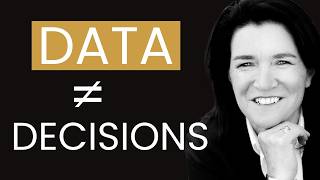
Gabrielle Dolan explains why data alone won't persuade anyone and shows how short, authentic stories make financial presentations stick. Stories should be 30 to 90 seconds, start with time and place, and pair with a blank slide to focus attention. A CEO's driving lesson or a CFO's reluctant adoption of storytelling proves vulnerability beats jargon.
Chapters
In business especially, there's an overreliance on, well, we've got the data and the data makes sense, so people will do what we want them to do because of that. But we are emotional beings. We make decisions based on emotion, not logic. Just pushing the data alone won't do it. So this is where a story fits in. If you're presenting, the most effective and memorable thing of your entire presentation will be the story.
Today's guest is Gabrielle Dolan, speaker and trainer on strategic storytelling and powerful presentations at Gabrielle Dolan Consulting. She helps leaders communicate more effectively through stories. She's a bestselling author of 8 books, including Story Intelligence, and she has worked with organizations like Amazon, Uber, and the Obama Foundation.
If you are going to use an image, whether this is in a presentation or a LinkedIn post or whatever, make sure it's a personal photo of yours, not a stock standard image. 30, 60, 90 seconds. What happens if your story's going longer than that? People are disengaging and they're thinking, get to the point. And the moment anyone starts to think, get to the point, you're losing them. So if you currently don't use any stories at all, I would just say an okay story is better than no story.
I'm curious, is there a framework you like to use when you're trying to craft stories for a presentation or approach to deciding what stories to use? Kind of what's the processes you'd recommend kind of people go through?
Ironically, even though we're hardwired to listen to stories, you don't want to start your story with Welcome to another episode of FP&A Unlocked, where finance meets strategy.
I'm your host, Paul Barnhurst, a.k.a. the FP&A Guy. Each week we bring you conversations and practical advice from thought leaders, industry experts, and practitioners who are reshaping the role of FP&A in today's business world. Together, we'll uncover the strategies and experiences that separate good FP&A professionals from great ones. Helping you elevate your career and drive strategic impact. This week's guest is Gabriella Dolan. Gabriella, welcome to the show.
Thank you, Paul. I'm excited to be here. I was going to say, you know, a.k.a. the storytelling expert, just because you said a.k.a.
Well, you know, I actually got the hat. My business legal name is the FP&A guy. Right. So it was a hashtag on LinkedIn that I used, oh geez, 6 years ago now, and it ended up sticking.
Yep, good stuff.
I only had one person complain. One lady said I shouldn't use it because females work in FP&A, and I said, well, I'm a guy, and she said you still shouldn't use it. But I figure one out of about a million people, I'm doing okay.
Yeah, yeah, yeah, yeah. And you're talking about yourself, not everyone else.
No, you still shouldn't use it. I was like, okay, relax. I don't know that I follow the logic, but okay, I take your point. You could be the storytelling gal if you want.
Exactly. Exactly.
Yeah, we'll go for all of it. So a little bit about Gabriella's background. And if you can't guess, we're going to talk storytelling today. So Gabriella is a global expert in strategic storytelling and real communication. She discovered the power of storytelling over 20 years ago in her senior leadership roles in corporate Australia. Since then, she's helped leaders from around the world communicate more effectively with stories. Her client list is extensive and includes companies like Amazon, EY, Uber, and even the Obama Foundation. She's the bestselling author of 8 books, including her latest, Story Intelligence: The Craft of Authentic Storytelling Made Smarter with AI, which debuted at number 1 in Australia and reached number 1 on Amazon's hot new releases in 4 different categories, including workplace communication and presentations. She's also the co-host of the hit podcast, Keeping It Real with Jack and Raul, ranked in Spotify's top 3% most shared podcasts. Love the background. I love storytelling. So I'm really excited to get to have a conversation with you.
Thanks, Paul. I'm excited to be speaking to you about storytelling.
I love when I get guests. I don't know if you've ever, if you know who Brent Dykes is. He wrote a book called Storytelling with Data. And I had him on before. And so he's very much that business storytelling. How do you think of it? You do it with data. But so excited to get your perspective on all of this. I'd love to start. How did you go from a senior leadership role at the National Bank of Australia to writing 8 books about storytelling? That's not the typical path.
No, it's not the typical path. So it was probably in my last couple of years at the bank. I was in a senior leadership role, so I was leading people. So, you know, big part of that job is communicating and influencing. And, and, but I was also in change management roles. So rolling out, you know, large digital transformations across the bank and, you know, cultural change. It was in those roles that I started to notice that when I shared a personal story to communicate a business message, as in a non-work-related story to communicate the business message, people seem to get the message a bit better. It would sort of be like they'd go, oh yeah, I guess that sort of makes sense. It wasn't a magical silver bullet, but I sort of started to think, hmm, I think there's something in this storytelling business. And then what I started to notice is the great leaders that I thought were brilliant leaders were sharing stories. You'd go to conferences and you'd see speaker after speaker, and the really great speakers, you go, ah, they're sharing stories. That's why they're so good. That's what I'm remembering. So I had in previous roles done a lot of design and delivery of leadership programs. So I knew I had the skills and experience to actually design training programs, leadership programs and deliver them. I knew I had that skill and I just kept thinking, I think storytelling's a skill. And at the time our children were 2 and 5 and I just sort of thought, I'm going to give this a go. I think storytelling is something people need to learn and I'm going to teach them. And if it doesn't work out, I'll be at home with the kids for a couple of years and I will just go back and get another job if it doesn't work out. And here we are 21 years later, 8 books later. So it'd be fair to say it has worked out.
Yeah, I was gonna say, I'm pretty confident it worked.
Yeah, it took a while. I must admit it took a while because, you know, even though everyone's talking about storytelling now, as I mean, this is a key communication skill, it's a key leadership skill, back then it wasn't. And, you know, people would like literally go, what, you left your senior leadership role at the bank to teach people storytelling? Like, like, are you crazy? Like, oh, once upon a time. And there was just this real pushback that story had no place in business. And that's where I was starting from 20 years ago.
I'm curious, when did you know you were going to be successful? I imagine there were some really challenging times, especially with the kind of attitude. So how long were you into doing this before you're like, this is really going to work, I think I can, you know, be successful long term?
Yeah, it took a while. It took, it took a lot of years. I was, you know, so been doing this for 21 years. I would say for the first 7 or 8 years, um, it was really slow. Like, you were still— I've still felt like I was, you know, um, pushing, pushing shit uphill, as we say. It was like— and there would be people that would go, you know, well, can we, can we call it communication training? Because if we call it storytelling training, no one will come. And I go, yeah, you can call it communication training because it is communication training. So that, that was That happened. And then gradually, I think gradually, you know, sort of started to get more and more. And it got to the point probably about 10 years ago where I thought, you know, this is, I can make this work. And I still remember my husband wanted to leave his corporate job. And after about 9 years, I was thinking, I'm not sure we can afford you to leave your corporate job at the moment. And, but I said, give me 12 months and things happened. And, um, I, I'm not sure exactly what happened, but, um, I decided to really, really give it a go. And there's quite a few things lined up, all that worked well. And then that was at the point where, you know, sales quadrupled. And I thought, yeah, this is good. This is, you know, I can, I can support everyone now. So my husband left his corporate role.
You know, there's a— I'm going to go on a little bit of a kind of tangent here with all this, but I think there's something we learned. I know I have a lot of audience that get into fractional CFO advisory and FP&A support. You know, I've been running my own business for 4 years now, and I think so often everybody thinks it's an overnight success, right? When you say 8 books and Obama Foundation and, hey, I've been doing this for 21 years, like, oh, we must have had this great business all the time. But rarely ever is that reality. And I think there's so many lessons to that, not just in business, but whether it's storytelling, whatever it is you're working on. Rarely is anyone an overnight success. There are exceptions, but a true overnight success is basically as rare as a unicorn, right? You don't, you don't have to be.
Absolutely. Absolutely. And yeah, like people would look at me and go, oh my God, that's amazing. You, you took such a risk. You did it. You were the front runner in storytelling and all this stuff. And, um, you know, and I would say yes, I've, I have been successful. But yeah, for the first 10 years, it was like financially, well, if you look at what success means, and to me success isn't all about money, but money-wise, I was not earning anywhere near that I would have, you know, if I'd have stayed in my corporate role. I was not earning anywhere near that. Um, I did have a lot more freedom and a lot more time and flexibility with, with the kids. But, um, even when, you know, my husband did leave his work, and so I was, you know, the, um, I guess the, the primary breadwinner, but, and like, I got real understanding of what that pressure can be. But, but not only— some people are primary, you know, the main income, but working for someone else, so they get that steady, you know, salary every fortnight or every month. This was— it was totally reliant on me to sell and, and to sell myself and to sell the concept of storytelling. So that That does create a bit of pressure. And even though it got really successful and I still remember one of the times we spoke about Obama doing work for the Obama Foundation. When I got that email from the Obama Foundation wanting to talk to me about running storytelling workshops, that's like, Paul, that was one of those moments where you go, first of all, my initial reaction was like, this is a joke. This is such a joke. And then, but then it was like, all right, I'll, but you know, don't pretend it's real. And then, and then you're having a meeting with them and they're saying, yeah, we want you to run the training. And that was one of those pinch me moments. It was like, how did I, you know, like when I thought I'll just give this a go and if it doesn't work out, I'll just go back and get another job to running training for the Obama Foundation, getting to meet Barack Obama. It was like, wow, wait, like that's pretty cool. And so, um, So I did have some of those moments where you go, yep, this is good. This has worked.
I can totally relate to some of those pinch me moments being the breadwinner, all the things you mentioned. It's, you know, quite the journey. So I appreciate you kind of sharing a little bit. All right. I want to jump into a little bit more storytelling. FP&A professionals, something you often hear in finance, data-driven worlds is the data speaks for itself. Talk a little bit about that idea, that notion.
Do you think the data speaks for itself?
I know it doesn't, but I want to get your opinion on it.
So we all know it's like you can have data there and it's the way it's interpreted is, and it can be interpreted in so many different things. So I'm not saying get rid of the data. Like I'm not saying you don't need the data, but it's just in business especially, there's an overreliance on, well, we've got the data and the data makes sense. So people will do what we want them to do because of that. But we are emotional beings. We make decisions based on emotion, not logic. We use logic to justify and we use logic to rationalize. So what I say, what I say with people is like, you, it needs to make logical sense. Um, you know, you would hope that what you're trying to communicate or influence people makes logical sense, but the data, just pushing the data alone won't do it. And then. And that often feels like, you know, when you feel like you're hitting your head against a brick wall going, why don't they get this? It makes such logical sense because we're trying to communicate with logic. So this is where a story fits in. So I sort of say, use a story if you're trying to get people to make a decision or to do something different. So if you're trying to get, you know, if you're presenting a whole heap of numbers and you're trying to get buy-in, you need a story because you're trying to get people to buy in and to influence a decision. Um, use, use a story, a specific story to bring your numbers to life. That's what I sort of say. So you could be, you know, you could be presenting something like, you know, 20% of our customers, blah, blah, blah. I was like, well, give me an example of one customer to add to that, to make it real, because I won't remember the 27%, but I'll remember the impact on this one customer. And you know that we've got a lot of customers like that. That's That's what will have an impact on a human and all humans. So I do get people, oh, well, I can't share a story to the finance team because they're finance people and they're just, I go, they're human. And if they've got a human brain, they will be like everyone else. So we'll make decisions based on emotion and use logic to rationalize that decision.
I've seen that in some of the books I've read on storytelling, the psychology, the look. One I heard is if you want someone to change an opinion— so if you're not, not so much just telling a story to get buy-in, but if you're trying to change an opinion, you really need to change their grounding, their story, with another story. You need to give them something to replace it, and then like you said, they're going to justify it with logic, but they're looking for that story to anchor it in from everything I've seen, kind of psychologically.
Yeah, I remember I did some work with it. It was a government department, so they were, you know, they would do all this work and they would present to the minister. So they were trying, they were trying to influence a decision. And they, they got really frustrated. They would go, we do all this work, we present, get all this information, present all this data, we present it to the minister, and we believe we've— they've made the decision based on our data. And then we find out the next day that someone came in and shared a story and they changed their mind. And I'm going, so what is that telling you?
Right?
And so to me, it's to me, you need both. It was like, how can you present your data but then share the story that actually influences a decision? Um, and that— and so that by their own admission, the, the story someone else was sharing was more powerful than all the well-researched data and facts and logic that they were presenting.
How do you combine those stories, or how do you find those stories, especially in a finance world? Right? Because obviously this isn't Once Upon a Time or bedtime stories. It's not necessarily that you need a hero and a protagonist, like you think of that. But to me at least, and this is where I want to get your thoughts, it feels like you need that emotional connection is what you're trying to do with that story. So how do you kind of— how do you pick stories, or how do you weave those in into finance? You know, stuff that's heavy with facts, data, numbers.
So I always come back to, uh, Paul, what are you— what's the message you're trying to communicate, or the, uh, what you're trying to influence? So there could be times for example, you don't need a story. So I'm very strong on you don't need a story for everything. If you are literally doing a project status update or a pure finance report, this is where we're at, you don't need a story for that because you, all you're doing, the reason you're doing that is to inform people. People want to know what the, you know, what's the latest monthly budget. You don't go, well, that reminds me of a time when, right? You're not sharing a story there.
When I was alive.
Yeah, yeah, yeah, yeah. But I always say, you know, unless, unless you've missed your sales target or budget, then you might need a story for that. So premising the fact that you might do presenting something for 30 minutes and it's a report on where we're at and it's just reporting on the data. But if there's a moment, say that, say there's one of the things is you're presenting the data and what you need is you might need the leadership team, for example, to role model this behavior. Or you might actually need more resources than you thought you needed. So whenever it comes down to, I actually need to influence a decision, then I'm saying you need, you need a story for that. So if, for example, let's just say you want people to role model a certain behavior and that's the message you want to get across. It's not necessarily a story about the behavior. It's a story about the importance of role modeling. And that you can have a story about that. I remember I worked with a team and it was the CEO pulled his top 200 leaders together. They were rolling out a new strategy, so they were there for the day, right? So there was all this information around the strategy and what they're doing and blah, blah, blah, blah, blah. But one of his key messages that he wanted to leave his leadership team with was the critical importance that they role model the behavior, that it's, it's, it's up to them, the, the top 200, to role model the behavior. And he shared the most simplest story where he said, I've been teaching my son how to drive, and my son will get in the car, and when he, he will put the indicator on and change lanes straight away. And I said to him, son, 'When you change lanes, you're meant to put the indicator on and leave it on for a few seconds to indicate to people that you're changing lanes. You just don't put it on and change lanes straight away.' And he, and he said to me, 'But Dad, you don't do that.' And he literally said, in that moment, I had failed my son because I was asking him to do something that I was not doing myself. Now, Can you see how powerful that story is? Because first of all, it acknowledges the fact that it is hard to role model this stuff all the time. Like we, you know, we say we'll do it and we want to do it, but it's actually hard to do it. And even his language about I had failed him at that time is quite emotive. Now, what happened after that, Paul? Because he was a massive fan on storytelling and he got me in to train all those top 200 leaders on storytelling because he saw it as a critical thing. So over the And then over the next few months, I ran all these workshops, internal workshops to train them up. I would say that nearly every single person, those top 200 leaders had retold that story to their team. So the story had this like cascading effect through the organizations because what the story was is it was, it helped you understand the message. It was memorable. People remembered it and they could actually retell it. Some had had a similar experience in teaching their kids to drive, so they shared it their own story, but it was still, it still got the message across. So that's, that's where I say you can use, think about, you know, and you think about how if you want to change, get people to do something different, feel something different, or think something different. So when you think about what do I want people to do, what I want them to feel, what I want to think, um, data alone will not do that. You need a story to help people do that because what a story does, it connects into emotion. And I'm not saying emotional like it's got to be all sad or anything or scary. It just, that story taps into emotion and then that's why we remember it and that's why we're able to retell it.
A lot to unpack there. I love all these shared. The first is great point on, look, if you're just doing a status update, a report, there doesn't need to be a story.
Don't need a story.
There may be a time when it makes sense, but you don't need a story. I think that's really important. Second, I love the example you shared of the leader, because one, he shared a simple story, so it's easy to share. There's a couple things, something we can all relate to, and he showed vulnerability. If you're wanting change and you show, look, I'm not perfect, I screw up, I'm here with you trying to do better, I'm much easier to follow that person or want to try knowing that they're being straight with me versus here's what I expect you to do and I'm perfect at it.
And I often, you know, when I train people, is those stories that show a bit of vulnerability, like when you didn't do that value, they're the most powerful. Because I mean, could you imagine if he shared a story about the importance of role modeling and he said, it's a bit like, you know, I'm teaching my son how to drive and I'm telling him when you indicate, so when I I put the indicator on, I leave it on for a few seconds to indicate to everyone so my son can follow me. And, you know, first of all, boring. Like, boring, boring story. There's no vulnerability. And so the power in that story is, um, showing some vulnerability. And again, I think some people go, vulnerability isn't about crying or getting people to cry or, you know, sharing your deepest darkened fears, but it's literally just having the courage to say, well, I don't get it right all the time. And none of us get it right all the time. And And as leaders, it's really important to demonstrate that to your team because it builds the connection. They're sort of going, oh, you're human, you're normal, you're just like us. And that can be the really powerful part of storytelling.
You want a really good book on that kind of whole idea of vulnerability and being a leader that admitting mistakes. Have you ever heard of Gary Ridge? He's actually originally from Australia. He was the CEO of WD-40. He wrote a book called Anytime Nap.
Yeah, yeah.
And he talks a lot about the vulnerability, you know, and he makes a comment, he's like, even the pe— even the queen has to sit down to pee.
Yes.
You know, we're all, we're all the same at the end of the day.
Yeah, yeah. Well, I mean, I'm, I'm a massive fan of Brené Brown, and she's, you know, her, you know, famous TED Talk is all on the power of vulnerability. But I do remember I did, I did some work with, um, uh, an investment company. So they were, uh, you know, get— they would buy companies and build them up and sell them. And so they were always looking for people to invest with them. And the CEO, he, he, you know, I did work with him because he said to me, he goes, we, we get these investors in a room and we just go through the PowerPoint of all the successes we've had and the numbers and the, you know, it's very finance driven. And he goes, I actually find it boring. Like I find it boring and I'm the CEO. And so after the work we did with them, they would bring the, you know, a handful of the leadership team in. They would all share stories and one would share stories about their culture and other stuff, but he would kick it off and he shared, he shared a story and he calls it the biggest mistake I've ever made. And so he shared a story about like when they did invest in a car and all the, all the things he did wrong. Like, you know, this was years ago, all the things he did wrong as a CEO and investor. And he said to me, initially I was really reluctant to share that story because I thought they would go, you're an idiot, I'm not investing money with your company. But he said the complete opposite happened. And every time he shared that story, it was almost like they were going, they really trusted and respected him for being so open and honest and transparent. But there was also a little thing going, well, you've learned all those mistakes with other people's money and you won't make the same mistake with my money that I invest in you. And he just said it was it was like a no-brainer in the end. And he shares that story every time. That's the story he shares. And yes, and yes, they do have the numbers at the end and stuff. So they go through that to give them, you know, that's important, but it's not, they're not leading with that. So what we find is people lead with the data and stay with the data and end with the data when they were literally leading with story and they were having the data there to support that. Yeah.
And finance would like to call it, you know, leading with a wall of numbers.
Yes.
And every, every eyes glaze over.
Yeah.
I had a guest on, he said, lead with what he liked to call a waterfall cause of change and bucket it into stories.
Yes. Yeah.
So there's this story here that caused the change. There's this one. And I always thought that was a great way to describe it for finance people. He goes, and then put the wall of numbers in the back because you have to have your wall of numbers. We work in finance and I just kind of laugh, you know, like the data has to be there. If all you do is tell a great story. And you have no data to support it, something tells me that's not gonna work too well with your audience if you're supposed to be presenting the P&L. So I think sometimes people, it's much better today than it used to be, but people still misunderstand the kind of vulnerability stories, the emotional, and think of their kids or think of, you know, storytellers.
It's like, yeah, that's not what we're— Yeah. And I like the fact you said it. I agree. It's like, you know, you've got, you've got your wall of numbers, you need your numbers, and then you've got different stories for different things. So it's not like one story, like if you've got a presentation, I'd be going, well, what are all the different messages you need to communicate? Do you just need a story about one example of a customer or whatever? Or do you need to influence the outcome and you need a story for that? So it's thinking of where you can insert stories. My thing is keep them really succinct. Like, you know, the story I just shared about the CEO and drove his son, that was like a 30-second story and it was probably the most most powerful 30 seconds of the day. So your stories are 30 seconds, 60 seconds, maybe 90 seconds, but you got to keep them succinct. And that way you can think about different stories where you can share for different purposes.
FP&A guy here. Agentic AI is one of the biggest shifts in finance ever. And most FP&A leaders are still struggling to figure it out. On May 21st, August 1st, I'm hosting the FP&A and AI software showcase with two of the leading AI agents in the marketplace, Concourse and Sapien, plus leading planning tools, Drivetrain and Oona AI. One sitting, real demos. Register at thefpnaguy.com/fpa-software-showcase. That's fpandaguy.com/fpa-software-showcase. See you on the 21st. Great point there. I'm curious, is there a framework you like to use when you're trying to kind of craft stories for a presentation or approach to deciding what stories to use? Kind of what's the process or processes you'd recommend kind of people go through? And a lot of times people struggle with that of how do they think of the stories, where do they put them in, how do they decide, right? The actual sausage making, so to speak.
Yeah, look, so I always come back to, Paul, what's the message? What's, what's the point? What, what are you trying to achieve? So don't think of the story and go, I need a story. It's like I often go, okay, okay, tell me what the message is, and they're still talking 10 minutes later. So you've got to be really, really clear on the message, the point you're trying to get across. Then I, then I go, okay, so where can we find a story? Now, in the book, I talk about the 4 different types of stories, which are very quickly professional, personal, parable, and public. Some of the most powerful ones are the personal stories, as in these are the ones that didn't happen at work, but you can link it to a work message. And, and, and, and I sort of get to know you a little bit better. So sharing, sharing stories like that. So then, but then it's going, okay, is this relevant to the message? Um, I've got this story and then I put it, take it through the framework of, you know, I know this may sound really obvious, but beginning, middle, and end. Because, you know, I always say you don't want to be that person that tells a story without an ending. Um, and, and this is, and this is where the real skilling takes place. So, you know, like I spend half a day teaching people this framework and skill. But, you know, to give a few tips is like when you start your story, start with time and place. Like, for example, you know, when I was a kid, I grew up on a farm is time and place. This morning at gym, time and place. You know, in my early 20s, I went on an African safari. That's time and place. So what that does is signal to your audience that you're about to tell them a story. And because we are hardwired to listen to stories and share stories, our brain sort of switches over to go, oh, I'm about to hear a story. And especially with finance, you know, when like almost by, because you are presenting numbers, it can be a bit dry. Like we know that it can be a bit dry. And then you're presenting these numbers and then go, this actually reminds me of what my kid said to me the other day. And then all of a sudden it's like bang, every, you've got everyone's attention. Because they go, we're about to hear a story. Ironically, even though we're hardwired to listen to stories, you don't want to start your story with, let me tell you a story. Like, that's a terrible way to start your story. Let me tell you a story about us. Like, please don't, right? And then we've got to keep it really succinct. So like I said, 30, 60, 90 seconds. If your story is going longer than that, people are disengaging and they're thinking, get to the point. And the moment anyone starts to think, get to the point, you're losing them. And then the hardest bit, the absolute hardest bit is how you then link that story to your business message. So, you know, you might be sharing a story about your kid or when you're a kid and people might be thinking, I've got no idea where this is going. And that's okay because you've only been speaking for maybe 30 seconds or so. But the real skill is to go, I'm sharing this with you because it reminds me of blah, and you know, and then like a call to action and imagine what we could achieve if we did this or whatever. So that's, that's the link where you want people at the end to go, oh yeah, I, okay, now I get it. Now I mean what I get what you're saying now.
I really like the point there of keeping it short, not starting with, let me tell you a story. It's kind of like the whole once upon a time.
So once upon a time straight away says it's made up. And that's the other thing. You don't want your stories to be made up. They need to be authentic and, and authentic on two levels. One, it has to be true. Like, like don't make up stories or exaggerate stories. It has to be true. And the other thing is that you've, you've got to believe in the message. So this isn't about manipulation. You're not, you don't have this data that doesn't make sense, but you're trying to convince people it does. You know, it's, it's not doing that. It's sort of like, I truly believe in the message. I truly believe we've got all this data and information. And so I truly believe that this is where we need to go. But you're just using a story to do that because you truly believe in it. Um, you know, talking about data, I had one, just this happened a couple of months ago about data and storytelling. And, um, he said to me, he goes, but we're a company that makes decisions based on data. And I would get, I would hope so. Like that, I would hope you're making decisions based on data, but this is about how you communicate why we're doing this. So you still need the data, but a story is what, a story is sticky. It's what people will get and understand.
You know, when you said that stories are sticky, it reminds me of the, there's a book called Stories That Stick.
Ah, yeah.
And the whole idea of being sticky. That's what it made me think of.
Is that, is that, um, Dan and Chip East? Called Made to Stick, or is that a different—
No, this one's Kindra Hall.
Oh, right. Yeah. One of the books I first read when I started out was Dan and Chip Heath's book Made to Stick. They talk about, like, I think there's 6 things that help your message stick, and one of them is stories. So that was way back then.
Not surprised. I mean, the evidence is overwhelming at this point. Stories are an effective way to help get across your message. Yeah.
I did. I had an interesting conversation once with a CFO, and it was actually the example I gave you with this organization. The CEO wanted me to train the top 200 leaders, but he also wanted me to have one-on-one sessions with the exec team. I had a thing with meeting with the CFO, and I could only get one hour in everyone's calendar.
Sure.
The CFO was late and it was just like, and I was in there and then he came in and it was so, you could tell he was so against storytelling. Like, and he would sit down and goes, yeah, I'm not sure about this storytelling, um, because, you know, they can't go too long. And I was like, no, no, they can't go too long. They like, no, absolutely. And he kept throwing things at me and I'd agree with him and he goes, and they've got to be true. And I went, yes, Yes, they've got to be true. And it was like, and so everything you threw at me, he, um, I just got, I agreed with him. And in the end, I, in the end, I was laughing a bit and I'm going, clearly you don't want to share stories. Like clearly you just don't believe as the CFO you need to share stories. And, you know, he would go, no, well, I'm just presenting the data. And I go, and, and, you know, again, I reiterated, if, if all you need to do is update people on where you're at, you don't need a story. But I go, are there times you're trying to influence? Like, and he went, yes. And I go, well, you need a story for that. And, um, at one point he said, I'm often presenting with the CEO. So this is the CEO that tells a lot of stories. And he goes, I can't get on stage after him after he's been telling stories. I can't get on after him and tell stories. And I went, this stage I did laugh and I went, I go, you know what, if you are totally okay with people remembering what the CEO says and no one remembering what you say, I go, if you are totally okay with that, just keep doing what you want to be doing. And by this stage, he was laughing too. And I think in the end, he said, I gave him a copy of one of my books and he went, oh, well, I'll read, I'll read your book and I'll see what happens. Because in another conversation, in another point of the conversation, he said to me, that the next role he wanted was a CEO role. And I'm going, you're not going to get a CEO role if you don't, you know, like you got to tell stories because that's, you know, influencing and communicating people. Anyway, we, we left, we left with him making a commitment to read my book. And, um, a few months later, I kept getting texts from people in this company because I knew quite a lot of people in this company, getting texts from people in this company going, have you been working with CFO? And was like, yes, why? And they go, he started to tell stories. It's like really good. And I got that cheeky bugger. He went, he went and did it and didn't tell me about it. So yeah, I think that's a great, great story. Yeah.
I often hear finance leaders say, I know I need FP&A software, but I don't even know where to are. That's why I created the FP&A Software Showcase, so you could see top tools in action. This year we're featuring Drivetrain and Oona AI on the planning side, and the— for the first time ever, we're adding two leading AI analyst agents on the market, Concourse and Sapien. These tools are already being deployed at public companies. You will get to see actual demos without the pressure of a formal sales pitch. Ask your questions and compare tools, all from the comfort of your chair. Join me on May 21st for the Showcase. Register for free at thefpandaguy.com/fpa-software- software-showcase. That's thefpnaguide.com/fpa-software-showcase. See you there. Oh, fun. So I want to ask a little bit, I think that's great there and great examples about your latest book. So you wrote 7 books and you decided to write an 8th called Story Intelligence: The Craft Authentic Storytelling Made Smarter with AI. So obviously you talk about story and AI in there. What made you decide to write another book? How did this one come about?
I was pretty convinced I was not gonna write another book on story, story, but it was probably about this time 2 years ago, I would be running these workshops and I would have people increasingly asking me, will AI replace storytelling? And the fact that people were even asking me that question horrified me. It was like, no, why would you think AI would replace your own stories? That's no, no, no, no, that's not going to happen. And then more people asked me, can you use AI to help with your stories? And my, Paul, my initial reaction, I must admit, was like, no, that's cheating. No, not on my watch. Not going to happen. And then I, and I thought, well, maybe I should just explore this. So I started to explore and would, you know, get into AI and say, you know, can you write me a story on whatever? And I was disturbingly surprised how good it was. Not pleasantly surprised at all, disturbingly surprised. But there was something missing. And what was missing was it didn't feel real. And it didn't, it was sort of like lacking the human connection. Um, so I, it was really the premise of me writing this book was that in a world of distrust, and we are in a world of distrust, like we just, just, it's hard to trust anything at the moment. And in a world of AI-generated content where there is so much AI-generated content that our authentic stories are needed now more than ever. But AI is not the enemy. And what I've done, what I did with my research, it was like, if used wisely, if used as your creative partner, you can use AI to help with your storytelling. You don't need to use AI. So, you know, I consider myself pretty good at sharing stories and I, up until 18 months ago, had not used AI to do it. But you can use AI to help you find stories. And potentially refine your stories, but the key is without losing your voice. So ultimately, this is still a storytelling book. Like, you know, 80% of it is storytelling. I've just brought in some elements of how you can use AI to help with that if you want to.
I think everybody at first, at least I was the same, like, AI for storytelling? And now I can see it being used in almost every situation, at least as a thought partner. Partner.
Yes, and that's what I suggest in the book. Like, you know, if you're trying to— so Paul, you're presenting and you're thinking, okay, I'd need a story to, you know, I love that story of role modeling. I need a story to help me communicate the importance of role modeling. Get into AI and literally say, I'm looking for a personal story to communicate X. Can you act as my storytelling coach and ask me questions to help me uncover the story and literally use it like that. Because, you know, if I was sitting down and having a coffee with you and you said the same thing to me, I wanna, I wanna share a story around, you know, role modeling, but I just can't think of anything. The first thing I would do is ask you a whole heap of questions and I guarantee you it would make you think of a story. So use AI for that. That really effective way to use AI. Now you could just use a friend or a coach or whatever, but you know, AI is there right at the moment when you need it and you don't need to buy it.
Yeah, it's available 24/7, the framing.
Yeah, yeah, yeah. And you don't need to buy the coffee and you don't need to make a time, so you can just do it. The real danger then, and I do talk about in the book how AI will then go, give me a few bullet points and turn it into a story. The real danger then is you have to, you can't get that stuff back from AI and go, oh, that sounds good and use it because A, is it true? Like it might go, you know, I felt really excited when this happened. And you might go, oh, I didn't feel excited. I felt terrified. Okay. So change it to be accurately true, but also make sure you're not using words in that that doesn't sound like you. Um, now I used to, up until, and I've noticed this probably in the last month, I used to say if you're using AI that doesn't sound like you, you're running the real risk of it just being a bit beige and bland and blending into all the other AI content. Now, I think the real danger is you're losing credibility because people are starting to think, well, you just— AI wrote that, or it feels AI. At the moment, people start going, it feels AI. It's— you're losing that connection, that human connection and potential credibility.
I think that's a great point. I mean, I use AI all the time to, uh, write my first kind of draft of posts from transcripts from these episodes, but I'll go through and read it. And often I'm like, well, that's not how I felt, or that's not true. And I'll modify and make changes. The facts, the lists, I'll edit them a little bit, but that I'm a little bit more like, okay, yeah, that, those are, those are the takeaways.
And, you know, but the story, and that's, yeah, and that's an important step that you've got to, uh, it's It's because I think we're using AI for efficiency where it can be efficient, but we've still got to go and check it because then it might be efficient, but it's not effective. So that's a really critical thing. And I talk about in the book to not lose your voice. And there's, you know, I always say, especially with stories, say it out loud. And if it doesn't, if there's a word in there that doesn't sound like you, then don't say it. Say how you really felt about it and change the wording to be more like you.
Great points. So one of the things you talk about in the book, I wanna kind of go back to the book for a minute, is this idea of story intelligence, you know, kind of another type of intelligence that we have. You know, we have others, obviously IQ and EQ are big. Kind of how did that concept come about and why is story intelligence so important?
Yeah, so full disclosure, you know, coming up with a book title's hard, very hard. And I normally, you know, ask so many different people. And so I, that's what I did last, this time I asked a whole heap of people for their input, but I used AI as one of those people for my input. So, and this is an example how to use AI. I said, you know, told AI what the book's about. Can you, can you come up with 10, 50, I think 50 suggested titles? One of them was narrative intelligence. Now, I don't, I don't particularly like the word narrative because I think it gets used in replace of storytelling, where I think narrative is like your big overall theme, but you've got lots of stories. So I don't like narrative, but straight away I went, oh, but what if it was story intelligence? And I really like that concept. And I also like the concept that it's, it's like emotional intelligence. I do believe that the people that are very, very good at storytelling have high emotional intelligence. Um, and so yeah, it was like the EQ, SQ. It's, um, it's like anything. You, you can improve your emotional intelligence. You can, you know, um, and you can also improve your story intelligence. So I, I like the sort of correlation between emotional intelligence and story intelligence. So that, that's where that sort of came from.
Great example of how AI can help give us thoughts and generate ideas. So what I'd like to ask is, you mentioned it's that everybody can improve their storytelling. We can all get better. So what's one thing that somebody could do, you know, maybe 5 minutes every day that would help them get better, that would improve their story intelligence?
Okay, so besides buying my book, that's gonna really improve your storytelling.
Love it. So there's the ad. Buy her book.
There's the plug. Yeah, there's the, there's the, I was gonna say subtle plug, but not so subtle plug. Um, it is a skill, but in all seriousness, it is a skill. And I've seen people just go, oh, I'll just start telling stories. And then it doesn't work and go, well, I tried a story and it didn't work. And it was like, so I think to start off with, I would say almost observe other people sharing stories. And like, when, when someone shares a story and you sort of— at the impact it has on you, and then going like, and, and observing that. And then once you realize that this is really powerful, then, then start to educate yourself how to tell it well. But, um, having said that, I always say an okay story is better than no story. So if you're currently don't use any stories at all. I would just say an okay story is better than no story. Now, I have seen stories backfire and that is a potential risk, but very minimal. An okay story is better than no story.
I like that, that the okay story is better than no story. And kind of funny, I'm learning, you know, I've been running my own business now for 4 years. So do a lot of presenting, a lot of training, and I have a partner I do my training with and we both have a story we share all the time actually. Around getting better at presenting. And we've got so good at telling the stories that every so often, just for fun, I'll tell his story and he'll tell mine. And we kind of almost mock it a little bit as we're telling it. But I think to the audience, sometimes those are the most memorable because, you know, it brings in that humor and that fun, but it also gets across the point. And so there's so many different ways you can use it when you really start to understand the value of storytelling.
And if you sort of think that if you're presenting, the most effective and memorable thing of your entire presentation will be the story. So, you know, put as much time and effort into that as you do putting into your polished PowerPoint presentation because we spend a lot of time on PowerPoint slides, a lot. Could you imagine the amount of hours that organizations spend on, or just even individuals. So I would say you don't need, you don't need to spend as much time as that, um, and your, and your story will be the most, uh, the impactful thing you say of the whole presentation.
Big fan of that whole storytelling. Bring in good visuals to aid your story, and it can just be gold sometimes when you, you know, you can combine it all together versus reading a deck. We've all been there, and it's just like, all right, If you're just gonna read the deck, hand it to me, I'm gonna walk out.
Yeah, if you're just reading the deck, you're redundant. You, you've made a point about having good visuals. So, um, if you're, if you're presenting and if you've got using a slide deck and you've got numbers on there and all, all the stuff you have and you've decided to share a personal story, first of all, you don't necessarily need an image because a good story creates the visual. But if you are gonna use a visual, if you are gonna use an image, whether this is in a presentation or a LinkedIn post or whatever, make sure it's a personal photo of yours, not a stock standard image. So if you're sharing a story when you're a little kid and you got your first bike, try to find that story of you on your phone. Don't— it's such a disconnect when someone's sharing a personal story, but they're using a stock standard image. So I would go no, no image or your personal image or photo, but not a stock standard image.
That's great advice. Another thing I've seen people do, and I had never heard of this, a guy that does a lot of storytelling, and he goes, when I'm giving a presentation and I want all eyes to be on me and I'm gonna tell a story, I just bring up a blank slide, a black slide, and I leave it on the screen. 'Cause then their eyes don't go to the screen. Their eyes immediately go to me. Like, why is there this black slide? I thought that was a really good little tip I picked up for somebody, and I've done that. And I remember immediately someone was like, Why is there a black slide in the middle of your presentation? And I explain there, oh, okay. I just wanted to make sure you didn't just accidentally stick in a black slide.
And that's great advice too, because you do, if you've sort of said, okay, this is a really important point. So I'm going to have a story for it. You want all eyes on you. You don't want, you know, you don't want to have left your graph up there and people are still reading the data and you're trying to tell the story. So that's a, that's a Great point. So either, either a blank, a blank, or just a picture of, of whatever, and people don't know about it. I remember I worked with Alita once, and, and she was, um, she was championing diversity in the organization. And so I was working with her on a personal story, and she shared with me that when she grew up, she not only— when she was about 10, she not only had braces on her teeth, but she had something wrong with her back. So she had to wear a back brace. And she was just going, could you just imagine this 10-year-old? Like, I was walking like a robot, I had braces, I was, you know, and often got left out of things because she looked weird. Um, anyway, she tells this story, and then of course she had a picture of herself as a 10-year-old, and, you know, like, it sort of made it funny and relatable. But, um, yeah, I think that's a great example— blank screen or personal photo.
I got to get better at the personal photos. That's some good advice. I've, uh, taken down some thoughts of where I can improve, so I appreciate that. Um, yeah, so I just have one more question before we move into kind of the section where I like to get to know our guests a little better, some more personal questions. So the last one: finance is famous for jargon— EBITDA, OpEx, run rate. You're laughing, right? All those terms. You'll find this appreciating thinking of stories. So I did Toastmasters for several years and I wanted to do a presentation. I never put the time in to do it. I work at American Express and it was a Toastmasters through American Express. I wanted to do a presentation with nothing but Amex acronyms because we use so many. Yeah, just kind of make everybody laugh and see if I could string together a 2-minute kind of story to brief little table topics in, uh, in Toastmasters. And you know, I think of that sometimes what we do in finance. So how do we break that habit of, you know, using so much technical jargon? What's the advice you offer?
Yeah. So, you know, I started a thing quite a few years ago called Jargon Free Fridays, and it was a bit of a fun way to raise awareness to the problem we have. And it's just not finance. One of my most popular keynotes when I go into, you know, speak at conferences is around real communication. And of course I talk about the importance of storytelling, but I talk about the dangers of the of jargon. You know, we're running, running things up flagpoles and we're pivoting and we're getting ducks in our row and, oh my God. But the real danger—
and call that BS bingo.
Yeah, yes, exactly. The real danger is the overuse of unnecessary acronyms. So I'm, I'm not against acronyms, but we have this excessive use of them. And like, as soon as something is 3 words, we reduce it to an acronym. Now what that means is, look, if everyone in the room fully understands the acronym, then go for it. But that, that's a big assumption you're making. And what it does mean is when you're presenting in acronyms, people have to interpret what it means. Now they may know what it means, but it takes a split second for them to understand what it means. And then you've got to hope that they interpret it the way you want to interpret it. Now, I remember once having a meeting with someone who wanted my advice on tapping into the SME market. And I said, sure, no worries. And then about 10 minutes into the conversation, I'm going, I was getting really frustrated. I'm thinking either I'm not explaining myself properly or she's not listening because it feels like we're talking about two completely different things. And then I went, oh, hang on a minute. And I just said, can I just check? When you asked me for advice for SMEs, were you talking about subject matter experts or small to medium enterprise? And she went, small to medium enterprise. I went, right. I've been talking subject matter expert the whole time. So we're making these assumptions and it's really hard to follow. I am just even to give this literally happened to me last night. I was, um, I was sitting on the couch with my two daughters and I conned one of them in to give me a little face massage. And so I'm on the couch.
Your secret.
Yeah, yeah. They put on this new show called The Pit, which is a medical— I'd never heard of it, but it's like based in an emergency in Pittsburgh. So all I could do, I was lying on the couch, eyes closed, but I could hear this episode. And after about 10 minutes, I just said, I don't know how anyone is expected to follow the storyline of this because it was literally acronym after acronym after acronym. And it was like, and that's, that's the reality that sometimes in corporate, whether it's finance or IT, technology's as bad, is that we, we talk in acronyms and there's a real danger. That people don't understand it, so it's disconnecting and isolating people, or interpret it in a completely different way that you want it to be.
Couple things I kind of took away there. One is, unless you're confident everybody in the audience is going to know what that acronym is, just use the word.
Just use the word.
Is that kind of using the phrase?
Yeah, yeah.
Two, I like your idea there of You know, kind of Jargon Free Friday, find ways to implement periods or presentations or times when you're going to focus on not using it at all. So you can start to break that habit.
Yeah, yeah, exactly.
Good, good advice there. All right. So the get to know you section. First one I want to ask, if you could live the life of any fictional character, who would you pick and why?
I've been rewatching Derry Girls, uh, recently, which is a, a comedy based in Derry, London, or, um, Ireland. And there's a character in there called Sister Michael, and she's the wittiest, sarcastic nun you've ever come across. And I think I, I would love to be that person. I think, I think I am that person, just without the nun. But I love that character.
Got it. So witty, sarcastic nun.
I like it. Yeah, yeah.
So I know you love a good story. So what's one story your family tells that you wish they would stop telling?
My kids constantly tell stories about when there was things wrong with them medically and I ignored their calls to go see the doctor, only to find out that there was things wrong with them medically. Um, anyway, I just sort of go, oh well, you know, whatever, it's made you tough. It's made you stronger. Yeah, it's just—
and they just shake your head.
They tell that. Yeah, I remember one story. My youngest, Jess, she was, uh, you know, she, she was really tired. She was in primary school and she goes, Mum, this— I'm so tired. Every time I'm so tired. I go, you'll be fine. It's just, it's what kids get tired. And this went on for about 6 weeks and then she got better. A few years ago, she had to get tested for glandular fever and, um, she comes back and she goes, so good news is I don't have glandular fever because I've already had it. And I went, oh, that must have been when you're in primary school and really tired for 6 weeks. Anyway, so things like that. They'd love telling the stories about that.
That's pretty funny. All right, next one. You talked a little bit about this earlier. So you got to meet Barack Obama. I know that kind of had to be a highlight. You mentioned that earlier. So, and you referred to that moment as you cannot fake that level of Authenticity. Can you elaborate on that? Share a little bit more about just kind of that whole moment and experience.
Yeah, so we were at, I was presenting at, at their conference in Malaysia and Barack Obama was there and Michelle Obama was there actually as well. Um, and you were constantly told that you were not going to meet the president. Uh, and we didn't, and we, we thought he'd actually already left and I was sitting with one of the participants and they got called in. For a photo shoot. So they went into the room. So I was just sitting outside, me and, um, I'd taken my daughter Alex with me and a couple of other speakers. We were just sitting there. And then Barack Obama walked into the thing and he's completely surrounded by security, as you could imagine. And, um, one of the other speakers said, when he comes out, because it was literally probably only 20 meters away, when he comes out, let's draw him to us with our energy. And I remember thinking, if anyone said that to me any other time, I'd think they were bloody a bit woo woo, but I went, yeah, let's do that. And he came out. And I don't know, I don't know what we were doing. I think we were just all smiling and like, I'm like looking so excited. And he could see like we had our lanyards on that said speakers and he said, oh, the speakers. And so he broke rank and he came over. And you're also told that you're not allowed to ask for photos or anything like that. And that kept being reiterated to us. And, uh, he, he shook our hand. He introduced, you know, we didn't introduce himself, but he asked us what we did and, and he spent spent probably a good 5 minutes with us and thanking us for our time and blah, blah, blah. And then he must know, he must know the rule of you can't ask for photos.
And he said, I'm sure he does.
And he said, let's get a photo with the speakers. And so, you know, there was an official photographer there and we got a photo. I've got the photo up on my wall. And that's when I walked away and thought, you cannot fake that level of authenticity because I've seen, I've met Well, I've met Australian prime ministers and you'll walk away going, feeling like that was a bit slimy. Just everything about that felt fake where everything about him felt authentic.
That's awesome. My kind of similar story is I once met Jimmy Carter and I think your example of level authenticity really sums it up. I was coming back on a flight from London almost 20 years ago now, and all of a sudden this guy starts going around and he's shaking shook every single person's hand on the flight. And you see two people right next to them, both with earpieces in, and I'm looking, I go, because I'm in London, like the last place I expect to see on a Delta flight is Jimmy Carter.
Yeah, yeah, exactly. And I'm like, that's Jimmy Carter.
And person next to me, he's an American as well, older, probably older than I am, he's like, who is that? Pretty sure that's Jimmy Carter. And, you know, just so genuine, just shook the hand and went around, shook everybody's hand, and You know, I said hi to him and that was it. It was a couple seconds, but you could just feel how much he cared about people. You know, just that difference. Like when you, I think relating that back for a wrap up here to storytelling, people can tell when you fake it. You can tell when it's made up.
Yes.
Sometimes the exaggeration can be used in a proper way or a little bit of making it up where it can add humor. But if you're always kind of, you're not being authentic, it shines through when you're saying it.
It shines through. You know, yeah, absolutely.
So I think that's kind of a great story as we wrap up here to share that, because I think it so relates to the whole idea of just storytelling, of make sure you're being authentic. It will shine through.
Yeah, and absolutely. And like I said, we are in a world of AI-generated content where we don't know what's true. We're in a world of deepfake. You can't control what anyone else does, but you can certainly control how you show up and how you present. And you're making a decision, is authentic or not? And so you have total control. Control over how you show up.
100%. Great spot to end it there. Last thing I would like to ask before we just give you an opportunity to just share a little bit of how people can learn more about your books, you know, business, all those things, get in touch if they want to, is if you could leave with one last piece of advice to our finance audience to be a better storyteller, something they should start doing today, tomorrow, what would that one thing be?
I would say con— ask yourself when the next you're presenting and you've gotta deliver a message, ask yourself, would a story help me make this point better? If you don't even start asking yourself that, then you are not gonna think of using a story. So like at least start with that and then go through the process of trying to find the most relevant story to share.
Great advice. All right, so this is your last minute for that lovely commercial. Paul, we did one earlier, but now, you know, people want to learn more about you, get ahold of your book, you know, get in touch. What's the best way for them to do that?
Yeah, my website, gabrieldolan.com. I'm very active on LinkedIn, so connect with me on LinkedIn. Of course, you know, buying the book would be a great, you know, $20 investment. And you also, if you're listening to podcasts, which clearly you do, as you mentioned, I've got my own podcast, Keeping It Real with Jack and Raelle. I'm the Raelle bit of that. And we drop an episode every Monday on all things work and career and leadership. And people have told us it's like having a professional coach in your pocket. So have a listen to that.
Great. Well, thank you so much for joining. I've really enjoyed chatting with you. I appreciate you coming on early in the morning for you, as I know you're Australia. It's early Thursday and Wednesday for me, and appreciate you carving out an hour. I really enjoyed chatting with you. So thank you so much, Gabriella.
Excellent. Thanks, Paul. Really enjoyed it.
That's it for today's episode of FP&A Unlocked. If you enjoy FP&A Unlocked, please take a moment to leave a 5-star rating and review. It's the best way to support the FP&A Guy and help more FP&A professionals discover the show. Remember, you can earn CPE credit for this episode by visiting earmarkcpe.com. Www.fpaacertification.com, downloading the app, and completing the quiz. If you need continuing education credits for the FPAC certification, complete the quiz and reach out to me directly. Thanks for listening. I'm Paul Barnhurst, the FP&A Guy, and I'll see you next time.
More from Paul




Trust and Leadership Lessons for FP&A From 100+ Top Leaders with CFO Jon Laudie






