A Technologist’s Quest for Meaning
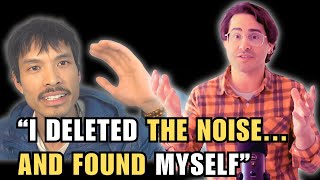
Juan Carlos, a tech executive, talks about leaving filmmaking for technology, building a mental models card deck, and what clarity means to him. They discuss purpose, free will, and how to think better about decisions.
Where am I in all of this? What is my independent thought? How do I do that? Clarity of thought leads to a purposeful life. And that's for me, that's for others. It's a underline for me now, where I'm going. So clarity as my one and specific and now only core value, I think is becoming more and more the this right here leads to all roads afterward. I started out as a filmmaker. Over the course of a decade, I found out that I had a passion for product and tech. Actually, my first feature film was about virtual worlds. I took a huge pause button and went to Joshua Tree and that's where I started to get more of an independent mindset, I think, and was able to rethink some of my frames. Started to write about frameworks as a whole. Got into Charlie Munger and Shane Parrish and these kinds of folks that are deep thinkers on mental models. Models are here inside our brain to simplify complexity, period. Knowing where you don't want to go is often more important than knowing where to go, because things will change.
Do you. Do you feel like you found your purpose?
Oh, gosh.
Hey, everybody, this is Robert. Welcome to the ABCs for building the Future podcast where we bring on leaders, founders, researchers, entrepreneurs, people on the front lines building the future, people doing big things with big stories to tell. Today we have on my friend Juan Carlos, who is a senior vice president of technology at Intracare Therapy, has a very illustrious career in product and strategy and technology and is also building a really cool thing on the side, which I will save for him to talk about when he introduces himself. So, Juan, welcome to the pod and could you tell the audience a little bit more about yourself and the thing you're building on the side?
Yeah, absolutely. So I started out as a filmmaker. Over the course of decade, I found out that I had a passion for product and tech. Actually, my first feature film was about virtual worlds and I think the bug started to gestate there. And then over time, I found myself driven by an interest in where technology's going. I want to get my hands into it. And ultimately, when I made the switch, it was through a social impact company called Participant and it was using this platform called the Take Action platform. So Fast Forward ended up growing into a leader in tech. And then ultimately in the last three, four years, I've been writing about mental models and life design, I think, you know, and in my personal life, I made a big switch from living in the city. I had been in New York City and then I moved to LA and then I thought, I need a. Find some place to get my own sense of space again. I needed some clarity from, you know, everything, all of the noise that I've been sort of imbibing throughout my entire life. And so I took a huge pause button and went to Joshua Tree. And that's where I started to get more of an independent mindset, I think, and was able to rethink some of my frames. Started to write about frameworks as a whole. Got into Charlie Munger and Shane Parish and these kinds of folks that are deep thinkers on mental models. And that's what really drove me to say, hey, I want to build the card deck again. I love the idea of having this be two pieces, the physical and the digital. And then you can use them whenever you're in a pinch, you have the phone. But when you're at home, I feel that using cards can be this really valuable and meditative type of approach. And then you can do fun things with it like spaced repetition and using it for memory games and types of things like that that I don't know if the digital space really allows for as well. So anyway, long story short, I've been building that. I'm about to launch it in about a month. And so I'm just really excited about the interplay between my old life and my new life in this universe. And then this, this side project that has really taken on its own form.
That's so cool. Thanks a lot for sharing all of that. I have so many follow up questions. First one is, did you read a card before this podcast? That's the first easy lohanging.
I was like, oh, million of these cards in my mind now at all times. So I think the one that has been sticking for me recently is Critical Mass and Tipping Points. And I just think about how movements are being built right now and what it takes to build a critical mass to create a movement. And then what's that tipping point that allows it to go from, hey, things are happening, but it's just a slow growing. Until that moment where it flips and it goes from. All of a sudden this happened, but so much is occurring underneath the surface of say, movements, but also, you know, all kinds of things in industry.
Yeah, interesting. Okay, so critical mass and tipping points, man. When you say movements, that's what's.
That's the one that's been in my head.
When you say movements, which ones are you referring to?
Gosh, I. I think I was thinking. I recently watched Selma, so I was, I was thinking about it from a civil rights perspective, just about how things grow and then ultimately quickly flip. But then that pasted against our current times, right. These movements that have caused different folks to be in power and why that's happening, how that's happening is just top of mind. Recently, you know, how Elon suddenly becomes like a co president is an interesting concept around how he gained this critical mass. And there was this tipping point for him to be able to make a switch over of that kind. So there's all of these kind of built in places where this occurs. I mean it happens in business all the time too. Right. And so I've, I think I've just been thinking about it. It's been the back of my head as one random model that has been percolating.
Yeah. And you know, it's funny, before we started the recording, Juan also has a 7 and 10 year old. So he's like full time dad bootstrapping a side thing. SVP of product company. Like that's a lot. And so I was just thinking as you were saying that how you're talking about how like being a full time dad, you're like getting them out the door every second you're doing things. And so I'm wondering if you feeling, you're feeling critical mass of that type of thing, like signing up for kids. Oh shit. Like do I have less time?
I know, right? I think, I think I live like intensely in productivity mode for sure. I've got like a whole productivity pack of ways in which to optimize my like sense of self and how I can make sure hey, you know, what's on top, what's second. So, and I'm sure that you do this all the time, but I'm heavy on the pomodoro technique. So I'm always doing 25 minutes on, five minutes off, 25 minutes on. And then my entire calendar is blocked with time blocks just to make sure that I'm doing the actual impactful things first, second, third. There's just a universe of those techniques to essentially maximize that ability to be able to. Not just necessarily. I think the challenge is you're trying to pull apart being productive against doing things that are meaningful. And I think you always want to be more on the meaningful side. And so when I think about doing this writ large on my life, it happens with the kids. Where I'm going, how do I make this the most valuable amount of time? Because time is scant with kids. I mean you think about it and you only get a few hours a day. They go to school, they come back, you go to, you know, practice with them. You're either at soccer or, you know, my, my son's doing soccer, my daughter's doing softball, and then they're doing violin and they're doing all these things, right. And they're, they're in a million different little places doing all of these cool things, pieces of work. Right. And I can share those moments with them in those very specific places. And so I'm always trying to make sure how can I create this time and space for that? How do I remove other things from that space, Right. So that I can be totally present. So I think productivity is one of those things that we usually push as just, oh, here's techniques to be able to do things more. Right. Do more things. And then obviously you have like that whole Cal school of thought with deep work and you're going, okay, great. So deep work is here. You're trying to build out these really big slots for these important projects. But when you push it into the world of hey, how do you create meaningful time? That's where I think we don't give enough credence to making sure that there's space for self in moments so that you can be present. Right. And that's, that's the biggest challenge that I think we face as, as a society right now. It's the presence of mind to be somewhere specifically when you say you're going to be there.
Yeah. And not just even being on time, but literally your mind isn't going monkey mind thinking about other things. You're literally there with the kids or literally there doing the enjoyable activity or the experience. I, I was going to say on the whole optimizing the life front, I've spoken like a true product leader, like, yeah, you have limited time, so you gotta prioritize that time. Obviously, if you're hyper optimization level like you Juan, you're gonna think about how do I prioritize, you know, meaningful moments with my family? Like, I, I love that. So let's, let's zoom back out a little bit. And then I wanna zoom back into this in particular and hear about how do you optimize for sense of self and stuff. Cause that's quite fascinating. And I think that leads into more of what you're doing. You gave me a few defining points of your life, like living in the city, New York, Louisiana. And then now moving to Joshua Tree. And my second question around kind of your overall journey is, and I'll kind of layer in a couple of them, but I'd love to learn about what are your core values? And then why are they core values? And do those tie into different defining points in your life? Oh, gosh, yeah.
That's such a good question. I think one of the things that I've noticed about my core values over time is I made a big shift relatively recently is a strong term. In the last few years, I went from a scenario where I think a mantra took most of my focus and helped me shift goal wise to who I want to become. And then over the last three, four years, especially as I started writing about all of these models, I think the thing that has been the metronome is clarity. Clarity of thought leads to a purposeful life. And that's for me, that's for others. It's a underline for me now, where I'm going. If there was one word that I could own for myself as a core value for how I can help others in this time, especially during a time where I think, you know, there's such a challenge with knowing where your thoughts begin and where others end. Right. So we're constantly influenced. We're in this space of, hey, I'm. Whether I know it or not, I have a thousand things that are hitting me with information, with opinions. I've opened myself up in all of these ways to things that I trust and things that I may or may not. And your challenge, I think, is stripping out, hey, where do I. Where am I in all of this? What is my independent thought? How do I do that? And all of that stems from clarity. So clarity as my one and specific and now only core value, I think is becoming more and more the. I get it. This right here leads to all roads afterward.
That's fascinating. That's fascinating. What triggered the. You talked about moving Joshua Tree, getting out of the city. And it seems like that coincided with this focus on clarity and then writing and thinking about where does my independent self and my beliefs, where does that start and end versus the rest of the world? Like, what triggered all that, if you don't mind me asking?
Of course. So I was making movies. I had. My first feature was a documentary. My second was essentially a hybrid docudrama. I worked with a group of youth in foster care where they wrote and then acted in a movie about their own lives. It was a very intense process. We got to the end of that and I had a great time, but I also had a terrible time. And. And I think a lot of the limiting beliefs that I had and ego that I had just caught up with me in just a spicy meatball of intense frustration, a lot of self hatred. There was just moments and layers of different things that my ego was sort of pushing to the forefront. I thought, this isn't me. I don't think this me is the right one. And I don't choose this one necessarily. And so there was this space in between there where I was thinking, I think there's another part of me that wants to find itself here and I need to make a shift. And so that's where I think I started to realize when I was doing this social impact work. And I loved what we were doing with my second film. Know how is a. It's a beautiful film about absolutely incredible people who go through some really tough times. And getting that out in the world was important. And then once on the other side, I think I started to look at it and go, wait, what have I been doing? I don't think it's the film part that resonates. I think it's the impact piece that's been resonating this whole time. And I haven't given it credence, I haven't given it air. And there was this space where I thought, okay, now that I'm here and I'm starting to see that the things that I've inbuilt right in my psyche aren't necessarily working for me. How do I just. And I think the biggest model that I think I can use here is Kintsugi. Right? I. How do I let go of this coffee cup and then. And then rebuild it and create, you know, this golden joinery and celebrate the scars of what's occurred to me? And so I think in that moment, I'm rebuilding myself. I'm seeing something new. And that's when we go, we need to leave, right? We have to go somewhere. And we found this place in Joshua Tree, and it was just the perfect respite for us to, I think, especially for me, to find my thoughts and to find self again and then honestly eulogize the old self. Right? Say, you know, I have so much love and respect for where that person got me. And also I'm so excited for the person I'm becoming.
Wow. Very powerful words. Very powerful words. Thank you for sharing that deeply personal journey of understanding. Hey, I'm working on my second film. Went out into the world and then just questioning things and then understanding more about yourself. Like it was an opportunity to learn more about yourself, it sounds like. And what actually fuels your purpose. That's what I got out of Hearing that it wasn't the movie making in particular, it was the overall impact that that had. Sounds like that was the most purposeful part of that to you. Follow up question, do you know what your purpose is? I think everybody. Purpose is like almost a conflated word these days. And. But I hear a lot of, hey, like, why am I here in life? Like, I hear especially now with super intelligence around the corner and especially there's a great data point I'll throw out there. 2.3 billion ebooks of data are created every 10 seconds, right? So it's like most people don't even read a book a year, right? So it's like you're inundated with all this noise, this data. And so obviously I take Thich Nhat Hanh, his Buddhist philosophy is really like, you know, you are what you eat and information is food, tv, media, that's food. And so that makes its way into your mind, into your belief systems. And then you end up someday, like I have been in the past, like, are these my thoughts or are they somebody else's? So that's a lot there. I'd love to hear your reaction and take on that. But also just pointed question, like, do you, do you feel like you found your purpose?
Oh, gosh, that's. What a wonderful. So I think I've had a couple of different feelings about what that is to start and to play it back. I think a couple things that are interesting about what you said. One, the amount of information, right, that's just deeply embedded in our system. So I think one of the books that I read was Designing your Life. This is probably like 10, 15 years ago now. And it's such a good book for couching this concept of, hey, all of these belief systems that you have that you've been either told by yourself, by your parents, by your influences, by your friends, who you are, what you are, how you're supposed to be, how you're supposed to exist. All of those things are embedded within you, right? And you've created these biases, you've created this sense of self off of all of these different places within you. And so it's very challenging to find your way out of that box, right? And can we really. And I think that the jury's still out, right? How much free will do we have over our ourselves? And I don't know if this is going to be a total aside. I'll. I swear it'll come back. But there's a book called Determined that's about the concepts around Free will and how little free will we have in life. Realistically, Right. Both from a scientific perspective and then just from a writ large. Once you think of it from, from the perspective of, hey, when I go to pick up a pen, right? Actually your entire system has been doing that seconds before you even thought about it or milliseconds before, nanoseconds before you thought about it. So nothing that you think is your will is actually your will. It's determined. And they layer on top, on top until society determines this, the world determines that, the universe determines this. And all of a sudden, you know, you're essentially like a fully boxed in, no free will, right? So there's this, there's this compelling sense of what you are is what you are. And then there's other compelling sense of wow. Well, in this space where I do feel, and I think we all feel we have ownership of ourselves, agency over ourselves, have free will, what do we do with it? And for me, I think when I think about your question, which ultimately is purpose, the I think the answer is we have to define it for ourselves. And for me, I have defined it now as this one word. So it's not necessarily a pursuit in and of itself towards the purpose of life as X. It's I am pursuing clarity and that pursuit ultimately will drive me to the right place. But there's the destination I think is problematic when we think about purpose because often we conflate destination with purpose, rather than purpose being a more amorphous theoretical way to exist that will allow us to find our place in the universe.
Fascinating. I could talk to you all day. I feel like. So, yeah, I have lots to say because I definitely love philosophy and thinking about. I've thought a lot about free will and determinism. So just layering on some of what I know. I also concur with the thought that purpose is subjective. I have come to my philosophy on life that you can choose your own purpose and that objective purpose is not real. And interestingly enough, subjective purpose to me is very real. And so I think objective purpose is this thing I used to think was true. And just in the course of my life I've realized, oh, there's beauty in realizing, hey, what if there is no objective purpose? It's beautiful to think that I could pick my own purpose, I could pick my own adventure, right? And obviously I tend to think about things like we're all made of nature and nurture at the end of the day. And so what's the function of my unique combination of nature and nurture. So that picking my subjective purpose really adheres to the amount of happiness points I get on a day to day basis. Do I get to live the life that I want? Even things like I want to be a great dad someday. So that even is subjective purposes like choice to go that route. But I wanted to bring up existentialism. Have you read Nietzsche's work? Or Sartre, if I'm pronouncing that right, they.
Yeah, yeah, yeah. I've read bits and pieces. I'll be honest. I, I wish that I, I took a medieval philosophy class back when and I got deep on middle medieval philosophy and then I found my way to meet you later and I've been, I've read some, but not all. I got into Adlerian psychology relatively recently, but I would love to hear more about. What about Nietzsche?
Yeah. So interestingly enough, Sarter emphasizes absolute freedom of individuals to make choices and be responsible for their choices. So he's saying, hey, like my lens on existentialism is like every choice you make is your purpose. You're literally defining your purpose. This is in my lens of his philosophy. You're literally defining your purpose in the day to day, many choices you make every day. And those choices add up. There's a great quote that I think exemplifies this well, which is it's not just the choices you think that matter. Every choice matters because a lot of people, they think that, hey, this choice, I could be a good person. Oh, but this choice doesn't matter so much. And humans have this bias where we're the heroes of our own story. So you'll explain away all of the not great choices you make. And then you'll also look at everybody else where it's like you don't look at them as heroes. So you'll tend to have a more negative bias towards what their actions are. But you have a very positive bias in explaining your own choices. Right. And so he has this very, very powerful concept of every choice matters that really lines up with your thinking around what I'll just call subjective purpose. You choose your own purpose. Nietzsche kind of comes at this, he has this great quote which is God is dead. And it's really around the argument of is there a God? And stuff like that. And basically in all of his thinking he came down to that. He is skeptical of free will as a concept, but also has this other concept of okay, let's say what you said, everything we do might be predetermined, hard to prove that wrong or right. But let's say that is the case and then biologically we're wired, where the action that I manifest in real life, or what I say, actually that all comes from the brain, right? So is there a difference between mind and body? So philosophy kind of goes into this, but Nietzsche talks about the concept of the ubermensch. So he's like, God is dead. We don't have free will. And then how I read it is the ubermensch to him is like the ultimate man. Like, what does the ultimate man look like? Understanding that free will doesn't exist. And what's weird is to me, I read both of their philosophies, Sertair and Nietzsche, and I kind of see some levels of overlap and I think they actually historically were at tension. But basically he says, okay, there is no free will, but within the scope of your life, you could just be the dopest person ever still. Like all your choices still matter within that scope. And so to me, I umbrella that to like, oh, they both kind of agree on purpose is objective, but then there's a scope and context to what they would call freedom or freedom of will. So I read about these philosophies and I started thinking like, oh, freedom is really just like scoped. Freedom just has scope and context. If you look at the scope of the overall universe and you take on the philosophy of, hey, we're all here from stardust. And there's this other interesting philosophy I heard about recently. I'll send you this talk. This guy, Benjamin Bratton, who is like a PhD philosopher, is talking about how technology is born when philosophy learns to ask the right questions. So philosophy, please up your game right now because we need to be asking ourselves different questions with the birth of superintelligence and how if we have kids, they will no longer be the apex predator like our kids. Right? So that's really interesting. So what are we to do here? And he argues for this concept of not just evolution of humans because we humans tend to think of our own evolution and Darwinism and survivalism and stuff. He talks about technology, evolution. So he kind of makes the argument that apes made fire from rock and now we have put intelligence into the rock and it is helping us make sense of the 2.3 billion ebooks made every 10 seconds or whatever. Right? So another way of looking at that is, would we know there is climate change if humans weren't evolved from Stardust at the will of the universe to then ultimately make technology like magnifying glasses to telescopes, to give us more sensors of the world? To learn more about the world and then build sensors that point up at the sky or measure the ocean depths. And that will tell us that we have climate change. Right. And basically was humanity's purpose predetermined? And it's just a scaffolding of technology evolution over time. We're now, we're at this point in time where we apes started off making fire from rock and now we have put intelligence into the rock. So I came up with this quote. There's Rene Descartes, another famous philosopher, had this quote. I think, therefore I am really one of the most famous quotes in all of time. And I've been thinking about this quote. It thinks, what are we like? I think that's really the question of this time period. So a lot there. But I want to just concur. I think we overlap on purpose is objective, all your choices matter. And I just wanted to layer on some of the philosophy that I learned which intersects with yours. I think you would enjoy reading about these specific philosophers around existentialism.
Oh, absolutely. I have read some Nietzsche. I think one of the things that I've often been challenged by, I haven't read much Sartre, but with Nietzsche, one of the things that I've been challenged by is that concept of the Ubermensch and what that means and what it took on during its own time. Right. And then how do we pull apart this concept of an optimized person? I don't know if I agree necessarily with the concept of chasing your, your potential constantly. Right. And that it's all about having this, you know, meeting or exceeding. Right. We get caught in a personal potential trap from this angle, often from my perspective, and we end up with this over optimization as part of who we are. And that's. It's a very Western type of problem. And, and I think it stems from. To your point, I love some of what you were saying. I haven't heard the concept around that specific way that you sort of framed up knowledge. So I'm very curious about that talk and I want to deepen my understanding there. But I do think that there's something very interesting about the way that we frame up the way that we want to exist. And how do we pull out the, how do we pull out the pieces from. From say, philosophy that might actually be holding us back. And to me, that concept of this Ubermensch tends to be one that's framed as, hey, this is how innovators are created. This is why we have these incredible humans and we need to elevate them and make sure that they're able to succeed, because that's who we're looking for. We're looking to highlight these, but it's a, it's a story that I think narratively sort of breaks down when I think about it from a humanist lens, because we're trying to be so specific there.
So anyway, no, that's so interesting because I, I definitely see it that way too. And now it gets me thinking, you know, because every. If you go on Instagram, there's a certain. Like, this actually goes back to what you said, which is, there's so much noise out there, like, what thoughts are my own, what beliefs are my own? If you go on Instagram, you scroll for like 10 minutes. There is one kind of attractiveness for a woman on Instagram, there's one kind of attractiveness for a dude on Instagram. Right? And not everybody in the world looks like these people. So there's sort of an argument there, which is, to me, if everybody was armed with philosophy as a tool so that they could discern what is truth as a process and differentiate between where they start and their real beliefs start versus what's fed to them, that would be great. But also, we're not in that world. And so we have kids growing up and I get fearful of this and they get the Internet in the palm of their hands, which I didn't have growing up. And then they might get that concept of an Ubermensch, or hey, here's the ultimate level of attractiveness, or hey, here's the ultimate level of intelligence, or hey, here's the ultimate level of what it means to be human. For me, I don't really take the Ubermensch concept that way, where it's like, there is one way to do things. I take it this is me making sense of it in my own lens. I take it in the sense that Nietzsche was saying that everybody has choice and your choices make you who you are. And there are definitely better choices that will help you evolve yourself and then not so great choices. And so to me, it's a target, what you were kind of saying. It's something to strive for. But I think also in striving, you shouldn't let yourself fall into mental traps. I tend to be a perfectionist and I used to have tons of anxiety and depression around it, but I've also realized, oh, perfectionism is a double edged sword. Could lead me to do really great things really well, could also lead me down anxiety holes. So it's like how I wield the sword Myself is, to me, the target. It's like, can I wield that perfectionist sword? Well, that's how I think about Ubermensch. It's like a striving to be thing. Like, how do I be the best version of myself? Only I could really answer that. Right. And I could definitely say not every moment of the day I'm the best version of myself. But over time, none of us are. Yeah, over time, I'd love if that got to 100% right. But that's just my own thinking on life. We went on the really deep tangent, but this is super fun, but just bringing it back a little bit. So you told me about your core values around clarity, your main core value around clarity. And then that tied in with your move to Joshua Tree and after your second feature documentary and where you learned that, hey, it's actually the impact that matters to me. And so you kind of went off, did a lot of writing, did a lot of deep thinking and found yourself. And then we talked about subjective purpose. I think this might be a good time to talk more about the side project you're working on. You talked about it a little bit, but I'm sure that was inspired by that time period. Moving at Joshua Tree, finding more of yourself, figuring out your subjective purpose. So tell me more about. You had said originally there's all these mental models and stuff like that you see out there, and you didn't quite have something that really fit your use cases. Could you walk me through that process? And then also, what might be interesting for the audience is your process of coming up with the concept. I don't know. Programming, I'm sure maybe you didn't know how to make board games or cards either. So how'd you figure that out? And then now how are you figuring out the launch? That would all be really interesting to hear. Yeah, yeah.
Oh, my gosh. There's so many different pieces there. So I think in terms of Origin Story, I think I got into a bit of it where and how I started thinking about models, Right. I think the moment that I started to pursue them, I started getting books, right. So there's Charlie Munger's books, there's super thinking, and Shane Parrish has all these mental model books. I'm pointing at my shelf because I have all four of his. And there's a lot of people writing about different models that help them in the sort of self development, self growth, growth space on social media, you know, on Instagram and LinkedIn, et cetera. And so a lot of different Folks are pulling different pieces from the ether, from history, different disciplines, and it just. I've been pulling all of these models together in my mind, of which are the ones that I find to be the most valuable in a given day, in a given week, over a longer time horizon. There's so many different models that exist. I mean, when you think about it, mental models are legitimately the concept of something in your mind, right? So at the most basic, this could be the concept of a bird in your mind, right? There's. So models are, are here inside our brain to simplify complexity, period. And, you know, just that idea of, hey, if you see a dollar bill and you copy it, you can probably do a decent job of trying to copy one a dollar bill looks like. But if you draw it from your mind, you'll create something that's usually pretty far off, right? It's like the concept of this, the concept of that, it doesn't look right necessarily, but it's your version of it. You're creating these versions of these models, right? And so for me, I think as I was looking at, you know, what I think we consider to be mental models, it's. They're, they're usually there as big ideas that help us couch what's happening in our reality. One of the first ones that I was gravitating to is first principles thinking, right? How do you get to that core idea? I think as. And you know, you're making products, you're creating, you. You have to take it back down to just the very, very, very LEGO brick of what is it? What are we talking about here? What's the most simplified version of this, right, in your mind, so that you can say, and build on top of that strategically, to a place where you have some ideas about, hey, this is where the world is going, right? So if you're talking about, like, why the iPhone got created and became such a big thing, right? So how do they take that idea back down to literal soup, come to that idea, and then rebuild on something that's completely new? It's from that sort of first principles thinking, taking it back down to its very nuts and bolts, right? That to me, is such a powerful model and it helped me so much, building products that had value and then ultimately having success in the market, right? And so when I'm, when I'm developing something, there's a, you know, there's obviously all the regular processes that go into it. You know, you're doing your ux, you're doing your research, you're, you're having interviews, you're pulling together all this information and, and that data is important, but you're also trying to do something innovative and new. A lot of times, especially at a startup, when I was at Onward and I'm working with this guy, Gabe Zickerman, who was the godfather of gamification. And we're chatting about that vision for what this thing can be. And we're not building something that's out there right now, Right. We're trying to build an application that is an anti addiction application. This piece of software doesn't exist right now. And what are the things that it would and should do? How can it help someone alleviate behavioral addictions just by virtue of the Internet existing? Right. And so how does someone end up with a gambling addiction that they can't control because it's so accessible now via the Internet, Right, Via, you know, your apps and all these ways. How do you stop someone from doing those kinds of actions or poach them in those moments? How do you create interventions? All of those ideas were new. And so there's a, there's an interesting way that you can kind of take it back down to just its brass tacks and pull apart and tease these ideas out. So you think about what, what has, what is true here, right? So that for me was just a wonderful way to get into these, these kinds of concepts. And then from there it was just laddering up, you know, going into second order thinking from there. And I think I originally got absorbed into strategic thinking. And so those were my favorites at the start. Inversion, you know, where don't I want to go? What are the things I don't want? What are anti goals, rather than just thinking about the goal and then trying to pursue finding yourself there going, oh, this isn't where I needed to be. Right? And so that challenge of going, knowing where you don't want to go is often more important than knowing where to go, because things will change. And as you learn more and grow, you're going to find that there's another. There's potentially another direction that you need to go in that space. But if, if you're so specific about where it needs to be, you end up in a place that might not be the right one or could have been better. Right. And I think that that leads into, you know, places like Occam's Razor. And so it's just the simplest path might be the best one. And how do I, how do I take all of this thinking, right. And then simplify? Maybe it's just the Simplest answer, right. It's the most straightforward. That's the simplest explanation, is the right one. And then I, you know, and this is just like the. The train of thought of asking myself these questions. And then, of course, at any given point, I'm going to, you know, pull in a thought experiment and just say, okay, what are the scenarios? And just build that in. So it was essentially just a couching mechanism for me to say, how do I build out a really strong methodology for my strategic thinking at any given moment so that I can then utilize that in a given conversation. Right. And that these models are there for me to remind myself of how to think well and utilize that so that the decisions and the thoughts that I'm having have the best chance of being valuable in those moments. Man, I went on a deep tangent.
No, no, just bring it back. So this came out of your own need. Like, the product you're making came out of your own desire to be able to use tools in the right moment, to be your best self, be the best leader you can be for whatever the problem or situation is in front of you. And then you read books, you had your own methodology that you crafted from these books and your own learnings and experiences. And now you're making this deck of cards and the app to go with it basically for yourself. It sounds like. So that's so awesome. I mean, I think from a product perspective, I think it's always easier to build for your own use case because you know you well. Right. So that must be really fun. That's like. Actually, that is an interesting question itself. Is this the first product that you built where you're like a primary user? Like, have you built other products where you were a user?
Yeah, this is the first one that's coming directly from my own need. So I think it's the first time where I'm seeing the gap for me and working to fill that gap by creating something that is specific. And exactly to your point, there's a lot of great tools out there. For me, the thing that was missing is, hey, I've now highlighted these 100 mental models with a giant highlighter in my brain, and I want these to be somewhere that I can utilize them at any given moment. And then I think one of the cool things about these cards that I don't necessarily see with some of the others is they're all numbered because I created a lot of recipes for them. And so a recipe is essentially the lattice work of mental models. Right. If you're going to the concept of it, it's essentially all of these in concert work, right? So Charlie Munger, you know, said that 80 to 90 models will carry 90% of the freight of making you a worldly, wise person. And so, you know, from that perspective, I think, well, here's 100, so here's 10 more than you need. But also here's the 100 that I think are most valuable. And then on top of that, it's really about how they work together. So these models are meant to be part of that really tight, hey, you have these five that can be used for this type of, of output, but also two of these work really well over here with these and pair well over on this side, right? So you might be in strategic thinking, but then you need to do something over here with, say, leadership. And one of those that's for strategic thinking is really perfect for this one, right? So the recipes are meant to be utilized in all these ways. And for me, one of the things that I'm really excited about is seeing how other people create their own recipes and wanting that to be a big part of that community. Right? What do you think? How do you want to build? What. What are the things that are valuable for you and how can you share that with us so that we can then be better off for having your knowledge and how you're taking these cards, but also ultimately the app, which similarly, you can build out these recipes, right? So you're going to go, oh, here, how do I take these three, put them together, but also share them, because we all need to know how to use them right? Now, there are only a few different ways that I've seen them pull together. These concepts of like, oh, the lollapalooza effect, right. Of these in concert can be more persuasive. And, you know, if you look at it from just a perspective of like, that, that original definition that, you know, they have, it's, hey, you know, you're at a Tupperware party, liking bias takes effect, social proof takes effect. You know, these are the things that are being used when you're at a Tupperware party, right? That's the Lollapalooza effect. But when you look at the lollapalooza effect as a larger concept, it's, hey, anything in concert with these specific kinds of frameworks can be highly valuable and change the influence of that space. Or, excuse me, I should say that you can use them to either influence the space or to be aware of the influences in that space in different contexts, right? So having knowledge of these can also help shape and change the way that you look at your biases in a given space. And that's really important, especially when you're. I think in, in business, the biggest challenge you face often is just availability bias. Things are coming in and recency plays a huge factor in what is important right now, which is not true. It just happens that we think the most important things are the things that are coming in the door as a crisis right now. You suffer from that. Humanity suffers from recency bias. Right? From, from this, from. It confirms what we think is true. And then we're off to the races thinking that we've now are out there solving the most important impactful thing when we may not be.
No. Yeah. Wait, I love, I love the examples you just gave with Lollapalooza and like the Tupperware party use case. Could you tell me about a recent time you had in, you know, heading up technology at intracare where you were able to use a recipe for a given business situation or leadership situation? I'm kind of curious now.
Oh yeah, for sure.
I'm sure it's all the time, but like, I think it'd be great for the audience to hear about some, like one of them or some of them.
So I have three main ones that I use consistently as a starting point for any collaboration. And I think collaboration in business is essentially the. It's the lifeblood. Especially now with AI, I think probably the only thing that makes us human, necessary, especially over time, will be how we pull together to complete something that's pretty challenging. I think ultimately a lot of the regular tasks are already being taken care of and more so over time. Right. And then ultimately the, the things that we need to do are going to be more and more strategic and they are going to get us to a place where we are thinking about just a couple of things. One, from my perspective is circle of competence, right? What is your circle of competence versus others? And then how can you trust others in the right spaces and how can they trust you in those spaces when you are the one that has some level of understanding of a problem or, or a deep set of knowledge in a space? So that to me is huge in that part of the space. I think number two, bottlenecks and constraints, right? So the biggest thing that I see often is one, any business has a ton of bottlenecks in different places, right? Either because something happened, you know, you go from one place where, you know, you might have a ton of referrals coming in and you go, oh, wow. When we get to this one point, we're bottlenecked and we can't get any referrals to go from this phase to that phase. And then you're looking at, you're like, oh, actually there might be an inbuilt constraint, right? We would, we are only able to process 60 people in this one spot because that's how many people can be trained after they go through this, you know, set of phases, right? So when we look at bottleneck, say in the start of this funnel and you relieve that bottleneck, but then you have a constraint later where only 60 people, then your bottleneck is just going to hit the constraint and then get slammed, right? You can't go past that point unless you alleviate now the new bottleneck, which is at the spot. So I think so much of the industry I'm in right now is bottlenecks and constraints. But I think knowing the difference is equally important. Sometimes we conflate a constraint for a bottleneck and vice versa. And that can be pretty dangerous from just the way that you posit a problem. So I think about circle of competence, I think about bottlenecks, and I think about. And then my third is radical candor. So how. And you know, I, I really like Kim Scott, but I think about that all the time and I. That's one of the most valuable things that you can do is, is be able to have candor with both the people that you work with, but also the people that you work for. And so from my perspective, those together are a valuable way to meet a lot of organizational problems. Now recently, probably most recently, I think the biggest thing that I've been facing is a lot of the map is not the territory where we're creating these valuable ways to look at where we are in the market, right? And so, you know, we're essentially enterprise, mid market enterprise right now. And we're, we're in the middle of growing quite a bit. And so there's a great trajectory that we're currently on that's very positive for us. But we're also in a place where we're doing a lot of work to understand how and where we want to grow. And so we're creating all of these maps. But when we go out there into, you know, this landscape, we're hitting the territory, right? So when we're opening, say, new clinics in different strategic areas, what all of our best laid plans are are on maps, right? We're looking at all of the data, we're looking at demo, we're looking at, you Know, cost of living, et cetera. So there's just like a giant soup of information that we're using to make a strategic decision. And then when we go out there and actually do the work, what we're finding is different. That's the territory. Right. So when we're actually in the clinic and they were delivering services, what's occurring is different than the expectation of what was built. And so it's completely changing the way we have to think because we have to validate against what's actually happening versus what we thought was going to happen based on our best judgments. Right. And especially as we grow into new states and there's different, there's completely different regulations, etc around what we need to do and how we need to do it. There's, there's a lot that goes into those decisions and choices. And so when, when we're thinking, it's very different than what's actually occurring on the ground. And that the map is not the territory, it's just. That's sort of echoing in the back of my mind. As we continue to grow at the size and scale that we are right now, I can see where old systems are breaking and we suffer from the planning that we've done that is now not the same as what's happening on the ground.
Got it. Thank you so much for sharing the mental models that you use that you find valuable in business and leadership context. So just to summarize, it was Circles of Competence. What was the second one? And then it was Radical Candor. Oh, okay. Circles of Content Competence, Bottlenecks and Constraints, Radical Candor, and then Maps and Territories. The map is not the territory. Got it. Oh, that's really cool. As you were saying this, I couldn't help but think about, do you have like, you know, every leader has a team and you probably have leadership principles or a manifesto for the team. Do you in integrate some of these things into like whatever the team's leadership principles are?
Oh, that's an interesting. So I, I certainly use them and talk about them ad nauseam, which you can tell. But the, but in terms of. Mostly it's related to how the technology team works with others and using that as a rubric. So I have several playbooks that we use that are foundationally based on different mental model recipes. That is essentially an output from our team. But as a leadership team, I don't think we necessarily all follow the same rubrics. So it's actually an interesting call out that I am going to give some more thought. So thank you for that, I put.
You onto a book that I got this concept from, because right now I'm at Dayforce running this big transformative initiative. We have about 1600 engineers. We've got to evolve the architecture and the way we, we work. And so every month I host this all huddle with all of our engineers and just look at what's the progress and stuff like that. But you know when you have a big meeting, I, I, I've been saying this recently, which is, I get the troops sufficiently rallied, everybody's stoked, everybody's excited. The half life of that excitement is one week after the meeting, right? So then, then it's like, wow, what happened? I remember how I felt in that meeting, because people remember. Don't. People will forget what you said, they'll forget what you did, but they'll never forget how you made them feel. Right? And so my goal has been how do I say things where it will keep with you? And there is no half life. It just stays forever. Great book that I read on this concept, the culture code. And it goes into, it goes into biomimicry around starlings. And starlings are these birds where there might be thousands of them in a flock. And, and if they have a predator, they kind of look like. When you're an outsider looking at this flock of thousands of birds, eagle comes in and they just like move as if they're one unit. And so in biomimicry, that's the science behind like just copying what's out there in nature and adapting that to human use cases. Essentially, they looked at different business use cases and they were like, some of the best businesses ever made followed this concept of they have some manifesto or some document that has essentially catchy taglines that will stick in somebody's head, right? Like, if you think about it, like, fail fast. Not you shouldn't probably always fail fast. Like, there are times where you shouldn't. But it sticks in your mind, right? Like, the reason it sticks in your mind is because of a writing tool called alliteration. That's a really easy one. There's many other writing tools that I've learned about. There's a great book called the Elements of Eloquence that goes into like, I think 25 different tools like alliteration, but it gets way more nuanced. And so what I did was I took that book and I thought of what makes a great technology team. We have great test coverage. People take care of the code base as if they own every part of it, not just their Service or whatever. If there is an opportunity to refactor something to make it a little cleaner, you'll do that, right? Just those are the behaviors you want to encourage. What you don't want to encourage is like fucking spaghetti code. Right? Like that's the opposite. That would be the inversion principle. Like you don't want that. So then I started thinking about catchy taglines about the manifesto that I would want the team to have in their heads after they lead the meeting. So one of them that I wrote was code reflects character. And it just sticks out in mind because of kind of alliteration. Right. But it also is like I'm hoping every engineer as they code outside of meetings we have or peer program sessions, they think, oh shit, code reflects character. I should clean up this spaghetti code or whatever. Right. Another one we have is tests are people too. So trying to end up a north amorphize tests to be more anthropomorphized tests. Anthropomorphized. There you go. Thank you for the word anthropomorphize tests so that they, you know, we have a problem with that test coverage. And so it's like, let's put that in the manifesto. Anyway, I thought that would be a cool tie in because I feel like you'd be all about that. Yeah. Read the culture code. I think you'll love it.
I wrote down both of these. I can't wait. That's awesome.
Yeah, yeah, yeah. Since we're like at the hour mark, I'll wrap up with one question and then we should absolutely do a part two once you've launched. And then we'll also add your launch links into the show notes and stuff like that, and get this pod out before you launch. Hopefully that builds you some folks in your community. Last question. You're a very thoughtful guy. You've done a lot of reflections, you've done a lot of work on yourself. That much is clear. If you had one hour with your younger self, who is just the Juan that was just starting his career, what are the top three things you would discuss? Like, or let's say you had, you know, 30, 60 minutes with younger Juan, what would you talk about?
My goodness, that it's such a. It's such a fascinating question because there's. I think you want infinite time, right? To be able to really describe, oh, here's these choices and those, and this is what you should do, et cetera, et cetera. I think the biggest one for me would, like this sounds hilarious. As you are an Engineer, Right. So for me, I think my biggest one would be learn to code early. Go learn and build that muscle and take a minute to think through that kind of mindset because that logical mindset is such an important and good couching mechanism for a way to stack logic and utilize that for the rest of your life to be able to solve problems. And one of the things that I learned much later, right, how to solve those kinds of puzzles. So for me, one big one, go learn to code. Go, go, go, go now, go early. You might not need it way in the future, but you do need it right now. So that would be one big thing. And I think the other one is more philosophical and I think it's the recognizing to recognizing that there's a difference between being stubbornly on a one track. This is what you have to do. You told yourself that you're going to be this one thing, your whole life is going to go in that direction and you are headed toward that and that's being this one auteur, filmmaker, xyz. That's what your goal is. Take a, take a second, recognize and think about the things that you love. Right. And just take that giant step back and actually ask those questions. Because I think you're going to find those answers to be one, disturbingly different than you see them right now. And then two, that you can find that curiosity now and go after it as fast as you can. Because going in that direction and being able to follow that curiosity is going to take you to a much better place much faster and give you that, you know, and we've talked about it a bit, but that sense of self is going to start to find its way through all of your exploration. And if I could have learned that lesson early, I think it would have just allowed me to breathe more in those choices. I'd love to impart that on my younger self. So probably more the latter than the former. But also just get coding.
Yeah, you got to have the tactical with the spiritual growth, right. Like you got to take the two pronged approach to influence. Right, Exactly. That's awesome. That's awesome. Thank you so much, Juan, for joining me on the ABCs for building future podcasts. I can't wait to hop on yours. Maybe by the time this comes out you have a link to a wait list of that I'll add to the show notes too if that's the case. And then we'll definitely have part two after you launch and things less chaotic. But yeah, I guess I'll end the pod here. So thanks audience and listeners for listening in on our conversation. This has been a podcast, ABCs for Building the Future where we bring on people doing big things with big stories to tell. I'm sure you could see that that was the case with Juan and his very interesting and illustrious experience shaping from Impact Video Film all the way through to now. Svp, Head of Technology at a software company in tech and also bootstrapping something on the side and being a full time dad. I don't know how he does it all, but he's definitely doing big things and has big stories to tell. So we can't wait till next time. Thanks a lot everybody. Hope you have a great day. Take care.










