Building In Public: How To Build An AI Health Coach
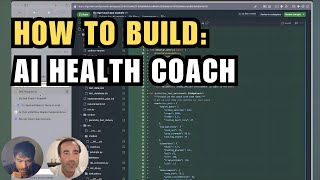
Jonathan and Ryan discuss building an AI health coach, covering prompt engineering, user experience design, and SDK integration. They emphasize rapid iteration and user feedback to personalize health and longevity tracking.
It's not just the biomarkers. It's like mapping the biomarkers to the biological age. What really drives the coach is these prompts here. And this is like what is telling the AI. You know, like we use these prompts in different contexts as the AI bot. So what this is what the evaluations are meant to do is like test that the prompts are, are effectively behaving the way they're supposed to. It's really crazy how good it's getting. I honestly think like, like we could test today.
Yeah.
You know what I mean?
Yeah. Yeah, I think everybody, welcome to the ABCs for building the Future podcast. We are just doing another recording extending on the previous one for a build in public update where we're looking at this AI health coach reference app that we're building to ship to our open source GitHub repo for epistemic me for the ideal customer profile of a developer who wants to build a hyper personalized AI health coach for their health or longevity influencer that they work for. So I think maybe first off what we should do is give a bit of an. It'd be cool if we just demoed it and looked at it together and then critically assess, like, how do we make this even better for the icp? How are you thinking we should drive this, Jonathan? There's more freeform, by the way. This is like live. We're going to critically assess this stuff live and look at the experience and stuff.
I mean, I guess so. We had a conversation with Greg last week. You mean Greg? And we talked about building an example reference app. And we went over the confident AI tools and the deep eval toolset. And I think he got conceptually like, okay, I see how, you know, we can build a data set to like train the bot to do what we want. And I told him I built an example app in the, in our repo and that's what I built. And so I think there's one question of like, okay, are we meeting that expectation from, you know, and like, actually the whole weekend I was building, it felt a little different. It felt like I was like putting myself in the developer shoes, you know, like, and just trying not to think about belief systems and trying not to think about epistemic me, but just like, I'm just building, right? So now I've got an app and it's built and now I need to start thinking about how to layer on epistemic me on top of it as the next step. Meeting great expectations, meeting the design expectations with Mikko and the rest of the Don't Die team are we on the same page about customer development? And we're empowered to do now is get the specific kind of interactions we want defined in the user experience and then train those with the valves and then release them and then test them with users and repeat.
Yeah, yeah. So for the audience we have a few things converging. We're building epistemic me, the SDK that makes it possible for you to hyper personalize anything starting with an AI health coach for the Don't Die team. And I think it would be useful if I even just shared my screen and shared the SDK playground swim lane. So and then I'll map to where Jonathan is at. So developer creates a user with, you know, they go to epistemicme AI, they see our little, what we're calling an SDK playground. So just so everybody understands what this feature is, this is the kind of like I go to some like Stripe Docs or some other developer focused set of tools and then I can immediately understand, oh okay, I can play around with it. I can see the data model, I can see the schema. So the broad brushstrokes are developer creates a user with default params and sees the data structure. An SDK response is generated for the created user with default params. Developer create a self model and belief system for a user and then we have these interactions here. The developer could then maybe copy paste a snippet of their existing user data and then see a self model with populated belief system. And then another part of the user journey is developer creates a default dialectic with the user with a particular learning objective like I want to learn about my users belief systems around sleep or their habits around sleep, whatever it might be. And then we give them that dialectic or a question answer sort of in a chatbot interaction and they see what our data model kind of looks like from there and what the interaction might be like. And then they can create a self model of that AI coach that represents an influencer or coach, but that's the model of them who will be interacting with the model, the user to provide what's the next best set of habits towards what your health goals are or longevity goals. And then finally there's the how do we solve for the opportunity of reducing uncertainty and any friction to getting a coach out in the wild as a product for that developer with that AI coach. So that's what this is about is the developer could then create a dialectic with a user and an AI Coach that learns about the user set of interactions here that go into another few components that we're going to call the self model Bootstrapper. Give us some user data, give us some influencer data, we create self models, bootstrapped, Self Model Simulator and Dialectic Designer. Those are the components I'm touching now which will give the developer ICP certainty that whatever they release in the wild, it works with the guardrails that they intend for their users for the hyper personalized interactions and suggestions. And that extends here with training the AI coach. So curating question answer pairs and doing evals and then going back to what Jonathan was saying, Jonathan put on his I am that developer hat and I am tasked with building an AI health coach. And so from the epistemic me perspective, we want to ship reference app code into our GitHub repository so that ICP developer could take that and bootstrap really quickly this AI health coach functionality in their existing application stack. Okay, so just setting the contours. I think there's also a few things sort of converging here. It's a little chaotic. So let me just say it out loud. There's the user research side, which is what would people actually want from this coach? We have a strong hypothesis that the MVP is we want to ship an AI health coach that will assess your biomarkers and then help you get a plan of ATT&CK for improving those biomarkers based on your health data. And if you don't have BioMarkers, then the AI health coach will give you some instructions for how to get those and then you get into the next user journey, which is okay, give me the habits and stuff like that that I should take on to improve my biomarkers. And then there's also sort of other features on the ICP side that they would probably want to put in, which are like habit tracking, accountability partners, that kind of stuff so that the habits are reinforced and they're in that core loop of do things that's healthy for me, I get healthier, I see biomarkers are better, I keep doing things that are healthy for me and see biomarkers get better and so on. Okay, so to sort of coalesce this, going back to the bioage coach, Jonathan, I don't know if you want to share your screen and go through the reference app. Doesn't have to, maybe doesn't have to be the demo. If you have it up, that'd be cool. But maybe just like walk through what the code looks like from the IPCP's perspective or even talk through how you thought about making it. That may be a good start. Wherever. Wherever you think might be best.
Yeah, sure. I have all the links open. I'll just go ahead and share screen where it started. So you mentioned Bio Age Coach, but I think it's really about getting to the biological age of, you know, the biomarker. It's not just the biomarkers, it's like mapping the biomarkers to the biological age. And what I created here, like, here's my PR work in progress. And then this is deployed to Streamlit, which is the first time I use Streamlit, which is cool. We have the app up and running here. It's like it's a chat app that you can use and it does two things in this app. One is that it's like a complete chat experience that we can evolve, but it also has a set of evaluations that are meant to train the bot. And so let's see, where's our prompts? Yeah, so I use cursor and Claude 3.7 for this, which was 3.7 with like the learning, you know, the inference capabilities. Just like, really fun. I don't know, it just like did a really good job. Okay, so what really drives the coach is these prompts here. And this is like what is telling the AI. You know, like, we use these prompts in different contexts as the AI bot. And so we have like the system prompt here, biomarker, assessment prompt, all these different prompts. And then in our tests we have. Let's see. Yeah, we have these evaluations up here. Yeah, like the chatbot evaluations. So what this is meant. What the evaluations are meant to do is like test that the prompts are effectively behaving the way they're supposed to. And so you can see, like, we have some example inputs here. This would be something that the user puts in the chat. I actually wonder, like, we could take this and put it in the app right now. Yeah, it actually, this would be interesting because it should already know that the values are different because we. I'm bootstrapping the users here and it's going to have like a value for H1BC on the biomarkers probably. Yeah, it's 5.8. So let's see if it corrects it actually, now that it has the context. But these are like these capabilities, like, you know, so I put one set of valves to make sure that when we load a user into the chat, that it that, like, we can provide context for the chatbot. And that it knows our numbers.
Numbers meaning all of those, the health and longevity data. Like my specific numbers.
Yeah, because like, when somebody comes in from the Go Die app, these are the categories of information they have. They have like biotests, biomarkers, measurements, and then there's some like capabilities and lab results you can order. So I created a panel here where you can like, create a new user. So let's call this a test user. Y. Oops. Never seen it do that. And then I can like, let's just say this person only entered 30% of their information in. It doesn't want me to change the name. I don't care. That's fine. And then this user. Now we can emulate this user. I think this is the one we just created here. And see like, we. They didn't like, fill up their health. They don't have a complete health data. So we can see how the bot would interact in this case. Like, for instance, if we wanted to have the bot ask for more health data, you know, like, you could. We could ask like, you know, what health data should I add next to get an accurate biological age measurement? And it probably won't do a great job of this. It might come up with some information based on the LLM itself, but we can train it with how we want it to respond. And then we would update the prompts so that it would, you know, we would update the prompts in the. Over here so that like, they did what we're expecting it to do. And then we could write evals to like, test that it's doing what we expect to do. And that way you can like, use legitimate prompt engineering, you know, to like, make the app better. Yeah, so that's the basic idea.
I guess one thing that I think about right now is right now all the prompts are stuffed into like one file. Right. Looks like.
Yes. They're all. They're all such a one file.
So then I wonder would that be the like. So. So we're critically just to zoom out. We're you're looking for feedback on for that Greg. ICP Persona will be the easiest way for me to like copy paste this in. Just get gone. Right.
What would be the easy way to copy and paste what end to get going?
Take this reference app code and then integrate into don't die to make an AI Brian. And then get some private beta users on it.
Yeah, I don't know that we're there yet because I think one thing is we have to now think about how do we want to integrate epistemic me into this code base. So, like, if Greg wrote this, right, and we're meeting him and we're meeting his use case, like, how do. How do we make it easy for him to then expand his prompts and expand his evals using the personalization characteristics. And I think. Let me try to. So, yeah, here this is confident AI where it will, like, it'll run the evals and then, you know, so this is how he can manage the data set. I was looking for, like the last test that was run, but the last, last test I ran, there were like, there were seven evals that are live. And so what we want them to do is start to, like, own their own data set here.
Yeah, that makes sense.
Got this stupid, like.
Get me out of this tutorial.
Right? Yeah. So, I mean, I think we want to. Where we want to get with them. I'll stop sharing screen. Yeah, So I think where we want to get with them is that like they say, this is how we want the bot to behave when. When the person, the user is interacting with it. And then we can put in the prompts and evals, deploy it, test it with customers, and then continue to repeat that. And then there'll be like, there's a set of like just basic, functional, functional things it needs to do. Like, it needs to be able to up. It needs to be able to understand the biodata health data from each of the users and not lose context throughout the conversation. It needs to not give medical advice. Like, there's a bunch of things like that that we could put evals in for. Yeah, and then we want to like, get into the hyper personalization cases and that's where they would. We'd say now. Okay, now let's use the episode Make Me SDK playground violate to designer, output some prompts and evals for you to put into the code base.
Okay. Yeah, thanks for giving me the download on that and the overview. Okay. I'm trying to think about. So where we're at with the research part is we want to ask this group of users we've gotten together for the private beta, like, imagine that Brian is your AI health coach, or Brian's your coach and there's some research questions we want to ask. I still got to work together with the designer on that. What's holding us up is like the contract stuff, actually. So that's the blocker right now, otherwise we would probably get going already. So I'm trying to unblock as fast as possible, but that's probably the biggest blocker for us to get real feedback which would inform some of these items. So I'm trying to think about what would be the most useful thing to talk through between us, given that blocker.
Well, are we seeing it the same way where you want to, when you're asking those questions, you actually just want to put in a prototype like this and have them interact with it?
Yes. Yeah. Okay. Yeah, like literally just ask them those questions and just to be ultra clear. So this would be like, let's take a given sort of curated question answer pair, like literally just throw that out in the wild. We get answers and then those are our question answers and then we put those into confident AI. Is that where we're aligned or am I not aligned?
I think like, but I think there'd be like a set of questions and answers about like you know, sleep routines for instance.
Yeah.
Hey, okay, in today's session we're going to talk, say AI Brian, about your sleep routine. Um, like it's got your, it's got your data uploaded, it has your scores from the last two months. Uh, what kind of stuff do you want to do you want to ask it? You know, and I think it would be like a guided set of questions that they would ask regarding sleep that we've prepared for to some regard. You know, what supplements, what bedtime routines do you have? What kind of, you know, like a quick urge tools like lights or any other kind of like biohacking devices do you use? We would like pre train it to answer those kind of questions and then test it with users. And by pre trained it, I mean like we would make sure the prompts have examples with this kind of data that the AI coach could identify that the user is in that context and load those set of prompts and that we would have valves that would like test that it that when those prompts were loaded they would behave like we expected them to, like they returned answers that were good.
So we have these users, I'm thinking we curate some questions, we get answers from them, we pre train like in the prompt feed examples and then we can hopefully hand it to Greg with confident AI and then run those evals to see is it hitting what we think that high level. That's where I'm at. So then there's some tactical things which are what are the questions we want to start with, which is probably informed, like what are the opportunities we see with the users which to me we could figure that out. And so just piecing together, got to get the questions together. Got to throw that out to the private beta user group, collect all their data, and then redo these prompts. Here, hand this to Greg. They own the data set. They can go to confer, to AI, run these evals, and then we ship something into the wild after we've integrated with epistemic ME SDK and stuff like that. That's kind of a question mark to me.
Yeah, I didn't think they were really prepared to own the data set. I think I'm ready to do all that on their behalf, basically.
Yeah.
Okay, so we would give a set of questions and by the way, going back to last meeting, I think, where Ryan suggested, what is the roadmap that everybody's seeing? I think the set of questions that solicit from each user what the improvements they want to see on their improvement roadmap are would be a good starting point. Okay, so we'd say like, okay, we have your data today. Where do you see the most opportunity for improvement? We might be the kind of questions that we're asking the user, and then we would like, you know, do some evals for those kind of cases and, like, test it with users. Okay, cool. Here is the opportunity. Here's the opportunities that we've agreed on that you can, you can go forward with. But, yeah, so, like, so if we're clear on, like, the experiment we want to run with users, then we can prepare this exact Streamlit application, you know, for them to test it and to, like, collect some more data, and then we can work with the Nodeje team to, like, curate their database and then the data set and then get it ready for the next set of tests, whatever that's going to be.
So are you imagining this streamlet we actually give to users, like, after, let's say, okay, get the list of questions, like, where do you see opportunities for improvement? And a few others. Get that out to the private beta users, get their responses, modify the streamlet. You run this, we actually get users to test it, and then we could actually see if the evals are working. And then once we get a few cycles there, it will evolve. And then at some point, we converge with. All right, let's plug in epistemic me for the hyper personalization.
Yeah.
Okay, cool.
So I'm thinking, I mean, we can use the Streamlit app or we can, like, show this an example and have them build one. But I honestly think, like, it's just going to be fastest, like, we could test today.
Yeah.
You know what I mean?
Yeah, that's what I think.
Complicated.
Yeah, yeah, I think shorten the feedback loop as much as possible is the goal. So. Okay, yeah, I think that makes a lot of sense. So tactically you got to get a list of questions together. Define the experiment, get that out there, click responses by user, and then we go to confident AI. Like then we're going to modify the streamlit application, pre train it with those system prompts that you showed me in the reference app code, reload the streamlet, give that to the users, see if it's breaking things in Confident AI and then go from there. Yeah, okay. Yeah, yeah, that makes a lot of sense.
If we just get in a loop of working together like that, then we can take on incrementally more complex stuff. Like, okay, for this next time, let's load these documents in and make sure that it's pulling answers from these documents to answer questions. You know, I think we just take it like one step at a time. We'll kind of grow into it together and we can figure out like, what's what.
I think the sleep one's probably the easiest one. What do you think?
I think, I mean like what I heard out of last meeting was that the, like getting the roadmap from each user is probably like the first thing to learn.
Ask them like ambiguously, like, hey, what, what is your health target?
Yeah, like what are your health goals? Like, where do you want to, where do you want to see improvement? And that's really interesting place for us too because we, I think we can survey for beliefs about like where. What they think they can't improve and what they can improve. What they think will take like time to, you know, because there may be things that people can do like today, you know, that will change their biological age. Right. And there's things that they have to like, you know, train three months to improve VO2 max, which is like obviously a longer term plan. Right.
All right, so basically got to think through the experiment.
Yeah, I would just go look at the notes from last call or listen last call because I do think there was a sort of a consensus forming around Ryan's suggestion about the roadmap, but I might have been overweighting his inputs.
So. Okay, yeah, I like that idea of in the initial experiment design also serving them around the corners of their beliefs around health. And that way we could literally bootstrap self models. Yeah, yeah, that'd be, I mean that would help us a lot for our hypotheses around hyper personalization for sure. Okay, so design the experiment, figure that out, collect the responses and then work with you. Update the Streamlit reference app and then get it to users.
By the way, have we ever talked about learning to build by Bob Mwesta, the founder of Jobs to be Done?
No, let me look it up.
He just, he has a design of experiments methodology that I don't know if you're familiar with it, I've never used it myself, but it looks like really powerful.
I'd be, yeah, I'm always willing to try new things. So empathetic. So innovation is an ability that can be learned and mastered rather than a skill reserved for a select few practical techniques. And a framework for creating products that customers find useful and willing to pay for. And there's like five pillars. It looks like empathetic perspective. Uncovering demand, causal structures, Prototyping to learn, Making trade offs. I guess I'll be reading this or at least getting the framework that's learning to build.
Yeah, yeah, yeah, yeah. It's a really short book. I think it just takes like four hours to listen to or something like that.
Okay.
But it also talks about like how to use the jobs to be done frameworks to like interview users and ask them questions with like context and contrast to like really understand where they're coming from. So that's what I saw like his business co founder, I saw him do like in person with my last startup and it was like really impressive.
Cool.
But yeah, the reason I bring it up is if like we could say, if we could look forward and say this is what this is our MVP hypothesis. And then we break it down to a design of experiments methodology where we just are running like you know, a series of these maybe a couple times a week with some sample users, you know, tuning the system the whole time along. That might be like a really good roadmap to get mvp.
Yeah, I like that. That's a good suggestion. Okay, I got work to do. I gotta unblock this contract thing. That's the biggest thing that's blocking me from doing anything on this. But in the meantime, okay, I'll quickly download and figure that out and then I think I'll get a design of a series of design experiments together into coda and then we can interface on that and that should get us to uncovering like what do the users actually want of AI Brian. And that would help us, I think, meet Greg where he needs to deliver. Oh yeah, yeah, that makes a lot of sense.
And I can, I could just evolve it for me and you, by the way, like, and we could just like, you know, import our Own data in and use it like the coach for these use cases. Because I think it's also a really great way to build stuff is just to build it.
I would, I would use it for my sleep protocol. I was asking questions in the void for a while, like. Right, yeah, I would find it useful, you know, so. So that's even quicker, honestly.
Yeah, like, so. I don't mean I. I'm really energized like by the progress this weekend and the path forward and like, like how the motivated to connect the dots with the SDK playground.
I'm stoked. Yeah, it's gonna be great.
So I think that I'm wondering, should I send it, Should I send the prototype over to the group or do you wanna wait till your contract stuff gets ironed out?
I think we should send it over. Like we're ready for feedback. Right? Like, I think. Yeah, like, I mean we're not yet talking to the users. Right. So getting the Don't Die team's feedback in particular Greg's feedback I think would be useful. So I'd say like, if you want to ship the loom video over to them with the streamlit app that they could play around with, that will give us more confidence in what Greg would want too. Especially if you put the code like into the repo, ship it there, complete the pr.
Okay, yeah, I'll merge the code, I'll rerecord a loom for them and then send over the example app and I think he'll get it. You know, we might have to have a meeting to really sync on it, but I think he'll get it.
Yeah. And either way, like the whole goal was shortened to me. There's, you know, two Personas. There's Greg and then there's the AI Brian users. And as much as we can eliminate the feedback loops, then we will uncover demand. Right. We'll uncover learnings that will strengthen our solution hypotheses. So I don't see why not. And we're kind of in with the Don't Die team. I think they're cool with like, they loved getting our swim lanes docked. Right. Like that loop video I sent them. I'm sure if we ship them this, it would just be even more like, let's get into a well oiled machine of like, ship you something, get feedback. Ship you something, get feedback. I think that can only be good. I don't really see the downsides here. Yes. So, okay, you do that. I will keep trying to unblock the contract stuff. Hopefully we get that done this week. If not, I think I'll just go through Nico and be like, I'll quickly try to read up on the Bob Muestas learning to build framework and over the next couple days design a series of experiments and then hand those to Nico. He seems like, seems kind of with it. So I think he could help critically like make those experiments more robust as well. And then hopefully he could just like facilitate them. And we're just like, kind of like, hey, we want to learn these things. Here's a structure, scaffolding. Please go ahead. And then we're more focused on the Greg ICP to deliver upon those learnings because, you know, if we were full time on this, I feel like we'd get this done in like a week. Right?
But.
But we're not, we're not yet. Yeah, yeah, but I love the progress, man. I actually didn't see all of. Because I was on mobile, so I think because of that, my view of what I didn't see visuals.
Oh yeah, okay.
Yeah. I scrolled through the loom. I didn't watch all of it. And so when I was on mobile I was, I didn't see all of what you showed me actually like in detail because I was like waiting for a taxi, didn't have too much time and just.
Oh, okay. Yeah, yeah, yeah, yeah, yeah. Something I put a decent amount of effort into is creating those example users. So it, there's like an SQL Lite database attached to the chatbot and they could, they could like take health data out of their database and put it in that. Or we can just, you know. So like let's say you want to test with a real user for God. Like you could just have an export command import into the SQL database, send them a link to the streamlit and then test with their data, you know, like.
Yeah, that's, that's great. Yeah. I mean even just getting a hosted instance of this once we refine it, you know, after these cycles, I could see that just being part of a PLG self serve motion on our website.
Yeah.
You know. Yeah, it's like, all right, we're not even in the loop here.
Here you go.
Sweet. Thanks for putting all that work, man. Oh yeah, I'd love to see your workflow for. You seem like a cursor God at this point. I want to see your workflow for. How did you go from concept to like getting this done? Yeah, at some point. I'd love to see that. If you want to walk me through it.
Yeah, sure. Anytime, man. Like, I know I say that all the time and our schedule zone overlap in that way, but if you want to like schedule a session for it, we can definitely do that.
Do that for like Friday. I got a lot of time. You want to pre book, like, Friday? Let's say like 11 did like 2. We just have a 3 hour chunk where we just work through shit.
Yeah.
And if we don't use it, like, we don't use it.
I've got like a lab test that morning at 10:40. So after that. Yeah, I can meet up and we can do that.
Do you think you'll be back at like 12 or 11:30 or.
Yeah, no, it's real close. Like, quest is usually on time. And then I, you know, I can just be back. I think 11:30. We should be safe.
Cool.
One thing I'd like your feedback on is that I really do feel like I have a crisp vision for MVP for this AI Brian. Just my experience as a user and I research this guy pretty deeply. I could be building that or we could be doing it together with DD team.
I'd say, Jonathan, you just fucking blaze a trail. And I'm happy to catch up because I'm trying to hold down a few other. If we're in warfare, you're kind of scouting ahead. I'm happy to scout. I gotta hold down the fort on some things. I gotta finish a revamp of our pitch deck tomorrow and just some other things. Okay. So, yeah, if you want to go ahead, man. I trust you with the vision of it. I feel like we're at a very coherent, aligned state, so. Cool.
Great. Well, I'll share what I have and then I'll just kind of like go forward as quickly as I can. And I. I find in like, socially this usually creates tension. As in like, like, wait a second, you've already made all these decisions that we're supposed to talk about and like.
I don't give a. Yeah, I don't give a. I don't. I'm not like that.
Well, yeah, but you might not be. But like, you know, somebody on the Don't Die team might feel like. Like Nico might feel like shit. Man, you sure did make a lot of decisions without even talking to us or something. And so that's where I think, like, political acuity comes into play. Yeah.
Yeah. I'd say don't worry about that so much because I could just frame it as, hey, this is all just testing still. Yeah, right. Like, and framing it like we're trying to shorten the feedback Loops as much as possible. We're using ourselves as users and we want to give you shippable product as fast as possible. That's like, how could they say no? Like, okay, cool, like, go modify the code. Then we're just. This is our hypotheses. Right? So don't the social intelligence stuff like to position. I think I could, I think I could. Yeah, I think I could figure that out. So don't worry about that just as. Dude, if you got energy, you got motivation, you want to fucking blaze a trail, blaze as far as you can. That's what I'd say.
Okay, do it.
Yeah, and then I'll be like your user. It's like really close to this. So anytime you have new stuff or whatever, I'll just use it. I'll record a loom or something, give you feedback, and then we just go as fast as possible. I think that's the best way.
Okay, sounds great. Did you want to touch on anything before our SDK playground meeting tomorrow or the refactor epistemologies for better organization readability?
I think my brain might not work anymore for tonight, honestly. Okay, I know.
That's cool, man.
Wait, hang on. Oh, shit. It just froze for a sec. Did you hear what he said?
Yes.
Yeah, I'm pretty beat. Yeah, I'll get.
We can call a night, we'll sync up in the morning.
Yeah, let's actually, maybe we could put time to do a 30 minute sync ahead of that meeting.
Yeah, however you want to drive it. I mean, I. I can jump right into where our code is at or. You know, I think I. I think.
That'S the best way at, at this point. Like, we've gotten the dev stoked. My goal for that is you show them where we're at and they should have reviewed some level of server code at this point and our data model via Protobuf. And yeah, I'd say, like, if you have, if you want to guide that meeting to just get them to a high level of alignment of things and what. Maybe even tactically, like, what do you want refactored at a high level, like broad brushstrokes, I feel like that'd be a good way to drive that meeting. And if you feel confident of that, I feel like we could just drop in.
Okay, cool. Yeah, well, I'll be, I'll be, I'll be prepared. And yeah, if you want to catch up anytime in the morning, just let me know.
Okay, so we got Friday sync, Wednesday sync tomorrow. Dude, shit's happening, bro. Like, damn, I'm stoked. Holy. Remember when we were just like, talking about Health Boost AI? And. And now we're like, all right, here's AI Health Coach. We're getting to user soon. Like, they'll be so great, man. That'll be so great.
Yeah. It's the most concrete output I produced so far is this chat app. Because it's much easier to build stuff like this than it is. Like, the abstraction of the SDK and the philosophy integrated much faster.
Yeah, totally. Totally. And I see, like, you're definitely really great on the front end for sure. Like, it's awesome to see because I haven't really seen that before. Like, you've made some other stuff, like the Belief Mirror or whatever, but seems to be like another level of your front end development skills, so it's impressive, man.
Yeah, it's the first one I built with streamlit. It was, like, pretty fluid, but, you know, like, the. The AI did a lot of the heavy lifting, you know, even picked a lot of the design iconography and stuff like that. Yeah, it's really crazy how good it's getting higher.
Agency shit, man.
Yeah.
Exactly. Cool. Cool. All right, man. I'm going to take off, wind down, rest. But this was great, and I feel pretty aligned, so go ahead and place the trail. That'd be great.
Right on. Sounds great, man.
Cool, man. I'll see you tomorrow.
Have a good one.
Peace out. Give my best to Meilin. Have a good night.
Thanks. You too.










