From NEAR DEATH to Top Exec with Rahul Chaudhari
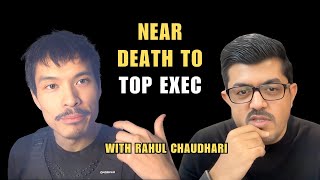
Rahul Chaudhari survived a near-fatal bicycle accident that forced him to rethink everything about self-worth and what matters. He talks about how curiosity shaped his career in product management, the limiting beliefs he had to break, and why family support became his foundation for rebuilding.
I landed in my head, had multiple fractures of my neck and that became very serious Sunday morning and I was riding a bicycle. I was bedridden for about six months. My neck was broken, essentially, is what it was. I could not sit, I could not hold the weight of my head. So looking at the white ceiling when you're lying on the bed, it gives you a lot of time to reflect on a lot of things. And I think that changed me as a person in my industry. What I realized was I was following the hurt. Comparing yourself to somebody else is the easiest trap that you can fall into. The trap that we would want to avoid is that achievement is my self worth. Only if I achieve am I worth something. Only if I achieve this am I enough. Only if I achieve this, I'm lovable. Only if I do this, I'm worthy. I think those are the traps that I think are most difficult to overcome. And the simplest of definitions that I've had or a formula that I've had for myself is my self worth is always more than my achievements, and my achievements are always more than my abilities. And reflecting on that, I think just some acceptance along the way was what brought me peace. If you are successful, but if people around you are not happy, it's unlikely that you will be happy despite how successful you think you are from a conventional sense. I read a definition of success a few months back which sort of stayed with me, and I'm trying to make it my own, which is success to me is.
Hey everybody. Welcome to the ABCs for building the Future podcast where we bring on founders, entrepreneurs, leaders, researchers, scientists, people building the future, people with doing big things with big stories to tell. We just so happen to have one of my friends, Rahul here, who has been a distinguished leader at many different companies, including Amazon. And now in his role at Kohl's, he's done many different projects, launched many products in his career, and has served a lot of different verticals and industries. So I'm very excited to have him on as a guest today. Rahul, do you want to give a little bit of an intro about yourself and then I'll ahead and just kick off the interview?
Yeah, absolutely. I'm super glad to be here. Thank you for inviting me. I'm looking forward to the conversation today. Just to give a quick intro about what I do. Robert. I've actually found a lot of my growth at the intersection of what we typically call as marketing growth and product management, where I believe my curiosity came alive. And along that journey, I found my True home in production and also sort of navigating that curiosity in different industries. Like you said, retail for example, for a lot of the last 10 years. But prior to that I've spent some time with retail banking and consumer packaged goods products, telecom for example, in search of interesting problems to solve for. And that is really what landed me into products. I currently lead product management at Kohl's for all of marketing technology and various aspects of the E commerce technology. I'm proud of that. Like you said, I did some years at Amazon in very different roles, largely on the E commerce side of things, but got an opportunity to have a front row seat to a lot of innovation that happened there. Scaled a lot of things from my initial journey, starting from India and then coming to the US to lead product for a few things on the E commerce side. So I'm happy to talk through a lot of that today, but super excited. Thank you.
There's. There's so much to talk through, but I think. So you have a. What's unique about your experience is you have a broad range of experience and you go pretty deep on, on the product marketing side for these experiences. So that's super cool and we'll definitely dig into that. But let's start at the beginning. So you know, you mentioned you immigrated from India and so just starting. Wait, so you had a really bad accident. What was the accident? If, if you don't mind sharing some details.
Yeah, I was actually, it was Sunday morning and I was riding a bicycle coming home, doing that with my friends and then a bunch of boys happened to be racing on the other side of the road. I was not expecting them to come from the wrong side and one of them hit me pretty bad, landed in my head, had multiple fractures of my neck and that became very serious. I was bedridden for about six months as a result of that. Yeah, so.
So this is like what, what year of undergrad are you?
This was in 2001, so it's been a few years.
Okay, so so then you were in the hospital for how many months again?
So I was in a hospital for about, I think two weeks. But I was bedridden for six months because I had multiple fractures of my neck. My neck was broken, essentially is. Is what it was. And I had sort of support around the neck. I could not sit, I could not hold the weight of my head and therefore I was bedridden for six months. So those six months were really pivotal in that sense. So looking at the white ceiling when you're lying on the Bed. It gives you a lot of time to reflect on a lot of things. And I think that changed me as a person in many different ways.
So you mentioned you didn't have the words then to describe what you're feeling. And so now that you've matured, what, 23 years since, what were some of the outcomes that were driven from staring at the ceiling for hours and hours for, you know, six months like that? I'm curious.
Yeah, absolutely. So at that point of time, I was doing my undergrad in pharmaceuticals. So, you know, going a little back, you know, I. I wanted to do medicine, you know, in my high school years or in my high school examinations, you know, I didn't score enough to get through the right colleges, and I ended up doing pharmaceuticals, which I thought was closest to medicine. And I still thought I would stay close to what I really wanted to do. And during those final years, a lot of my batchmates, the future path for them was to do PhDs and get into the industry or the academia. Some of them wanted to do their PhDs in the same institute that I was doing, doing my undergrad ad. And a lot of them actually came to the US at that point of time. So out of a batch of 30 students, 20, I think, came to the US to do their PhDs. And that was also something that I was working on. But what I realized then, you know, like I said, looking at the ceiling and staring at that and trying to reflect back on what I wanted to do or not, what I realized was I was, you know, following the herd. That is not truly what I wanted to do. And just because you see a lot of people around you doing something, talking about it, and that was the conversation at that point of time. I also did not have too much of exposure to really determine for myself what I wanted to do then. So the easiest thing for me to do then was to just follow the herd. If most of the batchmates or friends are doing X, that seems like a great thing. Let me go do that. So my realization essentially was that one was, I think, acceptance. Acceptance that what happened was not in my control, right? And therefore, feeling the resentment or anger about it was something that I was trying to overcome. Because the first thing for me was, okay, why did I land in this place? Because now I've lost six months of my undergrad final, you know, I can't. I can't do the things that my batchmates are doing. This is going to, you know, make me fall behind, etc. And all of the thoughts around that and the initial phases were just about, you know, how am I going to survive this? And lot of just frustration, anger because of that. The situation itself sort of binds you, makes you helpless. And reflecting on that, I think just some acceptance along the way was what brought me peace. So the initial part of my sort of reflection was around just acceptance that this is not something that I could have done anything about. And just accepting the reality and then trying to work from here on was really the first, was the first step in that sense of that process. The second was like this relation that I told you about, which is I realized I was following the hurdle and that is not necessarily what I wanted to do. And therefore also accepting that I'm not going to follow this path, the path that I was working on for the last maybe three years of my four year undergrad until then, that I'm going to not do this and then go figure out something else was the second realization. I think. The third, I think was a relation that your friends and your family matters the most. The way that my friends stood behind me helped me navigate through, you know, the challenging times. The way that my family stood behind me and supported me along the process, not just overcoming the, the health concerns and the medical condition that I was in, but also supporting me in the decisions that I was able to take as a result of that pivot in my, in my own mind. I think those were sort of most, most important relations and understand the value of that and then sort of a collection of that then gave me the necessary, I think resilience or the credit to say, okay, now I'm going to go figure out something else and then, and then carry on a journey from here on. I think collectively all of these were the factors behind that. And then that led me to sort of choosing a different path and then like I said, working different industries and figuring my way out. But that, that journey, I think the, the, the aspect that made the journey most enjoyable in the process was this experience and knowing that irrespective of what I do and what path I take, you know, I have people behind me, I have people supporting me along the way. And also the relation that the path doesn't matter as much as, you know, what you're trying to do along the way and enjoying every aspect of it is what really makes success about. So those were some of the relation that happened along the way, like I said. So reflecting back, it's easy for me to put words to it, but those were the, those were the thinking and the thoughts going on in my mind at that point of time.
Dang. That's. Thank you for sharing and sharing in such detail your reflections of such a hard time. I can't even imagine, like, you know, young Rahul, full of life, has a direction, and then boom, it's just kind of taken from you. And then to have the, you know, emotional maturity to, like, sit there staring at the ceiling and then come to some positive outcomes and maturity of thinking, like, that's. That's quite interesting. I wanted to double click into a few parts. So. So let's. Let's start with following the herd. I think this is something that the podcast audience would love to hear. And also I've. I've had this myself. So, like, I'm from Asian immigrant background, like Vietnamese family. And so my parents were like, be a doctor or be an engineer. That's it. And, and so, you know, I did chemical engineering in college, and then eventually I went to software because I realized I don't really want to do this. And. And so I had my own experiences kind of following the herd and realizing, like, it wasn't true. To me, it sounds like you were like you had, you, you, like, had this forceful event that made you come to a reckoning with that.
It did.
So how do you take what you learned then and how did that actuate into next steps after, like, after the six months and you spent all that time staring at the ceiling, understanding, oh, wait, this isn't really what I want. So then how do you come to understand what you really wanted, and how did you actuate that afterwards? I'm curious.
Yeah, so in the initial sort of phases, I, I like to reflect back a little bit of what I enjoy in the process. For example, you know, my father used to work in a finance company in India, and as a kid, I used to go to his office sometimes, and I did sort of enjoy those experiences of being in that environment. I wanted to recreate that in my life, or at least the initial parts of it. So that is what sort of helped me understand, okay, this is a path I want to take and then figuring out what will. What will get me there. The second is, I think, two things. You know, one is I used. I used to, as a kid, you know, do fairly well in academics in school, and, you know, in the Asian cultures. It's like you said, you know, you either become a doctor, an engineer, and those are the two parts to take and sort of figure things out from there. But what also happened in the process with me was I got labeled as Somebody who was intelligent. Right. So when you do well in studies, in school, your, your parents, your teachers, people that, you know, they start labeling you in a certain way. What, what I realized at, at much later stages, and I think in this reflection and slightly later, making a lot of mistakes along the way was those labels were actually my limiting beliefs. They were actually holding me back.
Right, okay, wait, say more about that. I'm curious.
Yeah, so for example, you know, the way the label worked for me was okay, I'm smart, I'm intelligent, which means I can't make mistakes.
I see, right.
So if I can't make mistakes, I will choose something where I will not make mistakes or, you know, I will not take enough risk. So the initial part of this pivot in my set of reflection was just overcoming some of that to saying I'm going to follow my curiosity, not, you know, hold myself with these labels. And, and, which is why I said and, and, and curiosity has been my guiding light all through my career journey. I just chase interesting problems. That's what I decided for myself. I'm just go after things that seem interesting in the moment. I didn't plan my, my career too well in advance to be in a certain way. But looking back, this, this sort of aspect of following interesting problems to solve for and curiosity that led me to different industries. For example, my first job was in, in retail banking, which had nothing to do with my undergrad in pharmaceuticals. My second job was being a brand manager in a consumer packaged goods company for a food brand, a biscuits brand. My third job was in telecom. So I did not really follow the pattern that some of my even MBA batchments followed where they just stuck to industry. And they said, okay, I'm going to specialize in a particular aspect in industry. Even then, in not so planned way, I did create that diversity of experience, which really helped me along the way. So that's one aspect or one way in which some of this actually came alive for me. And then not following the hurt sort of continued in the latest parts as well, where curiosity became my way of approaching my career in life versus trying to necessarily compare myself to what somebody else is doing. Right. And that realization along the way also that comparing yourself to somebody else is the easiest trap that you can fall into when you're comparing yourself to people around you, your batchmates, what they're doing, how much money they're making, where are they working, what titles they're carrying, etc, and I think avoiding that trap is the hardest thing you can do in the moment. But the most, I think, rewarding thing that you can do for yourself, irrespective of, you know, what you do or not do. Right. So just making sure that you're not really looking around in terms of, in terms of that comparative lens is how I was able to manifest that not following the herd.
Dang, that was really beautiful. Thank you for sharing that. A quote came to mind which is comparison is the thief of joy.
Right.
Like when you compare yourself, it's unfair because there are so many variables that make up one's life. And so to compare apples to apples, it's never apples to apples. Right, exactly. And it's, it's curious to me, using the word curious. Curious to me that you, you mentioned the term labels and you have these labels tied to your limiting beliefs about yourself and how it sounds like you with those labels that you got from role models or caregivers or teachers of, hey, you're intelligent, you're smart, actually constrained your path to want to keep being intelligent or smart and getting that validation. But then actually that constrained your overall desire, which is curiosity to solve interesting problems. Right. So it sounds like that accident was really terrible that it happened, but it also helped you kind of mature your thought process to let go of those limiting beliefs and then actually find ways to what you wanted to do for you. So one, one follow up question and then one follow up question on curiosity and then I actually want to double click on family because me and you have talked about family and I think audience would be curious to hear about a double click on like how was your family and support system backing you then? How did you leverage it? And that's something that I think about a lot too. And so let put a pin in that, we'll come back to it. But first is obviously it seems like curiosity drives you to solve interesting problems. You've stated that yourself. But also your resume says that. Right? Because you're just all like, you're, you've gone abroad and you've gone deep in many industries and so what does the feeling of curiosity feel like? Like, you know, when you're at the precipice of deciding what you want to do. Like back in college to all the career jumps or hops that you've made, what's that feeling? Like, what are the heuristics in decision making that make up. This is an interesting enough problem.
Right? Right. So my, my heuristics are as follows. Right? So one is what have I not done before? So if I haven't done something before, I sort of get attracted to it. The second is what is the impact of this problem? Is this really interesting problem? And what I mean by interesting problem is this something that I would, I would love doing or love solving for? Does that problem interest me at the first go? And the second is what will I learn in the process? Will that help me uncover something that would add a different dimension to what I know until now? And along the way I've for example looked at industries where you have product in a physical sense. When I talked about consumer packaged goods and when I talk about product in today's sort of software driven E commerce space, product means very different. But just understanding the physicality of things and the sort of challenges it adds was interesting to me in that process because it also allowed me to uncover much more deeper aspects of marketing and how marketing happens very classically in the, in the consumer package goods industry, for example. Right. So that seemed interesting to me to try and understand. The other was if in some way the dots connect to what I've done in the past. So I've even even sort of trying to create this diversity of experiences for myself that having some heuristics like staying in the, in the B2C industry, for example, looking at sort of problem from different functional lenses. So whether they be marketing lens or a business lens from purely P and L perspective or PNL management perspective or looking from a product perspective. So just looking at the same problem sometimes through different functions was also something that seemed really interesting to me. Very cool.
So it sounds like the undercurrent there is can I learn something? Is there impact? Will I grow? Yeah, yeah, that's. That's super cool. So it sounds like growth mindset has always been there for Rahul ever since he was young. It sounds like it did in some way.
And like I said, that also kept me interested. I did make some mistakes also on the way. So it's not just all hungry. Yeah. And one of the mistakes I've made is sometimes leaving a problem too early, not not going through the full learning cycle. Because as you fall in curiosity as you're chasing problems, sometimes the risk is you might find some shiny problems to go after. And resisting the temptation to not do that and making sure you complete the learning cycle in your current problem process was also a learning that I had along the way.
Could you talk about more of that particular example? When's the first time that happened where you realize, oh, I'm having shiny object syndrome, I didn't quite complete the learning cycle. I'd love to Talk about that in more detail.
Yeah, sure. Well, absolutely. And it sort of did not happen in one instance. I made a couple of mistakes along the way where I, for example, change roles or change jobs very early into the process. So, for example, right. And if I have to give an analogy, think of yourself and your task as, okay, my problem is I go to run 100 meters. Okay, great. Today I'm not able to do that. And if I'm able to do that, I've solved the problem. And now it's easier to sort of move to the next problem to solve for. But the challenge is, are the different dimensions of the problem that, that you have uncovered. So, for example, in this, in this analogy, right, I was able to run now 100 meters, say in 12 seconds. Can I do that in 10 seconds? Because the shrinkage of time will add a very different complexity to the same problem. The problem might seem the same, which is to run from point A to point B, which 100 meters apart, but the shrinkage of time has now added different dimensionality to it. Now, can I run the same thing with hurdles, right? Can I do the same thing on a different track or a different surface, for example? So the point being, and this is coming from my own experience, right? And I've looked at problem from a unidimensional perspective sometimes and not really gone deep enough to understand if I've solved the problem truly, or if I've just solved the problem at a surface level. So some of my changes in career at the very initial stages were leaving the role or leaving the job, or jumping to the next problem a little too early and not completing that learning cycle. And that's something that I've consciously tried to avoid in the later half of my career.
So, following this thread a little bit, could you give an example of when you were like, now that you learned that, and then in their later half your career, you're presented with a problem, another a hundred meters you gotta run, and then, you know, you had the temptation to go somewhere else. And then you were like, actually, I'm gonna hunker down and solve this guy and really complete that learning cycle. Can you talk about that in a little bit more detail?
So let me give an example. One of my experience was working in a consumer packaged goods company, like I said. And the initial problem there was to grow sales and to grow the net margin. The product was in a category of gifting, which was essentially putting together a gift pack around festival occasions. Products that, you know, generally sold otherwise as well. But now you're trying to, you know, package them in a, in a gift sort of packaging and present them as something you could give to your loved ones during festive occasions. So this was a biscuit company essentially, and they'll be putting a lot of biscuits and cookies into a gift pack around some of the largest festive locations in India. So doing that, doing some of the initial work, you know, one was able to get, I was able to get some growth in the sales, but uncovering dimensions of that. So, for example, how can I use packaging to add a different dimension around the whole aspect of festival? Can I? So one way is I can make a gift pack look like a gift bag by just putting a ribbon around it or putting some wiping currents on it. But one way in which I was able to get a different dimension on that around the whole festival gifting was to bring the nature of that festival on the gift pack itself through motifs or through designs. Leveraging some traditional designs and art forms and making the gift box an art in itself, not just something that was wrapping the products. So how do you elevate the gifting or how do you elevate the packaging in that sense? A different challenge I had in that particular role was once the festival was over, there was this risk of returns coming from the market because now nobody's going to buy something, for example, that is branded Valentine's, post Valentine's, you're not going to touch it, right? So either you will have to discount it heavily or they will come as returns from the retail stores. And then you have to figure out either destroying them or repackaging them as something else, etc. So how to solve for some of that? And there are ways in which, for example, I created a way of bartering some of that with the store itself, not taking that as a return, but asking the store to open that and sell the individual products. And some creative way of figuring out how we square the net margin impact from that, reducing the inward return and taking the hit that I would have taken to my gross margin as a result? So just going much more deeper into the dimension of, for example, how can I elevate, in this case, the packaging, make it fully festive? How can I reduce, invert returns and invert logistics and solve for a problem for my gross margin? So just looking at various ways and you can solve the entire problem, going into depths of individual aspects of it and not just trying to solve it at the surface level was 1. Learning that I had from that experience, which I then was able to apply to some of my other sort of experiences as well. Very cool.
So to summarize what I heard, it sounds like, taking the 100 meter example, it's like, well, I need to grow net margin and there's so many ways to skin that cat. Right, Exactly. You could just look at it on the surface like, well, just price it higher radar or do more paid ads or whatever. Right. But you actually went into, it sounds like consumer psychology and the design of the packaging as a differentiator to kind of move that as a lever. And it also sounds like you applied that thinking into other things too, like creatively, how do you engage with the store for these seasonal packages? It sounds like in a way that you can get creative and still meet the overall goal, not just at a surface level, but like way deeper.
Exactly.
That's really cool. That's really cool.
Yeah, absolutely. And then, and then creating sort of sustainable ways of making sure, you know, one is able to create this success in different locations. Right. So you also creating some mechanisms around it or processes around it to make sure that this is not dependent on me or one individual, but that organizationally we've learned enough about the problem and the ability to solve for it that can then become sustainable mechanism itself.
Like it's a system approach. Actually, that's a really interesting topic. I'd love to hear how you think about that. Which is here we prototype something, we try something new, we launch something, and then a lot of the times an operator's job is to systematize it and like you said, replicate it across other functions, business units, locations, whatever it might be. So how do you go about that? What's your process of that?
It's a good question. The way I think about it is generally sort of going a little bit more deeper into the assumptions that went behind some of the solutions and then sort of, I would say doing a little bit of a deep dive and root causing of what really worked and what did not work. Also experimenting a lot. A lot of the learnings that I've had have come truly from running a ton of experiments and seeing what works and then recreating them in different locations to see if the mechanism that you created or the approach that you created truly is sustainable or not in a different data set or a different problem situation, etc. So a lot of it just coming from, I think doing an honest deep dive. And second is, I would say experimentation.
Okay, yeah, that makes sense. So look into the process of success for that one experiment and like keep experimenting and then abstract it. And like really figure out what worked, what didn't work, and being honest with yourself. I think that makes a lot of sense. So thanks for diving deep into, into how you take that growth mindset into problem solving and driving your leadership and career with curiosity. That's super cool. And then also helping me and the audience understand how you took the initial learnings of hey, I didn't learn enough, and then you took that to your future career. And now going back a little bit to the thing we pinned, which is more on the personal side. But you know, we've talked about family a lot and family I think is everything. I mean, health is everything, and then family is everything.
Right.
And then you mentioned when you were going through that really terrible accident and you were sitting there staring at the ceiling for so long, and then you were making new choices about your life based on the reflections that you had, and you said that your family, your support system, was really standing behind you. I know in our own personal conversations, family is very much a priority for both of us. So I'm curious, like, how did you leverage your family? How did they support you like back then?
Absolutely. I actually grew up in, in Mumbai, a city in India, the largest city in India. If I have to give you an equivalent, Mumbai is to India what New York is to the US So I was very fortunate to grow in a very vibrant environment, you know, which is sort of a pot boiler of multiple cultures and experience it in that sense. Family was an integral part of my support system, growing in India in a middle class family environment. So a lot of the values, inculcation actually came from just the nature of how you grew up. Frugality was inbuilt into the value system, for example. And a lot of the support also came from my parents, my father in particular, who instills some of those values growing up. Right. So, for example, integrity is something that I picked up from him as, as my core value and integrity is something that I carry forward to my work as well in terms of being, being consistent with what you say and what you do and what you say in private versus what you say in public. Right. So that level of integrity, which is just beyond a thing, plain honesty, is something that I picked up from him. The second value that I picked up from him was about making sure you're not just thinking about individual success, but thinking about the whole family ecosystem and making sure that people around you are also supported or feel supported in that sense. Like one of the things my father used to say, and I'm saying He used to see, because I lost him in May last year, was, you know, if you are successful, but if people around you are not happy, it's unlikely that you will be happy despite how successful you think you are from a conventional sense. Right. So instilling this value of, you know, making sure people around you are also equally supported was something that I think, you know, I, I picked up from him, and he used to sort of underline that aspect and everything that he did, including his own life journey. So those were two things I would say, you know, I, I picked up from the whole value system and, and particularly from him.
Got it. So, so when you were, you know, on that bed thinking about things and you're like, I don't want to go with the herd. I want to follow my own path. I'm, I'm guessing just tying these things together, that came from a degree of being, having high integrity for yourself and your own choices.
Also, I think the, the confidence that I had in the support system. Right.
Yeah.
So, you know, my, my parents supported me along the way, irrespective of what I chose to do. The, the one thing that I think they never did was use either force or ridicule as a way of building that relationship with me. Right. And it's something that I have also learned as a parent myself. You know, I have two kids now.
Yeah.
A lot of times I think it's easy to fall into the trap of, again, trying to compare your kid with somebody else's kid and trying to either, you know, use some of, some, some aspect of comparison turning into ridiculing your own child, that happen with, with people around me, and I've seen the impact of that on their own lives and how they have made their own choices. But the comfort that I had in my own support system, which is even if I tell my parents today that I'm not going to do something that I've told them that I'm going to do for the last three years, and I'm going to tell them, I do not know what I'm going to do tomorrow. I'm going to figure things out. Just the confidence in that support, saying, I'm still going to feel loved, I'm still going to feel supported. I think it's extremely important, and I would not have been able to make some of those choices if I did not see that comfort. And I think that's something that I'm carrying in my, in my sort of parenting as well, which is irrespective of my, what my kid does my kids should always feel supported to make their own choices? I think that's the. That's the thing that. That, you know, we can do to each other as support. And I think that it also carries on to what you do as a leader with your own team and in different aspects. I think journey. Everybody will have their own set of mistakes and everybody will have their own set of learnings, but those are not something that you will use as a way to either judge or create self worth around now, whether it's self worth for yourself or just self worth for somebody else, I think those are things that I've really learned and picked up from those experiences.
Got it. Okay. That's really helpful to understand. Thank you for sharing. And then also my condolences for losing your father.
Thank you.
It sounds like he had a huge impact on you with providing that space of unconditional love of, hey, you can go mess up and you could decide new things and we're still going to be here for you. And it also sounds like he impacted you and influenced you in your own leadership and with your own kids, meeting at home and at work towards different. You mentioned this term, which is interesting. Conventional success versus like is real success. And. And you tied. You kind of talked about these two words, success and happiness. And then I was thinking, like, it seemed like he taught you that collective success is much more important than individual success.
Yeah.
And then success, like just the differences of conventional success versus, like, your own definition. So my next question is, I guess. I guess before moving into success, do you want to give a few words just to honor your dad? Because I know he's really important to you.
And.
And, you know, I reflected back some of the things that it sounds like he instilled in you. I don't know if there's other things that you want to bring up too, but definitely want to just make time to make space for that.
Absolutely. I. I would. I would just say I'm truly thankful for everything you did for me. Not just the emotional support and, you know, the support as a parent, but he was my best friend, and I used to speak with him almost every day when he was there. And that's something that I miss today, which is not having the ability to talk to somebody like him and share with him what I'm going through. Even if we speak for sort of a few minutes, that's something that we always used to do. So I do miss some of that. But I do also carry some of the learnings and the values that he instills I think in some ways he stays within me through those values.
Yeah, yeah. That's something I've learned about loss, is if you carry on, you know, their values, their influence into your life, then they still live on. Right, exactly. So that's really beautiful. Thank you for sharing, Rahul.
Absolutely.
Thank you. So let's talk a little bit about success versus happiness and then conventional success versus, you know, personalized success. Let's call it like, what are your thoughts on that? Because there's obviously the, you know, keeping up with the Joneses capitalism level of success, which is, oh, I buy a better car, buy a better house, whatever. But I'm curious to hear what, what your own measure of success is and how you think about those terms.
And I've gone through the same traps, you know, early in my career where I have linked success to. I think the initial success was just to be known for something. Yeah, right. And a lot of the definitions for success came from that. What am I known for? What am I recognized for? A lot of the other parts of success also came from collecting labels, I would say. Right. You know, I'm working at X place, I'm doing Y, my title is Z, et cetera. And I've made the same set of mistakes that, you know, all of us, you know, tend to make along the way. Defining success, I think mostly as either a set of achievements in the conventional sense or individually looking at it as performance. It's easy to, I think, fall into that trap because it's what you see everybody else do. And, and, and second, it is, it's, I think, easier to do as well because it seems tangible, it seems measurable. And, you know, I think we overdo sometimes the thing of, you know, what's, what can be measured, can be done, et cetera, and sort of, you know, over index on some of that thinking even in our personal lives. I, I don't know who shared this, but I think I read a definition of success a few months back which sort of stayed with me. And I'm trying to make it my own, which is success to me is liking myself, what I do and how I do it. So that's one aspect of it that's.
Actually such a deep thing, liking oneself. I'd extend that to self love as a concept. Self love is two words tied together, but it's actually everything in life. That's what I found. So I'm kind of curious, like, how do you. Because these things are not measurable. Right. It's not like you'd be like well what KPI of self love? 0 to 100%. It's not like that's not a thing. So I'm curious as your thoughts on that, if you could say more about, you know, liking yourself and what you do.
Your achievements are just that. They're achievements in the moment, they're achievements for a very limited set of goals and what seems important in the moment, but attaching more importance to them than, than what they are for and extending that to the self worth or self love. I think where most of the feelings come from or at least have come from me. So for example, my, my achievements should always be more than my abilities. Right. And, and that, that lift or the differentiation will come from a lot of things. It'll come from my own perspective, it'll come from my work ethic, it will come from things that I do to improve my productivity. It will come from things that I do to improve my health. And for all of those reasons, that's where I think the fun of human achievement lies, that you are trying to achieve something more than your abilities. Those are the stories that we tend to celebrate and that's where including in movies and real life underdog stories are so interesting because are stories where achievement is much more than the ability. But I think the, the, the trap that we should want to avoid is that achievement is my self worth.
Yeah.
Only if I achieve, am I worth something. Only if I achieve this, you know, am I enough. Only if I achieve this, I'm lovable. Only if I do this, I'm worthy. I think those are the traps that I think are most difficult to sort of overcome. And the simplest of sort of definitions that I've had or a formula that I've had for myself is my self worth is always more than my achievements and my achievements always more than my abilities. And I don't link one to the other.
I love that that's really succinct way of saying it. And I'm curious. So you've had a lot of tremendous growth and maturity in your perspective. You also mentioned that you've, you know, had fallen into traps before. I think we all do. We live in capitalism like it's hard. What's your advice for somebody listening to this and you know, they might be stuck labeling themselves as like, oh, I'm only as good as my success or my achievements. I'm only worthy of love because of this and that. What would your advice to those people?
I don't know about advice, but here is a perspective I'll share right which is we tend to, we tend to link of, or create a link of action and results, which is, you know, I'm doing a certain action and therefore I will get a certain result. And it's very easy for us to create that linkage and create, you know, measurements around it, both professional and personal situations, right? And therefore, if I don't get the result that I like, it's easy for me to go back to the action and question the action. And things that I have tended to do, for example, is okay, so my efforts were probably not enough. So I'm going to put in more efforts, right? Or maybe I was putting my efforts in the wrong thing and therefore I should just go figure out is this right problem to solve for is this right approach to solve that problem or not. And we keep going in that loop of I do a certain action and I get a certain result. If I don't like the result, I go back to the action, I correct the action and I come back and see what result I get. And that becomes like a self sustaining loop. The one thing that I think we tend to forget in the process is the action that I take really depends on the worldview that I have, right? Because I have a certain worldview, I take a certain action. But a lot of times true success in a particular thing or true unlocking really happens not by changing the action, but by changing the perspective behind the action. What do I believe that I'm doing certain things a certain way. So for example, I talked about my limiting belief. But I see if I'm seen as intelligent, that's what I like. So I will take action that only seem in consonance with that belief, right? If I only take actions in consonants with that belief, which means my results will follow accordingly, right? But if I overcome this, this limiting belief and believe that I do not know anything, I do not know everything, I will never know everything, I never have to know everything. Somebody else will always know more than me, right? And I free myself from that limiting belief, then it allows me to take actions which I would not have taken otherwise. So my, and speaking about myself, so my confidence of jumping from say one industry to the other industry in my initial days or initial sort of careers came from some of this relation along the way where, yes, I was chasing interesting problems to solve for, but those also came with the risk that I may fail at solving that problem, right? When I'm going to a new place, a new problem, somebody else who's been working on that problem will always know more than Me. It's also quite possible that people who are reporting to me will always know more than me. Right. And being comfortable with that. And that's not something that has come easily. But. But I think changing that mindset and that perspective and that belief and working on that, saying, okay, I'm going to create comfort in not knowing stuff. I'm creating comfort and coming from a place saying, I do not know this. Can you teach me?
Yeah.
And that suddenly then unlocks a set of actions that you would not take otherwise. So my sort of suggestion, or I would say my. My perspective here is just change actions if you don't get the results, but also take a step back to see where is that action coming from, what world is that action coming from, and see if you can question that worldview and that belief itself and look at a belief or a worldview that is actually useful in that process.
Yeah, so it sounds like part of it is just always staying open and having a beginner's mindset and realizing the actions come from perception and beliefs. And so you should. And worldviews. And so you should constantly be looking to evolve those. Right. There's a great story I'll cite real quick. Was it the UCLA coach? I'm looking Wooden.
He.
He had this thing where. So it was collegiate basketball. One of the best basketball coaches of all time, Coach Wooden, and he had story where every new cohort of basketball players, if I call, right, he'd ask them, how do you put on your shoes? It was simple. Everybody takes that for granted. He's like, I gotta first put on my socks and then I gotta put on the shoes. And then he would see his players put on their socks and their shoes and pick certain socks, tie their shoes a certain way. And. And then he showed them actually the right way to do it. And. And this is what comes from discipline and mastery and, like, always being open, which is, oh, if you wear a certain kind of sock, you're going to get calluses, you're not going to be able to move as much. You'll have a higher injury risk. If you tie your shoes a certain kind of way, it might limit your movement, that kind of thing. Right. I don't remember the exact thing, but it always blew people's minds that he started that small. And so every player comes to that, you know, team meeting or whatever, and they're like, I know how to tie my shoes and put on my socks, coach. And he's like, actually, let me just. Let me. Let me just evolve your limiting beliefs.
Right?
Now, so I love that example and that perspective, which is just actions drive results, but worldviews, beliefs, perceptions drive action. And so, you know, to be a great leader of yourself, whether at home or in your career or just for yourself as an individual, always be open to evolving your worldviews.
Absolutely, absolutely. And one thing I would add as a learning for myself is that public leadership, leadership that you and I generally see outside, I think is based on the foundation of personal leadership.
Yeah, Right.
If I can't lead myself, if I cannot lead my limiting beliefs, if I can't lead my own different perspectives and be comfortable with that, if I can't be comfortable in my own skin, how can I really be a leader for others and balance different opinions and perspectives and still be able to make an impact?
Yeah. And that underscores what you said earlier, which is what your father shared with you, that even if you're individually successful, if everybody around you is unhappy, then is that really success? Right. So. So it starts with the individual, and it propagates the collective. So that makes a lot of sense. Like, I've always believed similarly, if you can't lead yourself, then you can't. You're not fit to lead other people. Right, Absolutely. This has been awesome. And I know we're getting close to time, so a couple more questions to round this out. So two questions. They'll be literally different, but obviously this wouldn't be a Building the Future podcast if we didn't talk about AI. So, you know, just general question. What are your thoughts on AI at the intersection of humanity? Like, and at the intersection of, you know, the industry that you're in, if you would want to share, like, just broad, like maybe top of mind thought of, how is this going to impact humanity? Like, the evolution of superintelligence, AGI, all those things. It's a lot.
That's a big, deep question. I. Yeah, we might need another podcast.
For that, but give me, like three bullets on it, and then we'll try to round out this one and do a part two.
Sounds good. Okay. So I think AI is a tool. That's how I look at it. And a tool is only as good as what use you put it to. It's a tool, I would say is the sharpest tool that humans have created until now. It's a tool that will only get better, but it's also a tool that I think will help us solve for some of the most challenging, some of the most complex problems that we have faced or we will face. So what use we Put as humans and individuals, those capabilities of leveraging data or, or just the sheer computational power, for example, right? No, no humankind can match any of those. Right. You know, just the storage of data or the retrieval of data and being able to connect the dots and being able to find the patterns, see patterns where they don't exist. And sometimes that can also be dangerous. Right, but how do you use some of that? I think is going to be the more defining moment than just the developments around AI. So what, what used to be put to us those capabilities, do I see that as something that will really unlock human capabilities? Much more significantly. So the world that I see, or I would love to see is where AI as a tool unleashes human creativity and human intelligence. In my industry, for example, I think it also starts with asking some of the basic questions about, you know, what problem are we solving for and is this the right problem to solve for? What is the value of solving this problem? It's easy for teams and I've seen this with my own team and people that I generally speak to, other product leaders, for example. Again, AI seems like a shiny new tool and it's easy to sort of look at AI saying okay, let me now go create an AI roadmap. And I'm like, okay, how do you do that? So not being overly fascinated with AI as a shiny tool, but still working problem backwards and not solution forward matters. In retail industry, for example, I've generally seen two buckets of where AI I think has been most useful until now, and I'm sure it will evolve. To me, the first bucket is around improving customers experience. So retail or e commerce, for example, how do you make it easy for the customer to navigate? How do you make it easy for the customer to search? So conversational search, for example, or search and navigation or findability, making sure the customers have the most relevant product, the most relevant promotion in front of them is where I think most of the current use cases are. And the other bucket I've seen is where you're just using the sheer data computational power of AI to solve for complex problems. For example, where should I buy from, where should I store it, how do I make sure this is the right mix of where my fulfillment centers are located in a way that they are closest to the customers. So I get it, you know, at the fastest speed to the customer. They come in a mix that the customer is most likely to buy more often, etc. So just using the sheer data, computational problems or the capacity of AI to solve for some of those really complex, challenging ones where it's very difficult to put rules behind are the two broad use cases that I've seen within retail.
Yeah, I like the advice of, you know, work the problems backwards, not solution forward. Because I definitely see a similar thing which is like, oh, shiny new tool, let's try to apply it to everything. But you should really fundamentally go to first principles. And Jensen Huang says this too. It's like first principles, what are the problems we're trying to solve and then figure out does the tool work. Thank you for that, Rahul. Very insightful. To round out the podcast, I've heard a lot from you on your own growth journey. Maturing your perspective, letting go of limiting beliefs and labels that don't serve you, to find really that driver of your career and your life, which is curiosity. And it's clear you lead with a lot of curiosity just in this conversation. So to close out for the audience, I always like asking this for guests is if you can go back to your 18 year old self, have lunch with them, what would you say to Rahul, 18 year old Rahul?
I'll probably say enjoy the journey. The destination wouldn't seem as interesting or as enjoyable if you don't enjoy the journey itself. The second thing I would say is you have more time than you think you have as an 18 year old or a 20 year old. And you know, giving you some of the instances that I talked about. I've always felt pressured in some way. You know, achieve quickly or do something very quickly. And I also believe that's, that's one of the limiting beliefs I've had in addition to the one that, that I talked about. So you have, I have more time and this is what I would tell myself and you have more time than you think you have. So make sure you, you sort of go into the details and the journey, enjoy every step of it. Don't feel pressured to necessarily deliver something or do something with this artificial dead sense that you set for yourself. When I speak to my 10 year old, the other thing I would say is take care of your health. I've been guilty of not doing that at different points in my life and that's one advice I would have given.
To myself that's so important. You can't pour from an empty cup. Right. I always say that. Thank you so much, Rahul. This was really insightful. I learned a lot and it was great to hear hear about your journey, your story, your lessons learned and your perspective that will surely be insightful for the audience. As well. So I'll close out the pod. But we should absolutely do a part two of this. This is such an enjoyable conversation.
I would love to. Yes.
Yeah. So we'll do this at some point in the future. And thank you so much for being one of my first guests on the podcast. This is super awesome. So to close out, thank you everybody for listening to the ABCs, for building future podcasts. I'm going to drop links in the show notes where you could find Rahul and what he's up to. And thank you so much, Rahul, for being such a wonderful guest and teaching me something new today.
Thank you so much for having me. And I truly enjoyed the conversation. Thank you so much.
Yeah, for sure. All right, guys, take care. Have a great day.










