How This VC Measured His Way From Obese and Suicidal to 10% Body Fat
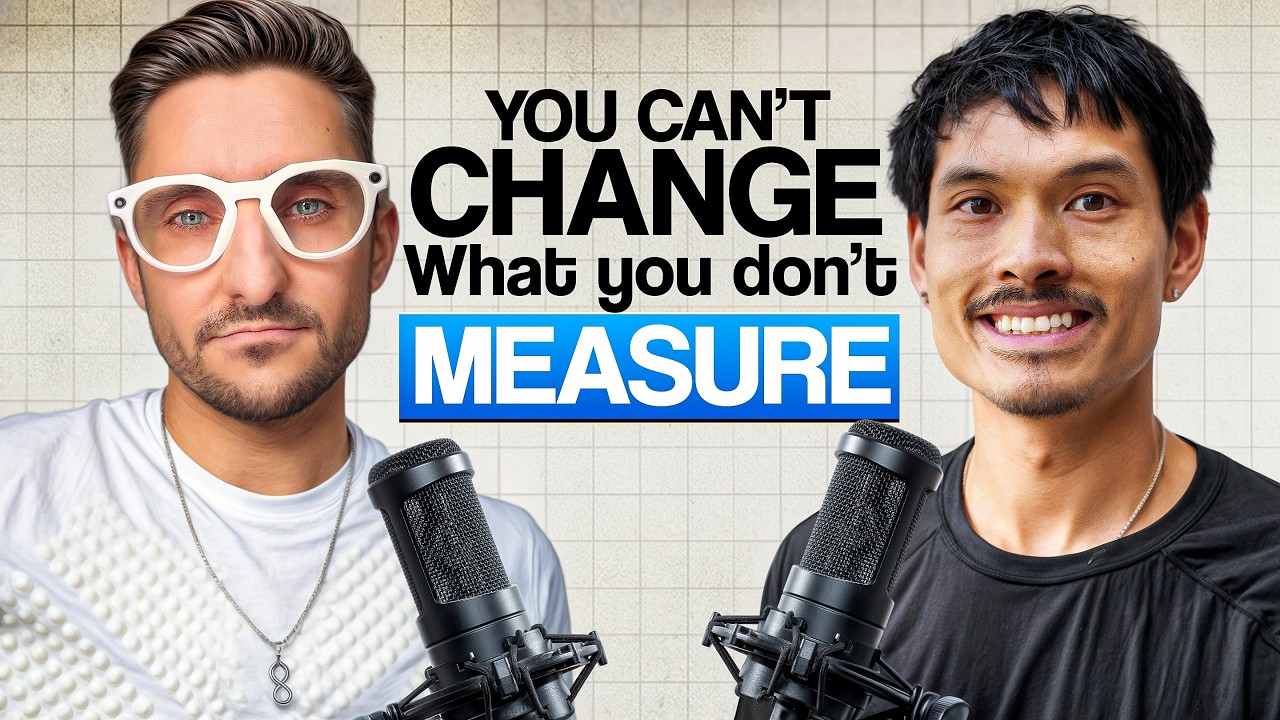
In this two‑part YouTube podcast, host Robert Ta interviews venture capitalist and former founder Arnaud Auger. The conversation weaves together Arnaud’s personal transformation—from severe obesity and suicidal thoughts to elite athleticism and 10 % body fat—and his multicultural upbringing across four continents. They discuss his early entrepreneurial failures, lessons learned about hiring, technical depth, and investor terms, as well as his roles at BNP Paribas Innovation Lab and Cathay Innovation, where he helped back companies like Chime and Okin. The dialogue delves into Arnaud’s investment thesis focused on vertical AI, precision proactive healthcare, and the societal impact of longevity. He shares concrete habits that maximize learning velocity (daily podcasts, audiobooks, meeting frontier founders), the importance of aligning personal incentives with corporate KPIs (the Unilever Facebook case), and philosophical influences ranging from stoicism to Nietzsche. The interview also explores speculative ideas about AI‑driven human evolution, the prospect of becoming cyborgs, AI companions and digital twins for self‑reflection, and his core life purpose of being the best future father. The episode concludes with recommended reading for founders and VCs, reflections on legacy, and a mutual commitment to empower others.
Chapters
From obese, pre-diabetic, depressed to 10% body fat Spartan Worlds qualifier, Arnaud believes you can't change what you don't measure, and he's worked across 4 continents, speaks 4 languages.
I say I move, therefore I become. And so the process of becoming is always ongoing, and every time you move to a different place, this environment can influence you. For me, every move in my career was driven by one principle: where will I learn the most? Not where I will earn the most, because I want to expand my knowledge, my skills, my cities. So next year I'll go to Sparta in Greece and I'll do the world championship of Spartan races. I focus on staying consistent, like learning every single day, doing everything I should do every single day, and knowing that over time it will pay off.
Welcome to the Self-Aligned Podcast, where we bring on builders of the future, people doing big things with big stories to tell. We have Arnaud Auger here today. From obese, pre-diabetic, depressed to 10% body fat, Spartan Worlds qualifier. He doesn't really need an intro. This is already pretty dope. Arno believes you can't change what you don't measure, and he's worked across 4 continents, speaks 4 languages, mentors founders, and builds bridges between global corporates and scrappy startups. Thank you so much for joining the pod. Uh, I am very excited to do this because you have such a great journey. And I think the very first thing I want to start with is just maybe you can— I gave you an intro, but maybe give an intro of yourself. And just like the highlights of your journey to get here, and then we'll drill into the highlights.
Yeah, thank you very much, Robert, and I'm super honored because I love your content. I think it's very smart, very inspirational, and I'm super grateful also that we co-created together Don't Die Sans Cisco community. So I think, yeah, one concept that I like to use to describe myself is ontological gypsy. Ontology, as you may know, like it's part of philosophy that is with the being, you know, what is makes you you. And Gypsy, because actually I'm from Gypsy origin, but I'm not like a Gypsy, like my grandmother as well, living in a cartwheel. Indeed, yeah, I moved 19 times across 4 continents. And I think every of these moves made me who I am. And then I realized it's not like René Descartes, one of the French philosophers who said, I think, therefore I am. I say, I move, therefore I become. And so the process of becoming is always ongoing. And every time you move to a different place, this environment can influence you. And actually, you can take the best of the different part of cultures that you can experience. So I'm very French, like you may hear from my accent, but yeah, I grew up in Africa. So I have also some African side on my hand. I have taken also things that I love from the Indian cultures. And, uh, and yes, I've been living in the US for 10 years. So yes, I think it's, I'm like, uh, I'm like water, you know, like flowing. And then I take like the spices of the different, like, yeah, herbs that I go on my way and to make my own flavor.
That's so cool. Wait, so 10 years here, backing up before that, where before? And then just keep going backwards.
Yeah, so actually maybe Go from the start. I was born in the south of France, in Provence. Maybe you've seen the lavender fields, you know, like, so I was in this small village from Provence. And then when I was 6, you know, we moved to Africa. And it's funny because I still remember the moment, you know, when my parents, my father was in the army, when he discovered that yes, he was going to be moved to Gabon. And then they were Okay, where's this country? You know, like, and looking down the atlas. Okay, okay. This is, this is where we're going to live for the next few years, et cetera. So yes, I remember that, that movement. And then I grew up there. I came back to France when I was about 11. And then I moved to many different places across France. And actually the biggest cultural shock I ever had in my life was not when I moved later on to India or when I moved to Africa or when I moved to the US, was when I moved to I have a big city in France with like kind of like upper-class school to a small village in a mountain. And we had moved during the school year. I entered the classroom and then I sit down next to a big country boy who looks at me and says, where you from? And I didn't have the time to tell all my life story, you know, the class I studied and everything. So I come from near Lyon, you know, and say, oh, here? We all born here, we all die here. And so I said, okay, we're not from the same world, dude. And so yeah, I think I realized later on that actually my people are not French people. My people are people who have experienced different cultures. And I think it radically changes you if at least once in your lifetime you have experienced a different culture, because then you realize that the way of thinking of where you're from is not the only way of thinking. And I think it makes you more humble. And yeah, I just love learning. And so yeah, later on, yes, again, like I said, I moved to India, I moved to New York, back to France, creating my first startup. And then yes, eventually I moved to San Francisco 10 years ago. And then yes, finally, I think I found my home because yeah, there's so many people like you who are inspirational. You know, I was a geek and always passionate about innovation. And so you're always a weirdo everywhere else, but in San Francisco, you're just a normal geek and you find your tribe. And so yeah, that's why I'm super happy to be here. And also San Francisco is, it's a moving city. It's changing a lot. You know, I think in the past 10 years, I think it changed like maybe 4 or 5 times and it keeps evolving. And so that's why I'm not bored. Like in the past, After 2 years in the same place, okay, okay, I'm kind of bored. And right now I feel confident that I could see myself here for the next decade as well.
I love that. So you totally found your tribe with Cisco. Okay. And I love what you said about everywhere else you might be a geek, but here you're inspirational. You're doing cool things. You're building cool things. So wait, let's zoom in on the childhood aspect because a lot of this podcast is really about what makes a person who they are. So what were your parents like? And then how did you become so driven? Well, you have certainly values in being a global citizen. Did that come from your origins there in your family?
Yeah, so I come also from a very humble social class. So you may know, but the Gypsy community is actually the most discriminated in continental Europe. It was actually the second type of people who were exterminated during World War II by the Nazis. And so even today, yeah, there's a lot of stigma against the Gypsy community. And normally, yes, Gypsies only have to marry Gypsies. And my mother, she fell in love with my father, who is not Gypsy, when she was like 16, he was 17. And so when my grandfather learned about it, you know, like he gave her a very bad time to the point like, yeah, like she, like we would say today, ghosted my father, who got depressed and then he dropped out of high school. But eventually, yeah, they reunited. But it meant for my mother that she was going to be excluded from a family and community. And then my father joined the army. And then it was always like the four of us, like my parents, my brother, and I, away from the rest of the family and kind of like the four of us versus the rest of the world. And I grew up also with this idea that this Gypsy identity that was part of me was a sort of danger. It was dangerous to disclose it to others, you know. And so that's why I could get into trouble if people would get that, because my mother also was bullied a lot when she was a kid for being a gypsy. So I also was growing up with this idea that it was some sort of shame as well, you know. But again, my father is French and I have a French name and I'm white passing, etc. But still, yeah, we grew up from very humble social class. And then, yes, my parents could not afford the branded goods, or at least maybe they were also saving every penny for a better life. But yeah, I felt like some frustrations when I was growing up with kids who had more things than I had. And I think it fueled a sense of like, I will prove them, you know? Like some form of revenge somehow, but determination that the disdain that I could receive, like some despise, etc. And also in France, like, it's a very classicist society. And so that's why I was determined to prove them wrong and to prove that I can, yeah, do great things. I can be smart. And eventually I went to the best university in France. And yes, like, I overcome that, but then eventually I realized that even when later on, you know, I went to the best university, best business school, I wrote my first book, was one of the best business books of the year when I was 21. You know, I wrote the first book in French about Facebook marketing. I was teacher at the, all of the, some of these business school, et cetera. And I was a founder and I created my first startups. But then, and so basically I made it, you know, kind of like the things, but then I realized I would never be part of them and they will never somehow accept me. And so that's why I moved abroad because for me it was a way to hide my social origin behind my passport because here I'm not Gypsy, I'm not from low class, I'm French, you know? And so that's why for me it was also this exploration of myself by exploring other territories.
Yeah. Yeah. It sounds like there was a strong maybe desire to belong and then also a strong desire to prove yourself, like a little bit of a chip on your shoulder. Did that drive you to like try to be the best at university, try to be the best in business school, drive, like write that book, like start your first startup? Is that what the culmination of that?
Yeah. Yeah. I always been like super curious, super passionate about learning, et cetera. So So yes, I wanted to be the best, you know, like, and the most—
The best at a specific thing or anything?
Eventually it was to be the best of being myself. But eventually, yes, I became passionate about philosophy when I was 12. I was super lucky. My teacher of French, we finished the program of the year, so she did us an intro about philosophy. And she asked us the question, okay, is the man a wolf for men? And he told us how some thinkers were thinking about it, et cetera. And I still remember that trip back home from school, walking, saying, oh my God, all the thoughts I had in my head, it's actually a discipline. There is actually a domain for that. And I was so excited that I found my thing. And back then, I remember I had discovered by myself myself the concept of false humility, when you pretend to be humble to be bragging, et cetera. And I was so excited explaining that to my classmates. They would look at me and say, dude, what the fuck are you talking about?
At 12?
Yeah, exactly.
And so I said, okay, philosophy at 12.
Yeah, exactly. Maybe not everyone is like into that, but yeah, for me it was my way to climb eventually the social ladder. And then I used, yeah, also philosophy, all the understanding that we can have. And so then I also became super interested into advertising. I was passionate about in like a 30-second commercial, you can convey such a powerful story to give emotions and eventually convince someone about something for a story. So yes, I was thinking, okay. And also because I was a geek and I realized that the main business model of the web was advertising. So okay, I'm gonna make my career in eventually digital advertising because yeah, that's where the future is for me. And so that's how I eventually did the best school in France about marketing. And then I started my career in marketing agencies in Paris, in New York, in India. And I work for brands like Unilever because yeah, for me it was like where the future would be about, yeah, and internet.
Very interesting. I love the philosophy bet. I wanna, uh, we'll definitely talk about that because I am such a huge philosophy nerd. Real quick though, before we get into more philosophy, is like, it sounds that you mentioned René Descartes. What other philosophers or philosophies inspired you the most? Like top 3, top 5.
Yeah. So yeah, one of the teenagers, I obviously Nietzsche, you know, his style of writing philosophy that is very appealing. I think when you're a teenager and they're kind of rebellious.
Yes.
And then, yes, I really like Spinoza. But today I would say my two schools of philosophy, utilitarianism, especially the John Stuart Mill version, and stoicism, and especially from Marcus Aurelius. So, yeah, stoicism, I think, just to describe that there's only two types of things in the world, the things that do depend on you and things that don't depend on you. And so just to realize that it's a total waste of time to think about the things that you can't do anything about them.
Yeah.
And then just focus on what you can do, you know. And what I like with philosophy is that, yeah, it gives you a discipline of thoughts, you know, and to put your energy where it matters, you know. And then utilitarianism was more like from an ethical perspective to, yeah, define what's good, you know. And especially if we come from Christian society, we think that the good comes from a pure intention. He has to be pure of self-interest, you know. And basically you can only do good if you are doing a form of sacrifice. And I always thought like there was something wrong about that. And because for me, what's good, it's the impact, the consequences of my actions or not, you know. And so that's why we should measure, for me, the good of an action based on the quality and the quality of happiness it creates in the world. So same, like he gave me a framework to evaluate my consequences, my actions. And so yeah, for me indeed, yeah, if I do some action for my self-interest, but that creates also good consequence for you, then it could be a good action.
That's so interesting. Something that I have talked to others about, and I'm curious to talk to you about, is around the same concept. Around pure intentions versus the actual impact or consequences. And I think actually it goes to the question, what does it mean to be human? Right? Because we have to go round out Maslow's hierarchy of needs. We, and we live in capitalism. So there's obviously some intentions where it's like, I just need to pay rent. I just need to buy food. I just need to take care of my family. And then my thinking is, how do you optimize for that? And for what I call my framework for life is like happiness points in the world. I think every action generates a certain amount of happiness points. I don't have a spreadsheet of all of that, an ontology you might say, of action this plus happiness points that. But I do think I play with my dog plus 100 happiness points. Something bad happens at work, maybe minus 20. I do something and maybe give a talk, take people bouldering, maybe that's like plus 10 happiness points for everybody if I teach people climbing or something like that. So how do you reckon with that, which is the optimization for what you need out of the world and how you act as an agent in the world, and for optimizing against morals and ethics, as you say. I'm kind of curious about that.
Yeah, I think, yeah, you're right. Like, I really put it as an equation, but the complex part of this equation is the concept of quality of good. The quantity of good, yes, is numbers of people you positively impact, is is relatively well measurable. The quality of good means that, yes, of course, like if we have this philosophical conversation, maybe it's a better form of good than just eating chips.
Yeah.
And so this, yeah, it could be kind of like subjective as well.
Yeah.
So this is why eventually you put more your own definition, but also you have to recognize that again, you are a citizen in a society. So eventually, yes, it's to also contribute for the maximum good of maximum people, but from a societal perspective. So indeed, yes, it's all this movement of like from you to others and from low quality to high quality. But at the end, yes, I think it's also always we define by also the feedbacks you get. But at least, yeah, the fact that you have this framework, it gives you a path. But the key thing for me was to realize, number one, yes, I can find happiness in doing good things, you know, so it's not incompatible. And just like, number two is to be accountable. Because if I could hide behind my good intentions, you know, oh, I cut your arms, I'm sorry, I didn't want to harm you. The end result is that I could do harm. So at least you use also this principle of responsibility. You have to be accountable with your actions and you measure that from the consequences of your actions.
Got it. Okay. Do you also follow up on this? This is fascinating. And I actually want to get into Don't Die because that's a philosophical angle too. And you're building the Don't Die community in San Francisco. And I would love to spotlight that, of which I'm very thankful. So on that, you spoke about stoicism, you spoke about utilitarianism. How do you go about when you made your big career transitions? Did that also have an undercurrent of, hey, how can I positively impact this society as well as, you know, go on my own journey towards finding success? And maybe you could weave in what is your definition of success? Because I'm fascinated by this conversation. So I appreciate it.
Yeah. I mean, for me, every move in my career was driven by one principle is where will I learn the most? So it's not where I will earn the most.
Okay.
It was where would I learn the most? Because I want to expand my knowledge, my skills, my capacities, because eventually as a leader, you can leverage these to have the best impact in the world.
Yeah.
And then yes, indeed, the way to have the most impact, yeah, it's changed. You know, like I created my very first startup when I was 21 and I thought I was the next Mark Zuckerberg, you know, and then I failed my first startups. And so yeah, it was creating a tech startup without tech background, you know? And so I was managing also tech teams without—
What was the tech startup, if you could spotlight that?
Yeah, so it was based on an idea when I moved to New York, you know, I didn't know anyone in New York and I wanted to meet New Yorkers.
When I was 21?
When I was, yeah, when I was 21.
Okay. Yeah. Started your first tech startup at 21, not tech background, moved to New York.
Yeah. Yeah. And so when I moved to New York, I said, okay, I want to meet New Yorkers. And I thought, okay, you must have a platform for that, you know, and to to meet people for share leisure activities. And actually, not really, because Meetup is Meetup, but Meetup is to join a group that you will see regularly. So actually, I joined their philosophy group.
I love it.
But then, yes, like, I came back to France and I created a platform called AllTogether, where indeed, yes, if you wanted to, yeah, find other people to climb or like play tennis or play soccer or see an exhibition or concert, you know, connect with them online to meet them offline. So that's why I thought, okay, it's actually the opposite of Facebook, where on Facebook you add online people you knew offline, and this would be the other way around. And then I launched the platform, and actually the majority of our users were actually newcomers in Paris, foreigners, et cetera.
Oh, people trying to find community, like, coming from a different location.
Yeah. And then I realized, okay, but but I thought this need was universal. But if you were born and raised in Paris, when you are in your 20s or 30s, for every type of activity you can think of, you know the people who could do it with. It's only when you're a newcomer, and because I had been a newcomer every year in my life, I was moving every 2 years, you know, something like that. So I said, okay, actually it's kind of like a gypsy need if you want.
Yeah, yeah.
And so, but yeah, still, I was leading the startup, we also had another business model where we were selling also the platform for corporates. Because when you work for big corporates in these big buildings, you have thousands of colleagues, but at the end, you know, like a dozen of them, the one you work with directly. And maybe there's someone who is passionate about China you could have lunch with, and someone who share your other passion for philosophy. And then you could create more social connections within the organization, and eventually you will find your tribe and you will find more sense of belonging, and eventually you can increase your loyalty to the company. But yes, and then also, yeah, I got screwed up by my first investors who actually wanted to take over the company the moment we found the right pivot, etc. And so I said, okay, I've made many first-time founders' mistakes.
Happens.
And so I realized, okay, and also I I looked at the successful founders around me and most of them, they were more in their actually 30s and more like their second or third startup, et cetera. So I said, okay, I will learn what I need to learn for the, when I get 30 and then I will launch a startup with more skills, you know? So that's why I went to India. I also wanted to have a different work experience than in the Western markets. I'm a big believer of like eventually create like global solutions. So I wanted to work in emerging markets. So I hesitated between Brazil and India, two of the most interesting emerging markets in my sense. And eventually I picked India and then I joined—
Where in India?
I was in South India in Chennai and I joined an agency that was building Facebook apps and maybe mobile apps for brands, you know? So a lot of Western brands. So I was in India managing teams of designers, developers. And over 2 years, yeah, I led the development of about 50 apps, you know. So it was all the wireframing, like to learn how to build a good app and a good product, etc. Even though like, yeah, it was like sometimes like just quick games, etc. But it was a good school for me. And on the side, every 2 weeks I was taking my Friday or Monday off or both. And I visited all the tech hubs in India. And for 2 weeks I was emailing all the CEOs of startups in the tech hubs I was going to visit. And they received an email from a white dude, you know, say, hey, I want to write an article about you in English and French, you know. So most of them said yes. So that's how, like, and I was super lucky because I was there when the Indian startup ecosystem boomed. Like in 2014, the Indian startups were raising about $1 billion.
Okay.
2015, $5 billion. In 2016, $9 billion. So they went from one—
Exponential.
Yeah. And actually most of the most funded startups were funded by Silicon Valley firms. Interesting. And the founders were Indians who had been in Silicon Valley before. And so I said, okay, even when I go to India, it's still Silicon Valley with the founder.
Got it.
Always. So, okay, I'd rather go directly to Silicon Valley.
Okay. Got it. So that's what you made your decision from India to move to San Francisco. Got it. Okay. And then tell me about the VC game because you're a venture capitalist. So you started off as a startup founder real quick, and then we'll get to the VC game, which is, did you bootstrap that first startup? Did you fundraise and then get a team and then build that?
Yeah, I bootstrapped it and then raised a little bit. And, um, but just like probably Hired too fast, et cetera. Like, I mean, there are many—
Wait, yeah, real quick on that, just because this is so useful. I was terrible first time CEO. So what were the top founder mistakes that you made that you learned from?
Yeah, I think not having enough technical background. So rely on my CTO too much and technical team. Then yes, hiring too fast actually.
Hiring too fast.
Yes, I almost, I got like the marketing team ready, etc., when the platform was not ready. So, you know, it's kind of a waste of resources. So, yes, actually, ironically, I think I went too fast. Which is normally, in retrospect, from a venture capitalist perspective now, I don't think it's that big mistake because, but yeah, in that for managing the resources I had, I burned it too fast. And actually I remembered in the coworking space I was like, I was next to another founder who were more like frugal, but then he did a very good job and eventually sold his startup 10 years later to the largest bank in France.
Wow.
So I think, yeah, hiring too fast or not knowing enough about the tech stack that was needed for startup. And then, yeah, I think eventually we pivoted, etc. But it was kind of like to And yeah, also having like bad terms on my first funding that screwed me over. So yeah.
Oh wait, say more about that if you can.
Yeah, so basically the very first investors in our startups was the father of my best friend.
Okay.
And so when my best friend, you know, at that time said, hey, yeah, your startup idea is great, et cetera. My father would love to invest. I said, I don't think it's a good idea because you're my best friend. If I have a problem at 2 AM, I call you. And if you're the son of my main investor, that has created some tension. And he was like, well, actually, it's too bad. Like, yeah, because I know you, my father discovered a good opportunity and it would be a miss if he can't have it and etc. And so I got convinced, but then I didn't know much. And then I also overtrusted, you know, him on the terms of the funding. And eventually, when we need to raise another round, like, he could block anything. And so he wanted to take majority of the company the moment we did find product market fit, etc. And so, yeah, I got screwed over, so I could not grow my startup anymore. So, yeah, I got to accept my defeat and said, okay, it was a bitter lesson, but then I will learn all the things I need to know to eventually be good founders in the future. Yeah. Cool.
Thank you for sharing that. That's, I really appreciate that because most founders don't talk about their mistakes. And so it sounds like you learned from not knowing the tech side and that drove you to India where you then shipped 50 apps and like really got into the details of understanding tech side. It sounds like you also learned from going too fast on go-to-market before a product market fit was there.
Yeah.
So burning resources and then learning about frugality as a founder from that other founder. And then the third thing was more the legal side, like the cap table management investor terms. So the, okay, so then fast forward, then you picked up all the tech skills in India and you came here. Tell me more about that arc.
Yeah. So very fun fact.
Yeah.
When I was in New York, I went to a rooftop party and I met a guy who had a good jacket and then we discussed and he has the same family name as me. You know, never in my life, it was the only time in my life I met someone else with the same family name who is not my cousin, you know. So we clicked and we connected on Facebook. And then 6 years after, when I was in India, I saw on Facebook both of them saying, oh yes, I joined a startup in San Francisco, we are looking for someone in marketing, let me know if you know someone. So I say, yeah, I think I know someone, I'm interested. And then he connected me to the CEO and then, yeah, he cooked me and then he basically asked me to do the whole marketing plan, et cetera. And then he said, yeah, like, you know, it's complicated with the visa, so we need to go fast, so we hire an American. Okay. But yeah, a few weeks after, he was telling me, every time we meet someone, he say, oh yeah, Xavi is not as good as Arnaud, so yeah, we want to hire you. So we are hiring you in, we are also in Asia. So he hired me in Asia first to work there. But yeah, I did several business trips to San Francisco. And eventually I launched the marketing for that startup. It was a food tech startup that got enough traction to be discovered also by Amazon that then acquired the tech. And in between, you know, I got also in touch first with Ming-Po Cai, who was an investor in the startup and he was the founder of Cathay Capital. And then also got in touch with the CEO of the innovation lab of the largest bank from France. With the innovation lab in San Francisco. And then she wanted to hire me. And because in this innovation lab of a big bank, they wanted to hire someone who knew about the startup world, you know, to connect the startup with the corporates. And also we could understand like this international perspective between the Silicon Valley ecosystem, the European ecosystem, et cetera. So that's how, yeah, eventually she hired me. So I joined this innovation lab and for me it was also a great opportunity to learn because when I was also CEO of my first startup, it was not so difficult to have meetings with corporates, but it was kind of a black box of why or not the corporate decide to move forward with us as a startup. And so I got hired for this innovation lab to connect the startup and the corporate. I said, okay, that's great. Not only will I be on the corporate side, but I will be actually at the intersection between the startups and the corporates. Discuss together. So I would learn, you know, exactly, also the sales process. So yes, I joined this innovation lab in San Francisco and it was, yeah, it was a fantastic opportunity because not only we were also advising the different business lines of the bank, but we were also advising all the big corporates, mostly from France, were corporate clients of that bank. So also work, yeah, for corporates in the retail industry, in the health industry.
What year was this when you got into that position?
Yeah, in 2015. Yeah, it was about 10 years ago. Okay. 2015, 2016.
Yeah.
And then yes, when I joined this innovation lab, the bank decided to eventually invest in VC firms. And then yes, eventually BNP Paribas invested in Cathay Capital for the creation of this venture capital firm, Cathay Innovation. Cathay Innovation has been created by Ming-Po Cai and Denis Barrier. So Ming-Po, he was born and raised in China, and when he was a young adult, he applied to study abroad. He was sent to France in Orléans, and he didn't know a word of French, and he studied his career in France. And yes, eventually he created a private equity firm, Cathay Capital, to help French companies who wanted to expand to China when the Chinese economy started to open. And Denis Barrier, he was really, he's really the pioneer of corporate venture capital in France. He created the very first CVC from Orange, the biggest telco company from France, and also with Publicis advertising network. He had invested in Twitter back then, et cetera. And then together, yeah, they created Café Innovation as a venture capital firm, both in San Francisco, Paris, Shanghai, et cetera. And BNP Paribas, the bank I was working at, became the main LP for that VC firm. And so when you have the largest bank from your backing a new VC firm, it helps to reassure everyone, you know, it's an interesting investment firm. And so yeah, since I was working with this VC firm, but from the LP side, from BNP Paribas, and yes, we were advising them on their fintech investment, etc. Eventually, Cathay Innovation, for instance, has invested in Chime. Cathay Innovation led the Series B of Chime. It was a neobank for the underbank. And indeed, yes, it was kind of a contrarian approach because back then the most successful neobanks, especially from Europe, they were like Revolut and N26. They were more targeting the Henrys, so the high earners, not rich yet, from Europe. But our analysis is that this segment is relatively well served in the US, but there's two-thirds of Americans who live paycheck to paycheck, and the banks is taxing them so many fees, and that it was actually maybe an opportunity. And Chime was like the neobank with no fees and for this segment. And Chime actually IPO'd 3 months ago, and Cathie Wood is 30 times the return on investment, you know, of their series B. And so yeah, eventually I joined Cathie Innovation about a year ago. And yeah, I'm super, super excited because we raised also the largest AI fund out of Europe, but we do invest globally. And that's the thing I love is that, as you told me, like I'm a global citizen. So investment committee is every week with China, Europe, Latin America, America. We all look at the deals together. I think it's our will of strength. And yeah, like, it's super cool to be able to look at the best innovation from all over the world. And when I went to China and to visit my colleagues over there, to go to this robotics company we just backed, you know, to see the future happening. And same here in San Francisco. So it's just to be able to witness this global innovations. It's, yeah, that's why it's a bliss for me and a joy for me to work.
And that makes sense with your arc of wanting to go where you could learn the most.
Yeah.
Not necessarily earn the most. Yeah. Learn the most. And I certainly hear that as the undercurrent in your story. Thank you for sharing. That's really crazy. The Chime thing, that actually sounds like that made your, that was like a big part of your career, right?
Yeah, I was a small contributor to that, but yeah.
But that sounds like, I mean, most VC firms are looking for something that's like, what's the unicorn, right? You're trying to get that. So that was like, that's like a really cool thing. What did you learn from working on contributing to that project?
Yeah, I mean, it was more like to assist on that deal with the tech we had with my colleague, Mathieu. This startup has also been identified by Taiman with other VC firms. We were investing before. But yes, eventually we were also on the BVPI side, we're also advising regularly this new neobank, you know.
Cool.
And so to make it, to see it go. And also what made me happy is that this neobank is helping the financial health of people.
Yeah.
And actually they did a very cool thing during COVID you know, like the government was going to send emergency check and because they knew exactly who was going to be eligible, They advance the money months before the government sends the check, you know, so for people to access that money. So I think, yeah, they have a very cool—
It's a life-changing.
Yeah.
For a lot of families.
And they use technology, you know, to have like, yeah, analyze the data and to help people. So that's why it's not only an investment that got good financial return. I think it contributes to a better financial life of people. So that's, I'm super happy about.
So more happiness points in the world.
Yeah.
But also you win. So people buy—
when exactly you ask the question. It's a good demonstration of a question.
I love that. I love that. Okay. So then you moved over in a formal position with This Office, right? So tell me more about your, you know, I think a lot of founders listen to this podcast and I think sometimes it might be for founders like, what do VCs do? Like, how do they vet? Like, how do they make decisions? How do I make get fundraising done. So what's your process like week to week? Like, you know, tell me about that. Like how many CEOs are you vetting week to week? What heuristics do you use in decision criteria? Like what's the process there?
Yeah, first thing, like founders have to understand that basically there's two jobs at a VC firm. Investing in startup, yes. But before that, you have to raise the money yourself, you know. There's a, you have to raise the fund in the first place. And so for us, yeah, we raise half of our money from corporates, you know. And so, yeah, indeed, it's to convince these corporates that we are the right vehicles for them. And then we can bring more than just financial returns, you know, like that basically we're gonna have like some intelligence about the startups that we see that could also influence their strategy, you know, their innovation strategy. So I'm working a lot also on that fundraising part, working with different corporates to educate them and also to build their investment thesis. So yeah, there's a lot of this aspect. And eventually, yes, when you raise a fund, this is to invest in a specific stage for a specific type of startups in different topics. So for instance, in our latest fund, InnoFree, it's a $1 billion fund to invest in AI, but in vertical AI. So AI applied to 4 sectors: healthcare, financial services, consumer retail, and energy mobility. And why these 4 sectors? Because we have corporates, big corporates in these 4 sectors. So we have like Sanofi for pharma and health, BNP Paribas for banking, et cetera. And so that's why also we invest in what we call early growth. So Series A, B. So when the startup has found its product market fit, is making at least $1 million of revenue, and is ready to be scaled. And basically we have two main added value for the startups we back. We can help them scale globally because we have offices in San Francisco, in New York, in Paris, in Berlin, soon in Barcelona, in Shanghai, Beijing, Singapore, Mexico City. So yes, we have a global footprint. So eventually, when they want to go global, we can help them. You know, we have team all over the world. And number 2, we can help them also scale by selling to bigger clients like the corporates. And for instance, yeah, we have Sanofi as an investor again, big pharma company. And we have invested, for instance, in Okin, which is a tech bio. So they use AI for drug discovery. And Sanofi became a client of Okin. The startup we backed. And then they love that relationship so much that on top of having been exposed to working, for investing in our fund, they invested directly more than $100 million in that startup. So we have this win-win-win effect where indeed, yeah, the startup wins, the corporate wins, and we win in between. And yes, we invest at this stage of maturity because when the startups are younger, they are many times and too young to work with a corporate, you know? So that's why it's our sweet spot. And so we invest tickets between $10 to $25 million for this. And so that's why I think for founders, you have to understand that you need to find your founder's fund fit. The same way you have to find the product-market fit, you have to find the right fund for you, you know? Investing at the right stage with the right, yes, skills and giving you more than just capital, you know. And eventually there's also like a founders-investor fit, you know, and I think that's critical. So if you are looking for funding round, is try to find the right match, you know. So that's why try to understand which VC firms for which stage and for which topic, you know, and try to eventually be relevant for that. Yeah.
How do you think about investor fit. I've heard from founder friends that taking institutional capital is kind of like having another marriage. Is that like, would you agree to that, disagree with that?
I mean, the thing in the marriage is that the relationship is supposed to be relatively equal, right? Well, in this case, yeah, like obviously in the terms, like VCs have some liquidation preference time, et cetera. But at the end, that's the founders who's in control. Like, uh, there's some form of influence that the investor can do, and yes, we try to help as much, but at the end, you know, that is the, the, the founders who, who leads and is a captain of the, of the ship, you know. So, so, so that's like, I think, uh, I wouldn't say is as, uh, intense as a marriage. Yeah, I think the marriage would be more maybe between the CEO, CTO, you know.
Yeah, co-founders.
Yeah, yeah, yeah, yeah, where indeed, yeah, they are working equally as hard in the same equation. But yeah, that's why I think it's also like to realize, okay, it's also contextual for one moment of the startups that we will be very helpful. And then yes, eventually we'll accompany the startups over time. But still, there's also both this transaction and then relationships.
So would you say values alignment besides the investment thesis, besides the check size, besides the Hey, you're at the right stage. Like for your fund, it's about the scale stage.
Yeah.
So beyond that, would you say investor-founder core value alignment is important?
Yeah, super important. Also even communication style, you know, to understand how much you want to interact with the investors or not, you know, how much you appreciate input or not. And also eventually also the end vision, because again, try to be in the investor's shoes. The investor has to return the money.
They got to.
So what's your exit strategy? And last week I met with a startup and they were super happy to tell me that total addressable market was $2 billion. Yeah, but that's too small for us. Like if we invest eventually $20 million at $200 million valuation, it means that if you do 10x, you just have all the entire market. So that's impossible to have, you know. So that's why it's not every actually young company is a startup. Not every young company has to raise funds from VCs, you know, like it's for very specific type of organization that is looking for hyperscale and that is willing to indeed, yeah, eventually have an exit like an IPO or an acquisition. But if you want to do lifestyle business, yeah, you can have a conflict.
Yeah. Yeah, it's different lifestyle business versus venture-backed, right?
But you know what, to come back to your analogy about marriage, I think it's like a prenup, you know? Like you agree on the exit terms, you know?
That's right.
And then indeed, I think I've heard a lawyer who specializes in divorce, he said that over his 30 years of career, he only had 2 cases of couples who had a prenup who ended up divorcing. And so I think eventually, yeah, when you have this conversation ahead, things can go wrong. What would be the exit scenario, you know, and then you remove the tension that you could have about the money, et cetera, to focus on the relationship. I think that helps.
It's healthier. Yeah, that's interesting. That stat with that lawyer saw that, hey, anytime people had a prenup, there's an implicit thing there where they had to communicate over the hardest thing already.
Yeah.
Right? That's that. I like that analogy better, which is it's more like a prenup. So, investor-founder relationship is like a prenup. That's interesting. Okay. Another question is what do you look for in a great founder? Cause that's part of the equation, right?
Yeah. Yeah. I think it's really the grit, the energy, the vision. Cause at the end, yeah, everyone can have good ideas, you know, but it's how you execute and leadership as well. You can actually drive a team around you and deliver. And so, so yes, I think that's, that's really the key, you know, to be be well knowledgeable about your market, your product, and be able to move forward, yeah, no matter what. And obviously the main quality is also resilience, you know, because there's so many lows as founders. So I think it's Sal Mattman who says that, yeah, like you have to be almost like delusionally confident, you know, like to be so confident in yourself somehow that it's to the point of delusion because you're gonna reach very hard times and it's only sometimes when you are so sure about you that you have to move forward. I say that, but at the same time, you know, at some point you have to know when to stop, you know, and when it's actually like stubbornness, like not driving for growth. But at the end, yeah, for web founders, I think, yeah, it's this not only the great vision, but the capacity to execute, to lead and to be resilient.
Yeah. Yeah, I like that. And you mentioned grit. So I, and on that, it reminded that there's sort of a theme here that I'm hearing, which is like, you know, I have to hold my own desire for success and success for society together. I want to align wins and incentives as much as possible, like win, win, win, win, like on that deal you mentioned. And then here it's almost like a founder's got to hold, I'm delusionally confident, in myself. And at the same time, I have to be realistic and pragmatic. That's such an interesting thing. It reminds me of something I heard from, I think it was Marc Andreessen, where he said, you have to, a great founder has to look into the abyss, see two bad choices and be like, this is a little less bad. I thought that was fucking hilarious. I was like, that's actually what it is. Like, because there's always there's always going to be bad decisions. It's always going to be BS and ups and downs and stuff like that. So yeah, would you agree with that? Where it—
Yeah, yeah. And I think it's even more important in this age of AI when things move so quickly and we don't know what the world will look like in 3 years from now.
Yeah, even a month.
Yeah, even a month. Yeah, that's true. I mean, when you know enough technology, you can gain like maybe a few months more of like anticipation versus the maybe less educated person. But yeah, like free. So you have to be able to also adapt. And then, so I think, yeah, this capacity to adapt to the situation is super key.
So adaptability, resilience, grit, vision, the ability to lead, the ability to execute. Okay, I want to now go to, so you had your founder's journey. I have for sure felt depression and anxiety and my health went to shit. First time I started a startup. A big part of your story that really resonates with me, and then I want to connect this to Don't Die and Bryan Johnson's philosophy of which you're doing a lot here to grow community around longevity and not dying, living well, living healthy, long lives, right? So tell me about that arc of how did you go from, you know, depressed and when did that happen in your career and your personal life? And then what made you snap and be like, I got to change things? Tell me about that.
Yeah, so it is kind of ironic, but I've always been very health conscious. Like, I've never smoked in my life, you know, I always want to take care of my health. But also, and maybe it's connected to philosophy, you know, when you sometimes go deep, you know, in thoughts. Yeah, I had also this idea that, okay, it's either I have my dream life or no life.
Yeah.
I don't want average life.
Yeah.
And so it's either I make my dream come true or I prefer to stop life.
Yeah.
And so for some reason, suicide for me was not so much like scary. It was kind of like, hey, it's an exit option. Yeah. Yeah.
Yeah.
And, and, but, but still, yeah, like it also tells about the pressure I put on myself.
Yeah, that's a lot. And so, yes, I navigated that and then What age was that that you sort of determined that? That's like a very—
I think, yeah, when I was a teenager, I think when I was, you know, when I was like 15.
Yeah.
I was sure that at my age, either I would have my dream life or I would have end my life.
So go big or literally go home.
Yeah. Or the ground.
Yeah. Home into the ground. That's a lot of pressure.
Yeah. But it's so, that's why, like, for me, yes, I had a lot of suicidal thoughts over the years and moments of, yeah, sometimes depression because, yeah, you have high and lows, etc. And yeah, like, long story short, yeah, like, when I was in India, I ended up like being, yeah, becoming obese.
Around 2014, 2013?
Yeah, I was like 27, I think around 26, 27.
Oh, okay.
2014, 2015, yeah, these years, yeah. And yeah, like, I was living in New Delhi. I was like I could not go outside, run or swim or play soccer. And I was eating a lot of carbs, etc. And yes, like eventually I moved to the US and take over more about my nutrition and my lifestyle. So I've lost a few pounds, but I was still like heavily overweight. And I had this frustration because in my mind I was an athlete, you know, like I always love sports as well. Was to work out, but I didn't have the body of an athlete, you know. And same, you know, like I remember I was at CES and I was talking to the startup that created this smartwatch for, I don't know, triathletes, etc. And it's almost like the person didn't want to talk to me. Like I was so bad looking, you know. And so I was offended by that. I said, oh my God, I'm not even part of the conversation, you know. And honestly, I understand. Like you have an overweight guy, like if you are selling a product for triathletes, Yeah, it's not fitting. I don't know.
But that was like, that was a moment.
Yeah, it was a moment like ego, like, okay, I'm almost, yeah, I'm a screwed, not almost, you know? And so yes, I decided to apply the Silicon Valley principle that you can only change what you measure. So I decided to measure everything because the little progress or little—
So backing up a little bit, you had this moment where you were trying to talk to a founder that had a product that you thought, this is part of my identity. Triathlete sports, and they didn't want to talk to you because you were obese and didn't look like an athlete. And that like clicked and you were like, fuck this, I'm going to try to measure everything. So then wait, like that night, the next day, like you were—
it was, it was other moments, another fun moments. So I'm a big soccer fan and my favorite team is Marseille. It's a city in France. Actually, I created the fan club of Marseille in San Francisco. So we about 50, we watch games together. On TV, etc. Some diehard fans, you know. And Marseille actually decided to do a summer tour in the US. And so they went to Washington. And so I was invited as the founder and leader of the fan club in San Francisco to see the team, you know. And actually, for the opening of a game of Marseille versus DC United, they had us, the fans, play game on the professional field with the fans of DC United, you know. And actually the biggest legend of my club was our coach.
Wow.
And then they gave us the kit. So it was my child dream, you know, to be the soccer player of Marseille. But I was fucking overweight, you know. And this legend, he cracked a joke, say, hey, not everybody followed the summer program, you know, to be fit for the day, you know. And so my God, that was my moment. That was my opportunity, you know. And I, and I'm screwing it, you know?
Yeah.
And so I think that was even a bigger click saying, okay, actually, yeah, I'm like missing out a lot. And so yes, I need to change. So, so indeed, yes, I, because I was making a lot of efforts with poor results, I said, okay, let's measure everything. So I did DNA tests, blood tests, wasting metabolic tests, VO2 max, et cetera. And actually among these many tests, they measured my biological age, which was when I was like, yeah, around 30 of chronological age. It gave me biological age of 37. So this number, it shocked me even more than numbers of my scale of my weight because it said, oh my God, I'm literally dying, you know. And even though, you know, like I had some suicidal thoughts, etc., I want to end on my own terms, you know. I don't want to— die out of like, yeah, of—
You want agency.
Yeah, exactly. I want agency. And so I think that was also another wake-up call. And then yes, I basically decided to measure my sleep with the Oura Ring. And then yeah, my workout with the Apple Watch. And then measuring also everything I was eating with MyFitnessPal. And then I had the dashboard of all my data. And so every day I could see, okay, how many hours I've slept, my sleep score, how many calories I spent, how many calories I've eaten, hours of fasting. I was wearing CGM as well. So my glucose level, et cetera. And then basically, yes, trying to focus on the process, trust the process, and then meeting my numbers every day. So if all my numbers were good, I was going to lose weight, you know? And indeed, yes, if my weight loss was like slowing down, I could realize, okay, actually my sleep was not as well, as good, etc. So I could readjust. And like that, I've lost like about, oh yeah, almost 20 pounds in about 12 weeks. And then I—
That's incredible.
Yeah. That's great. And then I tried to, okay, I keep that weight for some time. And then I've lost another 20 pounds in other 12 weeks. To become fit and then started to run. And then I said, okay, I want to be a marathoner. But immediately to come back to your point, I think it's well known, you know, like, if you want to change, you want to make it about your identity. And so that's why I'm an athlete. Okay, let's behave like an athlete. Let's eat like an athlete, you know. And I was thinking, okay, you know, there's a little park near my home. My ideal self is running in that park every single day. Okay, let's embrace the habits of my ideal self. And then by embracing the habits of the ideal self, you become your ideal self. And so that's why eventually it was, okay, then I want to be a marathoner. And so I run a fucking full marathon, you know? And then I could say, okay, now I can say that forever. And nobody can remove that title from me. I'm a marathoner. And for me, it was like, yeah, something, you know? And then I trained for Spartan races. And said, okay. And then I did a trifecta, which qualified me for the world championship. So next year I'll go to Sparta in Greece and I'll do the world championship of Spartan races. And one week after, there's the marathon from Marathon to Athens, the authentic one. And so we'll also do this marathon. So it will be, uh, like these two challenges at the same time in one year. Yeah.
That's cool. Well, first of all, good job crushing it. Yeah. So that, that transformation. And even to this day, it sounded like within 24 months or sorry, 24 weeks, you actually reclaimed your identity as a healthy person.
Yeah. It took maybe 6 months in between, but yeah.
Yeah. So on that, you mentioned reading Nietzsche. It's curious to me, like that's a very existentialism philosophy, right? Which is you are not what you say you are, you are what you do. And you have to align your being to actually become your ideal self. And so that's really interesting what you say about if you actually want to change yourself or your habits, you need to tie it to your identity.
Yeah.
And the identities that you hold dear or want to become. Do you apply this to the rest of life beyond this?
Yeah. Yeah. I think for everything. Yeah.
Yeah. It's like a, it's like an philosophy of extreme ownership, basically.
Yeah. Yeah. Actually, a lot of people here consider me extreme, yeah, because I'm go all in. I don't half-ass this.
Yeah. And so you full-ass.
Yes. I try. Yes. That's why I go, yeah, to the max I can, you know, because for me it's a matter of consistency. And if you make exceptions, yes, for me it's hard to stay on the way if I say, okay, but I can make exceptions, etc. So that's why I go all in and I, yeah, to be extremely rigorous about doing one thing. Yeah.
What do you think of this? When you make a mistake, you do something bad, you eat bad food. All right, let me rephrase this. When you fall off the wagon, when you eat bad food or junk food or miss a workout, that's a mistake. The second time it happens, it's the creation of a new habit.
Yeah.
What do you think of that?
Yeah, I agree. Even though I've learned to be nicer to myself. Because obviously I realized I would never talk to my best friend the way I talk to myself.
Internally.
Yeah.
Yeah.
Because I was super harsh with myself. Yeah. Like I was bullying myself, you know?
Yeah.
And, and yes, somehow that's what drove me, you know? Like, and that's also made me like, uh, very, uh, like social proof. Like, yeah, nobody can talk as bad to me as I talk to myself.
Yeah. So how have you learned to be kinder to yourself? Because I, I share a similar similar thing, like a really loud inner critic.
Yeah, I think that by— indeed, yeah, ironically, it's maybe more like in the eye of others, they say, oh my God, that's impressive, you know. And the fact that a lot of people tell you good things about you, you know, maybe they're not wrong. And sometimes, indeed, yeah, it should not take it too much credit because you want to do still more, you know. But still, okay. And then also reflect on time, you know, and I think the main learning I had for the past 5 years is to learn to be patient. And maybe actually we'll reconnect with our topic of longevity.
Yeah, please.
Because now that I have this perspective that I can, and I'm now, I'm happy to live, you know, and I don't want to commit suicide anymore. And actually that's why I think Don't Die resonated to me because Don't Die was don't kill yourself.
Yeah.
And, and then finding my path of being, my identity, my way of life, and having enough of achievement to realize that I'm on track, you know? And, and the next 50 years of my life is going to be amazing. So I'm at peace with myself. I'm super confident that I'm going to realize my dreams. I'm on the way. I'm on track. So yes, I can be more patient with myself. And knowing also that all the things I've done took a lot of time. And so I focus on staying consistent, like learning every single day, doing everything I should do every single day, and knowing that over time it will pay off.
Inputs equal outputs.
Yeah. Yeah.
You are the accumulation of all the things you do and it takes time to see. Yeah.
Right.
Thank you for sharing that. And thank you for sharing. That's such a transformational journey because I could relate to a lot of the depression. Especially when you're so driven and then your inner critic is so loud, you're never good enough. And so that was really great to hear. And I'm sure other people will be grateful to hear this too. I am. To hear about your transformational journey from, "No, that is the identity I want. That is the one, the set of identities I hold dear." And then to being kinder to yourself once you learn to love the process, it sounds like. Okay, tell me more about how you discovered Bryan Johnson's Dogmeat ideology.
I was already right on track on my journey, you know, like a week of recovering from obesity and suicidal thoughts, etc., and already considered as a biohacker because I wear so many wearables, etc. And so I heard of this guy Bryan Johnson, and at first, like many, I guess I was super skeptical because of the bad buzz, you know. But I said, okay, let me make my own thoughts by meeting him in person. So when he created the Don't Die Summit a few blocks from here, I said, okay, I'll sign up and I'll see him on stage, not through the lens of the media and et cetera. And when you see him on stage, he tells you, okay, don't die is sleep well, eat well, move well, socialize well. It's not like find a blind blood boy, you know? So, and actually it sounds basic. But most of us don't do these 4 things well, you know. And then for me, I really had this vision that the future of health is 2 things: prevention, precision. And I realized that this quest for longevity that I saw rising was what is unlocking this revolution from sick care to healthcare. And because in the sick care that we have, like still today, 90% of our medical expenses are once a disease has been declared and you find treatments to it. It's only 3% for prevention. And indeed, yeah, today is super binary, is that either you have symptoms and you are encouraged to see a medical professional, or you don't have symptoms and just wait to get sick, which is totally absurd. When today we can measure so many biomarkers, like, yeah, with the Oura Ring and your phone, et cetera, and blood tests that are more accessible. That can measure your risk factors before even you have symptoms. And even when you are healthy, you can work on some biomarkers to improve your resilience and your longevity, like the VO2 max. You know, I went from 37 of VO2 max to almost 60. So I went from the bottom third of my age group to the top 2%. And by that, I reduced my risk of all-cause mortality by 5 times. And indeed, because today we can measure these biomarkers, people can buy things for their preventive healthcare, you know, and also more precise to them specifically. Like for me, you know, I did a gut health test and DNA test that showed some of my superfood, food I should avoid, food I should reduce. And food, among the food I should avoid, there was broccoli, you know. Whoa. Broccoli. It's supposed to be healthy for the general population.
It's all your life.
And for me, it's like, yeah, not that I'm allergic to it, but it creates microinflammation, et cetera. And so I should remove that. And so basically I adapted my diet based on this analysis. And still today, when I'm at a restaurant, I click a picture of the menu and I fed ChatGPT with the list of food that are good and bad for me. And it tells me which dish I should to speak, you know. So I have like precise nutrition based on my test, you know. So basically what I was saying is that before, you know, if you want to— if you were not sick, you had nothing to buy for health. You were not going to buy drug not being sick. But now people buy longevity. They buy longevity through, yeah, some wearables, some blood tests, some, uh, some, yeah, like healthy experiences. Et cetera. And so that's why it creates an industry. It creates business model for people to buy proactive, preventative, and precise care. So that's why I think it's transforming. And this is why it clicked. And I see also this transformational change also in people's behavior. Like, yeah, the consumption of alcohol is reducing a lot, is reduced a lot in the younger generations. Like in Europe, there's already a third of like the 18 to 30 who don't drink anymore.
Wow. A third of people 18 to 30 in Europe.
They don't drink. Yeah.
Wow.
Good job. Even in the US, like the 21 to 30, I think they spend a third less than the older generations on alcohol. And then, and then yes, you have this day festival. I show because there was One, yeah.
And then yes, like morning raves and healthy things.
It redefined the notion of success, you know, and redefined what is to be cool. Because back then, yes, smoking, going to a nightclub and drinking was kind of cool.
Having a high career life was cool.
And now what's cool is to have six-pack abs and bouldering.
For sure. Oh, I love that. Okay, so It sounds like you had this vision of where health and longevity were going, precision proactive. And then you went to Bryan Johnson's summit to just check him out and you were open to like, well, the media positions him as like he has a blood boy, he's doing crazy shit. And then you heard from him, he's like, sleep well, eat well, diet well, move well. Right?
Yeah. And the thing is that I had moment of realization also the day I met him, is that I was thinking of finding only biohackers like me with so many devices, etc. And maybe apart from Bryan Johnson, there was the only other weirdo. Yeah. Maybe there was a thousand participants. It was like normal people.
Yeah.
And that's what made me realize that actually a lot of people want to live longer, healthier, you know. And even if like such a figure like Bryan Johnson, who is in the media, could be considered extreme, is driving these normal people, you know, it's because there is a big need.
Yeah.
And so that's why for me it was this signal that, okay, this is rising and it's going big. The other thing, you know, that I got at the Don't Die Summit is it was from Alex, you know, he's the founder of Insilico Medicine. So he's a longevity biotech founder for like maybe 10 or 15 years. And even him, you know, he confessed, we have to admit that Bryan Johnson did more to raise awareness about longevity than all the other founders in Longevity Combine before, you know. So whether you like him or not, and I think honestly, yeah, he's a marketing genius. He's doing these extreme, constantly extreme procedures like blood transfusion with sun, like gene therapy, etc., because that's what the media will talk about. And then the thing we realize that people like to make fun of him, but if you make fun of him in front of your friends, Some of these friends will still go to his content directly and then they realize actually they make fun of him, but he's not doing, he's not saying stupid shit. You know, he's just saying like, you have to sleep well. You have to be a professional sleeper. And yes, we don't have a culture of sleeping well. So yes, you can work on that and just move well, eat well and socialize well. It's actually a healthy message, you know.
I love that you said Bryan Johnson is a marketing genius because he is. Because his haters even spread his, his, his haters brought in his funnel, basically.
Yeah.
And there's something I learned from Alex Hormozi, another marketing genius, which is if you think about Red Bull, for example, right, the whole Red Bull gives you wings, that motto. A lot of people want wings. I want wings. And so why do they sponsor these crazy mountain biking courses or crazy like stunts? In marketing, what I've learned, just real quick tangent, and it ties back to Brian, is if you could show the product empowering people at the extreme, people that are normal at the very opposite end of the extreme would be like, okay, it gives them that. I want a taste of that. Another example of this is Patagonia, right? Patagonia is like a household brand. Lots of people, it's basically a backpacking brand. It's like to get you to Everest. So Patagonia will sponsor people to get to Everest, right? Why do they do that? So then the soccer mom driving a van full of kids is like, well, if it works, for people in Everest, it'll work for my kids.
Yeah.
And so that is total marketing genius. And I think that is the exemplification of go to the edge, demonstrate the brand and the products or services that enable that, or the lifestyle in his case, or philosophy that enables that. And then you will draw the attention and conversion of other people. So I love that you pointed out he's marketing.
Yeah. And I think most of the marketing of today is putting you you as a hero and the product as a superpower that makes you from a hero to a superhero.
Exactly. Yeah, on, on that one, uh, have you read—
what is it—
StoryBrand? I think it's called StoryBrand. But, but basically they say you want the person to be Luke Skywalker. They're the hero, and then you're the Yoda. You've seen it, or your product is the Yoda. It's like you've seen it before, you know how to get them past the hero's journey, you know, to go conquer the villain. You know, lose the weight, gain the healthspan, reduce the biological age in this case. Uh, so anyway, just quick tangent. I love that, which is like just phrasing, like even every marketing thing is like this. There's just a Yoda and you're trying to make the other person Luke Skywalker. That really appealed. Okay. So I love this conversation. Another one is, uh, back to philosophy because you're a philosophical guy, which we should absolutely just chat about more because I totally have been in philosophy and I'm like, how did I not know this about you? This is so cool. And I love talking about ontology too, because that's, that's actually the key to subjectivity, right? It's like, what does this word mean to you? Uh, that, that has so many roots in, you know, Greek philosophy, et cetera. We got to talk about this, maybe a future pod. We just talk about philosophy. Okay. On philosophy for this pod, Don't Die is a philosophy. Thoughts on Don't Die as a philosophy? Because Bryan Johnson talks about how Don't Die is not, it is the emerging philosophy and it's a full stack philosophy that could drive change past capitalism or any religion. It's compatible with all these other ideologies and economic systems. So tell me about that, the Don't Die philosophy, because you, I think, would have a great perspective given that you're really into philosophy.
Yeah. In philosophy, there's different parts and one of these parts is ethics. The other part is politics. And basically, Don't Die is first ethical philosophy about, again, what's good and what should be your priority. And so that's why it comes back to this analysis. Okay, like sleep is good, death is bad, and then taking like smoking, et cetera, is bad, et cetera. So it defines, okay, the good and bad. So from the ethical perspective. And then yes, it's also this political part of philosophy about, okay, as a society, we can also help each other not to die and support each other. I think is also doing a good job of emphasizing that it's not only about sleep, nutrition, and exercise, it's also about community. And that's why from this Don't Die Summit, I realized, okay, yes, we need to create this community of the attendees. And that's why we message on the Don't Die app, okay, people who are in San Francisco, let's stay connected, you know, let's not lose track from the summit. And organize a Don't Die summit debrief dinner, you know, at my place. And so let me know if you are in. So I'm super grateful that you joined. And I think it was an amazing moment, you know, what we created together with Michel and many others who introduced themselves, their relationship with Don't Die. And we had this discussion of how do we want to make this Don't Die San Francisco community. And we realized, yeah, actually it could be a good opportunity to make athletic activities. So I'm super grateful this morning. Yeah, you organized a bouldering activity and introduced bouldering to many of us. And I think it's a super cool sport. And yes, like basically we are a longevity athletic club, you know. And so that's like every month we have at least one Spartan DEKA or HIITBOX, ArcMor, cardio and strength, which is like honestly the best sport for me for longevity.
Cool.
We have like, yeah, activities like yoga, Pilates, more like also about longevity is also about this flexibility, agility.
Mobility. Yeah.
And what I realized, you know, when I was like running marathons, you know, you're on path to do ultra marathons or Ironman. But for me, I realized, okay, for longevity, a good dose of exercise is good for hormetic stress to boost your immune response. But too much of one dimension could be detrimental. And basically, I want to be more than just a marathoner. I want to do more strength. And then I started to do that with the Spartan races, and then also more about flexibility, mobility, etc. So to be more a complete athlete, And so that's why, and we have these different type of workout activity and bouldering, I think it's super good to also have a sense of your body. I love, you know, how you, it's also a lot about good exercise for your brain because you need to cut the different path. You understand how to move your body. So it's a very smart sport and maybe half of the sport is looking at the wall.
Yeah. It, you know, in bouldering they call them problems because it's a problem to be solved.
Yeah.
And you have your tools, your own physiology, your body, literally like how long your arms are, how strong your fingers are. And so what I love about it is actually it is to me the most gender equanimous sport. I, maybe I'm saying that right, which is at the highest levels, like there are lots of women that would blow me out of the water in terms of how many one-arm pull-ups they could do. And at the highest levels, like, it is more equally matched than any other sport that I'm aware of, which is so cool.
Yeah, super cool.
Uh, and so you don't have to be insanely strong to do it too. A lot of it is technique and a lot of it is the problem solving. So anyway, I could talk about bouldering all the time.
No, no, that's right. And so in this, uh, community, we also have these meetups where we host this conversation. It would be great to have you speak about Clarity AI, et cetera, because I think it's basically a good community of— you can do activities together, not only for your muscles, but also for your brain. And I think San Francisco is the world capital of AI. Half of the startups in the US in AI are in San Francisco, half of the investment in AI from San Francisco. So it's also a big part from Bryan is about, okay, what is the future of humanity with AI, you know, and how AI can actually help you live better, not only physically but mentally, psychologically, etc. And that's why I think longevity is quite holistic and AI has an amazing potential. So It's interesting to discover the potential of your own body, your self-potential, and the potential of technology. And meeting these two together, I think it's super inspiring. So yeah, I think it's a quite consistent philosophy, but a way of life. And yeah, I think we are doing a good job at making good community. Many times, you know, like when we organize events, half of the attendees could be speakers on stage, you know, like, yeah, hell, they're all dope. It's so incredible. And yeah, I'm super, super grateful. And I also want to shout out to Michelle. She's fantastic. She's a stone of our community. She's always arguing. And yeah, I'm getting emotional because I'm super grateful to her.
Yeah, she's just so kind and optimistic. He's like the glue person.
Yeah.
Shout out Michelle. You're awesome. You're awesome. So maybe a quick question on this and then we'll get into wrap up. Where do you envision Don't Die community in maybe a few years' time here in San Francisco? Like what would success sort of look like there for you? Because you're like leading this community, maybe co-leading it. Yeah. But yeah, what does that look like in a few years?
Yeah, I think eventually each of us will grow thanks to the power of community. Maybe we can also be like a blueprint for maybe others, you know, cities across the world. So that's why, yeah, like the way we operate, you know, taking the skills of each one to have these regular activities. Yeah, it's a good experiment. But you know, more than maybe 5 years' time, maybe it's more like eventually 40, 50 years' time, you know, to maybe have longevity residents, you know. And I actually yesterday had a call with a friend of mine who lives in San Diego in a residence, and they actually have a chef, a strength trainer, etc., and they all live together. So yeah, I'm a big believer that just like eventually could have this living community, communities living in the same place. And you know, last weekend we went to Ellen's place and she has an hyperbaric oxygen chamber in her apartment in San Francisco, you know. So yeah, we could mutualize these longevity equipment, you know, and really learn from each other every day. I think, yeah, learning is living.
Yeah.
And I'm so grateful because I learn at fast speed with you and the community. I love podcasts, but I feel like, yeah, having this in-person conversation in depth, I'm learning so much more. And so that's why I'm super grateful for all the learning.
Yeah, same, dude.
Same.
I love that. I love that. Okay, so to wrap the pod, this is really amazing. And it was great to hear your transformation story from going from— you literally were considering suicide pretty frequent, and you had a really loud inner critic, you were very depressed, you got way more obese. And then you broke through that, let go of limiting beliefs, and really acquired the identities through sheer will. And measuring things to manage your health and going full-on Silicon Valley mode, full-assing it is what we kind of called it. Getting— how many wearables do you have? 6 wearables? That's wild. And then actually like going from VO2 max, like bottom quartile or whatever, to top 2%. And then also your career arc is incredible to go from, you know, first-time founder making a lot of CEO mistakes. I know what that's like. Does add to depression for sure. And then moving as a global citizen around the world, learning from the, you know, best tech founders in India, understanding that, oh, if I want to learn more, I got to maximize that, go to Silicon Valley, I got to maximize my learnings for my dreams. And then part of it is just like, you're now realizing you're living the dream. The inputs are the consistent habits that get you to the dream. And that's, that's the dream. I love that story. Thank you so much for sharing it. I'm really grateful for that. So I have like this last segment that I do, with my guests, which is about just like, or sort of like a lightning round of things. But this is going to be like real quick, 60-second, 90-second sort of questions.
Let's go.
Okay. What is the worst slide deck you've ever seen?
It's like too many words, you know, and like overcrowded, like, yeah, keep it simple.
Yeah. Okay. So on that, what is the best slide deck you've ever seen? Like how would you describe that if you can go into detail?
Yeah, problem, solution, potential, where they're best, and business model. And yes, you're gonna have a good exit. Yeah, super story.
Simple story. Okay, so founders, keep it simple.
Yeah.
Don't have too many words. Cool. Okay, what are some of the worst mistakes that founders make at the stage that you invest?
Yeah, it's a good question. I guess, yeah, you have, you require, it So it requires different skills to go from 0 to 1, 1 to 10, 10 to 100, 100 to a billion, et cetera. And so basically, if you operate your startups when you raise your big Series A and B round and you have to be aggressive, as frugal as you were when you were bootstrapping, yeah, that doesn't work, you know, because the competition is also going fast and so to adapt the velocity, the velocity of your action. Obviously the management, the culture, sometimes it has to be adapted when you have like a 10-person team to 100-person team, you know, and a thousand, et cetera. So I think to eventually adapt to this different cycle of the company that requires different you, I think, yeah, that's critical.
Okay, adaptability. So founders, adaptability. And adaptability velocity, it sounds like. It's in different stages. Okay, another one. What is the worst investment you ever made and then the best investment you ever made? High level.
Actually, I don't think too much of my bad investment because otherwise you bully yourself too much. But the best investment I've ever made was in myself.
Oh, I love that. I love that. Hell dude, that deserves high five. I love that. Then continuously invest because it compounds. Yeah, exactly. All the time it compounds. You mentioned that corporate is a black box. Now do you think it's more transparent and why?
Yeah, I think it's transparent also because I realize that in big corporations people don't manage business, they manage their career. So you need to understand the personal agenda to move forward and to drive a business. So I give you an anecdote. I joined Unilever There is only 2 brands of Unilever in France that had a Facebook page. So all these consumer brands with millions of clients with no Facebook presence. So I write to the brand manager, say, hey, this thing called Facebook, your brand should be on it. I don't have any budget for that. How do you don't have any budgets? You have millions, you know, like for billboards, TV, radio, newspapers, advertising, etc. Because it was not in their job description. And in the reporting they will have with their managers, they were not required to do anything on this field called Facebook. So they, okay, give me your KPIs. How will you be measured? Oh, they had some KPIs about brand awareness, engagement, et cetera. So, okay, this is a metrics that we can measure on Facebook, so I can help you reach your goal with less money and faster and better. Oh, maybe I can find some budget then. And then like that, in 6 months, we became the second group in France with the most fans aggregated across our different brands because I played the personal agenda to play the bigger game.
Aligning incentives from personal to business outcomes. So important. What is a limiting belief you believe most early stage founders have that they gotta let go of to succeed?
That's yeah, like they don't have the the skill. I think you can learn the skill.
Yeah.
Especially today, you can learn so fast. So yeah, if you don't have the skill, you can hire and learn, but yeah, dedicate the time it needs to learn.
Okay. Yeah. Yeah. Because learning velocity with AI nowadays is so much. That's another good question, which is how do you learn personally? How do you maximize your learning velocity?
Yeah. First, I'm lucky that in my environment, my job is to learn.
Yeah.
So I learned by meeting the founders who are on the frontier of the innovation on the topic. I meet with the corporates with their main challenges. And then also myself, I love innovation so much that I spend all my personal time, like, I love, I think I listen, you know, in the past 5, 6 years, every single day, I must have listened to at least one or 1 or 2 hours of podcasts about health and optimization, et cetera, every single day. So if you think about it, like for 5 years, like 2 hours of taking class.
Yeah. So powerful.
Yeah. And because I'm passionate about it, you know, and then to do it also passively, I listen to audiobooks and podcasts when I run, when I swim, when, you know, all the time. So, and yeah, I love to learn and to be fed with content and knowledge and to connect the dots. So yeah, that's, uh, that's how I—
You shape your environment and your habits to maximize it. Okay. I love that. Okay. What is your hottest take around AI in the future?
Yeah, I think AI actually will change humanity and not the way people think, oh, they're going to destroy humanity. I think it will create a new scission in the human species. The same way we had the Neanderthals and the sapiens sapiens. We're going to have the super sapiens and the sapiens sapiens. And basically with AI, the people who will embrace AI to have like preventive care, precision care, and going to live 120, 130, 150 years maybe in good health. And the others who will not have access to that precise treatment, preventive care, will keep the life expectancies of today. Which is about 70, 80. If you have a part of population that can live 2 times longer than the others, that's 2 species. And so it's more like the one who will embrace AI will become a new species.
Okay, got it. So co-evolution becomes something greater. Okay. Another few questions. Because you're in the Don't Die, we're in the same community. If you could have a conversation with Bryan Johnson, what would you say to him?
I would say thank you first. I think gratitude is super important value for me. So yeah, I would just say thank you.
Yeah. Okay. What's the next thing you would say then? Oh yeah, it's much gratitude.
Yeah. So I would be curious about what's the next challenge he has, you know, like for me and maybe for you, every time I give myself different challenges to learn about different aspects. And my favorite question also when I meet anyone is what's your biggest challenge? Because then I can try to be part of the solution, you know? So if I ask him, okay, what's your current biggest challenge? And then try to also be part of this solution.
Okay. I love that question. What's your biggest challenge? Okay. So you ask that of people that you just meet.
Yeah.
That's really cool. I love that. Okay. Another one, because we're talking about AI, would you become a cyborg?
A lot of people think I'm already a cyborg. But the thing is that I'm also very health conscious, you know, so like having implants, especially in my brain, etc., I'm like risk-averse for this type of thing. So I like to go to safe things. So that's the thing is that I love to embrace technology, but also when I consider them safe. So, but eventually, if it's proven safe and I can trust them, why not?
Yeah. Okay. I love that. Okay. So you might not be an innovator persona on those, but maybe like early adopter majority on it. Okay. Another question just to wrap up the journey part is if you can go back to 18-year-old you, what kind of conversation would you have with him?
I would just try to be reassuring, you know, and then say, yeah, you're going to do it great. Maybe not as fast as I wanted, you know, but you will end up doing great. Yeah.
Yeah. Yeah. Okay. Now flip it. If you go to a 50-year-old view, what do you think that looks like?
Yeah. So actually, you know, my main goal, even though when I was like 12, only goal in life is to become the best father for my future children. So everything I do, my career, my sport, et cetera, is to be the best version of myself to eventually give the best life for my future children. So, so that's like, even like the financial success. I don't care about having fancy cars or whatever. I just want to be able to afford the best education for my future children. And the best way also to educate is to be a good role model eventually. So yes, eventually I hope I can find my life partner and then to have children and to be the best father I can be. That's, yeah, my only goal in life is to be that.
And then everything else drives that.
Yeah.
I do. I really love that. That's really, thank you for sharing that with me. Cause that is actually such a big goal for me too. And it drives me endlessly where I think about, well, what kind of stories do I want to pass down to them where I'm dead and then they only have stories about their dad or, you know, grandchildren only have stories about me. And what do I want them to hear that I was lazy on the couch and said no to a workout or like that I put down a book and played a video game or that I got after it and I tried to get after life with everything I had. So this is something we would definitely share as a value. I love that. Okay. Last one and then we'll wrap the pod. Top 3 books you think any startup founder, any venture capitalist should read.
I think Atomic Habits. Yeah. Like first the science of how to build good habits basically. I think Venture Scale, Yeah, for like all the, if you want to do ventures since you asked me about that. And yeah, Zero to One by Peter Thiel.
Oh, that's a classic. The 7 questions. That's a classic. Okay. On that, with that, is there a, you mentioned this before and I wonder if it's the answer. You mentioned Precision Proactive Healthcare. Is there a secret that you see that you don't think other people see in the world with AI with respect to your investment thesis, theses?
Yeah. I mean, what I told you, you know, this connection between the longevity and the unlocking of the transformation from sick care to healthcare. That's something I find myself. And also I think that this longevity is transforming every part of the society, not only healthcare, like financial services. Of course, if you live maybe 30, 50 years more, your wealth management has to be adapted. Your accumulation period will be adapted, distribution period will be adapted. Your risk profile has to be adapted. Your insurance profile has to be adapted as well. So it's going to transform like the financial services. It's going to transform hospitality. Yeah, because today you don't necessarily want to fly red-eye, you know, like you prioritize sleep. So you will fly a certain way. You will go to maybe hotels where like I pick now based on their genes, on their, a lot of like sleep as a privacy is going to change all the retail industry of what we buy and consume. And you could see also more economy towards experiences, but yes, not just goods but moments. So every sector you can think of is going to be impacted by longevity. So it's to see also the second-degree, yeah, like impact. And that's why for us eventually would be to invest in the startups that will drive this future, that will make this future a reality. So at least, yeah, this is how I think we can leverage that understanding, this vision. Also, we are lucky because I really think that the first weak signal that you can hear in San Francisco is going to be louder in the rest of the world if he is, you know, And so that's why if you pay attention to these weak signals, you can hear things, you can hear the future before it comes.
Yeah, for sure.
For sure.
I love that. You could hear the future before it comes. It happens here in San Francisco. Okay. Another couple of fun questions, if you'll indulge me. What do you think about AI companions? AI boyfriend, AI girlfriend? Would you ever go for that?
You know, it's funny, I don't know, it was like 5, 6 years ago. I had a friend of mine, Clément, who created exactly that. He created a startup called Hugging Face. It was first like an AI friend for teenagers. And we had a very interesting conversation. And maybe you know, but Hugging Face then pivoted and is totally different today. But it's a great success.
That's a crazy story. Hugging Face. That's wild.
Exactly. And that's why it was called Hugging Face, because he was cute and he was for teenagers, et cetera. So first, yeah, I didn't think I would be interested in that, even though I love the movie Her, etc. But recently, yeah, and actually at the latest meetup we had about AI and longevity, we met Dimitri, who was telling us that before his grandfather passed away, he recorded him, you know, asking him a few questions about his system of belief, etc. And he cloned basically digitally the intelligence and mind of his grandfather. And then he passed away. And 3 years after, his grandmother, who has lived about 50 years with his grandfather, is still having 1-hour conversation every single day with the digital twin of his past husband.
Wow.
Proving that she thinks it's super accurate. And then he proposed to clone us and then much time. And then Michelle did a clone, and then she introduced her clone to her, to us, with Hélène and I. And we have conversation with a clone, and he was exactly like Michelle. He was the logic, the arguments, the personality, the tone, the tone of Michelle. And it was mind-blowing for me. Like, even though we are on the edge of like AI, etc., you think, I didn't know that it would be that fast. But the crazy part he did that in just a 3-hour recording, you know, with just few arcs.
Barely any context.
Yeah. Like, and it was so impressive. And so we recorded last week on my clone. So normally tomorrow is live. And that's why I'm super interested also about Clarity AI and what you're doing, because I think you and Dimitri are creating this AI for the intimate self. And eventually I had to talk to myself and to be able to hear from me the way I would talk to my best friends or with maybe the kindness I want to offer to my friend, but to myself, etc. And I was thinking, yeah, maybe when I will be in a hard time and it's difficult to think clearly, maybe I can ask this AI that knows my system of belief and values, et cetera, what I should do, you know, and eventually got convinced by my own self, you know. So I think that's, that's, that's, yeah, among the things that I'm super excited about is this connection, not to digital companion of someone else, but of me.
Got it. So your better self, your best self, your future self could talk to you. And that in that you could mirror and reflect and talk to yourself as if you're your own best friend. And that helps erase the inner critic.
And you know, Michelle, she asked a question to her own AI, what are my blind spots? And the AI was so good.
Wow.
Finding some bad parts based on everything she did not say.
Okay.
And you know, like Michelle, she's very nice and outgoing, taking care of others.
Yeah. Yeah.
And basically the AI, I don't want to disclose too much, but it was saying, yeah, don't forget yourself also. You know, like if 'You're giving too much to others. Like, it's good, but you don't have to do it at your own expense,' et cetera.
Have self-love.
Yeah, so I was fascinated that, yeah, at least for the self-talk, it would be an amazing technology.
No, I love that use case. Wow, okay, so not AI companion for the, you know, what maybe teenage boys are thinking. Yeah. But AI companion to become your better self.
To become your better friend.
Better friend. Oh, I love that. Yeah. The better friend for yourself. Oh, I love that. That's so good. Okay, let's end it there. And then maybe if you want to give any shoutouts, feel free to give shoutouts, but this has been such a fantastic story and interview, and I am really grateful for your friendship and for you sharing your journey because I'm sure it will inspire others just as it's inspired me. So any shoutouts before we wrap the pod?
I mean, I will shout out to you because I learn every time I meet you in person. I learned also watching your videos and listening to your content. And so yes, I thank you for your leadership, your kindness, and yeah, everything you bring to the world. I can give you this testimonial that I'm positively impacted by it. And so I'm very grateful for that.
Dude, I, that makes me happy because my mission in life is just, I want to empower everybody on the planet to become their best selves. That's it. And so me hearing this, man, made my fucking day.
Let's go. Mission accomplished.
Mission accomplished for the day. Keep going. Thanks everybody for watching. We have had a great conversation. We'll probably have follow-up ones waxing about philosophy. We'll have to get into that because I didn't realize you're a philosophy nerd. I am too. So we'll talk about ontology, epistemology, axiology next time. But this has been great and thanks for watching.
We'll catch you next time. Thank you.
Dude, this was so fucking good. This is so great.










