In this discussion, the speakers examine how AI is reshaping the labor market and the need for rapid reskilling. They note that historically, workers have had to adapt when technology changes (e.g., plugging cables into vacuum‑tube computers) and argue that fast, systematic reskilling can alleviate anxiety about job loss. The conversation points to recent organizational recomposition at firms such as Block and Cloudflare, where analysts and middle managers are being laid off under the banner of automation, but the data supporting large‑scale job replacement is still weak. The speakers stress that the current phase is one of recomposition rather than outright displacement, and they encourage product managers, engineers, and designers to view AI as an opportunity to pioneer new roles—much like the first programmers did. By leaning into AI, these professionals can help define emerging job functions, capture economic arbitrage, and shift the narrative from scarcity and fear to abundance and wealth creation, despite the inevitable roller‑coaster of change.
Chapters
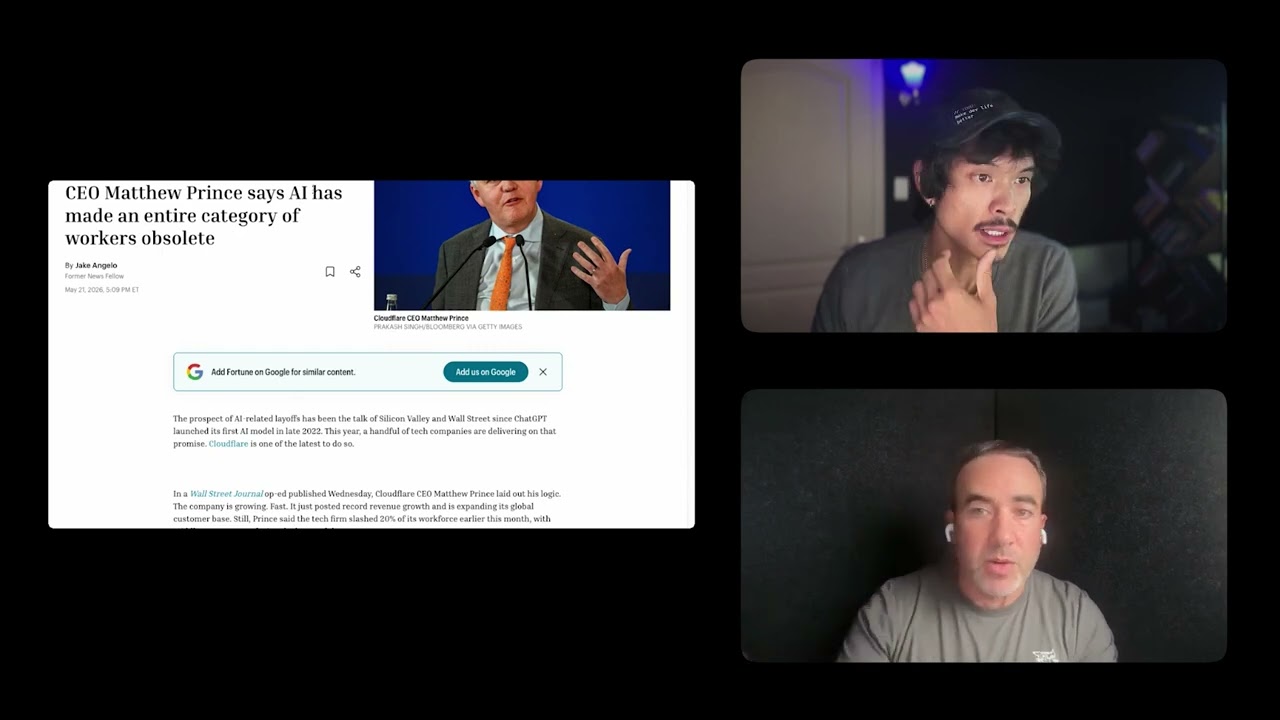
if you have a job and your job is to plug in cables to vacuum tubes that are making calculations, that's a role that existed for some amount of time. As the laborer, as the person who has the job, you need reskilling then to co-evolve with the technology. As the people that are building the systems, the engineers, the architects, the business decision makers, you're just looking for more efficiency, more cost optimization. You know, it's kind of like technology's form of labor and capital having tension with one another. And I think the ability to reskill quickly takes away the anxiety from labor is like, okay, wherever the technology goes, I'll have a new job. But I think one of the problems is that there hasn't really been a lot of precedent of fast reskilling and showing people like how they can go down a career path and then follow along with the technology. And I think that is one of the fears. And even in this recomposition here, you see companies like Block and Cloudflare that are taking the opportunity during the recomposition to lay people off and to say like, we don't need these analysts anymore, we don't need these middle managers anymore. In theory, those analysts and middle managers can be reskilled to use the AI in other contexts. In practicality, there's fear. We don't know exactly what that looks like, and it's like, you know, going to create some uncertainty about like how you should drive your career. Really credible CEOs saying like, look, we have automation now. In some cases, like in Block, people are saying no, actually, like Block just overhired during the pandemic and they just use this as an opportunity to kind of clean things up, and they have a vision for automation, but like it's not really in the data. The job replacement or job loss story isn't like really well supported in the data yet. You know, but like we're just at the beginning of the story. What we see more of is this recomposition, right? Which I think is the exciting thing towards the whole history of technology. Like we just need ways to imagine how job evolution follows the recomposition, how it creates a better future for everybody.
Totally agreed. I think for the product managers, engineers, designers out there that are fearful for your jobs, look at this as there is evidence that if you lean into it, you will be defining the jobs and the roles of this new era. That's the way I see it is if you are a pioneer, you are pioneering what the new roles will be similar to the very first computer programmers that had to do this by hand. I think that's such an exciting thing to reframe from scarcity, fear to we're in a new world of abundance, right? Like, and yes, it's going to be disruptive. Yes, it's going to be a roller coaster because change happens like that at every level, micro scale, macro scale. To me though, if you're a product manager, engineer, designer, you should be leaning into these things if you care about job security. And furthermore, if you want to care creating wealth, like, definitely lean into these things and sit at the arbitrage of the latest tactics applied to the problems that are economically valuable to solve for the business.