I Gave Away 100+ Hours of Free Work to Land a $500M Founder Here's Why It Worked
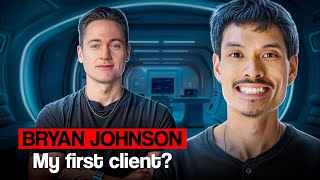
A first-person account by Robert Ta describing how he converted Brian Johnson into his startup's first reference customer by applying Robert Cialdini’s law of reciprocity, aligning contributions to Johnson’s 'Don't Die' longevity mission, and making a low-friction targeted ask. He documents a timeline (meeting at a paid dinner in September, joining the Don't Die community and app, providing daily community content and dozens of hours of product/user research and a slide deck, then pitching at a summit in January) that led to a closed beta, a testimonial from a founding engineer, and pipeline gains for his startup.
Chapters
I was able to land Brian Johnson as my first reference customer for my bootstrapped startup. And in this video I'm going to share with you exactly my tactics and my principles for doing that. So three things I'm going to go over. Number one is the law of reciprocity from Robert Cialdini's book on influence and the art of persuasion. So law of reciprocity is super important. Number two, trying to figure out where I could fit in to his mission and contribute overlapping skill sets that maybe he needs. And I'll go over exactly the tactics, how. And number three, once you stacked up enough, you've done a lot for the person that you want to make an ask of and you'll feel this and I'll share with you how you kind of qualitatively assess that, then make a very intentional and targeted ask and make it very easy for them to say yes. So I'll show you how. Number one, law of reciprocity. Let's go into that. So how did I meet Brian Johnson to start with? I met him because I started just watching videos of whatever stuff he had out on YouTube and I started growing interested because this guy had a big exit and he was advocating for physical health and mental health. I love that mission. And he was also talking about AI alignment and particularly because I am working on AI alignment, that's somewhere where I thought, oh, I really want to get to know this guy. Like is he for real? Because a lot of these famous influencers, famous rich people, like they can be fake. And so I was a little hesitant. But I also was curious to know if he was a genuine person. Turns out he is. Shout out to Brian. I love his team and his development team and product team in particular. World class people. So shout out to Greg and Chris at the time of this video, they're some of the founding engineers on that team. Love them, have loved working with them. So huge shout out. So I had the opportunity. So luck is where opportunity meets preparation. I love that quote. So I had an opportunity to go to a dinner of his and this required some capital that I was willing to spend and just meet the guy and see. I had no like plans to like make an ask. I didn't even know what a partnership would look like or, or that he would be a first reference customer for my start startup epistemic me. But I thought I just want to associate myself with other founders who are getting after it, trying to do big things in the world, change the world for the better and also have a mission for longevity and health and doing it in a way where doing startup life in a way where you don't have to compromise your health and longevity goals. You could be your best self from a health perspective and be your best self from a founder perspective. So I loved his mission. So I paid a good amount of money to go to a dinner of his when he had his first Don't Die conference in San Francisco. And that's in the Silicon Valley where I live, the San Francisco Bay area. So I heard about this happening. I watched a bunch of videos. I was kind of a fan from the outside, but I was also a little skeptical. Is this guy for real? Seems too good to be true. And so I wanted to meet him. And so I had spent some capital to go to this dinner, and there were about 20 people at dinner before I went to the dinner. And this is the law of reciprocity. I spent a lot of time watching all his videos, hearing his philosophy, and I consider myself a slight amateur philosopher, but I have done a lot of deep thinking about how do you solve AI alignment? That is the most pressing problem in humanity to me. And I really want to solve that problem and collaborate with other builders of the future to solve that problem. So that when I bring kids into the world, I'm confident I'm bringing them into a world where AI is aligned with them and helps them co evolve to their best self. Because everybody deserves that chance, right? This guy's talking about AI alignment. He's speaking my language with health and longevity, I think those are important things. And he's also had a big exit. He's proven that path before he sold Braintree, Venmo to PayPal. And then now he has this drum he's beating around. There's a different way to do startup life and you don't gotta compromise on health. And I've always believed that. So it's great to talk to the example. So before I went to the dinner, I studied almost every video about him where he talked about AI, where he talked about founder life and all these things. And I tried to assess, like, where are you at in your movement in building this don't die ideology and making it the most dominant ideology in the world. And then also how do you speak about that? Like what sort of weaknesses or holes do you have in starting this movement? And I thought to myself, well, if there was an opportunity, then what capabilities do I have to bring to the table to kind of help with that? And I thought, well, I have capabilities in community building. I have capabilities in grassroots movements and transformations. I've done that at Workday, big tech company, done that at Dayforce, big tech company where I've led initiatives to be more data driven and to be AI native. That's a big transformation that I've done at Dayforce. And so I thought, okay, I'm good at getting the pulse of people. I'm good at getting people influenced and on board towards my vision. And so perhaps I could start local sf, Silicon Valley chapter for Don't Die. And I'm probably assessing that he's in the talent acquisition phase of he's trying to get the right talent on board into this movement and his startup for Blueprint. And we live in the constraints of capitalism. So he's got to like build Runway, get a good run rate and then try to propagate this ideology. So I studied the ideology of Don't Die and I started getting involved in his community kind of ahead of time. Just online, he had a discord. I joined that. I was like reading through things and I assessed where he was kind of at. So I had language to talk to him from an informed standpoint when I met him. And my goal was just to meet him and, you know, make a decent impression and then hopefully make that the start of a relationship. And I didn't know where this relationship would go, but I just thought if I could just help this guy with a mission that I believe in AI alignment and healthy founders, spreading more longevity knowledge across the world in a free way, that would make me feel good. So the law of reciprocity says the more you do for somebody, it is in our nature when somebody does something. For us humans, it's just the way we are wired. Then over time you're going to feel compelled to help out the other person. So my thinking was, I'll meet him, I'll make a decent impression, hopefully evolve that relationship from there. So I met him, I said these things, I was like, I think you're in the talent acquisition phase of this ideology and you're probably looking for the right talent and perhaps you need some community building, grassroots movements kind of skills. And I positioned myself as somebody that could help with that for free. I didn't ask for anything. And he was like, that's exactly what we need. Cool, let's exchange numbers. And so we did. And I also was also wary that this guy's super busy, he's trying to change the world. Super important dude. So I'm not going to bug him a lot, but I'll just try to make his life easier. But because I believe in his mission, I want to help out. So I had this really genuine desire to just help. And this was, let's see, September timeframe of 2024. One month later I had a pretty good informed thought and perspective on how do we actually solve AI alignment? I believe we solve AI alignment by solving the n equals 1 personalization problem. What do I mean by that? What I mean by that is that we change. So how can AI understand us if we are constantly changing? How can there be a software system that actually tracks the drift of a human's model of self as the human like me goes off and experiences new things like starting a startup, joining the don't die movement, things like that, that changes who you are because you are what you do. You're not who you say you are, you're what you do. You're the accumulation of all your habits. So from that first principle take, I started looking into things like neuroscience and Carl Friston and computational biology like Michael Levin's work around predictive processing and the free energy principled by, by Carl Friston, who's a lead leader in the field of neuroscience. I started realizing the probably core primitive here is beliefs. How do you track somebody's belief systems over time? And I thought that that would be the key to solving AI alignment at scale. I also thought it could be the key to building great products because the future is moving towards every company having some sort of AI footprint. And especially now that software is no longer the moat because AI could create software incredibly fast and it's only going to get better from here. Then it's really the curated data set that meets the goal oriented outcome. In Brian's case, they had a goal oriented outcome of how do we reduce biological age for all humans on the planet? How do we get everybody their own blueprint algorithm hyper personalized to who they are and their constraints, their gender, their demographics, where they live in the world, what's food supply, they have access to the time they have in the day based on if they have a family, what obligations they have, that type of thing. It's so personal because sleep, diet and exercise is so personal. September I met Brian, made a good impression. We exchanged numbers and then after that he launched an app. And I immediately got in this app and it's a social media app for longevity people. I was like, cool, I'll meet other healthy founders here. That's so great. And I'll just show up every day. And so I just started doing a daily gratitude practice. In the app where every morning I just shoot off a little post that says, what are you grateful for today? Being grateful helps you don't die for sure. That'd be from Paul Conti, doctor of psychology. Being in a state of gratitude, state of agency helps you, I'm extrapolating. But it helps you feel content and that helps you don't die. That's where I'm extrapolating. And then every day I also set a goal for myself. Cause I like synergizing my goals, health wise, business wise. So I thought, okay, what's something I can contribute? I'm really into mental health. I'm really into promoting men and humans in general, going to therapy and men in particular. I call that out because not enough men are going to therapy or trying to seek out building skills around emotional intelligence and regulation. And that's really toxic. It's toxic for everybody involved. Right? Because everybody's feelings matter. So I thought, okay, maybe pillar of content that I can create in his app to help him build community, which is what I identified I'm good at. And I could help him build community. And it's a fledgling app. I could just be in there all day, like not all day. So I thought to myself, I'll be in his app and I'll share the types of content I like sharing, such as doing gratitude practices together as community, asking thoughtful questions to get people engaging, and also sharing a daily meditation practice. So I set this goal. I was like, okay, I'm going to do 30 minutes of meditation every single day. That was some, some other goal I just had on the side after learning about the benefits of meditation. So I started just tracking an app inside timer. And so every day on the Don't Die app, I would just screenshot my progress and put X number of days, 50 days of 30 minutes of meditation every day joined the Don't Die meditation challenge. And so I did that and I'm still doing that. I'm on day 304 now. I think as of that was also effective because Brian saw that he's in his own app, using his own community social media, but tied to Longevity app and he's seeing me post on a regular basis. I'm very disciplined. I share values with him in being very self disciplined and seeing that as self love. So he had this goal of trying to build community. I reciprocated effort and I directed my skills towards helping him build community, which was also synergistic towards my own goals of wanting to find community around healthy founders that are trying to change the world and other innovators that don't compromise on their health to go change the world and build out their dreams. So it was all quite synergistic and I just put in that effort intentionally every day I would post multiple times a day. In addition to that, I thought, well, I'm really skilled in software products. I understand product management, design, engineering. I've done that all my career, I love doing that. So something fun that I thought would be very useful to them, the Don't Die development team was, oh, I could just write them tickets in their backlog so they had a little canny IO product roadmap like feedback log. And so anytime I saw a bug, because I was using the app anyway, I would just log a screenshot, type in a user story or bug and just throw that into the backlog. And then whenever I had feature requests just did the same thing. And so I just started building community within the app. I started engaging with community, helping their development team understand maybe the higher priority features that would streamline retention, acquisition, retention, referral, engagement. And then that led to. So September I met Brian. October through December I started just posting the app every day with those discipline habits, building community, you know, helping them build out a prioritized backlog. And then January I had another opportunity to meet Brian in person. And at this point the development team. I had met with the development team because Shout Out Greg, he wanted to meet up and I was like, hey, like have you guys thought about building AI? Brian? I just DM'd him on the app and he was like, yeah, definitely, that's something people are asking for. And I thought that'd be true because I had done a lot of user research. I've actually talked to a lot of Don't Die users at that point and applied just sort of my product and design thinking and user research abilities. And I interviewed users on their behalf. I just did that just to understand like what, what does this type of person want and need and what are their jobs to be done. And based on that, I realized people wanted hyper personalized longevity plans because everybody comes from different walks of life. Like I said, they have different constraints. And then in addition to that, this overlapped with problem I want to solve, which is AI alignment at the N equals one level. So I realized, oh, there's something here where there's an overlap in our missions. Perhaps I could help and perhaps I could position myself as the person that would help. And so I realized in interviewing these users that they had these jobs to be done that were very functional, social and emotional in nature. What do I mean by that? What I mean by that is that health is and longevity are very personalization sensitive. What saves time for somebody else? What is functional for somebody else to lose weight or improve their bio. Age is not going to be the same even across genders. It's not going to be the same. Food access is different depending on where you're at in the world. Sleep, diet and exercise are also all very personal and very emotional and part of your longevity. Health is the pillar of community. So all of it is personalization sensitive is what I would categorize that as. And this is when I was starting to bootstrap the startup I met my co founder. He was actually in the Don't Die community, so also super synergistic. Shout out Jonathan Best co founder I could ever ask for. Jonathan McCoy. Great dude. He is insanely intelligent and he's always feeding his brain and feeding his body the right things and he motivates me a lot. So I'm very grateful for him. So I put together all this user research that I did on the Don't Die team's behalf because I know they're underwater, busy just standing up the app, getting traction, finding PMF product market fit and trying to scale the damn thing that I already know is hard. So I did all this research for them. I got on a call with Greg and I was like, hey, this is how I think I would build AI. Brian, if I were you, this would be how I look at the LLM architecture. Here's some user research that I have done on the jobs to be done. After talking to users and looking at what people post on the blueprint subreddit and just doing tons of analysis, I spent dozens of hours putting this deck together for them just for free because I thought we have shared missions, we have shared values here and I want to help you out. Didn't think about asking for anything. And so his dev team after that really enjoyed working with me because I put in effort and that is that law of reciprocity that I mentioned. So now we got through. Law of reciprocity number two is kind of piggybacking off that. But I realized a need he had was community building. So I, I did that. I helped build this community by actually being in there every day posting like I said. And then after that I just used my product skills for software products and then analyzed how do you make this app better from a retention, acquisition, referral, revenue perspective and gave them a bunch of User research and synthesized it with my own expertise and just delivered a really nice slide deck for them about how I think they might go about scaling their mission towards more and more don't die members and customers. So I did that and then his dev team started talking to him about me. I think is what happened because I texted Brian around December and I said, hey Brian, I know there's a summit going on in la. I'm going to buy another dinner ticket just to meet up with you. I've been talking to your dev team. Could I show you what we've been working on AI Brian and some of the plans there? And he texted back and said yeah, that sounds really cool. Dev team has been talking to me about you. Perfect. And so I thought, oh cool, yeah, my effort is being recognized. And so that was when I made the ask. That's number three is like know and feel when you've done enough to where you can make an ask. This ask was low. Hang through. It's like I'm going to go to you and just hear out my idea and I've already gotten your dev team on board. So I made it super easy for him to say yeah, because I. He sees me in the app every day exercising the values we both share around discipline, doing my daily gratitudes, bringing community together, meditating every day, taking care of my health and then also helping his dev team with the product roadmap and research and the backlog and just taking things off their plate, making their lives easier to build the best application ever. January rolls around and by this point we had a demo of what an AI Brian would kind of look like with a sample LLM architecture. That's what me and Jonathan had built at that point. And I meet him at dinner and then his conference, the Don't Die summit. Met a lot of awesome people there, other founders that are trying to get after it with their health and change the world. Had a great time. Brian throws a great conference and his team does a wonderful job. Shout out to his team and I was able to pitch Brian the AI Brian vision and I really curated this deck. It was singularly the deck that I have spent more time on than anything because I thought if I could land Brian as reference for my technology which solves hyper personalization at the belief level for this N equals one longevity problem to reduce biological age, which is their team's goal oriented outcome and their moat. That's what I ascertained from talking to their user base and then just reading the markets and seeing where the AI landscape is going to go. Then I thought, okay, I could position us as, we are just open source because we believe AI alignment should be something we all work on together as builders of the future. And then I also, it's like very easy to say yes to that. It's like I proposed all these designs, I made the designs myself, proposed the architecture, proposed the revenue model that would make them money. And something in software products too is like, you always want to be positioned as the revenue generator, not the cost center. You're not trying to save time or whatever, you're trying to position it where ideally this would lead to a higher multiple for you as a startup. So any startup founders out there that are building software or technology, you want to be in the revenue generating category. I help your CLV go up. I hope your customer lifetime value go up. You could build products on my product to sell to your customer base. That would make you more revenue. That's going to be a way easier thing than like in budget cycles and planning cycles. It's like, oh, let's buy this software that saves us time. Way easier to be like, let's buy the software where there's clear line of sight to making more money. And so I modeled it out. I asked users, like, what they would pay for an AI Brian and things like that. And I modeled it out like, well, if you built this and solved the number one concern, which is, is this personalized to me, which is where our technology comes in, then you can make X amount of dollars, Y amount of dollars over time. I pitched it to Brian in person and he was very thankful that I came to LA and came to the summit. And he said, robert, thanks so much for coming. I've noticed you in the community and it totally seems like we share values. And I think that's very true, actually. So another lesson there is really just help people you want to help. Don't be like nefarious or manipulative about it. I wasn't at all. I just genuinely wanted to help the dude. With him. I could see that he was a genuine guy. I met him and I told him, you know, I have struggles with getting my parents and my brother on board with longevity goals. Can you make a little selfie video with me? And he did it the very first time I met him. He made a little selfie video with me to try to convince my parents and my brother to become healthier. And that's when I was sold. This guy is legit. He just wants other people to be healthy and their best selves which is a big part of my mission. I believe everybody should deserve the opportunity to become their best self. So do it in a genuine way. And so even just three slides into this heavily curated deck, how we might help to spread their ideology of Don't Die across the world and build this awesome revenue generating AI Brian product. That was the initial plan. You know, all plans change and the plans certainly changed. We got AI Brian after that into closed beta with hundreds of users. Really awesome shout out to Brian's Don't Die development team. Really great people, some of the best engineers I've worked with. So he said yes in that pitch. He said yes because he saw a clear line of sight. He probably saw that I did all this work to help him build the community. He heard from his development team that hey, Robert's a cool guy. He's done all this research and did a lot of like user interviews and stuff like that to help inform our direction and prioritization of features. I just leveraged my skill sets and capabilities that I saw that they had were missing and tried to take work off their plate so that they could build the best product ever and build the best community ever. I just tried to help and then I made that ask and so we just got into a weekly meeting with their Don't Die development team and then fast forward, months later we, they became our first reference customer and we got a testimonial from their founding engineer Greg on our website. So then that's led to many more things like other sales pipeline and other customer contracts and stuff like that. It also has led me to just meet other cool people, which is really great. And I don't know where these doors will go, but I do know that surrounding myself with people that are trying to get after it too, with their health and the mission in life of AI alignment, I'm sure that'll lead to somewhere good. Because when I first met Brian, I wasn't thinking like, oh, let's make him a customer, let's get him as revenue. I wasn't thinking any of that. I was just thinking, this guy has similar values to me and he's genuine. He helped me make a little video to help my family become healthier, which I'm very grateful. If Brian, you're hearing this huge shout out to you, thanks for doing what you do. That meant a lot because family means a lot to me and getting them healthier means a lot to me. So the fact that you take time to do that, that just meant a lot. So I just wanted to Repay the favor. I wanted to help him out. We had shared mission in our respective endeavors. Solving alignment is the most pressing thing and it's just led me to this point. And now the startup is starting to get pipeline. We've thought of a B2C go to market approach. We're still learning and iterating. I don't know everything. I do know that I'm going to constantly be learning to take this startup to the next level. And I do know that I want to help billions of people have the opportunity to become their best self. And I do know that all these tactics will work for you as a startup founder. Trying to land your first big reference customer. Just do these things, reciprocate so much, give them so much for free and provide value and try to read where you can provide value and just go do it. Don't ask for permission. Like if you can just get in there and help out, you will be noticed if you do that for sure. So three things to summarize. How did I get Brian Johnson as my first reference customer for my startup? Number one, the law of reciprocity. Just do the most for whoever you feel you have a genuine connection with and a genuine overlap and core values and mission, try to help, try to assess where you can help and go and leverage that. Number two for Brian in particular, he was trying to build a community that's exactly where I saw I could help. He was trying to build an app to retain people, to get them refer other people to acquire more customers and users into that so that they expand the don't die ideology across the world. And I thought okay, I could really help with that. And it's synergistic with me wanting to find community that is like minded. Like people that try hard at everything and also want to change the world. Healthy founders founders in the longevity. So I targeted my reciprocity there specifically community building product work and I made really great artifacts and assets that they could have just completely for free. And number three, know when to make the ask and make the ask easy for them to say yes. It's going to be kind of qualitative feel but if you break down this particular case it's like I got in with his development team, his community. I was becoming more well known there and I just like provided value and it was in my heart of hearts like I just want to provide value that that's a core value of mine which is any relationship or community I belong to. I want to leave better than I found it, be genuine about it. And then you'll know and you'll feel when is the right time to make the ask and make the ask easy for them to say yes to. And especially if you're a technology or software company, like you have a product that's tech based, try to position yourself as revenue generating. Try to create a narrative that they could see where you provide value that multiplies the amount of value they can capture in market. Don't be a cost center, don't position yourself that way. Position yourself as a revenue generator and have a good narrative around that. Back that with data points and stuff like that. That's exactly what I did. And now we're months out from our engagement with the blueprint Don't Die team. Shout out to them, awesome team. And I love their work, I love what they're trying to do for the world and making the world a healthier place and solve AI alignment. And now we have them as a reference. We have testimonials on our website and that's taken us to the next stage in our startup. So if you want to find out more about startup life, personal growth, growing with AI, stuff like that, hit subscribe and I'll go and just share more because we're just documenting our journey, building in public transparently to solve the most pressing problem that humanity faces with AI alignment. Have a good day.










