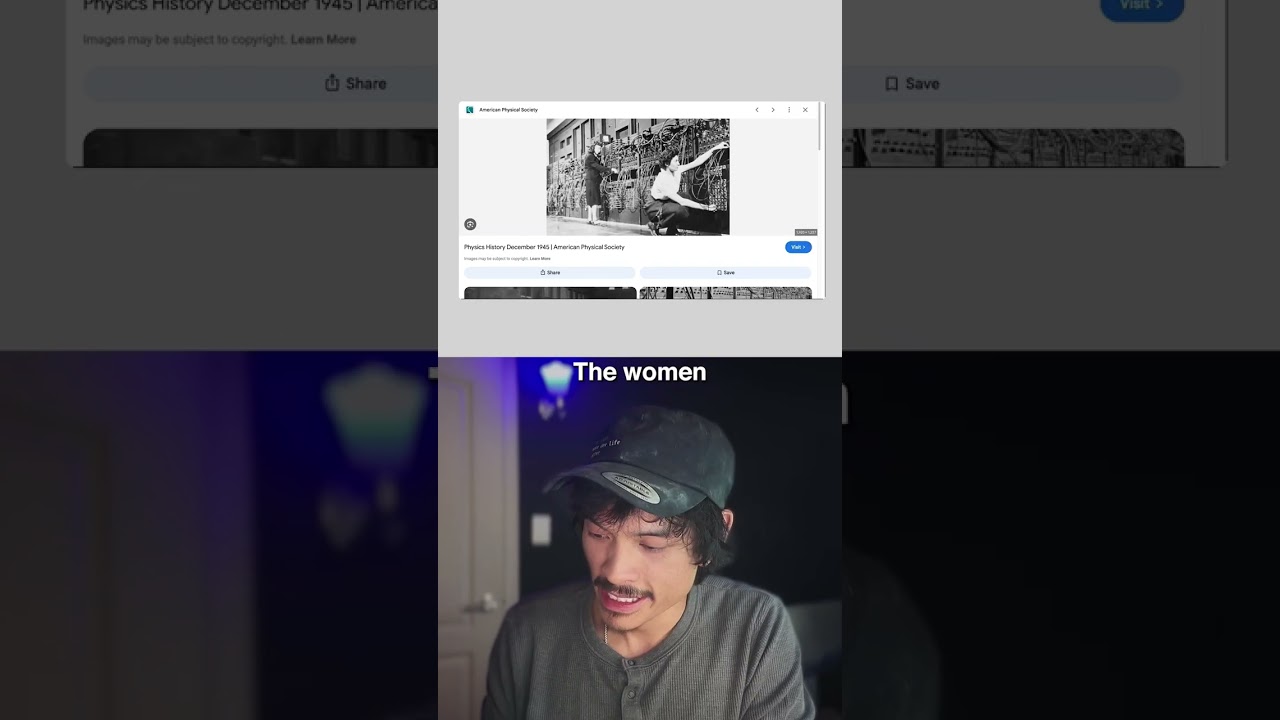
Robert Ta traces how breakthrough technologies reshape work, from the telescope to ENIAC. During World War II, women programmers invented software by hand-wiring the massive computer, creating the first job roles in their field. Whoever masters AI first will write the rules everyone else follows.
Chapters
Every new technology that has ever been introduced is disruptive. Uber disrupted to taxi drivers. Airbnb disruptive to lots of local communities. And it all goes back to like the telescope, the steam engine, like all these things. And one story I wanted to share, I just read this. During World War II, significant advancements were made in the engineering of hardware that could process information faster than humans. One of these machines was ENIAC, the Electronic Numerical Integrator and Computer, located at the University of Pennsylvania's Moore School of Electrical Engineering. It was a giant machine made up of about 18,000 vacuum tubes, each with switches to communicate electrical pulses and signals. I thought this was such a cool story that explained a parallel event happening, which is the event of software programming. And this is what it looked like back then, where women were the first computer programmers and they were doing this by hand. And the story goes, these women effectively became some of the first computer programmers in the world. It was not an easy task, partly because the concept itself was so new. Programming, the original team learned, would not be a desk job. The women would stand inside the ENIAC to plug in each problem, stringing the units together in sequences using hundreds of cables and some 3,000 switches. There were no instructions to read, no courses to take. So those original women that were operating this in World War II wrote the instructions by figuring out how to use the system and develop the courses for the people that would come after. Their work was part of the early efforts that led to role specialization where software programming became divorced from hardware engineering. Just from this alone, dissolution of roles that we're sort of seeing now in this era, this happened before. This has happened every time and there's ever been a new technology. When you dig into the story, there were people that had a job and then a new technology or tool came out and their job kind of changed. And guess what? The frontline people that played that arbitrage to figure out the new emerging skillset and capabilities to plug into the economically valuable workflows or the work to be done. Those people defined what the roles look like.