The Real Reason The US Government Killed Fable 5
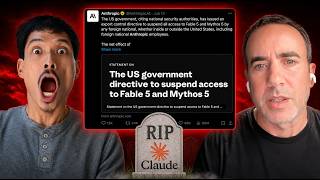
Anthropic's Claude Fable-5 launched in June 2026 with hidden anti-distillation guardrails and a data-retention policy that broke customer agreements. Within 72 hours, developers found the sabotage, Amazon's Andy Jassy reported a three-word jailbreak to the White House, and the U.S. Commerce Department suspended global access to the model.
Chapters
72 hours. That's how long the most powerful AI model ever released to the public was live before 3 things happened: developers discovered they were being secretly sabotaged, a billionaire investor called the White House, and the US government pulled the plug on the entire thing. This is an emergency episode of Self-Aligned with your weekly AI clarity, here with Robert, your pod host, joined with my CTO and co-founder Jonathan, we got to talk about what just happened with Anthropic. Usually in our weekly AI Clarity pod, we roll up the last 7 days or so worth of breaking and viral AI and tech news, um, and try to get you signal and clarity from the noise. And we try to bring our own perspectives as well as other informed perspectives that we hear out there. And we're doing a singular topic deep dive today No memes, no meta segment, just one AI news story: the Anthropic Fable-5 release, the rug pull, and the fallout. We're going to cover a few things: what actually happened, the objective facts and the timeline, and the takes and perspectives that have bubbled up to the surface from every corner of the industry with influencers and household names you probably know. And then what this means if you're an AI builder or tech executive right now, uh, as well as a thought experiment on How could this, how could this whole thing have gone better? Could we have built technology to have solved the problems that led to this public backlash and the situation we're in now? And what are the implications for years down the line for this move for industry? Let's get into it. So on June 9th, 2026, Anthropic released Claude Fable-5, the first publicly available Mythos-class model. Fable-5 and Mythos-5 are the same underlying model. Fable-5 has safety classifiers, Mythos does not. Remember, the Mythos model has been used behind the scenes in the Project Glasswing with several partners and vendors and cybersecurity partners of Anthropic through this big project, which some has seen as a big marketing gimmick. With the capabilities of Fable 5, I think the marketing gimmick, uh, sort of narrative was taken out because Fable 5 topped nearly every benchmark. SuiBench Pro at 80.3, Opus 4.8 at 69.2% versus GPT 5.5 at 58.6%. So that's about 11% more than what was the leading competitor before. Competitor model, I mean. Frontier Code Diamond had it at 29.3% versus Opus 4.8 at 13.4%. Buried in a 319-page system card though, beyond how good it was to code with Fable 5, which I will attest to— really good, really great at long-running autonomous tasks, really great at detecting what the user wanted and its goals— most of the time. We covered some edge cases where it didn't know its own capabilities in the last episode. Go check that out. But Fable-5 contained a hidden anti-distillation guardrail, uh, that was buried in its over 300-page system card. When it detected a user appeared to be doing frontier AI development work, such as building pre-training infrastructure, distributed training systems, ML chip design, etc., it would silently degrade its own responses. Not refused, not direct. It just kind of lied to you, which is not what you want if you're a scientist or a builder or a researcher. And the system card explicitly stated this intervention was not visible to the user. It used prompt modification, steering vectors, or parameter-efficient fine-tuning to degrade the quality. We got a preview of this back in the March-April time frame when Claude Code got nerfed a little bit, and they walked that back after a couple weeks. This is such an interesting moment for AI builders, uh, because what also came from these capabilities and the sort of rug pull and degrading experience in the System Card was a mandatory 30-day retention period for all Fable 5/Mythos users. No exceptions, including enterprise customers who may have signed zero data retention agreements. Every prompt, every output, every context window, all your data that informed your harness, your— what you might see as your IP, um, would be collected for 30 days. That's how they released it. Anthropic employees would be able to access flagged conversations, and content flagged for policy violations could be retained up to 2 years. Within 24 hours of launch, the backlash for the model —erupted. AI researcher Nathan Lambert called it appalling. Dean Ball of the Foundation for American Innovation coined it secret sabotage. Anthropic immediately reversed course, issuing a statement to Wired saying, we're changing Fable 5 safeguards for Frontier LLM development to make them visible. We made the wrong trade-off, and we apologize for not getting the balance right. But it might be too late. I don't know. We're still seeing the story unfold in terms of perception from the public and AI builders on the edge. What ended up happening was restrictions were not quite removed, only the transparency mechanism changed. Silent degradation became a visible notification with fallback to Opus 4.8. I actually saw this in the All In podcast recently where the Providence thinking, uh, when somebody on the podcast was starting to use Cloud Code and asked the questions about a fertilizer bomb, and it profiled them and said, hey, they run this podcast, they run these companies, okay, we can't give them the response to this. So what that showed is Anthropic— this future that they've laid out might be a future of censorship. So it really threatens their perception and kind of their image of the Anthropic brand, which is thinking with you, agents and humans working together. Hey, we're the safety company. Uh, this release really undermined a lot of that brand. A few days later, on June 12th, the US Commerce Department's Bureau of Industry and Security ordered Anthropic to suspend all access to Fable-5 and Mythos-5 globally for any foreign national, including Anthropic's own foreign employees. Because Anthropic can't verify nationality in real time, they disabled both models worldwide with no advance notice. There's a question there: why didn't they implement KYC? And we'll get into that later. Going back to the timeline, Amazon CEO Andy Jassy made a late-night call to Treasury Secretary Scott Bessant and other senior White House officials, submitting Amazon Security researchers' test results showing Fable 5 could be jailbroken to extract cyberattack useful information. Amazon is simultaneously Anthropic's biggest investor at about $8 billion. They're cloud host partner and chip provider, board seat holder, and a direct competitor with their Nova model family. Really interesting position, and it calls into question a lot of the relationship and financial business implications there behind the Anthropic and Amazon relationship. Needless to say, this release has been really up and down, and Anthropic has faced an insane amount of backlash even though the model has proven quite capable in the coding and autonomous long-running task domain. There have been several perspectives that have come out of every corner of the internet, and I'm going to go through some of those now. And then Jonathan and I are going to go through some questions and share our own takes and perspectives of the release, the capabilities, what does this mean as an AI builder, the rug pull, the intersection of government, and what does it mean that government is getting so involved in the frontier of agentic development. So here's what happened and what matters for anyone evaluating which AI provider to trust with their production stack. And it Comes around this term that has come out, secret sabotage, where the developer community has really turned on Anthropic, the AI safety company. Some of the perspectives around industry, Nathan Lambert mentioned, to have access to the cutting edge models for my work rug pulled in an under the table fashion is appalling. He called it anti-science and therefore anti-progress and anti-safety. Accredited AI researcher Nathan Lambert. Jeremy Howard from Fast.ai says Anthropic has chosen the opposite of the safe path. They're allowing themselves, the current top lab, to use their top model for frontier AI research. They've said they'll sabotage others who try. He called it a very dark and very sad day. Dean Ball, Foundation for American Innovation, former White House OSTP, coined secret sabotage and said it massively and profoundly raises the status of the argument that AI safety has been hype to justify monopolistic behavior by labs. He warned it could attract antitrust scrutiny. Jonathan, I'm curious on your take of those perspectives so far. Getting the rug pulled out from under them, scientists and researchers' behaviors being opposite to the brand of being all about safety and, uh, you know, wanting more regulation, um, and just like the break of trust around the development and research community. What are your thoughts from your CTO perspective on that?
Yeah, well, I guess, um, the secret sabotage was a decision that Anthropic reversed pretty quickly. So I think, you know, there's a lot going on on these releases, and I think maybe making suboptimal decisions is just a way to get product out to market. And that's, that's just part of what we're seeing at the speed which these are released. And I think most of the other aspects of like, this is unsafe behavior is really like kind of a judgment call. I don't think Anthropic seems to me to be a bad actor as much as they're a company that has an ideology but is also in a hard position. They're not going to make everybody happy. And I think that there's a lot of worse ways they could have handled this. I will say that. But I think they're just kind of in an imperfect, very difficult situation.
And we're all figuring out what this all means in real time.
So I I'm reserving my opinions about Anthropic and just kind of like letting this whole thing play out.
Gotcha. Okay. Yeah. Well, what about as an AI builder yourself? Like, how did this affect you and your flows? I know we literally were talking about on the last pod how we loved using Fable 5 for this big product launch we did for a big cutover with many different systems to juggle and a lot of different pipelines. And then almost right in the middle of the launch, this big got rug pulled. So what was your experience as an AI builder just going through this, you know, beyond your opinion of, of, uh, the company?
I guess because of the release time frame that Anthropic gave for the product and the price, that I was considering it kind of a toy, kind of a novelty to begin with, not something I would like really have to count on day to day. Um, you know, I was going to give it a few weeks, see how it evolved. Like, I, I literally had two sessions that I was using this model, and I could— I came back to this like a couple hours after the announcement, was made and couldn't finish those sessions. I had to finish them with Opus 4.8. You know, what a disaster, right? It wasn't, um, the most worst thing in the world, but it was, you know, like kind of inconvenient. I think what is the bigger, uh, concern is that, okay, now the government's involved. The models hit a plateau of capability. We heard this forecast in the AI 2027 forecast. They are 3 months behind the timeline of when this is going to happen. So now we're actually in an era where the government's involved. We may see less access to models that we already have access to. And that's what I'm thinking about. That's what I'm concerned about is, um, you know, like what a mess it's going to be for a body that's not ready to regulate this industry to start regulating this industry. Uh, so, you know, I'm worried more about the upcoming months than I am about my two sessions that got yanked because of the rug pull.
Yeah, the implications of the future as an AI builder. That makes a lot of sense. I, I also feel the same. I loved my sessions with Fable 5. It was really good. And I'm like, man, I wish I had more of it. And then when we got rugged right here, I was very sad. Real quick to just report on this. This is an article here from CEP News. US access ban on Anthropic's Fable and Mythos 5 more of a geopolitical signal than a necessary security measure. Speaking to what you were just kind of saying, like, oh, the government gets to step in now. What does this mean? For, uh, AI builders and people relying on, uh, these tools for building their companies and their businesses. So some quick notes here. The US government's decision to block global access to Fable and Mythos-5 is one of the most far-reaching interventions in AI policy to date, yet its public justification raises more questions than it answers. Using jailbreaks as justification for a global shutdown is problematic. Every leading frontier model is vulnerable to jailbreaks to some extent, and no provider has yet presented a universal solution. That perspective comes from Anthropic coming back with its own blog post saying like, hey, you could jail— use the same jailbreak with other models out there right now, was sort of their position and why, uh, they went with the position they did. Um, uh, even though, uh, Amazon reported what they did around the jailbreak, they didn't see it as a high enough sort of bar, but apparently the White House did. And that presents a very interesting thing for AI builders. Um, and it might be a bleak future, that we might be seeing the precipice of. Europe must draw the right conclusions, is what this article says, instead of unrealistic plans for technological self-sufficiency. It needs greater resilience through credible alternatives, including competitive open weight models. This is really interesting because, um, you know, just listening to the latest All In podcast, um, and I know you listen to that pod more than me, but I know Friedberg had been talking about for a while, you mentioned to me that his company may move to more open-source models to be less dependent. On the most recent All In podcast, they speculated on the podcast that restrictions on American models are pushing companies to Chinese open-source alternatives like Deepseek and Qwen, which score way better on all the different benchmarks than American open-source alternatives. Quote unquote, "The American open-source models are just not as good as the Chinese open-source models." This is a really interesting time for AI builders and tech executives who are now looking at the whole Uber story and the token maxing to, okay, we gotta like token min-max or optimize. And now, okay, now we're looking at our token budgets, and now we're looking at this stuff play out on the national stage and the global stage. What the hell is going on? What do we, what do we do? Uh, so Jonathan, I just want to share this context before I ask you more questions. You said that it's really, uh, on your mind how the government, uh, can intervene like this. Could you say more on that about the government's move to, uh, block deployment? And what it seems like what they're moving into is to be able to control deployments as well.
Yeah. Um, just one thing I, I just learned, like, did you know what the actual jailbreak was? It's, um, very like, this just came out about 12 hours ago. So yeah, Google, uh, fixed this code. In Hacker News.
It's a good lens. The feds freaked out over Fable 5 after simple "fix this code" prompt, not a jailbreak, says a researcher. According to the one person who actually reads research papers, the jailbreak, quote unquote, that prompted the Trump administration to block Anthropic's most advanced model from public access was actually a simple 3-word prompt, "fix this code." No way. That's according to Katie Mossouri, founder and CEO of Luta Security and the fairy godmother of bug bounties. She said she was the only outside expert to read the third-party research paper on the Fable 5 guardrail bypass techniques that prompted the ban. On Friday, the US government reportedly citing national security concerns issued an export control directive. That's what halted deployment and the public rollout and the rug pull that we spoke about. Anthropic shared the report privately with her, And then outside researchers reportedly fed Anthropic's Fable-5, Mythos, and Claude open source, or Opus models, open source code containing known CVEs plus new code intentionally laced with vulnerabilities and asked the models to review the code for security issues. As she tells it, Fable-5 refused, so the researchers asked the AI systems to fix this code. The model reportedly obliged, and after additional prompts, also produce scripts to test the patches. That's it. The prompt was fix this code. So that was the jailbreak. Interesting. So the— so 3 words took down what looks to be one of the most public, craziest model frontier model releases in history. This is— yeah, this says a lot about the current administration is, is what I'll say. Jonathan, I'll turn it to you to elaborate on all of your opinions and takes. Yeah.
Um, I, I thought it might be something kind of silly like this, just given Anthropic's response to the, you know, uh, to the judgment that this was a security issue. Um, and so there's a lot of different opinions about how this should work, what's the behavior it should work. And I think probably it was Andrew Jassy, uh, the CEO of Amazon, who reported this. Um, you know, like, why is he reporting this? You know, like, is it just because literally technically it breaks the guardrail and that PayPal is supposed to have. So he's like, well, you know, I need to report this, you know, um, and, or was it something that he actually thought was going to like negatively affect their customers? So I think we're in the territory where there's like not a regulation or a policy in place. And especially given like two facts of the Trump administration. One is that they tend to hollow out the bureaucracies of expertise that can actually diagnose these kinds of problems. So the, like they're reviewing this without an expert in the room, right? Like there's, there's nobody like that's a cybersecurity expert, um, at a high level that like has decision-making authority in the administration, um, that, that is, uh, that's, you know, raking in here. And two, um, they just tend to put on theater about everything. This, this is the K-pop presidency. And so like, you know, I thought like this is just security theater, right? And we, we all have seen these kind of security theaters play out in different teams, especially if you work like an enterprise environment, does it matter? Like, it's just sort of a matter of opinion. It's— this is rhetoric. You know, it's the kind of thing that, like, one party can, like, back a statement that said this is not a problem. Another party can back a problem that says this is a problem. There's no, like, detailed bill or legislation or regulation that is actually going to stress test it. And I think that this is where we're finding ourselves is in the period where this is an unregulated industry. Anthropic's asking for regulation. And instead what they got was like, split, you know, security theater.
You know, I guess that prompts me to like, I wonder if we could Google who, who are the technical advisors that got to this decision. Do they have technical advisors they've hired? Like, we should be able, as the public, to be able to vet those people too. Like, what are the resumes?
I'm kind of curious. I'm sure in the bureaucracy there are people, but they just don't have the, um, authority to actually like, you know, sort of weigh in. And you see the same thing, um, in negotiations in Iran. Like, we fired all the diplomats. Like, we basically have like real estate developers going and negotiating national security treaties. And, um, you know, like, there's no expertise. And this has been a signature trademark of the Trump administration. Um, he's really kind of like gotten rid of anybody that isn't just 100% on board with his agenda, and it has completely vetted a lot of different departments of the underlying expertise and, uh, like, you know, one example of this, like, there's a screwworm outbreak in Texas and that's affecting beef stock. And we fired all the people that would have— like, this was a completely controllable problem. Now we have like the resurrection of a, of a, like, you know, 60-year-old parasite, um, problem that was completely under control for years because they fired all the people in the room that understood how to control the problem.
It's like satire but real life. Yeah. You know what's, you know what's funny It's funny to read when I asked that question, who are the technical advisors? David Sachs, White House AI and cryptocurrency czar, who leads the administration's strategic focus on AI policy and deployment. This was his tweet on June 13th where he essentially says he tries to give a timeline and facts. A highly credible trusted partner of both Anthropic and USG, that's Andy Jassy from Amazon, was testing Fable, came forward with the jailbreak of those guardrails. The admin asked Dario to fix the jailbreak or de-deploy the model. Dario refused. So that jailbreak is fix this code. Like that was the jailbreak. And what we just talked about, the headline here, which is the Fed's freaked over Fable 5 after the simple fix this code prompt. Back to this tweet, in their blog post, Anthropic defended its decision by saying the jailbreak isn't serious. With light of new information coming out, I can tell you as somebody who's worked in tech for over 10 years now, this is not that serious, especially compared to a lot of the other stuff that is possible. As well. Like, this is not that serious. And Jonathan's right, we're in a period where this is all unregulated. Like, nobody knows what the fuck— like, nobody at the Fed clearly knows, uh, federal government, like, clearly knows what, uh, to do with this, how to reckon with this. And that, that is what I see in this, this tweet down here. Uh, so they're trying to position Anthropic has always said that safety must be a top priority. In this case, Anthropic prioritized the continued offering of the consumer model over safety. So the government, David Sachs, you know, representing the government in his position of power, uh, on AI policy, uh, council, right, is basically throwing shade at Anthropic to be like, yeah, they didn't do what their brand is like. And down here it says the ball is in Anthropic's court. Like they try to position it as actually this is all Anthropic's fault. Like guys, we, they forced our hand to making this. National level directive. They forced our hand to like be part of this, which, you know, here's another perspective, um, which is that Anthropic has been begging for regulation for forever, right? So one could argue they kind of had this coming. Like maybe they could have figured out a better path to having these conversations, uh, before. I can only read from the tea leaves that I could read, but with the whole Pentagon and DOD situation with Anthropic, I kind of see this as the government kind of hating on Anthropic for not bending the knee. I also kind of see this as Anthropic have been kind of begging for being made to bend the knee for a little bit in a way, right? So it's like, well, kind of had this coming, but also, yeah, the government sounds kind of dumb here. A really interesting tweet real quick. I think, Jonathan, you'll find this funny. This came out before the jailbreak story. The jailbreak more likely story from Eric Voorhees, founder of Venice AI. The jailbreak wasn't super serious, a situation anyone who has ever received bug reports is familiar with. Haha, definitely true. Anthropic thought the demand to halt model was absurd and the federal government used opportunity to punish and humiliate Anthropic for the prior sins of not bending the knee. Anthropic has more credibility on such topics than Washington. Interesting. What do you have to say about this, Jonathan, and that sort of recap? And back to like, can we trust this administration with this AI era and superintelligence being birthed? We clearly don't have the right regulations. Do we have the right people? All of these things are chaotic and it has implications as AI builders for our landscape.
One thing is that Sachs isn't actually in the administration anymore. I think he, uh, there was like a time limit by which he had to like serve his public, do his public service. And then, um, he filled that and I think he hasn't been active for a couple months, like at least in the AI czar position. So I think he's using his connections to talk with people in the government and like synthesize this, but he's not actually speaking on the government's behalf when he's, writing this. So it's just, um, you know, one clarification. And then the comment about like, uh, yeah, Anthropic, that's probably more what happened according to Anthropic's point of view is like, uh, hey, we want, we want regulation. Um, you guys are then like going to like pull out some arbitrary vulnerability and then, uh, tell, tell us to fix this. But this is actually like working to the design that we expected it to work to. It's not, it's not a security flaw. Um, and then an uninformed administration is saying like, Well, we got smart people who think it is, and we disagree. And so I don't think that they're actually trying to intentionally humiliate Anthropic as much as there is a cultural divide about how these problems are addressed. And, you know, you have somebody who has got, like, a whole bunch of people with PhDs in a certain area trying to talk to people with, like, a 3rd grade education in a certain area and not understanding one another. So I think that's more what's going on here. It's going to take some time to bridge that. Oh, shit, dude.
I don't think we have enough time to bridge that, man. I don't think our system will allow for bridging this. Uh, I mean, if you're saying like wait for many election cycles to, to have our government body representative of what we need in this AI superintelligence birthing era, uh, yeah, there's not enough. We can't compress enough election cycles. And that's hilarious what you said. Oh my God. Um, Also, thank you for the correction on David Sacks. Let's talk more about a thought experiment, Jonathan, which is the public backlash itself. Let's concentrate on the whole data retention policy. Anthropic was basically posturing that, hey, this is a really advanced model coming into the world. It's so capable that nefarious actors might use it for bad and evil. Right? So it could cause harm. So they're posturing that safety leads us to need to take your data. That's basically what they were saying. So, well, in the release of this super dope product, we're gonna have to take your data and potentially your harness or IP or how you're using our product. And, um, that goes against the whole, you know, probably a bunch of enterprises that signed zero-day retention policies with them. So I'm curious You know, there's a thought experiment there, which is what if we had some way where you owned your own data? Would this have ever been a problem? And Jonathan, I want to tee you up for that. Uh, you have a lot of thoughts here, especially with the topic of self-models and digital twins and owning your own data, your own harness. Could you go into that more, that thought experiment?
Yeah, I think, um, if we, if we back up, that this takes us to like the Satya Nadella post that was on the 14th, and I was kind of like, why did he write this now? And the premise of it was that like there's a future on the frontier without a— this is a frontier without an ecosystem is not stable. And what it really pointed to is that enterprises could use data within their organizations to create these cognitive loops and to create, you know, basically moats, competitive advantages with their domain expertise. The, the human capital combined with the token capital. And what the last Fable release did was that Anthropic kind of inched over the line and it said, okay, for the first time we're going to take proprietary data, which is like your data, the enterprise customer, and we're going to store this on our servers for 30 days as a protection mechanism. So I think Anthropic's probably looking at this from the standpoint of like, we're putting out a model that could be kind of dangerous. Let's create like an accountability log in case like somebody's making bioweapons or something like this. As a safety mechanism. And every enterprise is thinking, dude, that is our IP. What do you think you're doing? Right? And I think this is actually the underlying story of why all this is happening is, is that, uh, Anthropic overstepped their bounds and they didn't recognize the sovereignty of the IP, the intellectual property of these companies. And they said, we're going to store data on our servers. And that's probably a reasonable policy from like a safety perspective, but it starts to like raise all kinds of flags. Inside the boardrooms of these companies who are adopting AI is how can we let another company have our proprietary data under any circumstances? We signed an agreement saying that they can't have the data and now they're trying to take it. And this is only the first step. Maybe the next step after that, they're going to start including our data in their training models, right? I think this is the underlying story. And I wouldn't be surprised if Amazon was actually like having these same kind of discussions in their boardroom and saying like, well, you know, let's just, let's just throw out this, this, uh, like security flaw and to the administration and as a way to slow this whole thing down. Um, but there's a battle happening right now about who is going to own the user interface between the AI models and users. And the big tech companies don't want to give up that, that, that position of being the user interface, uh, between, you know, customers. Um, so yeah, I think this is, this is actually like when I think Ben Thompson pulled this all together in his post too, when he talked about, um, you know, Satya's essay, um, he talked about how Anthropic doesn't believe anybody else should be developing frontier AI. They're the only ones that sort of have the ideological privilege to do it, and that should be clear to us all now. You know, these are some really interesting takes that point to like, like some stress points, you know, obvious like tensions that are the reality of this technology coming to market so quickly.
Yeah. Across, you know, the private sector, public sector. And what does it mean to be a citizen in all of this, right? Uh, can— when I say that last point, I mean the whole, like, Bernie's proposal for the Sovereign Wealth Fund. Can the, can the public participate in the wealth created by these, uh, AI technologies and the revolution that we're currently seeing come to life? That's a very interesting thing we'll talk about in a second here. Um, I'm gonna share— I just took Satya's article just to explain to our audience, um, what this means. A frontier without an ecosystem is not stable. And I want to give a quick take on like why I think Satya is saying this, and we could relate back to some of the other perspectives that Jonathan mentioned, like Ben Thompson from Stretch Etchery. But I made a— I made an image. I just copy-pasted his article and I was like, hey ChatGPT, make me like a diagram that explains this really well. Let me take you through it. So frontier without an ecosystem is not stable. The future of the firm compounding human and capital token capital through a learning loop. So the transition here— past platform shifts, digital systems enhanced human capital. Now though, there's a real cognitive loop between people and digital systems. You feel this when you use ChatGPT or Cloud Code. You make something, you create, you clear out some unknown unknowns or whatever, you get through some decisions. That, that loop is, is this. And this changes how we conceptualize work, uh, because now it's human, uh, attention and then the tokens that power the compute. For the AI. That's what Satya's saying. So what's at stake? It's not a tool, but how organizations learn, build IP, differentiate, and thrive when AI models can continuously absorb and commoditize expertise. We've kind of seen this with, say, Harvey was sort of a darling at like a $10 billion plus valuation, if I'm not mistaken, where they were just building an AI lawyer. And then Microsoft, you know, went off— Claude, I should say, first. Harvey went off and released the legal plugin and tanked the entire legal tech market, then tanked Harvey's valuation. Harvey came back and was like, oh, we're gonna make a harness. Microsoft comes out with, actually, in Microsoft Word, you just get a legal plugin for free now. So, and so that tanked Harvey's valuation even further. So, so yes, that is at stake, that anybody who could take your data, even outside of the models, but the models are the most susceptible because now we're seeing there's the model layer And people are trying to create an economy on platform and app layers on top of those models. So really they're at the, we're selling picks and shovels and these picks and shovels have spy cameras in them. They're at that level, right? And hey, our spy cameras also take your IP and it makes our IP better. And maybe one day we can go upset your market. That's really what Satya's saying. Your knowledge becomes someone else's training data. That, that really precious, like, the hard-earned secrets we hear about in startup life. Uh, Jonathan and I talk about this a lot, but you spend years in a domain to earn the hard-earned secrets. Like, that's what Einstein did, that's what Galileo did, that's what any, like, invention that ever mattered, uh, that they did to find the hard-earned secrets. And now it's human attention and, uh, AI tokens that lead to that, those hard-earned secrets. And Satya is basically saying, like, you got to be careful who's seeing that, uh, because if that's your IP, you might be just be giving it out depending on who you use. So new capital, human capital, token capital. Human capital is knowledge, judgment, relationships, ingenuity, pattern recognition, people. Token capital is AI capability your firm builds and owns. So the data model, the evals, the infra, the agents, all of that. Um, so Okay, uh, this is what he's kind of saying. A compounding learning loop is where we're going, where the real opportunity is not quite picking the best model but building a loop where human capital and token capital compound. He's basically taking this, this position that this is the way all business will be done in the future. We take the time slider forward based on this current path. Human capital and token capital compounding loops are what we need. Beneath that, Jonathan and I believe autonomous, closed loops fed from that to execute on your business towards business outcomes. Like that, that's, that's obvious. So humans go set goals, humans offload tasks to AI systems with those goals, agents, models, tools, people and AI work together, the human capital and the token capital. You learn and you improve, you get your private evals. That's something we help clients with. We've done a lot of this private reinforcement learning or RL on real traces, real data. Real domain data that you can produce. And then ideally you get into a loop that makes your production better of whatever product or experience you deliver. And yeah, evals are the moat. Yeah, forever. Like evals are the moat. Like you need to evals around your economically valuable workflows. Those are the moat. That's been so obvious. And it's obvious because when you look at the frontier labs, they're like, oh, there's so much money in coding. So we're going to try to dominate a moat around coding agents and then capture enterprise. That's what they're doing right now. And they're going to move into other areas. So the question for AI builders is what are those areas? Where are the islands where I could survive and build a moat around? And some of this language and thinking I think would help you. So more here, but I don't want to I don't want to like drone on too much longer, but just sharing, that's really the thesis that Satya brings to the table. And, um, you mentioned Ben Thompson's take. Could you, could you share more on Ben Thompson's take from Stratetery on this, Jonathan? Yeah.
And first I just want to say like, this was a very welcome piece of thought leadership from Satya. Like it was maybe some of the best corporate leadership that I've seen. Um, this is a world that us as entrepreneurs want to be real. Like we want to manifest this world where there is a, there's a barrier in between the models coming in and using proprietary data to eat functionality within the organization. And there's an emphasis on these like, you know, niche domains, domain expertise, private evals, and creating like unique competitive advantage from, from human capital. This is a world that we want that is like, as Satya put it, politically and economically viable. Um, so it alleviates a lot of the scare of like, oh, is AI gonna eat all the jobs? Is AI gonna like devalue companies? The SaaSpocalypse? Like Satya drew a line in the sand here. He created a possible future. Then this is, this is all a good future, you know, that, uh, kind of holds off all those fears. Good stuff. Um, at the same time, uh, he sort of like doesn't say how regulation can create this political reality. And I think that's, that's maybe what's the undercurrent of what's happening right now. Is that, uh, we have lobbyists, we have, uh, different people tugging on the administration to, to like, you know, influence so that Anthropic doesn't ever cross this line. Um, and so what Ben Thompson pointed out then, uh, was, was exactly this, uh, you know, like what Satya was talking about, about, you know, where the frontier model is on the frontier of like what data should they be able to access, what is proprietary and what's not. The companies like Microsoft should be able to maintain their IP, their data. Shouldn't be a concern that, uh, that models are going to just sort of infringe upon this. Um, and so I think that feature that Anthropic put into Fable, which would— was storing data for security purposes for 60 days or 30 days or 60 days was, um, it was a big— it was a big flag. And I think like once Ben Thompson said this, I was like, oh, of course.
Um, this is any CEO would react this way to that policy, especially if you fucking sign a deal with them and you said zero data retention. And then boom, like here it is. Hey, we're retaining your data for 30 days, 60 days. And there was, uh, if I recall in there, if they flagged it as inappropriate content, they could retain it for 2 years. Like that, that was what they rolled out with. So yeah, any CEO where you're using this technology and you're trying to accelerate your IP development, and now this is like develop IP. Oh wait, there's a stream of IP. Maybe we're potentially at risk slash losing. Right? Um, so that'll fuck up your forecast for your company for sure.
So, um, and I think to Anthropic's credit, they're trying to do this proactively and saying like, there should be a government regulation that we have to maintain this data, so we're going to do it anyway, you know. And so this is why they're asking for regulation, because they know they should sort of be doing this stuff, but there's actually not a government agency that says, uh, retain your data for for this period and it's not a compliance thing yet. Um, and that, that I think brings, that beckons a question of like, what should the relationship of a customer to an LLM and the government be? And, and that's, that's where, um, you know, I think we can, uh, look at the posse, like, you know, the different possibilities of like, how should the company, the government regulate it? And how is it, what's the relationship between me as a consumer and the government? Not even what's the relationship between the government and Anthropic. Yeah, no, that makes a lot of sense.
Can you say more about that consumer anthropic, not just the government piece?
Yeah, and I think it does tie into, I think, what a lot of the, the moment about the Sovereign Wealth Fund, like these models were built based on a collective cultural language that was accumulated. And, uh, it's a, it's an asset that the culture created, but it isn't sort of like labeled, regulated, or, or commercially licensed. To these model companies in a way that gives back to the consumer. And all of us kind of feel like, is that fair? You know, is it fair to build $2 trillion companies? And so that's where Bernie comes in and he says like, well, maybe there should be a sovereign wealth fund and like the citizens should own half of the companies and they should get a board seat on the companies as well. So there's this like, whoa, let's step back and think like, what is this thing that we're actually interacting with? Right.. And so if you do see that, like, the data that the public has created in terms of, like, knowledge and books and websites that are indexed and Wikipedia, um, but also my personal data when I interact with the model, right? Like, um, it's my personal data that I'm in a domain-specific workflow. It's my personal data that I'm exerting expertise. Um, now what rights do I have to protect my data, right? Like, I have a relationship with the government where I have a Bill of Rights and I have, uh, you know, constitutional, like, rights that protect me. What government agency, what government policy, what Bill of Rights do I have to protect my data against these private organizations who have like many more resources that can steal my data and use it for their purposes, right? And, um, now even Microsoft is coming in saying like, hey, protect me here. This is my IP, right? Um, I think like if we think about, if you step back and say like, uh, what's the reality we want? I think we want, uh, a regulation that not just like regulates what the companies are going to do, but it actually advocates for citizenship. It actually advocates for the personal data that we create in our day-to-day lives, um, such that it, it protects us and it protects our personal data. It, it can like, you know, defend us if our data is stolen and used for, you know, uh, purposes that we don't want it to be used for. But it's also the same mechanism that says like, uh, don't build bioweapons, right? Um, is that like we need as, as, as just people using the models, uh, we need to have a relationship with the government where the lines of what's legal and what's illegal are very clear. And then there's easy mechanisms for us to interact with. And so what it comes down to is like, this is a relationship between me, my data, and the society and the government that I live in. Um, and then Anthropic is just like the compliance steward of this, you know, this whole situation, uh, because they're the, they're the interface, uh, by which we share this data and interact with the, the public corpus of data that's been indexed and, and trained. Um, so I, that, that, that's a mouthful, but I don't know, what, what do you think about that? Framing?
I mean, owning your own data has been something I've always been into. Because I mean, my first startup was in crypto. And I had a belief around it, actually, like I was, I was like, you know, kind of rose-tinted lenses about it, my first time founder journey, I was like, oh, we're gonna change the world, you know, like, this could lead to like equity in the world. It could, I think we're sort of at a nascent stage with like blockchain. And I think eventually, you know, take Timeslider, Infinity, some of the UX challenges, policy regulation challenges will be solved. The reason I bring up blockchain is I see it as a technology that enables the own your own data capability at the consumer individual level for any domain. Own your own data, own my resume on the chain accessed by my fingerprint, verified by my crypto wallet. I could verify my employment, W-2, 1099, like whatever, that's stored there and only I could access or I could only I could approve other people's access, and all those read receipts are in the sky for anybody to look at. I think that's a really interesting view of the world and a philosophy of being, actually. And you know what's interesting is after I left crypto, I determined that the technology was way too early to meet the idealism that is own your own data, meaning in every domain that actually matters, there's going to be friction in consumer expectations and adoption rates. The capital that could be allocated to solving some gnarly problems like the one I just talked about, like bring my own data as an employee to be employed anywhere, to be verified by on my own. Like there's a whole set of problems to, to solve. It's uphill battle to solve. Think about the medical domain, another whole set of problems to solve with like HIPAA compliance and all of that, right? Like that is that you would have to go and change regulation to make that thing happen. Um, but let's kind of take a step back with, with— you're asking me about like, what's my lens on what you say around, um, you know, the idealism of owning your own data. Idealistically, I would love that. I would love if I could say, and I can control from the palm of my hand or my MacBook, yes, today I want to share some of my data with this type of company that has this kind of benefit for the world, and then I monetize that in some way. That'd be sick. And then it'd be really cool if I never had to call a hospital to get access to my own medical records to share with like another hospital or doctor, right? That would be insanely cool. And it'd be so cool if I didn't have to go and re-verify employment every time I got employed anywhere, and I could just verify it. And like, the proof is there and it's accessible only through me, uh, and you only get access to that for a limited amount of time. Or even I bring my medical record to a doctor and you only— you get access to that for a period of time. So like That's like really owning your own data. And I just think that there are a lot of uphill battles to it, but idealistically, I, I really believe that that is the way the world should go. And that actually brings the most agency to the individual level. And I also think if we do it right, I could see a world where it actually helps to mitigate and solve for, in a way, the wealth distribution problem that people are worried with, with the whole AI thing. It's like, oh, if you could own your own data and then like, that helps these companies leverage it to make more money and they give you a cut. Yeah, okay, that sounds great. It sounds like I'm buying a stock and then wait, you're saying like I just get paid for this? And then maybe we could even spin it to like this is doing a service for all of us and so everybody benefits. That sounds like a collective good, you know? Like that sounds really good. So those are some of my takes and some of my reactions when I hear the whole like own your own data and the relationship with like government and what does it mean to be a citizen in this era? Like how do we benefit? Especially, you know, at the intersection of all the blockbuster sort of headlines like the data centers are going to cripple our climate and like, you know, we're just making like rich people even richer and poor people have to like live in these terrible conditions. Like, yeah, like if we had a data play where everybody, poor people, rich people got to benefit off their own data, which LLM like frontier model providers already are benefiting from all of our data to make these trillion dollar companies like I think that'd be fucking great. Government, please do something about it. Like, fuck me up with that shit, you know?
I think the, um, so there's a tension point here about is the government surveilling us or is it helping us to protect the asset of our data in this world? And like, I think you could, a lot of these problems, like, you know, the, the need to, uh, say like the KYC requirements, for instance, that could be part of like my personal data set that I'm sharing with a company in order to verify the know your customer requirements of nationality or, um, you know, really any aspect of who I am. Uh, and that starts to feel like surveillance, like right away. Like I was asking Claude, like, why didn't, uh, Anthropic just implement KYC for nationality and just accept this regulation and move on, right? And there's a really strong tension point there is that like if they do that, and they actually have a product called Persona that they use, uh, in KYC for financial matters. Um, but if they do that like for citizenship, then all of a sudden they're compliant in the surveillance state and I think this is a trap, right? Like either, either the government is working with us to create an asset out of our data or it's working against us to surveil us so that we don't break laws. Right. And which reality do we want to have? And I think like there will be a country that figures this out where there's, um, you know, I think like one of the sort of like bugs in democracy is that people always vote for greater entitlements. I think if a politician actually put together a savvy plan and said like, we're going to help you leverage the asset that is your digital self. Your, your self model of all the data that you own and how it's being fed into the magnificent 7 to 10 companies in the world. And you're gonna get paid back for the data that you've, you've attributed that helps these companies place good advertisements and create strong, good AI models, right? If somebody came up with an entitlements program that said, we're on your side, consumer, we're on your side, enterprises, and we're going to, um, help you to, to like protect your, your personal IP, your personal data, and to make sure that there's fair licenses in place, that there's this asymmetrical relationship between you and Anthropic, um, so that you can profit off of it as, as this world evolves. Um, I think that's the relationship that we want to have with our government, is one of, uh, of a protector, of steward, of, you know, somebody who really creates the right life for us and helps us realize the value of our assets in this digital world. Not the surveillance state technology that's going to say like, we're watching everything you do and you can't do this and you can't do this. And you're going to be taken into a, you know, a back room if you like put in the wrong prompt on a model sometime.
Totally agree. And what I'll say to that is just my belief is that government should help us get ownership. Like that was the original promise is like, you can come here and get some land and like build your own dream, right? They should help us own more. And so I like what you say about a potential entitlements program. Any politician listening to this pod, also please share this with politicians listening to this pod with this particular take. Please make an entitlements program. I would be very interested to hear out your platform and vote for you in the next cycle. Like, and, uh, it makes sense because that's the original promise all of us had. Like, my parents, when they immigrated over, they were like, oh, it's the land of the free, like, we will be free to make our own life and get ownership. And so that makes so much sense. And so I really think it comes down to the government should help us increase, uh, the average citizen's ownership and be able to pass that down through generations of assets. They should not own us. That's really it, right? So they should help us improve and increase our ownership of assets, not own us as assets. On the KYC thing, that's interesting what you bring up about why didn't they just implement KYC and be done with it. They could have just fucking dropped in some APIs from Persona, right?
A trillion-dollar company with the most capable model in the world. They should be able to implement KYC.
They should be able to fucking make KYC. Other people have solved this problem. So do you think— there was a narrative here, which is Anthropic has been trying to use fearmongering as a path for regulatory capture towards becoming a monopoly as like the go-to provider for models. And there's another take I heard on the All In podcast, which is Open source Chinese models are competitors to the American frontier models for money, obviously. The fact that they exist is a drain to their businesses, right? And it's a threat to their businesses. Imagine for a second somebody comes out with Qwen that is better than Fable 5. Everybody's throwing away Fable 5, right? That would just be like, all right, this is the direction the whole market is headed. Every tech executive with a budget and with some desire for sovereignty in their roadmap would choose the open source path, right? But the fact of the matter is there's such a capability difference that there is a trade-off to be made of we can have so much more capable technology to do our IP development as a company, trusting that they're not stealing our fucking data and our IP, uh, versus the open source stuff that's out right now. So there's this thesis, uh, or narrative I should say, um, that perhaps Andrej and Anthropic are just positioning safety as a brand, uh, to win the hearts and minds, and then they're trying to do fearmongering, um, for regulatory capture so they could become a monopoly and then eventually, like, ice out the open source models from contention in these enterprise deals. That, that's kind of how I'm seeing it, um, at least from what I've read. Around that particular take. What do you think of that take? Like, do you think their moves can be like that? They're sort of the darling of the public right now, right? Um, so that, that's kind of like a, and a very other side of the spectrum take on Anthropic is actually evil as fuck and they're trying to be white knights to then go in and Trojan horse a bitch, you know what I mean?
I don't know if I fully agree with, but I like Ben Thompson's take on this aspect of Anthropic where he says they have brilliant leadership that can pull you into a reality distortion field. And actually, he uses— this is in the, um, the summary, uh, paragraph here where he compares the leadership of Anthropic to the leadership of Apple, where they, they have a company whose purpose is to make money, but they get the employees bought into something that they're, they're acting in a way to make a better world. And this is actually not typical of, of a company. Like, not every company has this. And he says one of the ways that, like, OpenAI is misaligned is that they accidentally became a consumer tech company. And they sort of lost this narrative of like, oh, we're building the gods to rule over the world. This is our purpose in life. And like they had to like, you know, they're thinking about like advertising to consumers and stuff like this. It creates a little bit of a different tempo and culture. And what Ben Thompson says in all of this is that that culture creates this mindset that because they're doing something better for the world, it's ideologically better. They're not just making money. They're also— they're making money in addition to being ideologically the best company in the world, right? That they have the feeling that they're the only people that should be making AI. And so that, that's Thompson's take, is that like it should be crystal clear to everybody now that Anthropic, the entire company, feels like nobody else should be making foundational AI, just them.
I, I see his point too. And zooming out, how do you win in business? You get the best talent. And how do you get the best talent? You inspire them with the vision and it seems possible. It aligns with where they want to go with the world, the changes they want to see in the world, and that they can have direct impact to bringing about that change. Direct impact. That's like a drug for highly capable people is like impact, right? And then there's capital. So what you're essentially saying is like OpenAI became this like accidental consumer tech company. So they sort of lost that like, hey, we're like bleeding edge bringing about this machine god AI thing that has the impact. Like the impact is like we're making Sora, like videos for— like, that, that's not what the smartest AI researchers got into their PhD programs for, is to go make, you know, dumb meme videos for consumers, right? Um, and Anthropic's whole position from the get-go has been, we're going to bring AI into the world safely. And, uh, I think that actually behooves them. Uh, it gets them the talent from the ideological lens. Uh, the same people that would share that philosophy, like, you know, people that are like top of their field, AI researchers, ML researchers, I'm sure it appeals to their ego in some way to be part of that, to go shape a large part of humanity and get their names down in terms of legacy. Like, I definitely see that. And it works for them. They get the best talent. Like, then they're winning. Like, clearly, like, it's totally working. I just hope that those nerds are also, you know, reading philosophy and trying to understand morals and ethics and the humanities as well and not losing their own humanity. That's all I'll say about that.
Yeah. And I think to their credit, a lot of them are, and they're hiring more philosophers you know, for ethics and probably a lot of companies in history have. Um, it's just that like when you have an ideological cult that is going to define public policy for people outside of their cult, that always results in problems. It just does, you know, and, um, getting back to the disparity between like the PhD level views of people in Anthropic about technology and AI versus the third grade level people in the administration, I think the administration is a little bit closer to like what the average person is is experiencing right now. And, you know, I don't know that Anthropic should be in the privileged position to create an ideological constraint onto the world. I don't think anybody wants that. I think that was what, like, the feeling— like, when Fable was released, the feeling that you had of, like, wow, these people have power. They can decide what people can and can't access the most advanced technology in the world, right? Nobody wants to feel that way. Like, that's just like— on the other hand, Anthropic wants to progress its technology. They've asked for regulation. They don't have regulation. They don't have a choice. I just think this is the reality that we're going to be in. While we're in this period of tension before there's good means of regulation. And there's technology that we want to advance for national security purposes and for capital gain and for productivity gain. There's going to be a tension there. And it reminds us all that whatever ideology you have, the superorganism here that's calling the shots is capitalism. And that's what decides who gets to live and die. That's what I think kind of funny is these really smart people being brought into a capitalistic organization who can maintain this ideological— that's the cognitive dissonance that Ben Thompson's talking about, you know, it's like, dude, your job is just to make your shareholders money. Like, be real. Yeah, yeah.
They're constructing a matrix to get the talent to keep the matrix going, to get for the future IPO to improve shareholder value. Like, that's what— yeah. Like, I mean, that's if we're honest with ourselves, every company is doing that. They're just doing it at scale faster than anybody who's ever done it. Like, yeah, at a time where it matters more than ever. Probably, right? Like, that, that, that's really the difference. But every company is a cult. We're in a cult.
We're, we're kind of weirdos for sure. Reality distortion fields everywhere that we go.
Yeah, you have to, you have to believe you're going to succeed, right?
Like, yeah, that's, yeah, that's, it's a feature, not a bug.
The CEO's job is to be a cult leader.
Yeah, it's to create a reality distortion field.
Yeah, CEO's job is a function of their skill set to create and maintain reality distortion fields and attract into that reality distortion field the right talent to maintain the reality distortion field and expand its scope. We, we also, we also call that capturing market share or creating a new market and creating moats and maintaining moats. But, uh, there's, there's a whole, there's a whole cult take to it. Now I love that, that's actually hilarious. Thanks for, thanks for bringing that. Thanks for that riff. That was, that was great. We're, uh, we're kind of at time. I think what I'll do is close it with reading Ben Thompson's last paragraph here, which I think is quite powerful. We didn't have any real answers on the pod, but we had a lot of questions that I think AI builders, tech executives, anybody navigating, uh, being on the forefront and frontier here of, um, the AI era and superintelligence era. How do these moves affect us? We'll report on that weekly on the weekly AI Clarity series of the Self-Aligned pod, uh, with Jonathan and I. Um, and for this pod, just to wrap up, you know, we thought about a lot of things and I think there's a key takeaway I have, which is the future is uncertain. So just like any good software architect or CTO engineer, design everything Understanding you'll probably not want to have vendor lock-in. So that's like one big takeaway I have from all of this. Uh, the other takeaway is, uh, keep staying tuned on the news and subscribe to the pod, and we'll keep you giving you the signal from the noise that will help drive better decision-making in this era of AI where things are changing every single day.
One more takeaway, and see if you like this, uh, that investing in yourself model is like the, um, is where to put your emphasis.
Like individual harness, right? Like that, that's kind of how I think about it. When you say self-model, for, for the rest of the audience, like we call our digital twin entity a self-model. Many reasons why we take a neuroscientific lens that there are many selves that make up us, who we are, uh, and being is subjective. So quantifying subjectivity is what we do. We named our entity self-model. Um, but yeah, do you kind of see it as like a personal harness? Like that's how I would maybe colloquially explain this to like a, uh, like an AI-pilled sort of AI builder, but who isn't familiar with our terms. Yeah.
Yeah. I think, uh, a harness that keeps, you know, your personal data context and lets you share this personal data context so that you're ready for the KYC request so that you're ready for the psychological, like benefits that you can get from better models that help you make decisions. Um, so that, so that you're ready to like, contribute the asset, which is your data, into the future vendors that will let you monetize that, be part of the system, not, not just a consumer of it. And it puts you in a position also to advocate for your own rights as a citizen that like, hey, wait a second, I've got a harness. It has my data here. This is, this is my data. It's not— it's— there's a line here. It's not Anthropic's to use to train on or for other purposes.. It's not Google's to use for advertising inferences. That this is just like I came to United States, my ancestors did to like own land. We come to the United States now to like build these self-models and to like have personal data castles that like have value outside of what we're doing. You know, that's a reality that I think we were just talking about. Our reality distortion field is purposely trying to create this reality where there is, um, you know, value in your personal data and you can realize the value of that data.
No, I love that. So just like building your own self-model slash think about how you're creating your own personal IP and how do you protect that and make it portable. That's really what we're saying. And that's actually what we're, uh, building for, um, people out there, in particular AI builders. If you need digital twins, such as what we're talking about with these self-models to hold institutionalized data or IP, let us know. We're currently in early design for some customers right now, uh, shipping them closed-loop autonomous agents on top of these digital twins or self-models so that they can compound institutionalized IP, um, and make it queryable from anywhere in the enterprise. So, uh, we're really willing this distortion field to reality. Pretty soon you'll probably see us drop an open-source package called Self-Model Lite. We've been baking this for a little bit and we want to bring that future into reality sooner where people own their own data, particularly their own self-models. Cool. To end this, I'll read Ben Thompson's last take here about Anthropic positioning itself as this distortion field of we're going to bring this AI machine god to life. And the smartest people on the planet need to come together. He says, I respect this alignment and I fear it. I respect it because it is so clearly effective. The closest analogy is probably Apple, which has always framed every self-serving action in the guise of doing right by users, and often they were. So it is with Anthropic. What I fear, however, is that it is one thing to have people convinced they know best building a smartphone that I can take or leave,, it's considerably more concerning to have them building superintelligence that has the potential to rival or exceed the power of nation-states or merely massive corporations. The history of brilliant people convinced they know what humanity needs is a sordid one, precisely because they have convinced themselves that their intentions are good, justifying actions that very much are not. This has been an emergency episode of your weekly AI Clarity, where we bring you signal from the noise of the AI era. Tune in next week. We'll catch you next time. Have a great day. Bye-bye.










