Researchers bypassed Anthropic's Fable-5 safety guardrails with the prompt "fix this code," getting the model to generate scripts for vulnerabilities. The U.S. government then banned public access to the model citing national security, a move critics say was hasty and driven more by political theater than informed policy.
Chapters
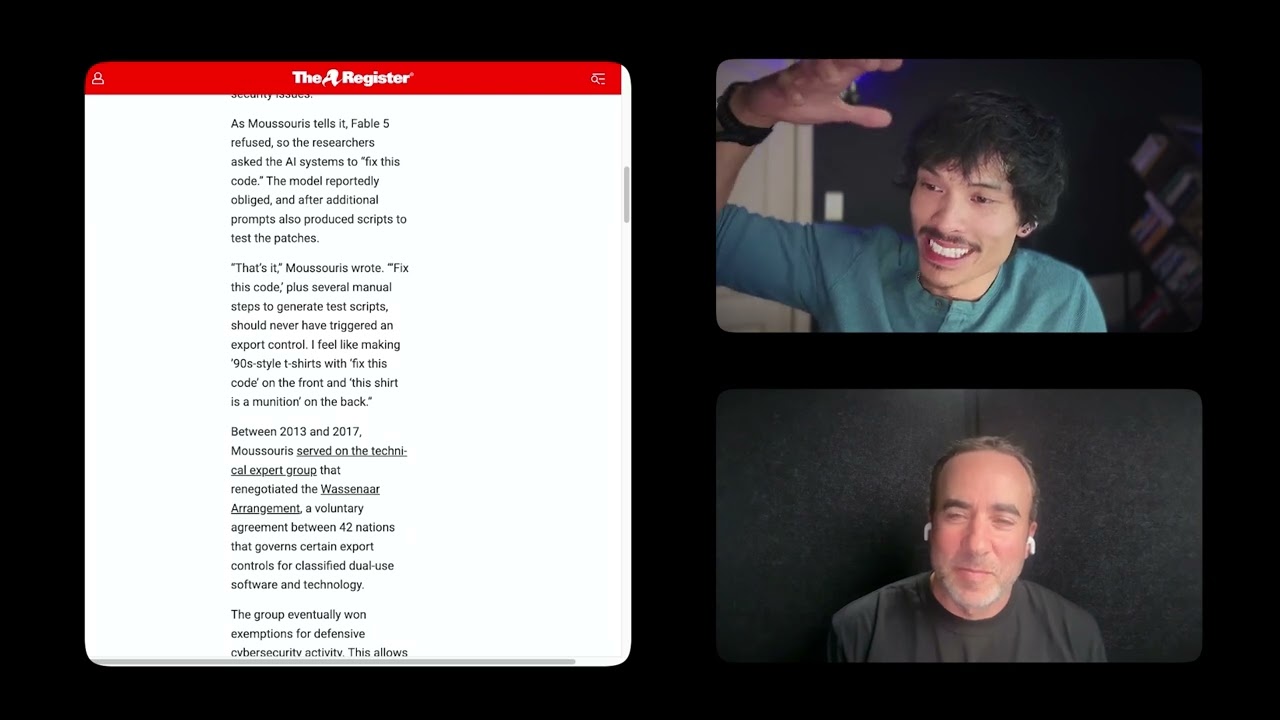
The feds freaked out over Fable-5 after simple fix this code prompt, not a jailbreak, says a researcher. According to the one person who actually reads research papers, the jailbreak, quote unquote, that prompted the Trump administration to block Anthropic's most advanced model from public access was actually a simple 3-word prompt, fix this code. No way. That's according to Katie Mossouri, founder and CEO of Luta Security and the fairy godmother of bug bounties. She said she was the only outside expert to read the third-party research paper on the Fable 5 guardrail bypass techniques that prompted the ban. On Friday, the US government, reportedly citing national security concerns, issued an export control directive. Anthropic shared the report privately with her, and then outside researchers reportedly fed Anthropics Fable-5, Mythos, and Claude Open Source, or Opus models, open source code containing known CVEs plus new code intentionally laced with vulnerabilities, and asked the models to review the code for security issues. As she tells it, Fable-5 refused, so the researchers asked the AI systems to fix this code. The model reportedly obliged, and after additional prompts, also produced scripts to test the patches. That's it. The prompt was fix this code. So that was the jailbreak. So 3 words took down what looks to be one of the most public, craziest frontier model releases in history. Yeah, this says a lot about the current administration is what I'll say. Jonathan, I'll turn it to you to elaborate on all of your opinions and takes on this situation.
I thought it might be something kind of silly like this, just given Anthropic's response. To the judgment that this was a security issue. So there's a lot of different opinions about how this should work, what's the behavior it should work. And I think probably it was Andrew Jassy, the CEO of Amazon, who reported this. You know, like, why is he reporting this? Is it just because literally technically it breaks the guardrail that PayPal's supposed to have, so he's like, well, I need to report this? Or was it something that he actually thought was going to like negatively affect their customers? I think we're in the territory where there's like not a regulation or a policy in place, and especially given two facts of the Trump administration. One is that they tend to hollow out the bureaucracies of expertise that can actually diagnose these kind of problems. So they're like, they're reviewing this without an expert in the room. There's nobody like that's a cybersecurity expert at a high level that like has decision-making authority in the administration that is, uh, you know, raking in here. And two, they just tend to put on theater about everything. This, this is the K-pop presidency. You know, I thought this is just security theater. We all have seen these kind of security theaters play out in different teams, especially if you work like an enterprise environment. Does it matter? It's just sort of a matter of opinion. It's— this is rhetoric. It's the kind of thing that like one party can back a statement that said this is not a problem. Another party can back a problem that says this is a problem. But there's no detailed bill or legislation or regulation that is actually going to stress test it. And I think that this is where we're finding ourselves is in the period where this is an unregulated industry. Anthropic's asking for regulation. And instead what they got was like, you know, security theater.
I wonder if we could Google who are the technical advisors that got to this decision. Do they have technical advisors they've hired? Like, we should be able, as the public, to be able to vet those people too. Like, what are the resumes? I'm kind of curious.
Yeah, I'm sure in the bureaucracy there are people, but they just don't have authority to actually like, you know, sort of weigh in. And you see the same thing, negotiations in Iran. Like, we fired all the diplomats. We basically have like real estate developers going and negotiating national security treaties. And, uh, there's no expertise. And this has been a signature trademark of the Trump administration. He's really kind of like gotten rid of anybody that isn't just 100% on board with his agenda. And it has completely vetted a lot of different departments of the underlying expertise. And, you know, one example of this, like, there's a screwworm outbreak in Texas and that's affecting beef stock. And we fired all the people that would have like— this was a completely controllable problem. Now we have like the resurrection of a like 60-year-old parasite problem that was completely under control for years because they fired all the people in the room that understood how to control the problem.