Robert Ta argues that companies are shifting from rigid hierarchies to shared models anyone can query and contribute to. He describes this as combining human capital with digital capital, using Clarity's content-market-fit engine as an example: autonomous agents feed podcast scripts and analytics into private evaluations that compound marketing insights.
Chapters
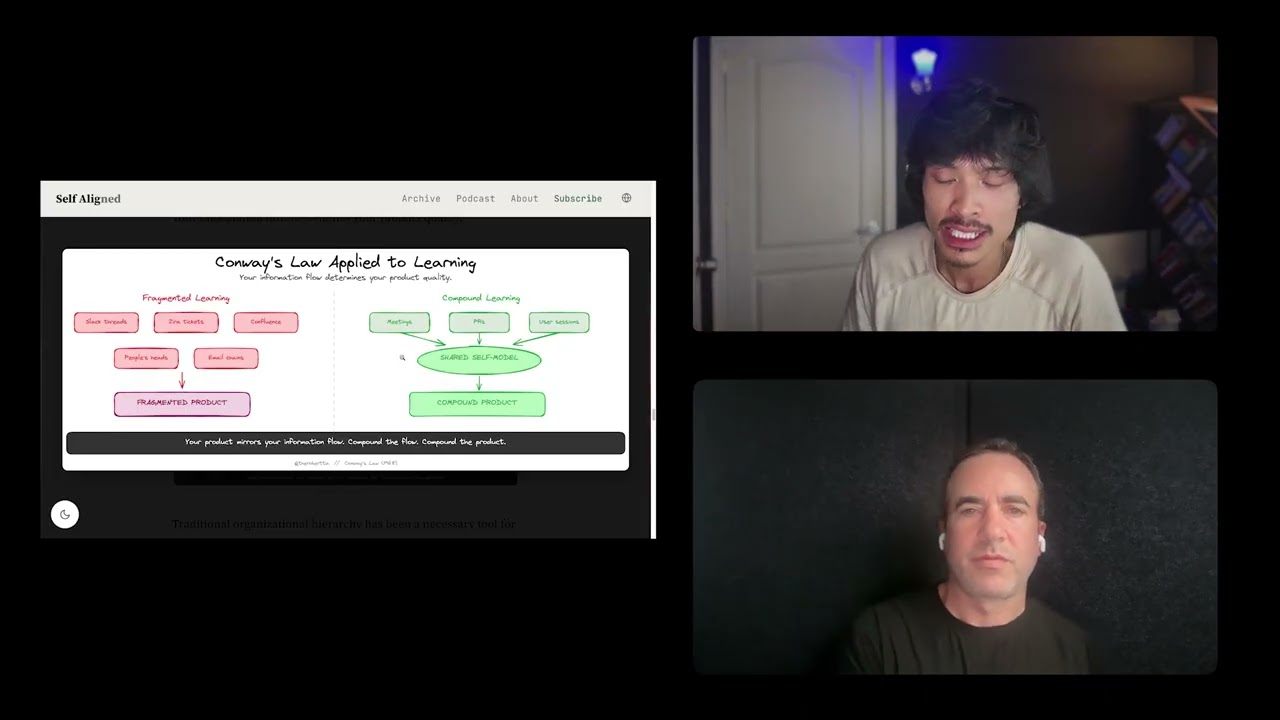
For folks that didn't hear, Jack Dorsey came out with this months ago from Block, which is, hey, we are moving from hierarchy to organizations of intelligence where you can query learning and simulate your company world model and your customer world model at scale. I kind of see any ROI modeling, like financial modeling, it's all modeling. It's all modeling all the way down, kind of like turtles all the way down, right? Like when you're doing these scenarios, you're trying to figure out This is the business. This is what we know about the landscape, you know, how we operate. And then there's the customer world model. How does that meet us? This graphic just really shows we're going from Roman army where super nested hierarchy spans of control, that concept came from there. And we're now moving to this like world model, customer model-centric era where anybody could contribute to these models and then query against them. So really thinking to me is like the before world is You have fragmented learning. If you have 1,000 people going off and doing product management, design, sales, marketing, they're all learning and experimenting about how do we evolve the business to incrementally capture more revenue at a lower cost. And a very simple way that I think about this that has resonated is the traditional business or the traditional enterprise is human capital shits out real capital. That's business, right? Nowadays it's human capital plus token capital equals more capital. So how do you optimize your human and token capital allocation? And the way that me and Jonathan think about it is if you model your stakeholders, your company and your customers really well, and then make that modeling queryable, contributable, curatable at the enterprise level, then it kind of goes from this where the left side is like we fragmented our learning. And on the right side, we have a shared model of how we view the world. And so we can compound things. In this graphic, it calls— we're saying let's compound product. It's very product-centric, but like you can compound marketing too. Like at Clarity, we have a content market fit engine, and I'm trying to get every agent run that informs our podcast scripts or our content clips with social media analytics to be able to inform private evals to then compound what we learn from marketing hypotheses.