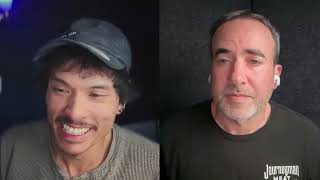
Robert Ta and a co-speaker break down the jury's unanimous verdict against Elon Musk in his lawsuit against OpenAI and Sam Altman. Musk spent the trial showing memes on his phone, while Altman testified about a failed proposal to fold OpenAI into Tesla's AI research. The speakers analyze how Musk's dictatorial leadership style contrasted with Altman's approach, explaining OpenAI's courtroom win.
Chapters
New York Times OpenAI lawsuit live updates. Jury rejects Elon Musk's claim in a unanimous verdict. Elon Musk loses court battle against Sam Altman and OpenAI after 3 weeks. Well, this is interesting then, this meme. Much of Altman's time on the stand concerned his relationship with Musk, who is pretty much the same behind closed doors as he is in his public persona. LMAO. Altman says there was a meeting at Tesla during the evening about folding OpenAI into Tesla for AI research. And then a long period of time with Elon showing us memes on his phone. The court reporter has to ask him to repeat memes on his phone, phone loudly. This is from somebody, uh, giving a play-by-play of the actual trial. And here's, uh, what an artist's depiction of the, uh, trial looked like. Sam Altman, slightly bigger head than body. Yep, fair. Elon Musk with a cat meme. I think that's what this is supposed to depict. Anyway, what do you think of the OpenAI Elon Musk trial? Mando?
That's a pretty funny meme, I think. Yeah, I don't know how deeply Elon goes in some of these strategic conversations when he's— when he was like trying to wrangle control of OpenAI and he's like, let's turn it into a for-profit and I want to run it. I don't know that he had a lot of depth of thought other than like, I don't trust these guys. I want to run it. Like, and that seems to be his modality, you know, with all of his— like, he doesn't have, like, really peers in his company, right? Collaborators. He works well as, like, a sort of a bottom-down, you know, bottom-up, like, type—
like, dictator, like, hierarchical.
Yeah. Uh, control. And I mean, he succeeded that way, so he— but, you know, there's not— there's not any pretending that he's, like, trying to work alongside anybody or get that. Yeah. You know, or, you know, somebody that doesn't get along with him has an unreasonable point of view. It's just like, no, you're just on Elon's show, and you He's going to run the show if you're here.
Yeah, it's definitely main character sort of energy is what he exudes. Yeah. So I wouldn't— I think he is a deeply thoughtful guy from my reading of him, uh, and his book and stuff. Like, he wants more for humanity from what I could tell. And you have to be deeply thoughtful if you're trying to build rockets and you succeed with that, right? But it is funny that on the flip side, he is they were just talking in the trial for a while about him showing Sam Altman memes back in the day. Like, that's like, I could totally see this happening. And then I could totally see him just thinking, yeah, these guys blow, I'm going to try this instead. And then he got a little upset and didn't go his way. And then now we're here. So such is life. We're all, we're all humans at the end of the day.
Yeah.
Just want to show my friends my memes. And then if they're trying to take over the world, and I think they're doing wrong things, I guess I'll do things about it.
Yeah, totally. I heard, um, I think it was Ben Thompson talking about the trial last night, and it takes such a winding course, like, you know, and there's a lot of things you could sort of look on the outside looking in and scrutinize about things that OpenAI did. For the most part, they made pretty rational, reasonable decisions and defensible decisions the whole way through. And I think that sense of them being a rational actor did not get destroyed during the case. And I think that's probably why, you know, there wasn't any kind of repercussions. Um, They just acted in the best interest of their business and in the most rational way that they had available to them.