Will Quantum Solve AI Consciousness?
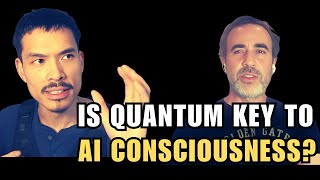
Robert Ta and Jonathan from Epistemic Me explore whether quantum computing could explain consciousness, discussing the free energy principle, AI alignment, and how their personalized AI health coaches model user beliefs to tailor experiences.
Can consciousness be modeled by quantum computing to make humanoid robots be more alive? Wild.
So what's happening with consciousness is that we have a model of self in the world, and we have a model world in the self. And the intersection of those two things gives us this sort of like conscious identity about how we can actuate the world in order to meet our goals, be it metabolic or survival or otherwise.
And back to quantum computing meets consciousness meets humanoid robots. So Gilder was saying, like, she has this hypothesis robots in the home would be such a cool problem to solve. And I was like, yeah, from a product perspective, obviously, because she was saying when she talks to, you know, users or other people, friends, it's like, well, what if a robot just helped you do all your chores? They're like, hell, yeah.
And I think there's a world in which consciousness can emerge where that is like far more advanced than what we are today and either sees us as pets or just doesn't need us at all. I think the way of AI is evolving. We just live at a unique intersection in time where the potential for this new consciousness is like kind of in our hands.
If there's something it is like to be a thing, then that thing is conscious, right? Yeah. Welcome to the ABCs for building the Future podcast. We have myself, Robert and Jonathan, my co founder on Episteme, as your hosts. On this podcast, we bring on researchers, scientists, entrepreneurs, founders, leaders, builders of the future, people doing big things with big stories to tell. Today is a build in public update. I'll give a debrief of our product, live with users, and we'll talk about consciousness at the intersection of AI and quantum computing. We'll see how much time we got. We're kind of running on a clock today because we've got something in an hour, so we'll see how much we get through. So this is kind of a special build in public check in after. I spent a few days in Miami at the Don't Die Summit hosted by Brian Johnson and his team. And this was super special because I actually got to demo AI Brian in front of real customers and learn from them. So I had some key insights to share. Our running hypothesis has been I am a person that wants to grow, self, actualize, improve my health in some way, whether that's improving my sleep, my diet, my exercise. And with AI Brian, I could use that so that I can improve those things and reach my target better self, whatever that might look like for anybody in between knowing the thing that I gotta do, generally speaking, exercise better every Day sleep, diet better in between knowing it and doing it is a lot of uncertainty. So our hypothesis has been for epistemic knee that starting with the belief system and accurately modeling the self for a given user, we can then predict what is the next best thing to suggest to them as a habit change that will get them to their target self model, which is a self actualized, grown better version of themselves in the health regard. So I got a lot of data points. I actually even recorded a bunch of user interviews and that was really great to see. People go end to end. They did a biomarker test like pushups, sit and reach reaction time tests and then they would get out of that and I would onboard them into the Don't Die app and I'd see end to end them entering in their information and then actually seeing their bio age and then going to AI Brian and asking AI Brian how do I improve my bio age? So high level I got to see that flow and many variants of that flow. So there were some cool things to share. But yeah, before I monopolize the conversation, Jonathan hasn't said a word yet. Jonathan, do you want to give a quick update on what you've been working on for epistemic me and then we'll get back into ease of research because I think you've been doing some cool stuff and I'd love for you to talk a little bit about your vision for personalization metrics, alignment metrics, and maybe our market opportunity to meet a niche out there with chatbot evals with that potential.
Yeah, cool. I can kind of pick up from that example you were giving at the conference, you know, where you have the bio age test, right. So in the Don't Die app you can, you can like do pushups and grip strength and flexibility exercises. And then when you get your score like the, the Don't Die app indexes it to your biological age. You know, it'll tell you like how what your age equivalency is for being for doing these things. And so it's, it's kind of fun. Right? Right there, there is a model of self in there where like, you know, there's scientific data that says there's an age dependent correlation of like the number of pushups you can do as an adult male. And you know, like, sort of like the less you can do then the more you correlate with being older version of yourself versus younger. So this is just like kind of like a statistical metaphysical model of self. So then when you ask somebody and they say upload this data about what they just did. And you want to ask them to get a more informed model of self. Like what are the habits that you currently have of why you think that your biological age is 20 or 30 or 40 or 50 or whatever it was diagnosed as. Somebody might say like, well, I exercise a lot and I practice my flexibility a lot. So I wasn't too surprised to do these things. Or I was like, you can get the habits that they currently have in their life that you think correlate to these things and then you can ask them, well, would you like to be like a younger version of yourself? Would you like to be able to do more push ups? Would you like to be able to stretch further? And then you can survey them about like what their beliefs are about what they can do to change these things. Some of them may be immutable, right? Like grip strength. If you're already doing a lot of stuff like deadlifts and dead hangs and practicing grip strength, maybe you can't increase it a whole lot, but maybe you believe that you can, right? So there's a believability about like the habits I have today, what I can change to the habits I have in the future and then what my biological age can be. And that's the experience of this, you know, like AI coaching experience that we've been evaluating. I think we've been talking about like this feedback loop where you upload the data. The AI coach can ask you questions about subjectivity, gives you an assessment or plan of recommendations that you can change and then you choose the plan so that the recommendations. So it's a recommendation engine start. But it also meets like this kind of clinical experience that we've been talking to doctors about, the SOAP loop, subjective objective assessment and plan. And so I think any, anything to add there? I think that's like the nature. And then I could go in and talk about the metrics and evaluations.
You're on a roll.
You're on a roll.
Cool. Yeah.
Okay. So if you want to build an AI coach to be able to do this, to understand your users and then to be able to ask them questions that to further understand them, the tool set that you want to use is like are evaluations meaning that you know you're going to have a set of prompts in your AI coach and those prompts will interact with the user and you want to evaluate and give scores to how well your AI coach responds to the user. And we're thinking of is like the set of there's like A lot of metrics available. You know, one of my favorite libraries is called deepaval and I'll just read off a couple of the metrics that they have for conversational metrics. They have role adherence, knowledge retention, conversational completeness, conversational relevancy. Those are some like the core conversational chatbot metrics that are tested to make sure that your eval's are running and passing and your prompts are doing what you want. You can also do custom metrics. And some of the custom metrics that we're thinking about are personalization. I want to know how well does my chatbot understand the user that it's talking to? And so like one of the top ones is like can I identify them instead of knowable user cohorts or like how, how quickly they they match, like an existing profile of other customers in my database. So that I, I know like, and we've been talking about, you could have cohorts that might be like goal oriented, like I want to lose weight or I want to be a better sleeper or I want to stop drinking alcohol. You know, these are all like a metaphysical set of habits, version of self, set of habits, identity that you are to an identity that you want to become.
Right.
And we can identify that. And by the way, I think one of the key things that TikTok does so well is that from your attention data it can automatically group you into different audiences and to show you relevant activities. So these are like, it's a very useful tool step. So we build the personalization metric for that personalization evaluation metric for understanding who these are, what cohort they belong to. But then there's a whole other set of metrics like how well do I understand the user's current behaviors as in their habits and their life and what they live. How well do I understand the user's beliefs of how they can change themselves? And then there's a whole set of metrics, we call them like alignment metrics. And I think of these as the set of epistemic emotions. And how well aligned is like the users capability to learn, to be surprised, to engage in curiosity so that we don't hit them with confusion. Because confusion is this mark that the AI doesn't understand you very well and is feeding you information that's confusing you and that's like you're kind of unaligned, you're not vibing together well. Right. So the base state that you want in an AI coach is that you understand the user's beliefs and that you can ask Them questions and engage and give them information that are relevant to the belief system that they have. And that's like belief coherence and belief confirmation. So this fundamental epistemic emotion of belief confirmation should be the baseline of how a coach that understands a user works. Okay, so, yeah, we're taking these kind of personalization metrics, making them as evaluation tool and then creating an evaluation harness where you can train your coach to train your AI coach to act in a way that it can understand your user better and that allows you to update your prompts and build better user experiences.
We've already talked about this, but for the audience, I'm just going to go ahead and ask this slanted question. So it basically sounds like starting with the beliefs first and understanding that and modeling that out is the key to limiting time to value, to understanding your user as a chatbot developer or app developer that is tasked with building a chatbot and getting them in this loop where the chatbot keeps asking them the next best thing to uncover more, to learn more. And then, and then you keep building that out. And basically that should be the value hypothesis for epistemic meeting. Right. Like, that's basically what we came to for the audience. I got back from Don't Die Miami, learned a lot about users, had a lot of recordings, had a lot of voice memos that I made coming out of user research sessions. And then I stopped by San Francisco. I live in Oakland, Jonathan lives in San Francisco. I stopped in San Francisco, we had a long lunch, we talked about all these things and we saw that there's an opportunity there because these different tool sets out there aren't looking at it this way. And specifically for the chatbot use case, and in our case, AI health coach chatbot use case, our hypothesis became we can eliminate time to understand your users because all parts of this engine of we get some information about you, the user chatbot understands you better, it asks you the next best thing to uncover more learnings, and then we just get into this virtuous cycle. Do you want to expound on that? And sort of the vision you saw there when you were working on DPV valves and seeing some of these tool chains out there and what they offer today?
Oh, yeah. So when you say that, can you give me a bit of a prompt.
Bio hypothesis of let's start with the beliefs and then that makes this whole learning engine, I'll just say, a lot smoother.
Yeah, great. So, yeah, value hypothesis of a conversational chatbot, starting with learning about beliefs of a user But I think we've even talked about this as like an onboarding tool, right? Where the minute that you meet the user, you can start to dig into who they are and why they're there and help them engage in the right ways to create the right community experience that you want. So, I mean, I think a big part of our thesis with epistemic me is that belief systems help us understand how a user is going to interpret information and how much value they'll get out of something. But it helps you to know what they'll understand and what they can learn and how they're going to learn. And when it comes to an AI coach, what effectively is a recommendation system? So this value hypothesis of how a coach recommends certain things that you can change about your behavior and your life, like, it has to meet someplace that makes sense to you. It has to understand A, where you're at, B, where you're going and see how you can get there in a way that's adherent. And I think when we interview these doctors, right, like, you see the real, the challenge of meeting somebody in their world where doctors have, like, this immense knowledge of the body and like the interactions of different drugs and surgeries, all the ways that they can help you be more healthy, at least in the conventional medicine or medicine sense. And the real challenge is like, how do I, how do I, like, give somebody a plan that they can adhere to that's actually going to help them that I'm understanding, understanding the fullness and the complexity of where they're at. And so I think starting with belief systems is like the best way to think about building recommendation system that you can train that actually meets people where they're at.
It's so exciting because we've talked about this for a few months now that, hey, starting with beliefs is really how we solve AI alignment. And then, okay, because, you know, we live in capitalism, we got to figure out a way to propel our project forward. And we have the strong hypothesis that especially in health personalization, hyper personalization in particular is such a needed thing. There's such a pain point out there. If you think about, we talk about this a lot offline, off the pod, but thought experiment of like, why does somebody go to a fitness coach if we could simulate that, but in an AI coach and do it even better, can we do it even better? Well, first we got to start with the beliefs, because what does the coach do? They get to know the person. They get to know the person that needs coaching. And for example, if somebody has Limiting beliefs around sleep. Like, hey, I could totally eat before bed. I'm just that I have those genetics or whatever, I could just totally eat before bed. It doesn't affect me. And then this coach, longevity coach maybe is like, oh, hey, why do you think that? You know, and then starts teasing it out. But that takes some conversations. That's a lot of dialectics to get to that. And there's a lot of human biases that might even go into that. And so basically that coach as well can only do that in a one on one session. So what if that coach wanted to scale their philosophy around longevity and their services to their clients? Obviously, AI is the next step. And then the question is, how do we hyper personalize that experience still where it feels one to one, you're uncovering my beliefs and you're giving me the next best recommendation, which is maybe listen to an Andrew Huberman podcast. Because I as a coach assess that you come from a scientific background. You're probably more likely to listen to somebody else that has, you know, a PhD in some hard science that you would respect. And then you listen to that, you learn that, oh wait, it's all about resting heart rate before I go to bed. That improves my restorative sleep and total sleep time. Oh wait, resting heart rate is a function as well, of if I eat right before bed, my resting heart rate's gonna be higher because my heart needs to pump blood to be able to process the calories and ATP, that kind of thing. Right. So that's what a coach has to do. And then we're basically saying epicentic me. Starting with the belief system will help the chatbot coach that experience meet the user right where they're at. Because if it's powered by episode me, we will model that user's belief system and the target that they want to get to, which is I want to sleep better, but I currently don't. I have all these thoughts about sleep currently. So it's really cool to see the value hypothesis being played out in real time where I got to actually test it with users. And I learned so much from that, where every user I talked to where they used it, and right now it's early, so it's still generic ish. We still need to get reps up on the front end and on the SDK. Every user I'm talking about, health is so personal. Right? They all have certain goals and they all believe, like, and they rightly should believe that they're basically a unique snowflake and they need some Unique answer for their particular goal. So the value hypothesis solution hypotheses are getting stronger over time. I feel really stoked about that, Jonathan. And also I want to say you mentioned alignment metrics. Do you want to tell the audience where that the naming of that came from? That might be just like a little fun Easter egg for the audience.
Yeah, like can I add on to what you're saying about the meeting the user where they're, how they evidence their beliefs? I guess these are two of the different alignment metrics that I created are. One is belief verification and then belief evidencing. And in both of these you're trying to see how does the user or the patient think about like how they evidence their beliefs. Is it from their experience? Like this is one epistemological approach is that, well, you know, like I do this every day and I see these outcomes and like this works for me. Like I'm in of one. Other users might be more scientific like you said, and they might come from a background where they are only going to trust scientific research, randomized control trials. And I think you want to be able to understand how the user is thinking and how they're going to ground their own beliefs and be able to and like what kind of verification theorem they're doing to understand that these beliefs are true in the world. So those are literally like two evaluation metrics that we put on the conversational evals to say what do we know? And I expect these to be like really low because I think this is an area of improvement. And if you think about like building out the complexity of the graph of the epistemology of a user and how well you understand them, you know, I don't think there's the incentive or the sort of like benefit in like really understanding users these depths so far. But with the way that AI is evolving, I think that we can definitely start to leverage that and meet people more deeply where they ground their beliefs in evidence and really trust something. So that obviously helps people question their beliefs too, like what kind of evidence are you using? Right. And if they have to answer these questions themselves, like oh wait, I'm sitting on some dogma here, right? That's what you really want people to see is like I've been sitting on some useful dogma here and there's maybe a better evidencing path that now that I'm examining this, I can actually answer this question a little bit better for myself. That's me learning. Right. And so yeah, so the alignment metrics then like is like, putting the user in a place where their mind is like, it's continuing to like, foster learning in a way that's, that's constructive. But I think this whole, like, the whole idea and the naming of vibe coding really captured me. Andres Karkathy calling it vibe coding. Because, like, if you think about, like, for me, I'm vibing with my media. If I'm continually like, building on my thoughts and like, you know, I'm finding things that verify my beliefs, I'm finding curiosities that I would need to explore. I'm getting surprised by things that I didn't know. But I'm not feeling a feeling of vibing when I'm confused and I'm tripped up on something. And when I especially, like when you use cursor right now and you're kind of in a flow and you're like, say, going through a feedback loop to have cursor test some code that you just wrote or something like that. When it gets stuck in these loops where it's like just trying to like, move some string over to some arbitrary place and it's like, dude, like, you're killing my vibe.
We weren't vibing, bro. Like, what's going on?
Everything was working just fine until you. Right? I mean, and I think it's early days for this kind of feeling. But, okay, it's a human machine interaction where I'm staying in a place that I'm sort of epistemically vibing with the experience. And the minute that you throw a wrench in and you confuse somebody, then all of a sudden that alignment breaks. So I think this idea of epistemic vibing and the idea of alignment metrics was a thought experiment of mine recently. And I wonder if this kind of meme idea of vive coding is actually going to become our working definition of AI alignment in a lot of directions. Because. And we know that the coders on the front line of this user experience, right? We're seeing things now that other users might not see in their writing in their lives for a couple years. But it's the fundamental human interaction and the AI alignment that we're talking about. So, um, yeah, there you go. Alignment metrics.
Alignment metrics, yeah. Another. Another Easter egg is. We almost named my newsletter Self Aligned because me and Jonathan nerd out a lot about things and we were talking about Maslow's hierarchy of needs one day, and I was like, I think there's something beyond self actualization. It's not enough for this next era. And then Jonathan Came up with this great term. What about being self aligned? I was like, oh, that's perfect. That's so good. And so we've just latched onto this name for a while and tried to figure out where else could we put align because we want to solve AI alignment. Where else could we kind of fit this in? And it totally makes sense for this type of personalization use case. So it's really perfect. We'll obviously have to go to market and test it out at scale to see if it makes sense to the ICP when they read it. But, like, internally right now currently makes sense to us. And it's a cool name. I wanted to touch on epistemic emotions for a sec, mainly because I think the audience hearing it might not quite understand what that means. But you define it. There's a few things there, like surprise, confusion, et cetera, Things that maybe take you out of an experience. Right. And I also wanted to combine that with the concept of the zone of proximal development. When you were talking about vibe coding, or even before that, let's talk about vibing with a coach. Right? Everybody could imagine you have a therapist, you have a coach, you have some sort of provider. It's kind of like dating, where you have to have the right vibe. Right. Otherwise the service doesn't go well. Okay, so let's map that to an AI health coach. What if you tell it that, you know, you don't believe that eating right before bed affects your sleep, and then it bombards you, let's say. Let's say you're not scientific, and then it bombards you with a bunch of scientific jargon. It probably didn't meet you exactly where you needed to be to learn a little bit more, which is exactly in that zone of proximal development. It probably went well beyond that. And then that instigates these epistemic motions of like, I'm super confused now, kind of ruined the vibe. I might try a different AI health coach. Right. That's how I kind of thought about it as you were talking about the vibing thing. And then the, hey, this is really just about, how are you evidencing your belief? Oh, that's a piece of dogma. Oh, okay. This doesn't serve me anymore. I have the right evidence at the right time. The coach presents it to me, it meets me where I'm at. So anyway, I wanted to throw that out there and get your thought on epistemic emotions meets proximal zone of development meets how do I grow the user what are your thoughts on that, John?
Yeah, no, that's a great question, but I had a relatable experience recently. Like when you talked about being overwhelmed with evidence.
Yeah.
So when you're. When I'm on Twitter, I'll frequently, like, use grok and say, can you fact check these claims? And I read a lot of scientific. And grok is just like, here's all the evidence and here's the supporting evidence. And I'm just like, there's no way, like, I can actually, like, intake all of this information and ground it to my beliefs and, like, walk away from this having, like, sort of an evolved learning pattern. But I. But it's useful in the fact that I know the data's there, and I'm like, maybe you can check it up later. So. And I think it's an example of where positive proximal zone of development there is going to incrementally and additively extend the evidence that you can apply towards your beliefs in ways that you can come back to them in the future. So the language of epistemic emotions. We talked about this with Peshoi on a previous podcast, and he's the one who introduced me to the term. He's a psychiatrist. But it's a term used in education to modify how well somebody is able to learn something in a given domain. And the words involve belief, confirmation, surprise, confusion, curiosity. There may be one or two others, but pretty limited set of states you can be in. And when we come to proximal development, let's say that you're. I always imagine somebody like, in a Baptist church, Southern Baptist church, like, you know, amen, Amen. Like, it's belief confirmation. After belief confirmation, everything the pastor's saying is like, you know, it's like gold are their ears. Yeah. Like, they're totally vibing. Right. But they're. They're maybe not learning something. And I think that's where there's a little bit of grit involved. And so how do you introduce grit into the learning process so that it's, like, optimal? And I think there's a lot of different studies that have kind of like, tried to address this through different frameworks. But the one I like thinking about, surprise, is one that if you. If you have like, sort of like a randomized surprise quotient that can hit your dopamine kind of like, like almost in a. In a gamification dynamic, then like, it's like, oh, like, I didn't know that. But it's like if I. If you hit somebody with surprise after surprise after surprise. Right. That's not optimal. They're not going to be able to sort of like take in all that information and then you want to leave some room for curiosity, which is like, you know, like, oh, I, you know, I never thought about that. Let me, let me go and explore this and see if I need to update my beliefs, you know, to like. So belief updating is expensive and it's hard and we all have resistance to it. You know, you really have to kind of like uh, in it, say in a given learning engagement session to hit that optimal zone of development. You have to kind of like mix the belief confirmations and surprises and the, and the curiosities in just the right way so that it sort of meets the domain the person's at and the, the amount of time that they have, the amount of energy they can expend and it kind of like meets them emotionally.
Right.
Because why, why epistemic emotion is such like a valuable lens.
Definitely, definitely. As you said that there's so many things around this to figure out what is the next best thing to give you. Yeah, right. And that's why come back to it. We're pretty solid. We feel very confident in our hypothesis that to do that really well, to help a user grow beyond limiting beliefs or become their better self step by step and at every step and every big step in between, we have to know what their beliefs are and what are the evidence points for their beliefs. Right. So that we could predict what's the next best thing to give this user to help them grow towards their target self. So the more that we test these ideas out in the wild and see them actually now coming back from the summit, seeing them play out in real time totally adds more evidence points on my belief that we're going the right way. So I'm pretty stoked about that. I know we have lots to get through probably in the next half hour, so I'll just give a really quick flyby. So real quick. Basically I learned that hyper personalization is the key. And people come to don't die for different things. They want to become a better version of themselves. Some are founders that are trying to hyper optimize their lives so that they have better chance of success. Some are people that have been burnt out by previous corporate culture and being a workaholic and now they just want to become their healthiest self, increase their lifespan, their health span and then even that looks different to people. Some people are going full on, let me go be like Brian, where I'm super disciplined. I got the red lights in the home, I'm vegan, whatever. Some people are like, okay, that's like a hundred percent. I'll be at like 20 and I'm cool. Women want, for example, they want to know that this is for them. That meant a lot. Some people are just trying to find friends that are kind of longevity nerds too, that validate their existence of I don't go to bars, I don't drink, I go to bed on time, or I do some combination or maybe even one of those things. Right. And so it basically gave us this more confidence that with this, what we're calling enrichment as a service where we can give you personalization metrics, alignment metrics to close out these loops quicker to learn about your users, a lot quicker. As a chatbot developer, let's say generically, in this particular case, it's the AI health coach use case that beliefs are really the key. And then we could even group people by belief cohorts. Right? So I thought that was such a cool learning where I got to go meet all these different users, test AI Brian with them, and all of them had varying goals and there were buckets of goals. But the paths to those goals, they all wanted those to be hyper personalized, which was a cool learning for me. Awesome. Okay, so just wrapping that up, let's talk about consciousness. So that was the build in public update. Jonathan and I have been thinking about consciousness. He picked up a book I am behind, but that's going to be our next epistemic Me book club if you are interested in joining it. We'll probably have a Slack channel that's public and out in the open soon. So maybe by the time this pod is out or perhaps a little later, look out for some news there on the podcast or on my newsletter or our website. But we, we try to read books regularly. We, we actually finished Mastery and Super Agency. We got to record a podcast or something on Super Agency. I got introduced to this idea of can consciousness be modeled by quantum computing to make humanoid robots be more alive? That was wild. I learned about this at the Don't Die summit. And I texted Jonathan the podcast that I learned about right away. We both listened to it. I listened on the plane on the way back. Jonathan listened to it. We talked about it over dinner, over lunch. And so let me just talk about consciousness for a little bit to give up brief history of what that means, just to define it. And then I would love to kind of talk about consciousness at the intersection of AI and philosophy. With Jonathan. So, okay, what is consciousness? Consciousness is typically defined as a subjective experience, the felt sense of being or having an inner world. The philosopher Thomas Nagel famously asked, what is it like to be a bat? In a previous podcast, we actually asked that to ChatGPT and had a whole discussion with Dean on that. Jonathan, myself and Dean. And that's the test. If there's something it is like to be a thing, then that thing is conscious. Right? So it's not just about information processing. It's awareness of the world, of the self, of feeling. And so, okay, brief, brief history of consciousness. And I don't know the depths of all of these, so I'm going to give a super high flyby of this to bring us to quantum computing meets AI consciousness, which is a very interesting topic. So to understand where we're at today, gotta go back a little bit. Rapid fire through of how consciousness has been treated in philosophy. So Plato and Descartes talked about dualism. Consciousness was separate from the body, a soul or mind being distinct from the physical. Okay. Hume shattered the self and he said consciousness is more like a stream of impressions and there is no fixed I underneath it all. Kant argued that consciousness shapes reality. We don't perceive the world as it is. We perceive it as filtered through our minds. Phenomenology says, and this is through the work of Heidegger and many others, Phenomenology says put experience front and center. Consciousness is not just in the head. It's embodied and embedded in the world. Okay. And then we move into cognitive science. So cognitive science says, let's treat consciousness as an emerging product of brain processes, more like a user interface than kind of a ghost in the machine that we can't quite explain, but we accept. And then David Chalmers coined the hard problem phrase, how and why does subjective experience arise from physical matter? Okay, cool. So that, that's like. And there's lots of in between and there's lots of depth for all those things. And we'll link in the show notes. There's a really great Stanford encyclopedia of knowledge around the history consciousness. I read up on that on my flight back from Don't Die Miami. So I'll link that in the show notes. So that brings us now we're on. On the verge of giving birth to super intelligence. And so some of the brightest minds in technology are thinking about, in particular, Suzanne Gilder. She has this company, is it Nirvanica, was it, who is trying to instill consciousness into humanoid robots via quantum computing. And her whole thesis is, I don't think we could solve this in traditional models. I think we got to look at this with quantum computing, and I thought that was really fascinating. So. Okay, let me just pause there and get your reaction. What are your thoughts on consciousness, history of consciousness, and then maybe also, very pointedly, consciousness at the intersection of quantum computing. We had a very deep discussion about this, and Jonathan has great thoughts about it.
Yeah, that's a. It's a pretty big surface area. I'm not sure exactly where I want to start, but the. I think one thing that's interesting to point out is I think that consciousness as it's. As it's, like, studied scientifically from a neuroscience perspective, you might assume that consciousness is unique to, like, the state of being human, and then that's there. So that's one in the scientific spectrum. Spectrum. And then on another side of the philosophy, like, say, modern philosophers like Donald Hoffman, Michael Levin, you know, they're saying, like, consciousness is fundamental, like, in that, you know, our. Our physical brain is not what gives us consciousness. It is like a container for the conscious behavior that is. Is constantly, you know, interacting. And I think when I think the most useful definition of consciousness is like, that is any. Any being that can have an experience, that can have experience. There's a lot of confusion about what the word means. We're in a place now where I think anybody that has curiosity that is really being scientific about it cannot dismiss the possibility that consciousness is what is fundamental about reality and that materialism is a result of that. And that's opposite to the epistemology of anybody that has a PhD, anybody that has a master's degree is sort of locked into this epistemic ideology that says scientific method. There's not a way to understand consciousness as being fundamental. I'll say that. You know, I think where Gilder came in with her company, Nirvonica, she's talking about embodied cognition, embodied consciousness. Like, and I think this is a, like a reasonable approach to say that, well, all the things that we see that we can sort of identify that have lived experiences. And I'll get to that in a second. Like, how do you know something has a lived experience? But, you know, like any nervous system you see on the planet has this evolutionary history behind it, that it has embodiment and it has movement as the primary foundation of what the nervous system is doing. This goes back to the proto fish brain, and this goes back even to the cellular life, the dynamics of locomotion and being able to move your body through space in order to say Find food or escape threats is fundamental to survival. And I think Carl Friston really, like enumerates this really well, and we've talked about this before, is like, if you're a cell or you're a fish and you're moving closer to your food, you don't see yourself from the outside moving, like from point A to point B. You see your environment changing in a way that the food is getting closer to you. So what's happening with consciousness is that we have a model of self in the world, and we have a model of world in the self. And the intersection of those two things gives us this sort of like, conscious identity about how we can actuate the world in order to meet our goals, be it metabolic or survival or otherwise. And so I think you can look at cells, you can look at fish, you can look at all life on the planet, and you can see this pattern of where consciousness found evolutionary fitness and sort of passed on the behavior of learned experience to actuate your environment through perception and actuation in order to have a fitness function. So I guess I'll start there and we can go in a couple different directions.
Let's also add in. Before we move on from this, because you mentioned Friston, let's add in the free energy principle. Can you tell me about that? At the intersection of what you just said, the cell, the fish, the locomotion, like your environment, you don't see yourself from the outside. Let's add that in because I know much of the audience has probably not heard about us talk about that before, but that is something that comes up in our conversations. The free energy princ.
Yeah, I think so. This is Carl Frischin's work. Carl Frischen is the most cited neuroscientist in the world, largely for his work in the early MRIs of neurons and all the work that cites his work. But as he was looking at how neurons behave, he saw these excitation potentials that were predicting the world around it. So the neurons aren't waiting for some stimulus of sensory information to hit it and then responding. They're rather predicting what's going to happen in the world. So the neuron actually has some memory of a world model that it's firing, you know, inspiring like. And so Krishnan took that and he put it into a statistical mechanical model called the free energy principle. And it can, like, kind of. It can define the behavior of anything in. In the world. And those memories that I talked about that the neuron might have are stored in what's called the belief system. Right. And that's how we mean belief system epistemic me. It is not like just epistemic beliefs for a human, epithetic beliefs for any type of conscious beat. That's how flexible the model is meant to be. And so through this interaction with the world, Frischen defines what's called the Markov blanket. And this is a statistical definition of its boundary between what is the environment and what is the world. And then so through that Markov blanket, it can perceive information and it can actuate information in order to fulfill the belief expectations it has of the world. Um, and. And basically create a survival function for itself.
Yeah. AKA let me get that food. I'm this fish. I'm hungry.
Right, yeah, exactly.
But at every, at every level too. What the fish is made of as well. At the cellular level. Um, real, real quick flyby, just because you mentioned it, and maybe the audience doesn't under. Doesn't know this, but so far in this podcast in particular, we have talked about belief systems at the intersection about human belief, a human agent or self model. And you just referenced that epistemic me as a data model. That's really our bread and butter where this is not just confined to humans. Could you tell the audience a little bit about that and then we'll get back on course about there's conscious.
Yeah, I think there's a construct in our code called the self model and it contains a belief system. And I think you could in theory model cellular behavior with the self model and with its belief system. So it's just a matter of constructing the environments and the response mechanisms between the self model and the world. So you can think about making a digital twin of anything, of anything sentient, of any being, of anything that has consciousness, anything that has lived experience. And Friston describes these as oscillations in the sense that there are statistical mechanical oscillations of the world. There's also the term OODA loop, observe oriented, decide and act. You know, there. But whatever, however you want to think about it, like there is a constant continual sort of like perception of the world being predicted by our belief systems. And this self model construct we have is like meant to kind of embody that.
We got a dope data model. That's it. I just want to buy real quick and hopefully one day we are able to not just help you reduce your biomarkers, but also when the sensor technology gets good enough, maybe we can actually model your cells and your mitochondria and your metabolism and then all of that could help us predict even better. How do you become a better version of yourself slash healthier version of yourself? Okay, so coming back to consciousness, this is an interesting question. I wrote down if Suzanne says, Suzanne Gilder, consciousness meets quantum computing in human robots. That's what she's exploring. She says maybe consciousness didn't emerge from intelligence, maybe it preceded it, maybe it generated it. I would love to hear your reaction to that. That was quite profound. When I heard it, yeah.
I think the first time I heard the idea articulated this way is Donald Hoffman's work. And so I think he's done a really great job of, from the direction of a scientist of perception saying here's what we have evidence for. I, I just can't, you know, I, I need to, I need to now explore the hypothesis that consciousness is fundamental in order to do scientific work going forward. And then I, I was just this week, Annika Harris, who is Sam Harris's wife, she just released, released this book Lights on. And the whole theme of it is, is consciousness fundamental? And it means that consciousness preceded like, you know, physical materialism. And the whole idea of this hard, the hard, conscious, hard problem of consciousness is like, how do we get from non living matter into this like conscious brain that we have?
Right, yeah.
And so the, so the whole idea flips it on its head and says like that question doesn't matter at all. Like, you know, if consciousness is fundamental, our problem of consciousness doesn't exist. But so Hoffman's been saying this for years and I think like the recapitulation of his ideas now kind of spreading through other people is helping me see.
It better through society.
Right.
Like if you think all of us as self models or agents, right. Like all of us are, you know, we have these beliefs, we put them out there and then the belief systems of a group, collective nations, et cetera, that might change over time. That's kind of what I was saying. Okay, yeah, that was really, really interesting to me. So. And yeah, go ahead.
There's one data point I want to point there that often constantly points to is that there's not a single example of where you can take a qualia like what is the color red? Or how do I feel when I feel hungry? And relate that back to a neural representation in the brain. We have not in science found a single representation of that yet. If you're really wanting to be scientific about what consciousness is, you can't just say that our brain creates consciousness. There's no evidence of it. Right. So I mean that's where I think the philosophy starts to help a lot and starts to help, like, frame new questions and new hypotheses of how to make sense of all this.
Totally. Because truth, as we talk about in the pod, is a process, right? And maybe one day we find scientific evidence, but currently it's not there. So it's an evolving truth. But, okay, this is also an interesting one. Back to quantum computing meets consciousness meets humanoid robots. So Gilder was saying, like, she has this hypothesis that in the podcast, which we'll link in the show notes, it was wonderful. She talked about how robots in the home would be such a cool problem to solve. And I was like, yeah, from a product perspective, obviously, because she was saying when she talks to, you know, users or other people, friends, it's like, well, what if a robot just helped you do all your chores? They're like, hell, yeah, let's bring it in. Yeah, like, they will just automate all my chores, do my dishes, like, do my laundry. That's great. But then that presupposes that it can do these things. And right now, robotics are very limited to set tasks like fold this shirt in this guardrail way. But to be human, it's like, think about doing your dirty dishes. What if they piled up in very different ways? The dishes are very different, house to house. The type of food on it is going to be different. Maybe the sponges or soap is going to be different, whatever. So she's saying, well, if we solve the consciousness problem, where this could become more like humans, when we instill that in a robot, then it would become very useful and it would be able to intelligently do these tests. I wanted to get your thoughts on that. Well, first of all, would you have a human or a robot in your house? And then second of all, how do you. What are your thoughts on quantum computing to solve that problem?
Yeah, interesting. So I love the premise and, like, the idea that it's really, like, not a fixed task to be able to do something like cleaning your home, for instance. Cleaning your home requires a lot of cognition and dynamic capabilities and processing. And I think, like, we've talked about where subject, subjectivity really lies, you know, And I think that domestication, as in, like, how do we manage our domestic environment, make sure that it's clean, make sure that it has food stocked, that you have comfortable sort of living environment lighting. These are all subjective qualities, like how we live our life. So for a robot to learn these things and then be able to sort of nurture our domestic environment for us is A very complex test. It's a great thought experiment. I think the idea of a humanoid robot. I'm still a little skeptical. I know that we've made some pretty interesting advances in humanoid robots recently, but I think the humanoid form evolved, like when Homo erectus evolved from apes to create bipedal locomotion. And there's a specific adaptation ability to that and a specific reason for that. And I think if you're building something that's going to now clean the new domestic environment of the humans that live in, what's to say that a swarm of insects isn't better suited than a bipedal, you know, humanoid robot to solve this problem? I don't think there's like really any, any answers to that, but I think there are going to be a lot of hypotheses. And I think, I think especially Michael Levin says, like, you know, that just the permutations of different forms of life and combinations of life and technology that we're going to see going forward is unfathomable. And I think that's one of the realities of like the next maybe 50 years, that people aren't sci fi ing enough in terms of imagining the future. You know what I mean?
I love that as a, as a phrase, we need to sci fi more. People aren't sci fi ing enough.
You can sci fi in that direction. Yeah, totally.
No, yeah, we need for futurists to sci fi us to the future. That'd be funny. Wait, wait, you didn't answer though. Would you have one in your house? Like, let's say like tomorrow they're on Amazon for what you can afford and could do your dishes, make you food. Would you do that?
I mean, I even. I had a Roomba in my house. I think, like, yeah, I think what'll really be, like, it's because of the subjectivity. Like, I think we're going to see these things as an augmentation of self. Like these, they will be tools. They have to be highly integrated with both us, our, our cycles, sleep cycles, you know, the work that we're doing. And like, you know, I think that's where they end up at. And yeah, I think, like, so it'll be a wearable that cleans my house, you know, through some set of like, robotic features.
Cool.
I'm in. Yeah, totally.
Wearable that cleans my house. That's funny that you even thought about it that way. Like, oh, this is just another tool, like a wearable. That's funny. Okay, that, that brings to mind an entrepreneur that I Made friends with at one of these summits, who has in one of his portfolio companies, they're trying to make a Pokemon for your house that will do things like this in your house. And I gotta say, I've always wanted my own Pokemon because I grew up with Pokemon, like just watching it and stuff. And I always wanted a Charmander for sure. I don't want it to burn down my house. So that's one. But I've always thought that would be the cutest thing, is to have your own Charmander just kind of followed you around like, char, Char. Or like, oh, yeah, I gotta light this thing. Boom. And then maybe, you know, it does lots of other cool things. Maybe it could fly me around and stuff. When I was a kid, I was thinking these things. Also for the viewers, I know Charmander can't fly, has the Evol Charizard just quick nerd take to correct that because I know on the record I'll probably get called out. Okay, back to this. One of the questions that I had kind of written down here is do you think emotion, intuition or gut feeling will ever be replicable in AI or are those irreducibly human?
So emotion, intuition and gut feeling, are they replicable in AI as in, can AI feel it for us or can our digital twin experience that feeling? Yeah, I've been thinking about the replica. Like, you know, where did AI create consciousness? I think that's an interesting thing. But the answer is no. It's augmenting our own consciousness until we form some sort of methodology for being able to generate consciousness. And so, yeah, I guess that's my answer. And I'm happy to talk about, like, you know, why I've been thinking about. Well, okay, one of the. One of the conversations consciousness I was listening to was Christoph Koch on Sean Carroll's podcast, and they were talking about the theory of IIT Integrated information theory. There's a lot about things about IIT I like, but one of the things it just seems to miss is like, what are the criteria of systems that we can evaluate consciousness towards? Like, they were talking about an example of a transistor gate. Like, you know, well, the transistor gate has input and output information. It has a score on the IIT scale. Right, but why am I wasting my time talking about whether this transistor gate is conscious? Like, it doesn't even meet my heuristic test. Like, it doesn't have experiences, it doesn't self actuate its environment, doesn't have a model of self, model of environment that can Sort of, like, you need something that can have experiences, that can actuate metabolism in ways to continue having more experiences. And so. So like anything I think of, like, it has a parent.
Right.
Has an ancestry of other things that we're also conscious. So why would we play these silly games and, like, you know, talk about whether plates or. Or transistor gates are. Might. Might be. You're right. I think there's. There's definitely, like, limitations you can put onto that. So in that. In that area of things that, like, I might consider conscious, like, let's say I have limitations that your parents had to be conscious for you to be conscious of, uh, everything. Everything conscious, I know has that sort of characteristic. And you have to have experiences to have consciousness. So now I need a way of, like, being able to, like, sort of evaluate something that has a living metabolism and understand that has experiences and ways to measure that. And that's a really interesting thought experiment. And. But I think that there's also, like, sort of a random permutation experiment that you can run to say, like, can natural selection just have such a large population of things that it would mutate into a higher level of consciousness or something like that. And this is where I think if I was to run AI experiments, to say, can I make some of these conscious? I would have this sort of simulation I would run over and over and over again until it could start to actuate this environment, like, in a robotic sense, so that it could start to demonstrate experience, so that it could replicate something, and then it would have offspring that would have the same behavior. Right. And I think if you just kept on mutating those permutations, like, at a. Like, huge populations across scale, that you could go from something that, like, is a computer program, it's obviously not conscious, to, like, this is. We can't differentiate that. This is not conscious anymore. And that's how I would sort of, like, think about the thought experiment.
Yeah. It's almost like we create a new Turing Test. Right. Dean had a really great thought experiment which was. What did you say? Did you say something like, could we take away all of its knowledge about science and physics and then could it recreate the theory of general relativity? Right. That's what he was saying would be, like, that would be believable as intelligence. Yeah. So now. Now it's like, all right, maybe it's both.
Well, I think. Yeah. Intelligence and consciousness are like, kind of two different things, but they have overlapping qualities. Right. But I think.
Have you expound on that?
Yeah. I mean, I just think at a minimum, you're thinking, does can something conscious behave in a way that keeps itself alive and keeps continued experiential behaviors happening? And it doesn't have to be intelligence in the sense that it can create a theory of general relativity in order to do that. Right. But if understanding general relativity helps it to maintain its stasis with the world. Yeah. Carl Frischen used this word, the Red Queen. Red Queen dance, which is a term that comes from Alice in Wonderland, where I think there's a character that's running in place, and she's saying, it's taking everything I have to run in place. And the quote. And like, that's what consciousness is. It's just like you're a part of the universe that is like every. Every part of your being is oscillating and having experiences. Just continue to be and continue to evolve.
Right.
And so, yeah, I don't. I don't need it to solve general relativity unless that's going to. That's going to help me do the Red Queen dance.
How do you think about this at the intersection of purpose?
Because.
Okay, meta, in a way, why are we choosing to be on the pod? Right. It's because we want to be solving AI alignment for the world so that we all don't die. Well, actually, now I'm even answering my own question. So I guess this is part of our survival mechanism. So free energy principle says Robert and Jonathan got together and we're combining our brain power to solve AI alignment. Yeah, I just answered my own question. So I guess part of this is just spreading our message out. And we believe that will help us to solve AI alignment and reduce existential risk for humanity and therefore ourselves.
Yeah, I think we're. We're actively working towards emergent consciousness, like that's what civilization is. And I think there's a world in which consciousness can emerge where that is far more advanced than what we are today and either sees us as pets or just doesn't need us at all, or there's a world where consciousness emerges that is actively augmenting and integrating what human consciousness means into this higher level of consciousness. And I think the way AI is evolving, we just live at a unique intersection in time where the potential for this new consciousness is kind of in our hands. I mean, sort of it's more like that we're actively living and experiencing this thing. And I think, yeah, we just need it throughout the evolutionary hypotheses and sort of look like compete for fitness.
For sure. For sure. So many Thoughts, So many thoughts. There was so many threads on this and we, we went away from the robots and quantum computing and now we're thinking about this, which is interesting. Yeah, there's so many things. Okay, let me just go back, back to grounding us. So we talked about free energy principle, we talked about the difference between intelligence and consciousness. One thing I wanted to zone in on you. You said you picked up that book and you learned something interesting. Yeah. And you said you got to chapter four and there was something interesting there. Could you tell me more about it?
Yeah, well, the whole book has been interesting in the sense that Annika is just testing her own beliefs and then talking to the foremost experts in the field. And so I really enjoyed her conversation with the physicist about dual split experiment and Schrodinger's cat. By the way, why do we assume Schrodinger's cat is half dead and half alive? We can just ask the cat, right? Like that's kind of, I mean like it's conscious. It's the only thing, the only one that knows. But then in chapter four, it gets into like the consciousness of plants. And I thought there was, there was interesting, you know, idea about like just how plants eat, as simple as they seem to be. Right. Are reacting to their environment, they're self actuating, they're expanding and bending cells according to light and shade dynamics. And one scientist. I need to look into this more. But it was just really interesting that some of the pain same pain medications that work on humans also work on plan to subdue the pain signal. Isn't that absurd? It's wild.
What? Holy.
And the basic idea is that the mechanism that it works on humans is it basically can kind of like shut down an ion channel that is sending a pain signal and that the plant happens to use a very similar ion channel to recognize pain. I don't know, it seems like kind of out there, but this is just biological researcher using the language of his domain to describe the behavior of a plant. To Annika.
Not been a good plant dad. A couple of them were wilting. I felt some pain in my identity as a plant dad for this. And yeah, maybe I gotta buy some of these painkillers.
I mean you can't have empathy for everything in the world at once, unfortunately. But yeah, but the consciousness is happening everywhere.
Totally. I Back to that question about Schrodinger's cat was what they asked, which is why don't we just ask the cat? Was that. Oh, you said that. Okay, wait, tell me more about that. I. Because I have a thought of like why you would say that, but I wanted to know more.
Well, the whole thought experiment is like that there's a cat in a box and it's dead or alive. And it's like this objective notion of what a cat is. You know, like if we build a self model of a cat, a cat is like undergoing all these homeostatic processes as it's in the box and is falling, you know, to its potential demise. Right. Like the only thing that we, that we really know, the cat itself has conscious. Has experiences. The cat is having experiences in the box. That's what we need to look at, evidence of the cat's experiences to answer this question that you know, like for us to like create multiple universes or the multi world theory is like it's so crazy to me that like ok, because we don't know that the cat is alive or dead. There's a many worlds theory that can explain this that it's just like there's two different worlds clearly, you know, like dude, just like look at the cat. Observe the experiences of the cat. That's all we can know. If we can't observe the experiences of the cat, we can know nothing. You know, and I think like it's just we. So what I really enjoyed about the book was it takes these thought experiments and it just kind of like looks at it through the lens of what if consciousness is first is primary, then weak. Yeah. So it's a really cool opportunity to kind of rethink through some of these thought experiments including quantum mechanics and.
Oh that's so cool. I can't wait to get my hands on this book and read it. That's awesome. Okay, I know we're getting to time to maybe close out the pod. Maybe one last question here. Were there any other. Because we're on the stot experiment train. Were there any other thought experiments that stuck out to you in this or any that are in your brain that now applying that lens of what if consciousness came first now it just makes you rethink things.
Yeah, I have a whole other thread that I kind of want to get on. Maybe we can do another pod on it. But there was.
Let's give them a preview.
Yeah. Well, there was a study recently where they put an MRI on a 12 month old baby and they could observe the memories forming for the first time. So there's a question of when did babies start to form memories and what do they look like? And so they found in babies about 12 months old they could start to see Memories forming. They put pictures in front of babies. Babies that have seen the picture before will tend to gaze at it longer. And they could measure the memory that way and put that against the FMRI data. I mean, really interesting. And I think if you think about like what's happening in the embryonic process as the baby as consciousness is kind of like moving through the embryonic process and this the collective consciousness in the first time. Now you have a baby, a human baby, with experiences that has like hippocampal memories forming that are the impression of its new experience, like they weren't there before, the baby wasn't conscious and having experienced it the same way as it was now, maybe a couple months later. Right. It's just like a preview into like what, what's happening to us as we, as we evolve. And I think if you think of each individual experience having its own sort of like in dimensional memory structure because the experiences, the memories of these babies are nothing like the memories that you and I have, which are much more complex and build on top of years and years of experience, right?
Yeah, yeah.
That's something we can know. That's an evidence of experience is like the structure of memory as we go through life and as we get older, it's just consciousness expressing itself. And this is one of the concepts that I use in the self model called the observation context, where if you think about the imprint of the experience forming a one or two dimensional memory for a child, and then maybe the imprint of experience of a four year old man forming an nth dimensional memory structure that's built on years of experience. There's a different sort of observation of the world, different way that experience is happening. So the study got me thinking and I think it's helping put together these pieces of how do we look at self and how do we model ourselves as the embryos that are constantly evolving and experiences evolving through our lifetime.
Let's take a one month old baby. How would you model that nap? Is that being now knowing this?
Yeah. I mean, so it's not a certain nervous system imprint. Right. And like what is, what is the experience pattern of the baby? Like, it's probably very geared towards like interactions with parents. As in like it cries when it's hungry, right?
Yeah, yeah.
The experience of a baby feeling hunger and crying is like the core sort of loop that I think about because it's, it's whole actuation of the world is to like call its mommy, do things for it, right? Yeah. So I mean, yeah, so that's what that's what consciousness is optimizing for at that point is just like, is experiencing and actuating its parents to like get, get its needs fulfilled, being rested or getting food or whatever it is. Yeah.
Makes a lot of sense. I love how you basically. If the energy principle could explain everything.
Yeah. Well, all consciousness, I mean. Yeah. And then if consciousness is fundamental. Sure. Everything.
Yes, yeah, yeah, yeah, definitely. Were there any other threads you want to pull on there from that study leading to this evolution of thought?
I think I'd like some help exploring this kind of idea of how consciousness and memory might interact. And then I really like Michael Levin's concept that memory is actually just like say a stored experience being saved for our future self. Like it's, it's a communication pattern. So yeah, like we think about memory on a computer, it's like, oh, it fills up this, this sort of like hexadecimal value on a, on a memory transistor or something like that.
Yeah.
But like memory and consciousness is just like a saved experience that's waiting for itself to be recommunicated again.
And like put a message in a bottle shipped in the sea of your brain for later.
Yeah. So when you come back to that same observation context and you're in an environment where that information is relevant, it just pulls upon that. Maybe we add to it, maybe we. And this is where like maybe we have a belief confirmation, maybe we have a curiosity where we need to like add to it. Right, exactly.
That makes sense. Interesting. And, and then why your brain stores that memory is also an interesting thought. So I suppose if we keep running with that self actuating line of thinking, it would be I gotta remember this quantum mechanics thing to pass the class to go to capitalism to make money one for the baby. It's like I gotta remember what my mom and dad look like versus other humans. I don't got much of a brain right now, so I gotta remember them. So I cry, they come back, I trust them, I take their food. Right?
Yeah, yeah. Have you heard of this phenomenon called infant amnesia where you can't remember things from earlier in life?
No.
Yeah, so that was part of the study. That was actually one of the key points I was trying to point out. I guess in mice they're able to take infant memories and use electrodes. And then where a mice won't remember something from an infancy, it suddenly can. As if maybe the electricity gives some extra energy for recall of the memory or something like that. But I think if you just think about the baby recognizing its environment, storing that memory and then eating it again later. It's very possible that our understanding of the world gets more complex. We have more complex observation context, and we sort of just never need to retrieve that memory because it's not sort of relevant to this new, evolved, more complex observation context that we have of the world. And another idea I think that might relate is that perhaps we do recall these memories, but then we just kind of augment them and overwrite them. And we don't store sort of explicit experiences in ways that are absolute. We just continue to mold those set of neurons to be more and more complex as we see the world. And we kind of overwrite the memories that we have as children and don't need them anymore, or they're just with us in a different form.
When you define child here, what's the age range? Is it actually adolescent to adult? Is that what you mean?
Yeah, I mean, I thought it meant, like, what's your earliest memory? I was talking with my wife and she remembered she has memories from being two years old. My earliest memory is about, like, four or five years old as a child.
I remember. So I was born in Vermont. My parents immigrated from Vietnam. I spent zero to one there. And then we moved to Austin, Texas, from one to seven, something like that. Zero to one. I have a memory sometime around there of just what Vermont snow was like. It was just so white. I remember I have this. I've had this distinct memory for the longest time. No other memory from that time period, but this very distinct memory of looking out the glass window and just seeing blankets of snow. It was so beautiful. It was like pure white blankets of snow. That's only. That's probably my earliest. Many other memories. One to seven, though.
That's. Wow. Yeah.
Yeah, that was my earliest one. It's kind of funny because I'm a snow person now. I'm like a chase the sun person. Maybe I was scared of it. Maybe I was like, this should hold, bro. Like, get away from me.
Interesting. Yeah.
Yeah. That's fascinating.
Left an impression. I mean, that's really cool.
That's really interesting. And I have always found snow quite beautiful, especially when there's, like, fresh powder and stuff. I went backpacking to Patagonia once through a blizzard, and I thought it was pretty heinous going through it, but it was also gorgeous going through it. It's so cool. And actually, when I was doing that in Patagonia, I do remember that I recalled that memory and I thought about, wow. Yeah. Wait, what was your earliest memory?
I don't remember. Absolutely. But I just remember a set of events, you know, around 4 years old. Things like, you know, interacting with friends or, you know, just various situations that have kind of like revisited over time.
Okay, okay, got it. That's so interesting. I hadn't. Nobody's ever asked me what was my earliest memory before. At least not that I could remember. Right.
Yeah. Well, it's funny, your description is like really vivid. That was just. That was the same with my wife's memory. Like she remembered visiting Disney park and like Princess Castle and she revisited as an adult and she's like, wait, there's nothing like I remembered. It's like much. This window is like much smaller than I thought it was.
Damn. Ruined it. Leave it there. Leave it there. Yeah, that's funny. That's funny. Okay. I would love to actually get into Michael Levin next time because Gilder was talking about Michael Levin. But we'll save that for next time because gotta run, take care of my health and go to the gym. And I know you got a thing you gotta go to too, so we'll leave the viewers there. Let us know if you enjoyed the build in public update or the consciousness history and consciousness meets AI and quantum computing and all this speculation and then also just dropping some knowledge that we have and then just riffing back and forth about it to make sense more of it together. Let us know if you like this. We're always looking for feedback on how we can improve the pot. Thanks everybody for listening to ABCs for building the Future. This has been your host, Jonathan and Robert, co founders of Epistemic Me, where we're building towards AI alignment. If you're interested in joining our open source project, let us know in the comments. Subscribe to the newsletter all right everybody, take care. Have a wonderful day.










