BoneChat #129 - Scaling MSK Recovery with Whole Person Care | Raja Sundaram (CEO of Plethy)
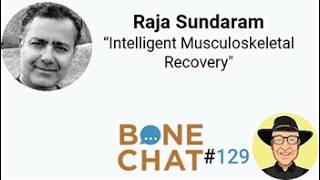
Raja Sundaram, CEO of Plethy, discusses an MSK recovery platform that uses phone-based 3D computer vision and human coaches to track patients through injury and surgery. Simply following the prescribed program accelerates recovery by up to 25 days. The company serves orthopedic groups, health systems, and insurers through a claim-driven model with near-zero patient acquisition cost.
Chapters
Welcome to BoneChat 129. Today we have Raj Sundaram, co-founder, CEO of PLETHY, uh, an intelligent musculoskeletal recovery platform. Um, PLETHY's elegant solution really kind of supports my thesis that everything in ortho is being driven by patient throughput and better patient outcomes. And this will be really interesting. I'm gonna turn the mic over to Raj. Don't be bashful, everybody. He has no slides. Just raise your hand or jump in anytime.
Excellent. Hey, thank you very much, Tiger Buford. I really appreciate this. I think we started this conversation with how on God's green earth did you get here? So I'll start there. It's easier that way. I'm the least knowledgeable person in MSK in this call. My background is sales channels, alliances, product at Cisco Systems, ran Corp Dev for Virgin Hyperloop One, and then did strategy consulting at Boston Consulting. So one day, you know, Paul and I have been friends for many years. I was reading an article on MSK. A World Health Organization article, and it talked about, you know, delayed recoveries, the impact it makes on society, and so on. And made me think about my parents who retired and aging, then thought about people who are growing older, living longer. And I thought to myself, what happens on their recovery journey? So I started being the idiot savant I am, started reading, more and more about the space, which made me realize that the doctors do a fantastic job, the surgeons do a fantastic job of giving pre-op instructions, conservative care instructions, post-op instructions. PTs do a fantastic job of giving plan of care. Patient goes home and watches Netflix, right? And so this notion of what causes recovery delays and how do you address it by keeping patient engaged. Was what I felt needed to be solved. So Argo, a whole— Paul guided us, a whole group of people came in, and we're a combination of geek and Greek sport, medical people with the uber geeks. And that combination worked really well. We've been fortunate enough earlier days, people who are the granddaddies of digital health like Michael Roach from Fairwinds Medical joined us on our journey. They've already been there, done that, understand what works and what does not. It gave us an opportunity to build the right model. That's kind of how we got about here, Tiger. I know that was a conversation that you asked, and people are always curious how on God's green earth I ended up here. This is how I ended up here. Let's just talk through how we think about the thesis of what we are, if that helps. And then at any point interrupt and ask questions. So the title of this session is Intelligent Musculoskeletal Recovery, right? So let's start with a simple definition of what it is and then kind of the thesis that builds from there. So the thesis of the intelligent musculoskeletal recovery fundamentally is the shift from treating isolated symptoms to managing the whole recovery, the full recovery journey, right? And the core component of it is this notion of a whole person recovery. Because what we realized, and our data supports it again and again, we are a data engine, that MSK outcomes are shaped not only by the anatomy of the human being, the pathology of the human, but on their beliefs on pain, stress, sleep, function, paycheck, life, work context, family, friends. All of these impact recovery. And so when we started thinking about intelligent musculoskeletal recovery, it's really the whole person recovery. And that thesis, along with the need to track longitudinally recovery from conservative care to pre-op to post-op to non-op, a year out post-op, 2 years out post-op, and then work our way backwards to understand what is the human behavior and how do you coach them and guide them, is kind of what led us to this space. Let me pause there. I'll take any questions. That's the fundamental thesis of what we are.
Good. No, I get it. Yeah, I get it.
I—
we were— Raj and I were talking off offline. I remember when COVID happened, I saw all these physical therapy avatar companies pop up so people could do, uh, their PT at home. And then they sort of disappeared and, and I didn't know why. And it's probably this notion of, you know, not treating the entire person but just treating the knee only. But yeah, keep going. This is, this is fascinating.
Oh, it is.
Yeah.
See, let's build that up. There are, there are incredible solutions in the marketplace, incredible technologies that got created, right? I did not invent this category. We did not invent this category. Because when I came in and wanted to apply this thesis at Pleti, we already had products from Stryker, Zimmer, Medtronic, J&J, Depuy Synthes, Concentric Orthopedics. They all were there. It's not new, right? I didn't create this like new unique category of product. Fundamentally, what the challenge is this getting my dad to come back with the SCAD instructions and follow it? It's not the plan of care, it's getting the human being to do it, right? If there's one thing that we solved while we looked at the data, is not that we created an incredibly better mousetrap. Yes, we did. We'll talk about that later. But it fundamentally started with this premise of what is it going to take to get a human being to engage in in their plan of care, right? And that's the code that we cracked. So when you see those solutions that showed up during COVID they're fantastic solutions, all of them. The problem is human beings don't follow care instructions, right? And so let's kind of build on the thesis with regards to how we do it and what works, right, in, in that context. So what we found was this: What we started looking at was, first, let's do the solution, right? It's not a pitch on Platy, but there's nothing magically different in digital. So we have an app where we take the plan of care from, let's assume, Dr. Schützel at United Medical or Dr. Hunter Green at Summit Orthopedics, and put it in there, and the patient follows it. iPhone, Android. Right. We kind of make it simple for the patient because my dad is not going to buy an iPhone 17 Max Pro. He's got an iPhone 5. So you have to backward compatible everything, right? So technology cannot be a barrier. Then we have a sensor that they wear twice a day while they do the plan of care. Looks like this, goes on a body on a sticker. That peels on and off. So measures range of motion, high clinical fidelity. And we also do computer vision, but we do vision AI using Sapiens by Meta because that gives us 3D. The reason that is important is there is computer vision or vision AI, and then there is vision AI. And the fundamental difference between the two is, is it vision AI that a surgeon believes, or it's a vision AI that merely tracks activity, right? So active flexion of the knee, is that real? And that's kind of what we drive to. So our vision, our vision AI gives you clinical fidelity data on where they are in the recovery trajectory. And then everything is data. We'll get into what the data play is and AI plays in a minute. But a human, a human connection, a human-to-human connection through our coaches is what we have created. The way we simply think about it is a patient has good days and bad hours, and the ability to meet them where they are becomes that much more important. So the way we think about it is This is not necessarily the case of the right care for every patient. It's the right care at the right time for the right recovery risk profile. The right care at the right time for the right recovery risk profile. And so how do we do that? Right. And we talked about patient engagement. They come back home, watch Netflix. How do you get them to manage their care at home? That is the most difficult problem to solve. So what we ended up doing is we fundamentally created archetypes and behavior profiles of a human being. The archetype and behavior profile of a human being, along with their social construct, which is why our program is a bio psychosocial program. So we started looking at it, and that gave us an opportunity to understand how people like to be coached, cajoled, motivated, kicked, pushed. Empathetic. And whether it's the app or the human coach, the engagement is aligned to their behavior. Their archetype. How does someone deal once with pain, once block runs out? And therefore, what is their mood going to be? And based on the mood, what their engagement drop is going to be is highly predictable. That's where the data element comes in, right? And that's kind of how we thought about it.
So what's— and what's the basis of the data? Raja, do you have like, did you, how did you pull, how did you teach the AI?
Yeah, yeah. So what we found was, this is interesting, we found that the need, uh, for us, other than the face sheet that comes in, what we needed to do was thinking about it in the context of intelligent musculoskeletal recovery. Um, we needed to generate on our own this high-dimensional real-time biopsychosocial data. We found that this dataset is different from the EHR data because it's generated by real patient engagement, right? Uh, on their interactions, on their recovery behavior, their longitudinal engagement. So we had to create it. We found this is important and not just scraped from the web or claims data, which is not difficult to get anymore, was that we found that the richest signals on recovery trajectory are often found in what the patient does, does not do, avoids, or struggles between visits, clinic visits. So what happened for us is like any other med device, Tiger, it's a crawl, walk, run for us. We— it's not like we woke up and we are not that intelligent. So which means we onboarded patients on total knee, then total hip and shoulder and your first labrum tear. And so we do foot, ankle, knee, hip, lower back, spine, neck, shoulder, elbow, wrist, finger, every joint, every indication. We deal with sprains and strains to pre-op to post-op to non-op, conservative care to catastrophic cases, Paris and TBIs, all musculoskeletal related, car accidents, truck accidents and so forth. And so part of it for us on the journey was pretty simple. We, we onboarded these patients, come to find that Johnny recovers faster than Stephen. The profile of Johnny and Steven on what their MSK indications were, were similar. The procedures were similar. Then what gives? So when we started looking at it that way, it became pretty evident that the psychosocial factors were the ones causing delayed recovery. For example, in the case of healthcare, a PHQ-9, which all our primary cares ask us to fill out, right? Every time we go to a yearly thing, a PHQ-8 gives us a very good indication with regards to depression risks. That along with what the social construct of the human being is and their support structure gives us a very high view of whether the shoulder injury or shoulder condition is going to end up being a delayed recovery risk or not. I'm just vastly using a simplified example, and that's kind of how we came about it, which was iterate, iterate, iterate joint by joint by joint. Fortunately for us, we had incredible surgeon partners for each joint, like Yale UCSF fellowship looking at it from total knees, sports orthopedic surgeons to people who did, you know, Stryker arthrex systems. In the post for shoulder. I mean, these people came out of the woodworks because we kind of approached it right to kind of help us down this path of like, why is Johnny not recovering at par with Steven? And how do we intervene quicker, faster? Does that give you a view of how we think about this? Yeah.
Yeah, it's a holistic approach. It's really— it's amazing you can handle that many musculoskeletal problems with one sensor. I mean, how do you— I'm— I got a million questions, but I wish other people would jump in. But how do you put a— how do you put the sensor on a wrist injury? You know, I mean, uh, and, um, and then tell us more, tell us more, talk through the tech. Yeah. And then tell us more about who your customers are, who's making the buying decision.
Yeah. So let's talk through the tech. So look, at the end of the day, the sensor is merely a displacement, right? Machine. It's the vision. AI gives you full body and the whole gamut, or whether you're moving your core while you're lifting, while you're doing long, long arc knee extension. Right. And so it's a combination and people have preferences, right? Our patient population is 9-year-old to 94 years old. Again, 9 to 94. In healthcare, it's predominantly my parents' age, Medicare age, right? And so what we found was each of them have a preference on what works for them, and we give them that preference, right? Meet the patient where they are. The concept of the sensor merely is a displacement. What we learned was very simple. What we learned from clinical studies, by the way, we appear to be clinically published. All our papers are in our website. We're very transparent on outcome data. What we learned was it's the activity of the patient doing 3 days their care program that drives outcomes. Pretty simple. One of our interesting papers out of— under the tutelage of Dr. Kemet was if you actually did what the heck you're supposed to do, you recover 25 days earlier, 120-degree active flexion of the knee. I mean, now you don't need to do anything else. Just get them to do their care plan, right? Whether you watch them, measure them, the hot-on effect and all that is nice, but it just works, right? But the, the issue is about getting them to do day in and day out. Now the client, the client one is simple. So we are in the following markets. The first is we are in orthopedic groups. We just are rolling out one of the largest physician-owned orthopedic groups in the United States as we speak. We are very, very proud of it because we are proud of it because to somebody like me, that's a reflection that we are growing up, right? Otherwise they would not touch us. We are partners with with the Visco-Gliosi Brothers on spine, uh, in the marketplace. Um, and, uh, we are also in property casualty insurance and workers' comp, uh, where our clients are directly, um, Fortune 100, Global Fortune 500, uh, insurance carriers, city, counties, states, like State of Arkansas as a client, as an example, or City of San Diego as a client, as an example. That's kind of what we do. So we've— it's, it's still musculoskeletal indications. Don't get me wrong, we're not solving any other world hunger, but multiple buying centers and each of them have different care abouts.
And the goal when you talk about governments is back to work earlier. Is that— that's the problem you solve?
Yeah. So they have 3 challenges, right? Simple way to think about it. One is they want the injured worker engaged on the recovery because the injured worker is not engaged in the recovery. That leads to frustration. And it's like they're off work for a few weeks. Their percentage of return to work mindset goes down. Right. And so, so them being engaged is important. And if they're not engaged, there's a high degree of litigation as well. Right. Whenever we come out of an airport, we see great billboards of 'Have you gotten injured in an accident? We'll make you a million dollars,' right? I mean, that's there. So that's a lot.
But avoiding lawsuits, right?
The second one is your point, which is quicker return to work. Because the financials of quicker return to work is not just medical spend, but also indemnity spend and disability spend, right? And long-term cost of care through a Medicare set-aside. So there are different buckets of costs, if you will, from a risk standpoint. And the last part is this notion of quality recovery, because you can't have someone who works in a distribution center who's asked to lift 70 pounds and he or she did not get the right quality recovery. There's a high propensity for re-injury. So do it right, do it once, call it, right? Becomes pretty important. But what happens there in that marketplace is It's not a simple wellness or a consumer benefit program, program, right? Because there is a claims process with layers of utilization management, independent medical review. There's authorizations, there's documentations, there's medical legal coordination. I mean, it's a whole process. And you can't do the— I showed you an overall ROI of 5% reduction. You actually have to show outcomes claim by claim by claim by claim, one at a time. You can't say, oh, I saved you 3.5% over the year. No, no. Tell me what you did in the last 300 claims I sent you. So you have to, you have to be in the ability to drive outcomes, meaningful outcomes again and again and again and again. And that's really what we have learned and gotten really good at.
So you can show like the baseline is of the last 300 claims is this, and you're with using Plethy, you, you beat that by 50% or whatever, right?
And so with the way Meaningful works is I'll just give you some examples. So Fortune 500, we would say for every complex surgery, we'll save you $7,500. We'll save you $3,600 for medium surgery. We will do 1 week faster return to work with us than with a 5 weeks later recovery without us, benched against ODG, which is a benchmark that is used in the insurance space. If it's access to care issues, Arkansas, between Fayetteville and Little Rock, we'll save you $3,000 on your access to care claims. We will, if it's knee surgery avoidance, so much on conservative care. If it's shoulder, obviously it's more expensive. Um, and things like that. Here's how much we will save you per catastrophic claim, which, as you can imagine, is millions of dollars yearly, right? Uh, we're talking about a para, uh, here. So that's kind of how it looks like, uh, Tiger, in addition to what you said about, hey, I will do the— I've done this overall looking at the last 6 months Your loss run the previous year was this much. Now I have saved you this over that, right? That's kind of what we do.
So I have a couple questions, if that's okay.
Colleen, you're on mute. Yeah, go ahead, Rich, and then Colleen.
Sure. So one of the things that you're talking about, Raja, is the value of your care teams and looking at the entire biopsychosocial model of managing these types of patients. And as you said, as you're becoming more into the bigger leagues, you're going to have to scale. Do you believe that you're able to do that with AI agents for the data you're collecting, or are you going to proportionally have to increase the amount of people to keep the patients compliant?
Yeah, so what we do— that's a fantastic question. It's just a matter of time before someone did the AI scaling. Richard, the answer to the question is, uh, humans, we won't proportionally scale because the unit economics won't work, Richard. So here's what we do. So think about our touch points in three distinct buckets, right? Uh, and, and then we'll take— go into process automation and agent tech, which is kind of what we do today, and we're building more and more and more. Um, the three touch points for us are When the person gets on board and there is a delayed recovery risk, and they're delayed, and what do you do on the intervention, right? And the delayed recovery risk can be all the way from kinesiophobia to fear avoidance to childhood trauma. We're exceptionally good at identifying it, right? And so if we identify it, now what?, right? And that's one piece of touchpoint. The second touchpoint is once in a while someone will drop off the wagon, right? And then for whatever reason, and the ability to get them back on the wagon, for lack of a better word, in empathy. And the third one is identifying readmission risks. As an example, we are exceptionally good, um, in, in saying like between today, tomorrow, and day after, here's the symptoms we see, there's a high propensity Johnny's going to end up in the emergency room. Right. And so what we found was when, when you kind of narrow it down to those touchpoints, everything else like is a nudge, Richard. It's a straight up nudge through the app and it's all the way from machine learning to agent tech, the whole gamut. That's kind of how we have scaled it and ensured that the unit economics makes sense. Does that answer your question, sir? So I can't— I'm not building out a support arm which is so big that I— yeah, no, it will never scale that way.
Yeah, I mean, I agree. I mean, I think that's the question is, is our— so you're answering it, and that's great. I think it's because we have that same issue. It's like, how are we going to be able to scale at those levels depending? And I think that the AI model, the agentic models, are pretty much the only way we're going to be able to do it. It's just making sure we have the right type of data and the right type of algorithms to be able to make the informed decisions on how to do that management, but then also secondarily what type of risk you're willing to take on, on it as a company.
Yeah, that's true.
Yeah, I just want to add one more part to that. So because, because I think particularly it's— it maybe you can answer it is how do you differentiate yourself from a traditional like home exercise program? And it sounds like it is this additional layer of services you're adding on top of it, but that as that becomes more valuable, it also makes you more liable. So I'm just more trying to understand where you're trying to, trying to, trying to extend that and create that value on top of the other programs like Tiger was mentioning, like the Medbridges, your SWORDs, and, uh, enhancements in that type of way.
Yeah, that's a very, very good point. So we are not a home exercise program. Let's start with that. We are not an RT machine. It's easy to think about it that way, right? So what we do is we kind of— when we did the whole person construct, let's start with that and then I'll get to the— I have a point to make. Think about it this way. For conservative care, we are identifying patients who need more help and support them on the conservative care and ones who will make progress in conservative care with some kind of a light touch guidance on the data and insights on where they are on their recovery and did conservative care work or not work. Then if you get to pre-op instructions, it— what it does is it improves readiness, sets the right expectation, what to expect when you were expecting construct. And what we found again and again in our studies show is it supports quicker, faster downstream recovery, remember, return, enabling people to return back to work or life. And so when you look at it in post-op, it helps monitor functional improvements, recovery activity for daily living. And signs of delayed recovery risk, which we were, we were talking about earlier. A non-surgical case, it creates a kind of a structured pathway on how to— so we've kind of looked at it as an episode of care, not just the I'm going to get you to do your exercise, including your medication adherence, right? And pain management and everything else. The trick on nudge, to the previous point that you made, Richard, the trick on nudge is It's not the ability of the ML to nudge somebody. That is not rocket science to do, right? We're based in Silicon Valley. That's our background. We know how to do that. The problem is the way you— we have thought about it is think about it as Thanksgiving dinner, right? It's, it's my dad and this uncle that no one wants to invite to the dinner, right? He assumes he knows the answer to every question. Then you have the aunt who believes that She won't do something because our doctor told her to, right? And you have all these personas to go with it. The question really is, who do you nudge? What for becomes the trick. And that's a learning. I do not know what you do, Richard. We can certainly collect, but it's that part we have to go figure out, which is to the archetype of the persona. What do we need to do on the nudge? That was the hardest thing for us to learn.
So in the case though, like, as you were showing the Recoup in the beginning though, it's a, it's an IMU that you place on the body to do a complete— what I'm assuming is you're doing exercises though within that. That is right. And that's one of your primary data sources that are going into essentially assess that patient's compliance or not. Yeah. I, I'm less familiar with the computer vision part of that, but the So I guess the first question is that, is, is the computer vision by itself enough to manage a patient, or do you need to use the IMU in general?
No, you don't need to use the IMU.
Yeah. And okay, and then so do you see advantages of the vision by itself versus the IMU, or one advantage for the IMU versus that? Like, is there— because I mean, for feeding models it could be helpful depending on, on what it is, but yeah, you're using both. Does it make sense to use both?
You don't use both, Richard. So let's look at the profile of the patients, right? So tying it back to the psychosocial aspect of it. So, okay, so if we are supporting city-counties, which we are, right, in the city-county, among the employees exist first responders. Asking a first responder to where a sensor that looks like an ankle bracelet is not going to work. I mean, just the— there's a physical aversion to it, right? So it's one or the other, to, to, to, to bottom line it. It's not both. But computer vision gives you, uh, better insights, full body and the movement and so on, right? This is the, the, the portion when you're doing the home exercises. Uh, the sensor gives you very discrete data on the joint and its movement alone as a displacement. So it's not both. We kind of do one or the other. We make both available and we found it's more the patient's choice on what they feel comfortable.
Does that answer your question? The computer vision is just, they put their phone, they just put their phone up and they do their exercise in front of the phone.
That's it. That is it.
Do you see higher compliance with, with one versus the other?
Okay, that's a— okay, that's a— that's an interesting question. I'm going to do the "it depends" and I'm going to share the what it depends on. So when we track our longitudinal data, we are tracking it by occupation and ethnicity. So the— so if I were to do a broad dataset, I would say something that goes like 68% of native Spanish-speaking engagement occurs with Sunset. Simple, right? But then when I start breaking it down underneath it, or whatever the ethnicity is, then we found that, okay, there is a higher propensity from someone who's a fire person versus a police officer versus an agricultural worker versus So you start seeing this micro-segmentation kick in. And then what we then do in our algorithm is kind of find a figure out based on what they do, part of the psychosocial, then how do you engage them? Does that make sense? So that's kind of how we say it. So we can't say is one better than the other. The next question is for whom?
Yep, I understand. And I, I'll let Colleen, talk, and then I have a couple more questions. Sorry about that.
Okay, no problem. Great question. So, so, Raja, I had a similar question on the service side, but we've already covered that. But, you know, I guess one thought, I really like what you guys did to go after workers' comp and self-insured corporations and government agencies. And it sounds like you're starting to make some traction into, you know, orthopedic clinics and that type of thing. Are you— are the users of your device using the remote therapeutic monitoring codes, or is that something that you've had to get involved with as you expand into the orthopedic practices or even hospital systems?
Yeah. So the orthopedic practices, the answer to the short answer to your question is yes, but we use remote physiological monitoring codes, not remote therapeutic monitoring codes, which is a higher bar, right? And because we're dealing with MDs and DOs, right? So that's kind of what we do. Now, the answer to your question on the ortho side is this. Look, Colleen, we had always made inroads in the ortho. Right, and spine and neuro. The difference that we are seeing in growing up is the size of the systems that we are able to attract now, right? Which is the— it's the graduation, for lack of a better word, from small orthopedic groups to larger health systems is the shift that we are seeing as a firm. And yes, it is CPT code-based for them. And RVUs as appropriate. That's how we are approaching it. With regards to large corporations, we have done straight B2B with large corporations, straight B2B with, with city counties and insurance carriers, because the decision point there is the head of risk and the head of claims and the CFO, right? Because They're the ones who are writing the checks. They're the ones who care about outcomes and data. Yeah.
And then I'm assuming you have data sets that you've analyzed that you can use as a demonstration of what Pleti's solution can provide, right? Because you've collected all this information in your other sales channels.
Yeah, in a way, you are absolutely right. See, to a large extent, when you start looking at carriers as a client, or self-insured, anyone in the risk business as a client, let's just look at it this way. Unfortunately, they've seen a lot of snake oil through the years.
Right?
And two things matter to them. And it behaves exactly like a technology adoption lifecycle, early adopters, early majority, the whole gamut, right? Crossing the chasm. So what happens there is two things. Number one, Once you kind of hit this inflection point of showing outcomes, it takes a few years to kind of get there again and again. Word spreads, word spreads. We get— we got a Fortune 100. We are now closing a Fortune 100 once a month. That's the pace at which we are. And it fundamentally occurs because we can go down and say, here are the outcomes we drive and here's the numbers. And oh, by the way, which client of ours— here's our client, who would you like to speak to? They're all reference accounts, all of them. And oh, by the way, I don't have to— in some cases, we don't have to do the sales motion because they already sell to somebody else and say, my buddy from this other large corporation is going to call you because he or she wants what I have, right? And that's kind of how we are. It takes a while to kind of get there. Let's get real. But once you do, the data supports it again. It's a journey.
How do you onboard that, Rajesh? So Fortune 100 company, they got thousands and thousands of employees. What, how do you onboard that? Yeah, I have no idea.
Yeah, so what we don't do and what we do, we are not EB, right? We are not employee benefits, right? And so this is not the B2B2C, I have to go market to the end user. At every payroll, send them a postcard and a reminder to participate. So for us, it's a claim getting filed. And when the claim gets filed, we get the referral. That's a simple way to think about it.
The claim gets automatic referral, automatic referral with all—
yeah, there is no— there's no other bells and whistles. I don't— so when I look at it in that context, our patient recruitment cost is marginal cost of zero. The patient gets sent to us, but therein lies the complexity. Now you're talking about jurisdictions. Now you're talking— it is a complex business once you kind of take the time to go figure it out.
So how many employees do you have? And then I'll let— I'll turn over. I'm just curious.
Me? Oh, we are. Yeah. So we have altogether 40 W-2s. Yeah, yeah. You mean employees?
Is that what you're— employees? Yeah, yeah, W-2s.
I think, yeah, we have 40, of which, uh, uh, just less than shy of 2/3 of them are, uh, are, uh, are, are contractors.
Okay.
We're not carrying a heavy, uh—
no, it's pretty lean. Go ahead, Richard.
Yeah, so I So as we're talking about this, when you said, uh, like there's less of a need for like the IMU and you can get most of it with the Vision, so how do you differentiate yourself from MedBridge or Chemtai or any of the other digital PT platforms in terms of when you offer your services to a potential client?
Okay, so let's play that back. I am a large hospitality company where I'm trying to get my injured workers— the largest hotel chain in the United States, worldwide, right? So I want to get my employees to engage, litigate less, return to work quicker, faster, and get my indemnity down and my medical down, right, and my disability down. What they don't need is a solution that through the app gets them to do their exercises. If there's one premise of the, of what I talked about when I started with what is our thesis, it's that that doesn't work. It mere, it's a MedBridge is a fantastic solution for a PT to set the plan of care and send them home. Right. It's an incredible solution. But that's not what's going to get the hotel employee who's cleaning the room with a lower back issue and a knee issue and a shoulder issue to return to work quicker, faster. So when we talk about a whole, whole person kind of an approach with data intelligence, it's the ability to get people actually qualitatively return to work and life. Now, what I hear you look at— pardon me if I'm completely mistaken— is the, hey, it's an IMU, it's a sensor. It's not the sensor, because like I articulated, people built sensors way before me. It's not the sensor. It's a, it's a whole person approach of recovery in MSK. It's not the sensor.
So I understand that, that, that part, but then the— so the question is, is then where is the value add in what's being provided? Because you have one input we'll say is the computer vision, well, throwing out the IMU. So you have a patient that's at home that's probably doing some level of guided exercises. That information's going into your app, but what are the other pieces of the app that are then driving the outcomes?
Yeah, yeah, yeah.
In order to get that output, because all the digital PT platforms do that part. So what is the level on top of that that you've created?
Yeah.
And how does that create the outcomes that you're saying, this is why we're better than MedBridge, this is why we're different?
Yeah, so we don't actually go even look at MedBridge as a competitor, uh, at all in, in how we play, right? And so that's a good point. So the way we look at it is going back to who I'm selling to, right? I'm selling to a state with employee return to work, return to life, right? And in that context uncover— we're covering every joint, every MSK indication. We are collecting longitudinal data, which is active and passive data, which is biopsychosocial, right? Let's start with the higher order bit of what we are picking up. Once you do that, then this longitudinal data gives recovery insights. Let's take a simple example. I'm able to determine we are able to determine that someone had childhood trauma. Now, the next question in MSK someone is going to ask— by the way, we have done 10 suicide interventions, legit. So why would that matter? And that's the difference between a shoulder injury being 4.5 months versus 8.5 months. Now, if you look at it from an insurance standpoint, that 8.5 months is not only excess utilization of services, but it's also indemnity paid, right? And possibly higher disability values. So when we look at that same analytics, the predictive analytics gives us a chance to identify delayed recovery risk, keep the patient engaged on the program before a claim becomes expensive. So it's claim by claim by claim. So our proposition going back is not the I have a sensor and I'm able to measure exercises. That's commodity. It's the ability to actually return someone to work. And that's the differentiation of how the program works.
But is that then the algorithms being fed through like sentiment analysis and pulling other things from the phone, like, like in order to assess their psychological state? Yes. And then, or is it, are you relying primarily on additional user-added subjective data? Both. In order to combine that.
So you're—
Both.
Yeah. Because your continuous monitoring, I'm assuming, is based off of additional information you're collecting from the patient's phone. Yeah. More or less.
And at the same time, things we are picking up from behavior. For example, one of our peer-reviewed clinical studies, it's funny, talks about the role of mood.
For example, but essentially, but that's all captured essentially. I mean, are you staying within what's provided by the user or are you jumping into other apps?
No, no, we are not jumping outside of what is provided by the user.
Yeah.
Okay.
So you are—
Yeah, we are not scraping. I'm sorry.
Yeah, I'm sorry. I mentioned this earlier. I don't mean to interrupt you. My apologies. We are not scraping EHR. We are not scraping the internet. We are not scraping.
Right. But are you scraping their phone for things outside the app as well?
No, we don't. Okay.
Yeah. Yeah. So the vision, the vision can pick up mood basically just by watching the patient.
Yeah.
Yeah. So that part portion, yes. And what we found, Richard, is pretty simple. We found basic things like, and because we had to do crawl walk on guinea pigs, right? We found that if the mood is good, patient spends 32 minutes on their care program. Mood is bad, they spend 2. Right? Then the fact is not about whether they did 2. The fact is, how are you going to intervene? Reminding them to do more is not going to make a difference. So when you talk about a program, the way we think about it is this. We realized the outcome that people want on a claim is all the points that I made on cost structures and timelines. So if you want to make a difference on the plane, you can't give them a better mousetrap with a better app and a better set. It doesn't do anything. And if others have tried it, it's a rumor. I told you I didn't invent this category. They've all been there and spent a boatload of money either making acquisitions or building it on their own. Doesn't do anything. We kind of figured out if you programmatically run it like this as a whole person recovery program,. It drives outcomes again and again, whether it's conservative care, pre-op, post-op, non-op. It drives outcomes. And it's sustainable behavior a year out or 2 years out, which is the longitudinally how we track it on. There is no complications to— there is no reinjury. It's not—
Oh, sorry.
Go ahead, please. No, no, these are great questions.
I think I heard you say that if patients use either the IMU device or the computer vision twice a day, did I understand that correctly?
Right.
Okay, okay. So they don't have the burden of having to constantly wear a device. All day long. And so from either computer vision or the IMU, you're able with that twice daily usage, determine all these other kind of holistic characteristics that go into treating the entire patient. That's basically how you do it.
Active data, which is patient inputted, passive data, it's collected. And the only thing you asked about, what else on the phone with patient's approval, walking distance.
No, I was just, twice a day is the, I guess the process for the best data collection. I can imagine that those patients that are not motivated or depressed, maybe they don't use it twice a day, which is another indication.
Right.
Right. See, I think if there's one thing that I want to reiterate, it's not that we created a better tech on an IMU. Because Colleen, I was very fascinated by what TrackPatch created. It's an incredible product. Let's just call it what it is on the name. The question is, how do you get people to use it day in and day out? These are the kinds of things we have to think about, right?
And that's why Canary Medical was invented, because they put the device inside the knee and they have no choice but to—
but it creates a different problem. It creates a different problem because when the person passes, now mortuaries are asking, is there a device implanted that has a battery?
Ouch.
I don't know whether you know that.
Yes. Yeah, that is an issue.
There are many devices, right? From pacemakers.
Pacemakers.
Now people are like, I don't want lithium-ion blowing up on my— Right. There's no free lunch. But this is kind of how we have thought about it. Richard, I want to come back to you, mate. One thing that I learned not having come from the space is I found that it's the notion of active and passive data all the way, which is not just bio but psychosocial, on how do you take it all to kind of support the human in following their care at home. Because I've learned very early on, giving them a sheet of paper or giving them an app from a PT app on their plan of care does the same thing—no one engages. Others have tried it before me. We just cracked the code on patient engagement because many of our patients are fourth-grade educated day laborers, as an example. It's— that is the hard nut to crack. Anyway, I'll stop there.
Interesting. Compliance. Is everything. It reminds me of Green, Green Medical, Green Sun Medical in Denver. They have a scoliosis brace for young teenagers. And the whole premise is it corrects, it corrects your scoliosis a little bit, not completely. But the whole thing is it's compliant. It, you wear it like a clothes versus those giant hard shell tortoise things that Nobody wears— they've cracked the compliance problem. Really interesting, this, this fundamental notion.
And, and there's quite a bit of insurtech papers written on it. If patients follow the care plan, great outcomes occur. It's not new. The question is, how do you get people to do it?
Have you found, Raja, that a lot of your business, you know, through the self-insured employers, is there an added psychological pressure on the patients that my employer is expecting me to do this? Is that— do you find more compliance in those type of environments than you do in others?
No, actually, that is— yeah, I don't know. Yeah, I mean, I wish there were, because when you look at jurisdictions, you kind of have directed care states, you have non-directed care states, you have monopolistic states, and you have non-subscriber states. Eberomber compass state by state. It's not federal, right? Each state has its jurisdictions and its flexibility. It does not work that way. For example, our highest onboarding rate, self-onboarding rate, uh, today in the market runs in at something around 86% in rural Virginia. Wow, interesting. Yeah, so one of the other lessons that we learned was any and all preconceived notions that we would have carried as a team, very, very rapidly threw it out of the door and learned from ground up. Colin, if a person is blah, they will do this. Yeah, not true. And we around—
but there, but there's a correlation around occupation, like coal miner versus, you know, hotel, since you said I'll use that example.
So, that's a good one. So, one of the things that we learned is there are certain occupations that are very high propensity to return to work. Very, very exceptionally high, right? Everyone wants to— look, there is— forget the headlines, which is no one returns to work and everyone wants to, right? That is not true because the GDP of the country will drop immediately. That premise is not true, right? We say that to ourselves again and again and again. It makes it real and it's not. Then what we found on top of it is like, look, everyone, it's 67% of payroll on indemnity when you're not doing 100% coverage with an excess carrier. It's not going to work for most people. They have children and family and others to deal with, right? So there is a motivation to return to work, return to life. The longer the delay on the recovery, The longer they are away from work drives propensity for a whole boatload of things, right? Is the issue. So if you catch it pretty early on, you'll know how to address it. What we found in certain occupations is return to work supports the quality of life. So certain occupations make exceptionally good money. Let me just put it that way. Right? These are not white-collar jobs. They pay, and it pays for the sports car and the cruiser motorcycle and everything else. And they are the ones who will basically go like, am I ready to go back to work yesterday? And no, no, you're not. We can't. We are not the ones who sign off on it on MMI, right? Maximum Medical Improvement. So you have to show the maximum medical improvement for you to be discharged from care. It's not who's and coos on Oswestry, it's MMI, lift, push, pull, carry expectations.
Yeah, a lot of people put a lot of self-worth in their occupation and when they're not working they get depressed. It's, yeah, it's the, it's the psychos, psychological thing. It's, I, I totally get that. Plus you may— you can't earn as much money, obviously, when you're out of work. That's— those are really big incentives. Yeah. Um, I want to tie back.
Richard, did I begin to answer some of your questions, mate?
Oh, absolutely. Yeah, it's, it's not—
I mean, I wish I created an app that people will adopt, Richard. I would have.
Yeah, I mean, I think that, you know, I keep thinking about this layer on— because of, of the statement of we figured out compliance, or we figured out something else that it's— what is that? You don't have to answer it, but it's just what is that box of creating a solution to get the outcomes that you want to get to? And what data is required? And then how do you automate that over time and scale that, you know, is ultimately the— where, where I'm assuming you're going with all of it, it in its— but that's what I'm thinking about, the value creation beyond the data that comes in to create the outcomes that you want to get to.
Yeah, yeah. So look, uh, so two parts, right? One is around what each of these markets want. Yeah, exactly. So what the client wants in each of these markets is completely different, right? You could say somebody— something like, well, I got better WHOOSN and QoS scores, one market, as long as my reimbursement makes sense financially and patient is happy and it's solved at once, and they tell their retirement community to go get their total knee done here, right? Yeah, that's one market. There's another market which expects us to, uh, claim by claim, as I indicated, show quicker return to work, lower indemnity, lower medical, lower disability, right? Beat my loss run ratio. Um, third market looks at it as Well, I need better proof that my conservative care did or did not work. If it did work, I want the data to support surgery throughput. And oh, by the way, my patients who get the surgery, because I don't want to do a P2P with a podiatrist, right? Or some— or a chiropractor, right? Well, whatever the case, nothing negative about everyone, but it's no matching principle, right? And the last one is, look, I want to show outcomes a year out. I want to show outcomes 2 years out. And after the global period, I don't have tracking of the patient, leave alone 6 months out or a year out, right? And so each of these markets have different needs. But what is common among all of them is the patient gets a care program. How do you get them to do it? Then the datasets that come out of it cross-pollinate, which is the point you're making. If I'm learning from total knee, total hips and reverse shoulder labrum tear, then I'm leveraging that in a profile of the patient. If something fits the profile, then what are my risks and how do I intervene quicker, faster to drive the outcome that another market needs? And yes, that's kind of how it plays out.
Have you looked at all— I mean, I know we're at time, but have you looked at playing a role in the access model? Within CMS? Yeah, so we actually—
yeah, so what we found are two things. Number one, yes, we are in the access model. We applied for it. It'll take a while for us to, given our priority, to do some of the API interlocks that we would need to do as part of it. So our plan is sometime through this year we will slowly but steadily get it done. What we found very important for us is this. Also, so look, at the end of the day, access to care is a real issue. It takes 2.5, 3 weeks in many large metropolitan cities to get to a PT appointment. There aren't— in rural America, there aren't many orthos and spines and neuros out there. It's an hour and a half drive. So access to care is becoming that much of an issue. Access model is going to be pretty critical around it to address. It's not a replacement to a doctor or a PT, but having a modality of care that helps people on their recovery is going to be important. So yeah, we're slowly but steadily making investments towards that as well, Richard. It's the right thing to do. Okay. Not there yet. Not there yet. Part of it is a, it's a constant, like, oh shoot, this market needs that, right? And it's about figuring those out. It's kind of the journey that we are. No, but none of this is overnight. We— I used to run— my favorite one was I ran a, I ran a, I ran a who manages pain before cohort of Army, Navy, Air Force, and Marines, because there's a preconceived notion of who manages pain better. Whatever the preconceived— no, my preconceived notion was completely false. So if you run— we have run these cohorts, we've done so many science experiments to kind of get to what we are learning, and we continuously— I look where I— my team is tired of hearing me say, uh, we are the tallest among the pygmies. Long way to go. I like that.
Really, it is. All right, that's a good place to end. This is fascinating. Thanks. Well, thanks for coming on. Thank you. I really appreciate it. Yeah, my mind's swimming right now. All right, well, thanks. We'll be watching PLETHI, obviously. Thank you. Yeah, yeah. Good luck. Good luck. Thanks. Take care.
Nice to see you again, and hopefully we'll run into each other at conferences. Absolutely, Colin.
Good to see you. Sure you are. Bye.
More from Tiger


BoneChat #145 - ASC Robots, Direct-to-Patient Marketing & Ortho Startup Reality

BoneChat #144 - Defining the Standard of Care for Orthopedic Tissue Preservation & Restoration

BoneChat #143 - AI-Driven MedTech Sales, Startup Traps, & Orthopedic Commercialization


BoneChat #142 - Fastest-Growing Ortho Segments, Reverse Shoulder & Joint Preservation Rollups

BoneChat #141 - Disrupting Surgical Visualization: Single-Use 4K Scopes with Richard McKillop

BoneChat #140 - Transforming Knee Rehab, Patient Experience, and MedTech Go-to-Market


