BoneChat #64 - Adjusting to the evolving orthopedic healthcare landscape with wearable technologies.
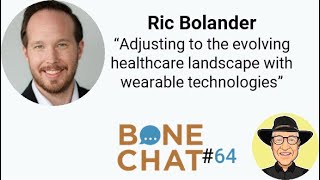
Rick Ballander of TrackPatch Health discusses wearable sensors that stick above and below the knee to track orthopedic recovery. Two published studies with 600 patients established normal recovery curves. The company is seeking $12M to scale production and add AI analytics for detecting abnormal patterns during rehabilitation.
Chapters
Foreign.
This is bone chats number 64. And we're lucky to have Rick Ballander from Track Patch Health and a lot of people familiar with Track Patch. You know, I think wearables are finally coming around. And he's. This is going to be fascinating, and I'm just going to hand it over to Rick and welcome aboard.
Sure, thanks. And thanks, everyone, for stopping in. And, Tiger, thanks for inviting me. So, just a little bit about my background. So I have a Bachelor's, Master's, and PhD all in biomedical engineering. And my area of study was impact biomechanics. And in that time, most of it, what I had spent most of my time doing was trying to understand the mechanisms of brain injury. And initially it was for soldiers, because at that time, improvised explosive devices were a really hot topic for the Navy and Department of Defense. And so what we were trying to understand was, is how do you create a brain injury from being exposed to a shockwave from an explosion? And so from that, I had a lot of training in neurology, but also sensors, developing algorithms, data collection, and so forth. And at that point, when I had then graduated, I joined a small tech company in New England by the name of Symbex, and basically translated the laboratory experience into being a researcher in the area of concussion. Because what we had done over there was, was develop different types of wearable technologies. Everything from kind of a think of it as like a sensor array for measuring heart rate and breath rate. But once again, the primary thing I was focusing on was a sensor array that goes inside a football helmet. And what we're trying to do is measure head impact for, obviously, athletes playing the sport of football. And so in that process, I had learned a big everything on the data science side, from collecting raw data to developing algorithms and spinning that all into a data product. And so I'm going to just show an example of what this looks like, because it's going to translate into what we're talking about with Track Patch. But this is an example of the sensor film. And the film goes inside the helmet shell. And what will happen is that when there's a compression of that sensor, it creates a charge. And, you know, we turn that into how hard you're getting hit, but also where you're getting hit. And then what we want to know is how hard, where and how often, because that helps us identify a risk profile for an athlete. And so this data that we've also collected in the product is currently in the Riddell Insight tool. And so a lot of our research also helped with them in the design of their helmets. So what we've done is, you know, we help guide them, their guidance. Now where you start seeing these flaps in the helmet shells, that was from the work we did with sensors with them.
Wow.
And then this film we have is now kind of thinking as like the low cost option so that you can have high schools and other types of groups utilizing it. And one thing that I'm particularly proud of is this year the Denver Broncos actually made a grant to the state of Colorado where they purchased new helmets and the sensor system for all of their high school football athletes. So about 15,000. And so with that we took a. And so from that data though, we had to understand how do you create something that's meaningful for a football coach? Because how do they take the data and make a decision on how do you change the behavior of an athlete? And who do you define as at risk? Because if you have a college football team or a high school football team, you may have 150 players on the field at one time all and throughout practice you'll see just a huge range of different individual events occur. So how do you know what to pay attention to and then how do you address it? Like cumulative adding over time. And so that was a lot of what my time was spent doing. And we actually created an, an entire analytics platform for it called Insight Analytics. And so with that, we created these reports for coaches so that they were able to then say, okay, this person is at at risk. This person isn't based off of different things such as how hard you got hit, where you got hit, what type of impact, what day you're seeing the most impacts, all of that type of thing. And so these were actually charts that I created for them in that system that they're so still using today. So go ahead, Elizabeth. Yes.
Hi. So what you're saying dovetails very nicely with an event I attended two weeks ago. Lee Steinberg, are you familiar with him?
From Michigan.
This is a gentleman. He's 75. He was for Jerry Maguire and he is big into brain health and concussions. His whole event this year. He throws a pre super bowl party every year and it was all about brain health. And he's just launched a concussion foundation. He's a really big deal. And you should probably try to connect with him.
Oh, sure, absolutely.
I'll send you some information.
Sure. Thank you.
Your email in the chat or something, please. Yeah, sure.
Yep. Absolutely. And so this is. But yeah, so once again, what we're trying to do is Identify risk but also decide defining a standard of what's normal. And so that's where. And then about three and a half years ago. So I then transitioned to track Patch because at that point I had. I moved to Chicago, away from New England for. Mostly because we wanted. Because Covid happened. We wanted to be close to our family. And. And then I ended up coming into track Patch. And so the, the idea was, is how do you take the lessons that we're learning from that type of space and apply what it is for or in orthopedics? Because one of the things that I had seen when I came into orthopedics is that a lot of those questions we were trying to answer on the football field were farther ahead than what is happening in an industry that has a lot more people going through it each year. That's a lot of how I came in into the product development side and trying to say, how do we think about the system in this type of way of risk mitigation? And so as an. So as an analog, just as a refresh. So what track patch is, is it's two wearable sensors that one goes above and below the knee. And there's a little plastic patch in this little patch, patch sticks to the skin, one above the knee and one below the knee. And then the device itself pops into the skin, sorry, into the tray. And then it's worn on average for about 1212 to 14 hours a day. And with that, we're capturing data every minute in which the device is being worn. And that includes local body temperature, position of the leg, as well as step counts by minute. So from that we can also extract cadence. So from that, that data is then pushed over to a phone app that allows the patient to also collect patient reported outcomes, pain scores, wound photos, that type of thing. And then it also provides telemedicine features as well. And then all that is pushed right up to the web and can be accessed by a clinical team and by us as well. So we have a. We have access to all the entire data, which is also great because it allows us to publish and define these risks and standards that I'm talking about. But an agalis, I'm sorry, as an analogy, this is very similar to that head impact system. So same idea. Patient wears some. Or athlete wears something, data goes to a phone app. Phone app then pushes data to the web and then the data is used by someone else along the way. So one of the. So over the last kind of year and a half, one of the things that we had really thought about is we've had over a thousand patients using the system at that point. And I was like, and I wanted to start transitioning into creating that really scientific foundation of how do we find what a standard recovery looks like? And to do that, last year we actually published two papers in the Journal of Arthroplasty, and the first one was looking at 600 patients in defining what does a standard Recovery look like? 10 days prior to surgery, up to 60 days post surgery. And so, for example, when we look at this graphic here, what's happening is you'll see that the median step count will increase almost, almost very predictably every single day following up to that 60 day time point. But that really, that first 20 to 30 days are the sweet spot where the greatest amount of gains happen. And then beyond that, gains are still happening, but just not as quickly. And so the. And then when you look at it in terms of cadence, you'll actually see there's even less variance in the data, meaning that there's a more consistent, consistent error or variance that you would see occur over time to really indicate that functionally we expect patients to come back on this trajectory. So what we want to do is then say, okay, which of those patients are doing too much because we don't want a boom and bust situation and which are doing too little? And then we want to figure out, why are they doing too little? Because is it an issue with they're not compliant with the sensors? Is it because they're depressed? Is it because they're in pain? These are all the type of clinical questions we want to be able to address, because ultimately we want to be able to say, if you're a system and you have 30 to 100 active patients who are the 10, you actually need to pay attention to. And so we wanted to create those standards, and those have now been published. And then in our second paper, we also looked at the importance of capturing a pre surgical baseline, so capturing data for about five to ten days before surgery. And the reason why you'd want to do that is a couple reasons. One is that you understand what the patient's pain was like before they go into surgery, what the re understanding, basically setting a baseline of where their function is and their ability to move. But then thirdly, you want them to be able to use the technology and be comfortable with it, because it's very hard to teach someone how to do something when they're in pain, especially within the first 72 hours. So with that, we also published some more of Basically expected corridors of, for example, how many points of pain, of change in pain would you expect to see? What type of deficit and steps or flexion you'd expect to see all those types of things. And so using those two as our bit, as our standard, we now can say what's good or bad and then use that as a way to, to guide therapists and physicians to basically evaluate how is this patient going to, is this patient a high risk patient, Are they a low risk patient, Are they on track or are they not on track? So that's the data side. And then I'm going to switch into, you know, how we're, how we're addressing things in the future. But is there any questions about kind of like the science behind what we're doing before I jump into the next phase?
It's really cool. I mean, I was, I was telling Rick, I was on the phone with the CEO founder an hour ago and he said, all clinical studies are terrible because you're just looking at implant A versus implant B. What I want to know is how this specific patient is doing. And I said, you need to talk to Rick at trackpatch. And he goes, that's a great idea. I mean, it's 2025. Why can't we track patients individually now? It makes so much sense.
Yeah, absolutely. And I think the other thing I was showing Tiger ahead of time is one of the graphics and kind of concepts I've been coming up with is that because we capture position of the leg by minute, I can essentially say, okay, was this patient in a static position for that minute? And if they were, what is the general bucket of position where they at? Were they sitting with their legs straight? Were they sitting with their knee bent or were they moving around? And what you'd expect to see is that over time, the amount of time when the patient's leg is being straight decreases, your ability to bend increases and you'd expect to see more movement. And so what that actually looks like functionally is that this was actually a revision knee patient who collected data before surgery and was very active and was also sitting on, was doing a lot of like sitting on a bike. And so we were capturing those, that those movement events. But what you see right after surgery is that the amount of time where the leg is being more, more. Well, first off, the patient is much more static and then second, they're spending a lot more time with their leg being straight. And we continue to see that decrease over time and we see more movement occurring. Once again, more movement is More blue is the way to think about it. When we think of what does a day look like for a patient, first we want to know functionally, is their knee able to do more? We do that by capturing flexion extension maximums. What was their total daily activity, which we would do with total daily step counts, but then also what was the daily behavior? And that's what we're trying to do with this. And so now you have multiple markers that you can then combine with pain and other things to really get a better snapshot of what that patient looked like within that day. But also how does that patient look longitudinally? Are they trending in the right direction or not? And so those are the type of concepts we're looking at. And just for example, this is a patient that we had that looking at their change over time. And this was a patient that ended up doing too much and through his boom and bust and actually had a, a large secondary swelling event. And then we saw a decrease over time as well. So this. But it's this type of thing. We have these multiple markers. So, for example, steps, pain, range of motion, what does that look like? How does it look over time? We'd expect things to go down, but other times we.
How are those red flags communicated to healthcare?
Yeah, so what we've done is. So there's two layers. So what we've done today is we've actually published or, I'm sorry, included the standard recovery curves into the software now. And so a provider can see how does that look like for that patient relative to what we have included in the JOA paper. What we'll be doing over time is publishing more demographic norms. So, versus male versus female, BMI levels, male versus female. What we have seen is that males have faster cadence and end up walking more, but the general flexion extension properties are about the same. So. But then to your next level of how do we completely automate it? That's something that I'm building into the system now and it will be. We'll never use the word triage, but it's going to be a second set of eyes for the, for the clinical team to be able to determine who needs to make that attention or not, or I'm sorry, does there need to be an intervention to bring the patient back on track? Cool. So with a lot of what we're talking about with the technology side, this is a little bit. Actually, let me pull up something real quick as well, and then we'll switch over to the kind of where we're going with all this. But this is just an example of our daily progress test with the sensors on the leg. And so this is the app that the patient will see. And let me put this on mute real quick. And so this is an example of a progress test we do to see from a seated position what was the flexion extension at that time. And then at that point, the patient will then submit a pain score as well. So that data is then captured in the web for us. Then, for example, we also have these guided exercises that the patient's able to do. They'll be able to see their body move in real time as their knees move, and they can use that as their guidance. And we can look at how that progresses over time as well.
Well, that's like a home physical therapist.
Yeah. And it's. It's not, it's not a replacement, it's an adjunct for the physical therapist, particularly when we start talking about how this fits into value based care bundle optimizations. Also, interestingly, we tested four patients in Delhi this last year. And what we actually found is because our step counter is based off of an acceleration but also shift of the tibia, like the tibial swing phase, that we identified that this patient was actually walking improperly as well. And the clinical team in India went to her house to help get her to get her knee moving more because she was basically stiff legging it. And our data was picking that up.
Wow.
Well, kind of. He sort of answered it. Rick, I was asking whether you were measuring actual pain or apparent pain. And when I saw the proms, it kind of basically, you're reporting what the patient reports as pain, I presume.
Yeah. It's correct that the pain measure is a subjective measure and produced by the patient.
I got it.
Just like, just like COOS scores. I mean, a lot of the studies do the same thing.
Yeah, exactly. So, for example, when you're looking at like a Koos, for example, which we also can capture, is that those are discrete points in time, usually, for example, like a week before surgery, and then like either six weeks or six months or a year, where with what we're able to do by capturing it every day, we can see where that. Where that's trending at a higher resolution than what problems usually provide. Because problems are usually like an outcome as opposed to something that you're trying to track in real time to address.
Yeah. Are you familiar with the movie the Canadian Company?
Yeah, I actually know the president. He's a friend of mine.
Okay. Yeah. Are you familiar with. Are you familiar with pain Trace I am not.
Is that something that they're working on?
No, that's another company I looked at last week, and they measure, according to them, actual pain, not reported pain.
So they have a sensor in the nerve or something?
Yeah, it's a nerve measurement.
Wow.
And it's kind of a way to measure, you know, your actual pain as opposed to what you think is pain or your report is pain or, you know, that sort of thing.
Anyway, I'd love to share that report with my husband and compare notes, be.
Like, oh, like, oh, you're.
I really had more pain.
Absolutely. That's awesome.
Does the heat mapping show pain? Does that. Is that indicative?
Yeah. Oh, hey, I'm not. Is that question for marker for me?
I mean, either. Either one of you. I'm just kind of curious because he, you know, pain generates heat. I didn't know if the heat mapping and what you're doing would actually kind of trail with that.
So we. We measure temperature at the site of both these devices. And so that's another metric that we capture. The thing is, we don't have enough adverse events to know what is significant in terms of that. We do have an anecdotal case of one of our surgeons actually picking up an infection, but it wasn't from the surgery. It's because the patient was wearing track patch and actually cut themselves on a rusty nail and actually had a septic event. But it wasn't from the surgery. But track patch caught that, which was funny. But in terms of us, like, we just don't have enough data yet to know how well or how well we could tune an algorithm to be like, does this patient require an MUA or is there an infection? The only thing we can do is provide the different data points, which are the combination of pain, temperature, wound photo, and then lack of function. And with that, then a clinical decision can be made that whether to bring the patient in or not. And so a couple of the other things that we've done over this last year and a half was we really took, like, a stop and said, okay, we needed to create the scientific rationale for things, which is what we did in these JOA papers. But the other things we had to do was how do we increase the usability for the patient? What we've done now is we were asking the clinicians to do a lot in terms of getting or someone on the clinical team to really educate the patient, get the devices on the patient, and get them out the door. And there's a lot of pushback because clinicians don't have a lot of time. And so what we've done is now move to a patient direct ship method as well as self calibration algorithms so that the patient can put them on themselves and go through a calibration process to increase the accuracy of the system. And then when they're done using it, then the patients will directly ship the devices back to us. And so it's like a dme, but it's not a DME if that system makes sense, because we have to keep the clinic out of it as much as possible because otherwise you get that pushback of I just don't have time or so on and so forth. So we really had to figure that out. And that's been one of our, one of our big things is doing that as well as reducing our BOM cost and all sorts of things in order to really turn this into a revenue type of generating business. So with that, so those were some of the big things that we've really been up to, but now it is more of this transition of where do wearables fit into the management of orthopedics? And how can you actually create economic incentives for a surgeon or clinical practice to actually want to use it? One thing that we've learned is that you have some groups that will be interested in value add. But it was something that even Tiger posted earlier this week about this desire of clinical data and who actually wants it. And I made the point that people say that they want it and there is value with it, but if there's not an economic incentive for it, there's just you're not going to get the traction that you really want to. And so what we've done particularly in the last eight months now, has been like a complete pivot and saying, okay, where can, where and how can Track Patch best be used to create either savings or generate revenue? And so historically it's either been with all wearables like it has been either it's a value add play or as a utilization of the RTM codes. But those codes could kind of get cut off a little bit more each year. And the issue is if you're trying to take the clinic out of the clinic and out of the management of it, but you have to try to optimize their time with the device. It's a counteracting issue. And so the really the third way that we came up with is noticing that within healthcare what's happening is this push towards bundled payments and value based care. And so one of the big things that's happening right now is in 2026 there's a program called the Team Initiative that's being mandated by CMS, which is basically forcing 740 hospitals to go into bundles. And TKA just happens to be one of those. And just for everyone's understanding, when we talk about bundles, really what's happening is, is that an arrangement is either made with an organization between CMS or through like private insurance. And it's generally saying, I'm going to give you a bucket of money and it's going to be covering for both post surgical and post surgical care. And what happens is that particularly that post surgical care window is where a good amount of money is spent, but also where the greatest amount of savings can be. And so what we've said is that if your standard bundle is for example, around 22k, you, you're allocated about 6k for your post surgical care, which is usually earmarked for like 12 PT visits, plus two at home visits. Well, if you have a PT using track patch, what they're able to do is knock down that number of in clinic PT visits. Because once again, if, if we can show through the data that the patient's on that right trajectory, they probably don't need to come in. And the ones that do need to come in, you can optimize them to come in and they'll use more, but they're going to get that touch that they need. And so that's really the how we're looking at it. And part of our way of proving this is we're now undergoing, to my knowledge, the largest patient economic analysis utilizing this. So we've partnered with Rothman Orthopedics across their Philly, New Jersey and Orlando locations. And we're going to, and We've started a 130 patient trial where the PTs are managing this and they're referred by the physicians, but the pts are basically going to be using the track patch data with the goal of decreasing those amount of PT sessions by 50% to 75%. And so with that some, and so with that analysis, we'll have that recipe to really take it both to the, to the different large systems, but also ultimately to the insurers and saying this is a way to manage these post surgical care costs in a way that can be the most economically efficient. Particularly if you're a clinic and you have your PT and you already have your bundled patient paid for, you can repurpose that PT for fee for service and further bring in revenue to your organization in that Period of time. And so that's the model we're working with. And we're also testing this out with other sites concurrently. The Rothman study is the big one, but we're doing this at five different sites as well right now, collecting the data so that we have the message and then we can take it and scale across, across the country. So does that concept make sense? Yeah, yeah, yeah, absolutely.
Are you using the remote patient monitoring CPT codes to bring in additional revenue?
Yeah. So when, if you're bundled, you can't use that in, in parallel to that. Okay. So. But if the CPT codes are available, and we use those as a, as an incentive for groups that are within fee for service, because generally Speaking, it's about 20% of groups are in some sort of bundled arrangement, so that leaves another 80% of those 800,000 knees each year being available with that. So we do have that option as well. But once again, it's just, it's a harder sell because of that. It requires the clinic to spend more time looking at the data as opposed to creating a system to reduce your effort with your team. So the. Go ahead, Colleen.
Sorry. So I think you said, did you say you've already used this 500 plus times? Is that what.
Oh, a thousand?
Over a thousand? So do you have, I mean, do you have any information right now about reducing revisions, decreased healing time, better mobility, or.
Yeah, so the, the thing I won't ever claim is that track patch can heal you faster, because I don't know of a real way that we could say, just through the use of this, that it would. Because I think there's a fairly, in the data showing us this, that they're, you know, going back to it. There's a fairly standard definition of what recovery is. And, and these are the curves. So you're, you're improving daily. You're improving daily. Basically, if you're in an ideal state, the question is, is that if I could get to 3 degrees of flexion two days earlier or 10 days earlier, is that valuable? And to me, the answer is not really. And so it's. What it is, is it becomes a convenience factor and an economic value, because a. If you're getting economically squeezed with decreased reimbursements and you're being forced into bundles, you need to be able to work as an organization, particularly if you're an asc, where you're continually getting cut. The. On the other side, though, there's a, There's a substantial benefit for patients that don't. That if they have travel restrictions or other things. Their quality of life is much higher because they can do most of what they need to. And they also save money because they're not paying on their co pays. So it's. So we're using the technology not necessarily to improve outcomes, but to improve quality of life and to increase revenue generation for clinics and organizations.
Yeah, I think it's awesome. I think it's, it's really cool. Rick, I, I was thinking, does it have a Fitbit effect? You know, like that's.
Oh no, it does. So we, so one of the other things that we're doing right now is we're working with the University of Miami to publish a, a social Determinants of health analysis. And University of Miami is really interesting because of the 190 patients we looked at, 40% of them have Spanish as their primary language or don't even speak any English. 60% is Hispanic and then 50% is class two obesity or higher. And what we're seeing is that both of what we call passive compliance. So are they just wearing the devices each day? Is there's no difference between the groups and then active compliance? Are they doing exercise and stuff? There's no difference between the groups. So we have these 70 year old Spanish speaking ladies living at home by themselves that are just as compliant as, you know, the standard domestic. And it's, it speaks to the utility of the system and how they're running it there. And so that's something that we're, we're starting to write up for JOA at this point.
Very cool.
And then one of the other things I really talked about, but we've also now have jumped into the sports medicine field. And so we've collected our first 40 patients on ACL as well. And so that's a, in what we found is there's, there's a number of things going on that are different. So one is that you're wearing a brace is the biggest. And so we had to figure out how do you position the sensors in such a way and run the calibration in such a way that you can get around that, Particularly if the patient is an ACL plus meniscus, Then what we've identified is that brace is even more locked up and it's a lot larger. And so we have to deal with that because we were seeing things like, for example, if the brace was shifting up and down and the device was too close, it would create a usability issue for the patient because it'd create pain. And so we're trying to solve all these problems along the way to get to that, to get to a solution that makes sense. And we're very close and we're, and we're learning a lot from it. But we're also dealing with the different population now. We're dealing with athletes that are, that care about performance, but we're also dealing with 16 year olds. And that's a, that's a different deal. And believe it or not, the, the 70 year olds are more compliant than a lot of these 15 and 16 year olds because they're like, there's like a usability thing for it or they're more busy looking at their phone for their apps instead of looking at track patch. And so we've actually had cases where we had parents like lecturing their kid to do their exercises because we could see that they weren't doing it, which was pretty funny.
That's fascinating. Mark, you got a comment?
Yeah. So if you can't use remote patient monitoring for your total joint patients that are bundled, can you use chronic care management?
Yeah, so that would be. Yeah. So the answer to your question is chronic care management. Yes. And that's where the RTM codes really have an opportunity.
Okay.
Because the issue why we've said that we need to look at bundles more than anything is because a, it creates the greatest amount of savings. Because if I can say that I can save you $2,500 per episode, that's more than what you'd make on those RTM codes. But the, the other thing about it is that if you're the treating surgeon with those codes, you cannot use those in conjunction with your global period. And so you have to use a PT to use those codes in that post surgical window. And that PT has to have a separate tax id so it became pretty onerous for the physician to make any, any revenue on that. However, pre surgery and using ccm. Absolutely. And the surgeon. And the surgeon can utilize that.
Right.
Because that's something that we've wanted to get into is like for example, making the decision to go to surgery. But also is there. And then this is where we can track things such as like does the joint cocktail work ahead of time in relieving pain? Because those are metrics that we can change how long and how effective was it for what period of time before that? It's something we haven't explored as much, but I know it's something that we can do.
Interesting. Yeah. Where does Dr. Stubberg come into your play? I saw his name.
Oh, Stalberg is, well, a. Being a mentor. He's also a hero for me, but he and I. He's actually really the one that's been guiding me in terms of the research and so on and so forth. But yeah, so he's still involved with the. With the organization and being in Chicago, he and I are, you know, are always seeing each other.
Yeah, he's cool. I'm a big fan of his.
He and I are golfing Torrey Pines together at AOS this year, so we're pretty excited, really.
Wow.
Stay out of the rough.
Yeah, exactly. But, yeah, he's amazing for. For being 81 and he still operates twice a week and. Yeah, and just his mind technologically is just fantastic.
Yeah, yeah, I remember him well. He was pretty active in the early days of computer navigation and movement studies and so forth. I'm surprised he never got mixed up with a movie. And by the way, while you were talking, I just by pure coincidence got a text from Michelle Laflam in Montreal. She was the CEO there.
Got it. Yeah. Because my main person is Alexander.
Yeah, but he's the PhD.
Yeah, yeah. He and I get along.
That makes sense. Yeah, he's the. But he's the. I mean, your backgrounds are so similar.
Yeah, exactly. Yeah. I always thought of us as being like somewhat of a complementary in the way that. And this is something that I've been, you know, explaining is this concept of the value of wearables and where they fit into a continuum. And so, for example, where I see a movie is what I would call clinical grade at the clinic in that you can create this much higher resolution data at that snapshot at the office visits. And another one is like, that is figure eight, but it's not camera based. It's. It's like wearable based. And then on the furthest end, you have a full on gate lab, super high resolution, but it's expensive and you have to be there. On the complete other end, you have your watch like, like an iWatch and you can get some information about it. Your ease of use is the highest in the accessibility, but you don't have as much of the type of data or what we're calling clinical grade at home. So we say we provide that right amount of accuracy and usability outside the clinic because once again, we're trying to look at essentially evaluating risk and helping guide a patient along the way. So if you, for example, took an AMOVI data and then combined it with track patch, you would create this really interesting conjunction of a profile of what what a patient's recovery looks like.
I will email you. That pain trace, that measurement thing that's they might have a place in your sort of continuum.
Yeah, absolutely. And I, I think also what we've have also been not challenged on but, but being asked about is like camera based systems. And one of the things that we've, it's the same thing. It's like there's benefits and cons for each. So a camera based system is nice because A, you don't have A, put sensors on, but B, but the issue is you have to be in front of the camera and that requires what we call active compliance. And there can be issues like a patient doesn't want to be in front of the camera, but it's more. So what our data has shown is the desire to do exercises decreases as you get better and you start feeling better. And so we actually published this in joa that there's almost a linear decrease in exercise compliance as the person gets out. That's completely the inverse relationship of how well you're moving. So for example, as you start moving more and more, your desire to do exercises decreases and continues to decrease over time. And so what we provide is that passive compliance to still monitor what's happening because they're still getting, they're getting information and we're getting information on them to know if they're on track, even if they don't feel like they want to do exercises. So that's a, so that once again, that's an evalu of that continuous monitoring aspect so they can be combined together. But it allows us to have longer compliance in a longer data feed than you would if you're relying on exercises only. And then. Andrea, you had a question? Yes. I was wondering how the spine application would work. Yeah, so the spine application is a little different in that what we're doing is we're not looking at range of motion, for example, we're looking at biological. The biosignal is the wrong term. We're looking for the combination of different metrics that are associated with a given pathology. And so you can do it with a single point IMU as long as it's mounted in the right place. So in our case it's on the chest. And what we're doing is looking at metrics such as posture deviation, step velocity, step counts, and looking at those in certain ratios that are related to specific pathologies. So in the case of like lumbar stenosis, we have these metrics that are allowed for us to basically take like five or six different metrics and combine them into a number. And then that number you track over time. So it's. It more or less, I'm calling it is an analog to a continuous glucose monitor, but it's more like a continuous mobility monitor. And so it's less of. You're not trying to do a bunch of exercises with it. You're trying to use it as an evaluation to see are you getting better or worse or is something progressing in a positive or negative direction, similar to like a glucose monitor in that way. In that case, you may be like, looking at how you respond to certain foods. While we could do that with certain exercises or injections or those other things, but this will be the ground truth of are you moving better or not?
Also, pelvic tilt, right? I mean.
Yeah, exactly. And also just postural deviation off the. Off the primary axis. And looking at, for example, walking asymmetries and all these other things to help us identify, you know, these different aspects or signatures that we're trying to identify.
Well, really interesting. So I would. I was thinking while you're presenting, I was thinking about the countries that have national health care, like, like the U.K. i mean, they're really, really interested in economic analysis of how do they treat a patient that's cheaper. You know, and part of the. Part of it is how do they prevent revisions or how do they, I mean, use the word kind of, you know, triage. How do they triage a problem and catch it early before it becomes too expensive for the national.
Yeah, and I'd answer, actually two pieces of that. So specifically, we got it. Sorry, it's two things. So we started looking at revision patients, which has been a new thing, which has been really interesting. And, and it's going well. And that's something we've been looking at, at. Over at Rothman Orlando. And it. Yeah, it's been good watching that trajectory. Those patients are actually very motivated, and it's nice because they've gone through it a second time. This is their second time. So it's not, it's not their. Not their first rodeo. And so they, they're taking to it really well, I guess is the way to put it. And it's interesting watching a. For example, like an extension issue suddenly getting corrected, and suddenly they have like 15 degrees more immediately after surgery of their ability to straighten their leg. It's. It's pretty neat. But like you're saying, where the surgery itself, you know, particularly for primaries, that. That's more or less boxed in at a, at a Fixed cost. And when you're looking at where people are, keep trying to add to it, like for example, disposables for a robot or potentially a new fancier implant, so on and so forth, but that box keeps getting smaller and smaller. And that's gonna be the same thing for these direct groups because basically in a socialized medicine, they're basically value based care. You're getting paid a fixed cost. So the only place that nih, outside of making a better contract with someone for a lower implant cost is to do what we're talking about in our value based plan, which is reduce the amount of human resources because it only bring in the patients that need it. And then to do that you need an objective standard, which is what we're trying to do with the data we published. Got it. And the other cases that we're seeing with that. Just not only generally speaking, particularly with some of the health systems we're working with, there's actually a PT shortage that they have issues with. And freeing up patients and bringing the ones in that need to be is an interesting prospect. But there's other groups like in regions like for example we're talking with in Puerto Rico where they just don't have the pts and it could be four weeks before you see your PT following a knee surgery. And this is where we're trying to say if you can get these on the patients early, you can at least know which ones and then figure out who needs to be fast tracked at two weeks versus you know, having that longer period of time. And internationally that's the same thing. So like when we're talking about India and I was showing you that patient, two things was going on with this. So the first is she was only one, one knee. But in general in India they tend to do bilaterals. And the reason being is that a lot of cases they're coming from regional places and it's better just to get em both done at once. But also they're just not the same amount of PT in those locations. And as a result they wanted to, they want to have something that can, that can monitor that and know once again who to look at, who's the hotspot. Interesting. And then just as a another example is in Japan, it's completely different. There you have, they're in the hospital for like two weeks and then there's no such, and there's no PT after. So like the idea of us, you know, suing same day or next day outpatient, you know, it's pretty foreign over there. And so, but, so each of these places in the world have their own kind of boxes you need to work in that the problems are different but there's some level of remote monitoring that could be helpful.
Wow. When we developed the magic rods at Ellipse, we, we went out and got the nice approval in the UK which I think it cost us about a hundred thousand dollars and doing a large economic analysis. But once we got it, it's expensive, but once you get it, they literally mandate your product. I mean you have to use, if you could get a nice approval in the UK they will actually force every orthopedic surgeon in the country to use track patch that it's a thing.
Absolutely. And that's why we're focusing so heavily on this Rothman study. Because it's a value based care patient economic analysis. We're not trying to once again assume or not assume, but imply that you're going to get 5 to 10 degrees range of motion two weeks faster. It's not that critical I guess is the way to put it. And we're not, we're not trying to say it was, I mean those in realistically we would be the first ones that wouldn't be the first ones, but we would be the only ones that could say that. Because one of the issues like you brought up at the beginning is if you're relying on proms and rate of readmission as your primary metrics for something successful or not, it's not sensitive, sensitive enough to detect that.
Yeah, pain, infections, it's got everything in the world in it. Yeah, right.
But those things that, but there's such a small frequency like, like the chances of, of an infection or, or mua. They're so low, it's a, a to figure it out statistically that you're reducing them. You need to have large patient numbers. I mean that's the main thing. And so like how, how do you demonstrate that as being the thing you're going to put your hat on? And so that's why once again we had to pivot to economically how do you create value for each individual patient?
So how are you selling today? What's the, what's the sales process?
Yeah, so what we're doing is so we have existing contracts that are primarily value added with, with large, with a large hospital. But then beyond that we've really are starting up again with and focusing primarily or 80% of our effort in this value based care aspect. And so what we've done now is we've hired an additional sales team that have that are not traditional metal and plastic salesmen. And this is something I was actually gonna gonna mention is this transition of mindset of this is not an implant cell. It is very similar to what we dealt with in football of trying to get someone who's traditionally sold plastic to try to sell a technology product. And it's a hard sell and a hard shift. Particularly when we were saying we're not in the surgical window, we're post surgical window. So it's a whole different kind of sales team and sales pitch and people you're talking to because now it's surgeon PT and value committee. And it's just the whole direction is different. And so what our goal is is we're identifying these key accounts and we're getting trials up and going right now for a smaller version of what we call this Rothman protocol that's a little bit, not lower risk, but more easy to get going at some different organizations. And then that becomes our recipe to scale out. And so that's what our next. So our three to four month plan is we're getting that data and then we're going to our friends and family building it out from there. And then as we get more paying contracts specifically in value based care, that's when we expect things to take off.
Cool. Well, I wish the value, the value analysis whisperer was on the call today. Mark Copeland. But you should probably talk to him.
He's.
He's the king of getting through value analysis committees faster.
Oh, sure, I'd love to.
Yeah, I'll introduce you. Wow. It's just, I mean it's like, it's kind of a no brainer. Why wouldn't, I mean if I had a total hip or knee or spine, I would, I would want to have a tracking device to catch early problems is just.
Wow. Yeah. And that's what the interest. I mean, that's why the Miami thing is interesting for us is because it's identified that once again you have these kind of what you would consider hotspots of social determinant health equity stuff going on, but they're using it just fine. And particularly if you're home alone, they like that. Like, if you're like a, like a widower or something like that, it gives them a connection. But they also get a connection to like our, our clinical support group as well, which has been an interesting part because particularly in that culture that they really like to. There's a, there's a process of how conversations go and it's a lot, it's a Lot usually drawn out. Just, just that's how a lot of the like Latin America that communicates I guess is the way to put it. And so we're addressing that and we have bilingual staff for that reason.
That's cool. Mark.
Yeah, I mean having set up sales teams in orthopedics that were used to selling implants for non implant or technology based products like digital imaging, electronic medical records and as late as, you know, last couple of years Movi I really kind of empathize with where you're going with that. And when you go and talk to a group about for example in the emobi's challenge was you could help them select patients that did not need surgery and then you found out that really they wanted to do surgery, not delay surgery.
Yeah.
And then in your case finding the somebody that cares about the money and I know it sounds obvious, it should be the surgeon, but it's not.
Yeah, it's. And that's what we're, we're really trying to. Yeah, we're trying to figure out because we, there's a system, there's an ecosystem that has to occur for and everyone needs to work together for the system to occur. The surgeon is the key person that will guarantee the compliance without even doing anything for the patient. Meaning the, the physician says I want you to wear it. That will have more weight and time of wear than anything a PT can do. And but it's really the PT or someone else that's going to manage the other side. But the PT has to be bought in with the technology and then you also have to have the person making decisions. And so if you're particularly in bundles, you're either dealing with admin from the health system or you're dealing with a convener or you're developing, working with an, with an IPA or other types of people that are managing the bundle. They also have to be bought in with the idea. And so, so it has to be a multi prong approach to, to get it across.
Yes, it's complicated. You got to have the admin who will make a decision. Whether it's a surgeon. Surgeon is always a decision maker. You'll die a slow death waiting for PT to make a decision. They're just not decision makers typically. And, but that's quite a synthesis to bring together. This is a hard sell. But the one thing you do have that is the magic button is that easy always sells.
Yep, this is easy and we didn't talk about it much but this is one of the few agnostic Products. I mean, it works with any knee in the world, you know, or a meniscus procedure or.
Yeah, anything. It's. It has been interesting because I have probably about 10 different implant manufacturers that we've captured. You know, but just between us in this room. Just kidding. But BMI is a bigger predictor than anything else in terms of recovery. Bmi.
And yeah, interesting. BMI is the biggest predictor. And then, and then how rigorous the physical therapy is is number two, maybe.
I, I'm not sure. I don't have that data, but I would say is that at least from demographics, it's gender is, is a big one. For some reason, males tend to walk more and faster and. But it's interesting because, like, we have more females that have used the system. It's not substantially more, but. But then BMI is the biggest predictor. It, particularly if you're looking at cadence in steps, flexion, extension is a little different because it's hard to compare because with a high bmi, you have a wider leg circumference. So it's just not as easy to get that thing bent up.
That makes sense. You know, I, I remember surgeons used to force heavy patients to lose weight before they would do a hip or knee, and I don't. I just don't see that anymore.
But, yeah, there's some groups like over at. There's a group we've been working with a little bit in Chicago, and one of the surgeons at Northwestern requires that they go to this, this PT program to help them for weight loss before they come in. Got it.
The other Colleen.
So, Rick, now that you guys have started to refine your strategy on how you're going forward, are you looking at raising some outside investment dollars in 2025? Yeah. Thanks for that, Colleen. So I'm actually in the process right now of a raise, and we're looking to raise $12 million. And about a quarter of that or a third of that is for increasing volume of volume of the devices and helping accelerate our sales team and doing some of our key studies, but also adding some 3D kinematic functionality to the knee. And then another third is associated with developing, finalizing the spine product. And then another third is for the effort that we're undertaking with IBM and just for an understanding of what that is. And I know we're already time, but just as a concept, keep going. Yeah. If you think about an individual episode of care, there's a lot of data we're capturing. So now what happens when you have 10,000 patients suddenly you have a bank that you can look at and say what is clinically effective? And if you combine clinically effective with cost effective, then what you're dealing with is a unique solution for evaluating the effectiveness of healthcare. And so the way that we've thought about it is taking where track patch essentially becomes your objective criteria for what is good or bad. And then you combine it with EHR data, claims data, and you use a generative AI tool to do the analysis for you. So then you can be prompted up and say, okay, what is the effectiveness of blah, blah, blah. It will then spit it out for you. And so that's, that's really more of our moonshot. I don't talk about it too much right now, but it's, it's the big play. But in the. But for us to get to those 10,000 to 20,000 episodes of care, we need to collect the data first and we need to have good contextual data. And to do that there needs to be revenue generation and a reason physicians want to use it. And so we're in our first. We actually kicked off about a month ago. I've been in my first management presentations and are just going through that process right now. But yeah, so we are looking for a race. It's somewhat of a. I would say like a series A or C Series A equivalent.
Are you talking. Are you talking to VCS or.
Yeah, so strategics, as well as a large number of VCs anyone. As well as family offices. But it's ranging from, you know, groups that have funds of, you know, up to billions other ones that are smaller. It's an interesting process for an engineer to be in this world now, but it just, it refines the way you're thinking about things because you have to defend every end of this from the technology, the clinical integration to the business model, as well as being able to synthesize it as a story.
Yeah, storytelling is really important. Any. Anything else? This has been.
This has been great, I would say. So that's how my day split up. Right now is. Is doing management presentations while trying to get these organizations up and running. The Rothman study has been. Is going now and we're getting. We have a number of these organizations that were also setting up protocols all at the same time. So it's, you know, validating the sports medicine model and these accelerated, what we're calling accelerated discharge protocols as well as just getting new customers. So it's a. Every day is a new day and it's a busy day.
Been in plates. Yeah.
Exactly.
Well, thanks for your time. This is fascinating. And. Wow. Good luck. Come back anytime and we'll keep talking.
Yeah, absolutely. Thank you so much. Thank you. Take care.
Good luck.
More from Tiger


BoneChat #145 - ASC Robots, Direct-to-Patient Marketing & Ortho Startup Reality

BoneChat #144 - Defining the Standard of Care for Orthopedic Tissue Preservation & Restoration

BoneChat #143 - AI-Driven MedTech Sales, Startup Traps, & Orthopedic Commercialization


BoneChat #142 - Fastest-Growing Ortho Segments, Reverse Shoulder & Joint Preservation Rollups

BoneChat #141 - Disrupting Surgical Visualization: Single-Use 4K Scopes with Richard McKillop

BoneChat #140 - Transforming Knee Rehab, Patient Experience, and MedTech Go-to-Market


