BoneChat #83 - How to build trust with others using digital media
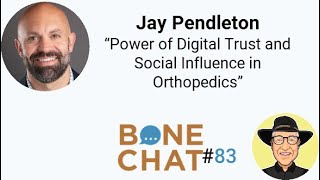
Jay Pendleton, founder of MedTech Voice, draws on 23 years in medical device sales to explain how orthopedic startups build trust on LinkedIn and YouTube. He advocates for consistent posting, showing behind-the-scenes work, and prioritizing genuine help over polished metrics. Personal stories and employee sharing matter more than analysis paralysis.
Chapters
Today is Bone Chat 83. We have Jay Pendleton, founder of MedTech Voice, and Jay's gonna share insights on kind of digital trust and social influence in orthopedics. And he's gonna be drawing on his 23 years of sales experience. Medtronic, Nuvasive, Vizion, and other things. So, the mic is all yours, Jay.
Welcome aboard.
Thank you. I appreciate it. Nice to be with you all this afternoon, and thanks, Tiger, for the opportunity. Yeah, so when I was thinking about, like, how I could maybe help this group and, and just a level set, like, this will be tailored around the startup or smaller business aspect of orthopedics. Assuming everybody's good with that. It seems to be the focus here. And, you know, I've worked for large companies, you know, Medtronic 7 years, NuVasive 7 years, and then a couple years of startups. And I think one of the things that stuck out is like, it's really important to be efficient and useful in your communication. And, you know, the, the, the advantage of digital, the digital aspect of trust is that kind of that one-to-many. And honestly, this started out for me at LinkedIn, utilizing LinkedIn and really seeing the power of that. When people understand a little bit about you or they feel like they know you, those are real advantages in, as it relates to everything that you're doing. You know, Andrea and I met for the first time in Chicago at the NASA Innovation meeting. But it didn't feel like that, right? 'Cause there's that a little bit of a relational, a little bit of like a connection that's made. And I think that that's something that, that's a theme that I've seen certainly in the last few years doing this now for companies and just helping people tell their story. So let's see if I can share my screen here. I'll pull up, a little bit of, you know, to give some context to the discussion. Can everybody see this? Yes. Okay. I don't know what you're seeing. Are you seeing like the PDF or kind of all this other stuff?
We see the first slide, but it's in slide mode, not presentation mode.
Okay. Let's—
slideshow.
Is that better?
There it is.
Full screen. So, you know, really, um, oh gosh, it's on, uh, it's on autoplay. So, so this is a, this is a, this is a picture of me in Dubai. Uh, so did a gap year between Medtronic, or excuse me, between IBM and MedDevice, uh, took a year, traveled around the world, backpacked. Somehow this picture lined up with this canned like Dune picture. So I have no idea. This is, this is not like a, a, I have no idea how these shadows lined up. I'm just, I'm not that good. Sometimes it's better to be lucky, but really what we're going to talk about today is, is, is how your voice can, can truly build visibility, velocity, and value because that's at the end of the day, that's what the thing's all about. So at the end of the day, nobody cares. You know, it's tough to get people to notice, you know, this, this slide was, it was kind of recycled from a, from a talk I did about the great detachment era. Where like 73% of people feel detached from their work or stuck, right? Personally, professionally, and staying stuck, I would say, is a choice, right? And so what can you do? And, you know, for me, it's being visible. It's not the fact that you're stuck in your work. It's really that nobody knows what you're doing. And so it's my experience that visibility is what's going to fuel your growth., right? And so how do you do that? Well, this is, this is a busy slide and, and somehow AI, we were talking about this Tiger, AI is a little bit weird. I, I look more like Joe Rogan than myself in this, in this AI-generated picture. But your story is the spark and the network is the ripple that happens after that. And like, I've literally started from the ground up as an associate sales rep grunt, tray runner at Medtronic and Römer Medical. Sales rep, worked my way up through the ranks of a sales rep and then managing a team of people and then ultimately getting promoted up through Medtronic, doing, managing a team of 15, directing a team of none, which was a wild post-COVID riff scenario that led me to the startup world. And that's, I think, where we're gonna park for this discussion. Couple startups, couple different startup experience and really just learned that like, if you're not seen, then how can you be heard. And, and that sounds very obvious, but I don't think that it's being done. And so it's just here to encourage you, like, the, the impact and the power of, of being seen, being heard, and ultimately being trusted. It kind of works in that order because storytelling or story, story selling is really how everything for me over the last few years has worked. It's helped build a brand for the companies that I was with, for myself, and also just that starts to drive the influence and really kind of the network effect of social media. I'm gonna pause there. Any questions? Have I lost anybody? Any thoughts or comments? Because I can get going on this stuff.
Nope.
Keep going.
Okay.
And really, so what I'd love to say is, you know, 3 things. If you all could, you know, at some point today or right now, if you have multiple screens going, open up YouTube and give Tiger and myself a follow. Everybody follows everybody on LinkedIn, but subscribing to YouTube somehow is really challenging. If you look at all the content Tiger puts out, you know, I think we— let's get the subscribership up. My friend, because it's fantastic content. Um, and do the same for me while you're there at YouTube. Just subscribe so that MTV— we can continue to grow the channel. Uh, I really, really appreciate that. So this is— I don't need to go belabor the point, but I started telling my story back during this gap year in 2005 and— excuse me, 2006. This was pre-Facebook. Facebook was still an edu-driven, school-driven platform. And so really it was kind of like this story traveling around the world and like capturing videos and and, and, and images that really kind of ironically almost 20 years later is what I'm doing today. And so met a girl after I came home. She made me want to be a better man. Uh, I needed a job basically. She got me into medical device because her cousin worked for Synthes. That's just kind of a story. Best job I ever had. I worked all the, the ranks, you know, as, as a rep. And this is kind of more to, to kind of connect to you all and what I did. 2020 was where everything changed, I think for all of us or for the entire world really. And so I had to pivot and really, instead of, uh, traveling and recruiting competitive hires, which I was doing, um, I really started to dive into the story. Like, what could I do from my desk that could make a big impact? Because that's the edge— connection, communication, sharing personal stories. And at this point, I had less than 800 followers on LinkedIn, right? And so, um, It just goes to show you like the power of consistency and, you know, really kind of the, the, the fork in the road was the reduction in force, the RIF. A lot of people have been impacted over the years. Um, many of the people in these pictures that I recruited ended up getting let go, um, which was really tough for me. And I got rec— I, I, I, you know, got them to leave safe rep jobs for the, uh, market development job, which is usually risky. And I had survivor's guilt. Um, because I got promoted basically on the fact that there was more money, right, to share with people like me. I didn't like that. It's kind of the beginning of the end. This was the re— the reason I'm showing this slide is that this is when I decided to start telling my story every single day because I did not feel safe in my career. Story— go ahead.
I did a similar thing, Jay. I got laid off in 2006, right when Twitter and Facebook were taking off. And I said, I will— I'm going to be a super networker. I am never going to be without a network if I get off again.
Yeah, interesting. It was, it was just, it's just a, just a feeling. I did not like not being in control, uh, of, of my, my future and my family's, you know, livelihood. And so this is, uh, obviously everybody knows who this person is. I would imagine on the call Arnold Schwarzenegger, get to the choppa. Um, and but storytelling wins because people follow people. There's a reason Zimmerbaum chose to hire this gentleman as their chief movement officer. And it's my, uh, thought, not having anything to do with the decision, um, is that everybody in the world knows who Arnold is. Not everybody in the world knows who Zimmerbaum is. And so there's an opportunity to connect to a brand through Arnold, right? And so if your story is something that relates to people, well then that's an invitation for them to know more about your company. And it's not for everyone and not everybody's gonna share as much as I do or, or some others, but I, but I'm just saying this is like lowest hanging fruit, very free opportunity for you to connect with people. So this was the, this would be the screenshot slide. Again, another very weird AI picture, but attention is the new currency. And so what I would love for everybody on the call to do today is just write a post about something that you've learned recently, or you can make a comment, right? Comments are super easy to add substance to somebody's post that you follow. It could be mine, it could be Tiger's, it could be whoever's. These 10 ways to expand any piece of writing What tips have you learned? What are some stats? What are some steps? What are lessons, benefits, reasons? You know, if you think about your career and all the things that you've done, these are just ways. And, and, you know, not everybody wants to share their own story. You could share your team's story. If you're a startup, you're at a startup, build in public. Share like some of the mistakes. Like one of my most popular posts was, uh, at Vizion trying to crack it in the value analysis committee. I know Mark Copeland talked to you guys about that last week, trying to crack it and make, make headway. And it's like I was the VP of sales with no sales. And that got so much, uh, attention because people like to see the train wrecks. They like to know that every, not everybody's got all the answers. And so, you know, these are just some ways that, that I like to keep in the back of my mind of like ways to help your posting and just, just something I'd like to share with you guys today. Um, And this is my favorite quote of all time: "You miss 100% of the shots that you don't take." Wayne Gretzky, uh, the greatest hockey player, uh, to ever skate, is the one that said it, and Michael Scott somehow took credit for it. And even my wife got me a framed picture here in the office that shows Michael Scott, like, he claims the quote even though it's Gretzky's. It's just really funny because plagiarism is everywhere. Especially on LinkedIn. And this is— apologies in advance, but embrace the cringe. You know, I went through a phase getting into shape during this period. This is kind of a midlife crisis period for me. Turned 40 years old and needed to lose weight. But just post. No one really cares that much, right? And then this is more of a personal story to me. I share everything now. But I mean, 3 years, I lost my dad, my dog, 3 different jobs. I literally lived a country music song. Yet it's just like essentially in my life, um, and it was a very humbling season that allowed me to find God and, and just find a little bit of, um, you know, why you go through hard things. It's, it's, it's to redirect you. And in my, in my experience, this is what brought me to Jesus. But that's not essentially what— I'm not trying to force that on anyone. I'm just sharing like you're surviving things. Every single person on this call is a survivor. We've all survived things. And if you can learn to just like take that and maybe share that, that will then build a bridge of that digital trust with the audience. And that's where it's all, that's where this whole thing's going.
So here, so let me, let me ask the first question. So we had this a week or two ago on BoneChat. How do you separate posting about your company and your products and your services versus personal stuff and can you do both on the same platform?
Yeah, you can do both. Um, and I can, I can, I can stop there. I mean, this is pretty much, we can kick into it. Uh, I'll come back to that. I'll, uh, build your audience before you need it. Stop hiding your value, right? You have a voice, use it intentionally, and let's reimagine influence together. That's it. These are the results of the 5 years of doing this. I went from 800 to 21,000 and 15 million overall impressions. So that's the, the talk. You can do— what I try to do is there's— I try to find out like, what are the— what are the— what's the foundation to the house? What are the 4 pillars of you, right? Family, fitness, like finances, whatever you like, your business, entrepreneurialism, um, whatever that stuff is, whatever the, the 4 things or 5 things maybe that you talk about a lot or that you enjoy, uh, reading about, right? It might be comic books, whatever. It doesn't— guitar, I play guitar, right? Whatever. Those are the things that are uniquely you, that make up who you are. And every single one of us is a unique human being. And so that's what I try to do, Tiger, is just I'm gonna talk a little bit about the things that matter to me. You can use that as analogies and ways to weave in work and work-related things. What I think really, uh, what really works is like, if you ask yourself these questions of like, who cares, who benefits, like, uh, of your post, like each line, go down and say, who really is going to care from this? Like, who's gonna, what does this matter? Why does this matter? Who benefits from it? And then it helps you kind of put things in a little bit of a different light. But I would just say like, I weave in and out between work stuff, MedTech Voice, uh, stuff that we're doing at, at, which is exciting, like partnering with companies. Uh, we're, we're rolling out some things for doctors specifically to help more of a, uh, done for you model there. But I try to share a lot there about, I don't really know if I follow a certain percentage. But what I really try to be is— what I really try to do is be consistent on who I am and not change that, not really change who you are to try to like meet some— I mean, you are who you are. I'm 45 years old. So I'm not changing. As frustrating as that is to the pretty lady in the kitchen right now. She, you know, she's tried, like, we are who we are. You're not going to change that much. And so who you are or who you're maybe becoming, like, as you evolve, as you grow in your business. That's what I try to like talk about in that present tense. And so what does that look like? If you're at a conference, you can be like, hey, here are 3 things that I learned today at, you know, Academy, or 3 going into a conference, 3 things that I'm excited about. To, uh, go see at OSET, or here, here's why we as the startup are making a commitment to be at this conference specifically because XYZ. Because then that gives you the ability and kind of the, the, the audience can learn a little bit about like why you do what you do. And then I'm a big, big believer, I mentioned earlier, in building in public, like, like sharing some things, not anything proprietary and nothing secret, but like share a little bit about why you do what you do. Or, um, like, hey, you know, this week we had to make a tough call. We had to decide between, uh, whatever that is. And it, it, it'll, it, it draws in the audience to participate either, either in the comments or really in the DMs because the direct messages will come to you. When you hit those nerves of people that really want to go deeper on something but not publicly, that's where you can really start to get to know someone and build that trust, that bridge.
It's kind of like a reality TV show for your company. You share the good, the bad, and the ugly. And a lot of companies just can't do that. I mean, I talk to them all the time. They only want to put the good stuff out there. You know, we got an FDA clearance. We just, we had a great month in sales. Right. You know, and they don't want to say, geez, we got knocked out of another hospital. You know, our inventory costs are too high. I mean, it's just nobody wants to put out— it's a tough one. It's a really tough one.
Yeah. And I get it. Like, I think it's one of the problems of social media. Like, everybody shares their highlight reels, but you don't share, like, wrangling the kids together to get the picture on the beach. Like, You know, but, but if your goal is connecting, then share the real, like maybe share the picture and then here's what it took to get there. Like, you know, like bribing with goldfish or whatever it is. Like you just like, hey, like this is real. People relate to, I think that's what I've been told actually is that the fact that I get the, I guess I get people that enjoy the content or follow or whatever is because it's relatable. I'm not trying to sugarcoat anything. I'm not trying to like say I'm the best. Like, I'm not the best. I've failed a lot more than I've succeeded. I've got some wins. I'm proud of those wins. But people really will relate when you start to share like, hey, you know what? This startup is hard. Like, it's really difficult out there. And honestly, your customers will too. Like, most doctors respect the grind of me building a business and a platform for med tech. They'll tell me that like, Jay, what you're doing is inspiring. It reminds me of like my residency years. That's pretty cool. That's actually really, really, even Andrea in Chicago, I had a couple doctors, you know, come up to me and it's always humbling, like, and that's not why you do it, but like, it's just cool to know that they're paying attention, they're listening. And then you think about your startup, if you start sharing a little bit more around like, you know, kind of like, what this whole thing's about. Like, honestly, it could be as simple as this. If you're in a boardroom and you got all your leadership, just take a picture of it and just be like, planning for Q3. Here's what's exciting about Acme Ortho. Um, you know, new launches. It's like, you don't have to say anything specifically, but you're inferring that things are in motion. That like good things are coming, that you're passionate about patients, that you're there to help your surgeon customers or whatever it is. I really think that that's the, like the bridge that doctors wanna see. They wanna know who, and I think that's why innovation, it, it happens in small, smaller startups in small companies that then gets acquired by the bigs. Like the innovation happens in the rooms that you guys are already in. And so I think like if you start to share those things, you could build that bridge that leads to something great.
Yeah.
I tell startups to show the sausage being made.
Exactly.
Yeah. Even though it's ugly and it's, you know, nobody wants to see it, it's authentic. The other thing I want to jump in with any questions, anybody, because this is a kind of a broad topic. Uh, the other thing is, um, I try to teach startups is that everybody in the company is responsible for content. You know, if you're at the hospital, you take a picture, you know, the surgery, you know, you take a picture, you, you know, you drive an inventory across in another state, you take a picture or video, and then you, but one person in the company should be responsible for, uh, content uploading. Editing, content upload, because not— you don't want 10 people in a 10-person company all, you know, uploading different stuff. There's no continuity. I mean, what are your thoughts about that?
It's very interesting you saying that because like I just got out of a long planning session with a new client in orthopedics, um, and they're talking about like they have like this content calendar where they try to like stay somewhat consistent, which I completely support and endorse. Like, you do want to develop some level of consistency, like, um, you know, MedTech Mondays, or like, you know, like Thoughtful Thursday. I mean, not to be— you don't have to be cheesy, or, or you don't have to have like clever names. I'm saying like a consistency of content is a good thing because then that develops that dopamine and that expectation from the audience. But, but in terms of who, right, is posting. Yeah. Like you need to have, and this is what we coach a lot of our clients on, like you need to have some sort of a strategy there, but it can come from multiple different, you know, desks, if you will. Like I think a message coming from like the, the VP of sales, right, is going to be something that likely ends up leading to people want to work for that, that person or with that person. So it's almost like a recruiting tool. Like if the VP of sales is sharing something like, it's like you, you have the opportunity to talk to your future distributor partners or, you know, direct employees or whatever. Um, surgeons as well, but like, That seems to be like a byproduct of like when sales shares things that like someone latches onto it. They say, you know what, I'm done. I'm tired of this company. I want to talk to that person. I want to figure out a way to work together. It's just like you're, you're extending that olive branch when marketing or, or another company shares something that's more vision, message, product. You have different, like, content types and it's kind of geared towards a little bit of a different audience. I don't know if I'm answering your question properly.
No, it's, you're saying more than one person can post, which I think is interesting. Yeah.
Yeah. I mean, with coordination, I wouldn't just have a free-for-all and just have everybody going after it and, cuz then you get a little bit of a dilution of the message.
Yeah. Yeah. Questions, comments, anything, or I'll keep asking questions if you guys—
I'll throw in my two cents. Jay, uh, you do an outstanding job.
Um, thanks.
I had a conversation not that long ago, one of my board members, uh, we're an orthopedic spine, you know, do braces. One of my board members, general manager of Intuitive, right? So it's a little outside the space.
He's like, you know, you gotta follow this Jay Pendleton guy.
I'm like, yeah, I follow him.
Like, come on.
I mean, he follows every one of your posts.
He knows it.
You got to start doing what he's doing because you have such a social media thing on Facebook with all our patients because we're working with kids and that.
So, sure.
Now, your brand goes way outside of—
oh wow—
and spine, you know, and the biggest device car, you know, company.
Yeah, Intuitive is massive. Well, thank you to that gentleman or gal. I don't know who it was.
Bland is the guy.
So, oh, Marcus Bland. Yeah.
Yeah.
So that's just the thing. I've never met him, but I know he's in Dallas, I believe. His daughter's now in the industry. Like, these are— this is what I'm talking about. Like, I just— from following him, they do— like, he is one of the ringleaders of like this 5 AM workout circuit that Intuitive has when they go around, right? All these details of things that somehow I've learned just through following Marcus in a completely different market segment.
Right.
And it's just because he's sharing. Don't know the guy, but yeah, like have respect and admiration for what he's building and his team and all that kind of stuff. That's pretty cool.
Yeah.
It's almost bad to have him on a board because that guy posts more almost like you do. And it's like, man, he's like, I don't want any excuses. Get up at 5:00 AM and start posting. You know, there's like, because he's always running with whatever local group. Yeah, I tell you, it helps his persona out there. Like, you come to work with him, this guy runs every day at 5. Do you want to, do you want to be part of this team? We're up and going. Yeah, sets that bar right out of the gate just based on his LinkedIn presence. And it doesn't hurt Intuitive having a guy like that leading your sales organization.
Yeah, in fact, it's interesting you bring that up. When I started this whole thing, it was 2021. Again, my team was kind of ripped out from under me and I was still at Medtronic and was actually promoted. It was that weird time. Where I didn't have a target. It's kind of a VP, a vacancy waiting for that next VP job, which I didn't. I told Tiger last, earlier this week or last week, I don't do well when I don't have a something to aim at. You know, it's just like idle hands. That's what led to me posting because I was just craving connection and my travel was not deemed essential because it was post-COVID world and I wasn't in the rooms anymore. My, um, And so one, the one thing that he shared with the VP of sales, who was my boss at the time, shared with me when I told him this idea of posting on LinkedIn every single day to attract top talent, no product claims. That was literally the only thing that I learned that he said to me. And he said, other than that, he's like, I love it. You're gonna stir some feathers. You're gonna scare some people, but do it. And he, he was, you know, uh, just bold in himself and take, took some risks and, um, I view it, and that's literally like the one thing that we can't do is say that your product's gonna do something. Like, 'cause then that just opens up the lawyers, you know, they're coming in right for that in discovery process. Everything else is fair game. Like, hey, here's 4, here's 5 things that are really challenging about XYZ, or, here's why surgeons in 2025 are more important than they've ever been, or whatever. Like, people on this call, like, seems like there's a lot of experience in this, in this gallery here. You all have— and not that everyone wants to do what I do, it's exhausting, like, every day, like, posting and all that stuff. But once a week, once a month, like, just drop in and share. It's gonna help your business. That's the, that's the, that's the overriding point. Like digital trust and, and, and social influence is really nothing more than sharing a little bit behind the curtain. You gotta, I got a hand, I got two hands raised, so I wanna respect those. Looks like Chris and Mark.
Yeah, go ahead.
Go ahead, Chris. I was gonna, I was gonna say, I'll, I'll, I'll let Mark go cuz he's, He's always got something great to say.
But go ahead, Mark.
That was very kind of you to say that. I love this talk. Uh, when Tiger Buford posted earlier, he talked about digital trust. I found that electrifying, and I said I'm gonna steal that phrase.
I saw, I saw it. I love it.
Yeah, steal that phrase. I love when people talk about their joy, the tip of their spear, what makes them get up in the morning, what makes them care. Uh, my son Brian was here this week, and, um, you know, like me and a bunch of my family, you know, he's a veteran, and I was talking Iraq, and he was there, and I was telling him, I said You know, when I was in the air cab, I used to get out in the morning and a beautiful day, and I would talk to my pilots and I would say, today is a good day to die.
Mm.
And the irony of that was, by freeing yourself to that joy of life, if you did die, yeah, it was the greatest day of your life.
That's right.
And I love what you said about the humbling season. I mean, I put in a chat to Tiger that I would love to, uh, have a session in which everybody talks about their failures. Ah, because you never ever— yeah, it is always an epiphany. It is always something worth writing about. And I just love it. And the last thing I want to say is I want to tell you that I hate the word content. Yeah, me too, because it doesn't say anything. It's, uh, one of my favorite sort of inside head stories is the story of sausage, because, you know, you talk about making the sausage and so forth, and people love different things about the sausage. Some people like the process, that's a common one, you know, and then you get the dreamers They like the picture, the image of the sausage. Then you've got the sensory types. They like the smell and the noise of the crackling cooking, you know. And some people, some people like to make the skin, for God's sake.
Bless her.
Okay, but content, I don't know. I mean, um, you know, I guess, you know, all information has value, so maybe all can't— maybe all content has value. Maybe I should be kinder.
Well, I think it's interesting you say that. First off, thank you for your service, you and your son. Uh, we're, I'm honored to be on this call with you. Um, it, content is kind of disposable in nature. Like you, it just, it, you know, especially on LinkedIn, it's gone. It's not really searchable. LinkedIn has the worst search, uh, in it. I mean, it's, it's, it's Microsoft, so go figure. It's terrible. But, um, We like to say we help our clients and what I try to do personally as well is we build you assets, you know, 'cause assets are, you know, there's a library of videos that are categorized by whatever that is. And those assets then can be, you know, used and they're evergreen and they can be reshared and repurposed. And, you know, Tiger, with your experience, like, you know exactly what I'm talking about. You build this content library of assets then yeah, the content is really just like, it's a flimsy word. Yeah, I'm with you, Mark.
That's a good way to look at it. So you look at, to look at content as assets, you want to build an asset library, a content library, and that's, those are things that you can use, kind of like an armamentarium. It's a good idea.
Yes. Yeah, just, yeah, just, you know, build it, build it up so we can, you can use it.
So that's a really good comment about LinkedIn. LinkedIn's, the content is ephemeral. It just, it just disappears like a fart in the wind. YouTube is there forever and searchable. Um, and I, I'm a big fan of YouTube because it— the recommendation engine.
Yes.
And that's why, you know, on the talk, I, I wanted to go follow— I followed you today, uh, Tiger. I think I got a notification, same, you know, you followed me. And that, that's how I think YouTube is something that, uh, I'm certainly— my eyes have been opened to that point. Uh, I would focus on that if I'm a company. Yes, LinkedIn is— everybody's on there, but YouTube, I would not skip out on that in terms of your strategy for 2026 or 2025.
We agree completely. Okay, Chris.
Guys, I just want to say, Jay, when you first started doing what you're doing, I was following, and you know, I'll be honest with you, I didn't get it.
I'll be the first to admit it.
Didn't get it. Didn't know where it was going. You know, kind of saw a few people and I was like, man, like I, And it's only because I'm simply— I'm not the kind of guy who's going to go out there and put themself out. And I— so I applaud you and acknowledge that. And but the one thing as I listened in, you know, we kind of leaned into it, not to overuse that word, but I leaned into it, you know, from watching you as we're building our startup for the last, you know, almost 3 and a half years. You know, you talk about Mark not using content. We don't use that word. We use assets and building an asset library, or as I'm starting to call it now, our arsenal.
Yes.
As we come into the public since our FDA clearance, you know, now a month ago, and we start getting ready for the all-important commercial launch, you know, we're gonna, we're gonna throw that out there. And some of it is like the very beginning, the sausage making, you know, we want people to see this is what has gone into it, live videos and, you know, a lot of things we can repurpose over the next 2, 3 years. So, yes, not, I wanna say thank you for, for, for, for giving me the ideas. And it's not to say I couldn't use you at some point.
Just startup world.
Yeah, never there. But totally. I hope, I hope other people that have, you know, that are in our roles pay attention enough and know that they can use little bits and pieces and learn because that's what this whole ecosystem is about, is learning and, you know, and applying.
So thank you.
I completely agree.
I literally just joined on and I was like, I didn't want to miss this, but we're— my kids were shooting M15s in the backyard, so I had to stop them.
Freedom.
Freedom. Hey, for Chris, that it means a lot. Thank you so much for the kind words. And, you know, I greatly appreciate the network. You know, what we do is really hard. You know, I interviewed Phil Ratcliffe, the CEO, president, CEO of GE Healthcare outside of LSI. I didn't pay for LSI, but I was like literally outside the, like literally outside the grounds of the Waldorf, like just grabbing execs with a camera when I first started the company. And you know, one of the things he shared was like, and I don't know why this stuck out to me, but like his dad passed and he was like, if we had access to the, the, you know, the technology that we have today, like it probably could have saved him. I think it was prostate cancer or something like that. And he was like, it matters. The reason I get out there and grind, it sounded a little bit like Marcus Bland, right? Jamie. But, but, but, but he was saying at the end of the day, we're not selling bubble gum here. And that's just like that, you know, right? As Matthew Ray Scott talks about, right to the amygdala. Like, it just like crushed me. Like, yeah, we're not selling bubble gum. What we sell matters. And it changed a lot. It changes lives. And so, I think that's why LinkedIn or YouTube or any of these channels that if you can just invite people in, you know, Chris, as to your arsenal of like your story and why you do what you do and like why you get up early, you know, we all work hard. I don't think you can be in orthopedics or in any medical, um, job without that, without work ethic. It just doesn't doesn't work. We all work hard, but then there's that level of like the behind that, what is behind that? And if you can tap into that vein, I think you'll find your people or they will find you. And one of the things that I, I probably should put in the, in the slide deck is like in, in this economy where everybody's connected, everybody's online, there's a lot more noise, uh, than there was when I started doing this. But it's no longer who you know, it's who knows you, right? And that's what this whole thing's about. It's just, it's not as much shouting from the rooftops of like, look at me. It's like, hey, here's what we're working on. Would love to talk to you if there's interest. And I think the right people will find you. But that's been in my experience.
Yeah, I just wrote down push versus pull. Kind of marketing, you know, yelling people versus you sit back and people find a common tribe, a common thread, and they, they reach out to you.
Yeah. I mean, I, I certainly think so. I, I certainly think that there's like this, I think that we're all early, like it's like Bitcoin, right? People that think, oh, it's $100,000. That's early. I mean, it's my personal opinion, but it's early. We're early to this, this, this digital trust, social influence, whatever you wanna call it. LinkedIn storytelling. Social media, whatever it is, um, it is the early innings. And I mean that like, I see companies just getting going on this stuff and the faster that they can adopt it, the better. Um, Andrea, did you have your hand raised? I see that.
Yeah. I was going to say that in, in addition to the sausage making and, and, you know, talking about how hard it is to do things and the grind. I think what one thing that you do really well, Jay, is supporting others.
Yes.
And, and I think to me, more than anything else, that has been a reason to, to look positively on it, because I don't think everyone that you give a shout out to or comment on, you know, they're not all prospective clients.
No.
Right.
Yeah.
You can't, you can't just—
yeah, you can't just— yeah. And I think that, that kind of relationship building LinkedIn, and it is, it is becoming more of a community. And, you know, family is a little bit of a stretch, but, but it is that kind of, you know, just like when I showed up, I was super, super nervous about going to, to the NAS Innovation Summit. And yet, yeah, as I got there, I really relaxed because there's so many people that I knew less from like actually meeting them in person, but from their LinkedIn presence and how I've interacted with them over the years. And yes, there were people I've worked with and a a lot of the other connections too, but, but it really kind of opened my eyes to, to that and the value of, of showing up.
And yeah, yeah, thanks for saying that. Yeah, you can't— I mean, this is what, um, this was early on, like, a decision that I knew that, like, you know, since I'm this, you know, I'm not— I don't take points from clients, and so I can't— I have to stay unbiased. You know, like in terms of like what we do with MTV. But one of the other things too is like, I'm a real person. I have, you know, I'm just like everybody else. I'm nothing special. And so just like help people. I mean, I think it's like I'm called to serve others. And so I try to do that in my work. And not everybody that is a client of ours, like to your point, like, just do the right thing. If you see something interesting, like there's some cool pieces of technology that deserve recognition and they're not a client, I'm still going to talk about them because I'm interested in them. Um, you know, and I think it's like, it's, it's, there's a lot of pay-to-play models out there, you know, and, and I just, I don't want to be that. But, you know, at the end of the day, I got a business to run, so it's like, that's a, that's a tough, um, you know, ledge So that's a good point though. Thank you, Mauricio. I know you got something to say, brother. Everybody else has.
Yeah, no, I, I was thinking that it's, it's, it's a, it's a great, it's great when you share like your losses and things. Yeah. And the other day I shared something like random. It's like I was, I was just feeling terrible that day and I'm like, you know, sometimes starting a startup world punches you in the face or something. And that's been the, my LinkedIn post with the most engagement.
Oh yeah.
In a long time. And people were like, oh, you're so honest. You're, you're saying it's, you know, you're sharing your loss. I'm like, I didn't share any loss. I just shared that it's painful today.
It's painful. And let me ask you this, if you don't mind sharing with the, the small group here, like, doesn't it feel good though to, and a little cathartic to get that out there and get the reciprocal, like, uh, responses, like, from people that are going through it, right? It's like, uh, it's almost therapeutic, at least for me, to, to share those things that I know suck and I know that they're hard. But the fact that other people have also gone through those same challenges, it's a little bit— I don't know, it makes it more palatable.
Yeah. And the, the sausage analogy, I think, is great because in the end something you fail to realize on social media. And when you're a small company, you idolize these big corporations and you, you tend to think like they're perfect and all their processes are perfect and their compliance is awesome. And, you know, their innovation teams are geniuses. And, you know, they're just companies like, like, like all of us. And it's all— we're all like, every company is sausage at the end and every company makes sausage and every company is a sausage factory. And then you, you look at, you only see how you make your sausage, but the other guys are making sausage. The process is just as messy.
No, no, 100%. I think it's great, and good job on sharing. Um, I don't know why my laptop's saying it's about to die. I'm plugged in, but so you go. Anyway, if I go dark for a second, that's why.
Hey, hey, Jamie, I don't know if you want to share or not, but Jamie's got a really cool startup that, and the patients are the ones, and the patients' families are the ones creating most of the content.
And I have no idea how you enable that, but it was customer service and it like, there was things going on in Facebook groups we didn't even know about. And, you know, it was like, I started learning from other people. Hey, this mom posted about you. And so we started doing more on Facebook and, and wow, you know, we just took care of parents and I just ask them, I, I never tell a parent what to post. I just say, please post. And so if they say, um, you know, they're like, hey, what do you want us to post? I'm like, just tell, tell about your journey. Authentic content to me is the most valuable thing out there. And I tell the parents, I'm like, if I give you bullet points to talk about, it's going to seem scripted. When you do your thing, you talk about your journey, your post, how your kid's doing, or, yeah, you know, how you got here, whatever. Tell your story and that's it. And there's always things I'll read and I'll be like, God, I wish they just said this a little different. And you're like, yeah, they actually got something wrong because they understood it wrong or whatever, but it doesn't matter. And the parents that come to us say like, we, we believe all this content. Parents of these kids will trust other parents before they trust a doctor.
Yeah, 100%.
And so you've got to have that trust, you know, and I think that's our biggest brand value, you know, in our company is like all these parents trust that we're trying to do what's best for them.
That's big. Yeah, it's, it's just the, it's the whole like user review phenomenon. Like you'll get on Amazon or I will get on Amazon and I'll, I'll rip through all the reviews from complete randoms. And even though some of those are likely bots, or— right, right. I still— you can get a sense for like good product worth investing in, or maybe, maybe let's do a little bit more research. Um, yeah, because like I agree with you, those, those parents and those, those caregivers and those people, like they have real stories, and those things are— those, those— that's sticky for your brand.
Absolutely. It's so sticky in it, and it's that trust is incredible. Because if you have, like, our parents are, you know, if they have a doctor that won't write a prescription for our device, they'll go to somebody else, you know, they'll drive down the road. And I don't encourage that. I like try and stay where they are, but it's like, if they want to, that's fine. We'll support the next person.
Yeah, you know, 100%. I think, um, I think, I think that there's— while I don't feel that direct-to-consumer. Like, I don't see med device— and Tiger, maybe you can give us an opinion given your experience— I don't see med device going the pharma route. Matter of fact, I think JFK or RFK Jr. might be shutting that down. Like, the pharmaceutical ads that I personally don't, don't care for, I fast forward them, they're ridiculous. But, and we're the only country outside of New Zealand that even allows that, by the way. Every other country in the world bans pharmaceutical advertisement. I don't see device doing that, but I do see what you just described, Jamie, being an avenue of like community, uh, of sharing those stories that really kind of like provide that, um, hope or that, that, that, that familial, uh, experience, experience that then can drive a brand forward like you've experienced. Like, if these doctors don't have it or they're not prescribed, like, it's like they're gonna find someone that does. We saw that with the X-Lift, uh, with the Better Way Back, which was a patient advocacy, uh, or basically we'd connect one patient with another prospective patient to just have, um, that attachment as like an ambassador.
How did you do that? That's fascinating. Yeah, how did you make the connection between Yeah. To hurt patients.
So betterwayback.org, uh, was the— this nonprofit that was, you know, connected with NuVasive and the XLIF procedure, the extreme lateral interbody fusion procedure. Um, I actually have Bill Walton's signed basketball, rest in peace, but he was one of our like, uh, brand ambassadors as was like a UFC fighter. And so we would have these events where they would speak and patients would come, right? But behind that was, uh, if a, if a, if a surgeon was— and we did like, I had like a surgeon finder, right? And so we started to like indirectly guide people towards, uh, the caretakers and the doctors that were doing this procedure. So if a surgeon was in like an area that did AxLift, like they could— I think it was like 12, that they had 12 cases or something under their belt or something like that. Was like a really low level. Okay, well then they could, um, yeah, there it is. BetterWayBack.org. I don't know if it's, is this still going? No, still live anyway.
Okay.
So yeah, so this was it. And, um, you know, really it's, it, it was all about hope. Yeah, it's still, it's still up there. I don't know. I don't know what it's doing, but yeah.
So this, no idea what to do with it.
Yeah. This was really neat though. Like we, we leaned into this kind of stuff and I think Nivasa did a good job of this. Um, you know, just helping the doctors like differentiate themselves, their practice. I see this, especially with like personalized medicine and other things, like I see this is maybe making a comeback because it really, at least for us, like anyone can go up to a doctor and be like, hey, I can help you market your practice, but like, how are you doing that? Like, you know, and if your tech or your solutions are something that is differentiating, If I'm Carl's Med, for example, I'm doing this. I'm doing this exact carbon copy. I'm just— I'm gonna do this. If I'm like anyone like that that has something distinct— Barricade, you know, or whatever— I'm doing that because number one, it's different. And they're— I mean, you see what, um, Barricade's doing. They're doing a lot of, you know, marketing and stuff for the public. But, but I also think that there's ways that, you know, each startup, each small company can do this in their own right.
Let me push back on that a little bit. So I think, I think most patients can't diagnose themselves.
Oh, 100%.
My, my back hurts. I don't know what's going on. Yep. And so the going from there to Barricade, you know, preventative hernia in the future is, it's a light year away. Big jump. Yeah. The, the, the successful companies like Therese, anybody can look down at their foot and see they have a bunion. And so that's, that's one of the reasons it worked for Therese. And to Osseo, to a lesser extent, you know, that between metal in your foot and things that don't, you know, disappear.
Right.
So I think, I think you gotta be really specific if you're a medical device company. You have to, you have to go direct to consumer when the patient can diagnose themselves exactly and then say, go to the Surgeon Finder and say, Doc, I want this product.
Well, but I don't know. I, I think you, you can diagnose just like I have back problems, but we're moving around because my husband is in the Navy. And so it's been a real struggle finding doctors that I, even with all the expertise and having been in spine for, you know, 15+ years, I still can't just— there is no resource where I can go somewhere and find good spine doctors in, in location of my choice. So even for educated patients, it's a struggle. So I think people— and people get diagnosed, one, but then to actually have any kind of treatment, that's a big leap there. And I think it's in between there, like, yeah, don't self-diagnose your back, spinal problems or your orthopedic problems. But once you're diagnosed, who do you choose to, to perform anything on you?
You know, Pat Miles and I had a conversation about this, um, and I was asking him that same question when we worked together, like, at Nuva. Actually, I think he had just gone to ATEC. Anyway, it was a while ago, it wasn't recent, but it was, it was exactly this discussion. And Tiger, you're spot on. He said what you said. He said we would inundate the offices of our customers with unnecessary people that aren't candidates for surgery, and that would end up being a negative thing if you were just driving, you know, more people and that didn't need them, or that was way too, you know, they weren't ready for them, which I, I, I get that, but don't you want to have them in like the, and again, I'm speaking outta ignorance here. I've never run like a spine practice, wouldn't you wanna have like connection with a patient that's dealing with some symptoms and then like have some sort of a way to like, yeah, that's different though.
Practice, practice marketing works I think really well. Yeah. On the local level, but medical device company, you know, blasting out to the entire country, that's, yeah, it's, it's way harder than, than I think practice marketing. But anyway, that's just my opinion.
Yeah, I know it's a valid one. Mark, did you have your hand up? Or you're on mute? There you go.
On my phone, it's a little clumsy. If, you know, I said earlier that what I really like, you know, I like the tip of the spear. I'm a pretty shallow guy, so I like boil things down to its essence. And so When people are trying to write a campaign and write a message, I'm always curious about whether it's best to lock yourself in a room and not come out till you just nail it, or get a group together and brainstorm it, you know, kind of like the writers group on SNL versus, you know, Ted Turner's advice to take, you know, take a walk in the woods and don't come out till you get the big idea. So, you know, you're a communicator. What do you— which, which of those methods do you prefer, or do you think there is a way that's just the best?
Well, it's a very— I mean, that could be its own chat right there. Um, it's on Bone Chat. It— I prefer, and I don't know if he was first, but I know that he's public about it, uh, if you're familiar with Alex Hormozy. So I prefer what he's done, which is— it's pretty, it's pretty fascinating. He will take— he used to write himself iPhone notes, and I do the same. My notes section on my phone has thousands of thoughts and ideas that later, yep, become posts. When he he went to Twitter to do this, or X now, but it was Twitter at the time. And he started sharing these thoughts on Twitter and literally would market test what people would resonate with. Like, so any of these short-form thoughts that generated a lot of— now he had a big following, so it's a little bit different. Any of that stuff that really caught fire, Mark, that was his signal to go longer format, maybe video content, like use the market to show you what is going to be resonating with, right? If depending on your goal, I do that.
Yeah.
I use Shield Analytics. Uh, Shield is a, is a paid, uh, way to track your LinkedIn. Um, and I do this for our clients too, which is like, we can show a lot deeper in terms of like what, what they call engagement rate, which is a big, big thing. I would suggest if you start diving into LinkedIn, like you, you look at your engagement rate, that's essentially like impressions versus like who opens it. You know, impressions are kind of an inflated, like they've stopped the scroll. You've stopped the scroll and you can look at something for, I think, 3 seconds or whatever. It is. That's an impression. An engagement is like, okay, you've actually like gone here. Yeah, there you go. There's Shield. I use that. I pay for it. I think it's worth it. Um, to just kind of keep track of what, to your point, Mark, what are those topics that are gonna resonate the most, uh, with your audience?
And I think if it's different for an individual as it is for a company, Um, they've always said that the market will tell you the truth whether you want to hear it or not.
Yes.
When it talks back to you. And exactly, you know, when you get a good idea, you know, 100 people get the same idea at the same time. 3 people write it down and 1 person does anything about it.
Yeah. Well, here's what I'd love your advice on real quick, and I know we're at time, but just My dad used to say, don't tell people what you're gonna do, do it, and then tell them what you did. And may he rest in peace. I'm doing the exact opposite. Uh, I am telling people what I'm doing as I'm doing it because I— the vulnerability of building in public creates a bridge and it creates relationship and it, for lack of a better term, people will root for you. Like, they've actually been— like, I've heard— I've had people either come up to me in person, like Andrea in Chicago, or via the DMs. They'll be like, man, I just love this. I hope this is working for you. Whatever I can do, let me know. That wouldn't happen if you're not out there. But so— but at the same time, you're also sharing some things that could get completely ripped off, which is a valid concern. Like, I've seen carbon copies of what I'm doing at the booth, the Booth Fairy, other things, like literally people doing it. But you got to be willing to take that. That's part of it.
I wouldn't worry about that.
I mean, yeah, I don't, right?
I had two signs in my office on a couple of different startups, and one was two words: F the F competition, or worry about them. The other one was Deeds Not Words.
Deeds, deeds, not words.
Deeds Not Words. So I enjoyed it very much, Jay.
My—
by the way, uh, my youngest son is named Jay.
Oh, well, I've heard this once, and it's, you've never met a Jay that you don't remember. It's kind of weird to say that out loud, me, but someone told me that. Like, hey, I like that. There you go, brother. Nice to meet you, sir.
Thanks, Mark. Yeah, thanks, Tiger.
All right, we'll go as long as you guys want to go.
So yeah, I can hang on.
Yeah, one thing I was going to say about building in public, at least for me, uh, I'm a— I'm like a massive procrastinator and I'm all over the place. So when I say I'm gonna do something in public, it keeps me accountable. Bingo. So it actually helps me Execute.
Same. I completely agree. It is public accountability. If you put it out there and you say you're going to do it, you got to get it done. It's like almost like it'll happen. I agree.
Brandon. Yeah. So, Jay, appreciate you doing this.
I've—
you bet.
You know, I've come across your stuff plenty of times. I've heard about you from everybody. We haven't actually met personally. I even had Corey Solanki shoot me a text. Oh, cool. Like, you gotta meet— he was standing with you a couple weeks ago. He's like, you gotta meet him, enough already, stop waiting.
Oh man, that's kind of you to say. Thanks for sharing.
So Tiger, you'll— what Jay just mentioned, you and I had that discussion like a month ago, said a little bit differently, right? And Jay, here's, here's my biggest question for you. And I have a— I'm running a company now that we are doing extremely well. We're growing very well. And as Tiger kind of mentioned, your team has to be the content creation machine in the beginning, right? When you're earlier stage, you gotta rely on them.
Correct.
And one of the biggest challenges I have is it's kind of me against the, the mentality that— and you said it exactly— the mentality among my team is you need to have earned your seat at the table to be able to speak, whereas social media has flipped it to the entire opposite. Yeah, which is you speak in order to get your seat at the table.
Mm-hmm.
And the big question, which I struggle with constantly, is where is the balance Right, where do you find the balances between building in public, which I'm not saying is wrong or right. The difficulty is when you build in public, yes, your failures are then public, which is fine. I don't think— maybe some people are scared of it. Maybe some people aren't. I think you're gonna see a divide there. But the bigger question is, what's the right balance so that your failures don't necessarily create a reput— that you don't want to have because when you are failing, or for lack of a better way to describe it, when you're growing a business, I, I hate calling things failures because failures would incentivize the end of something.
No, it's a learning experience, right?
Failure is an end. So you're going to hit speed bumps every day, no matter how well you're doing or no matter how poorly you're doing. You are going to get knocked on your rear end over and over and over again.
Yeah.
When you put that on display, some of it's okay, that's fine. There's others in the beginning where you don't want to be showing that, not because you're— you think it's going to cause an issue, but the reputation it takes a hit, right? That you— so where is that balance where what you're talking about is reasonable but you don't want to start too early? Yeah, but you don't want to start too late, you want to take advantage of the storytelling.
That's fake. I mean, what a question. Thank you for that. I I would say there's a few things that just come to me without preparation, but just my, my, my reaction to that. You mentioned it used to be earning the right to speak and now you speak to, you know, earn it. That's, that's a fascinating point. One of the things that does— I think you have to have done something in order to speak about it. I don't talk about anything. I don't write about anything. I don't speak on video about anything that I don't feel like I have done at a high level at a, just because it, I have the ability. I have the ability to share because I've learned or gone through that trenches. It's like when you see people out there either coaching on medical sales that they've never really done it for a year and now they're all of a sudden a coach on it. Like, come on. Like, That to me is wrong. And I don't think that's what you're talking about. What I, what, what I would say is I think that the vol— there's confidence that, or there's, there's a bridge that can be built through the vulnerability of just the fact that you are sharing. And even like, if you're just there saying like, like I'm out there and you're sharing something and it's like falling apart and it's like that constant thing of falling apart. I don't remember. I mean, look at Michael Jordan. Like, he's missed more shots than he's made. We don't remember the misses. You can remember what he, you know, the, the shots that he's made. Um, and I think if you are out there and you're authentic and you're real, and it's— this is something that, that, that means something and that matters to you, and that you're sharing that, um, I think win or lose the doubt there. I think, let me get to this point. There's more downside risk of not sharing than sharing because there's more risk in being anonymous or invisible to my presentation earlier. Like, I don't think, I don't see things in terms of like downside of sharing too much or sharing in public and then it doesn't working out. I was like, I was VP of sales for this company called Vizion. It was a minimally invasive camera for spine. And I took a picture like with the, like the, like the signing day. And I did it because I was still in this ego-driven place of like wanting to tell all my former Medtronic employee, you know, friends that like, I, I got the VP of sales job. Like that was really important to me. I was chasing titles. Which is a whole nother subject of what not to do. I didn't succeed at that company. And you know, my product market fit, $2,000 single-use camera with no reimbursement code. There's some other reasons for it. But like, I still feel like sharing that and sharing those, like I was the VP of sales with no sales, or sharing what I learned through the value analysis process, like the slog of that in dealing with distributors to like attack that challenge and, and try to eat, you know, go for getting things on formulary. That experience is invaluable because before I was at Medtronic and Invasive, we had teams of people that would do those things and I had no real life experience. And so Where's the failure? You know, to your point, Brandon, like I learned so much in that year of being at a startup. And I still draw from that when I have clients today, when we're talking about, like, I think there should be value analysis specific content, find somebody at HTA or somebody at a big Intermountain that's granted your product on contact, get them to say why they did it, post that. You think that's not gonna talk to the other people, you know, that are on LinkedIn that see your product and like, oh, well maybe I should. I mean, your audience is listening and you, it's, you know, you're out there, whoever you are for the company and you're sharing content or assets around your company. You know, you're not sh— you don't really know who's listening. It could be a surgeon. It could be a distributor partner. It could be an investor. Like, I think if you, let's say you connect on a level with an investor, maybe it's something completely random back earlier to like, what do you share? Tiger's question about, do you share personal? Do you share, maybe you share something about some random obscure point about your company or you personally, and then there's an investor who closes out your round based on that connection point. I mean, I don't know, I'm rambling a bit, which I tend to do.
I think, let me kind of summarize. So the, I think what Jay said was really important, the, the fact that the person in your company is sharing something, that's more important than the quality of the content. And what I, the, the, the mistake I see is people prejudge their content. You know, they'll, they'll, they'll massage it for a month before they hit the post button, and they should just They should just post in 30 seconds and, cuz there's gonna be another post a few hours later, another one, and they'll figure out by trial and error what, what connects and what doesn't.
Yeah. It's the sharing.
It's a big problem.
Yeah. It, there's analysis paralysis. I mean, even I'm struggling with this right now on a certain theme and lane that I'm thinking about opening up. It's, um, helping some people, you know, at a crossroads in their career. There's a lot of folks that are getting riffed and laid off and it's like, I'm not gonna be a recruiter. Like, I don't have the time bandwidth, like, to do that, but I can help them with some guidance. And so what I struggle with today, and I'll just be vulnerable and share this here, it, it, it's like, I don't want to be, you know, the trench coat guy. Like, I've got all these things for different people. Like, I want, I wanna stay foc— I am focused on my business as I should be, as we all are. But I also have opportunities to help people and open up some revenue streams that would be foolish not to. And so, I'm trying to like, how do I message that appropriately to where, right? It's just another lane or another spoke on the wheel of what we're trying to build here. Yeah. I struggle with that over-analysis of like, at the end of the day, like, I think what I've learned is have that bias for action. And you'll, you'll do well with it. If it, if it lands, great. If it doesn't, post another one in a week and compare, you know. Like, it doesn't really hurt at all. It does not— there's not a negative, in my opinion, having done this as long as I've done it. Like, I post some, I post some weird, silly, you know, personal stuff. I post some, you know, other things that maybe others wouldn't. I don't think it, I don't think there's too much of a negative impact there. Brandon, I hope that answers your question. I just, but I think it's a fascinating debate.
I think his question is how do you nudge your employees to not judge and just post?
Oh, oh, your employees.
Yeah.
What do you do? I would say empowerment as a leader has always helped me like with people, like just give them the confidence that they can share some things and like, you know, maybe just some dos and don'ts, like don't say this stuff, like don't share secrets or claims. But maybe if there's something that you feel compelled to share, maybe you have like one point person in the company that's like that sniff test. Okay, yeah, good. Yeah, this is great. This will be good. And you let it rip. I mean, like I second-guess myself too on some of the, some of the content and then I'm just like, let it rip. That's kind of become my internal, just embrace the cringe, post it, or not the cringe, but just embrace the fact that if you feel it's valuable to share, then somebody else will. Because for me, my barometer is if I can help one person with this post, then it's worth posting. If I can help one person, right? And so, yeah, I would say there's a very low threshold then for me to not share something because usually I think that there'll be, there will be that one person that it lands with. Good stuff.
Good stuff. Yeah. What I, I say it a different way, Jay. I say you have to be useful.. So share things that may help one person or a physician, a hospital, just, you know, and don't worry about, you know, how many people like it, comment on it. Just do things like that until you find a nerve and then do more of that.
Yeah.
Yeah.
And you'll find your way and, and, and your people will find you and There's a balance for sure. And then balance is really difficult to find. And I think it's in the pursuit of balance. You may not ever reach balance, but you'll find some sort of a rhythm or a flow to it. That's at least been my experience. Before we go, Tiger.
Yep.
All right. The cowboy hat for you. Cowboy hat. On this July 4th.
Alright.
Appreciate you, brother.
More from Tiger


BoneChat #145 - ASC Robots, Direct-to-Patient Marketing & Ortho Startup Reality

BoneChat #144 - Defining the Standard of Care for Orthopedic Tissue Preservation & Restoration

BoneChat #143 - AI-Driven MedTech Sales, Startup Traps, & Orthopedic Commercialization


BoneChat #142 - Fastest-Growing Ortho Segments, Reverse Shoulder & Joint Preservation Rollups

BoneChat #141 - Disrupting Surgical Visualization: Single-Use 4K Scopes with Richard McKillop

BoneChat #140 - Transforming Knee Rehab, Patient Experience, and MedTech Go-to-Market


