Personal Branding - Real World Examples with Elvio Gramignano, Andrew Ortega-Verdaguer & Tiger.
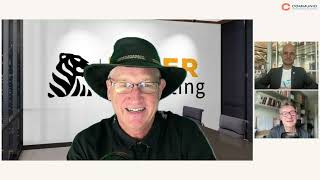
Startup founder Andrew Ortega-Verdaguer and recruiter Tiger Buford discuss personal branding as the story people tell about you when you're not in the room. Andrew used an analog brand to win a Young Talent program at a 120,000-person pharma company, then built a digital presence to raise money for his med-tech startup IntelBusk. Tiger pivoted after being fired in 2006, became a super-connector on early social platforms, and now trains a personal AI assistant to answer domain-specific questions better than he can.
Chapters
All right, hi, welcome everyone, uh, uh, to this new Community LinkedIn Live. Following the experience of the previous LinkedIn Live with Tom Salemi, today we are still exploring, uh, the topic of personal branding, uh, but today what we would like to do is to explore this personal branding element from a different but equally powerful perspective, uh, and we have two distinguished speakers. One is the founder of medtech startup who has somehow leveraged that personal branding to build visibility and raise funding and create a company. Uh, the other person, the other speaker today is a recruiter who turned to become a thought leader and is a huge voice of influence in, in the orthopedics So what we will do today, we will unpack how each of the two speakers have leveraged the concept of personal branding to grow their business, their careers, and to increase their network. Andrew and Tiger, would you like to introduce yourself?
Sure. So thank you for having us. My name is Andrew Ortega-Ortega. I'm the CEO and co-founder at IntelBusk. After 15 years of corporate career in pharmaceutical medical devices, I decided to drop off from this path and found a company to develop the technology I believe to be essential to increase the clinical success and quality of life of cardiovascular patients. So here, here is myself. And yeah, looking forward for the conversation.
Excellent. Tiger?
Yeah, yeah. My name's Tiger Buford. I've been in the orthopedic industry for 40 years. I'm an engineer. Used to run product development. I kept moving to smaller and smaller companies. And after my last startup exited, I started recruiting. I kind of became a super networker by accident, and we'll talk about that. But I have a blog, a newsletter, recruiting service, BoneChat community, lots of things going on. Glad.
An AI virtual, uh, person.
Yeah, you have—
you, you're really— I've been following you for more than 5 years now, and, uh, you're definitely a person that had the ability from your knowledge and skills to really develop absolutely personal branding while we were preparing for this, for this live, we're talking about some people and we noticed the fact that in the orthopedic, really everyone knows Tiger. So what I would like to start with is asking the basic question in a live about personal branding. What personal branding means to you? Andrew, if you want to start.
Sure.
So I think that personal branding is how the outside world perceives you. I mean, each person is a world and we have many layers and a lot of facets, but when you are out there, I mean, there is so much noise and so much people and great ideas out there, at the end of the day, people or your stakeholders have to remember you. They have to, to know who you are and how you differentiate from the others out there so they, they remember you. Today, I believe one of the most valuable assets is time and also stand out of the crowd. When we have so many tools to make oneself visible. So personal branding for me, uh, answer your question, Elvio, would be, um, the footprint, the blueprint of the person, um, so the outside world can remember and identify, uh, this person or this brand.
And Tiger, what is your, your point of view? And I would also maybe like to ask you one question because Personal branding has always a— I don't know if I can say this, but a negative connotation. Personal branding means influencer. And I was discussing this with Tom Salemi and he was saying, well, I wouldn't call it influencer, I would call it leader. So what does personal branding mean to you? And what do you think of the word personal branding or of the concept of personal branding?
Good question. I like what Andrew said. It comes from the outside, not the inside. The mistake a lot of people do is they try to control their brand, and you really can't. So when you hear, when you hear the name Richard Branson, everybody has a thought of who he is. Well, he didn't create that brand. It came from the outside. I have, you know, I think this is the best way to say it is your brand is the story that people tell about you when you're not in the room. That's not when you're in the room, but when you're out of the room, it's the real perception of who you are. And it comes from the outside, like Andrew said, you can't control it. All you can do is just be authentic, be yourself. Share, share your knowledge, and then the world will create a brand for you. And everybody has a brand, even people without a digital presence have a brand. So anyway, that's a few thoughts.
It's interesting. There is one element that it's interesting. You said, first of all, you said you can control it. And second, you said be yourself. And I see a lot of LinkedIn posts saying, suggesting you should be yourself. Don't try to. But then at the same time, the general perception is that people are, as a tendency, are giving their best. They're showing their best view. While on social media.
True.
What do you generally do?
Yeah, yeah. So, um, yeah, that's called the Instagram moment, right? Every time you go to the Eiffel Tower, you take a picture of the Eiffel Tower, and that's, that's your vacation. But you don't take a picture of the terrible hotel room. Um, so I would say that authenticity really is what matters. And so if you look at viral posts and things, it's people sharing things that are ugly. You know, they got cancer, they lost their job. I tried this sales technique, it didn't work. And those are the things that really create strong brand and connect with people. I think we're in the attention economy now. And so everybody is trying to attract attention. You know, online, you've got seconds to capture somebody's attention. And if it looks a little too polished, you know, the perfect sunlight and the perfect script, then people are just going to scroll past and go to the next thing. But if it looks vulnerable or if it looks different, edgy, then people are going to stop, stop the scroll. And that's what it's all about nowadays. It's the attention society. You've got to stop the scroll, and the way to do that, I think, is to be authentic.
Andrew, have you showed your vulnerability in the development of your personal branding?
Well, when you are a founder, Elvio, you have plenty of opportunity of showing vulnerability. You are facing problems day in, day out. Yes, I agree that you have to be authentic. So the audience doesn't confuse authenticity with showing everything of yourself. There are some, you know, influencers, as they say, on Instagram that they share absolutely everything they do from the morning till the night. I mean, I don't know why. That's my very personal opinion. I don't know why these people are influencers, because I don't understand how people would be interested and knowing everything I do from the morning till the night. At least my life, it's way much more boring, no? But for instance, I have a real passion with political science. I'm not going to share that because my personal brand is around medical devices, life sciences at this moment, and my public face is around this. It's one of my great passions, but it's not my only passion. So I think that is important that we equate, and I believe that most of the, most people do that, the kind of layer or face that you want to share with the outside world so you are relevant, right? Because nobody would be interested, people that are following me or people I interact with, Nobody would be interested about the post on LinkedIn about what I think about the latest paper in political science that was published in London School of Economics, right? That's not something, that's something for me. Or I don't know, video games. I like video games. Nobody would be interested about that. So I think a personal brand has to be, you have to be very aware which audience you have and which are the interests this audience have and what can you offer them? I agree, if I share my, uh, uh, the, the, the complexities of being a founder, um, I will attract probably many founders or maybe encourage other founders that they want to become one. Um, and I think this is the important to know how to differentiate, uh, what is, uh, you know, the message which is your audience and the message you want to share with your audience.
Yeah, what we were saying last time is being an influencer is probably showing a lifestyle. Instead, what we want to share is competence, share competencies, and by sharing the competencies, then try to, let's say, show one element, one perspective, or maybe inspire or teach, maybe sometimes something, maybe sometimes teaching also the wrong way of doing a thing. I've made a mistake here, that's, please don't do this. One, how the personal branding, and I would like to start with you, Andrew, how the personal branding has shaped your professional journey so far?
So this is a very interesting question, Elvio, because I started my career in— and the way that you can stand out in, well, that could be a country because they have more than 120,000 employees worldwide. So if you want to stand out in your organization, you really need a personal brand. But it was not a digital personal brand, it was an analog personal brand at the beginning, right? And you had to do things differently. You had to think, okay, what would bring value to the organization and would bring me in front of the relevant people, but not doing what everyone's doing. And this helped me to get into the Young Talent Program that among 60 candidates every year, 2 were picked for a career plan. And this changed, you know, my career for sure. And as I was going, as Tiger said, my career was also going from large corporations to smaller and smaller. And as you get smaller, you have more the chance to be visible digitally online as well. So yeah, that's something that I kept doing when I was at other companies. And finally, when you create your own company, you better leverage all this digital personal branding that you have done and LinkedIn or platforms being out there, participating in different activities, and then it's when you really can, you know, leverage for, leverage your personal branding for in a company, in a scenario where in a startup, when first start, nobody knows you, right? And if you have a personal brand that you can leverage, this really helps you to bring momentum and not to be one more in the crowd.
Okay, no, that's, that's an excellent perspective. And Tiger, instead, on your side, when we were chatting to prepare this live, you told me a little bit of your story that I think is fascinating, the way you went into, into new chapter of, of, of your life. Can you, can you tell us something about this?
Yeah, yeah. So, um, I sort of had a seminal moment in 2006. I was working for a larger orthopedic company and I got fired completely out of the blue. And it wasn't for performance and I was confused. And then the next week they fired my boss. And what I realized is the new CEO was cleaning house. So had nothing to do with me. But at that point I said, I'm going to become a super connector.. And I jumped on Twitter and LinkedIn in 2006, 2007 in a big way. And I read this book that really changed my life called Never Eat Alone. It's about networking. And back in the analog, like Andrew said, analog days before things got very digital, every time I went to a new city, I would look up my contacts and try to have breakfast, lunch, or dinner with one of my contacts and by sending an email. And that worked really well in the analog world. But, you know, as— and then we got into the big platforms like Facebook and, you know, LinkedIn and Twitter, and then you could, you could reach people all over the world all of a sudden. And so, uh, the digital— I think the digital world now, I mean, it gives you infinite platform. So It's kind of flipped. So in the analog days, you would say, hey Bob, I'm going to be in London on Tuesday, can we have breakfast? Okay. And you had to push that out. Well, nowadays you can just send out information to the whole world and people will find you. It's backwards now. Instead of push networking, it's pull networking. And so that's why I just realized I've got to be everywhere all the time. And I mainly focused on Twitter, which is X now, obviously, LinkedIn, and YouTube are kind of my 3 platforms. So, and I just, I believe you have to give, you have to constantly give away your knowledge for free. Give away your thoughts in your niche, and then people that are of like minds will find you. So the pull thing really works well when you have a large platform that reaches, you know, I don't know. I mean, I have 1,000 people a day that read the blog, 7,000 read the newsletter every day. I don't know, 100 watch YouTube videos. And so you add all that up, and there's a lot of people looking at content, you know, that— and when I connect with somebody around a topic, they reach out to me. I don't have to go find them.
That's, that's really, really interesting. Tiger, I would like to ask you another question about the social media, because you said, I'm on Twitter, LinkedIn, and Instagram, YouTube, YouTube. Now, there is, there is a very interesting advertisement from LinkedIn now with, with, with Stephen Bartlett, that is suggesting everyone saying, all right, if you— your foundation should be LinkedIn, then do every other thing, but you first need to build your presence on LinkedIn. Personally, I'm kind of agreeing on this, and I focused all my efforts on LinkedIn and I avoided any other social media. Since you're using some other social media, what is your experience?
Yeah, so they all— every social media platform's got its advantages and disadvantages, and LinkedIn is really good for business. It's really good business-to-business communication. Some of the other ones are better for consumer, if you're, if you're selling consumer products or consumer services. And I think you just can't do them all, you know. I— if I, if I could You know, if I had a huge company, I'd be on Instagram and TikTok and everywhere, but I just can't do it as one person. So I've sort of picked LinkedIn, best for business. YouTube, I think it's the best recommendation engine on the planet, is YouTube. So when, when you put out a YouTube video, it's searchable through Google, and it, and it now very— now it's searchable by Gemini and the other AIs. And so, um, yeah, I, I think you got to pick and choose. And I think for business, I think LinkedIn and YouTube are probably the two best. But they all have a place. I mean, TikTok is amazing if you can, if you can find the right niche in TikTok. And we didn't talk about niches, but we probably need to talk about that too.
What do you mean? It's interesting.
Yes. Yeah. So you can't— I mean, you have to be very specific with what information you're sharing and who you're trying to attract. If you go too broad, then it's the old saying, you can't boil the ocean. It's meaningless, you know. If you, I mean, if you say I'm a law firm and we do legal services, well, that's too broad. Nobody's, that's not gonna connect with anybody. Nobody cares. But if you say, okay, I'm a law firm in this city and we only deal with traffic accidents, you know, then it's interesting. People will find you and they will call you. Or email you or text you, whatever. So you have to pick your niche. It's got to be, it's got to be a small— the smaller the better. And that, that's another counterintuitive thing. Um, you know, the, the joke I say is if you are— if you want to attract people that are into midget wrestling, then you put out great midget wrestling content every day. I guarantee you, you're going to find 1,000 people all over the world that love midget wrestling, and that's super specific and that works. But if you talked about wrestling in general, or I mean, it's just too— it doesn't connect with anybody. So I'd love to hear from Andrew. I think narrow is better.
I couldn't agree with you more, Tiger, and I will say even more to that example that you said about the the legal forum that deals with traffic accidents, if you can put out a personal experience, a person who had an accident and thanks to that, the legal advice, look, they are in a much better place now. That's what then people connect, oh, I had this or I saw that example, so I should call these guys. So this wiring with people's real experience is really the connector that then can hook to the, the opportunity to get other opportunities and, and, and wide your brand. When it comes to medical devices or the life sciences, coming back to the platforms, I agree that LinkedIn is the ways of it, and it's different if you are a person or an expert or a corporate brand. Corporate brands, at least in, on my field, we worked a lot with LinkedIn to reach out our customers that were clinicians, um, and, uh, in the US and the UK in particular, beyond LinkedIn, they were using X as well, but this is another way of interaction. It's more dynamic, you control it a little bit less, but companies have got great outcomes out of that. For personal brand in the niche of the medical field, I didn't find X so much interesting beyond to connect with other surgeons or doctors and to discuss and share images about the case or what 'What would you do?' 'Which would be your diagnosis?' That's super engaging and very interesting, but goes a little bit beyond of the personal brand. It's when you want to promote maybe products or you want to talk about more in-depth and in particular with indications or clinical conditions. But yeah, I think coming back to what you said, Tiger, about narrow, it's better. It's always trying to get this detail that connects with your audience, this experience, this trouble, this feeling that they can relate with. And then it's when you can take, pull this rope and take your audience to other places that might be interesting for them as well.
Yeah, I like that. Pull the rope. I like that a lot. Let me add to what he said. So LinkedIn, You know, I'm in the recruiting business. I talk to startup companies. I talk to lots of candidates. And the candidates send me resumes and they say, you know, is this resume good or bad? And I tell them it doesn't matter. Nobody reads resumes.
Irrelevant.
I said LinkedIn is your resume. You know, when the employer When I send an employer a profile about the person, they're going to read my profile first. And a lot of times I ask the candidate to create a 30-second video introducing themselves to the hiring manager. That's— they're going to watch the video, they're going to read the profile, and then the very last thing they're going to do is look at the resume. You know, resumes don't matter anymore. If you're not on ice, If you're not on LinkedIn, you're invisible. That's what I tell people.
No, I agree. And I would add to that, that for employers, it's basically which value can you bring? When in my last corporate position, I was hiring people for my team. Beyond that, everything that we assume that you have, like a degree and relevant experience, is what do you know? What do you know to do? You come with all these titles that sometimes mean nothing, sometimes very much on purpose. But if you want to stand out, you have to analyze the company, you have to understand it very well and figure out how you can bring concrete value. I know how to do this so I can improve that for your team, your division, your company. If you are able to do that, as you said, in a minute video, then you you get the attention that you need to be considered as a candidate.
Yeah, absolutely. A lot of tech companies like Google, they don't want to see— they don't care if you went to school, you know, if you went to— they don't care how old you are. They don't care what race you are. They— if you can make it through their 10 screens, which is a lot of problem solving, you get hired. That's right. So resumes don't matter. Uh, and especially startups. Startups don't hire based on what you've done in the past. Startups hire based on what you can do for the company in the future. So, and resumes are backwards looking, so just makes no sense.
Yes, for Intel Vaska, we, uh, we do the same. I mean, people come and say, look, I've done this for this corporation, or I have this experience. Um, I said, well, I— what, what can you do for me? I have 20 problems on the table. Pick, pick your, your, your favorite. And show me that you can help me, you can help me solving it. Uh, I, I want to, you know, externalize, outsource problems to other members of the team. So I, I don't care your credentials, I don't care your knowledge. You might be a very intelligent person, but if you are not able to tell me in 30 seconds, I, I see you have this company, therefore most probably you might have these problems and I did this, this, and this to solve them in the past. Let me try to solve them for you. That's going to be very difficult to pick you. And there are different things, different stages. You are, you know, a company just fundraised $20 million. Problems are different than mine. We are fundraising way slower. Medical device is very competitive and challenging field to fundraise. So we are always resource scarce. And that's why we cannot say, okay, let's hire 5 people, let's solve this here. So we cherry-pick very well the people that we want in our organizations. And normally, or at least what I've been doing, is test people first. You want to help us? Okay, be my guest. Join the meeting, the weekly meeting we do, meet the team, and let's see if you get along, and let's see what you can start doing immediately. 'And after showing some value, if you are so sure that you can bring value after showing some value in a few weeks, then don't worry, I won't let you go if you are solving this problem.' Right? So this is a bit of analog way of personal branding. And, and, um, yeah, no, and, and another thing is, uh, don't apply to positions if we are talking about headhunting here or recruiting, don't apply to positions, it's useless. Connect, as Tiger said, connect with people. Go and grab coffees in the area where all the companies are and say hello to someone. I did this, I'm doing that, and I would love to join, to learn what you are doing and see if I can be of value. Applying, everyone can, and therefore stand out is extremely difficult. Unless you come from the hand of a headhunter or something like that, like Tiger mentioned.
That's great. We are moving into the practical elements of the personal branding again, because otherwise we perceive that personal branding is being an influencer, is something a little bit etheric. Instead, you're telling us it's very practical. Personal branding helps you to find a good job. Remaining in this practical element, and you mentioned several times you are the founder of a startup, and clearly startup requires funding. Is personal branding helping you to retrieve funding, to find ways and means for the success of your company?
I think it is essential. I mean, now we are not talking about hiring someone. Now we are asking someone to give their money to you, right? And back in the day, in the '90s, early 2000s, in the Bay Area, they said, oh yeah, with a PowerPoint they throw money at you. That's not actually correct. Back in the '90s or 2000s, the Bay Area was a way smaller place. So everybody knew everybody. You come out from Stanford or from Berkeley and you have done this accelerator, you have worked at this hospital. And then of course, people invest in you because you have your credentials, your personal branding with you. It's a small ecosystem. Today, the Bay Area is not this small ecosystem anymore. So you have to stand out. And as an outsider like myself, I'm originally from Barcelona, Spain. Spain. I lived 10 years in the UK and I decided to move from the UK to the Bay Area to found my company, set up my team and create ecosystem here. So unless I had a personal branding, I worked very intensely, probably most intense efforts I did in my life when it comes to personal branding, because I knew I was coming new to an area that is hugely competitive. The best, most competitive companies, most intelligent founders are here. So if you want to be heard and, uh, taken, uh, taken into consideration, um, you better build a personal brand that creates this trust, this confidence, uh, to the investors to trust their money in you. Because investors are not rich people, they borrow money from rich people.. And the rich people, they want to see some return at some, some day. And if these investors, they don't give them this return, they are out of business, but forever. Entrepreneurs, we can do one company, two, three. Our value grows as many failures we, we get, more companies we fund. But an investor has one shot. If this fund doesn't give returns, it's very hard that these LPs or wealthy individuals are going to trust with their money again. So they are really, really strict in the process and the way that they invest their funding. And unless you are a trustworthy person that can be referred by several channels, you are, as Tiger said before, a super connector. Then when someone asks for your name, oh yeah, yeah, is this person— oh, it was great, gave me great advice, or I think that what he's doing is It's fantastic. I think the technology is going to really work out, and this is the reasons why. Then is when investors said, oh, okay, I've seen this person here. It was in this YouTube channel, in this conference, and now this person tells me that what he's doing is relevant. Maybe I should be talking to this person. And I got, you know, maybe dozens of texts. Obviously not all of them convert into funding. Dozens of texts from investors. Hey, Andrew, I saw you here, I saw you there, you were recommended by this person, would you mind to share your pitch deck with us? So that's no-brainer, you need that.
Well, I love, I love the fact that you moved to another country and you had to create a brand. That's a really subtle point you made, that when you, when you move across the country or to another country, your brand follows you, you know, because the internet is global, right? So as long as you're, if you're doing your brand in English and the country you're going to speaks English, then your brand beats you there. I love that. Yes. I absolutely love that. Whereas in the old days, if you, you know, lived and worked in London, everybody knew you was in London. And people in Dallas had no idea who you were.
That's right, that's right.
Very important. That's an interesting element, yes. The fact that the creation of the personal branding through social media now makes it a global asset, not a local ownership anymore. Tiger, one question is that when, when, when we were talking before, you, you explain your vision of how the work will be in the future, uh, and, and like you started as an R&D executive and then you turn into a communicator, but then as you said, uh, you're, you're doing videos, you're writing articles, you're making podcasts, you, you're doing multiple things. Uh, at the end is always communication, but it's multiple things. How do you see the evolution of, of, of the job and the creation of a personal branding being related to this?
Yeah, so as we all know, you know, medical devices kind of lags behind a lot of other industries. You know, we have lots of regulations and it's just hard to change things in the medical device world. But what I always notice trends and I kind of guess what's coming and I think where we're headed maybe 10 years, 5 or 10 years from now is that companies will have way less employees. And almost all companies will be virtual. And so let's just say you have an idea for, uh, I don't know, a heart pump or something. I don't know anything about heart pumps, but somebody comes with an idea and some capital, and they will literally go online and say, okay, I need a, I need a designer, I need a software person, I need an electrical engineer, I need a marketing person. And you will literally hire a virtual team based on their personal brand that they've built up for years. You will come together, you will solve a problem, design, manufacturing, regulatory for 6 or 12 months, and then everybody just scatters. And I think that's where, I think that's where we're headed in the future. So you'll literally wake up in the morning, you'll log in, and you'll see a project. You say, huh, 6-month project, do I want to do that? Yeah, that works. That, you know, pay me this much per day or per hour and 6 months, that's interesting work. I like the concept and click yes. And now you're a virtual employee for— I think that's where everything's going. There's a famous chart that in, in the US that shows how many employees it takes to, or how many millions of dollars of sales for each employee in the S&P 500. And I mean, it used to be 20. It took 20 people in an S&P 500 company to deliver a million sales. Now it's less than 1. And so we are doing more with less employees all the time. And I think this is a big trend. And I think more and more employees are going to be consultants or 1099s or fractional employees, and there's going to be less and less full-time employees. And that makes the personal brand even more important.
And now I would like you to put your, your Spanish hat on, uh, because Tiger comes from the US where the, the job market is very, is very flexible. And instead, we are both Europeans, and so we know that here the job, the job is much more crystallized around, uh, multiple bureaucratic laws. Do you think this is the future? Do you think what Tiger is pitching will happen?
Well, to this, as he was talking, remind me a situation that it might not be completely accurate at the time, but it was like in the maybe couple of thousands, 3,000 years ago in the ancient Greek Greece, where this inventor invented a device that allowed to do the work of 10 men. And whatever was the ruler destroyed the machine and killed the inventor because he said, well, but if we get these machines now, how my subjects are going to work? They are going to they're not going to have anything to do and they, they are going to revolt. I don't want that. I need to employ these people. So let's do it, uh, in the worst way possible but, uh, keep everyone busy. Uh, sometimes Europe reminds me to that, right?
Uh, yeah, but, but the— because, okay, now this man, this man that created this new invention is AI. Yes, we mentioned this. We mentioned the fact that we are doing much more with less time. But we're pitching the story of AI. AI is exactly doing this. And AI is coming. And we all know this. This is not a live about AI. But let's say I think it's the elephant in the room here.
I will say even more, Elvio. Today it's AI. 10 years was robotics, maybe 20 years ago was robotics. When I was 16, 17, I worked in a meat factory and they created different products with meat and they all revolved. I was 17, 18, all the 50-year-old employees were all scared. Oh my God, we are going to become redundant and irrelevant. All these robotic arms doing all the job that we do. We are going to be all replaced. Before that, it was something else and something else. So it's the history of humankind, fortunately, that it's, we say in Spanish, you cannot put, you cannot set up a door in the middle of the field. Right. It's absurd. You can regulate as much, you can stop innovation as much. But if you are creating something with the value that AI, I believe that has a lot of limitations, but certainly allows to do a lot of things. But I believe that it will be AI. I think that this AI, it's overstating the intelligence that it has. But I do believe that it will come other generations that will really work much better and much more intelligently than the current one. And this will, of course, make some jobs irrelevant. But maybe it's my personal opinion, and of course I'm not an expert in that, but I would say that AI, like robotic arms, are taking away jobs that humans hate doing. Humans, if you put the Industrial Revolution, you put all these people from the field and with women and children inside of factories to do something over and over and over for 12 hours a day. Kill them. And I think AI, the current version of AI, it's helping to remove many of the repetitive tasks that everybody hates. And we don't do very well— humans, we don't do very well repetitive tasks perfectly. So this is going to be, I believe, a good thing. And over-regulating, it's not going to solve the problem.
Tiger, you're an expert in personal branding and AI, or at least you are experiencing new tools. Can you tell us which is your vision on how the AI may transform or modify the way personal branding is managed?
Yeah, so I think AI, it's, it's evolving really, really fast, right? It changes every week or month. There's a new version of ChatGPT or something, and it just gets better and better. So you got to keep this in mind. Every year, there's less percentage of human knowledge on the planet, and there's more percentage of AI knowledge. On the planet. So let's just go back in time. The best chess player in the world used to be human, now it's a computer. The best Go player used to be human, now it's AI. The best diagnostic tools are now AI. Surgeons will tell you, radiologists will tell you, I use AI every time. Because it's better than me. It's looking at a million X-rays in 5 seconds, and I just can't keep up with it. So the best diagnostic now is AI. The best— let's just extrapolate— the best comedian in the world will be AI shortly. I mean, it's crazy, but the best— so what it's gonna— AI is gonna go to wherever there's intelligence. They're going to take over intelligence in every area. Okay. And I think what Elvio is asking me is, I'm creating my own AI and I'm training it based on YouTube and all the articles I've written. And I don't know if it can be shared online, but the fascinating thing is you can talk to this and it talks back, or you can chat with it and it chats back. The thing that I just realized is it's better than me now. I mean, because it knows 15 years of everything I've ever said. It remembers things way better. When you ask, what are some tools that a founder needs, or what are some great hiring tips for startups? It answers the questions way better than I can. Now I'm using my own AI to help answer questions because it's, I mean, so everything is going to be, if it's intelligence-based, it's all going to be replaced. And I just think that's natural. You know, it goes back to the Luddites, right, that were tearing up machines in, I think, England during the Industrial Revolution. There's a, I mean, but every time there's a job that's gone, there's a new job that pops up. I mean, look at YouTube influencer. Where'd that come from? Look at, uh, look at Uber driver, you know, where did that come from? And so every time we lose jobs, we gain a lot of jobs too. So I think you have to— you just have to adapt or die nowadays. And you have to learn how to use these tools, and you have to learn how to use the AI tools to improve your brand and improve the reach of your brand. Um, anyway, I'll stop there.
No, I, I would like to see if there is any question from, from the audience, uh, because I think we've gone around multiple elements. We, we started with the talking in general about personal branding, then we went into recruiting, then we went to into funding, and, and, and now the connection between AI and personal branding is interesting. Now, I don't see any question from the audience, but let me ask maybe one last question, and that is returning a little bit back into the element of the perception, because Andrew, you mentioned this fact that when you want to get the funding, you need to develop a certain level of authority, or the people with money need to trust you that you will be able to give money back. So this is somehow an element of perception. So how much do you think the personal branding is real and how much do you think is perception?
Hmm, this is a very good question. Um, you never know, uh, certain, uh, how much, uh, you know, the, uh, what would the other person perceives. Um, and, uh, what I, what I'm encountering though is Fundraising is not a pitch. You meet a person and the next day they are giving you money. In my experience, not always like this, but in my experience, maybe 80% of the fundraising efforts come from people who you meet at one conference and they see you online, they see you moderating a panel, and they see you delivering the milestones that you said you were about deliver 6 or 12 months ago. And then is when they say, okay, let's have a meeting. We are really impressed with what you are doing. So I think that personal brand, I mean, if you are too far away, yes, then you can get an idea that you are way better or way worse than you really are in certain aspects. You always have that when you show a screenshot of your your life. Um, but the investors try to overcome this by doing a really thorough due diligence that sometimes it takes months or years of personal relationship and encountering. And they are monitoring, even though they are not telling you, they are monitoring. And the best way to do it is digital, um, over time, what you are doing and how you are progressing.
Okay, and there was, uh, Alicia, do you think that you can share Tiger's clone with the, with the audience? Is it possible? I don't know if I'm getting you into trouble, but otherwise, otherwise we can, we can share with the, uh, with the attendees. We can share Tiger's clone, but I I have to admit, he shared it with me. It's absolutely— it's fascinating. It's, it's more than fascinating to me, is impressive.
It's like— just wanted to, to add now before, before I forget, with the clone, um, I believe that, uh, because of this technology, as Tiger said, the technology moves very rapidly, so This is something that never happened in history of societies before. So before, you were a hammersmith, or you were the guy, you know, building the carriages of the horses, and you could do that all your life, and also your family. You were known by your surname, by your profession. Sometimes some surnames were the name of the profession. But today, because the technology moves so quickly, also the jobs move so rapidly that Oftentimes what you, what you have to do is to keep your mind open, and that's a big change, generational change we are experiencing today. One person will be able to do 3 professions during their lifetime, and they have to pick wisely. Maybe what you are capable to do in your early 20s until your mid-30s will be different what you want to do in your middle age. But even how the world is moving, I mean, maybe after you're 70, you still need to earn some income, right? Prices are soaring and, you know, our elders are worried, right? How the pensions, the public pensions that we have in Europe, will they stay the same? Probably not. Probably they will still be there. They won't completely disappear. But in the UK, we have this change that didn't happen in Spain, for instance. They had this change late '90s. Early 2000s, where the person, the individual, is contributing to their pension and the public, it's very small. So probably the, the 60, the ones who are retired, whether you retire at 60 or 70 years old, still you might want to generate some income, and the technology allows you to do that. Before, if you work in the field, uh, you know, collecting potatoes or things like that, when you are 70, probably you don't want to do that anymore. Anymore. But now you, you can, you can be, you know, support calls, you know, and things like that from your sofa.
So, Andrew, this is a very, very interesting point that with the, with the, through your personal branding and with the interconnected world that we're living right now, you can work fractions of your time, continue, continue to be active Uh, so it's— I think it is definitely is sustaining the income because we don't know what will happen to the pensions. But on the other side is also— on the other side is also remaining active and, and remaining. I have few, few questions here. Um, one is very interesting and is from Matthew, and he is asking, do you believe that personal brands have the potential to drive more engagement or value for the business than classic marketing tactics? Or is the comparison too complex?
I would say yes. I mean, it's— everything's blurred, right? So your personal brand, your company, uh, it helps the more visibility you have about what you offer the world. Like for Andrew, funding, the, the bigger his brand is and if he continues to hit milestones and share those, then he will have access to more funding. So it helps sales in the US. It helps a lot. The surgeons are finding out about new medical products online now, not, not at conferences anymore. So yeah, it, and brand and your company and your products, it's kind of all glob together now. I'd love to hear what Andrew has to say.
Yes, I mean, I, I worked in marketing for a number of years, and I, I don't think that is incompatible. I think that it's very much compatible, but you have to take into account if you are a YouTuber and your business is broadcasting on YouTube, or you are a large corporation selling a lot of products. If you are a large corporation, personal brand, it makes a remarkable change in the course of the company. First example that comes to mind, Tesla. They invest zero in marketing because Elon has been the front face of the company for years, and he's a showman, and that was enough for this company. So they save them billions of dollars in, in marketing. Now, all the companies will go this direction? Of course not. But if you are a company or you are a CEO of a large organization and your face is out there and your personal brand is well worked, you really have an edge over the competitors. The way that you can connect It's very different. And most CEOs of, you know, public companies, of course, they are very careful what they share, right? They are public companies. There's so much they can talk, and we start all chatting too much, then we give up information we shouldn't, right? As Elon has done many times. That you should be careful with this. But if you find the right balance, it's amazing. And of course, if you are a a solo founder or a YouTube broadcaster. I mean, what can I say, right? Of course you have to advertise in conferences and do traditional marketing, but the most powerful is your own brand.
Yeah, and Mike is adding, he's saying, good question, but how can the engagement be quantified?
This is the billion-dollar question that we always have. Do we want to go to conferences, right? 'Which is the return?' Well, I always answer the same, which— don't ask me which is the return of the conference, ask me which is the cost of not going there, and then I maybe I will be able to help you, right? Because maybe if you don't go to one conference, it's okay. If you are not visible at all, all your competitors are, that's going to take a toll in the company. So I think that you have to be out there, but I always, whether I manage multi-million budgets or myself now, uh, leading Intel Basque, I was extremely picky with the conferences I wanted to go. Not going because everyone is going, not going because everyone says this conference you cannot miss. Um, I won't say names, but there are conferences that are huge conferences going in large cities— London, Las Vegas. I mean, I don't go to these conferences. Many of my fellows go, but I don't go because they are expensive and there are 10,000 people there. So I mean, I'm a small startup. I know exactly the people I want to talk to. I— it would be 20 people that I know I want to talk to. There's way much more cost-effective ways to interact with these people. I don't have to go to these large conferences. Now, if you want to create personal branding and you want to get in the podium in front of the 10,000 attendees, that's another thing. But to manage the business now, you don't. So there are nuances and there is no white and black situations here, but when it comes to marketing, there is always— I always followed common sense, and not because you cannot quantify how much sales you get out of a conference, you shouldn't go. And that doesn't mean because everyone is going, all your competitors are going, going to one conference, you should go as well. You, you, you have to do tailored and very precise analysis to calculate that, and not always is the return of investment. Um, there are other aspects to it.
Okay, good comments on conferences. They're, they're difficult to measure. Um, yeah, Matthew, I would say the, the best way to measure engagement is have a landing page. So every time you put out a piece of content, then there's a, there's a link, a call to action. And then that's easy to measure. You can measure how many hits, how long people stay on the page. The other things you can— I send out a newsletter every day. I know how many people open it and read it. YouTube channel, you know how many people watch each episode. Those are real easy metrics. Those are— that's about the easiest thing to quantify other than, you know, as you go through the sales funnel, you know, you eventually get to real sales and that's the ultimate measure. But it's really hard to connect the dots sometimes between, in medical devices, you know, I met a doctor at a conference, the doctor wanted to do a training lab, okay? And then the sales rep visited him 3 more times and then, okay, he wants to try the product. It's really hard to connect those dots. Real easy to connect hits on websites.
Yeah, I fully agree. The beauty of digital marketing is the fact that you can probably quantify much more. Visibility is clear, is given by numbers, and so you can at least have an understanding of of your ability to reach. Now, we have passed the hour. Generally, as I say, we try to keep this meeting within the hour. I would like to thank you both, Tiger, Andrew. Fantastic conversation. We touched on a lot of things and it was absolutely inspiring. And I think I learned a lot. Generally, I try to make a kind of recap, but now we don't have much time. But I think probably the most— one of the most interesting elements was this fact that networking is changing, push networking and pull networking. This is really, really interesting. And I loved also the fact of the specificity, not to be extremely specific, that as you said, Tiger, is counterintuitive. And so pick your niche, but also the giveaway for free and, and the element of the fact that your brand becomes global. I think this is probably something that, that is, is absolutely interesting. Again, thanks for your participation. We will, we will share this live on YouTube, and it will be on, on the community channel and also on Tiger's channel. I thank everyone that stayed with us in this hour and looking forward for the— to the next meeting. Thanks, Tiger.
Thanks, Andrew. Good discussion. I enjoyed it.
Thanks. Thank you, guys.
More from Tiger


BoneChat #145 - ASC Robots, Direct-to-Patient Marketing & Ortho Startup Reality

BoneChat #144 - Defining the Standard of Care for Orthopedic Tissue Preservation & Restoration

BoneChat #143 - AI-Driven MedTech Sales, Startup Traps, & Orthopedic Commercialization


BoneChat #142 - Fastest-Growing Ortho Segments, Reverse Shoulder & Joint Preservation Rollups

BoneChat #141 - Disrupting Surgical Visualization: Single-Use 4K Scopes with Richard McKillop

BoneChat #140 - Transforming Knee Rehab, Patient Experience, and MedTech Go-to-Market


