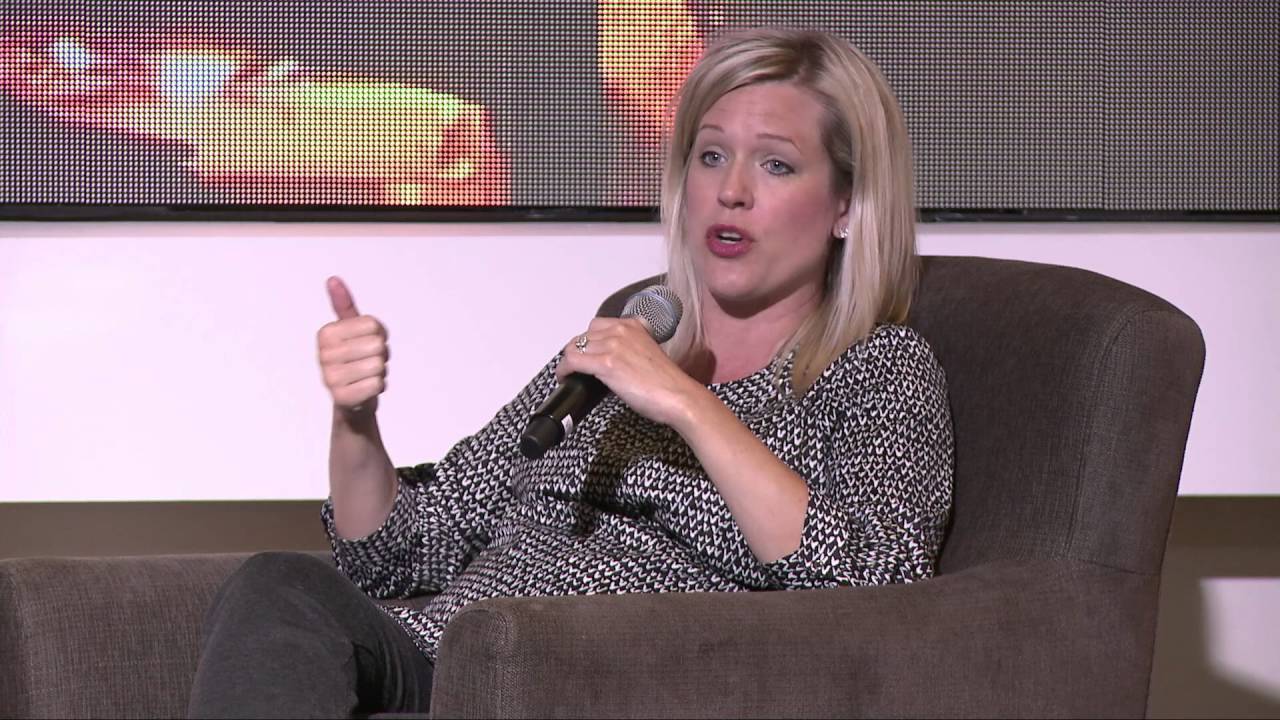
Emily Dabrant Conley walks through 23andMe's genetic testing product: you order online, send a saliva sample, and get results on carrier status for 35 conditions, physical traits, wellness factors, and ancestry. The FDA halted health reporting in 2013, but 23andMe secured the first direct-to-consumer genetic test clearance in 2015.
Well, thank you for taking the time to speak with us today. And I thought what we would maybe start with is if you could just talk a little bit about what the 23andMe product is at this point, because it's gone through some changes in the past couple of years. And you recently relaunched a new test. So maybe if we could just get everybody up to speed with what the test offers first. Yeah, totally.
Oh, is this on? Do I need to hit a button?
Hello?
There we go. Yeah, absolutely. And then maybe we'll talk too about the business model, which kind of goes beyond just the consumer test. So 23andMe is probably best known as a direct-to-consumer genetic test. The company's been around for about 10 years, and we've evolved a fair amount in that time in terms of what we offer people about their DNA. So the way that it works is really simple. People go online, they order a test, you spit into a tube, you send it to our lab, and then all of your results get uploaded in a personal password-protected interactive account. And when we first launched the company, we were really focused twofold on health and ancestry. What could we tell you based on your DNA about where your ancestors came from? And what could we tell you about your health? And rather notoriously, in 2013, the FDA determined that the information we were providing on health actually constituted a medical device and needed to go through the FDA's regulatory review processes. And so that has shifted things, or certainly had a big impact on our company. For that period of time, we were not able to report any health results back to individuals in the United States. Other countries outside the United States have different regulatory frameworks, so in those countries we were able to provide the health results. And earlier in 2015, we received the first-ever clearance from the FDA for a direct-to-consumer genetic test. So that was a pretty big milestone in the history of the company and really kind of in the genetics space in general. And right now, the product that we provide on the health side focuses on 3 things. So the first is genetically inherited diseases. So these are diseases that are totally genetically determined, things like cystic fibrosis, sickle cell anemia, Tay-Sachs. There's not an environmental component. And someone who would test positive for one of these conditions could be what's called a silent carrier, where they— like for cystic fibrosis, you need 2 copies of the genetic mutation to have the condition. So if you have 1 copy, you don't have the disease. You're not at risk for having the disease, but if you have a child with someone else that's also a carrier, your baby could be born with that condition. And that's called carrier status testing. So we provide that information right now on about 35 different diseases and conditions, and all of those reports meet the FDA standards. We also provide information on physical traits. So obviously the way that we appear, our eye color, hair color, whether we have freckles, whether we're likely to go bald, all of those things are heavily influenced by our DNA. So there's a lot of information on the trait side. And then we have a category of reports called wellness. So things like lactose intolerance, how you respond to caffeine, these are things that are more gene-environment kind of interactions. And so we can provide some information on the DNA side of that. And then genetic ancestry. So where your distant ancestors came from, where your recent ancestors came from. And there's a feature that's optional people can choose to participate in called DNA relatives. where you, if you are interested in seeing if you're related to anyone else in the 23andMe database, you can opt in and do that. And so we have, that's really popular among like adoptees, people who don't necessarily have a lot of information about their family history. And then outside the United States, we provide a little bit for, you know, beyond what we do here. So we also provide information on genetic risk factors. These are complex diseases, things like Alzheimer's or breast cancer, as well as how genetics influence the— as well as how your DNA influences the way you respond to certain medications.
Great. So let's stay on the test first and then get to other parts of your business. So when you guys started 23andMe, you weren't expecting to be regulated by the FDA in terms of being viewed as a medical device. So when that happened, and this is something that now you've gotten through, I'm curious if you can talk about that experience. So what was it like? What have you learned from it? What would you say to anybody who is looking at a space where they might be regulated by a body like the FDA? How do you prepare for that?
Yeah, great questions. A little bit of historical context. So we started talking to the FDA kind of loosely early on in the history of the company because I think no one was really sure what the regulation— what the regulatory framework was going to look like. And in 2010, another company, Navigenics, that was also a direct-to-consumer testing company, launched a partnership with Walgreens where they said they were going to market their DTC test in Walgreens stores. And I think that kind of elevated the whole field to really the level of FDA going, wait a minute, and kicked off a— there was a GAO report. There was a congressional hearing. Our CEO spoke at that. There was a lot of dialogue. And then we continued talking with them, and I would say probably not prioritizing it quite highly enough. So we had submitted prior to 2013. But we hadn't been on the ball about it. And so for companies who have the potential to be regulated, I can't emphasize enough how important it is that you hire good people who really understand the regulatory framework for the industry. It is not enough to get anecdotal evidence to point to another company and say, oh, well, they're doing it and the FDA isn't regulating them, so that means my company can do it. Like, that's not a regulatory strategy to have. It's sort of like driving on the freeway and the car in front of you is going 80 miles an hour and you're like, oh, well, I guess the speed limit says 65, but it's okay to go 80 because that guy's going 80. Um, like, that's not the way to run a business. And so it's been really important for us to get educated, um, because being out here in Silicon Valley, I think there's a little bit of a different ethos around wanting to be nimble and fast. Um, and one of the things that we learned from our process with the FDA was that there were holes in our leadership team. We didn't have all of the expertise that we needed to navigate that system. And in that way, actually receiving the letter from the FDA has been a blessing because we've been able to grow out the team very strategically. It's been a huge focus, is growing out that regulatory framework. So my 2 cents is to make sure if you're going into an industry, especially something like for genetics, um, there's a newness there. And so there, there was also some uncertainty, just there weren't a lot of other companies doing what we were doing. And, um, and, and so especially if you're in that kind of an industry, to really make sure you're looking to senior people that have a lot of experience working with the regulatory bodies associated with your field, so that you can make sure you're getting good counsel. So,