700 Fans, $200K, 60 Seconds🤯
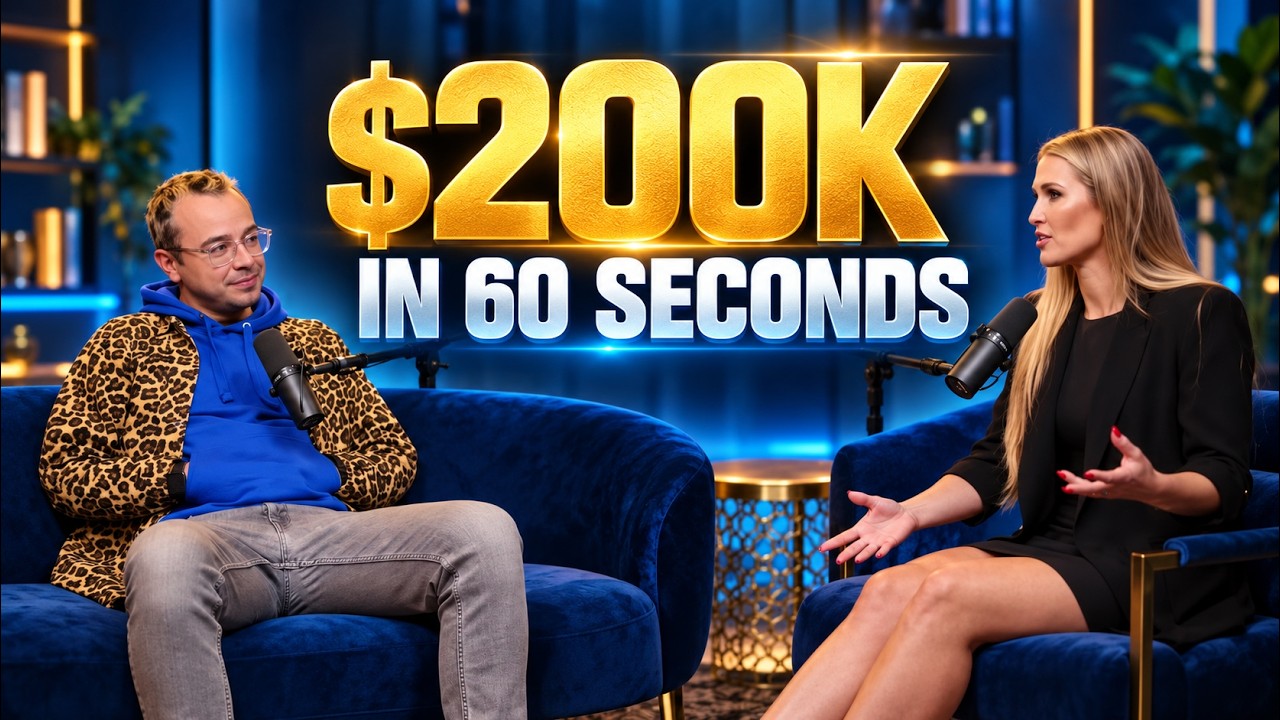
An independent musician sold 2,000 NFTs in 60 seconds to 700 fans, generating $200,000. Each NFT included sync-licensing rights, a physical vinyl, and access to shows and community. That's the equivalent of 40 to 50 million Spotify streams at $0.003 per play.
Chapters
But just under $200,000 in 60 seconds.
Right.
On one drop. I mean, that's, that's mind-blowing.
And it kind of— I had no expectation of this, but it became a case study for the 1,000 fan theory because like that amount of, that amount of revenue is the equivalent of like 40 or 50 million streams on Spotify.
Wow.
I had at that time, I had like fewer than 10,000 streams on Spotify.
about your mega moment of success when you dropped your NFTs for the first time. Tell us a little bit about that because I think that's so cool.
So dropped a few songs last year. By August we had an album. And so of course we said we gotta make the album an NFT and we wanted to make sure that it would be historic by innovating and doing things that hadn't been done before. So as I was kind of alluding to, we offered a copyright license. So if you own that NFT from that collection or most of my collections, then you actually have a sync license for that song. You could put it in any type of content you want. You can monetize it, but I still own my masters and I still own my publishing.
Right.
Which is You know, it's pretty revolutionary because what it means is if you own my NFT, you know, any brand could approach you and say— because you can sub-license it, you can even sub-license it.
So I can sell your music to somebody else, or I can let them use my NFT or whatever it is so that they could use that song in whatever they're doing.
Exactly. So a brand could say, we want to pay you to use this song because you have a really rare So you write a Spotty song, you get some cash up front, it's called a sync fee. Then they place that song in a film, maybe, or they place it in an advertisement. And if that airs on broadcast television or terrestrial radio or Spotify or wherever this advertisement airs, I'll get a performance royalty because I still own my publishing and my masters. So I get a royalty from the song being played or performed in public. So So that's what— that was inspired by the Bored Apes. The Bored Apes created this mutually aligned incentive where they gave people IP rights so that the owners of the apes became brand ambassadors. They want to see the brand.
Brilliant on a brand side, right? That's like every brand's dream. Let my community build this out and do the PR without us having to spend a dime on that because they are so excited to be a part of this community.
Exactly.
So that was like our way of taking that model and transcribing it for music, which had not been done before. We also made it a blind mint, or like I compare it to like a gumball machine where when people on the day of the release, when they went to go buy their NFT or mint their NFT, they didn't know which song they were going to get. They might—
That's cool. That's exciting.
And that hadn't been done before. They might get a song from the album or they might get a remix. The remixes are really rare. Some of the remixes are 1 of 1. And they had rarity traits. So like we took the drums from one version of the song and the bassline from a remix of the song and the synths from another remix of the song, and we would mix 'em up and make these different combinations. So the same way you would look at a Bored Ape and be like, oh, this one has gold fur, that's really rare. Or this one has crazy eyes, that's really common. That's what we were doing with the instruments, the instrumentation, or the stems of the song, which again hadn't been done before. We gave a vinyl record for each of the 2,000 NFTs. We pressed a vinyl record. So you're actually buying a physical vinyl if you choose to claim it.
So you attach this digital collectible that they would buy, and not just a collectible, obviously much more, to a physical good as well. So you can literally do whatever you want with these songs. You can provide infinite amount of value, essentially. Exactly.
With the token, exactly right. So yes, if you go to OpenSea or you go online, you look up the NFT, you will be able to listen to the song. But that's just the beginning. You know, now I do parties where, you know, if I have a concert, if I have a show, whatever I'm doing, a lot of the times I'm able to work it out with the venue or with the promoter or wherever where You know, maybe if you have my token, you get in for free. Or maybe not everyone, maybe I have a guest list and I start with the people that have my token to figure out who's going to be able to make it. Let me put you on my guest list, things like that.
But you can also see who your mega fans are right now, and that's something that's revolutionary for musicians as well. You can reward your mega fans for being there for you, for supporting you. I mean, it's, it's just so much different. You have direct access to your community and to your fans.
And I don't even need to know their names or their address or any of their, you know, PII information that they might not want to share with me. They might choose to share that information with me, but especially for a big brand, that's huge, right? Because, you know, every time you buy something from 7-Eleven, they're asking for your email or whatever, and it's like, I don't want to give you my email.
All your personal information that's completely irrelevant, it doesn't mean anything to Unlocking these benefits, and yet you have to give that time and again.
Right.
And this is just a more efficient way of doing it, apart from the privacy. On that note, now a short word from our sponsor, EtherMail, the Web3 email solution. Listen to the end to find out how you can earn 250 EMC tokens and subscribe to Crypto Megan on EtherMail to get exclusive access and updates. The link is in the description below.
Backed by blockchain-synced real-time data, EtherMail finally allows you to stay up to date on all your digital assets by just connecting your wallet. Since companies have to pay to access a user's inbox, an extra layer of spam protection is guaranteed and advertising overload is disincentivized. Keys are stored on the blockchain, so they are only accessible by the user that logs in. You already have an anonymous inbox waiting for you with the latest information on the tokens you hold.
So that was, that was basically my drop for the, for the debut album. So that was August of last year. We sold 2,000 NFTs, 700 supporters purchased them. They were about $97 apiece at that time. It was 0.03 Ethereum.
Okay.
Ethereum was worth more at that time. So it was 60 ETH in 60 seconds or under 60 seconds because it sold out right away. So that was about You know, just under $200,000.
Wow.
And then it—
oh my God, wait, let that sink in. Okay.
Right.
You're telling me you've made 2,000 different tracks or NFTs, right? And sold those only to 700 people. I mean, people are under the impression that you need millions of fans to make this kind of money. And you made what, just under $200,000 in 60 seconds? Right. On one drop? I mean, that's, that's mind-blowing.
And, and it, it kind of—
in—
I had no expectation of this, but it became a case study for the 1,000 fan theory because like that amount of, that amount of revenue is the equivalent of like 40 or 50 million streams on Spotify.
Wow.
I had at that time, I had like fewer than 10,000 streams on Spotify. I had 5— I had 5,500 followers on Twitter. Like, I had very, very little, a very, very small audience, you know, and very, very few streams online.
And you dropped your music at that time when you had so few streams in Spotify. That was when you did this drop at this point. So you're thinking, you're not knowing what to expect, right? Because in the traditional world, you do need those millions of streams. Like, what is the difference then in the Spotify model than in the actual NFT model for artists and—
Well, the whole, the whole music industry is designed really to— it's driven by ad dollars on, on platforms like Spotify or Apple Music or wherever. So those platforms, they do need millions of people. They need millions of eyeballs, millions of ears, millions of users.
Right, right.
And it's funny that we use the word users for, for it, but that's what they need. They need millions of people because they make their money selling ads.
Right.
And they sell ads by the millions. It's CPM, cost per— I don't know why the M is for thousand. I think it's like Roman or whatever, but it's, you know, they're selling it based on cost per thousand ads that they're going to sell. So they need a lot of people using their streaming platforms. But as an indie artist, That's their revenue model. That doesn't have to be your revenue model. Like, if, if you have 1,000 people that really love what you're doing, if you can convert 1,000 people into $100 of merchandise sales per year, you're a 6-figure artist. That's, that's with 1,000 fans.
I mean, you could never do that in the traditional world. What does an artist get paid on Spotify, for example?
I think it's $0.003 per stream.
I mean, it just blows my mind. And listening to this now, it feels like everybody who's listening, who's in a music— a musician in this position who wants to grow, who wants to be able to fund themselves, I mean, this is ideal. How many followers or fans, true fans we'll call them, you know, audience, would you say an up-and-coming musician had to have to make some kind of an impact?
Or—
Well, definitely 1,000. You know, 1,000 is like tried and true. If you have 1,000 people that really mess with you, really support you, like, you can do well, you know, in, in the NFT space, like, especially during a bull market, you know, you could do well with even fewer than that. Like, I had really great timing. That's the—
Yeah, I mean, that, that helps, but at the same time, it really doesn't have to influence it all that much if they're fans of your music and they're gonna then have this direct access to you and they understand that this is a two-way Value bridging factor, right? Like, so you can give them value, they can give you value. Man, that's valuable in whatever market conditions, right?
For sure. For sure. Yeah, it's just about communicating that and then
More from Tim


He Sold His Car to Build This Startup, Then Pitched It for $1M 😳 #Startups #AI

This Startup Moves Your Crypto BEFORE Hackers Can Steal It 😳 #Crypto #Cybersecurity




15 Months Without Refrigeration?! This Startup Thinks It Can Go Global 🥥 #FoodTech #Startups



