A Vision for Xiaomi | Richard Liu
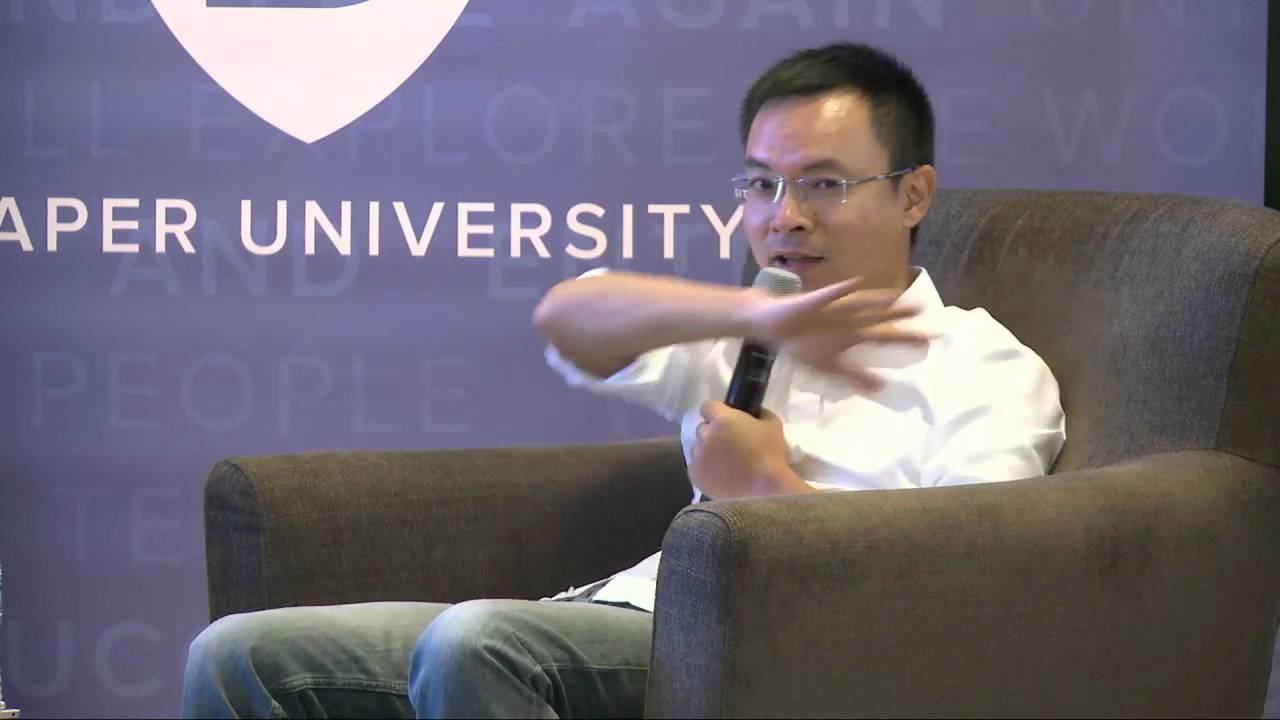
Richard Liu explains Xiaomi's strategy of building loyal users through weekly OS updates and pre-orders, and how supply-chain disruptions from Japan's nuclear leak and Thailand floods shaped the company's approach to China's consumer market.
Chapters
And after you made the investment, what was the most difficult? Was it always smooth sailing? Because 2010, it was not that long ago, right? This is maybe 5 years ago. So has there been any tough spots and how have you navigated?
Well, I think, you know, the— because— so I don't want you guys to think, you know, Xiaomi is something you can easily translate that model. But basically, I want to share with you, a legend is so experienced, and he really designed the whole strategy to put that aggressive plan into very small piece. And each small piece can create what we call the positive, you know, the loop. I'm the EE major, you know, that's the modeling. You have to get in the positive loop.
Positive feedback.
Partner feedback. So he can— he's very experienced to divide this very ambitious objective into very small piece. The first step is to do the UI, the OS. The second step, to create the loyal customers through the social network. Zero marketing dollar. Very similar like Max.
Yeah.
from the Instagram car. He share with you that you don't need a marketing dollar. You really create relevance to your target customers and convince him you can offer the best user experience. And without knowing you are a strong company, from heart, your customer love your product and is willing to recommend to his friends. We use that simple common sense to guide Xiaomi to move step by step. And we don't choose to launch the hardware immediately. We spend 1 year to do the OS. And that very smart strategy, because basically the first group of the early adopter of the, our OS user, those customer, They already purchased very expensive smartphone, Samsung, Motorola, HTC, cost you almost maybe $1,000, and they take the risk to replace their OS, default Android OS, with Xiaomi OS. And that risk means sometimes it's very tacky process. If doing something wrong, your phone just become the garbage. You cannot go back to the default OS. You know what I mean? It's a brick. It's brick. And because these customers so love the OS user experience, they take a huge risk to replace that OS. So that's why we spend almost 1 year to have weekly update, to engage with the end user, and you tell me what you want, and we respond very quickly. Another 2 weeks, we just say, hey, we deliver that for you. So we collect all the requests from all the users, and they vote. They ranking list what feature you want to add on into the OS, and then we deliver that. Every week, we update the OS. So that's very smart. Even though they don't— they have no idea this is the startup a company. They just thought this is some labs, small labs. It's a group of fans, they do that.
Open source.
It's open source, something like that. Because we don't want to use the traditional marketing campaign, say we are great entrepreneur, we got VC funding, we are people like Google or something like that. That's very traditional campaign to do that. We say no. We have no noise, just product. Use it. Observe whether you love it or not. And tell me what you want, and we just deliver. And Microsoft, every year they have the upgrade. We have weekly. Every week we just upgrade the feature to just accommodate your, you know, your input. So within one year, we have almost 1 million very loyal customers without launching the hardware. And then 1 year later, we decided to launch the hardware.
So was this— was the OS sitting on third-party hardware?
Yes, exactly. So that's why when we have similar, like, you know, do a press release, big event, yeah, And all the media, newspaper, magazine, they attend. And then a lot of large group of fans, I mean the OS fans. And those newspaper, a lot of is my friend. They just cannot understand why these people so enthusiastic, why they are so excited.
They're very passionate about that.
They're real passionate. And they They come to me, you must pay a lot of money to just make the fake, you know, the enthusiastic, you know, the atmosphere.
That's definitely one of the things that Chinese people are always very paranoid. Is this real or is this fake?
They feel that because we keep so low profile. People cannot just believe you can create so many, you know, strong response from those end users. without our media help. That's their regular—
It's very interesting because I think this goes to— some people would say this— it's better to have 100 people, customers who love you, than say a million people who don't really care, who is a pretty decent customer but are not passionate. So you sort of create that core group of users who essentially become a free marketing machine out there.
Yeah, I truly believe just like any marketing we learn from the B-school, you need to have the early adopter. And gradually, the mentality needs to beat up people's mental block to receive the core value of your core product. But you first, just like virus, you need a viral first group of early adopter, and they will help you educate them. Just like our, you know, the Xiaomi phone. A lot of, you know, the first group of the early adopters, they use that, and the second year they will replace, upgrade to the second version, and they will leave their first-generation phone to their parents, to their friends. You know, that's gradually, you know, viral, everybody.
Yeah.
Affect everybody, like virus affect everybody.
Right.
So the tough piece is that, you know, when we just launched a so successful campaign, without any inventory because we pre-order, you know the model.
Yeah.
So within just 10 minutes, we got, you know, 300,000 orders. We have to shut down the server because we cannot accept more orders. We cannot deliver from the supply chain. I only—
Was that part of the original business plan, is to use this pre-order concept?
Yes. So we did that in the phone because we have the OEM manufacturer like, you know, Foxconn. We have a world-class supply chain. You already got that ready, you know.
Yeah.
But basically, point is that, you know, when we have the preorder, we got trouble. I remember that in the year 2011, Japanese have the nuclear leak.
Yeah.
And our screen comes from, you know, the shop.
Yeah.
And I believe Lei Jun is the first group of business people visit Japan, even though there's a nuclear leak, because he have to go to the shop to make sure we can get that supply of the screen.
Yeah. So that's the killer instinct, and I got it. I need this.
Yeah, because we don't plan. We're gonna fail. We have the preorder. We promise the customer will receive some product within some days. That's the risk. That's the risk of this model. And then we have first the nuclear leak in Japan. It's a world-class supply chain. We have the flood in Thailand, and all the flash memory packaging Supply chain is in Thailand. It's very tough.
So, those are the things from outside looking in we don't think about.
Yeah, you cannot predict what will happen, you know, although you have so good, you know, the turning point, you have the momentum, you have great, you know, the careful, you know, the strategy doing the right way, looks perfect, but you cannot expect nuclear Leak and, and the flood in Thailand.
So what do you see the vision for Xiaomi? What, how do you imagine Xiaomi in 10, 15 years?
Well, I really would like to share with you guys. I mean, the, I truly believe, you know, the China similar like the US. US is shaped by the baby boom generation. After World War II, this baby boom generation shaped the U.S. economy because the consumer comp— 70% of U.S. economic system. I believe China, we have similarly, like, we— I personally define that group of people, I call that, you know, post-Cultural Revolution generation. You know Cultural Revolution in China, right? The post-Cultural Revolution generation. That's in my age. We are similar like a baby booming generation. We shape the Chinese economy. That's one driver. Number two is that we fortunately Deng Xiaoping opened the door. It's first time Chinese proactively participated into the globalization. If you look at the Chinese history. Over two thousand five hundred years, we never want to participate into globalization. Even in the Qing Dynasty, we got in you know the all these kind of you know history. The government don't want to involve in globalization.
They were unwillingly involved.
Unwilling. But this is the first time. Chinese people is willing to involve, proactively involve into the globalization. That's the second driver. The third driver, I believe, is the innovation. And we see that in China, we can create a leapfrog effect. Who can tell me in the United States, who is the largest retailer? And Amazon, are they ranked in traditional and e-commerce? Amazon is not top 3 retailer, I guess.
It's the top e-tailer, but not—
Yeah, I'm talking about all the retailers, including the traditional one.
I think Amazon and Walmart are probably the top 2. I don't know which one's larger.
Okay, I tell you, in China, the largest retailer is Alibaba Taobao, and they come for maybe very significant portion. Why? Because China don't have to follow the traditional industry growth mode. Mama and pop shop. Department store, shopping mall, and Walmart, like big box things, and then e-commerce. We just have the mom-and-pop shop and the department store, and immediately within, just condensed, maybe in 10 years, the e-commerce emerged. And the traditional retailer have no time to dominate those, you know, the sector, and innovation model, innovative model like e-commerce jump into So we see that we call it China has specifically jumping, jumpfrog opportunity. We can take the innovation.
Just like mobile phone too.
Just like mobile phone. So I answer your question. I believe Xiaomi typically take advantage of that 3 driver. First, we probably have the world largest domestic consumption market potentially. We have 1.3 billion population. 300 to 400 are middle class right now, and in the next 10 years, 20 years, we'll grow up maybe 700 million middle class. They have huge consumption market, and that huge domestic market can create probably the most powerful cost structure Because of economic scale.
More from Tim


He Sold His Car to Build This Startup, Then Pitched It for $1M 😳 #Startups #AI

This Startup Moves Your Crypto BEFORE Hackers Can Steal It 😳 #Crypto #Cybersecurity




15 Months Without Refrigeration?! This Startup Thinks It Can Go Global 🥥 #FoodTech #Startups



