Pascal Finette explains how software and digitization drive replication and distribution costs toward zero, creating abundance. He uses self-driving cars and cultured meat as examples of products that need to cross from early adopters to mainstream markets, drawing on Geoffrey Moore's framework for navigating that gap.
Chapters
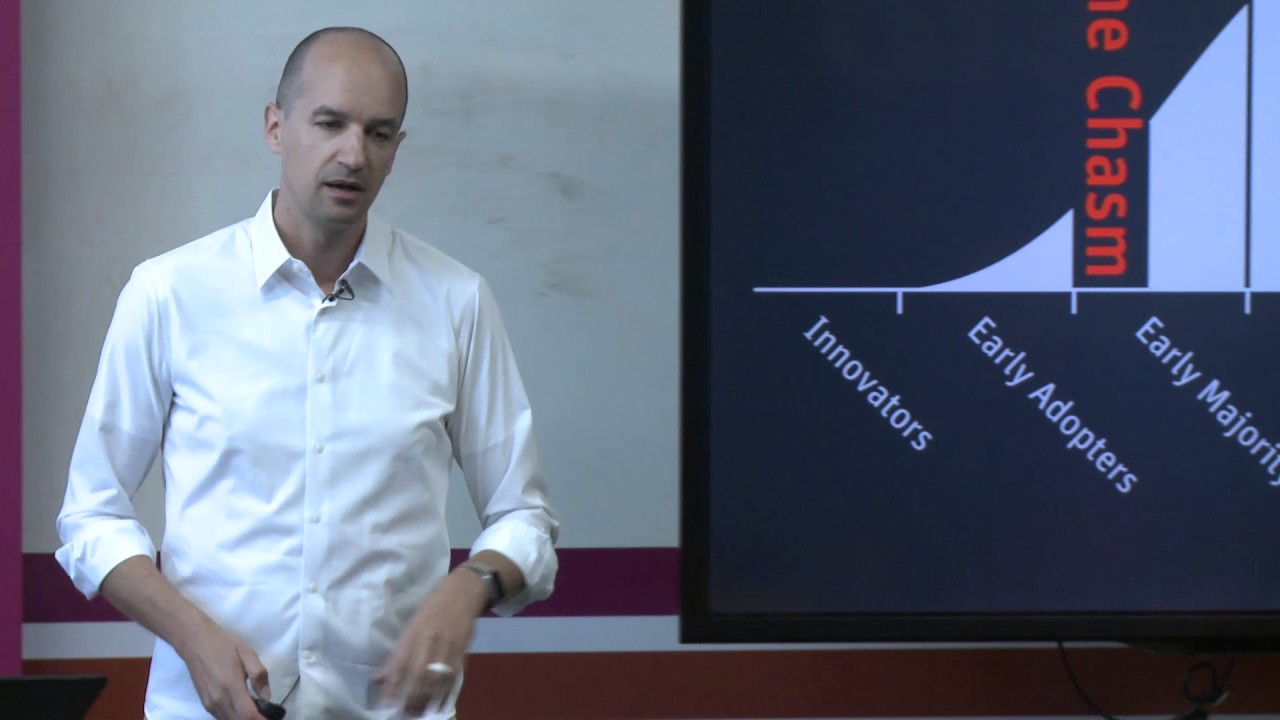
There's another idea Peter talks a lot about which is fundamental, which is the idea of abundance. We talked about this a tiny bit when we talked about electricity. So we're going from something which is a scarce resource to something which is abundantly available. And Marc Andreessen's Software Is Eating the World creates abundance. Software is creating abundance. And here's how this works. When you have a book, a book is a scarce resource. You take a tree. Yeah. You turn that tree into pulp. The pulp you turn into paper. You print on that paper. You bind the paper. You put the book into a truck. You bring the— you drive the truck to a Borders and then you sell it or Barnes Noble. That's a scarce resource. Knowledge, a book is a scarce resource. The moment you turn it into a digital good, that goes away because the 2 most important factors suddenly go to zero, replication and distribution. With that, everything changes. Your whole business model changes. We have seen this with music. The moment we had Napster, suddenly music became a whole different thing. Like today, I have 140 million songs for $9.99 in my pocket. Knowledge, when Jimmy Wales started Wikipedia, suddenly like the world's information became free to me. What's important to understand is Duplication goes to zero and distribution goes to zero creates new business models. This is a really big opportunity for you guys. If you find a business, again, where you can take something which is analog and turn it into a digital good, that digital good suddenly becomes abundantly available, which changes, fundamentally changes the business models underneath it, right? So what was a I'm selling you CDs now becomes a $9.99 subscription model. Very different business. Think about one thing. I keep telling these people, think about the future of medicine. If you think about what a tablet, like a medical, like a prescription drug is today, it's nothing else but actually digital information, right? It's a molecule. It's a molecule in a specific composition. Now what if You have the ability to actually print that molecule either like at your local pharmacy or even at home. I don't need to sell you the blister pack with the little like prescription medicine anymore. I can sell you the digital information. If I'm Bayer or I'm Pfizer, I can actually sell you a subscription model to all the prescription drugs you need for $9.99 a month. That's the future of drug dealing, guys. So you want to be a drug dealer? Like subscription model drug dealing. No, in all honesty, like think about like what this means for the healthcare system, right? So really fascinating. Who's familiar with this? Geoffrey Moore wrote a book called Crossing the Chasm. It came out 25 years ago. It's really funny. It's like I grew up on this shit. Like now everybody seems to have forgotten it. It's a really important, really important insight. So I want to teach you this. So Geoffrey Moore's insight was this. As a product matures, it hits different markets. And the markets have different sizes. So it starts out with, like, in the early days, it's the innovators. It's like you and I. Like, we built the thing. Then you come to the early adopters. This is all our friends. They're the crazy ones. They're, like, using the product. They're OK if the product is still a little buggy. Good example is I bought the first Pebble on Kickstarter back in the day. I was an early adopter. The software wasn't great. I could— and I'm fine with, like, flashing the firmware and stuff. Right? Then you get to early majority. Early majority is the people who buy today a Pebble. So they go to Best Buy or Amazon and buy a Pebble. They still want to be cool and like on the edge, but it needs to work. They really don't want to flash the firmware. Then you come to late majority. Late majority is my mom. My mom is like, oh, I should get like one of these smartwatches. That's cool. For her, the shit just needs to work. And then you get to laggards. Laggards is my grandma. It was like, oh, I need a watch. I guess like I get this thing because it's— there's nothing else anymore. Okay. So the insight Geoffrey had is each of these groups has a different, a slightly different take on what you want from your product. And the big one is here. Between the early adopters and the early majority is a massive chasm, a gap. And for you as like entrepreneurs, as tech entrepreneurs, What I see many, many tech entrepreneurs miss is they don't see the gap anymore because you can't see it. Like for you, the gap doesn't exist. Let me show you a video where this becomes super apparent. So this is a funny video which made the rounds on the internet about an elderly lady. She's sitting in a Tesla self-driving car. So Tesla in the self-driving mode. And her son who took her out films her. I just want to play the video for a sec. Somehow my clicker doesn't work well. Let me see. This is so scary. Oh, Jesus. It's my first day out and I'm about to die. Oh, come on. OK. OK. So first of all, it's pretty cruel to put your mom, literally your mom, into a situation where your mom is like, I'm going to die, right? I think it's super cruel to film her and then put it on the internet. But here's the thing. Do you see the chasm? This is a really interesting thing. So I keep telling these people, I fundamentally believe if we're not crossing that chasm, self-driving cars will for a long time not become standard fare. Because the woman is freaking out. She will not drive that fucking car, right? I was at Google when we released Chauffeur, the self-driving car. And I freaked out somewhat in the car. And I'm an early adopter. And I tell you why. This is the chasm. The chasm is the steering wheel because the steering wheel moves and it looks like magic and looks like weird and it's like freaking you out, right? So what do you do? How do you cross that chasm? You remove the steering wheel. You build this thing, right? The little like self-driving car from Google and then you put people in it and looks like this. Somehow my videos don't play. Damn it. You said relax. You don't need to do nothing. It knows when to stop, it knows when to go. It actually rides better than my own car. Yeah. What she really liked was that it slowed down before it went around a curve and then accelerated in the curve. She's always trying to get me to do it that way. That's the way I learned with high school drivers. See, that's how you cross the chasm. You have to think about this. So for you as an entrepreneur building a tech product, if you want to get out of early adopters, if you really want to make a big mainstream product, you need to cross this chasm. Let me show you one more example. This is one of my companies. They come out of— actually, he teaches at Singularity University. This guy called Mark Post. He is the first person to grow meat in a petri dish. So this is a hamburger patty which he grew by taking a biopsy of a cow, so a tiny little amount of cow cells. cells and then coaxing those cells into replicating themselves. The first time he did this is about 4 years ago now. That hamburger patty, the single patty, cost $350,000. So not quite like your McDonald's value meal pricing yet. 3 years later, at the beginning of this year, the price was down to $11. Wow. We are rapidly moving to a world where we will not slaughter cows anymore because we can produce better meat In petri dishes. But here's the problem. Every time I show this to someone, I can guarantee you that the audience is always half divided. There's one half, like the crazies like me, are like, oh yeah, hell yeah, this is great. And then you've got the others who are like, I would never eat anything which doesn't have a face. Okay? Which is fine. I get it. So how do you overcome this chasm? I'll tell you how you overcome it. Another company out of my portfolio, they're doing something very similar. They're called Modern Meadow, coming out of Brooklyn, New York. They're going for something— their first food product is something called a steak chip. It looks like a potato chip. It's made out of basically steak, steak fiber. Steak chips are great because there's nothing you can compare it to. They give this to people and they're eating it and they're like, oh, this is great. Because there is no such thing as a steak chip in the frickin' world, right? You're like, oh, this is cool. I eat it, right. So you need to think about this when you're building a product. Like, where are the chasms in your product and how do you overcome them?