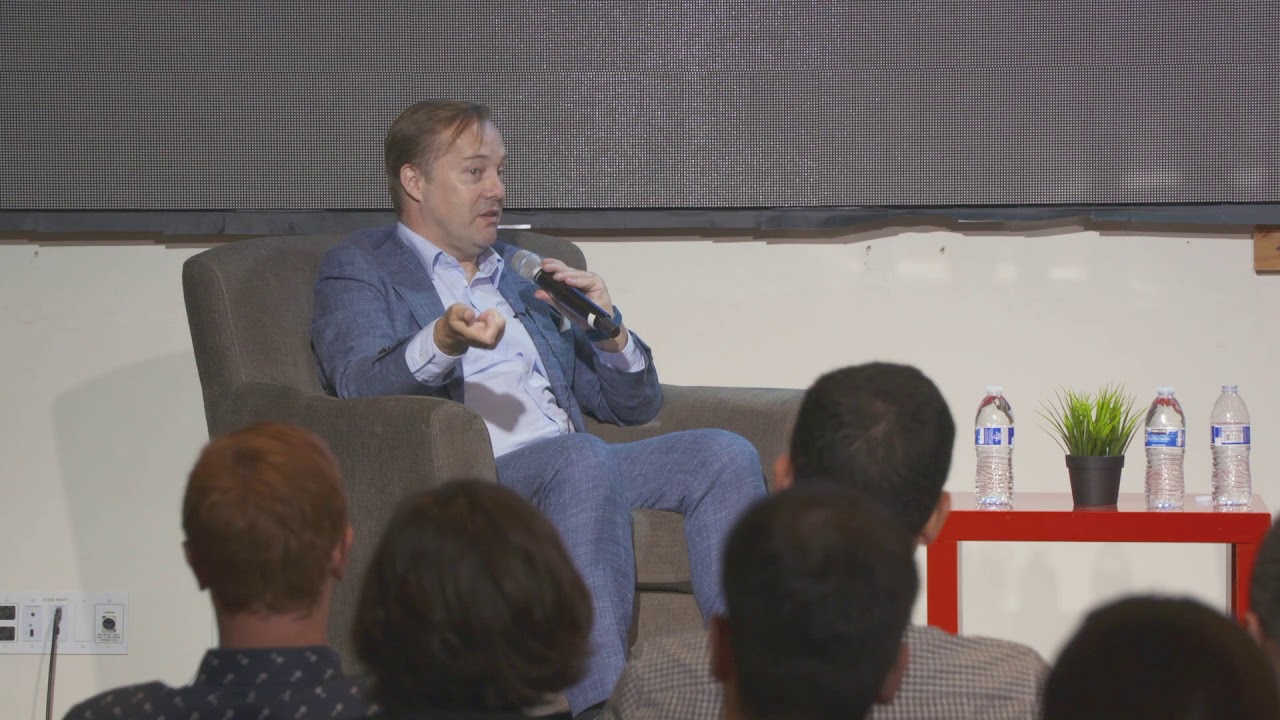
Jason Calacanis argues founders must be technical and do core work themselves because early seed checks can't pay senior developers. He learned page layout, writing, photography, and ad sales to launch Silicon Alley Reporter in the 1990s, and now advises founders to handle PR directly instead of paying $5-10k monthly to agencies.
Questions this video answers
Calacanis says evaluate the time required versus the cost of hiring. If a PR firm costs $20,000 for a 4‑month engagement (≈$200/hour) and the founder can accomplish the same outreach in about 10 hours, the firm is only justified if the founder has ample runway (e.g., $20 million) or can convert that effort into a multi‑million funding round. With limited cash (e.g., $40,000 left), it’s usually better to do the work yourself.
Chapters
efficient. That's why Y Combinator had a rule in the early days. They would only accept multiple founders and only developers. And people were like, well, that's kind of BS. Like, Airbnb wasn't a developer, it was a designer, right? And so it's a little bit unfair, but I think in the early days they were writing very small checks, $16,000, right?
Right.
And they knew it wasn't enough to take that $16,000 that they were investing for 6% and say, go get higher developers who cost $100,000 a year. You would have them for 16% of a year, one month.
Right.
Maybe for 6 weeks you could get them. So they said, just make sure you are a developer yourself. So people who do sweat equity, people who are bootstrapped, those are the people that separate themselves and have a higher likelihood. I've seen people, and I've invested in people who you invest $250,000 or $500,000, they take the $250,000 check, they give $50,000 to a design firm, $100,000 to a developer, $50,000 to a PR firm, And then they wire themselves $50,000 for living expenses and it's gone.
Right.
And then they just threw a bunch of gasoline and kerosene on a log. They lit it on fire. Now they have a charred log. The better approach is to have kindling, just small pieces of wood, some coals, and build up that hot fire. That hot fire is your skills. And the number one skill in the 21st century is the ability to acquire skills. And so many people are designers, and you say, oh, okay, you need to do some front-end work, and they go, okay, well, I don't know how to do that. Okay, well, you learned how to use Photoshop and Illustrator, you learned how to be a designer, and now your knowledge stops. There's a hard line where your brain is not capable of learning front-end development on Treehouse or Lynda or any of the free courses or Coursera or anything online that's $20 a month. Why?
Right.
You know, like, you really— if you really want to have a go at it as a founder, you're gonna need to be able to acquire a large group of skills and be able to use your own enthusiasm and effort to push things forward, even when you haven't done it before. So when I meet people, a lot of young people, a lot of millennials— not people in this room, this is a self-selecting group who decided to come to a talk by an angel investor at Draper University— but I talk to a lot of millennials, and you probably have friends who are talking about their ideas. They think they have some great skill in the world, and you're like, what's your skill? And it's like, I'm an idea person. That's like saying, like, I have a heartbeat, you know, like I'm breathing. Oh, your skill is breathing oxygen. Wow. Your parents must be so proud. That's not a skill.
Mm-hmm.
You know, like when I started my first magazine in the '90s, I learned how to use PageMaker. I learned how to write. I was a terrible writer, but I got a little better every year. I took pictures. I bought a nice Carl Zeiss lens camera. I learned how to sell the ads. And I learned a little bit of graphic design. I learned how to make a logo. I learned how to do distribution. I learned every aspect of doing a magazine, and I was probably, you know, a 6 out of 10 or a 7 out of 10 on each of these skills. But at least I could, by sheer force of will, make a 16-page photocopy and take it places and say, here's my magazine. And Fred Wilson and other people would look at it and go, This is 1995. That's a magazine? I say, yep, it's a magazine. And they go, it kind of looks like a photocopy with 2 staples on it. I'm like, yes, but I put a full-page image on the COVID therefore it's a magazine.
Magazine.
I was delusional, but it was quite charming to people. They're like, oh my God, you wrote 8 stories and your byline is 7 of them. And it's— and I used to put a joke in the— on the masthead. Jason Calacanis, Jason McCabe Calacanis, editor, photographer, delivery boy, ad sales. And I was considered a bit of a joke in Silicon Valley in the early days, 'cause once I printed the magazine, I had no way to get it to people.
Uh-huh.
So I would take a luggage rack, I would put 300 copies of the magazine on it, and I would walk to Razorfish, to DoubleClick, to Sudo, and I'd stop, I'd knock at the door and say, hey, I'm delivering Silicon Alley Reporter. And they'd say, what's that? I'd say, it's my magazine about the internet, you're in it. They'd say, oh, that's cool. I'd say, great, can I meet the CEO of the company? And the receptionist would be like, do you have a meeting? I'm like, no, but I, you know, I'm writing a magazine. Maybe I'll write a story about them. They'd be like, no, you can't meet the CEO. I was like, okay, can I leave some magazines? They're like, fine. So I'd leave 10 copies of the magazine, and I would just drop the magazine off everywhere I went. And eventually I would drop off the magazine and 8 people would come out and want to talk to me. PR person, the CEO, everybody would be in the lobby like, Jason Calacanis is here with the magazines wearing a Silicon Alley Reporter t-shirt. And I was so clueless at the time that I didn't realize that I looked like an idiot. But it was charming to people that like I was living the brand, right? And that I was so desperate to make it successful that I wouldn't— I didn't have the money to spend $20 on UPS to send 20 different people.
Mm-hmm.
I didn't have the $400, so I said to myself, well, I can do 20 deliveries in a day. That saves $400.
Right.
And the level of entitlement I see amongst entrepreneurs in peak markets like we have today is just absurd.
Right.
They're like, I don't know how to do PR, I gotta hire a PR firm. You really have to hire a PR firm? Really? You haven't finished your product and you wanna spend $10,000 a month on a PR firm? I have an idea for you. Why don't you look for all the people who've discussed your competitors, Make a spreadsheet of 20 email addresses, follow them on Twitter, like what they're tweeting, write a blog post that links to their recent story, name-drop them, do that for 2 months, and then email them and say you have a new feature coming, you would love to meet them for coffee, or send them a screenshot of it if they're interested, and you're the CEO and you just got $100K in funding from Draper. And just do the work yourself.
So on that note, when you're doing the work yourself, you also have a very interesting formula in your book which kind of defines the opportunity cost of doing everything yourself. So would you elaborate a bit more on that? Like, when is it not worth doing all this work yourself?
It's very simple. If you look at the time, you just say, what could I have accomplished? So in the case of PR, PR firms are notoriously expensive and notoriously ineffective. They cost $5,000, $10,000 a month. Let's say you got the easy end of the the price range. You got $5,000 a month, and they said it's a 4-month minimum, $20,000. You say to yourself, okay, I could do this all in 10 hours of work.
Mm-hmm.
5 hours of reading, finding, you know, 50 names, emailing those people, putting it in outreach, sending a follow-up message 2 times, doing a little mail script, and that would take me another 5 hours. And then at that point, I have to meet with the top 5 of them, but I would have had to do that anyway. So it's 10 hours of work. For $20,000, that's $200 an hour. Now, if you have $20 million in the bank, you've raised your Series B, by all means, $5,000 a month, it's $60,000 a year, it seems pretty de minimis. If you could, in that same amount of time, close an angel round of $2 million, okay, maybe it's worth it to hire the PR firm. If you have $40,000 left in the bank to spend that half of your money on that, probably not a great idea. Right.