Jesse Damiani maps the XR spectrum from augmented reality to virtual reality, explaining device categories and examples like Pokémon Go and Snapchat filters. He argues immersive media matters for younger generations and outlines implications for advertising and business strategy.
Chapters
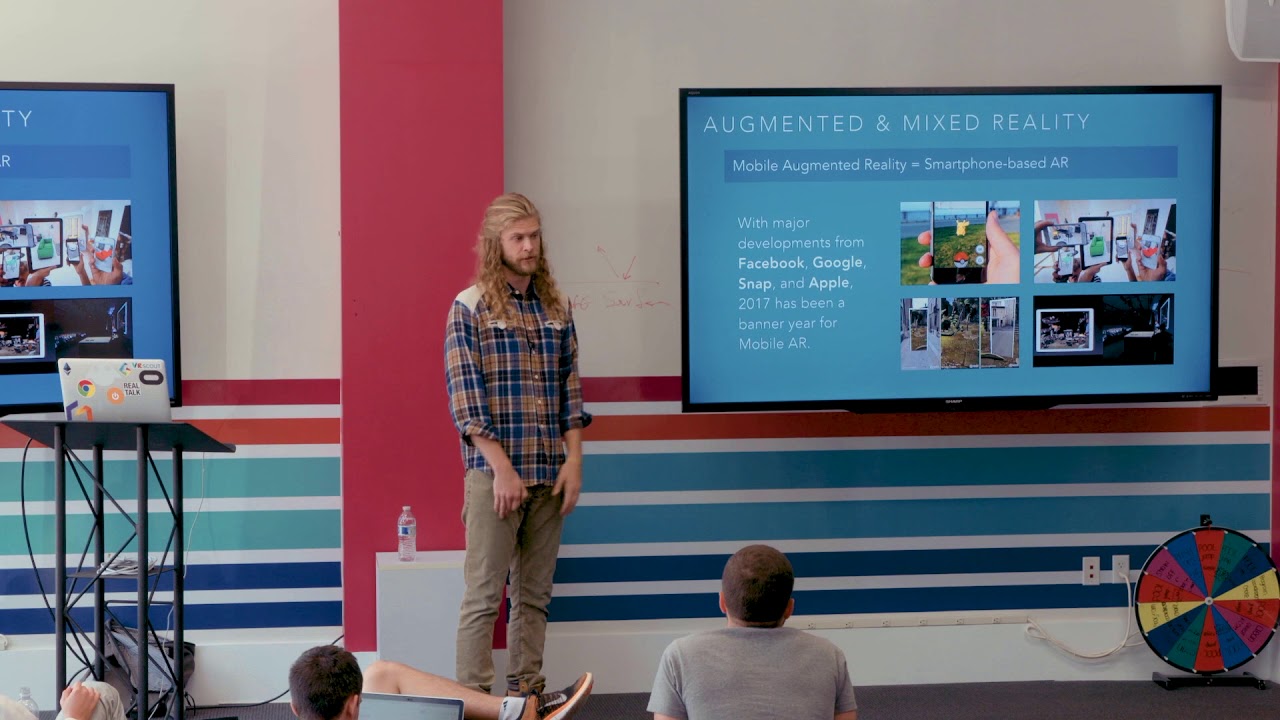
So it sounds like a lot of you are pretty familiar with VR and AR. I'm going to sort of catch us up for those of us who maybe aren't. Unless it doesn't work. There we go. So the way that I and a lot of people are sort of talking about this to limit the amount of, like, Rs you have to reference is XR, which some people call extended reality. Some people also just refer to XR as just, you know, X is a fill-in-the-blank variable letter. And that's actually a spectrum moving from base reality that we're in right now, which gets called real reality, which, you know, makes sense, all the way to virtual reality, which means you're in an entirely virtual world. There's nothing of the real world in your virtual world. So between those things, you've got augmented reality, which brings digital objects into your world, which we'll talk about this more in detail later. You've got augmented virtuality, which basically flips that, which brings your body and objects around you into a virtual world. And then you get mixed reality, which are 3D objects. Should I twist this one, by the way, as well? Can you guys all see this? Cool. And then you've got mixed reality, which are digital objects you can actually interact with and potentially interact back with you. So, you know, XR is still early as a term, so you won't see it as much, but you'll increasingly see it more. And I'm counting on you guys to, like, carry the charge for XR so that we can all stop having— I'm bad with clickers, I guess. So, VR, the computer-generated simulation of a 3D environment that can be interacted with in a seemingly real or physical way. These categories are converging. So, basically, you have mobile VR and you have console-based VR, which essentially means with mobile VR, it's based on smartphones, and with console-based VR, it's either a computer, in the case of PlayStation, a PS4 Pro. And the reason for that is the computational load for console-based VR is very heavy, and phones can't handle it. So the trade-off is you can typically have much more powerful VR experiences in the console-based VR, and you have much more light, portable, lightweight experiences in mobile VR. So, you know, I could just hand it off to you, stick your phone in, and we're going, rather than having to boot up your computer and run it that way. And then moving into augmented and mixed reality, and another sort of clarification is a lot of people will use these terms interchangeably. It's just something you sort of need to be aware of and just to be able to talk back with them. It doesn't actually really matter if somebody misuses it if you get the idea. But traditionally speaking, augmented reality is just digital information overlaid on the world. So if I'm wearing a pair of Google Glass or Epson Moverio and I see you, I get some social information, your Facebook pops up or something like that, nothing that's actually interacting with the world, it's just the information. Yeah. And meanwhile, mixed reality is when you have something like digital objects coming into the picture. You can manipulate them. In the case of like a hologram, if you've recorded a hologram of a person, you can place them and do all kinds of experiences that way. And the way that you've probably seen augmented reality most, if you're unfamiliar, though of course it sounds like a lot of you are familiar, is mobile augmented reality, which is based in smartphones. And this has been getting a ton of traction this year. Because Facebook, Google, and I don't know if you guys saw, but Snap and Apple had some pretty big announcements about AR the past week. So basically Pokémon Go is sort of the first AR game that everybody really cared about, but we've been having— Snapchat had facial filters prior to this. Anything that represents the real world through your smartphone but adds digital information to it, that's a lightweight version of augmented reality that we've had for a number of years. And it's important to sort of bear in mind that this is augmented reality, but what we're moving toward is something very dramatically different. So, one thing I want to address that will come up a lot is some people are wondering if these technologies are a gimmick on the order of, like, 3D TV. And there's a lot of reasons why it's not, and I think it's important to sort of bear those in mind and to think about that when you're developing your own companies and your own strategies because over time having an immersive strategy isn't going to be something that you can— that's a debatable sort of option. What is a gimmick? I'm sorry? A gimmick. It's something that's sort of a one-off kind of like big flashy thing that then doesn't really have any use later. So the example with 3D TVs was people were getting these TVs that you like a movie theater, you can put on glasses and watch movies in 3D. But they just— it didn't really understand the market well enough. And so a lot of people just didn't really want that. People weren't even really liking 3D movies in theaters all that much. The sales weren't meriting. But moving beyond 3D TV, what VR and XR are tapping into is a broader sort of cultural thing that's happening, where we want our media to really grab us and to put us through experiences. And people talk about how millennials and Generation Z They're not buying things, they're buying experiences. And that's because we've grown up with so many media channels and so many different ways to access media that we want really absorptive content. So VR and AR allow, they create the infrastructure for us to have these experiential sort of, this experiential media access. And right now, millennials and Generation Z, which I don't know where you guys fall on that, you're probably on like a dividing line, We make up about 46% of the entire US market. And of course, that's growing every single year as people in Gen Z can actually make buying decisions. And businesses right now are hungry to find new ways to optimize their practices. And we're seeing this with the rise of ad blockers. I mean, how many of you guys, by a show of hands, use an ad blocker for your phone or your computer? Right, so you're advertisers' worst nightmare and businesses' worst nightmare. And I'm in that number too. Businesses need to find new ways to access us, and it's not gonna be by forcing us to look at their materials. It's gonna be by inviting us in and giving us an experience to engage with and feel like we're part of it and like we can participate.