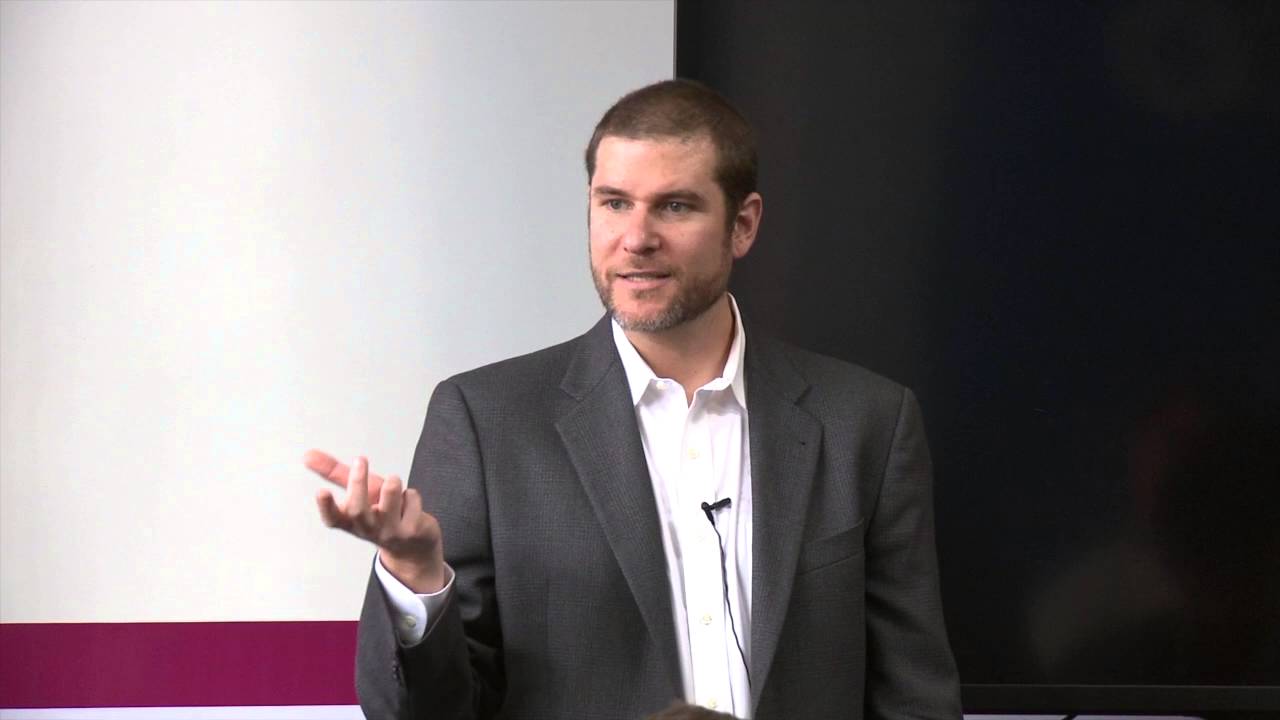
In this workshop led by Michael Margolis at Draper University, participants engage in a paired storytelling exercise designed to surface the personal origins that inform their current entrepreneurial mission. Each participant has 90 seconds to tell a concise story that connects where they were born, who their parents were, what they have studied or are curious about, and most importantly, how these past experiences explain the "quest" or problem they are trying to solve with their startup. The facilitator enforces a strict timing protocol (30‑second warning, immediate stop at 90 seconds, followed by a moment of silence) and then switches roles. Listeners are instructed to actively observe without interrupting, noting moments of energy, personal resonance, and any questions that arise, using short keywords as timestamps for later debrief. The exercise’s purpose is to help entrepreneurs recognize the narrative gold in their personal histories, improve storytelling and listening skills, and create a compelling narrative that links past influences to present ventures.
Chapters
Here's what I'm gonna ask you to do in a moment. I'm gonna ask you to get together with a partner, and I'm gonna ask you to share part of your personal story. Okay? You're gonna have 90 seconds to share your story. It's gonna be short. Okay? But what I'm gonna take you through is actually a structured exercise. There's gonna be a few steps and elements. They're precisely designed, including the time limitation. So we'll start together in telling our stories. I'll give you a 30-second warning, and then I'll call when it's time to stop. All right? Now, when I call time's up, we're all gonna stop in our stories no matter where we are. Okay? Will you guys all agree to that? You could be mid-sentence. Okay, we're gonna let the room go completely quiet. Okay. And just sit in the quiet. And then you're gonna have a chance to switch, 'cause you're with a partner. One person's gonna tell their story, the other person is gonna listen to the story. Okay? Now, I'm gonna actually share with you a couple more distinctions about this exercise, 'cause it's what's gonna make the magic come alive in the exercise. All right. But before I do, actually, I want everybody to grab a— you guys have your notebooks, pens? Yes. So I want you to actually think about the following questions. Think about the following questions. Question number 1, where were you born and raised? That's an easy one. But think about where you were born and raised, how does that shape how you see the world? Small town, big city. Okay, where were you born and raised? Okay, question number 1. Question number 2, who were your parents? If you had to describe them as characters, whether it's their vocation, whether it's their personality, describing them as characters. And for some of us, whoever our parents are, Sometimes it's an adoptive, it's an auntie and uncle or grandparent or whoever played those roles. Okay. Who were your parents? What were those influences? Because usually for us, there's some things about our family that deeply shapes us in a good way, and then there's other things that we're running away from because sometimes our life even depends on it, or we're like, No, no, no, no, no, no. This ain't for me. Okay. But think about this, like the story of where you come from. Okay. Because after you go through the exercise, I'm going to connect the dots. You're going to see there is gold in your personal story. Doesn't matter how old you are. Doesn't matter how much life experience you think you've had or not had. Your personal story is the linchpin to what you're doing as an entrepreneur right now. Okay, so second question, who's your mom and dad? Okay, question number 3, what have you studied in life? What have you studied? And this is not about what you went to school for and got a fancy degree, although if you have, that's cool too. Okay, what this is really about is what are the subjects you're most curious about? What are the things that you're like, I wanna know how that works. And maybe it is what you went to school and studied. But you guys all know in today's day and age, you can hack any subject, right? Thanks to the internet. Thanks to any hobby or interest. If you wanna geek out on something, you can geek out on it. Okay? So for me, it's anthropology. For me, it's being a seeker in yoga and ancient wisdom traditions. For me, it's chocolate. I throw chocolate. I throw epic chocolate tasting parties called Return of the Chocasaurus Rex. Just saying. If you guys are really nice, and if you guys want before the end of our time together, we could have a little chocolate together. Yeah. What do you guys think? Yeah. Okay. All right. Okay. That's too cliché. We'll start with the chocolate tasting. We'll see where it goes from there. Question number 3. What are you most curious about? That's 4. No, no, no. It was back to the question of studying. What have you studied? Question number 3. What have you studied in life, which is a synonym for what are you most curious about? I'm giving you a few different ways to get into this. Okay. All right. So that was question number 3. All right. Now question number 4, this is the most important question for the exercise. Okay. Question number 4 is how can you explain, how do you explain the quest that you're on? How do you explain the riddle you're trying to solve or something about like this is where you're going? This is where I'm going forward. This is what I'm moving towards. But explain it based on where you come from. Okay. So I'll say it another way. I'll say it another way. How do you use— okay, so first of all, think about where you're going, and then how do you use your past? How do you use your origins? To help make sense of that? How do you help people to understand that what you're working on, what you're curious about, this isn't something that you've just started on 5 weeks ago? I wanna know, and I want you to share with your partner, what are the threads that connects this back to something earlier in your career, to something you studied in school, to something in your childhood? Can be anything. Okay? Does everybody get that? Yes? Wait, we need to answer all these questions in 90 seconds? Good question. Okay, so all of these questions are meant to stir the pot, to get you thinking. All you have to do in the 90 seconds is answer the 4th question. So the purpose of sharing your story is in some way helping people understand How what you're working on now, what you're working on here at Draper University, how does it in any way connect to your origins? Connect in any way to your history and your past? Okay, that's the prime directive, the only thing. All those other questions, they're not a checklist. You don't need to tell everybody who your mom and dad were, where you were born and raised. If you don't want to, if it's not relevant, don't worry about it. It's just to get you to start thinking. Okay, I don't care how old you are. You might be 18, you might be 25, you might be 35. If you've lived life, you've got a story. We've got an infinite number of stories. Okay? So does everybody get that? Only thing you gotta answer is something about what you're working on that you're explaining based on your past. Is that straightforward? Yeah. Okay. Ah. You're gonna find this actually once you get into it, it's really fun and really easy and the sparks are gonna start flying. There's no wrong or right way to do this. Okay? Now, I wanna give you just a couple other pointers about the exercise when you get together with your partner, 'cause this is gonna teach you really important storytelling skill. You wanna get good at storytelling, You actually wanna get good at story listening. So your role as the listener is gonna be a really active role in the exercise. Alright, so here's what you're doing. Obviously the teller, just tell your story. You're gonna have 90 seconds. I'll call out a 30-second heads up so you can pace yourself, 'cause when I call time's up, Doesn't matter where we are, we stop, we catch our breath. You could be mid-sentence. The impulse, by the way, Is you're gonna wanna like comment, start talking, laughing with your partner. Think about it like a yogic exercise. Just be like, all right, we're just gonna zen out for a moment. Okay, we just stop. Now the listener, here's what I want you guys to do as the listener. You're focused on receiving your partner's story, which means you're not commenting. You're not asking questions. You're not interrupting. You're just receiving the story. Now here's some tips as a listener. Here's what I want you to listen for, and write these down. As you're listening to the story, listen for where the story has energy. Where does it have energy? Okay? Now what does that mean? Well, it's things like, where does your partner who's telling their story, where do they light up? Okay? Where in the story, as the listener, you identify. You're like, oh, me too. You have that internal moment, write down the word or phrase. Okay? Another thing is, where are you leaning in? Or maybe there's something that your teller says, you're like, oh man, that was like poetry. Write down those words. Okay? And then lastly, There might be a question you have as you're listening. You're not going to ask the question in that moment. You're just going to make note of the question. What was the second one, sir? What's that? What was the second thing you said? Okay. So again, listen to where the story has energy, where your partner lights up as they're telling the story, where you identify or are leaning in, and then if you have any questions. Okay, so about 4 things you're listening for. You're writing down the words. They're like timestamps, as if you're gonna, you know, 'cause there's gonna be a process we debrief the stories. So those words are like the timestamp of a video. Just write down the short couple words or phrases as you're listening. Everybody got that? Yes. Okay, all right. So in a moment, you're gonna get together with a partner. I'm gonna ask you to stand up. I'm gonna ask you to actually look around the room, Partner up with somebody maybe you haven't, that you haven't had a chance to connect with as much during your time here at Draper U, and when you bring your chairs together, make sure that they're facing each other. Okay, so move them around so you're facing each other. We got lots of room around the room, and then remember, we're going to, it's going to be a timed exercise, so once everybody has their partner and takes a seat, okay, I'm going to get us started. Okay, so. Wait for the signal for us to start, and then we'll go through it. All right? Any other questions? OK, everybody stand up. Can we do that? All right. Look around the room. Find a partner. Take a seat. Move your chairs around. All right. So remember, 90 seconds. I'll give you a 30-second heads up. When I call time, we're all going to stop. We're going to go zen, catch our breath, let the story settle. It'll be quiet, no talking, and then we'll switch roles. OK? 90 seconds. Yes? The objective is to explain the quest that you're on. Yes, using— yeah, and what you're doing, so you're helping to explain, again, prime directive. You're helping your partner understand the quest or the riddle you're trying to solve with this startup right now, the project that you're working on. But you're explaining it based on something that happened to you in your life before the last 5 weeks, before the last 6 weeks, right? Something about your origins, about your childhood, early in your career, like whatever. Something about where you come from, about your history. Okay. That's the prime directive. And with that, you can share anything you want in 90 seconds. Okay? Everybody, everybody got that? Yes. Okay, 90 seconds on the clock and go. Time is up. So press pause, catch your breath, go zen. Just let the story settle. Okay. All right. So now you're going to switch roles. Teller becomes the listener and the listener becomes the teller. 90 seconds on the clock and go. So I tried wearing the new mask, but it wasn't snug enough. Time is up. So press pause. Catch your breath. Go zen. Congratulations, you all survived. Wasn't so bad, right?