Assess The Situation | Dave Kranzler
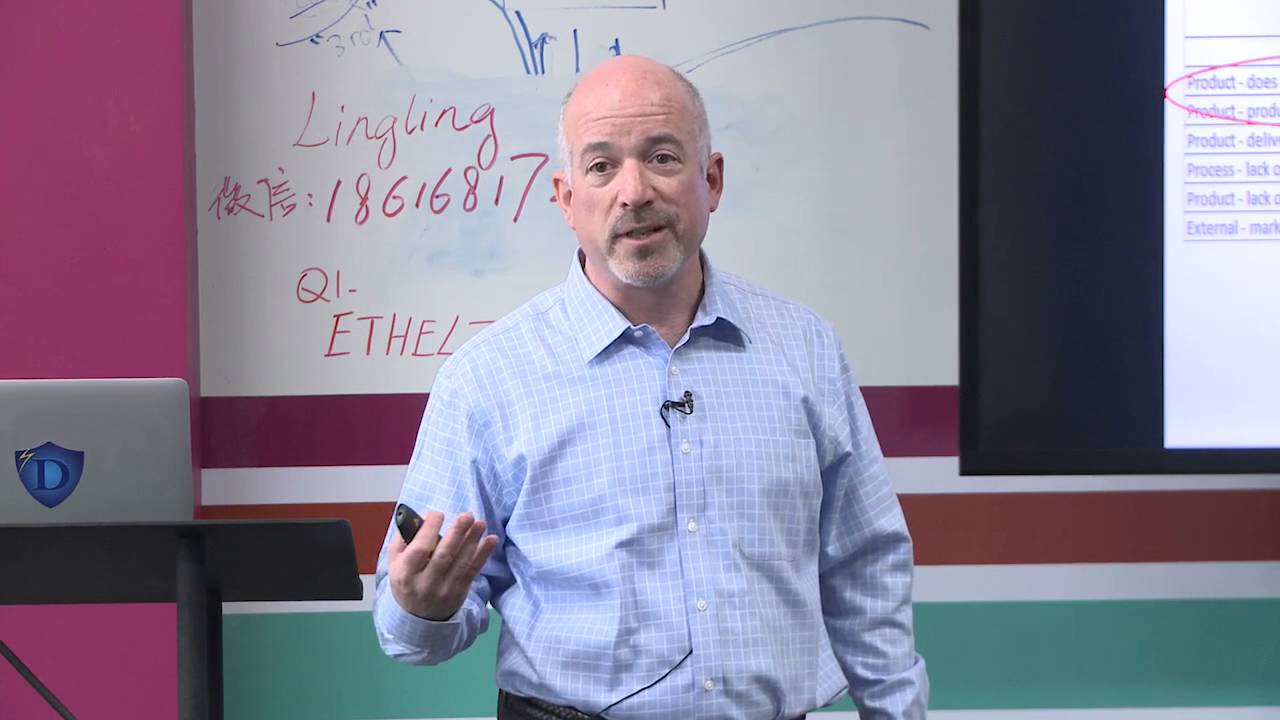
Dave Kranzler walks through a five-step management process: assess the situation, set priorities, build your team, observe outcomes, and fix what breaks. He uses structured interviews with key stakeholders to surface common pain points like product reliability, then sorts your business into four buckets—sustaining success, realignment, turnaround, startup—to decide where to spend your time.
Chapters
As he said, my name is Dave. I'm going to talk to you today about management. Pretty boring topic, but it's going to be the kind of stuff that you won't learn in school, and unless you're really lucky, your boss won't teach it to you. But if you want to lead a team, if you want to build a team, if you want to get stuff done, it's pretty important to know. I have a number of influences. They've all written fantastic books. Andy Grove, Jack Welch, TJ Rodgers, you can read all that on your own time. I haven't read a book, I haven't written a book yet, so instead I give a talk every now and then, but let's dig into what we're gonna learn today. So, as I said, name the course Management 101 or What to Do When You've Got Your Work Cut Out for You. Let's talk a bit about what this discussion today will be and what it won't be. By the way, feel free to interrupt. I talk real fast sometimes. I'm not gonna interrupt. Ask me questions anytime you want. The best kind of discussion will be interactive. So I'm going to give you a bit of a framework for learning what needs to be done, for being able to build a team to do it, and then actually to get it done. As I said, these are things that you won't learn typically in management school or in business school. It's the kind of stuff I didn't learn until I was probably in my 40s. So consider it a free gift that I can teach it to you today. These are my views. This is based on my experience. This by no means represents the views of Trilliant or its customers, employees, shareholders, etc. Now that we have the disclaimer out of the way, let's get started. All right, so what does a manager do? What is management? There is a number of definitions and they range from very fancy ones, getting stuff done, through and with people in formally organized groups to forecast, to plan, to organize, to command, to coordinate, to control, or very simply just getting other people to do the work. I prefer to look at this a little bit differently. Management really to me is about 5 steps. First, you have to assess the situation. Second, you have to set your own agenda and priorities. You have to build a network of humans to actually go execute those priorities. You have to sit back and observe what happens, and then you have to go in and fix the stuff that's broken. Now, all of you are entrepreneurs. At this point in your careers, this may not appear as relevant when you're trying to build your first product, get your first idea, get your first funding, but if you are good, And if you are lucky, your business and team will grow, and you will discover that the problem of scaling things gets a little bit different when there's 50 of you than when there's 5 of you. Now, one thing I've had to do my entire career, when each of my assignments has been similar, is I've been able to take a team that had about outrun what it was capable of doing and take it to the next level. And in some cases, it's been a team that was a little screwed up in a few areas, and I had to make some changes. So some of the things we'll talk about today will be useful right now. Some of them I ask you to file them away and they'll be useful for you in a few years if you're lucky. Okay. So first step, and this again may sound obvious, you have to assess the situation. And even if you are starting your job for the first time or if you've been at it for a few years and you realize you've gotten a little bit out of touch with what's going on, There is always the step of assessment. So the metaphor we are going to use today in talking about it is from a book called The First 90 Days. And I am going to give you some real examples, some stuff that I did when I took on a new job. Because even if you have been at a place for a long time, there are times when you discover you don't know what is going on and you need to relearn. So my father used to say, anybody can manage if they have all the information. The perfect manager can manage in the complete absence of information, and most of us fall somewhere in between. So how do you go get that information? How do you actually discover what's going on? Well, this book that I've used quite a number of times has a great framework laid out for how to learn. Again, you may think you already know, but sometimes it's a little difficult, and particularly when the team has grown to a point. The best way I've ever found is you sit down the key people in the company and you ask them the same set of questions. What are the challenges that we are facing right now? Why are we facing these challenges? What are the root causes? What are the most promising opportunities that we may not be exploiting right now? And if you were me, what would you focus on? Now, when you ask these questions, it does 2 things. One, you start to build a model. and I will show you some pictures of what that might look like, of what is going on viewed from the people with whom you work or whom you manage. The second thing is you can tell a lot about somebody by how they answer the question. And again, I will show you a few examples of that as well. So as part of your assessment, you are assessing the situation and you are assessing the team that you are with. Again, as I mentioned, the metaphor I am using is as if you were starting a new job and one of the other key embedding opportunities you have when you start a new job, something called the new manager assimilation process. You can read about that in the book. But that's a little bit about how your team learns about you. Let's talk about how you learn from your team. So when I joined Trilliant, I did exactly this. I sat down a slew of people from across the organization. Names have been changed to protect the guilty and the data has been Modified and redacted a little bit. But I talked to people in the engineering organization, product managers, exec staff, and I said, what are the biggest problems that we face? And then you put a little X in the column for everybody who mentions one of them. Very simple. But then some things start to emerge out of this data. What does everybody actually agree on? Well, geez, products don't meet requirements. They are not reliable. They are not available. They are not serviceable. That's nice when you're head of product development. Typically, that's what people will tell you. Documentation stinks. And this theme came out over and over again. So again, when you talk to people, you learn a little bit about them, but you also learn about what the key problems are in everybody's view. Next. Well, why is this the case? What's interesting here is that there's a whole list of reasons people came up with. A few people had a lot to say. So what did I learn about this guy who works with me now? He's one of my key employees. He observes a lot. He sees lots of stuff that's wrong. He became a very key ally for me to help me understand what was happening. So if you look at the data that way, you can see some patterns on who your best allies are gonna be. What are our opportunities? Well, this is kinda sad. Nobody really could think of that many. Interesting. There are quite a few more opportunities now than we could see 5 years ago, but again, interesting what that tells you not only about the situation but the people you are talking to. What would you do if you were me? Very consistent feedback. Get a process in place. So the subject matter of that isn't as critical. What is more interesting is the process you go through And how you learn when, again, you either first start a new job or if you have been at the place for a while and you feel you have gotten out of touch and you need to get reengaged. I still take this process every now and then. Okay. Once you have started to learn, there is another model. If your business is complex, and again, if you are good and you are lucky, it will become complex, different aspects may be working in great shape, other aspects may be completely broken. And based on this data, you have to decide and assess where to focus your time because the most important resource anybody has is the bandwidth that they spend. So some parts of your business may be what we call a sustaining success. They are running pretty well. They are some of the crown jewels that you can build upon. Some business may be what we call a realignment. It was running well. It's broken. And either we can fix it quickly or worse things are going to happen. Some of them are completely broken. We call it a turnaround. Better go in and do something fast, or if you don't, you are going to have to either shut it down or get rid of it. And then some of these, and this is a situation probably many of you are in now, it is a startup. You don't really know yet, so you have to take data. Without going through this in too much detail, it is basically what you can do. You sit and you, in my case, I looked at the products, I looked at the people, I looked at the processes, And sort of binned them out to be able to discover where was I going to spend my time. Now there's a critical product that was broken and it didn't have a team around it. It became one of the first things I had to do. Otherwise, we just may as well get rid of it. There was another product that was critical. It was a little bit off its rocker. I had to spend a certain amount of time there, but we knew we could fix it and we had the right people. There were some parts where we didn't have any team. Better put one together fast. And as you go through and you assess the team as well, you also discover who you can rely on and who you can't. We will get to more of that later when we talk about hiring and firing.
More from Tim


He Sold His Car to Build This Startup, Then Pitched It for $1M 😳 #Startups #AI

This Startup Moves Your Crypto BEFORE Hackers Can Steal It 😳 #Crypto #Cybersecurity




15 Months Without Refrigeration?! This Startup Thinks It Can Go Global 🥥 #FoodTech #Startups



