Aubrey Cattell of Autodesk explains why the company is targeting consumers and makers. She covers 123D, Meshmixer, and Tinkercad, tools designed to teach 3D literacy and let people design and manufacture products themselves.
Chapters
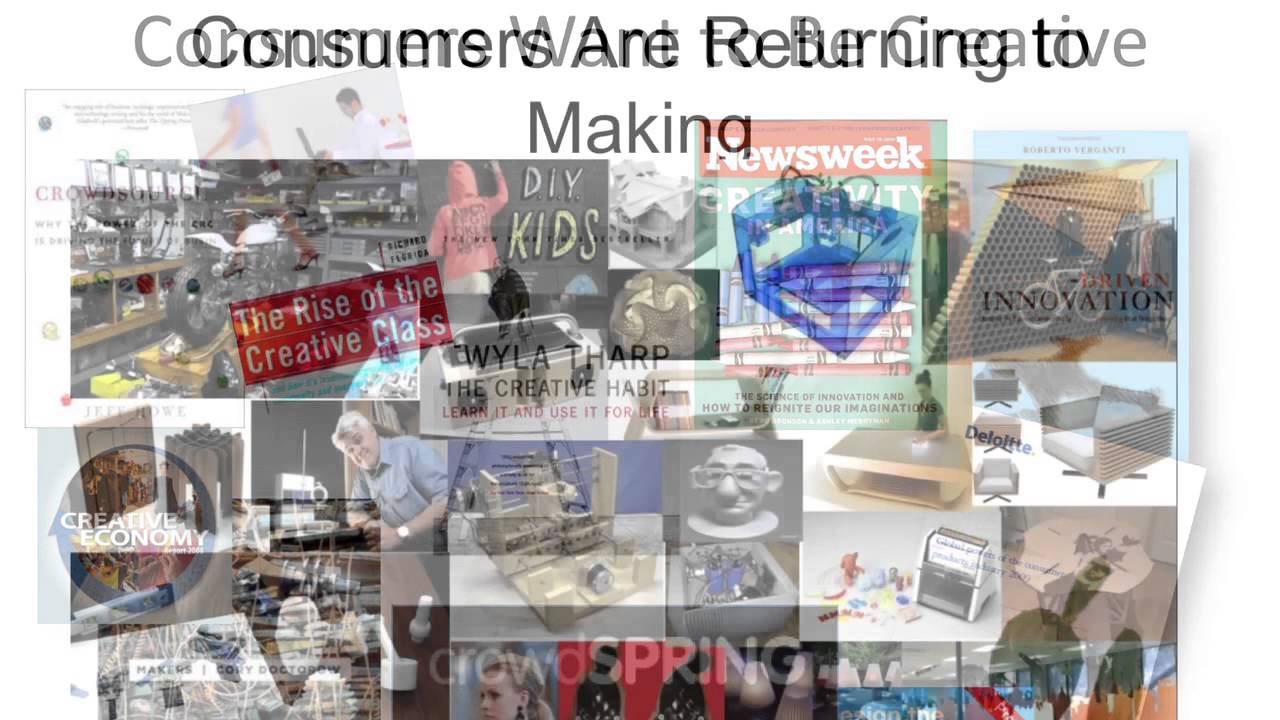
So my name is Aubrey Cattell. I work at Autodesk. I'll talk about who that is in a minute, in the consumer group. And with me is Guillermo Melantoni, who's the product line manager for a product line called 123D, which we'll talk about as well. So let's talk about who Autodesk is, why it is we have a consumer group, and what it is we're doing there. So Autodesk, if you don't know— how many, show of hands, who's a mechanical engineer, electrical engineer, civil engineer? I am. OK, so some of you probably know our products. If you know us, you know products like AutoCAD, Max, Maya, maybe Inventor. We're a 30-year-old software company, which dates us. So we're the second oldest PC software company after Microsoft. And the reason we've been around that long is because AutoCAD is an incredible code set that still powers most types of 2D and even 3D design today. We're about $2.5 billion in revenue and have 7,000 employees. And really, the business of Autodesk is design and visualization software. So we play in a number of industries. We play in architecture and engineering and construction, so some of the tallest buildings in the world have been designed with our software. We play in the manufacturing space, so everything from an iPhone that you can hold in your hand up to Tesla are customers of our software. And then we have a large media and entertainment business. So every movie for the last 15 years that's been nominated for the best special effects is an Autodesk customer, and all the top 10 games every year are developed by studios that are Autodesk customers. So this is what we do. We do design, we do visualization. And what we realized a couple years ago was that, look, we have all of this incredible IP on the professional side, but really there are some forces, there are some trends that are emerging that mean that we should be looking at the consumer space as well. The first was that we saw that traditionally technology started in the enterprise and then trickled down to the consumer space, but really consumers were actually leading the way in terms of technology And that was pushing up into the enterprise. And Autodesk rightfully said, whoa, this is a trend that could disrupt what we're doing. We need to be going after consumers in a concerted way. We also realized that consumers want to be creative. And there's been a lot of social science and research and popular press on this topic, especially the dearth of creativity in our education system. And what we realized is that with our professional design tools, we could really make consumer-based apps that would enable that creativity. And then finally, and I think this is what we're gonna talk about today, we saw this trend of consumers returning to making. So in the pre-Industrial Revolution space, you had artisans working in their home, that gave way to things being made in factories, but now things are leaving the factory, and actually people wanna be creative again, they wanna make things with their hands. New entrepreneurs are emerging that are really disrupting traditional markets. And what we see is this maker movement is really analogous to the early days of the PC. Back then, it was hobbyists creating these new machines that were creating things out of bits. Now what you see is that machines like the MakerBot, who's a partner of ours, can really make things out of atoms, really anything that you can imagine. So why is this consumer space something that matters to us? Well, for each of our professional markets that we play in, there are consumer analogs around creativity, home design, digital art in the form of sketching and image editing, but most importantly, 3D design and fabrication. The opportunity for us is so critical because we're thinking about the next generation of our users. We want all professional designers on our platform, and there's really an opportunity with 3D design and with 3D printing to teach that literacy in 3D to a new generation of users. We have a pretty extensive portfolio. I'm happy to chat about it more, but I'm cognizant of time. The ones that we're going to talk about today are really in this middle row in terms of personal design and fabrication. This is really about designing things in 3D with very intuitive interfaces on platforms like the iPad, and then connecting directly to available 3D printers like the ones you see on the table here to actually take your idea and make it real in a tangible object. And the key for us, one of the themes that we hit on, one of the initiatives that we really drive within the consumer group is that for consumers especially, and this probably resonates with all of you, design isn't an end in and of itself. You can make a cool design app, you can have a freemium model, you can put some ads in there, and you can make some money. But I think what's really going to disrupt the consumer space is this notion of an end-to-end workflow. What consumers want is to consume things. They buy things. And really, they're looking for inspiration. They're looking for a way to design the product that they're excited about. It might be a piece of jewelry, it might be an article of clothing, it might be a new toy for their kids. But they want to take that through that process of actually making it, and then in many cases, they want to find a market for the digital and physical goods that they've invented. So we believe there's a platform emerging here that's going to enable that next generation of entrepreneurs. It's also something that's really valuable to established brands that are feeling disrupted by those changes. So I'm going to stop there and let Guillermo talk more about the 123D product line itself. itself, some of the apps that we're building around Meshmixer and Tinkercad, and how those tie into 3D printing and what we're seeing in the market. Thank you.