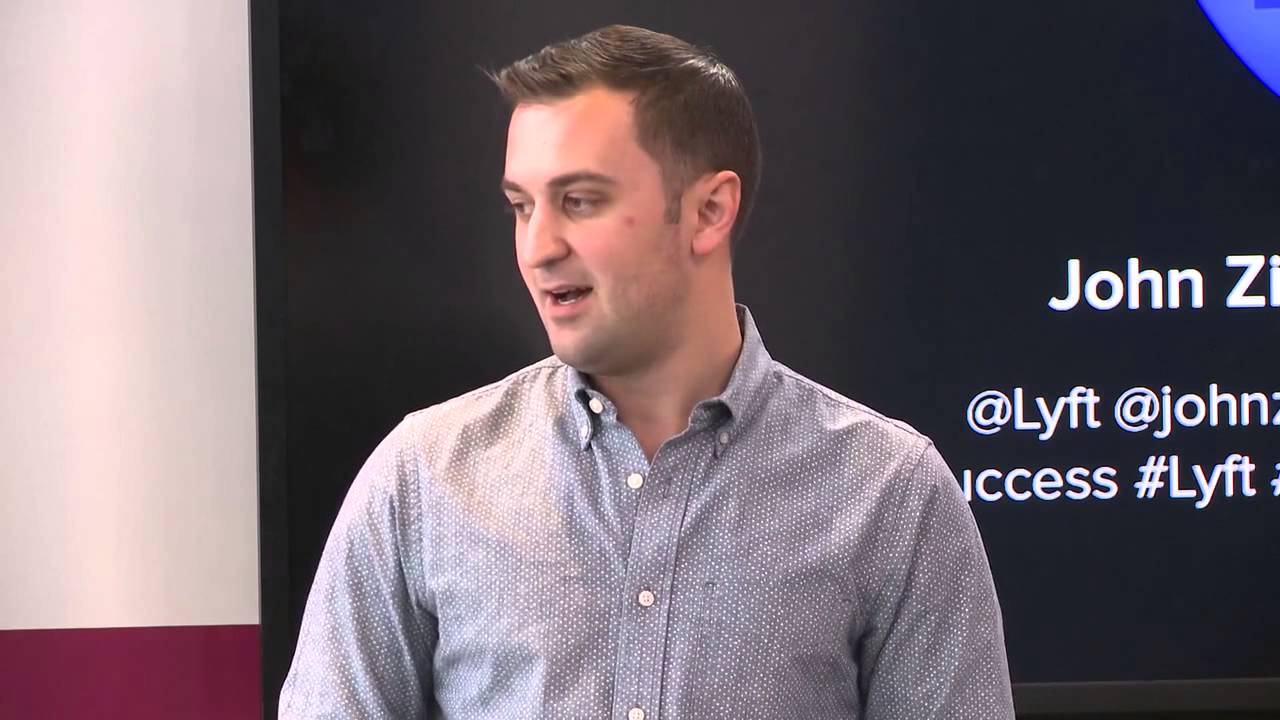
John Zimmer, Lyft's co-founder, shares how the company built an alternative to car ownership and launched Lyft Line in San Francisco. He discusses growth, regulatory battles, and driver stories that show the service's community impact, then offers three lessons for entrepreneurs: do something you love, be yourself, and create fearlessly.
Chapters
So the other thing I want to say about kind of the future is, when I said we want to create the alternative to car ownership, it used to be a rite of passage. You used to turn 16 and be like, I'm going to get a car, and that's freedom, right? And there's been billions of dollars spent, probably maybe even trillions of dollars spent, convincing Americans and outside the US that driving a car equals freedom and is the best thing to do. The reality is it's like a $9,000 ball and chain that you have to find parking when you go out. In fact, a third of traffic in many cities is related to looking for parking. You have to pay for insurance, you have to pay for maintenance, and so they show in those commercials everyone with their hair blowing back and no traffic, open roads. It's like that's not reality, right? But we think that we can get to a happy form of transportation where you embed hospitality into the ride. And so that's what we've really, really worked hard to do with Lyft. And I think we're on our way. We just launched a new product called Lyft Line in San Francisco. Lyft Line is the idea if 2 of you request a ride right now going to, let's say, an approximately similar location, maybe within a few blocks of each other, We'll match you both up if you select to share a ride. We'll offer you up to 50% savings on that ride. And we'll create a social experience. So we now have profiles. If you both want to chat after the ride, you have the ability to send messages, and if you both do, then they both get released. And so we're building that community into the experience. Lyft Line launched in August, is now the majority of rides in San Francisco. And we do millions of rides every month. And so what I'd argue with what's happening with transportation is we're just at the beginning, but as we keep pushing and staying true to the same vision, we're making really fast progress. And because we've stayed true to that vision, we've had fast growth. We've gone from about 30 employees in the beginning of 2013 to now 450 at the company. We went from 1 city to 65 cities. We went from thousands of rides to now millions of rides every month and 1 cease and desist to probably 20 cease and desists. But it's been a— Did you frame them in the office? We did with a few, but then we got so many we just— I don't know where they are anymore. Yeah. The government— we have a 25-person government relations team that they probably have them somewhere. But there's a big map that we used to surround the cease and desists with, and now the map just shows kind of the states we've unlocked with regulations and the cities that we're targeting next. A few other things I want to talk about that relate to the vision is remembering kind of who the customer is. And for us, with our vision that we want to reconnect people and communities, it was never just about getting from A to B. I think with other companies it's about let's provide a better taxi ride, let's get people from A to B. For us, it's also about the driver in the car and it's— for them, it's an ability in many cases to pursue something that they're passionate about. Because what happens with a platform like Lyft, the majority— if you look at LA and San Francisco, the majority of our drivers are either entrepreneurs or artists, actors, actresses, and things like that, and they're doing this for maybe 10 to 15 hours. And so they're following their passion, and using this to supplement their income, and that's really powerful. And that helped because that is part of our vision, because I get to experience the product every day when I use Lyft, it helps motivate me and our team members. And so we've heard incredible stories. I had a driver just a couple of days ago, his name was Jordan, he had a cochlear implant. And so he was born unable to hear. And at the age of 4, he got the implant and all of a sudden he could hear. And he told me the story about how his parents lit up when they saw him just all of a sudden get the gift of hearing. But what he was telling me about is— and what was interesting is because you're in this fixed space of a car, you have these experiences with people that you wouldn't have had otherwise. And he was telling me that he took Lyft the other day and he had a deaf driver. And he was like, I'm really happy— He articulated back to me what our vision is. about reconnecting people and communities, and that just again shows how important it is to have a vision and then to make sure other people know it. And he said, and that makes me really proud to be part of Lyft because I had this other driver who couldn't hear. I had never been with a deaf person in close quarters like that. Him, having been born that way, had never been with it. He didn't know any sign language, and it was just an incredible experience for him. And so again, I just say that to show how important having the vision is, sharing the vision because then others will help you achieve the vision. So before we go into more questions, just kind of want to talk about the moment that I think we're in and the opportunity that we all have to be part of it. If you think back to the Industrial Revolution, time when like steel and railroads and all these incredible things were being built, I would say we're in at least a similar type of revolution right now. It's a modern industrial revolution, it's this digital revolution, and I say at least because we have the ability, within a couple of years we've built a product that has reached millions. There's other people that— and soon hopefully billions. And this has happened with many companies right now, and you guys are in a position to build something that reaches millions and maybe billions of people. And so Just like Spider-Man was told, with this great power comes great responsibility, and so what I've learned is that having a vision that I'm really passionate about and that really means a lot to myself and our team is important in that time where you can have a major impact. And we could build this company with the wrong, I'd say, ethics or goals and had a very different path. And so I just— I think that's really important. So 3 lessons given that we're in this modern revolution. Number one, do something you love, and I think hopefully I've shared to you why I love what we're doing, why I love bringing people together, why I think that's important, because if you're not doing something you love, if you're doing it just to make money, you're doing it for some other reason, the moment you face adversity, and you will face multiple moments of adversity, it's going to be really hard to to push through it. And you're going to hit rock bottom with a startup. You're going to hit that emotional just drain. You're going to be completely drained. And you need to be able to push through by having a vision that you love. So do something you love. Number 2, be yourself. These are kind of like so simple that they seem maybe too simple. But I think what I've found about starting a company, it's similar to like a relationship. So whenever I've dated someone and now again I'm married, but I found that having that relationship is like such— is like a mirror. You learn so much about yourself. I would argue the same is true of a startup. When you pour yourself into it and you have to make decisions, lots of decisions one after another, you're going to— it's going to reflect you. And so there are times where you say, oh, maybe I should act this way because that's the right thing to do. In the end, it just doesn't work. It's hard to not be yourself. It's hard to not— it's hard to be successful if you're not being yourself. So do something you love, be yourself. And the last is create fearlessly. And that's just— I used to run the mile when I was in high school. And there's the 3rd lap, which is, they say, the most important and often the hardest lap. And I had a goal of getting under 5 minutes. And I remember running the third lap and it's just completely mental. Like I'd run the mile so many times that like my body's just kind of going through the motion, but it was whether I convinced myself I was going to do it or whether I got concerned or worried about it was the difference. And so that second that I decided like I'm going to do it, I ran a 4:40, I went way under. And so I would just argue, Again, to be able to push through all the adversity that you will face as an entrepreneur, just be fearless. Thank you.